



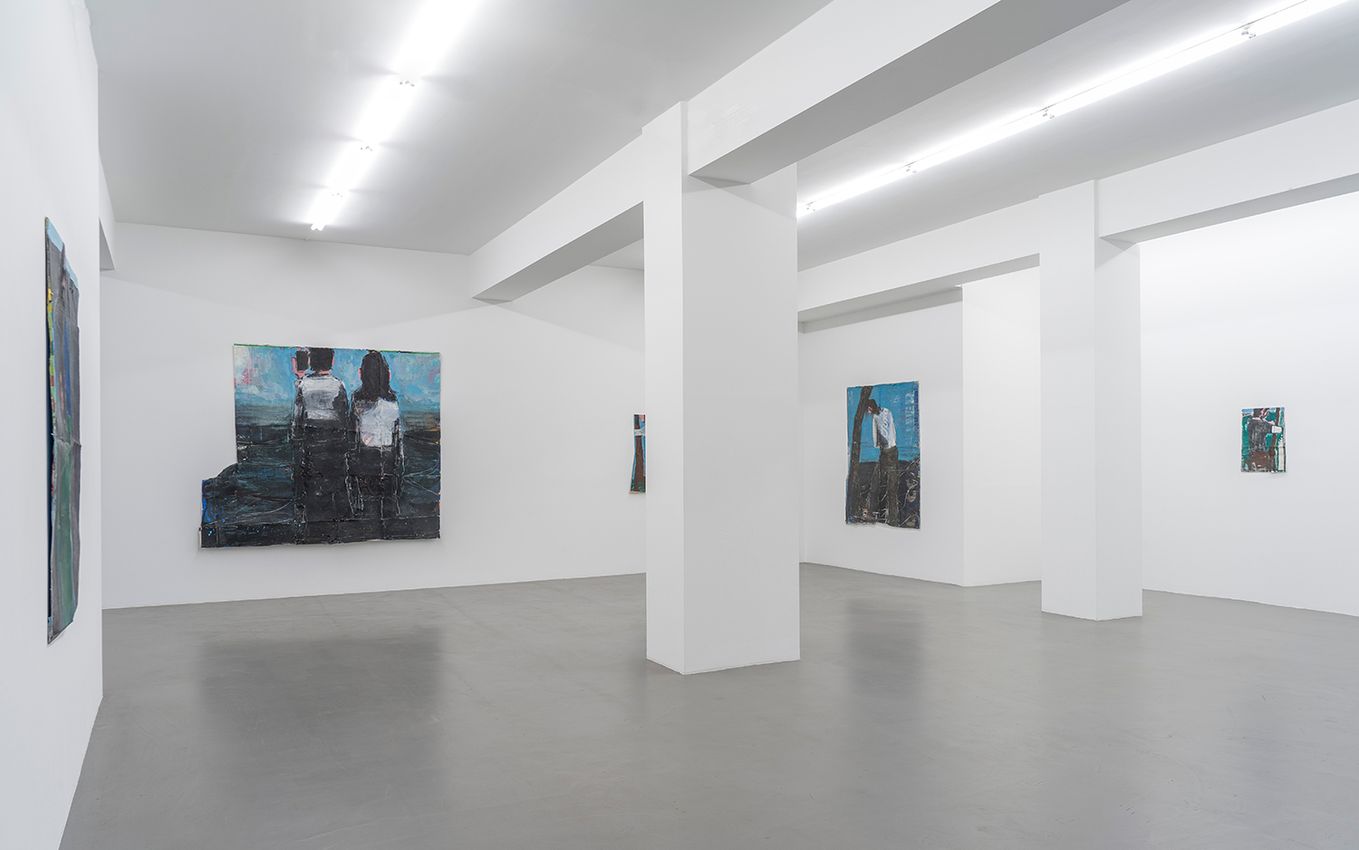
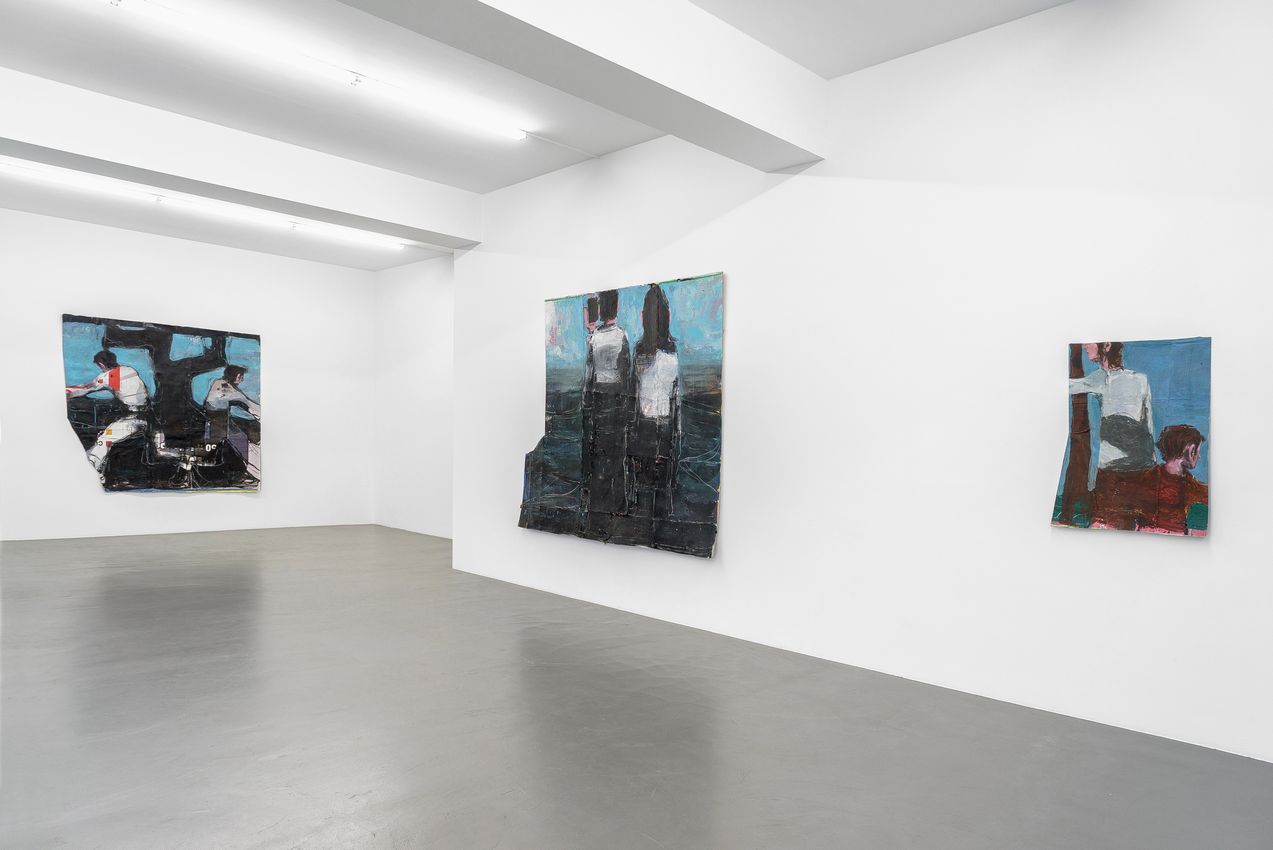
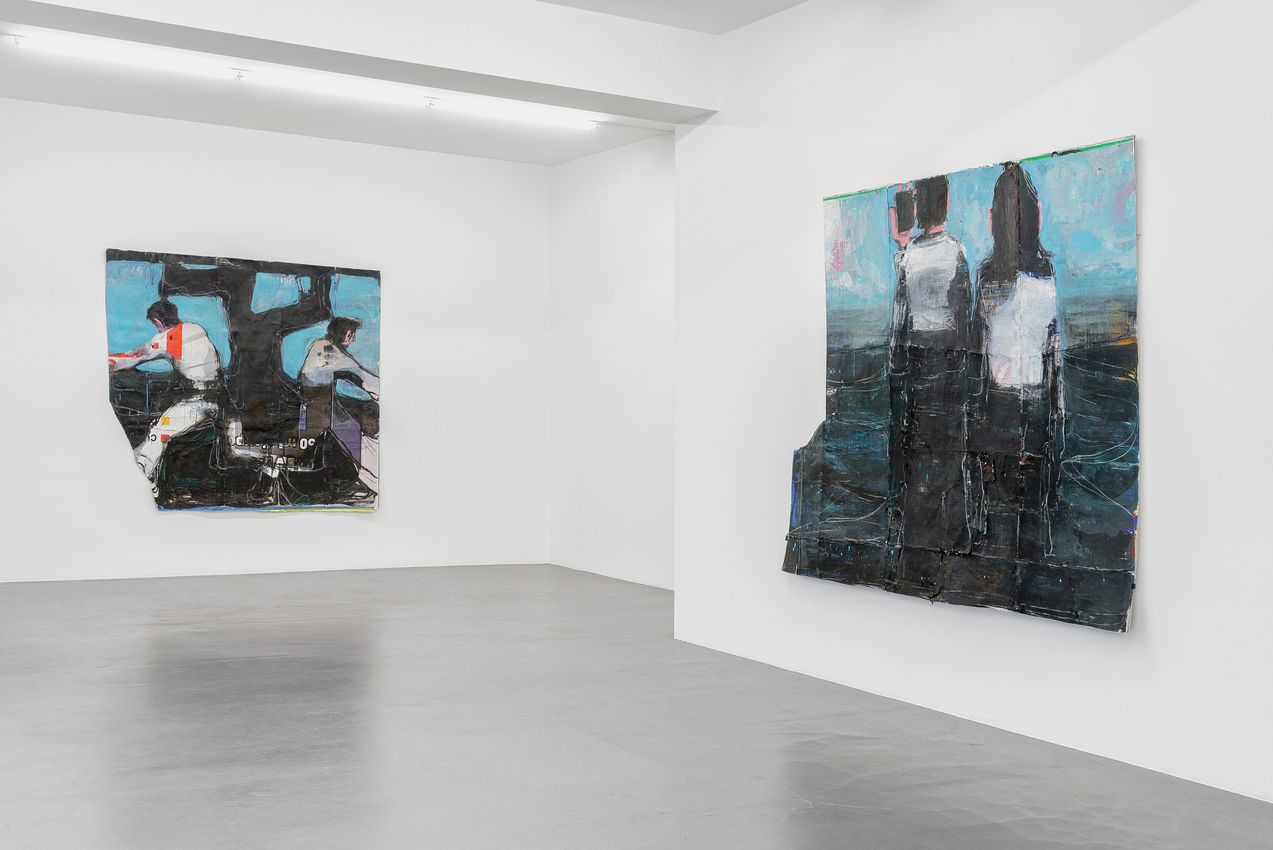
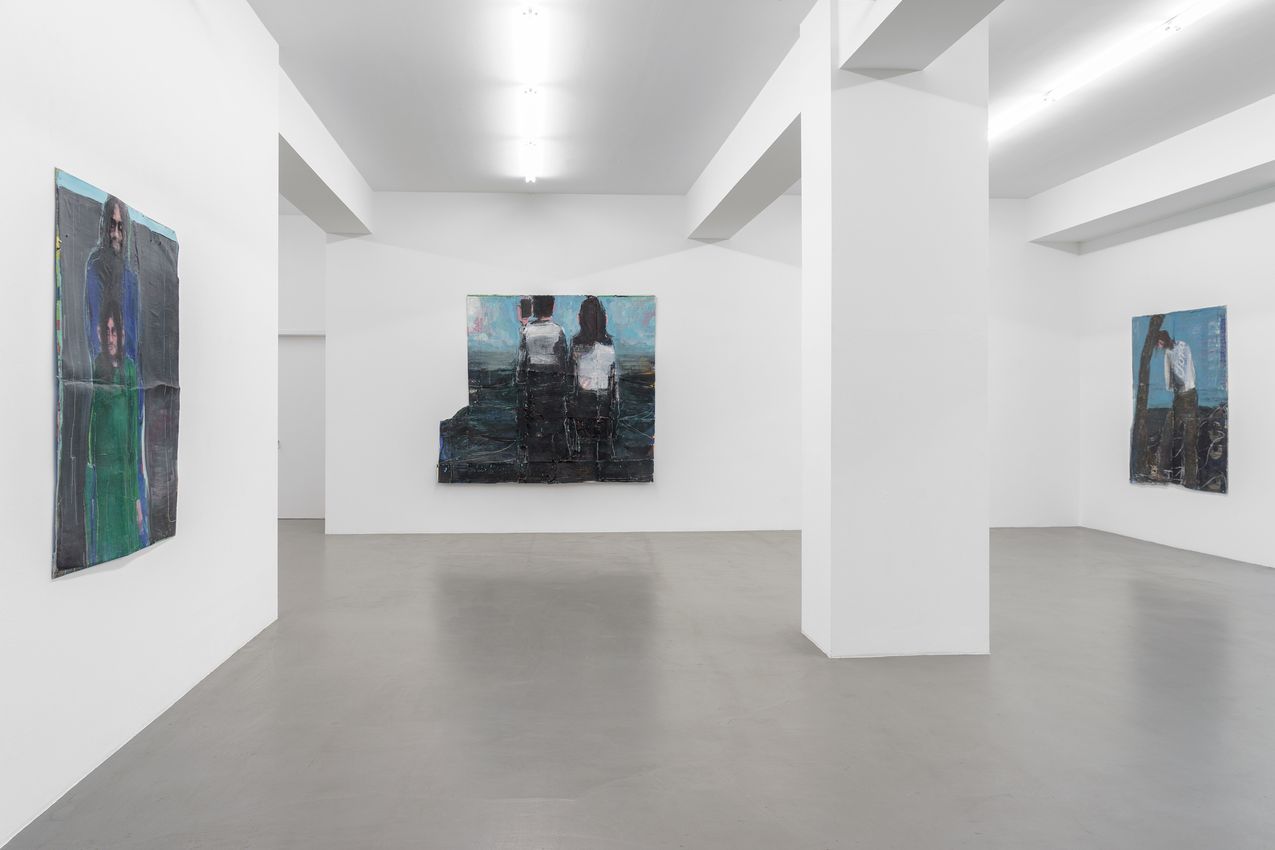
The Buchmann Galerie is pleased to present an exhibition with new paintings by the French painter Jean-Charles Blais (*1956 in Nantes).
Jean-Charles Blais emerged in the early 1980s as a member of Figuration Libre, an informal group of French painters revolting against the art of their time. Movements such as the Transavanguardia in Italy and Neo-Expressionism in Germany or street-art protagonists of downtown Manhattan all sought to take art back from the institutionalisation and ivory towers that conceptual art and formalism of the previous decade had created. ‘I work with great trust in the processes of painting.’1
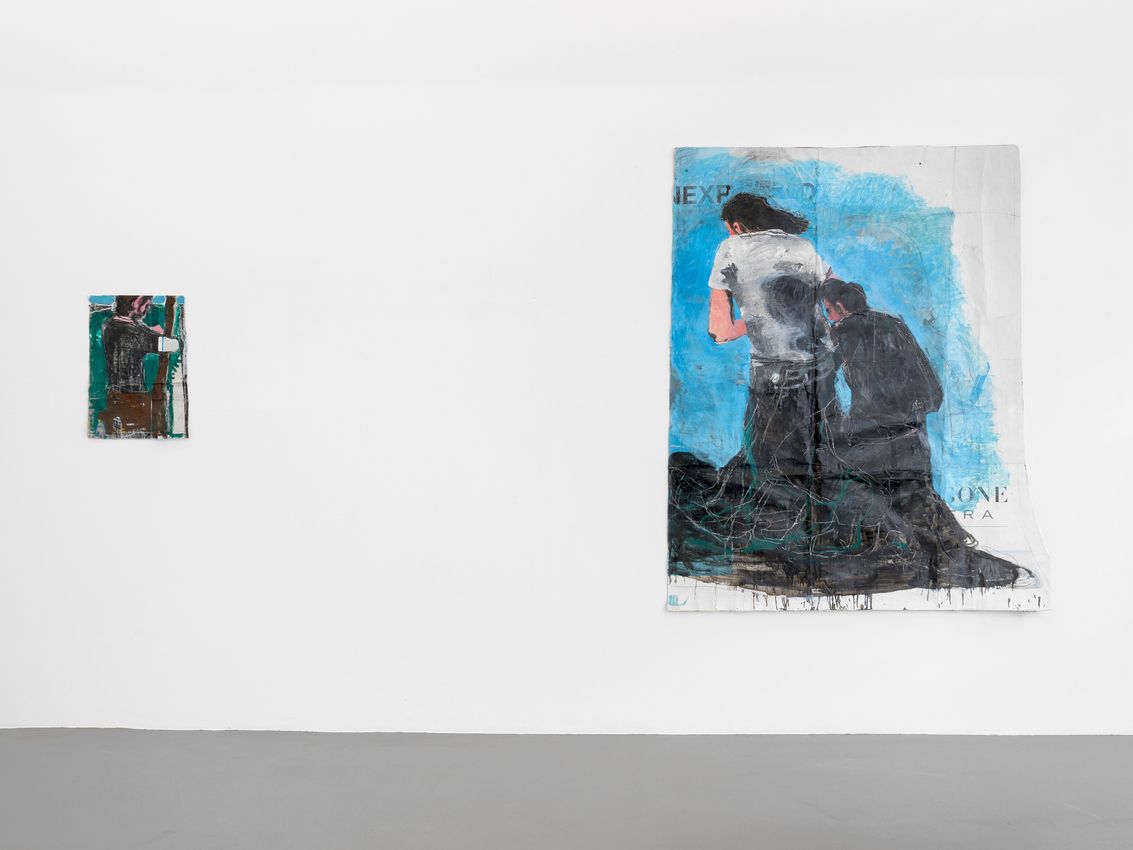
This very process creates a tactile sensation while looking at the new paintings of Jean-Charles Blais. His ‘canvases’, layers of torn advertisement posters, reflect his techniques and experimentation. On their surfaces–damaged, cut, ripped and uneven–every visual element interacts with the surface in a way that results in spontaneous impastos and gestural bursts of colour or a line, defying definitions.
After a period of intense reduction of figure to the point of abstraction around 2010, Jean-Charles Blais has returned to the figurative. At his last exhibition at Buchmann Galerie in 2016, the artist presented new works characterised by a renewed interest in the human figure, exploring its corporeality in a sculptural, column–like execution.
The works presented in the exhibition are the continuation of this new direction, and a further development of his renewed visual style. Thematically, the artist recognises paradoxical ambivalence inherent in the understanding of the superposition itself–its ‘to be and not to be’–as a visual, emotional and deeply ironic discourse on the nature of the human image, and the symbolic meaning it provides.
The new works are characterised by a reduction of the painterly pallet–black and blue surfaces dominate the canvas, their contrast creating the strong visual and psychological effect. Compositional dynamic is achieved by vertical movements of black surfaces that emerge from the lower end of the compositions. This movement is emphasised by the lines scratched into layers of black paint which shape the figurative characters from this dark mass. The characters are static, as if captured in the somber abstraction that created them and now threatens to swallow them back to the non–real. But how real were they in the first place?
‘It is in the nature of images to slip between us and reality,’ to quote the artist again; ‘We live according to cultural norms that encourage us to treat the body as an image, and this division between the self and the image results in a space that is difficult to control–it is in constant flux.’2
This division of self and the image, the main theme of the works, is conveyed in the image of a smartphone, a main iconographical motif of somber self-alienation prevalent in the cycle. The displays of smartphones serve as deeply ironic portraits. As the characters in the paintings and gouaches physically and symbolically move away, turning their backs and hiding any personal, recognisable characteristics, all that is left for the spectator is the image of a dark display from their phones–an abstract and ironic portrait of the human today.
Paintings by Jean-Charles Blais have recently been exhibited at the Cabinet d’art graphique, Centre Georges Pompidou in Paris, at the Pinakothek der Moderne in Munich, the Musée d’art moderne et d’art contemporain in Nice, the CAPC Musée d’art contemporain Bordeaux, and the Musée Picasso in Antibes.
The artist’s works can be found in major collections, including the collections of the Museum of Modern Art in New York, the Centre Pompidou in Paris and the Tate Gallery in London, the Museum Moderner Kunst Stiftung Ludwig in Vienna, the Carré d’Art in Nîmes, the CAPC in Bordeaux, the Stedelijk Museum in Amsterdam, and in the Musée National of Monaco.
1 Michael Semff, ‘Evocation-Defence-Disappearance; on Jean-Charles Blais’, in Jean-Charles Blais 15.3.-9.6.13 Musee Picasso, Paris 2013.
2 ‘Too near, too far’, Jean-Charles Blais interviewed by Jean-Louis Andral, ibid.


Buchmann Galerie is a contemporary art gallery in Berlin with a focus on painting , sculpture, drawing and photography.

A respected voice in contemporary art discourse.
Focusing on ambitious storytelling and insightful art-world commentary. Ocula Magazine publishes in-depth interviews, critical essays and timely analysis on the artists, exhibitions and ideas driving the global art world.
Learn more about Ocula Magazine
Showcasing the best of the art world.
Ocula partners with galleries from around the world to highlight their artists, artworks and exhibitions. Gallery membership is by application and invitation, with each member vetted by an independent panel.
Learn more about Ocula Membership

Specialises in the sale of major artworks.
Led by a team with deep ties to the world’s leading auction houses, galleries and collectors. Ocula’s advisory team offers bespoke services to high-net-worth clients from around the world who are looking to acquire the best of contemporary and modern art.
Learn more about our team and services