



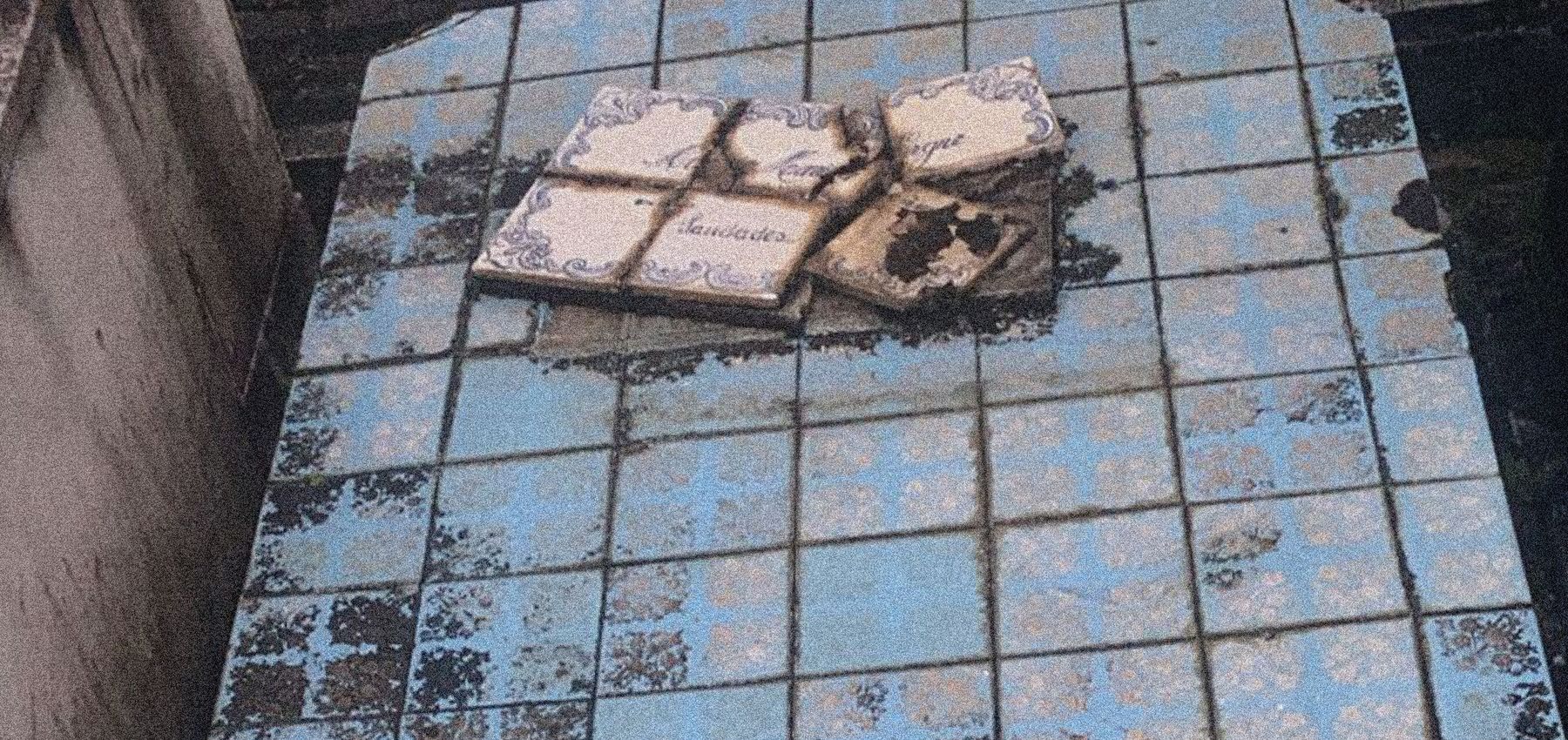
“Storm in a teacup” is an English expression that means doing much ado about little. Antonio Tarsis (b. 1995, Salvador, Brazil), as a Brazilian immigrant artist in London, subverts the meanings by working with such a restricted and modest range of materials to create an inexhaustible poetic and aesthetic production. His artistic practice, however, arises from enduring storms of sociohistorical, racial, and xenophobic violence. By invoking the allegorical power of tea in the British Empire’s history and its colonies during the spice trade, Tarsis reclaims an imperialist motto for a production that denounces hegemonic dynamics in colonized countries as his homeland.
The artist explores the centrality of labor in the human condition—especially labor born from violence—by contrasting the rigorous processes of industrial science with traditional, modest manual craftsmanship. Industrial processes like standardizing matchbox sizes and mining for electronic devices are juxtaposed with manual actions: hand-cutting, folding, pasting, dyeing papers, and exposing labels to sunlight for natural fading. This approach recalls the scarcity of tools and materials in his early years—living in a favela at 12 after his mother’s death, he dropped out of school, self-educated through public library books in Salvador, and began working with materials found on the streets. The emphasis on manual production in Tarsis’ work also connects to the complex artistic traditions rooted in African heritage and the labor systems devastated since colonial enslavement: Salvador, the first capital of Brazil for two centuries during the colonial period, is home to one of the world’s largest Afrodiasporic communities.
Carlos/Ishikawa’s programme focusses on artists with wide-ranging, multi-disciplinary and experimental practices. Artists currently represented work with performance, sound, internet, dance, film, installation and text, as well as painting and sculpture. The programme exhibits international artists, offering many artists their first solo shows in London.

A respected voice in contemporary art discourse.
Focusing on ambitious storytelling and insightful art-world commentary. Ocula Magazine publishes in-depth interviews, critical essays and timely analysis on the artists, exhibitions and ideas driving the global art world.
Learn more about Ocula Magazine
Showcasing the best of the art world.
Ocula partners with galleries from around the world to highlight their artists, artworks and exhibitions. Gallery membership is by application and invitation, with each member vetted by an independent panel.
Learn more about Ocula Membership

Specialises in the sale of major artworks.
Led by a team with deep ties to the world’s leading auction houses, galleries and collectors. Ocula’s advisory team offers bespoke services to high-net-worth clients from around the world who are looking to acquire the best of contemporary and modern art.
Learn more about our team and services