The art world in focus
Subscribe to our newsletter for news and insights on artists, galleries and exhibitions.

Betye Saar, aged 99, at the 14th Annual Los Angeles County Museum of Art’sArt + Film Gala 2025. Photo: Xavier Collin/Image Press Agency.
Betye Saar, the pioneering assemblage artist and central figure in the Black Arts Movement of the 1960s and 1970s, has died at the age of 99—just four days short of her 100th birthday.
Roberts Projects, the California gallery that represents Saar, confirmed her death yesterday, stating that the artist died in her sleep in Los Angeles in the early hours of 26 July.
In a statement, the gallery said: “Betye Saar will be remembered for a body of work that powerfully interrogated African American identity, spirituality and the intersections between diverse cultures.
“...Her practice transformed everyday items into groundbreaking artworks and installations, cementing her legacy as one of the most influential artists of our time.”
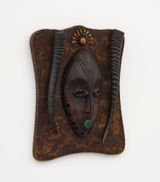
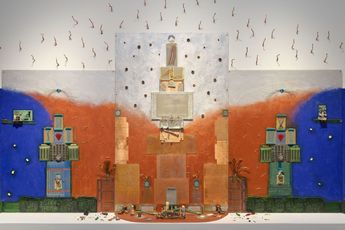
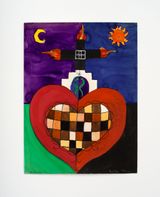
Across a seven-decade career, Saar used assemblage to transform everyday objects into rich reflections on American identity, spirituality and the connectedness between different cultures. Having helped to usher in the development of the practice, she went on to become a giant of the assemblage movement, and to imbue her works with symbols of Black power, and with the feminist mantra “the personal is political”.
It was during the 1970s that Saar’s work first took on this political messaging. Her most famous work from this time was The Liberation of Aunt Jemima (1972), a mixed-media assemblage that subverted the racist stereotype of the Black “mammy” by replacing servitude with agency.
In a 2016 interview celebrating her 90th birthday, the artist told the Los Angeles Times: “I had this Aunt Jemima, and I wanted to put a rifle and a grenade under her skirts. I wanted to empower her. I wanted to make her a warrior. I wanted people to know that Black people wouldn’t be enslaved by that.”
Saar’s work was exhibited widely throughout her life, and she also made considerable contributions through her mentorship of a generation of Black artists, including painter Kerry James Marshall. However, it was only in the latter part of her career that she began to receive wider recognition.
Shortly before her death, curator Carol Eliel, who organised Saar’s 2019 exhibition Betye Saar: Call and Response at the Los Angeles County Museum of Art, told the Los Angeles Times: “She had what I call three strikes against her.”
According to the curator, these strikes were being a woman, being Black and being based in California when New York City was the centre of the art world. “But she stuck with her practice when she wasn’t getting accolades, wasn’t famous, and remained absolutely fearless in her willingness to take on the most significant challenges of our time,” she told the paper.
Saar was born in 1926 in Los Angeles and, following her father’s death when she was just five years old, was raised in Pasadena and Watts by her mother. In 1949, she graduated from the University of California, Los Angeles, where she studied design, and started her career as a printmaker.
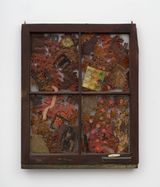
She began making art aged 35, with early institutional shows at the Whitney Museum in New York City in 1975 and the Studio Museum in Harlem (1980). More recently a 2018 exhibition at The Museum of Modern Art in New York presented 42 rare early works on paper alongside Saar’s early autobiographical print-assemblage, Black Girl’s Window (1969).
The artist is survived by her three daughters, six grandchildren and, according to her gallery, by her red-footed tortoise, Rojo.



A respected voice in contemporary art discourse.
Focusing on ambitious storytelling and insightful art-world commentary. Ocula Magazine publishes in-depth interviews, critical essays and timely analysis on the artists, exhibitions and ideas driving the global art world.
Learn more about Ocula Magazine
Showcasing the best of the art world.
Ocula partners with galleries from around the world to highlight their artists, artworks and exhibitions. Gallery membership is by application and invitation, with each member vetted by an independent panel.
Learn more about Ocula Membership
Specialises in the sale of major artworks.
Led by a team with deep ties to the world’s leading auction houses, galleries and collectors. Ocula’s advisory team offers bespoke services to high-net-worth clients from around the world who are looking to acquire the best of contemporary and modern art.
Learn more about our team and services