




Contemporary Fine Arts is pleased to present it’s fourth exhibition of works by the Austrian artist Walter Pichler on the occasion of Berlin Art Week 2026.
Be it sculpture, drawing, or architecture, in all these fields Walter Pichler created an extraordinarily significant oeuvre over the course of several decades. As early as the 1960s, the unconventional sculptor gained international recognition with his Prototypes, a series of futuristic works: technical body applications, pneumatic rooms, audiovisual components. At that time he was mainly interested in the art of architecture, and together with Hans Hollein and Raimund Abraham he developed utopian spaces on the basis of delicately executed architectural drawings. Already in this early phase of his work, Pichler had a solo exhibition at the Museum of Modern Art in New York in 1975.
While he worked with materials such as polyester, acrylic glass, PVC, and aluminium in the 1960s, Walter Pichler later turned to more organic materials: metal, lead, wood, concrete, brick, clay, glass, and bronze. From these materials he created his unique universe of drawings, models, sculptures, and buildings. Drawing was a preferred medium for Pichler because it served as a projection surface for his imagination. But he realised his artistic ideas not only on paper or in the form of models; he often spent years translating them into reality. Pichler pursued the realisation of his sculptural vision with great stringency and with the intention of ordering space. He approached his sculptures through drawings and then designed spaces and houses for them. His works of art are an integral component of these buildings and find in them their ideal continuation. Thus, the relationship to architecture is inherent in his work.
Since 1972, St. Martin in Burgenland has been the site of his architectural “Gesamtkunstwerk:” originally only two houses were planned, but alongside his home and workshop he built a series of dwellings for his sculptures; eventually there were seven. These simple structures – usually of wood or brick – serve only the purpose of housing the sculptures. Pichler did not distinguish between space and sculpture; they must be seen as a single entity. His deeply personal relationship with his sculptures long prevented him from selling them or placing them in museum collections.
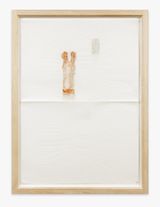
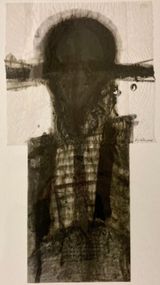
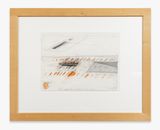
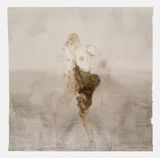
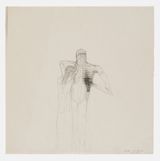
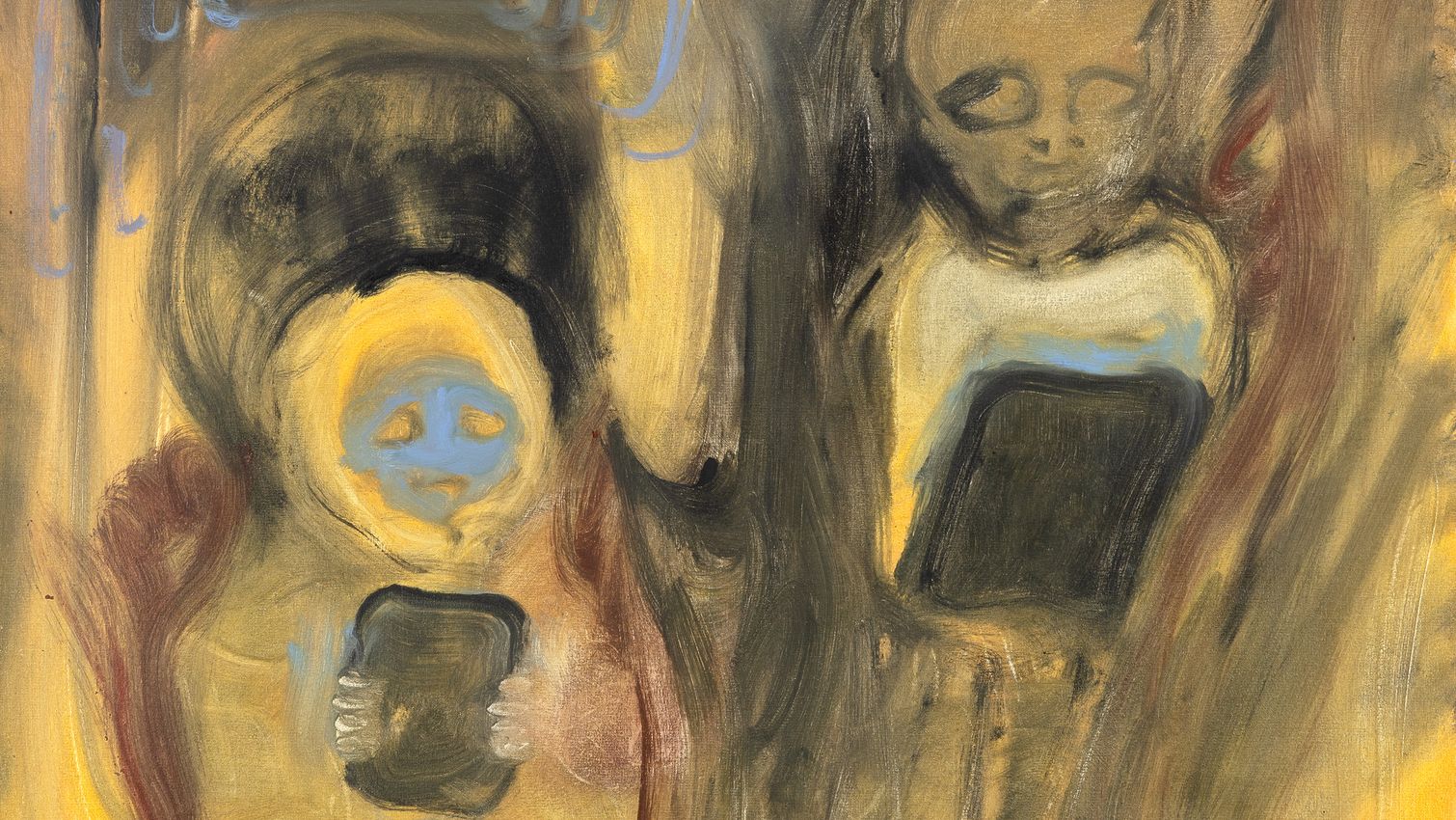
On the occasion of Berlin Art Week, Contemporary Fine Arts presents a selection of sculptures and drawings spanning different periods of Walter Pichler‘s career. Walter Pichler Zeichnungen & Skulpturen, set up by his daughter Anna Tripamer, offers a focused insight into the work of an artist whose exploration of sculpture, architecture, and space remains as compelling today as ever.
Walter Pichler was born on 1 October 1936 in Deutschnofen, South Tyrol. He lived and worked in Vienna and St. Martin an der Raab. He studied at the Kunstgewerbeschule in Innsbruck and the University for Applied Arts in Vienna. From an early age, his work was featured in prestigious international museums, including the Museum of Modern Art in New York in 1967 and 1975, Documenta 4 in Kassel in 1968, the Austrian Pavilion at the 40th Venice Biennale in 1982, the Städel Museum in Frankfurt am Main in 1978, the MAK – Museum of Applied Arts in Vienna in 1988 and 2011, the Generali Foundation in Vienna in 1998, the Stedelijk Museum in Amsterdam in 1998, the Museum der Moderne in Salzburg in 2016, the Belvedere in Vienna in 2023, and Kunstmuseen Krefeld in 2024. Pichler died in 2012 in St. Martin an der Raab.


A respected voice in contemporary art discourse.
Focusing on ambitious storytelling and insightful art-world commentary. Ocula Magazine publishes in-depth interviews, critical essays and timely analysis on the artists, exhibitions and ideas driving the global art world.
Learn more about Ocula Magazine
Showcasing the best of the art world.
Ocula partners with galleries from around the world to highlight their artists, artworks and exhibitions. Gallery membership is by application and invitation, with each member vetted by an independent panel.
Learn more about Ocula Membership

Specialises in the sale of major artworks.
Led by a team with deep ties to the world’s leading auction houses, galleries and collectors. Ocula’s advisory team offers bespoke services to high-net-worth clients from around the world who are looking to acquire the best of contemporary and modern art.
Learn more about our team and services