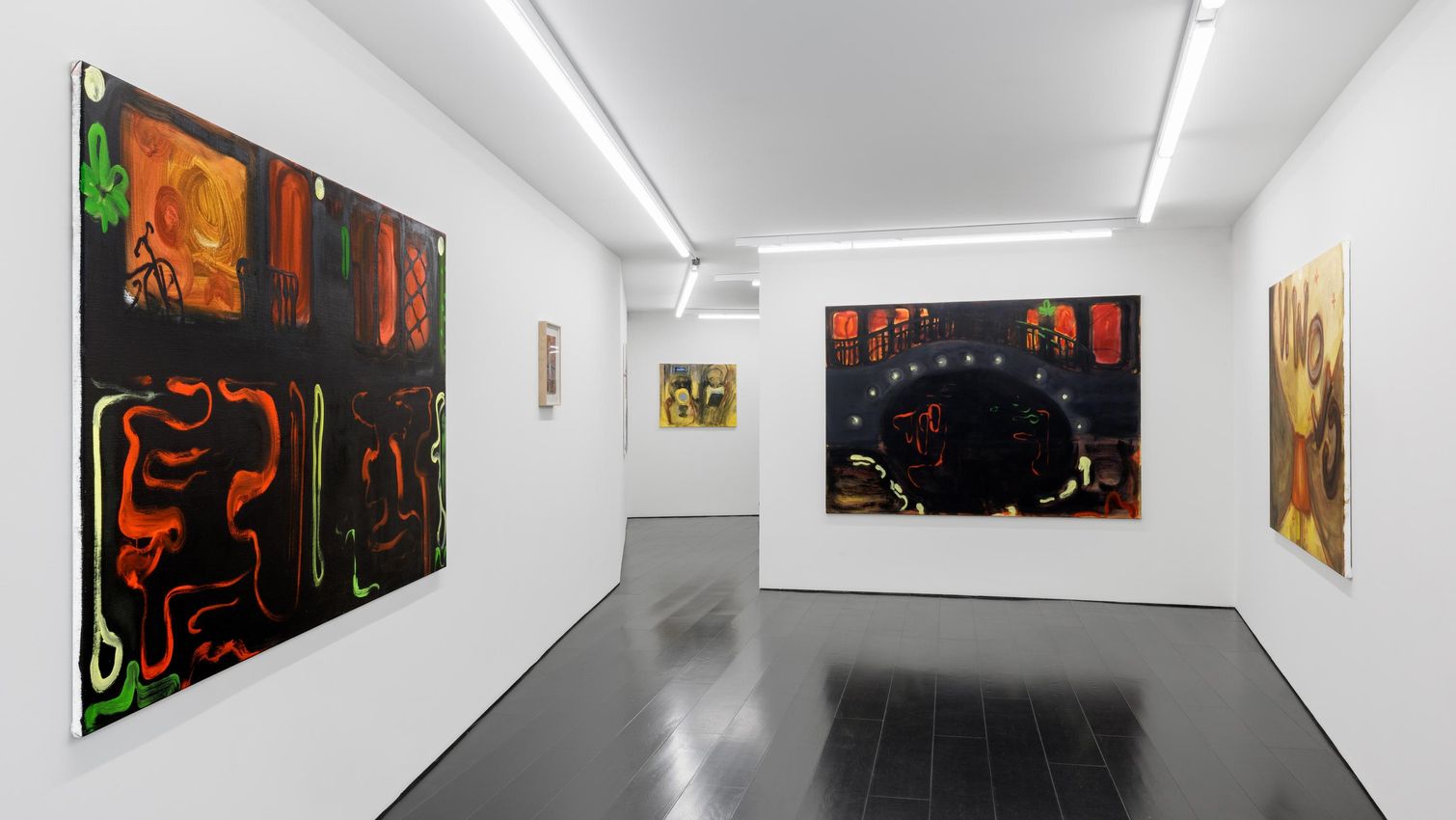
The thing about dreams is: they always have a meaning. Are you able to decipher that meaning though? Or rather, are you willing to try and make something out of the unhinged story you were just part of? And what happens when the oneiric is actually not a dream but reality?
These are not the questions I bring to Zuzanna Bartoszek__’s studio at Rijksakademie, Amsterdam but the ones I leave with.
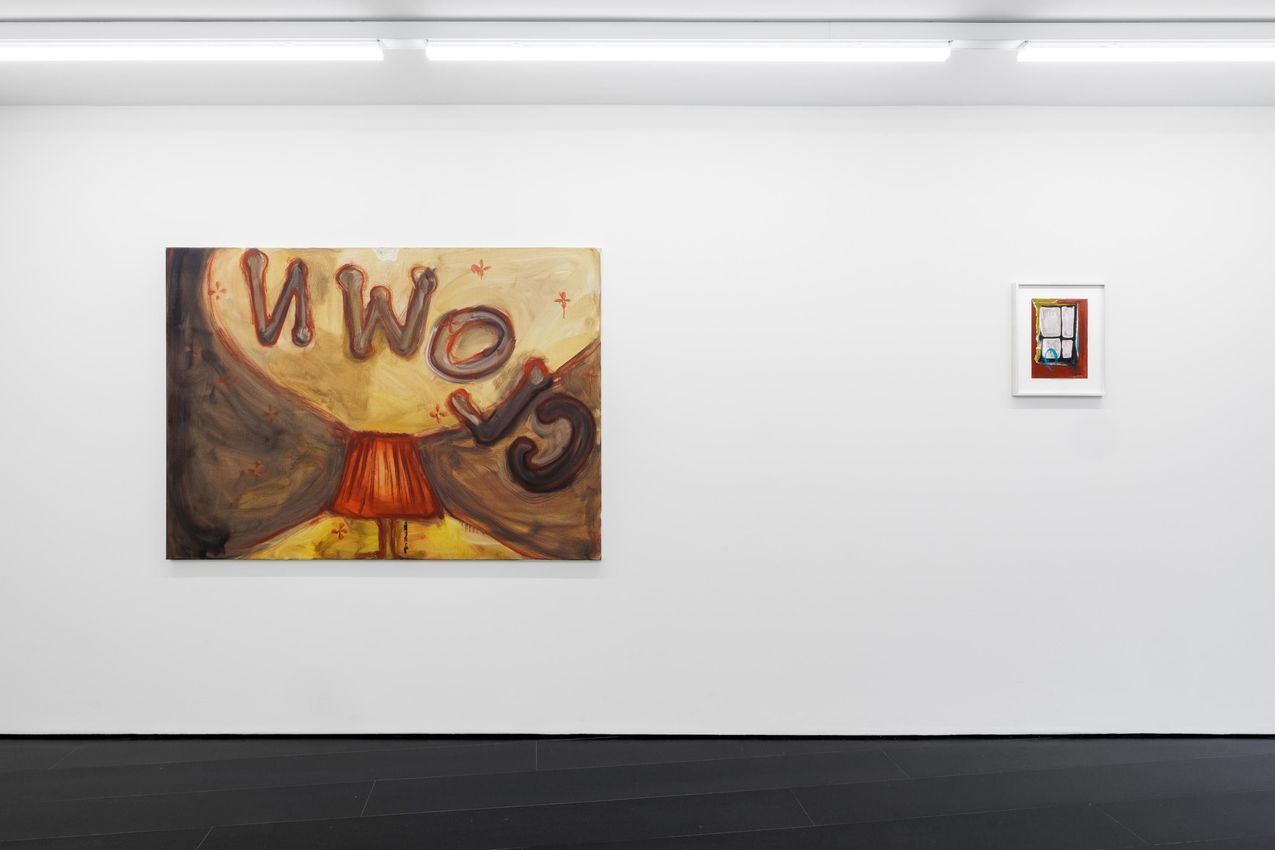
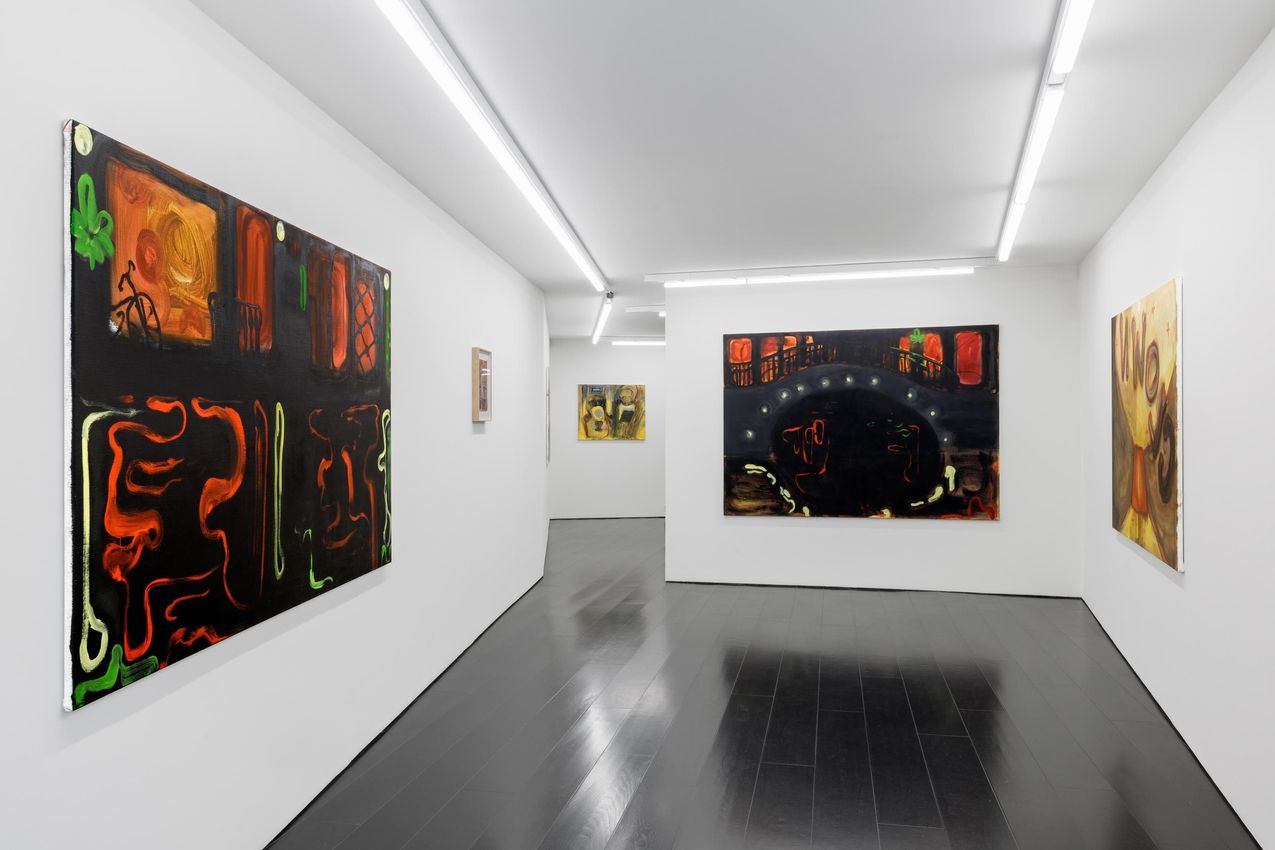
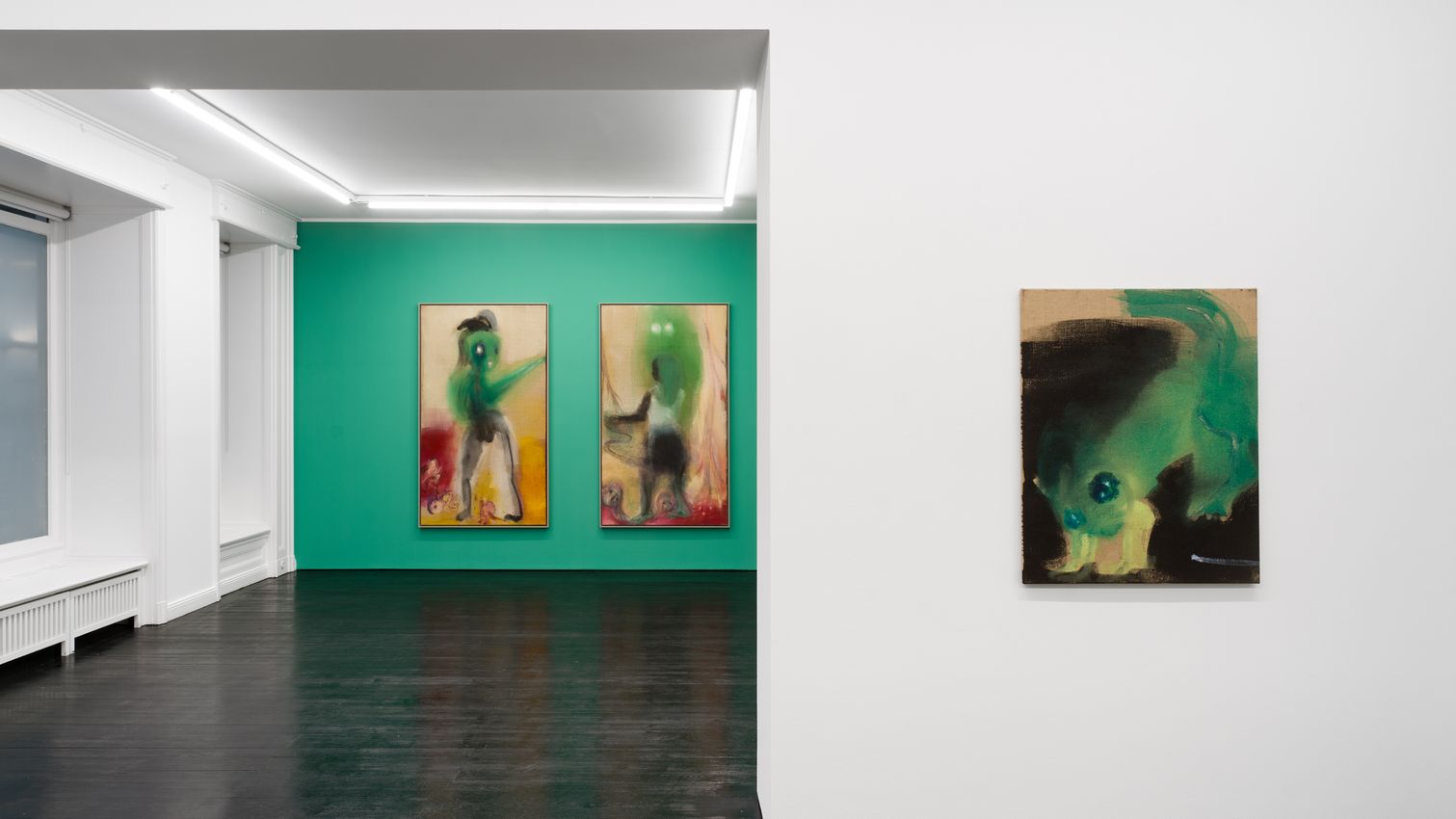
The artist’s work is full of elements that make you question reality: Paintings showing alien-like children glued to their phones, a sun with spikes, abstracted reflections in Amsterdam’s red light district. Short stories about an apartment made up only from printed fabric, a dying fish’s struggle, hiding from the sun, pretending to do fentanyl.
“It may seem abstract but there is usually a quality in the stories that reflects how I feel or what I saw”, the artist tells me. The link to Surrealism seems obvious; the fusion of reality and dreams into a surreality that Andre Breton famously demanded in his 1924 Surrealist Manifesto. When asked about this connection, Bartoszek, however, is not convinced: “Dreams are very important to me and I consider my work very dreamlike, but I’m not trying to make up things – like the surrealists did – and create something apart from myself, I’m looking for metaphors”
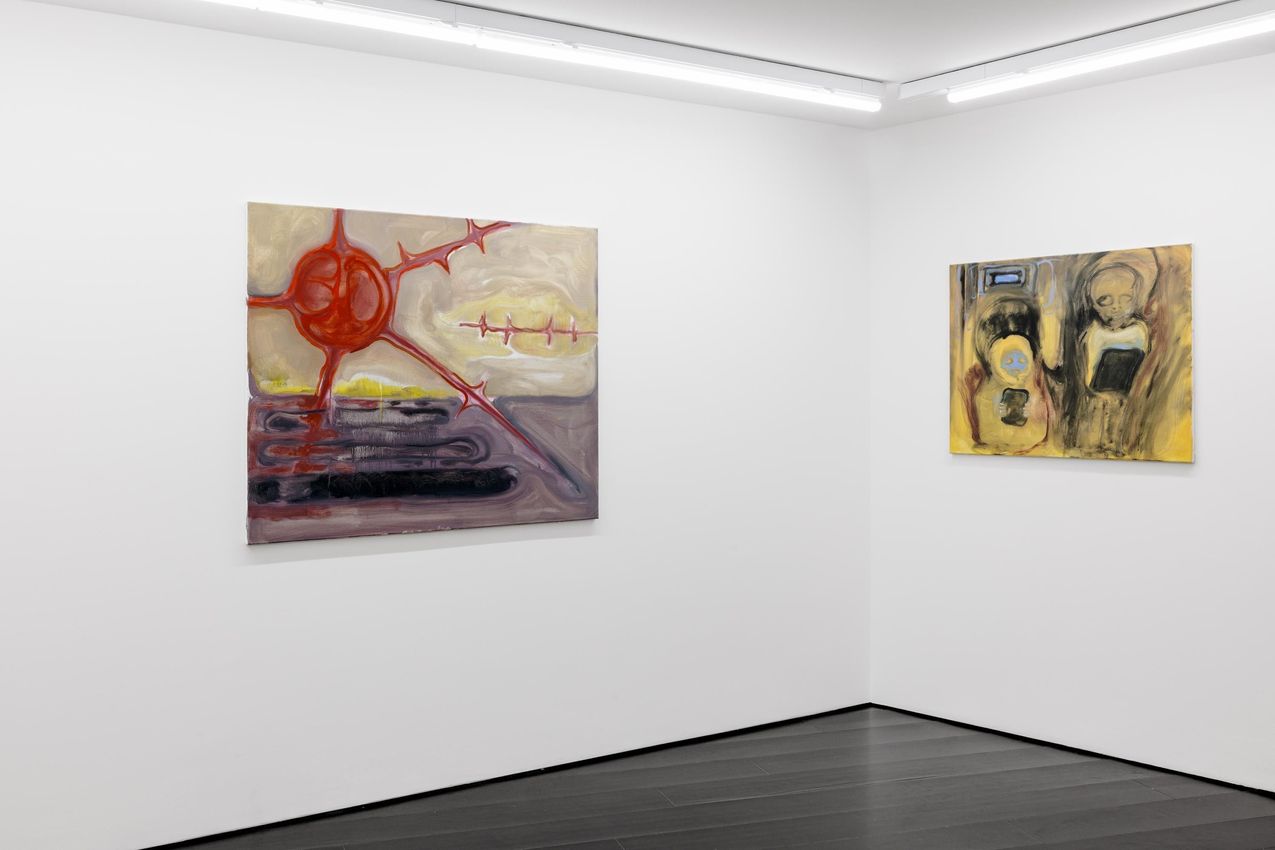
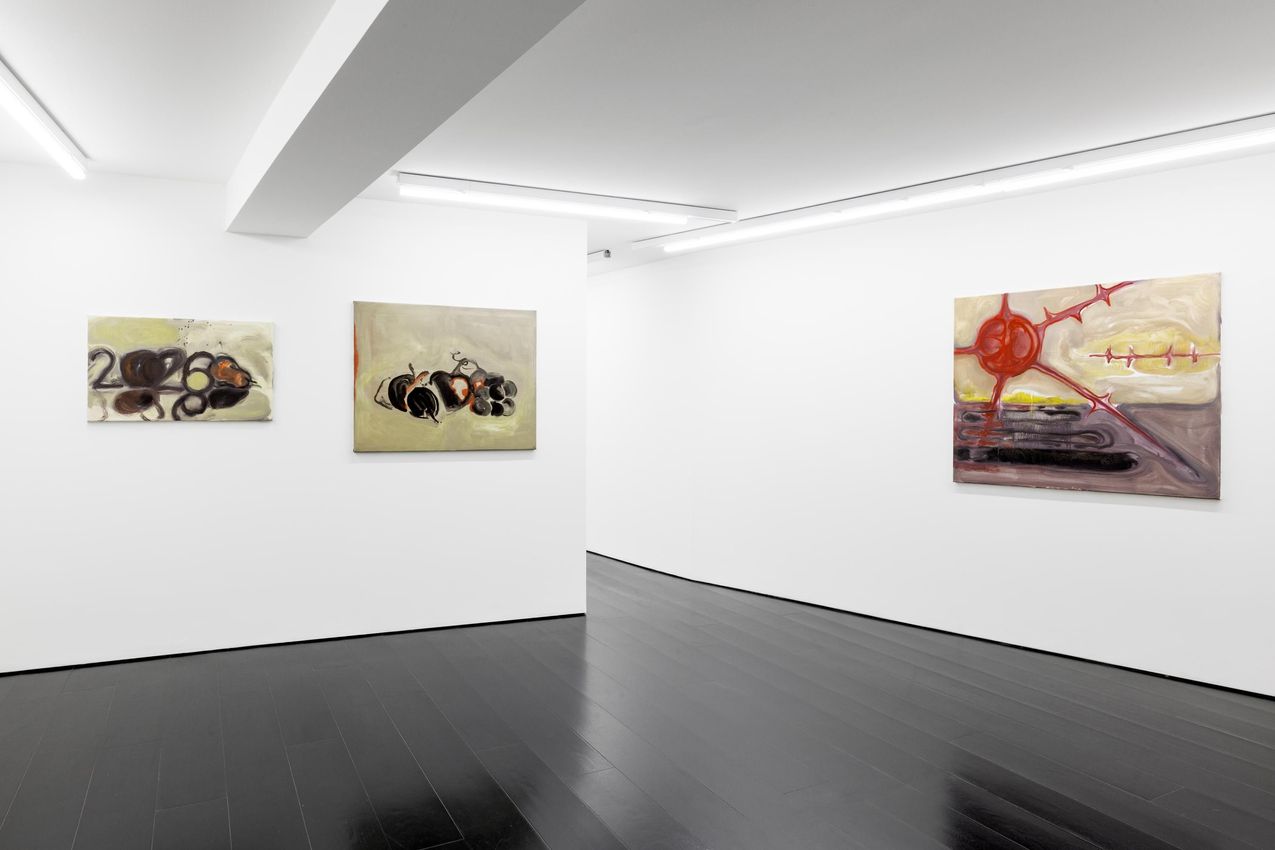
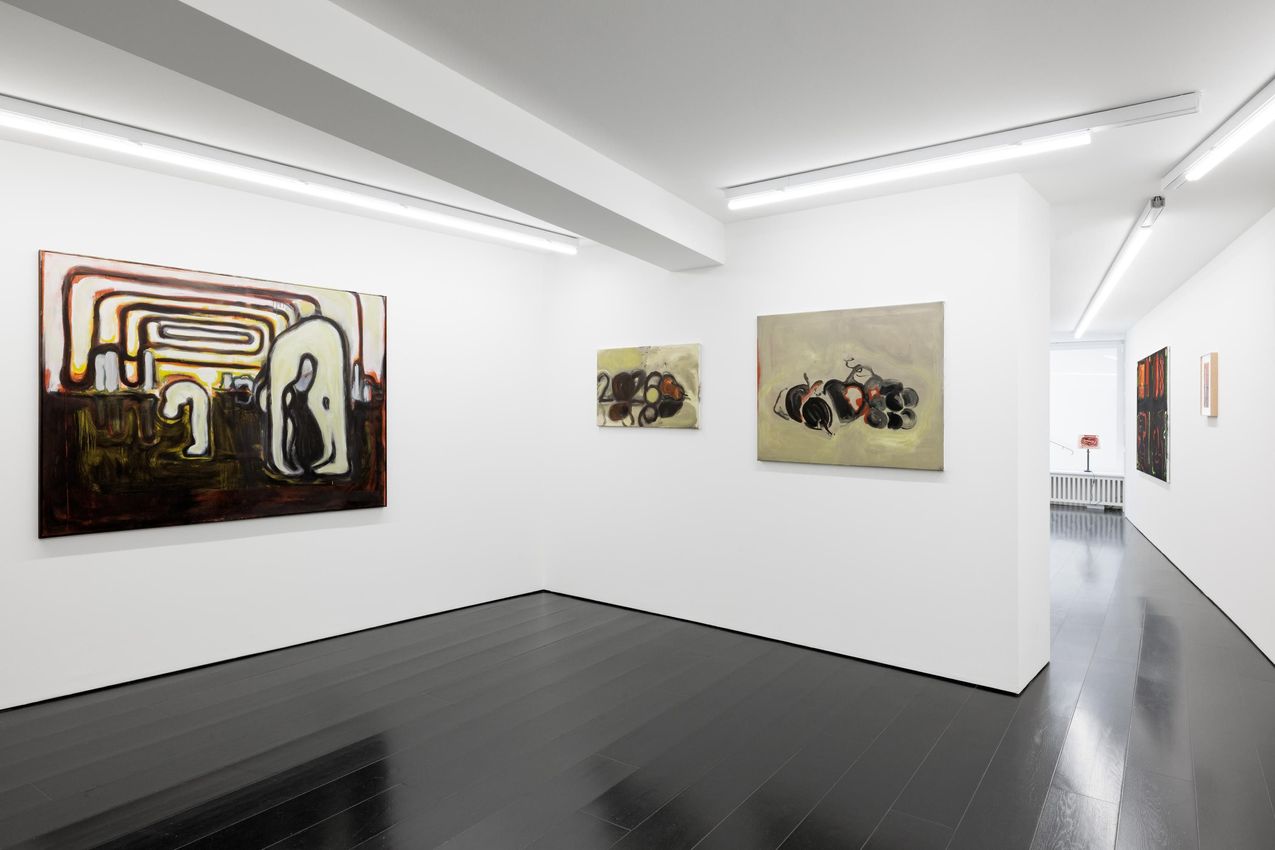
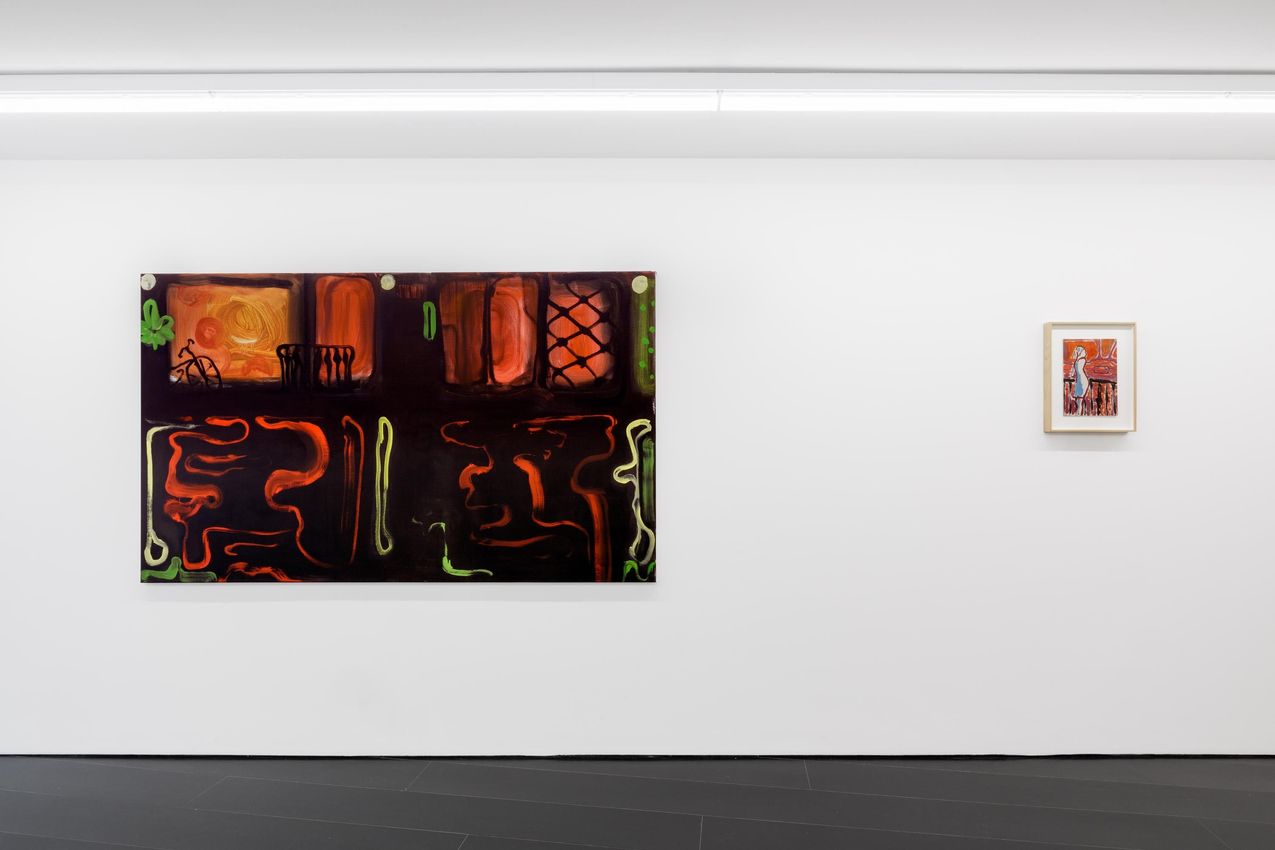
This fusion of reality and metaphor, so to speak, runs through both her writing and painting practice. A closer look at her text Under the Spiky Sun, accompanying her eponymous exhibition at Contemporary Fine Arts, Basel, illustrates the artist’s metaphoric approach to processing personal reality and daily observations. It brings together all the seemingly unrelated elements present in the exhibition’s paintings: the spiky sun, fentanyl, babies, screens and lamps.
Staying at home has always been a big part of her life since she was a child – preferring to draw in solitude over going out to play with friends. This was only reinforced by the development of autoimmune diseases at the age of 12 that caused the artist to lose all her hair. Thus, for Bartoszek, the sun really has spikes. Her highly sensitive skin forbids her from enjoying it.
Out of this experience, the artist started writing a diary – the origin of her writing practice and the foundation of an ongoing need for self-expression on paper.
The outside world, however, is not overlooked by the artist. Observations find their way into her thinking, mixing into her thoughts and work, rendering it multi-perspectival – bigger than herself.
Asked if she actively tries to take other perspectives when painting and writing, she replies: “I do. It’s something very primal for me. My mother was a huge empath. She raised me so that seeing something from someone else’s perspective comes easily to me.”
When living in Berlin, the artist encountered people on fentanyl on the street. A sight most people hurry to get by finds a way into her paintings and writing. She faces them not in a judgemental way, but with a sensitive curiosity.
Perhaps it is this interplay of empathy and introspection that is the source of Bartoszek’s intrinsic need to create, to escape into her own world where life is processed and experiences become metaphors. “I think that’s why I need to hide myself or to find this shelter outside of society, which is my studio. My practice is very lonely and I’ve always been protecting this loneliness. It’s something very precious to me.”
When she is alone and it’s time to paint, everything happens fast. The accumulated emotions have created urgency, resulting in gestural and intuitive works. The use of diluted paint allows for a quick, intuitive rendering of the images in her head. “Expression instead of narration,“ as the artist puts it. To her, the process of painting is not about capturing finished thoughts on canvas but an active part of reflection. Experiences are not processed through meticulously portraying them but through a conversation with chance, opening up meaning, allowing for new perspectives and metaphors to emerge.
This is visible in the painting Kids and Phones (2026), for example. The odd and simultaneously familiar sight of children hypnotised by screens serves Bartoszek as a point of departure for this highly gestural portrait. Its expressive, one might even say “escapist” execution is marked by peculiar features: the skull-like faces, the matryoshka-like rendering of the figure on the left, the repeated blue in one child’s phone, another’s face, and the warping shape in the upper left corner.
What could be quickly dismissed as a clear critique of her subject becomes something bigger, opening onto a sea of associations: science fiction, digital escapism, apocalyptic futures. Looking closer, the scenery also emits a sheltered, caring feeling. The expressive background envelops the figures in a way that hovers between purgatory and the warmth of a blanket.
It is this dichotomy between clarity of subject and manifold means of interpretation that is characteristic of Bartoszek’s work. When asked about what parallels she sees between her painting and writing, Bartoszek refers to exactly this “fluidity” – what spontaneous and loose brushstrokes are to her paintings is changing lyrical “I’s” to her texts. The result is a unique merger of personal and contemporary elements in her work, providing us with metaphors but not fixed meaning.
Text by Jonas Sanden

A respected voice in contemporary art discourse.
Focusing on ambitious storytelling and insightful art-world commentary. Ocula Magazine publishes in-depth interviews, critical essays and timely analysis on the artists, exhibitions and ideas driving the global art world.
Learn more about Ocula Magazine
Showcasing the best of the art world.
Ocula partners with galleries from around the world to highlight their artists, artworks and exhibitions. Gallery membership is by application and invitation, with each member vetted by an independent panel.
Learn more about Ocula Membership

Specialises in the sale of major artworks.
Led by a team with deep ties to the world’s leading auction houses, galleries and collectors. Ocula’s advisory team offers bespoke services to high-net-worth clients from around the world who are looking to acquire the best of contemporary and modern art.
Learn more about our team and services