Contemporary Fine Arts is pleased to announce the second solo exhibition of internationally renowned artist Leiko Ikemura at its Berlin gallery.
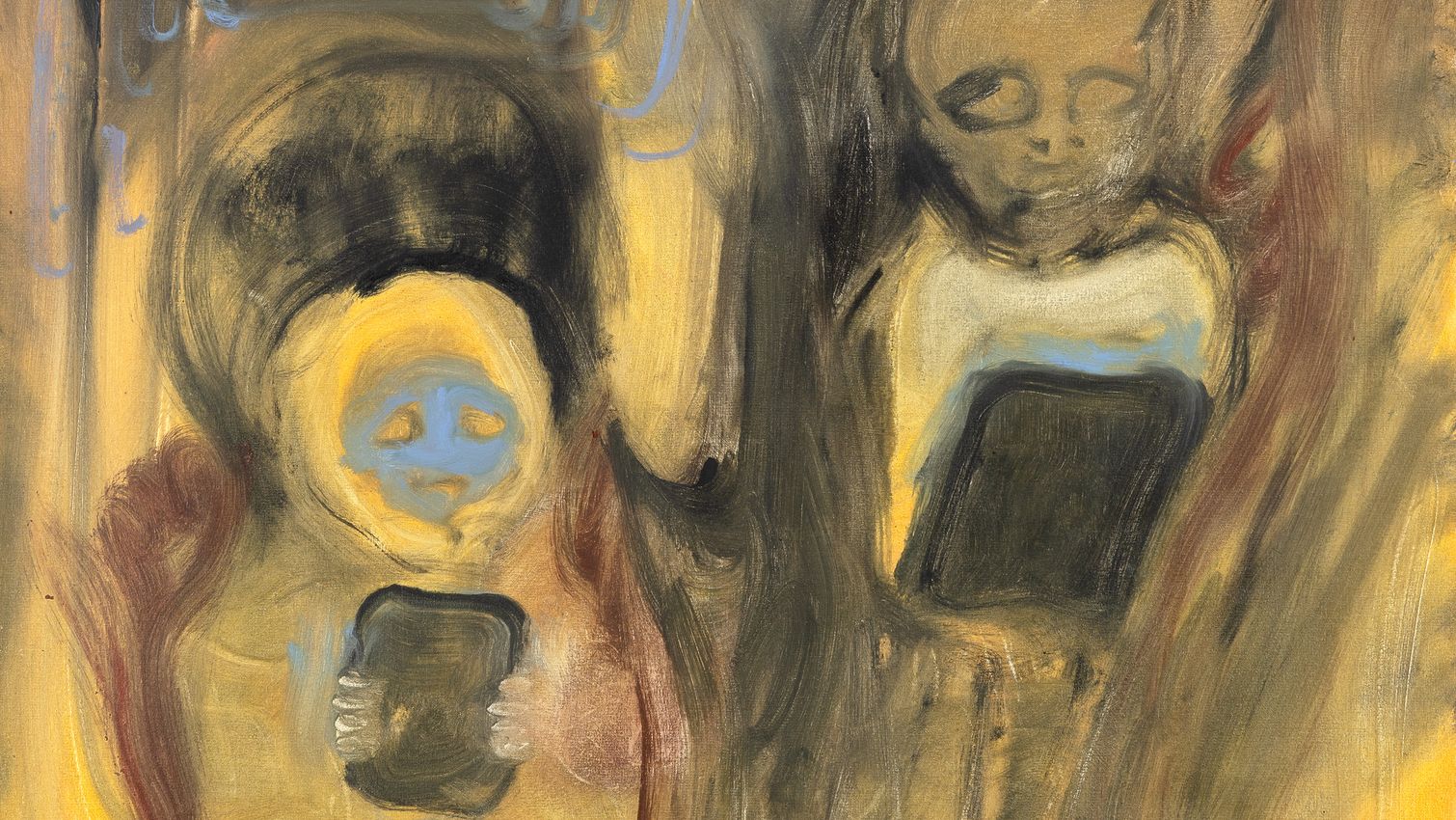
Under the title de sensu, Ikemura presents new paintings and sculptures that explore the relationship between perception, body, mind, and space. The Latin title – de sensu, “through the senses” – refers to a central theme of the exhibition: the experience of the world beyond the purely visual. The suggestion of touch, imagined sounds, and scents seeks to expand perception synesthetically, inviting viewers to understand their own bodies as part of a larger spatial and social context.
Beginning from a state of uncertainty, Ikemura explores the possibility of finding new orientation in a world shaped by constant change. The sharpening of the senses appears here as a process of searching and rediscovering – an awakening of awareness of one’s surroundings.
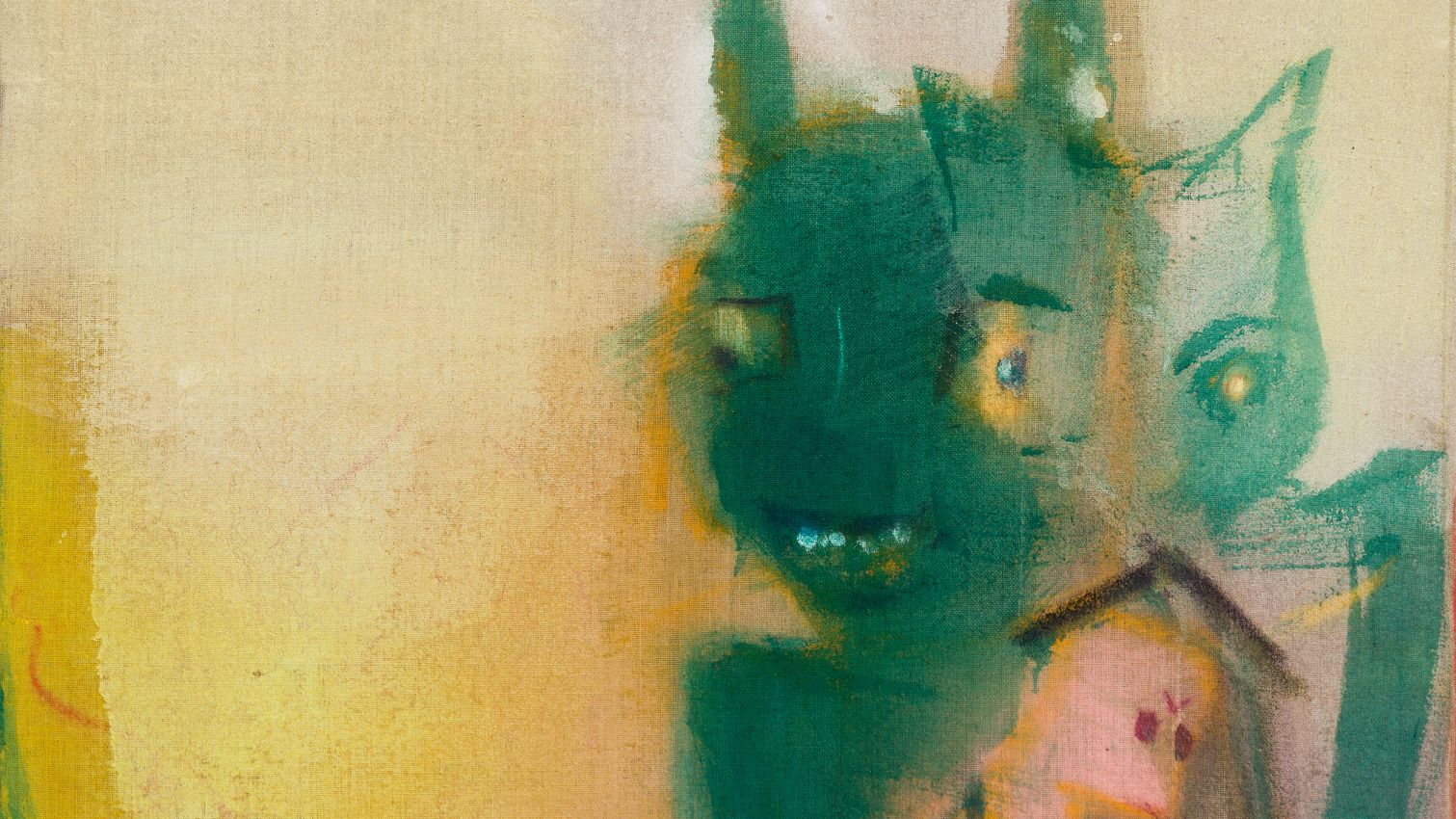
The spatial design of the exhibition is shaped by three green figures – Green Baby, Green Mom, and Dear Spirit. Green walls and accents of yellow and dark blue light create an atmosphere reminiscent of the transition from day to night, evoking the cycle of becoming and passing away. The figure in mamagirl appears to accompany this liminal space as a vigilant presence.
With her new sculpture Milk Lady, Ikemura deepens her exploration of care, transformation, and renewal. The figure absorbs energy and releases it again as nourishment for new life. In this way, the exhibition suggests a creaturely cycle without beginning or end.
Since the 1980s, Leiko Ikemura has explored themes of transition, transculturality, and collective consciousness beyond the boundaries of nations and gender. Her practice moves seamlessly between luminous and often monumental paintings, introspective drawings and watercolours, glazed terracotta sculptures, glass, and ceramics.
Ikemura’s figures, which often appear as female spirits, can be read as childlike, defiant, and independent, yet at the same time fragile and ethereal. They seem to possess the power to exist in multiple worlds. Mythical hybrid creatures, somewhere between human and animal, populate her artistic universe. The ubiquitous Usagi motif, for example, combines rabbit ears with a human female body. First created by Ikemura in response to the nuclear disaster in Fukushima, the motif embodies universal suffering, resilience, and renewal.
The East Asian Sansuiga tradition of landscape painting, the masters of old Japan, Surrealism, post-war abstraction, and the figurative painting of the 1980s, which she helped shape, all serve as sources of inspiration for the artist and merge as influences within her work.
Leiko Ikemura was born in Tsu, Mie Prefecture, Japan, and lives and works in Berlin. She studied at Osaka University of Foreign Studies and at the University of Fine Arts in Seville before settling in Europe. From 1991 to 2015, she was Professor of Painting at the Berlin University of the Arts.
Ikemura’s works are held in major international museum collections, including the Centre Pompidou, Paris; the National Museum of Modern Art, Tokyo; Kunstmuseum Basel; and Museum Kunstpalast, Düsseldorf. Her most recent solo exhibitions include Motherscape, Albertina, Vienna (2025); Das Meer in den Bergen, Kunstmuseum Chur (2025); Rising Light / Frozen Moment, Museum of Contemporary Art Tokyo (2024–2025); Floating Spheres, Kunsthalle Emden (2024); When Animals Become Art, The Feuerle Collection, Berlin (2023); año del usagi, Museo de Arte de Zapopan, Guadalajara, Mexico (2023); Witty Witches, Georg Kolbe Museum, Berlin (2023); and Towards New Seas, Kunstmuseum Basel (2019). In 2025, she was awarded the title of “Person of Cultural Merit” by the Japanese government.
Leiko Ikemura is a Japanese Swiss contemporary artist known for poetic paintings, sculptures, drawings, and glass works that merge human, animal, and landscape forms into hybrid, transitional figures. Her artworks explore themes of cross-cultural identity, ecology, femininity, and the fragile relationship between humans, nature, and cosmic space, often through spectral girl-like bodies and rabbit–human beings.


A respected voice in contemporary art discourse.
Focusing on ambitious storytelling and insightful art-world commentary. Ocula Magazine publishes in-depth interviews, critical essays and timely analysis on the artists, exhibitions and ideas driving the global art world.
Learn more about Ocula Magazine
Showcasing the best of the art world.
Ocula partners with galleries from around the world to highlight their artists, artworks and exhibitions. Gallery membership is by application and invitation, with each member vetted by an independent panel.
Learn more about Ocula Membership

Specialises in the sale of major artworks.
Led by a team with deep ties to the world’s leading auction houses, galleries and collectors. Ocula’s advisory team offers bespoke services to high-net-worth clients from around the world who are looking to acquire the best of contemporary and modern art.
Learn more about our team and services