



‘I Prefer Poetry to Pedagogy’: Tadashi Kawamata Comes to Frieze London
The Japanese artist is known for making work with reclaimed materials. At Frieze London, he shares the creative concepts behind his new permanent works at Ruinart’s headquarters in Reims. Save to My OculaTadashi Kawamata’s reclaimed-timber structures offer an alternative definition of shelter. Huts perch in trees and nests attach to buildings’ façades, finding support in existing structures. They suggest a place to retreat, but their precarious, exposed positions put the promise of protection in doubt.
Born in Hokkaido in 1953, Kawamata has spent more than four decades making installations in public spaces and historic sites worldwide. In 1987, for documenta 8, Kawamata built Destroyed Church from scrap timber amid the remains of Kassel’s war-damaged Garnisonkirche. Planks crossed and jutted out at opposing angles, as though the building were breaking apart. The construction seemed held at the point of collapse, making the site’s history of violence physically present.
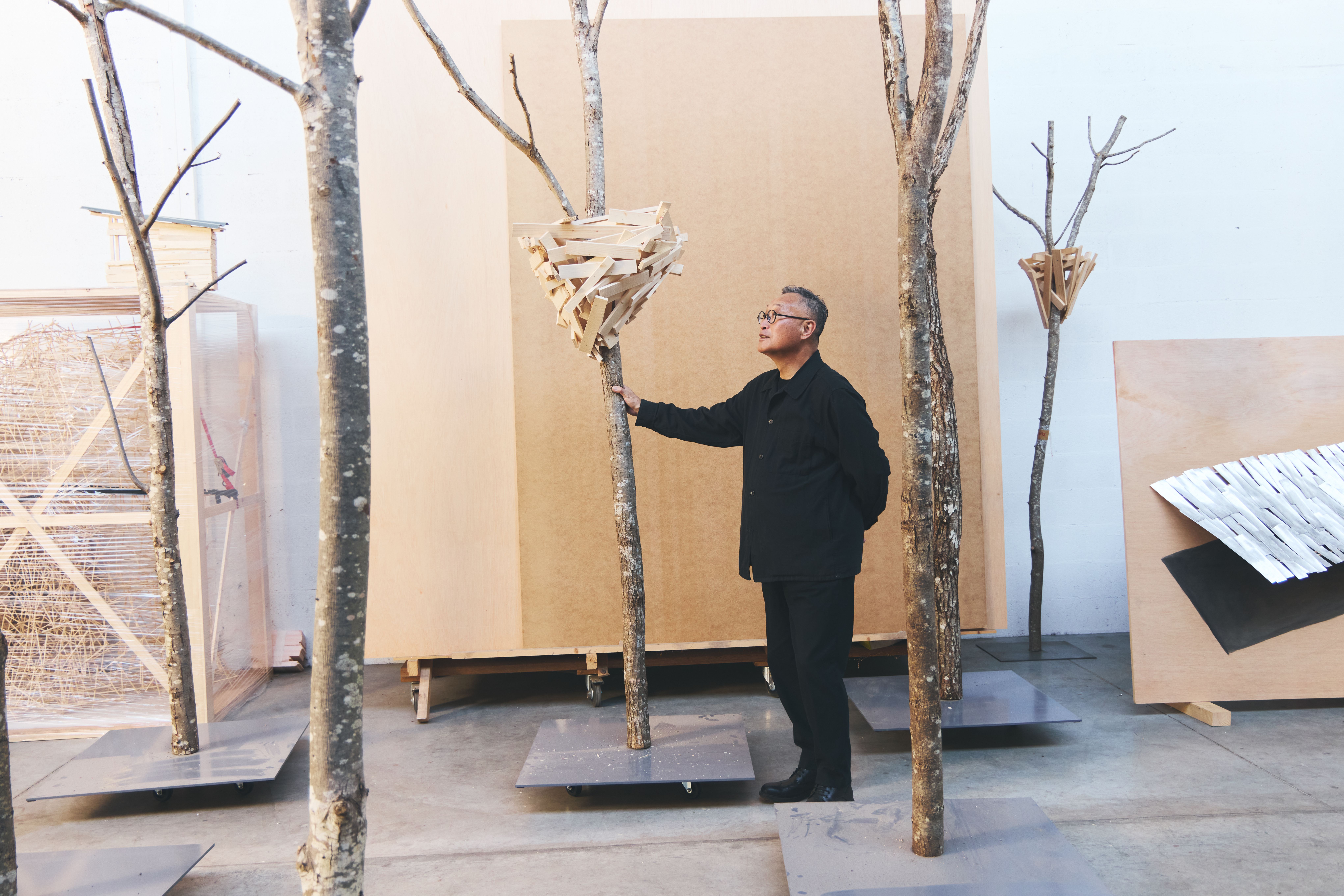
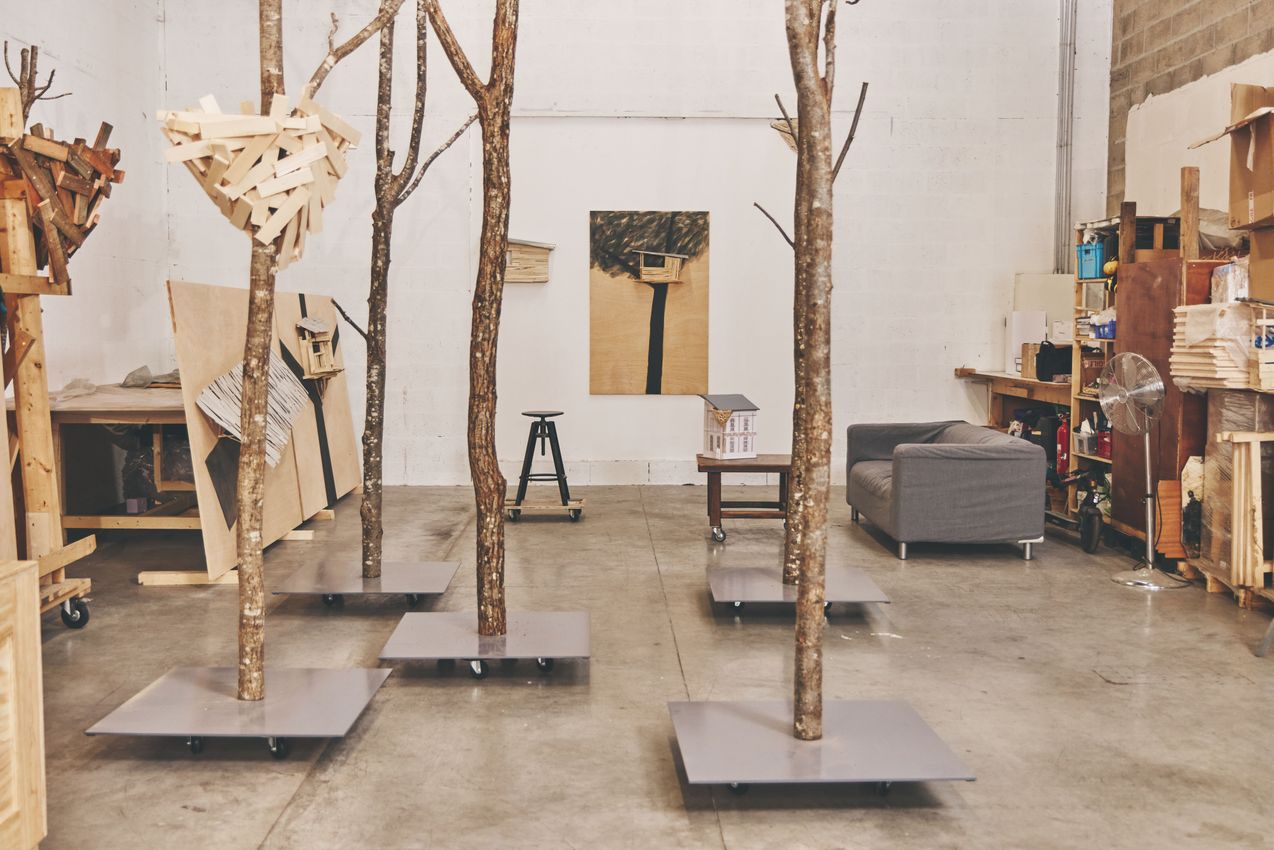
At Frieze London (14–18 October 2026), Kawamata will present a site-specific installation in the Ruinart Art Bar, alongside drawings and models informed by his visit to Ruinart’s Reims headquarters as part of the Champagne brand’s Conversations with Nature programme.
The drawings and models represent early ideas that went on to form the three permanent works that now occupy Ruinart’s site at 4, Rue des Crayères in Reims. Nest—the latest iteration of Kawamata’s series of ephemeral, site-specific installations with this name—projects from a corner of the historic building, high above the ground. Short, overlapping planks form a bulging enclosure that narrows to a point. Their ends jut out at different angles, interrupting the façade’s regular arrangement of windows. The form recalls Ruth Asawa’s suspended looped-wire sculptures, inspired by on plants and spiders’ webs: in both, enclosure emerges through the accumulation of small, repeated gestures.
Tree Hut is more recognisably a cabin, with plank walls, a sloping roof and a rectangular opening. It sits on a projecting platform, with timber braces beneath it and branches spreading around it. Shadows of leaves fall across the walls, making the tree part of the cabin’s surface as well as its support.
Above the chalk cellars, where Ruinart Champagne is stored, the six-metre-tall Observatory rises from a narrow base into a broader, circular viewing platform. Upright planks surround the lookout, with gaps opening on to the sky. The elevated view of the grounds comes with exposure to light, air and changing weather.
In Giuseppe Penone’s Alpi Marittime series (1967–1968), a tree grows around a metal cast of the artist’s hand, gradually taking it into the trunk. Kawamata’s hut also rests on a living support that keeps changing after construction ends. “The wind, rain, sun and gravity are all part of my sculptures,” Kawamata says. Wood changes colour as it weathers; the tree supporting the hut continues to grow.
Reclaimed timber retains nails, dents and grooves from its previous uses, according to the artist. In smaller models and collages, fragments of wood and cardboard carry Kawamata’s architectural thinking into another scale. Miniaturisation changes the relationship between a structure and the hand, bringing its joints and construction within reach.
Kawamata hopes these shifts in scale will encourage a more modest sense of our place in the landscape. Feeling small, he suggests, makes an insect, leaf or shadow easier to notice. Asked whether art can draw attention to nature’s fragility, he says: “I prefer poetry to pedagogy.”—[O]
Conversations with Nature (14–18 October 2026) at the Ruinart Art Bar at Frieze London
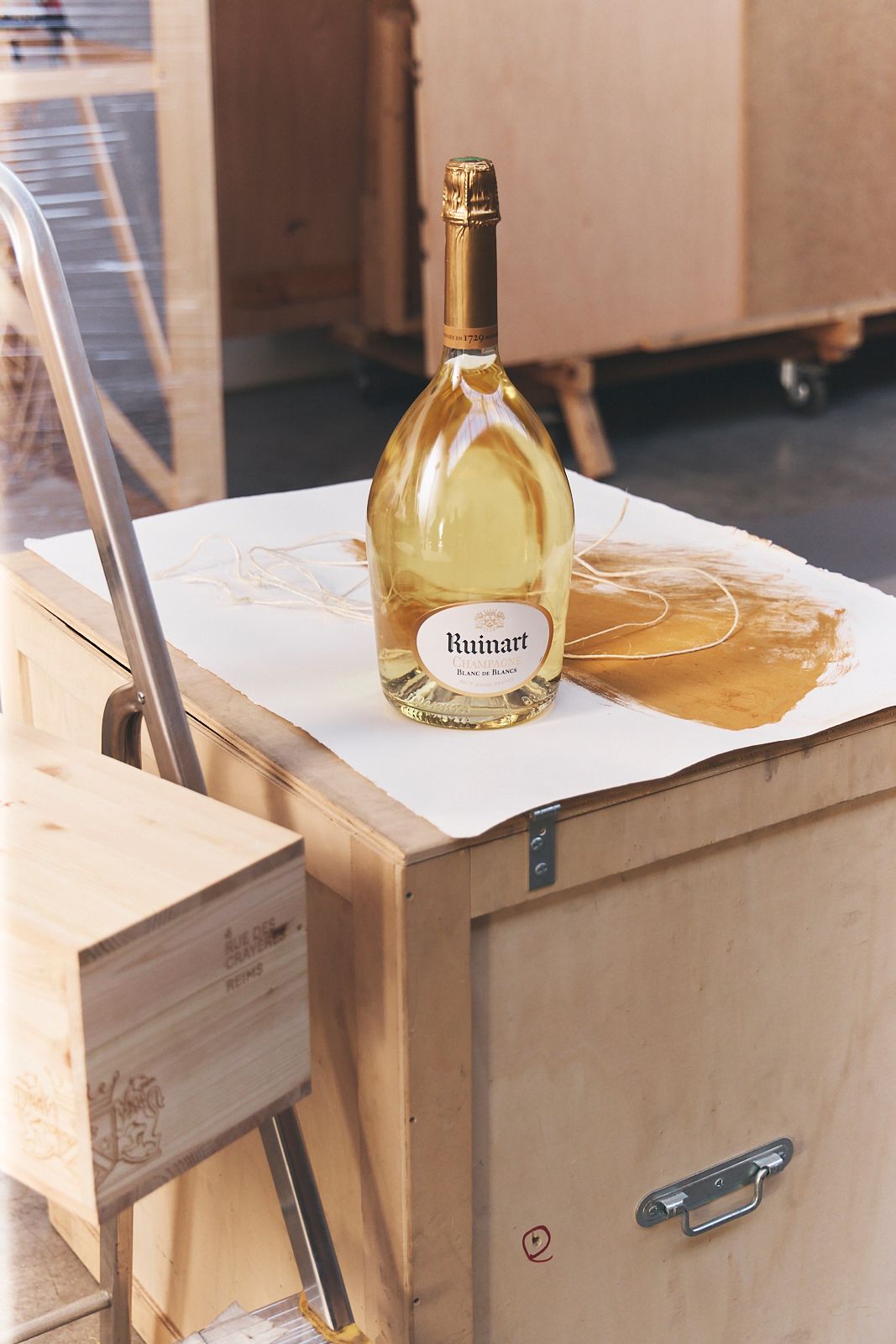
Main image: Tadashi Kawamata’s studio. Courtesy Ruinart.






A respected voice in contemporary art discourse.
Focusing on ambitious storytelling and insightful art-world commentary. Ocula Magazine publishes in-depth interviews, critical essays and timely analysis on the artists, exhibitions and ideas driving the global art world.
Learn more about Ocula Magazine
Showcasing the best of the art world.
Ocula partners with galleries from around the world to highlight their artists, artworks and exhibitions. Gallery membership is by application and invitation, with each member vetted by an independent panel.
Learn more about Ocula Membership
Specialises in the sale of major artworks.
Led by a team with deep ties to the world’s leading auction houses, galleries and collectors. Ocula’s advisory team offers bespoke services to high-net-worth clients from around the world who are looking to acquire the best of contemporary and modern art.
Learn more about our team and services