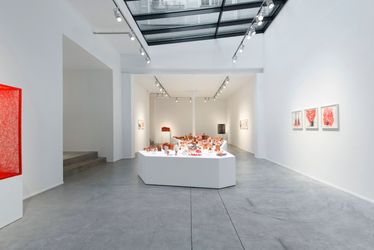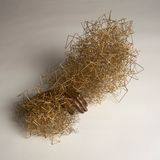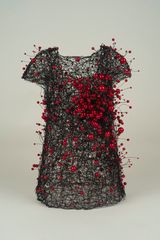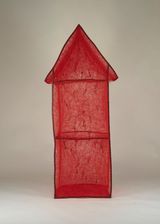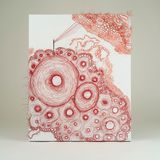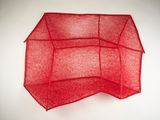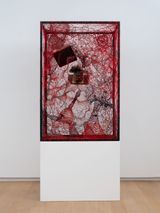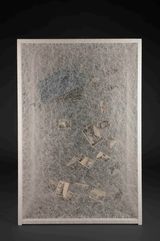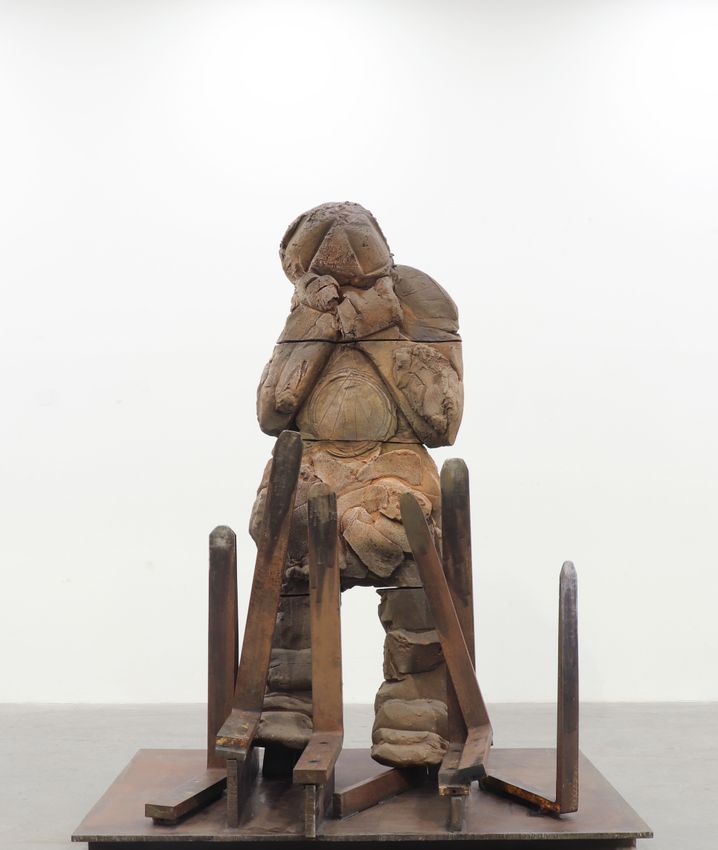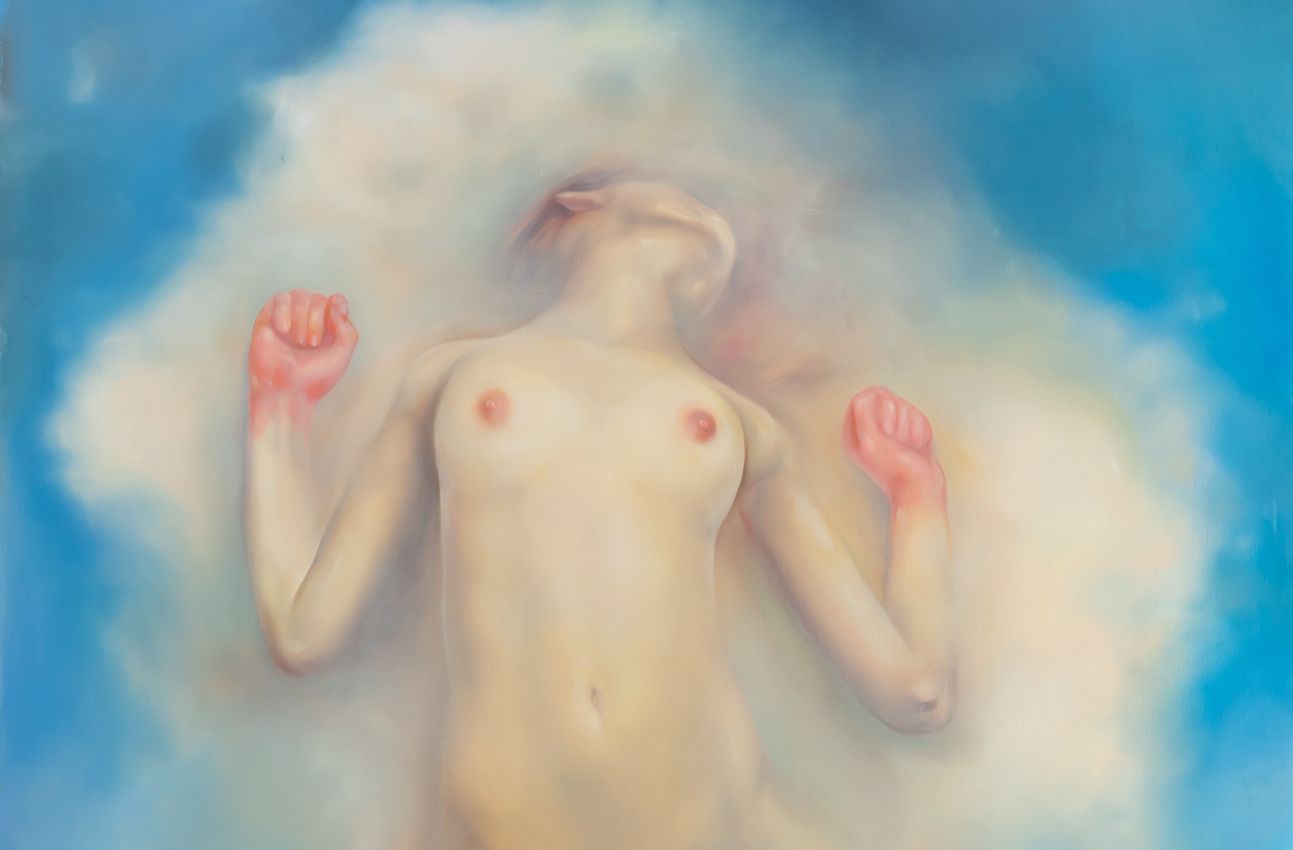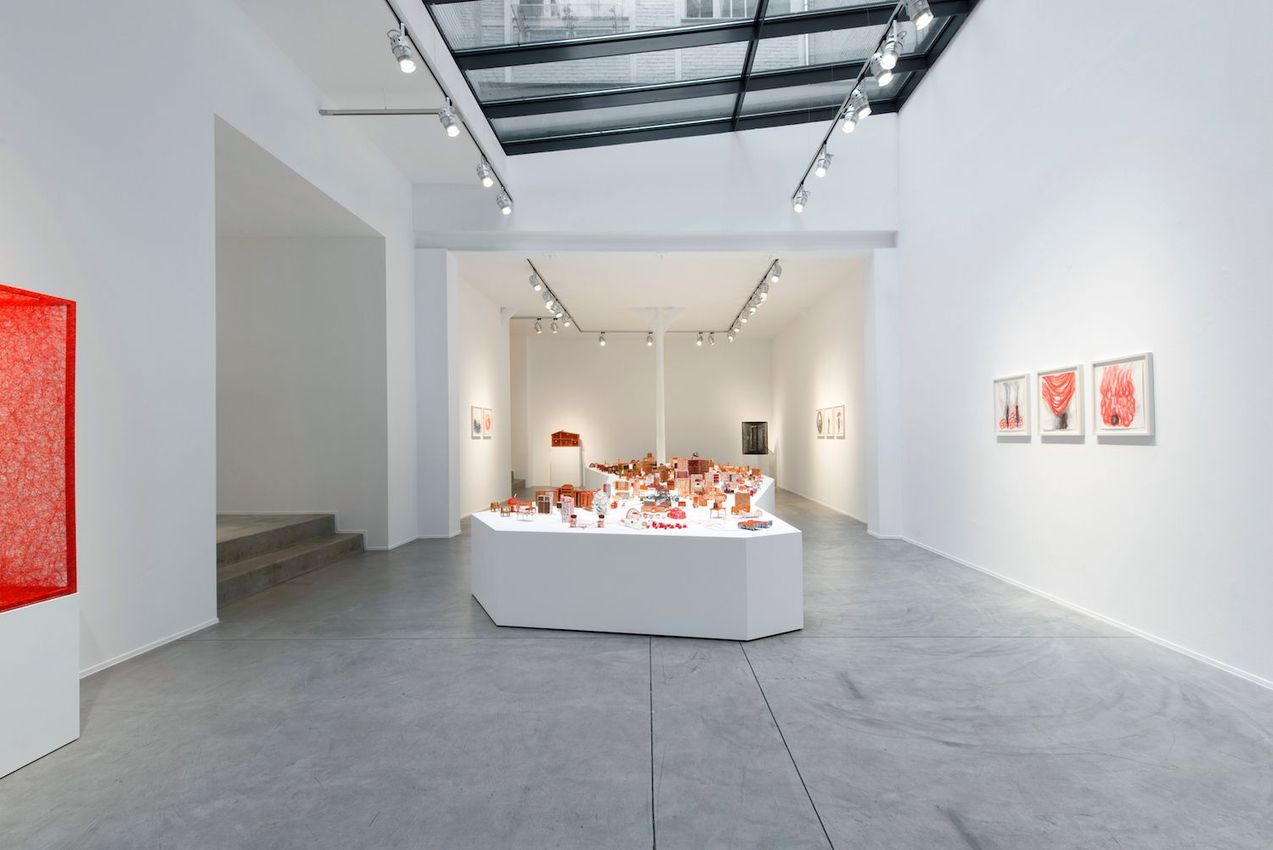
Like many artists confronted to the global lockdown, Chiharu Shiota has found her thoughts turning to domestic spaces and the family cocoon. Living Inside features a group of new works, both intimate and delicate, exploring the notion of home and the fragmentation of our daily reality.
Celebrated around the world for her spectacular installations made of woven thread, the Japanese artist suddenly had to call a halt to her constant travels, staying put for the first time in over 15 years. In isolation in Berlin where she has been living for many years, she has experienced this momentary stop as an echo to many of her familiar themes: immobility, silence, seclusion and the uncertainty of destiny.
An artist who has long been haunted by the question of the invisible ties between beings, illness and transcendence, she reveals in this new exhibition a novel approach to sculpture. Using doll’s houses, miniature furniture and window frames, her recent work plays on the notion of scale, recollection and our secret bond with everyday objects.
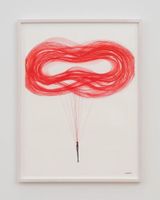
In response, a series of new drawings created in the solitude of the deserted studio, stage relationships between enigmatic figures. Trapped in accumulations of waves or spirals, spectral characters seem interlinked by red or black threads, a metaphor for the ties between spirits.
Chiharu Shiota manipulates these miniature worlds, seemingly frozen in time, both reassuring and unsettling, to invite us to meditate on this last strange year. As she explains: ‘We are connected, since we are all in the same situation. Everyone is sitting at home looking at their furniture and asking questions about the outside world, which right now has been reduced to a mere memory.’ She takes a bittersweet approach as she examines the codes of a living space that has been drastically curtailed but is already, maybe, brimming over with possibilities for inventing the new.
Born in Osaka, Japan, in 1972, Chiharu Shiota has been living and working in Berlin since 1999. After a foundation degree in painting at Seika University in Kyoto, she turned to performance and pursued her artistic studies in Berlin. Chiharu Shiota is an internationally renowned artist whose work has been exhibited for twenty years. She represented Japan at the 2015 Venice Biennale.
Her work has been the subject of numerous exhibitions including: in 2017, Where are we going?, Le Bon Marché Rive Gauche, Paris (France); in 2018, Butterfly Dream, Kyoto Art for Tomorrow, Museum of Kyoto (Japan), The Distance, Gothenburg Museum of Art, Gothenburg (Sweden), Absence embodied, Art Gallery of South Australia, Adelaide (Australia); in 2019, And Berlin Will Always Need You, Gropius Bau, Berlin (Germany), The Soul Trembles, Mori Art Museum, Tokyo (Japan), and in 2020, Push the Limits, Fondazione Merz, Turin (Italy), The Dark Side – Chi ha paura del buio?, Museo Musja, Rome (Italy), Counting Memories, Silesian Muzeum in Katowice (Poland), and her work has also being shown at the 13th Gwangju Biennale in South Korea in 2021.

Born in 1972 in the Japanese city of Osaka, Chiharu Shiota has been living and working in Berlin since 1997. She studied at the Berlin University of Fine Arts then the Hamburg University of Fine Arts and worked at Rebecca Horn’s studio and with Marina Abramovic. Her artistic language has been influenced by artists such as Louise Bourgeois, Eva Hesse and Ana Mendieta, both in terms of physical experimentation and an exploration of the unconscious, and with the choice of delicate materials like fabrics and thread, traditionally associated with femininity. Shiota’s radical and protean artistic approach explores the notions of the body, temporality, movement, memory and dreams. Her site-specific installations are often the theatre for performances designed by the artist and involving the mental and bodily participation of the viewer.


The gallery was founded in 1966 by Daniel Templon, who was then only 21. It first opened rue Bonaparte, in Saint-Germain-des-Prés in Paris, before moving in 1972 to its current location, rue Beaubourg, in the Marais, close to the Pompidou Center, which opened in 1977. Daniel Templon first gained recognition by exhibiting conceptual and minimal artists such as Martin Barré, Christian Boltanski, Donald Judd, Joseph Kosuth, Richard Serra. In the seventies and eighties, Daniel Templon was one of the pioneers of the contemporary art and introduced many important American artists to the French public: Dan Flavin, Ellsworth Kelly, Willem de Kooning, Frank Stella, Andy Warhol. The gallery quickly became one of the references in contemporary art in France. In 1972, Daniel Templon and Catherine Millet co-founded the monthly art magazine ART PRESS.

A respected voice in contemporary art discourse.
Focusing on ambitious storytelling and insightful art-world commentary. Ocula Magazine publishes in-depth interviews, critical essays and timely analysis on the artists, exhibitions and ideas driving the global art world.
Learn more about Ocula Magazine
Showcasing the best of the art world.
Ocula partners with galleries from around the world to highlight their artists, artworks and exhibitions. Gallery membership is by application and invitation, with each member vetted by an independent panel.
Learn more about Ocula Membership

Specialises in the sale of major artworks.
Led by a team with deep ties to the world’s leading auction houses, galleries and collectors. Ocula’s advisory team offers bespoke services to high-net-worth clients from around the world who are looking to acquire the best of contemporary and modern art.
Learn more about our team and services