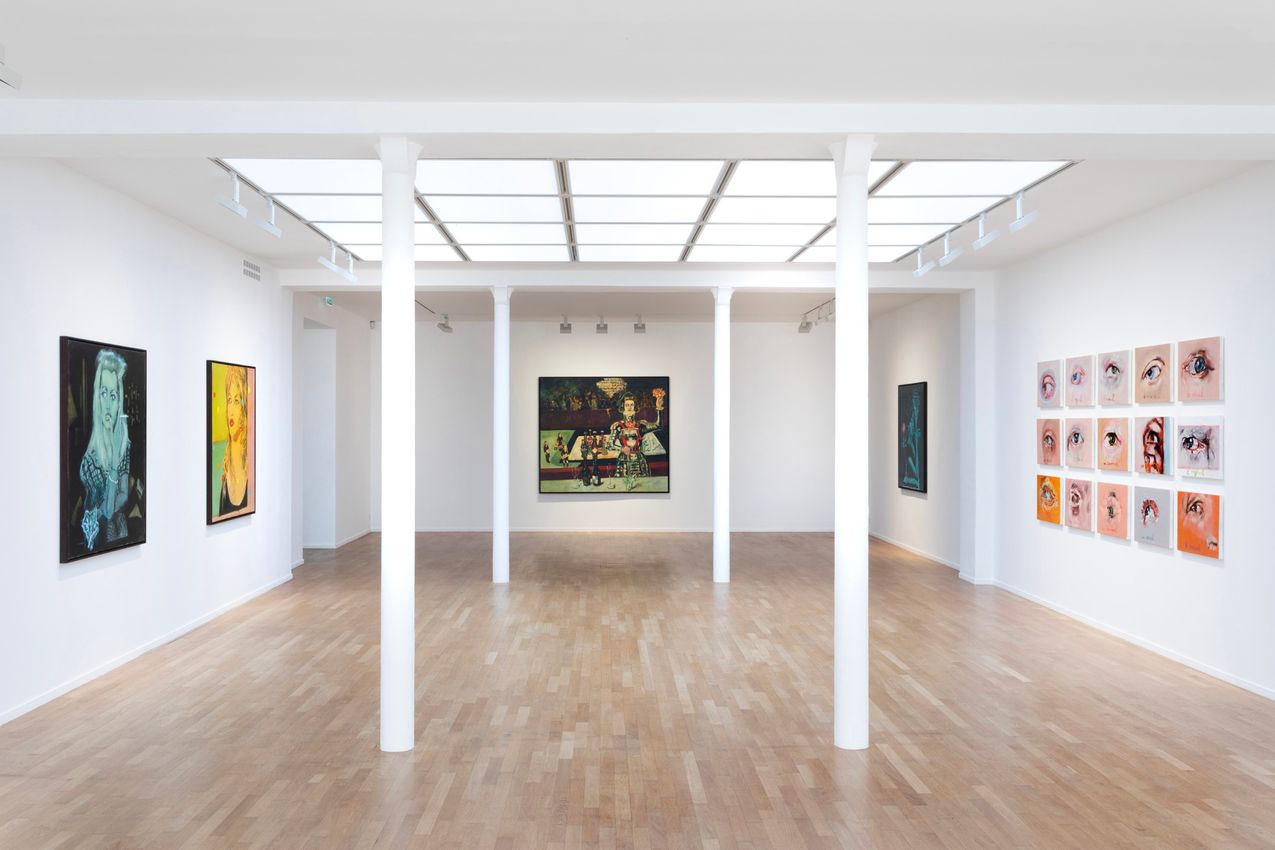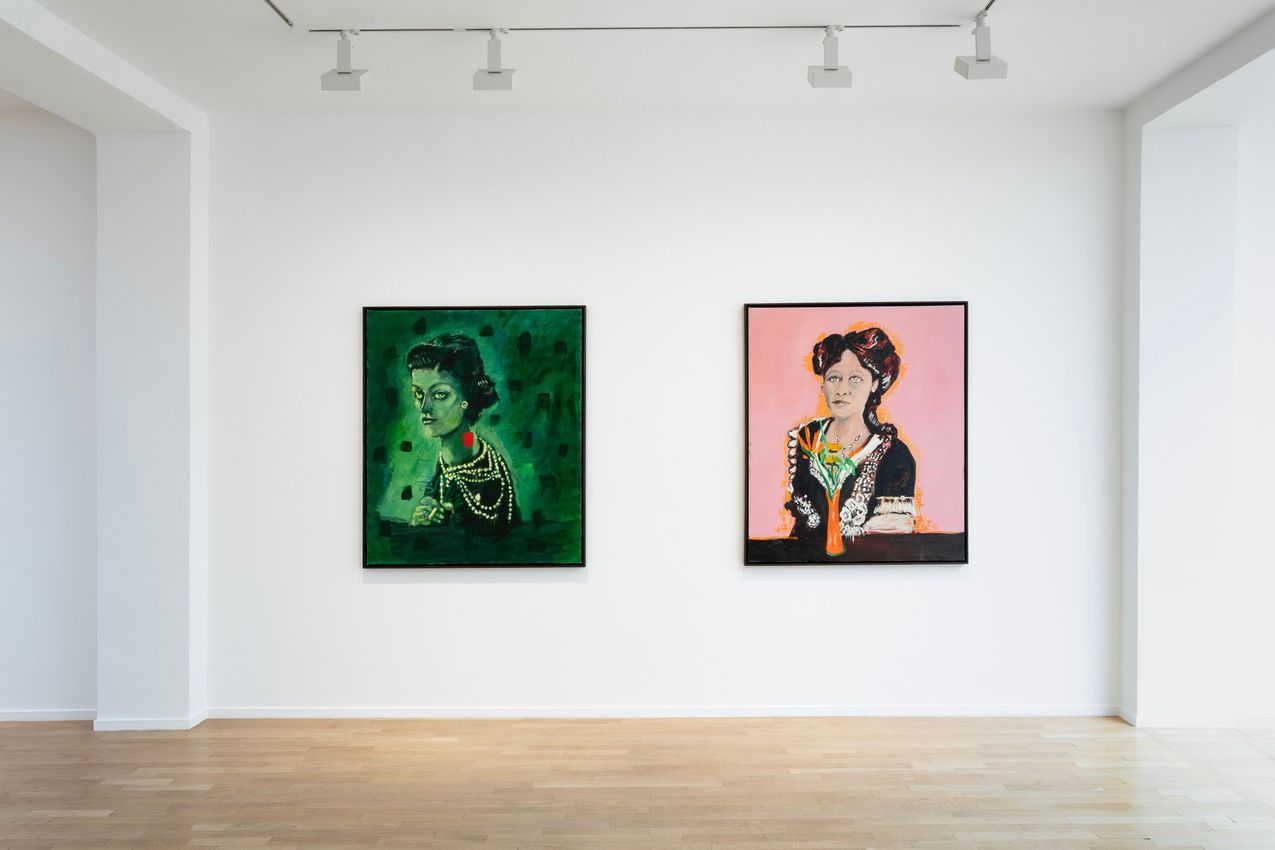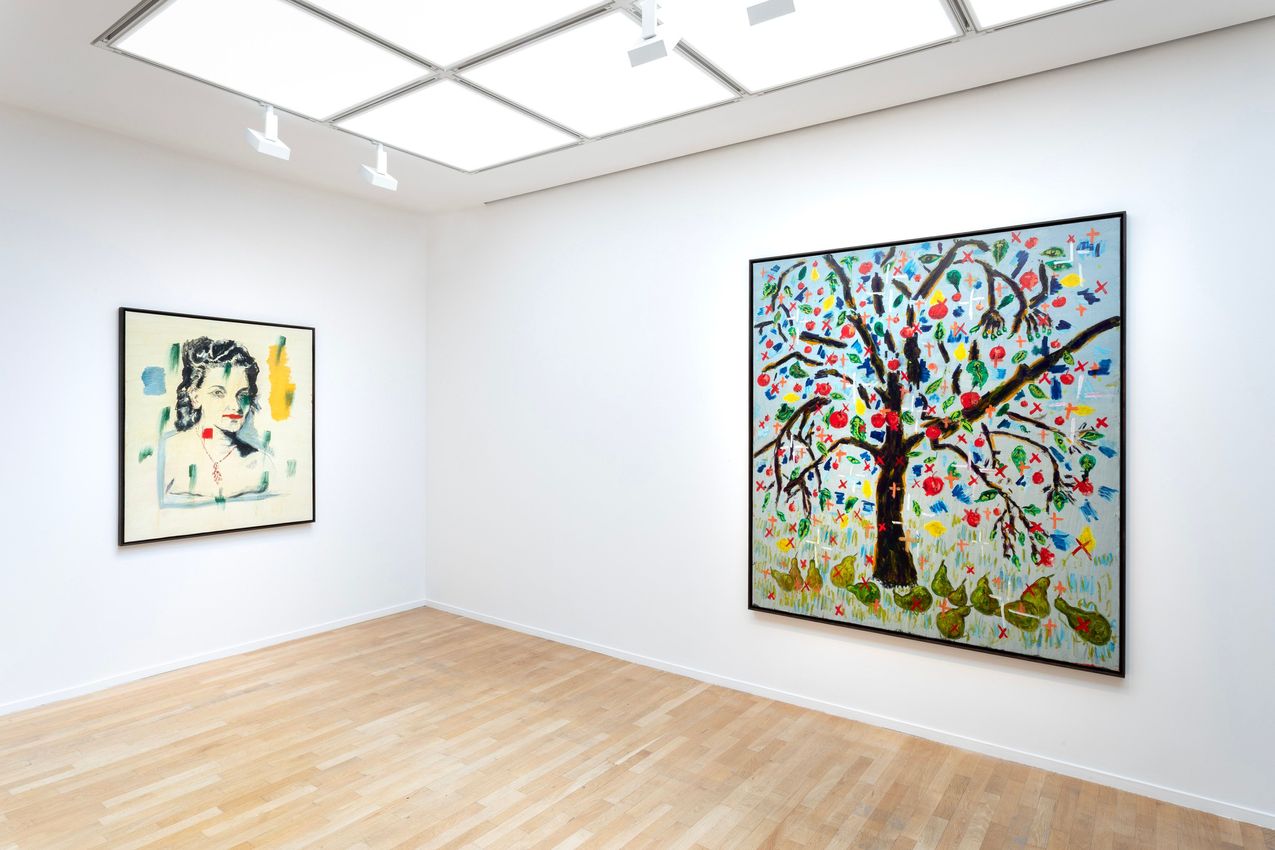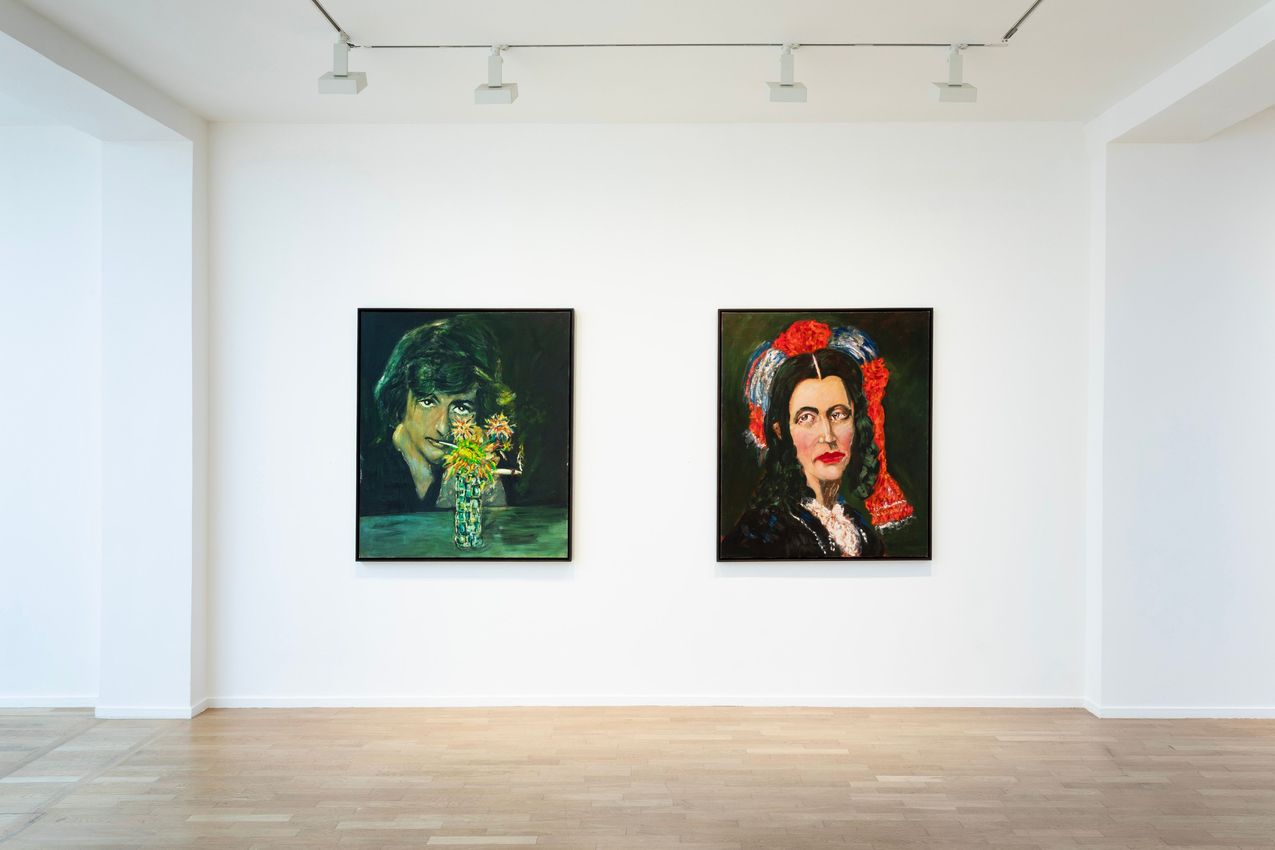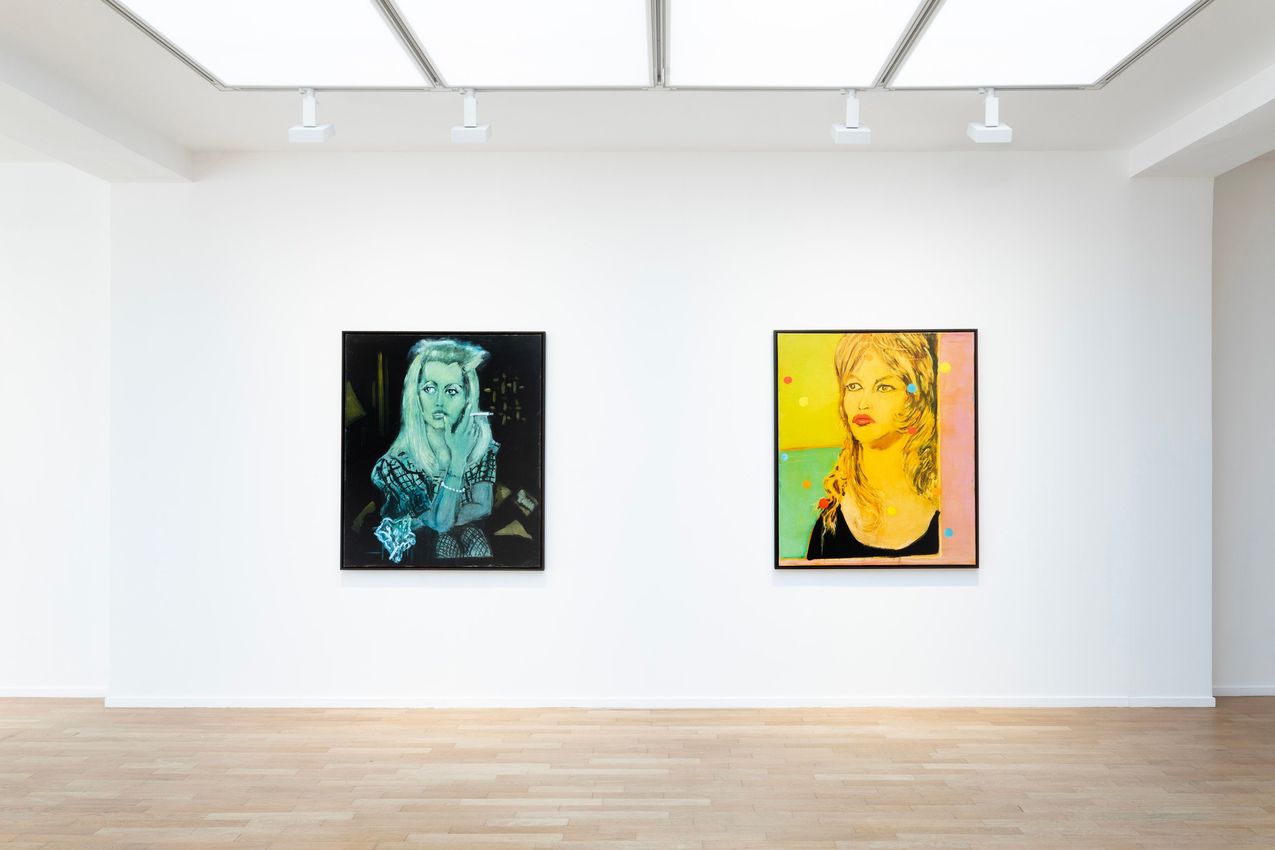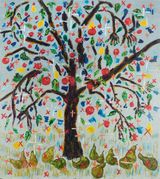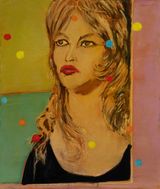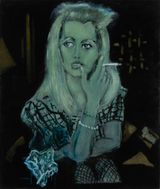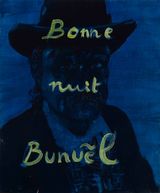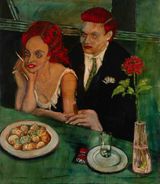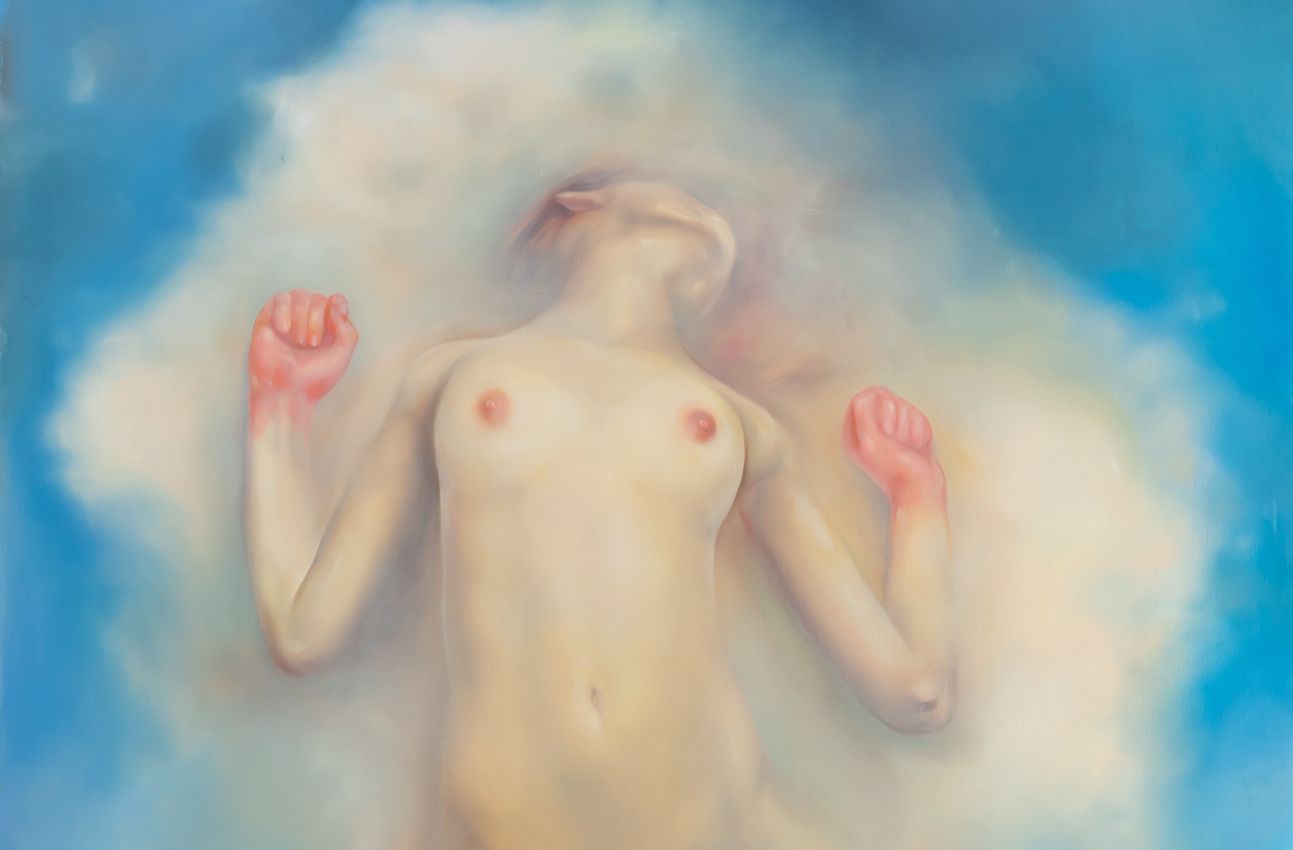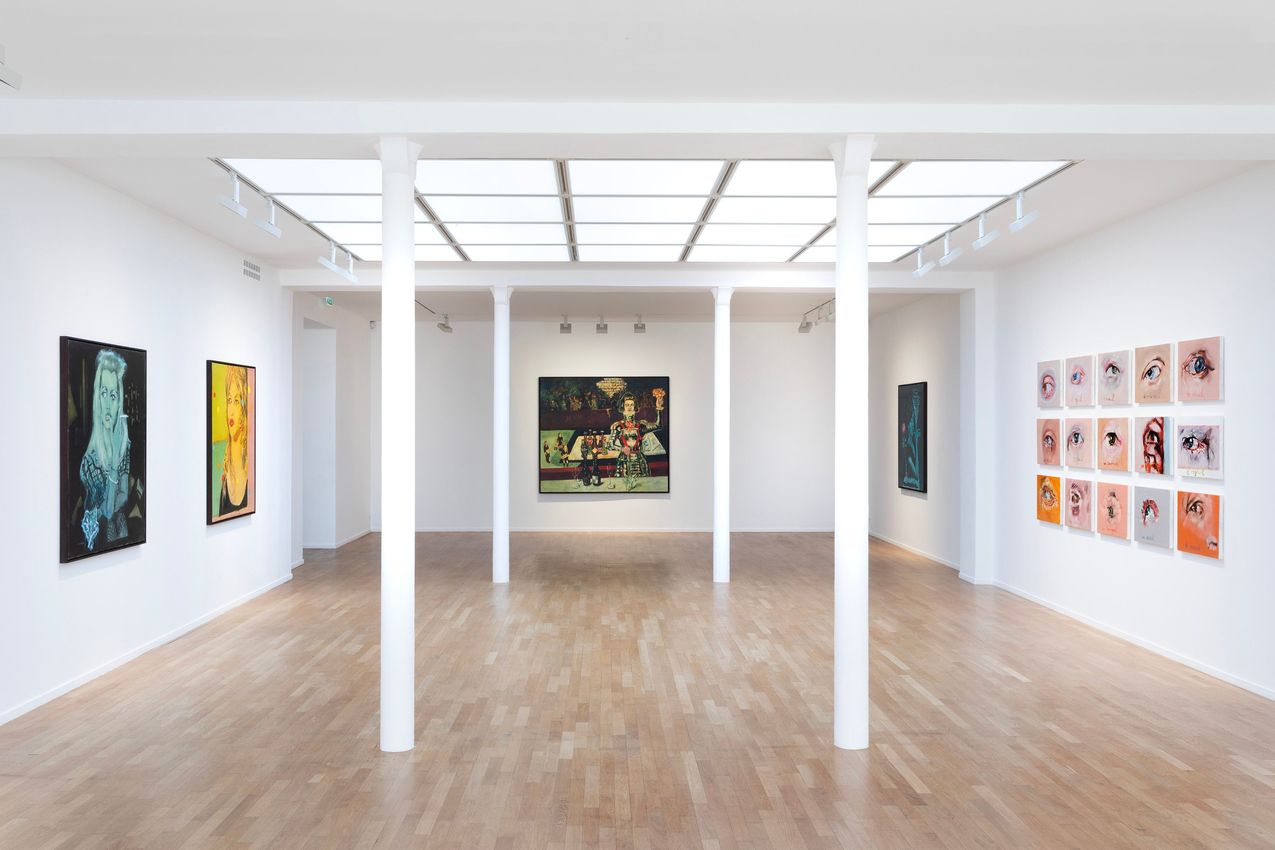
Belgian painter Jan Van Imschoot unveils “Le Chant du Pommier” [The Song of the Apple Tree], a new series of nineteen paintings dedicated to French women whose images, variously mythologized, instrumentalized, or obscured, have shaped our collective imagination.
From Joan of Arc and Brigitte Bardot to Sonia Delaunay, Olympe de Gouges, Simone Veil, and Louise Michel, these works go far beyond a simple gallery of portraits. Through painting, they probe how myths are constructed and how the authority of the gaze transforms complex lives into enduring icons.
Continuing his earlier portrait work, most notably his depiction of Alice Guy, widely regarded as the first filmmaker in cinema history, Van Imschoot revisits historical figures whose representations have hardened into fixed images in the collective memory. He shifts their contours, restores their ambiguities, and reasserts their individuality, pushing back against sanitized or instrumentalized narratives. Under his brush, these women emerge as fully realized subjects, each carrying her own history and force.
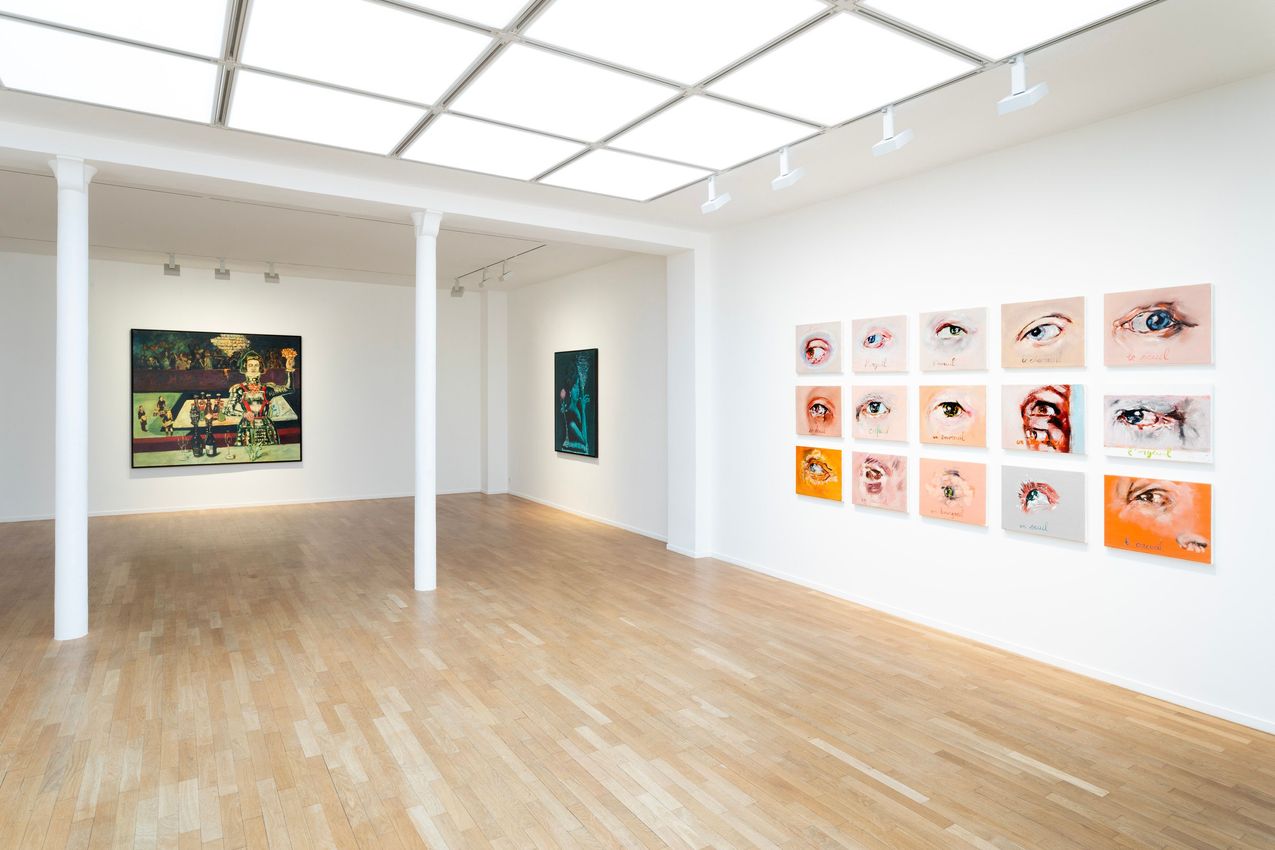
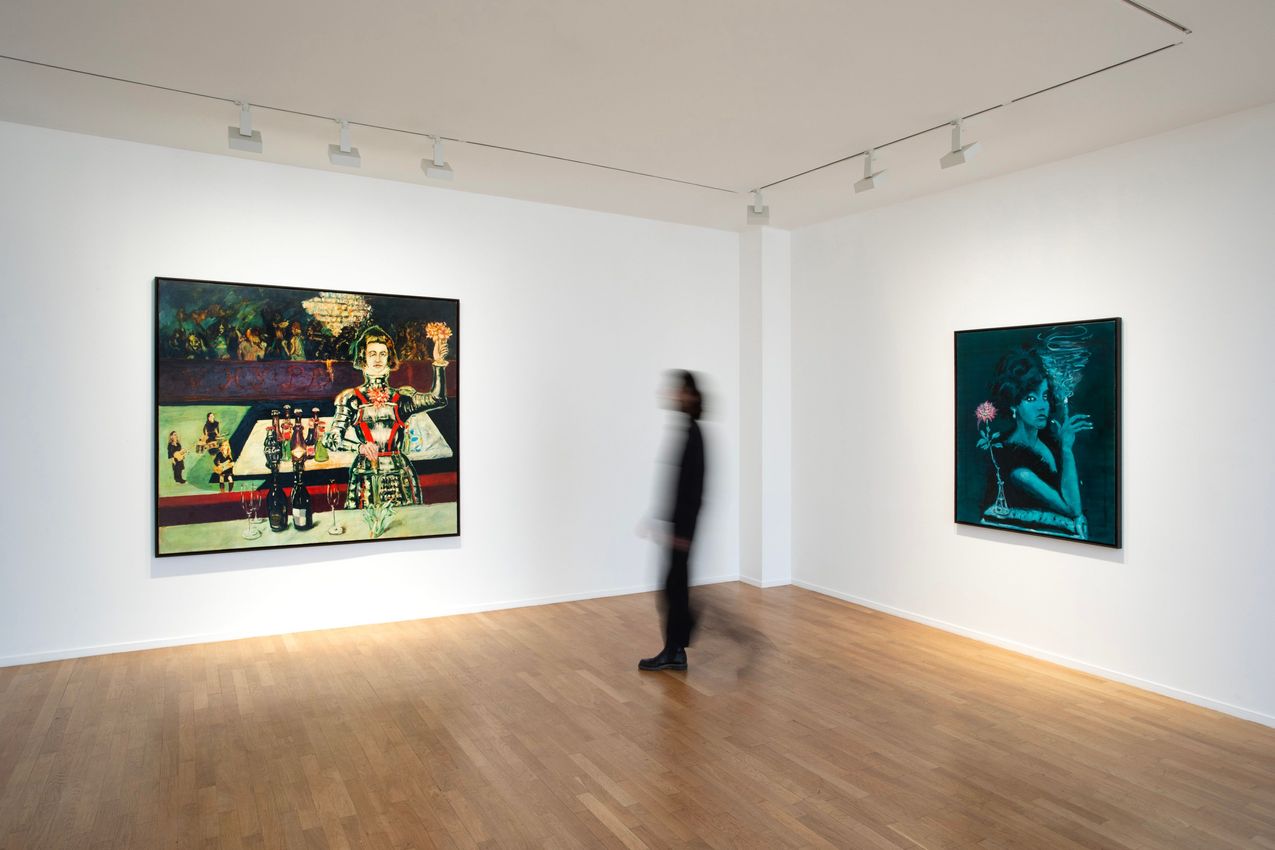
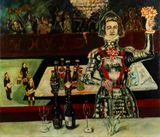
At the heart of his inquiry lies the figure of Joan of Arc, long reduced by the Church to the image of a humble shepherd girl. Yet historical accounts suggest a different reality, one less impoverished than legend would have it, with a stone house, land, and property. The exhibition opens with Jehanne à travers le temps Joan Across Time, a reinterpretation of a Belle Époque portrait by French painter Albert Lynch (1860–1950). Van Imschoot displaces the sainted warrior from her original setting, reimagining her at the bar of Manet’s Folies-Bergère. Below, a punk rock band electrifies the crowd: Jehanne becomes contemporary, moving freely across eras. Saint, military heroine, feminist icon—she becomes a screen onto which anyone can project their own narrative. Her face keeps changing, revealing less about who she was than about what we expect her to be.
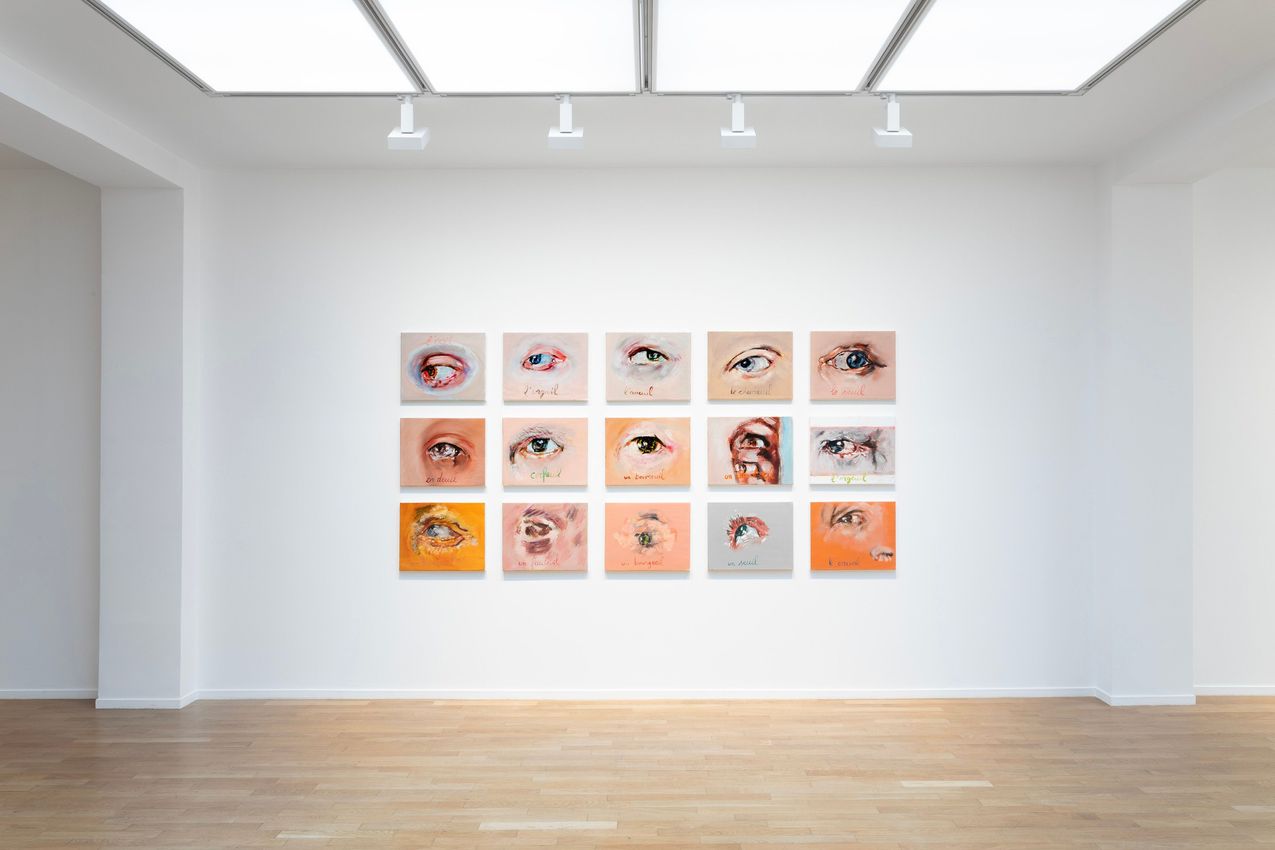
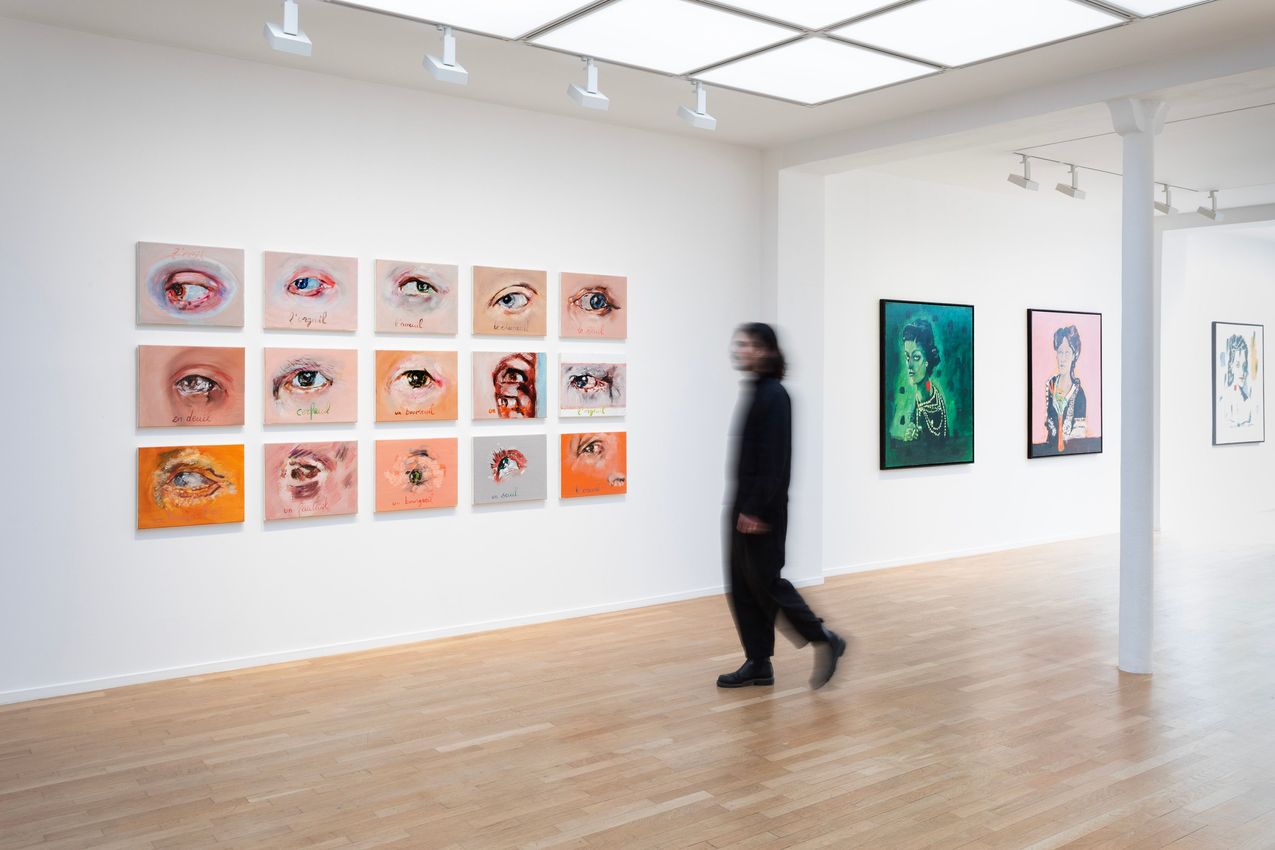
Across these works, it is a whole history of seeing that comes into view. The gaze that shapes, condemns, idealizes, and surveils. La guerre des yeux The War of Eyes, a group of fifteen small-scale paintings, extends this exploration of symbolic surveillance. The gaze is no longer only historical or religious; it is also digital—the ever-present, voyeuristic eye of social media. From this constant visibility emerges a new form of confinement.
As Van Imschoot puts it, “Le Chant du Pommier” is “a true ‘femmage’ to powerful figures [...] Women who traverse the centuries never reach us intact: the public appropriates them, projecting its expectations and interpretations, turning complex lives into symbols.” Their polished images both reassure and fascinate, while their flaws, contradictions, and desires fade behind the icon, leaving collective memory to preserve only the legend.
This journey does not celebrate myth, it lays bare its mechanisms, inviting viewers to question their own gaze. What do we choose to see, to remember, to erase?


The gallery was founded in 1966 by Daniel Templon, who was then only 21. It first opened rue Bonaparte, in Saint-Germain-des-Prés in Paris, before moving in 1972 to its current location, rue Beaubourg, in the Marais, close to the Pompidou Centre, which opened in 1977. Daniel Templon first gained recognition by exhibiting conceptual and minimal artists such as Martin Barré, Christian Boltanski, Donald Judd, Joseph Kosuth, Richard Serra. In the seventies and eighties, Daniel Templon was one of the pioneers of the contemporary art and introduced many important American artists to the French public: Dan Flavin, Ellsworth Kelly, Willem de Kooning, Frank Stella, Andy Warhol. The gallery quickly became one of the references in contemporary art in France. In 1972, Daniel Templon and Catherine Millet co-founded the monthly art magazine ART PRESS.

A respected voice in contemporary art discourse.
Focusing on ambitious storytelling and insightful art-world commentary. Ocula Magazine publishes in-depth interviews, critical essays and timely analysis on the artists, exhibitions and ideas driving the global art world.
Learn more about Ocula Magazine
Showcasing the best of the art world.
Ocula partners with galleries from around the world to highlight their artists, artworks and exhibitions. Gallery membership is by application and invitation, with each member vetted by an independent panel.
Learn more about Ocula Membership

Specialises in the sale of major artworks.
Led by a team with deep ties to the world’s leading auction houses, galleries and collectors. Ocula’s advisory team offers bespoke services to high-net-worth clients from around the world who are looking to acquire the best of contemporary and modern art.
Learn more about our team and services