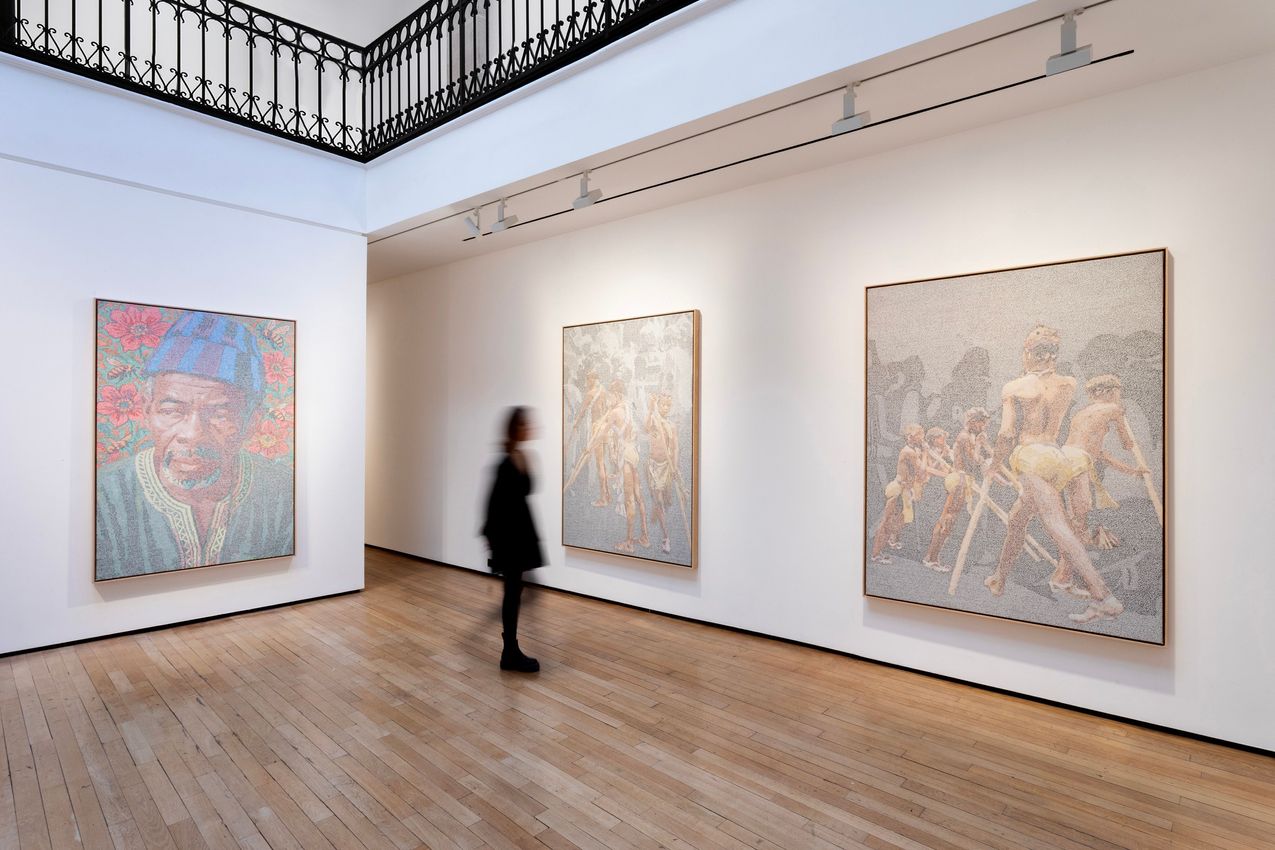
Following his national pavilion at the 2024 Venice Biennale, painter Alioune Diagne returns to Paris with “Saytou” a new body of work rooted in two years of research across Senegal. This exhibition foregrounds the preservation, transformation, and transmission of cultural heritage as key themes.
In Wolof, saytu means searching, examining, and preserving what is most precious. The artist spent months traveling through Senegal’s central and southeastern regions, meeting minority communities in remote areas, including the Bassari, Bédik, Dialonké, and Coniagui. He documented their ancestral customs and rituals as they work to sustain and protect them.
The project began with a two-month stay in Etiolo, Bassari territory. Diagne then visited the Bédik communities of Ethiwar, Ibel, Iwol, and Andjel, visiting the latter twice. He shared daily life with the Dialonké in Madina Baffé and traveled to central Senegal to meet the Coniagui in Koupentoum, where certain rituals are gradually disappearing.
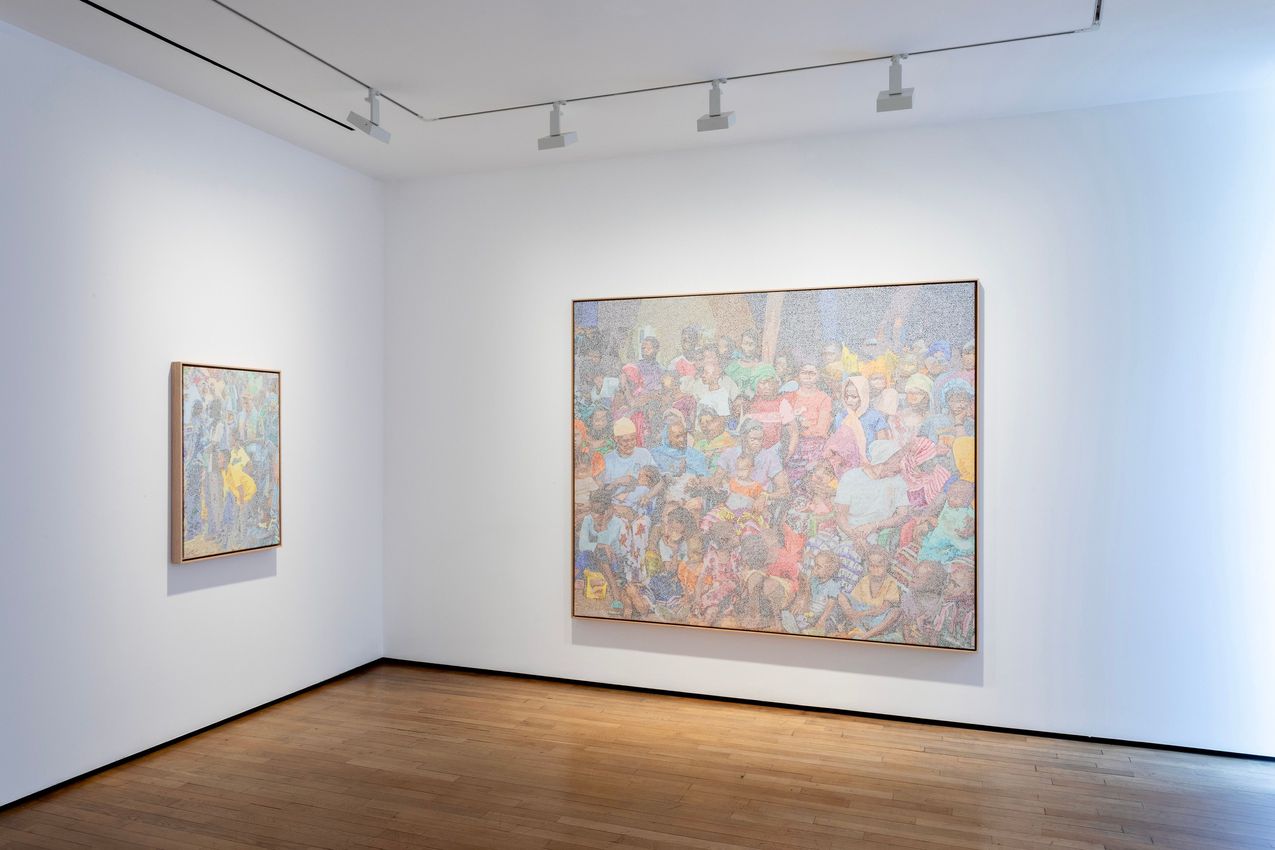
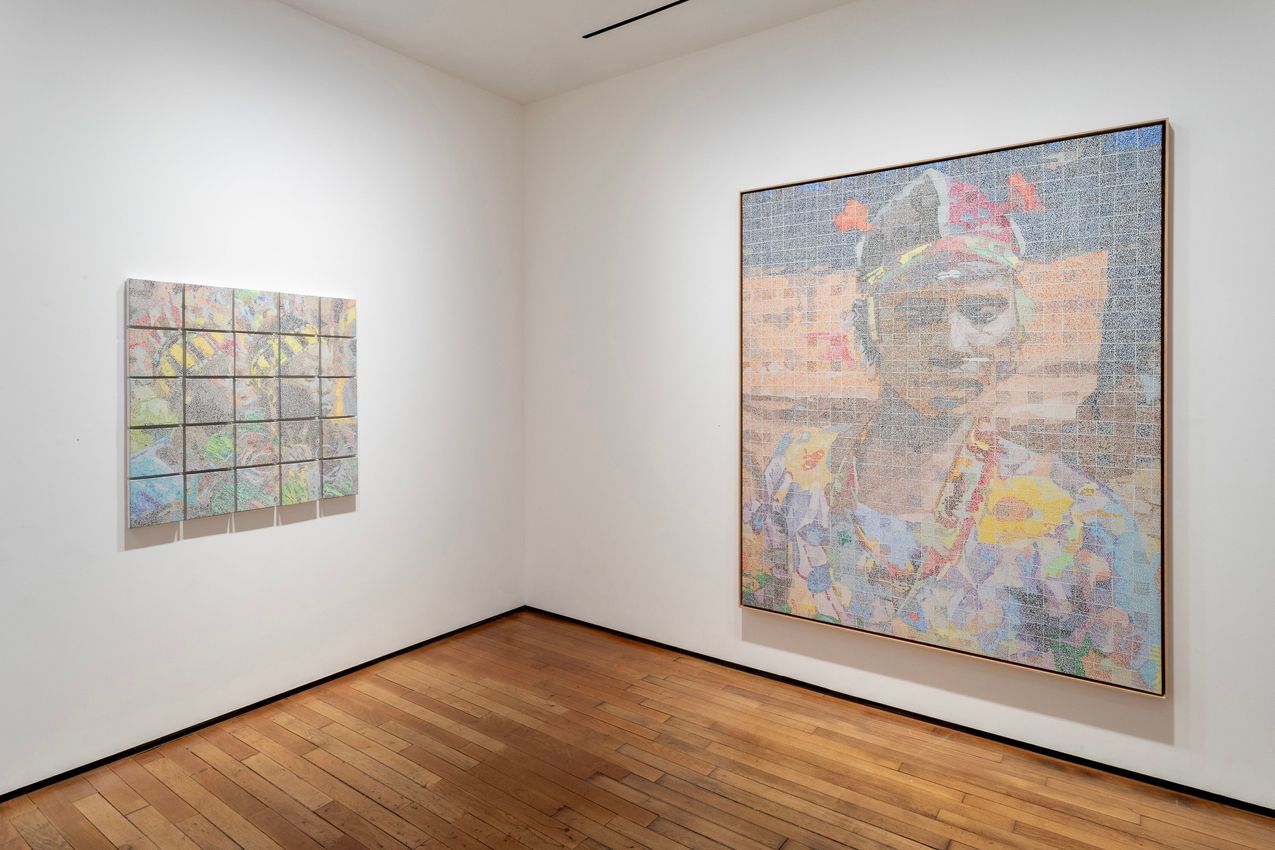
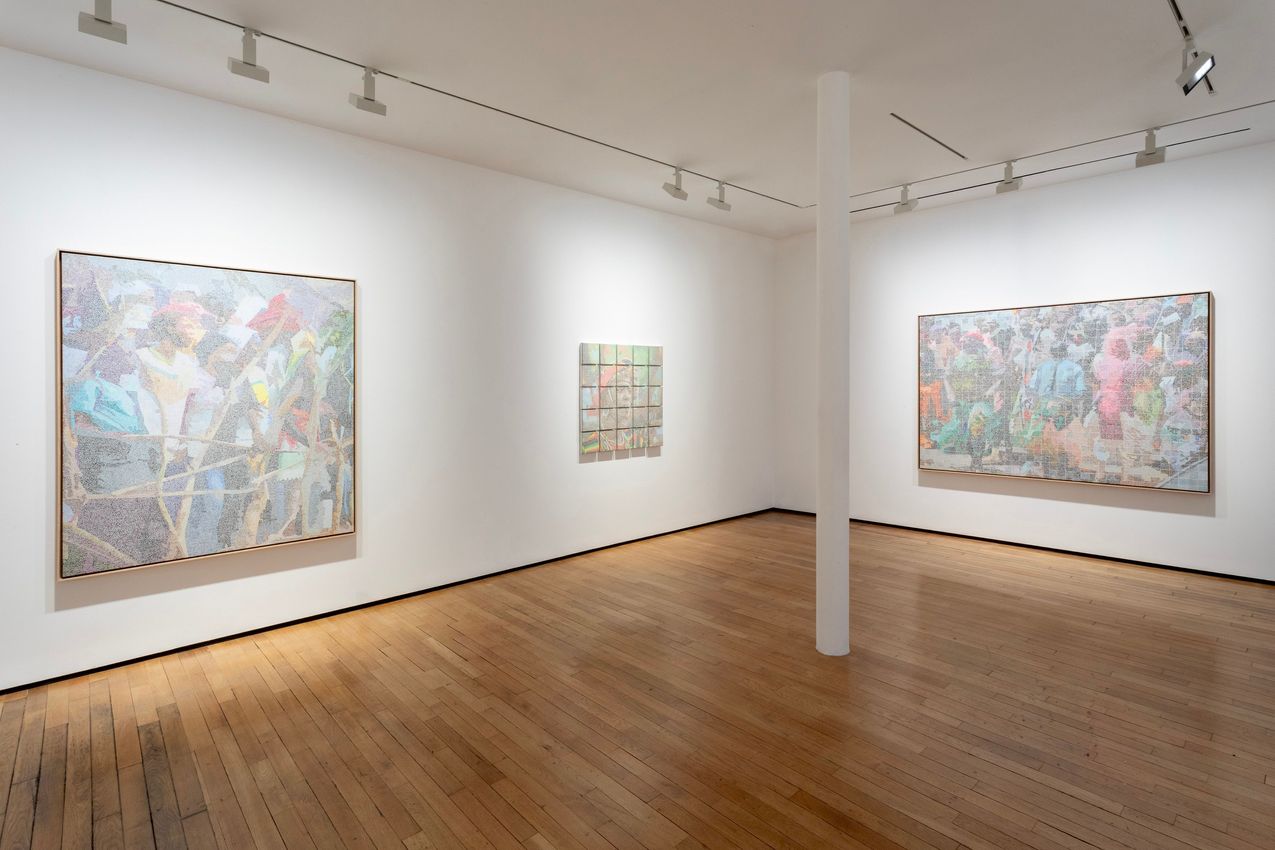
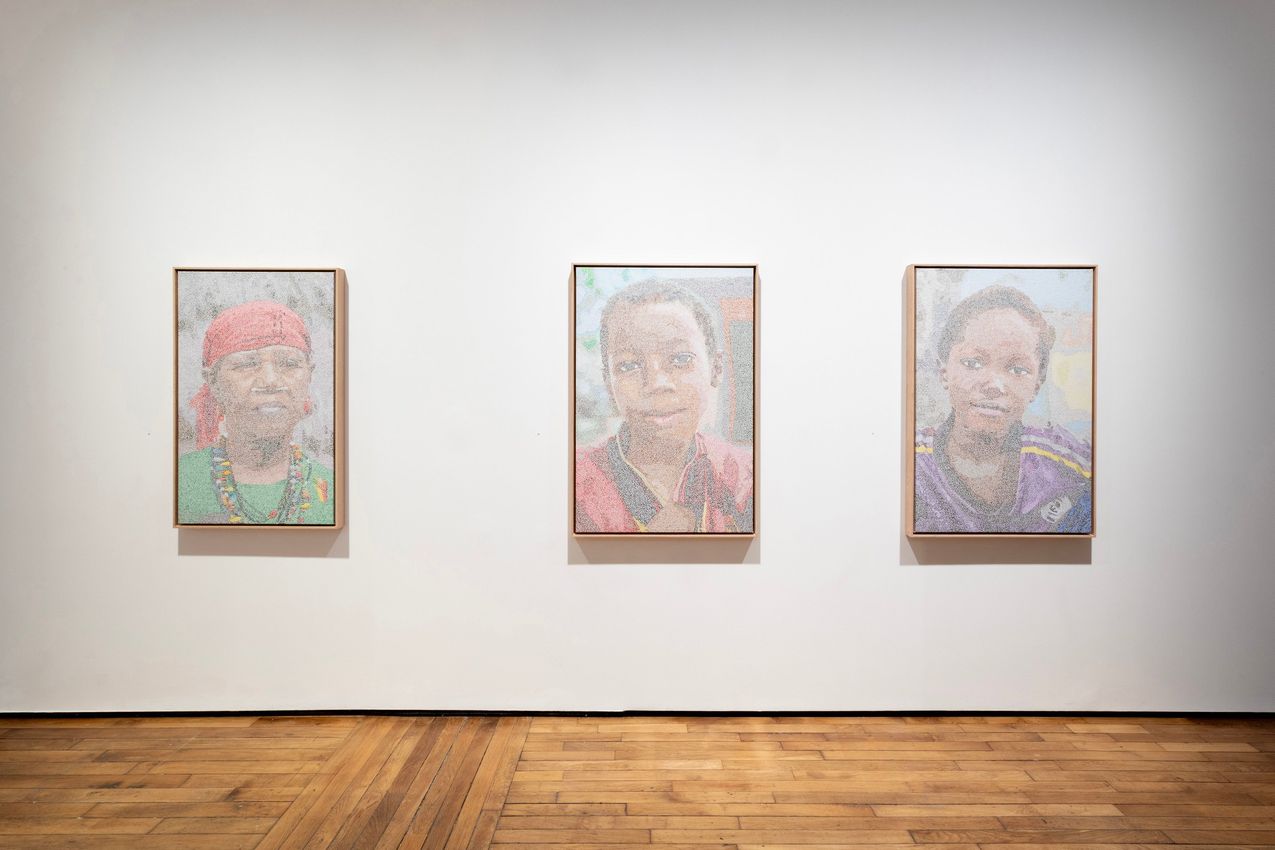
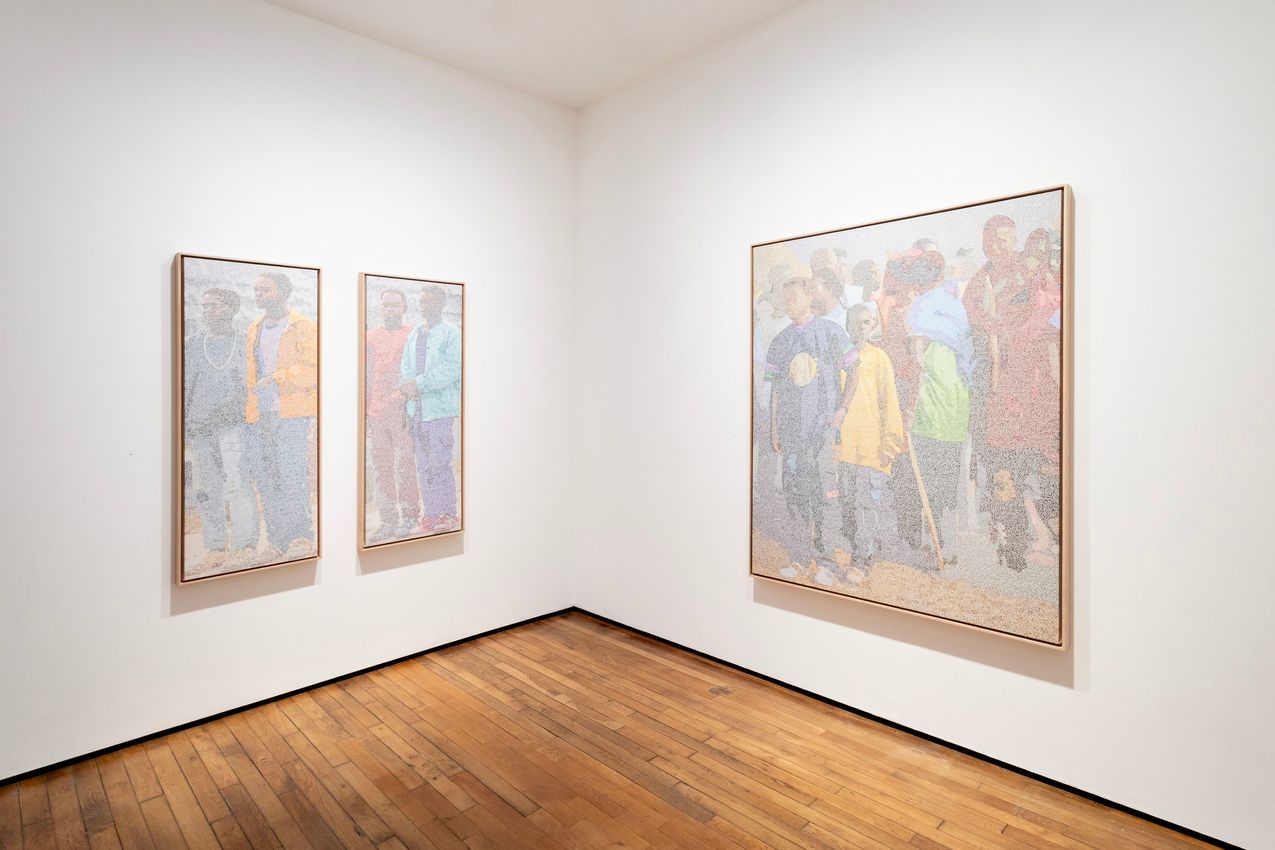
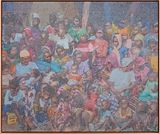
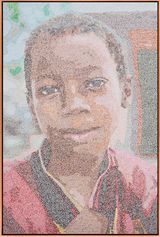
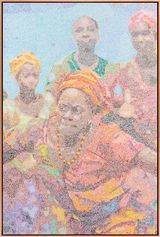
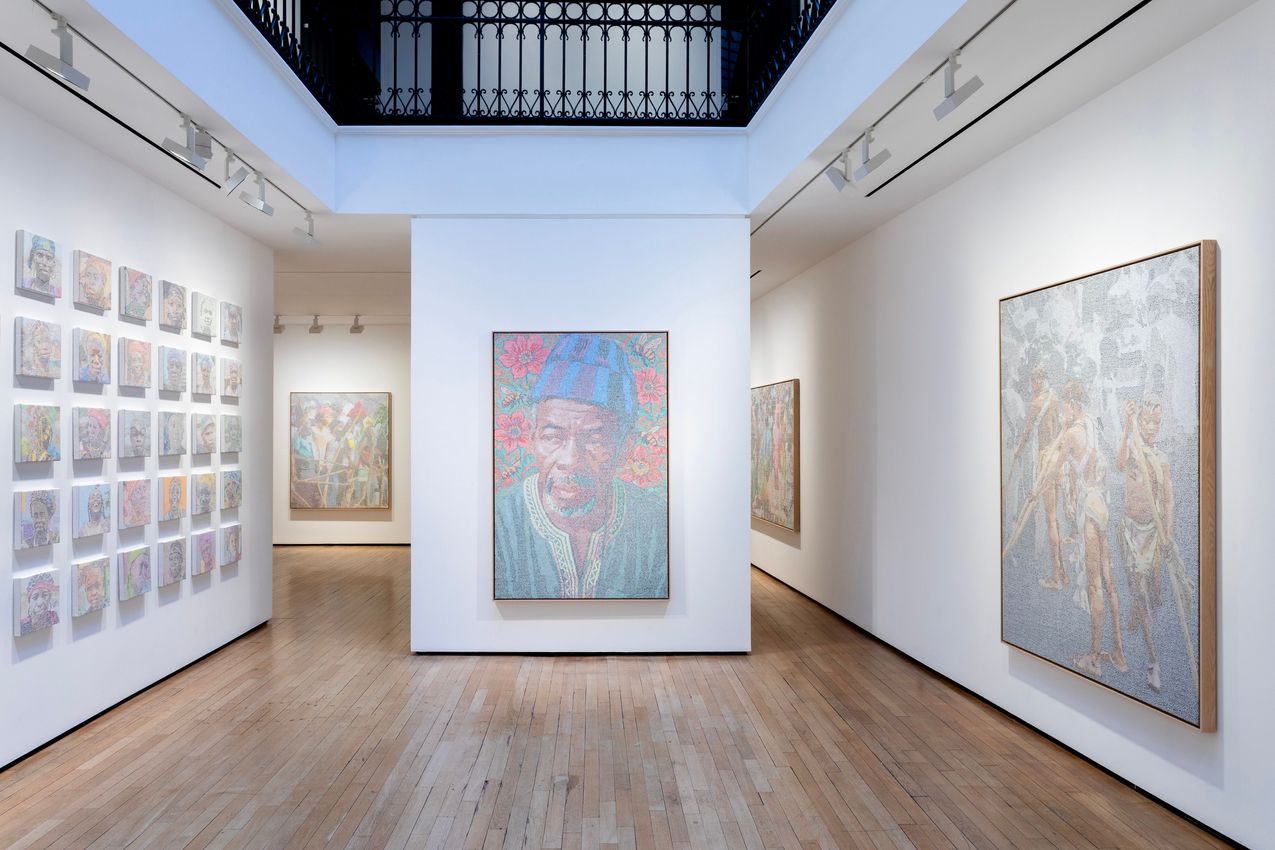
Working closely with these communities, the artist patiently observed, documented, and reinterpreted these traditions through his highly distinctive visual language. His technique – developed gradually over the years – is based on assembling small units he calls “unconscious signs.” When brought together, they form vivid, figurative scenes of striking intensity. Masks, dances, costumes, music, and song are thus translated into painting to capture the vibrant energy and spiritual essence of these ceremonies.
Initially, and unconsciously, influenced by his grandfather, a Qur’anic teacher, Diagne developed an almost pointillist vocabulary he sees as a universal language for the inexpressible. Moving between abstraction and figuration, some works – such as Jeune fille Bassari Young Bassari Girl – reveal themselves instantly, while others, like La foule qui danse [The Dancing Crowd] or Sous l’arbre sacré Under the Sacred Tree, invite slower, more attentive decoding, preserving the mystery inherent in traditions passed down orally through generations.
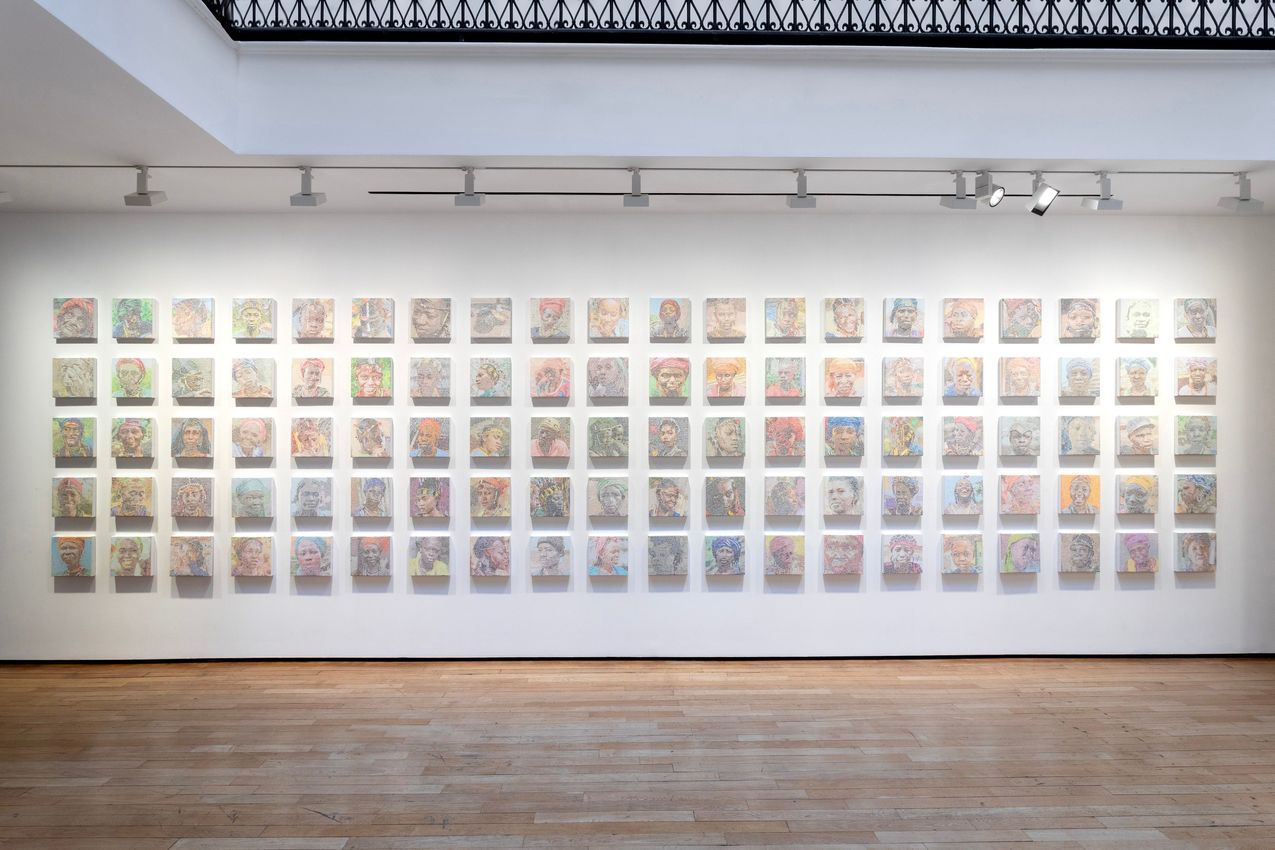
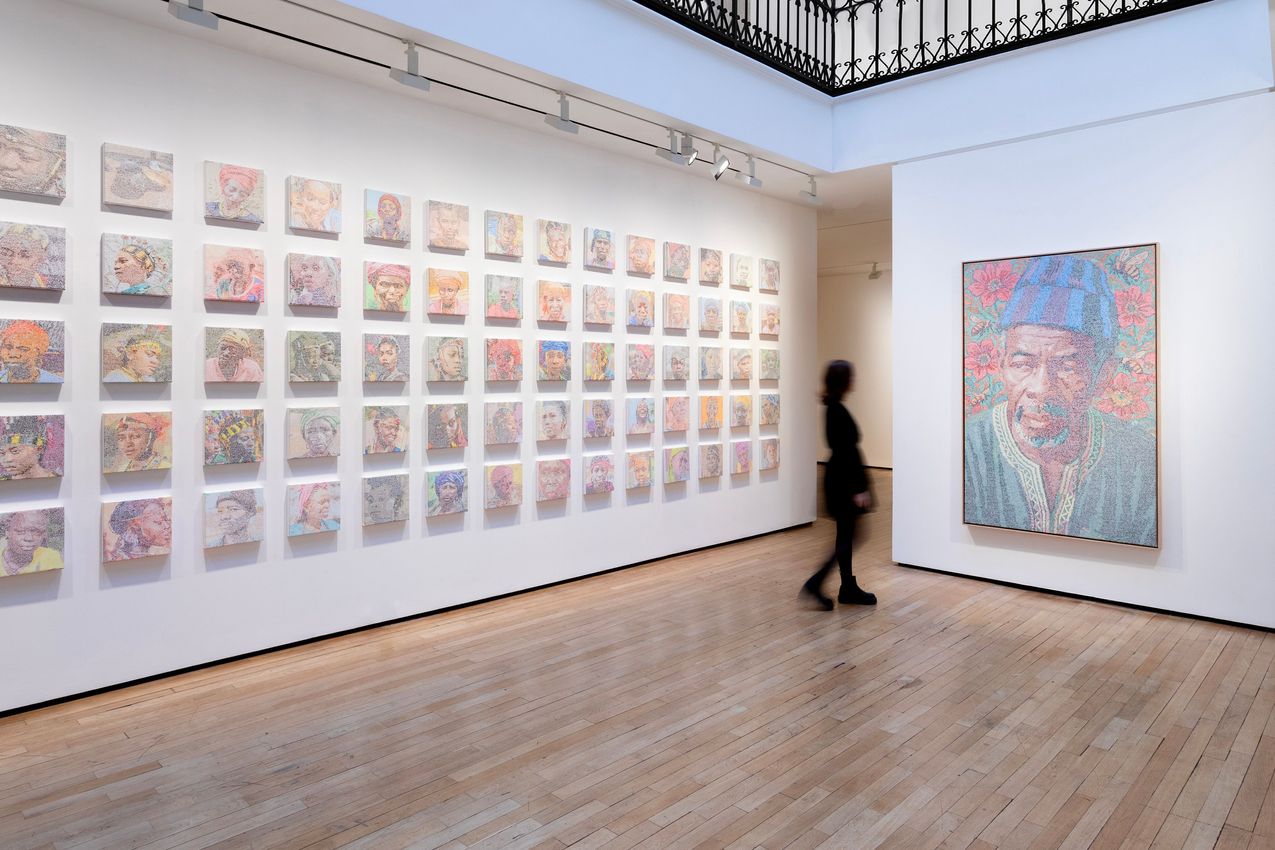
A chronicler of his time, the artist aims to create, in his own way, the future archives of Senegal. Faces/Time, his monumental installation, presents 100 portraits of individuals he met during his journey and embodies his ambition. The anonymous faces reflect two central themes: the preservation of personal stories and memories, and the transient nature of digital identity. In this sense, “Saytu” explores how knowledge and cultural legacies are transmitted and transformed in the context of social media and globalization, raising these central questions: How are such legacies evolving, and what roles will they play in the future?
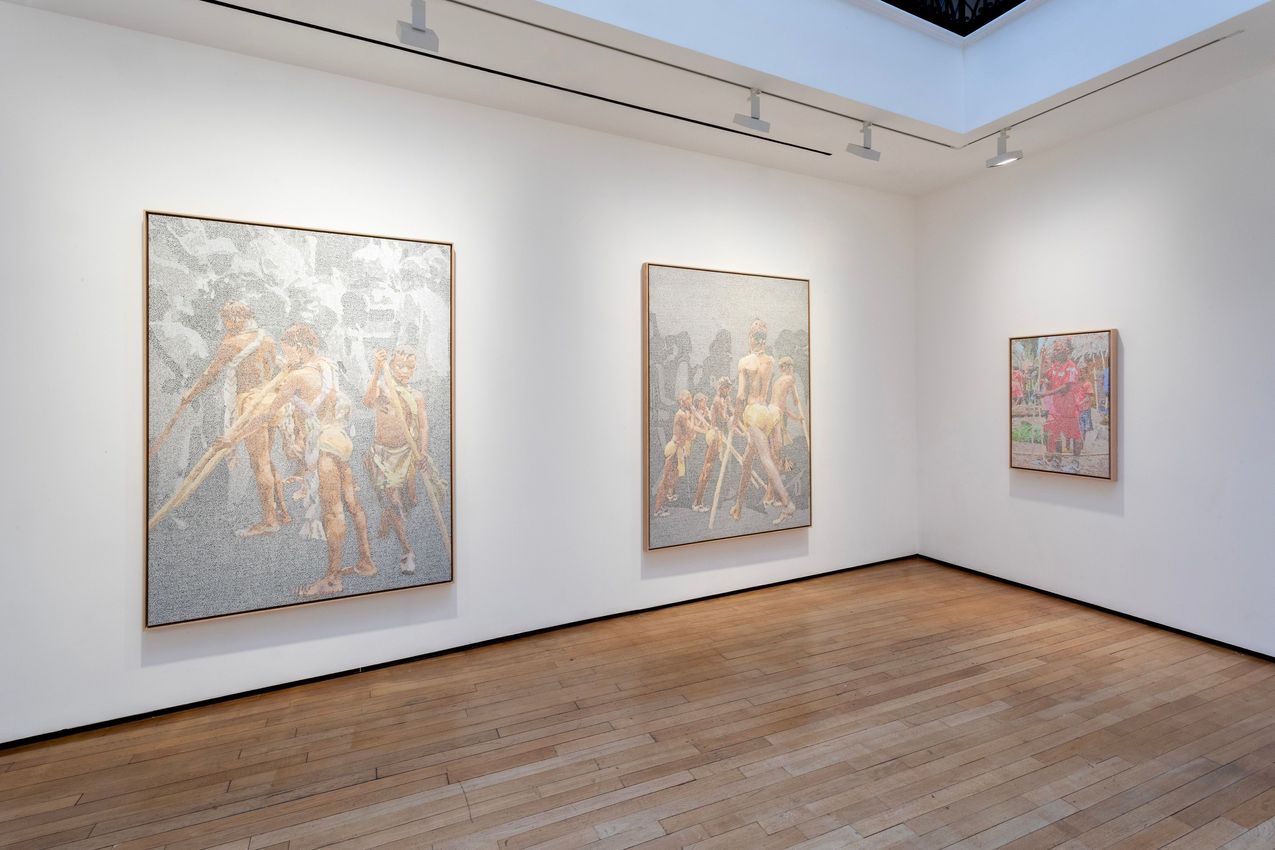
Among the communities he encountered, Diagne focused on women and their rituals, highlighting their central role in social life and knowledge transmission. La première ligne [The Front Line], (2025) and Rythme Dialonké [Dialonké Rhythm], (2026) honor their strength and creativity, situating these traditions in a contemporary dialogue about women’s roles in society.
More broadly, the project explores the vulnerability of global cultural heritage, focusing on themes of preservation, reinvention, and transmission of tradition. Using a contemporary painterly language, Alioune Diagne invites reflection on how today’s societies address these concerns.


The gallery was founded in 1966 by Daniel Templon, who was then only 21. It first opened rue Bonaparte, in Saint-Germain-des-Prés in Paris, before moving in 1972 to its current location, rue Beaubourg, in the Marais, close to the Pompidou Center, which opened in 1977. Daniel Templon first gained recognition by exhibiting conceptual and minimal artists such as Martin Barré, Christian Boltanski, Donald Judd, Joseph Kosuth, Richard Serra. In the seventies and eighties, Daniel Templon was one of the pioneers of the contemporary art and introduced many important American artists to the French public: Dan Flavin, Ellsworth Kelly, Willem de Kooning, Frank Stella, Andy Warhol. The gallery quickly became one of the references in contemporary art in France. In 1972, Daniel Templon and Catherine Millet co-founded the monthly art magazine ART PRESS.

A respected voice in contemporary art discourse.
Focusing on ambitious storytelling and insightful art-world commentary. Ocula Magazine publishes in-depth interviews, critical essays and timely analysis on the artists, exhibitions and ideas driving the global art world.
Learn more about Ocula Magazine
Showcasing the best of the art world.
Ocula partners with galleries from around the world to highlight their artists, artworks and exhibitions. Gallery membership is by application and invitation, with each member vetted by an independent panel.
Learn more about Ocula Membership

Specialises in the sale of major artworks.
Led by a team with deep ties to the world’s leading auction houses, galleries and collectors. Ocula’s advisory team offers bespoke services to high-net-worth clients from around the world who are looking to acquire the best of contemporary and modern art.
Learn more about our team and services