




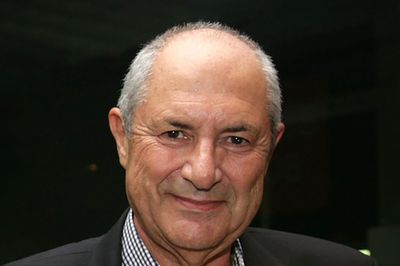
HAIM STEINBACH
b. 1944, IsraelHaim Steinbach is a pioneering artist whose practice has radically redefined the status of everyday objects in contemporary art. Internationally recognised for his precise arrangements of found and mass-produced items on custom-made shelves and framing devices, Steinbach’s work explores the psychological, cultural, and ritualistic meanings embedded in objects and the ways they are displayed. His installations have been exhibited at major institutions including The Museum of Modern Art, New York; Serpentine Gallery, London; and Kunsthalle Zurich, underscoring his lasting influence on postmodern artistic discourse.
Early Years
Born in Rehovot, Israel, in 1944, Haim Steinbach moved to New York in 1957. He studied at Pratt Institute, Brooklyn (BFA, 1968), Université d’Aix Marseille, France (1965–66), and Yale University, New Haven (MFA, 1973). Steinbach began his career as a painter, working with minimalist compositions and materials such as linoleum, before shifting in the late 1970s to the selection and display of everyday objects—a practice that would become his signature.
Haim Steinbach Artworks
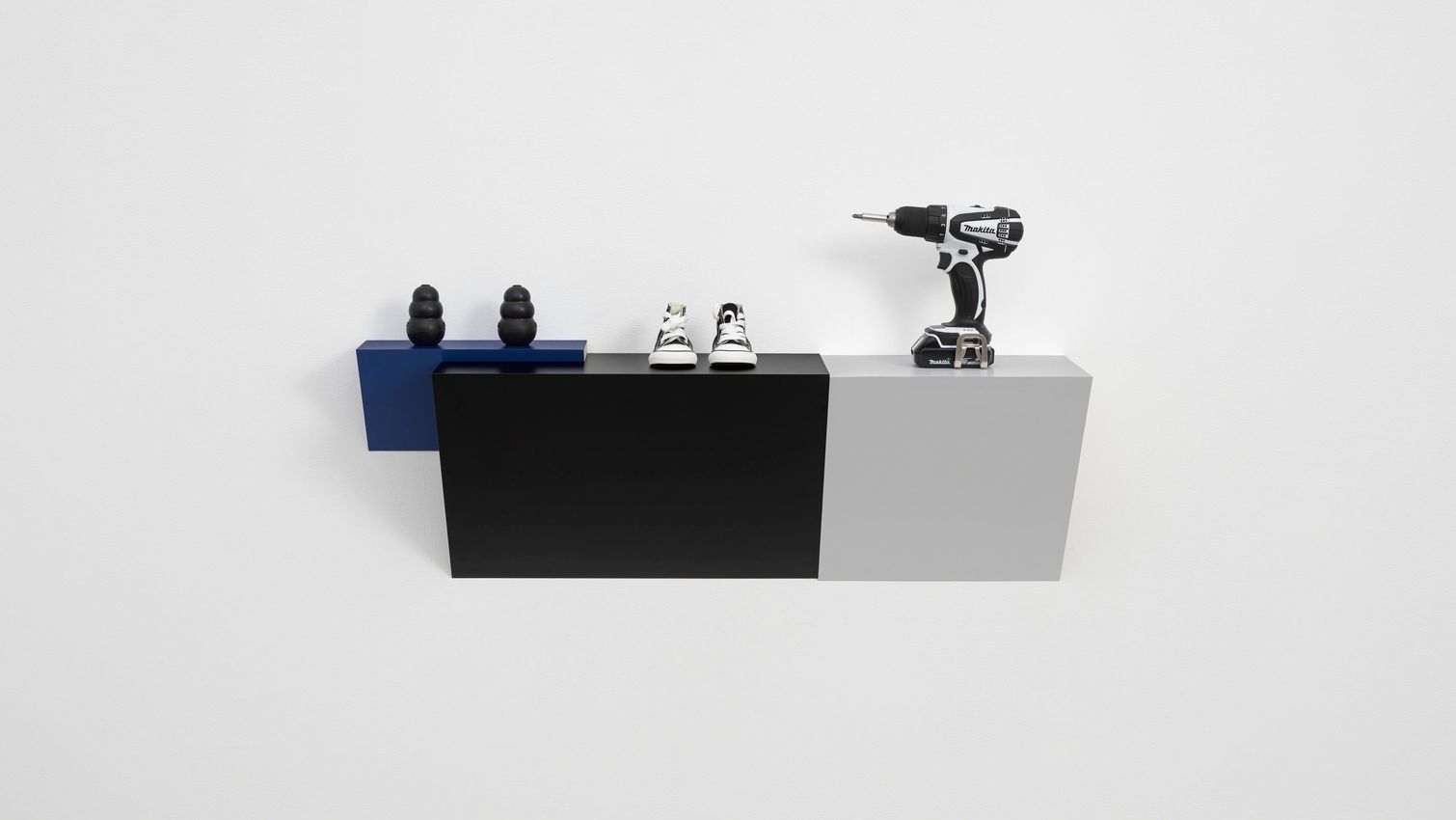
Steinbach’s art is centred on the act of “display.” He selects objects—ranging from the ordinary to the ethnographic, handmade to mass-produced—and arranges them on custom-designed shelves, often wedge-shaped, which he refers to as “framing devices.” These structures are meticulously conceived, employing geometric systems and colour laminates to set the tone for the objects they support.
By foregrounding the context and method of presentation, Steinbach prompts viewers to reconsider the aesthetic, psychological, and social significance of familiar things. His installations create a dialogue between ‘high’ and ‘low’ culture, the unique and the multiple, the personal and the universal. Steinbach’s approach extends Marcel Duchamp‘s concept of the readymade, but with an emphasis on arrangement, context, and the poetic resonance between objects.
Notable Works and Series
- Display #30 – An Offering (collectibles of Jan Hoet) (1992): For Documenta IX, Steinbach transported and re-presented the entire collection of objects from curator Jan Hoet’s office, recontextualising them within a museum setting.
- Jacob’s Ladder (1997): An installation featuring industrial shelving, stones, and a ladder, evoking both domestic and mythological associations.
- Shelf with Picnic Set (1983), Ultra Red #1 (1986), and numerous other “Display” works: These highlight Steinbach’s ongoing investigation into the meaning and value of objects through their arrangement and display.
Select Awards and Accolades
Steinbach’s work is held in major public collections including The Museum of Modern Art, New York; Solomon R. Guggenheim Museum, New York; The Menil Collection, Houston; and Tate, London.
Exhibitions
Haim Steinbach has been the subject of both solo and group exhibitions at leading institutions worldwide. Below is a selection of important exhibitions.
Solo Exhibitions
- Haim Steinbach: once again the world is flat, Serpentine Gallery, London (2014); CCS Bard Hessel Museum of Art, New York; Kunsthalle Zurich, Switzerland (2013–2014).
- The Museum of Modern Art, New York (2020)
- The Menil Collection, Houston (2014)
- Museum Kurhaus, Kleve, Germany (2018)
- Magasin III Museum and Foundation for Contemporary Art, Jaffa, Tel Aviv, Israel (2018)
- Castello di Rivoli, Turin, Italy (1995)
- Solomon R. Guggenheim Museum, New York (1993)
Group Exhibitions
- Documenta IX, Kassel (1992)
- 47th Venice Biennale, Venice (1997)
- A Forest of Signs, Museum of Contemporary Art, Los Angeles (1988)
Haim Steinbach FAQs
What is Haim Steinbach best known for?
Steinbach is best known for his installations of everyday objects on custom-made shelves, which explore how context and display shape meaning and value.
How does Haim Steinbach select objects for his art?
He chooses objects ranging from the ordinary to the ethnographic, often incorporating items chosen by others, and arranges them to create new relationships and narratives.
What is the significance of Steinbach’s shelves?
The shelves, or “framing devices,” are carefully designed structures that serve as both support and context, highlighting the aesthetic and cultural qualities of the displayed objects.
Which art movements is Haim Steinbach associated with?
Steinbach’s work is linked to Neo-Geo, conceptual art, and postmodernism, and is often discussed in relation to Marcel Duchamp’s readymades and the critique of consumer culture.
Where can I see Haim Steinbach’s work?
His art is included in the collections of major museums such as MoMA, the Guggenheim, Tate, and The Menil Collection, and is regularly featured in international exhibitions.
How do you pronounce Haim Steinbach’s name?
Haim Steinbach is pronounced: HAH-eem STINE-back.
Ocula | 2025

Explore Haim Steinbach's Exhibitions






Explore and Follow Artists Shaping Contemporary Art
A respected voice in contemporary art discourse.
Focusing on ambitious storytelling and insightful art-world commentary. Ocula Magazine publishes in-depth interviews, critical essays and timely analysis on the artists, exhibitions and ideas driving the global art world.
Learn more about Ocula Magazine
Showcasing the best of the art world.
Ocula partners with galleries from around the world to highlight their artists, artworks and exhibitions. Gallery membership is by application and invitation, with each member vetted by an independent panel.
Learn more about Ocula Membership
Specialises in the sale of major artworks.
Led by a team with deep ties to the world’s leading auction houses, galleries and collectors. Ocula’s advisory team offers bespoke services to high-net-worth clients from around the world who are looking to acquire the best of contemporary and modern art.
Learn more about our team and services