Once Upon a Who there was a little bear who’s name was Who the Bear,
Now Who, as Who was known to be,
Seemed rather ordinary
Just another Rupert, just another Pooh,
Who was a nobody, Who was just a ‘who?’
Small and white, clean and bright,
Who wore a simple pair of jeans in blue
Jeans like the ones worn by me or worn by you,
So what makes Who special
What makes Who Who?
Is it their golden heart that sparkles brightly in the dark?
Is it that crazy tongue Who can’t control, however hard?
Maybe it’s something you can’t see?
Who’s class, Who’s race, Who’s sexuality?
What is Who’s Gender? What is Who’s nationality?
Oh, will somebody tell me?
What is Who’s Identity?!
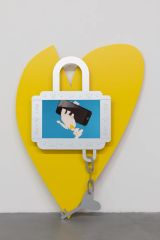
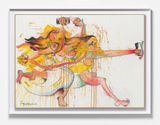
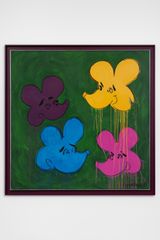
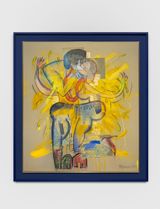
Esther Schipper is pleased to present Once Upon a Who?, Simon Fujiwara’s second solo exhibition with the gallery. On view will be multiple new works from the artist’s Who the Bær project presented in a highly inventive range of media ranging from collage, drawing and sculpture to stop-motion animation and animatronic sculpture. In addition, Fujiwara is presenting a ‘Whotique’ in the Esther Schipper Bookstore, a boutique devoted to merchandise from the world of Who, in collaboration with Highsnobiety.
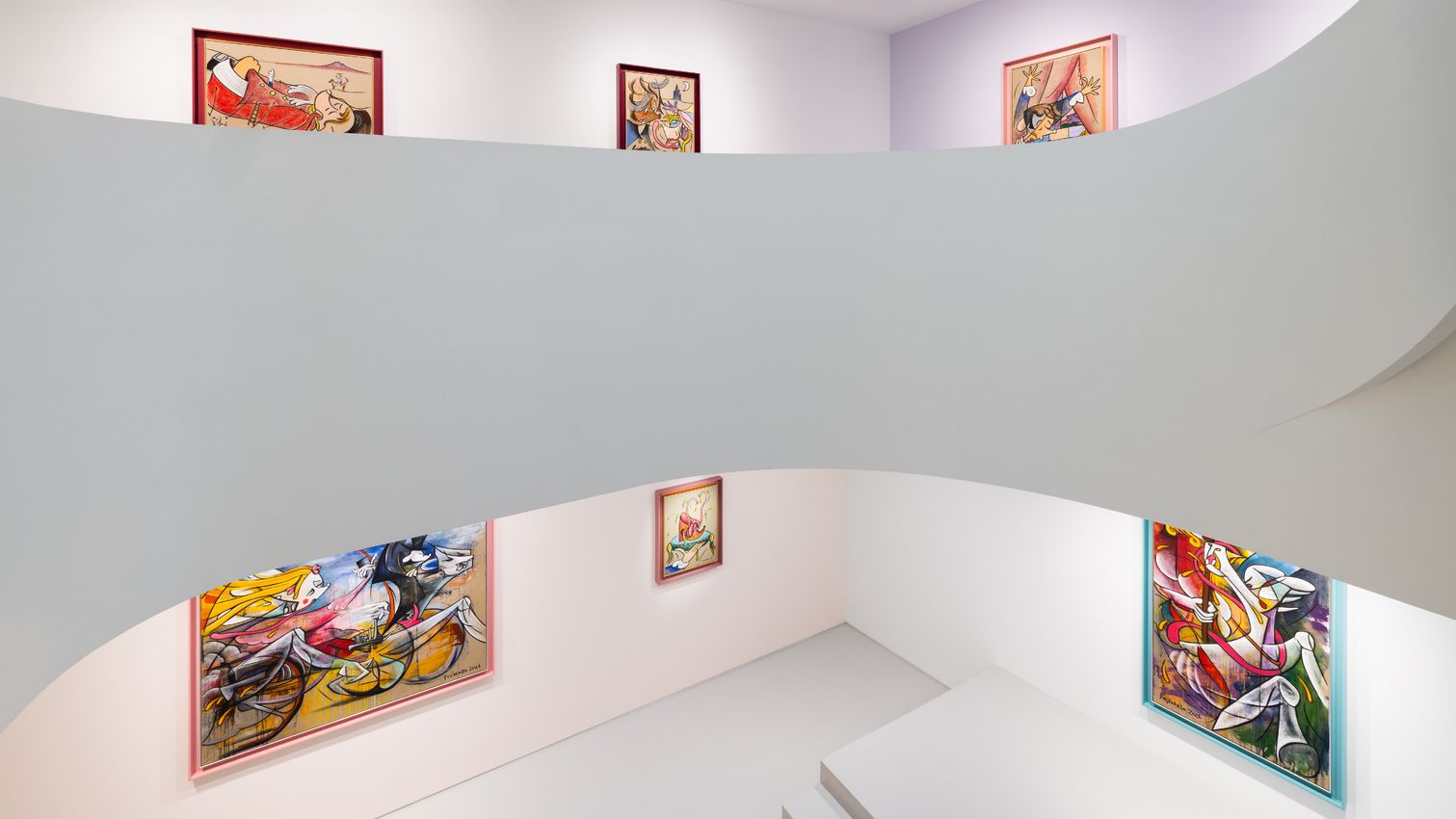
A large-scale immersive exhibition, Once Upon a Who? highlights the multifaceted development of the original cartoon figure, which Fujiwara created in Spring 2020 and first presented at the Fondazione Prada in Milan in summer of that year. Staged within an exhibition design resembling a museum with different rooms devoted to different chapters of their development, visitors encounter Who the Bær: a bear that seemingly has no race, gender, sexuality or nationality.
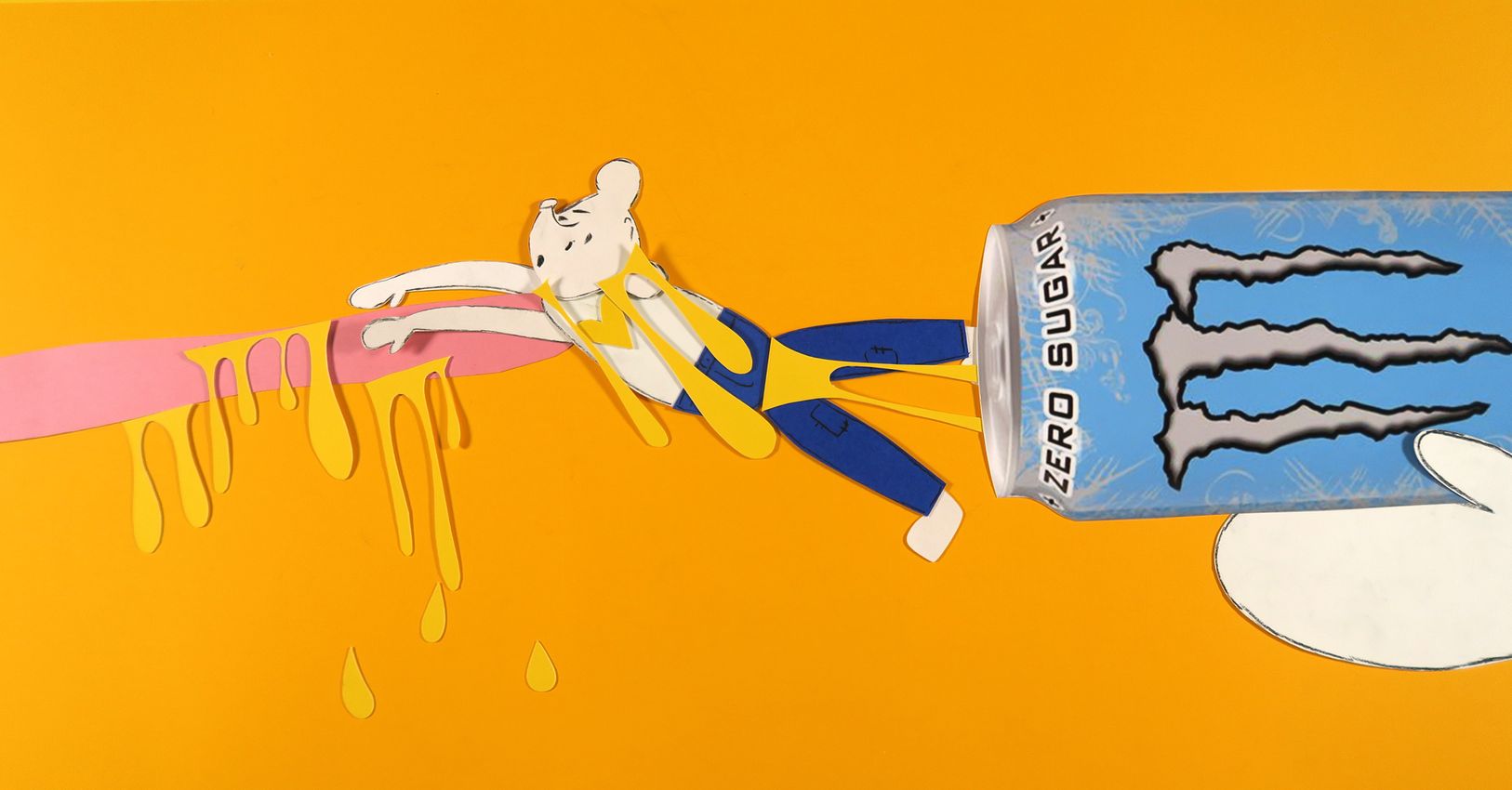
In the first room of Fujiwara’s Once Upon a Who?, a stop-motion animation presented in a blue carpeted environment with colourful plush seating, introduces the central themes of the exhibition and the Who the Bær character. Among them are the origin story of the figure and the significance of the characteristics Who has been given; the processes of identity formation, especially regarding gender and race; the effects of mass media, social media, dating apps, and celebrity culture on those processes; as well as cultural appropriation, colonialism and the controversies around stolen artifacts and art.
In the subsequent rooms, these topics unfold in a series of specifically themed spaces. Who’s negotiation of identity is explored in two sections through collages and modified images and objects that combine traditional and contemporary representations of feminine and masculine stereotypes. A sculptural animation, Who’s Childhood?, draws on conventional depictions of early years identity formation and family life. Next, sculptures mimicking cultural artifacts create world history in the image of Who: among them, ancient sarcophagi, pieces of the so-called Elgin marbles, and African and Asian artifacts invoking displays in museums and ethnographic collections, notably Berlin’s controversial, recently opened Humboldt Forum. The adjacent room, the ‘Whoseum,’ features iconic works that reference and remix modern and contemporary artists, from collages that draw on cut-outs by Henri Matisse or Hockney-esque swimming pools, to a small metal sculpture referencing the work of Alexander Calder–all presented with a set of drawings devoted to the Whoggenheim Bilbao. All are Who-ified, so to speak, i.e. given the characteristic silhouette of Who. In the final room, the melancholic chorus of Who’s Only Whoman? welcomes visitors. An interactive animatronic sculpture, the robot’s twenty-first-century apparatus has a child-like DIY sensibility that evokes the anachronistic aesthetic of the Wizard of Oz’s Tin Man (1939) and Robby The Robot (1956).
Constantly encountering and performing different identities, we watch Who the Bær as they try, fail, and try again to enact, perform or embody the various lifestyles and identity choices on offer, mostly online. Seen through the distorted lens of a cartoon character, Who the Bær offers a tender but at times disturbing, dada-esque response to a contemporary society possessed with spectacle and identity performance. Nostalgia, anxiety, an inability to commit and a longing for authenticity mark the journey of Who the Baer, a story that seemingly oscillates between the extremes of joy, hedonism and melancholy and loneliness.
In addition to the main exhibition, Simon Fujiwara will present the first Whotique at Esther Schipper Bookstore. Continuing the collaboration with Highsnobiety initiated for Art Basel Miami Beach, the Whotique–a boutique devoted to merchandise from the world of Who – will present a series of Who the Bær related apparel, houseware, and posters that offer gallery visitors the chance to own a piece of the ‘Whoniverse.’
Simon Fujiwara is a British-Japanese artist, born in 1982 in London, living and working in Berlin. Fujiwara is the recipient of the 2010 Baloise Prize at Art Basel and the 2010 Frieze Cartier Award. He was shortlisted for the Preis der Nationalgalerie 2019.
Fujiwara’s recent solo exhibitions include: Simon Fujiwara, new work, Kunstinstituut Melly, Rotterdam (2021); Who the Bær, Fondazione Prada, Milan (2021); Hope House, Blaffer Art Museum, Dallas (2020–21); Joanne, Arken, Ishøj (2019); Revolution, Lafayette Anticipations – Fondation d’entreprise Galeries Lafayette, Paris (2018); Joanne, Galerie Wedding, Raum für zeitgenössische Kunst, Berlin (2018); Hope House, Kunsthaus Bregenz (2018). The artist’s work is represented in the collections of the American Embassy, London; Museum of Modern Art, New York; the Solomon R. Guggenheim Museum, New York; Tate, London; Museum of Contemporary Art, Tokyo; Hamburger Kunsthalle, Hamburg; Sammlung Verbund, Vienna; Sharjah Art Foundation, Sharjah; Centre Pompidou, Paris; The Prada Foundation, Milan; Leeds University, Leeds; and the Museum für Moderne Kunst, Frankfurt am Main.
Simon Fujiwara’s early installations and narrative performances (2008–2012) largely traced his own identity formation as a multi-part auto-fiction presented through the re-staging of his own childhood events, reconstructions of historical places associated with his conception and the mythologising of his origins as an artist. His work can be seen as a complex response and sometimes critique of the increasing cultural obsession with self-presentation that new technologies offered to his generation. Working often in collaboration with others in the telling of supposedly personal stories, Fujiwara’s work explores the concept of the contemporary individual –self-determined, self-narrativised, unique–and presents a highly contingent notion of the self that can only be defined through the participation of others.


Esther Schipper founded the gallery in 1989 in Cologne. In 1997 the gallery relocated to Berlin. Through more than three decades of continuous exhibition practice, the gallery has established itself as a major force not only in Germany but in an international context, with offices in Paris and Seoul and representatives in France, Spain, the United States, Latin America, South Korea, Taiwan and China. The gallery holds up to ten gallery exhibitions as well as multiple off-site projects each year and participates in leading art fairs across the globe.

A respected voice in contemporary art discourse.
Focusing on ambitious storytelling and insightful art-world commentary. Ocula Magazine publishes in-depth interviews, critical essays and timely analysis on the artists, exhibitions and ideas driving the global art world.
Learn more about Ocula Magazine
Showcasing the best of the art world.
Ocula partners with galleries from around the world to highlight their artists, artworks and exhibitions. Gallery membership is by application and invitation, with each member vetted by an independent panel.
Learn more about Ocula Membership

Specialises in the sale of major artworks.
Led by a team with deep ties to the world’s leading auction houses, galleries and collectors. Ocula’s advisory team offers bespoke services to high-net-worth clients from around the world who are looking to acquire the best of contemporary and modern art.
Learn more about our team and services