Press Release

Experimenter presents a group exhibition with works by Adip Dutta, Ayesha Sultana, Bhasha Chakrabarti, Biraaj Dodiya, Christopher Kulendran Thomas, Julien Segard, Krishna Reddy, Praneet Soi, Rathin Barman, T. Vinoja, and Vikrant Bhise.

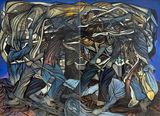
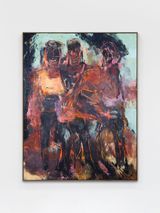
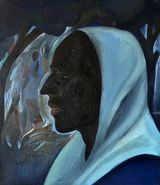
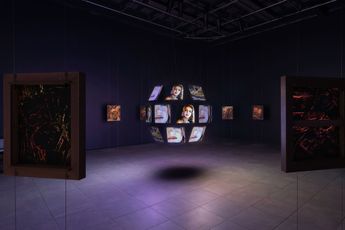
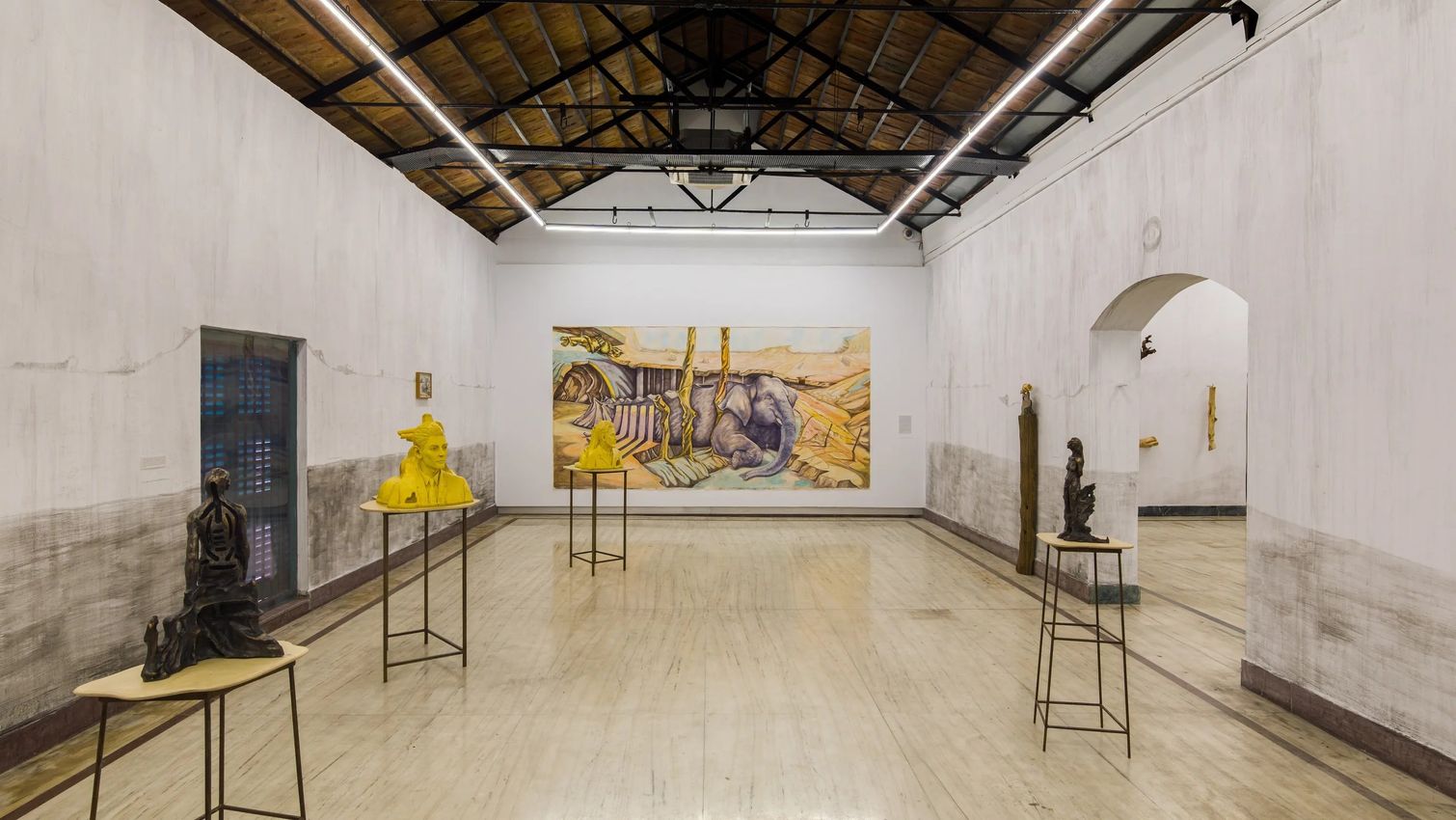
Christopher Kulendran Thomas (b. 1979; lives and works in Berlin, Germany) spent his formative years in London, after his family left Sri Lanka during the civil war. His knowledge of the civil war and its long-drawn aftermath, like many other diasporic Sri Lankan Tamils, resulted from the circulating images, news and stories about the region that were disseminated through manifold sources at the time. His interests lie in unpacking the multiplicity of historical narratives and the elusive nature of ‘true events’ as opposed to their claim of objectivity. The image and therefore what it represents, and the context in which it emerged, influences his works significantly. Through immersive film installation, painting and sculpture, Thomas’ practice is underscored by the representation of modern art and visual culture, specifically in the Sri Lankan context. In his paintings, the initial compositions are generated by a constantly evolving machine learning tool that sifts through thousands of art historical images using an algorithm he has built. Once this image is fixed, Thomas paints the digital image by hand on the canvas, a process that allows adaptations and improvisations through the human act of painting. Thomas’ works question the conventional ways in which paintings are seen, as his practice attempts to bring together simultaneous historical timelines onto a single canvas.

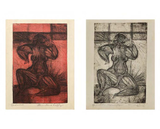
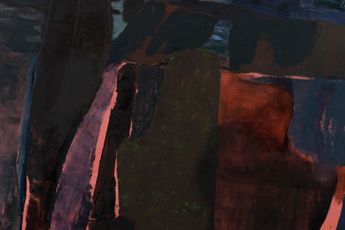
Krishna Reddy (1925–2018) consistently experimented with form, technique and application. At Stanley William Hayter’s Atelier 17, he developed and invented the process that he is most well-known for—simultaneous multicolour viscosity printing—and broke new ground in intaglio printmaking. In collaboration with Hayter, Reddy developed a new technique in multi- colour printing by utilising variable viscosities of the printing inks. He was able to control the viscosity of the inks by altering the oil consistency in each impression, thereby allowing the inks to occupy different depths without mixing with each other, a process never done before. Using a range of rollers, he pushed the inks to desired parts of the plate, making spectacular unique mono-prints, rich in their textural quality and dimensionality. Reddy constantly pushed the boundaries that were not only confined to the formal process of printmaking but a revolutionary way of thinking on how to develop a new form.

Praneet Soi will be presenting a new sculptural work at Art Basel in Basel. Using hand cut blocks of birch, typical to Kashmir, where Soi has been involved with craftsmen for the past decade, they come together to from a two headed bird. A mythological creature found across history, the two headed birds in Indian mythology is Gandabherunda. In Indigenous North American mythology they are known to us as Thunderbirds. The shapes of the blocks are gleaned from geometric tiling ubiquitous to Kashmir. The forms are filled in with graded shades of red, creating a dynamic image as the bird appears to glow. In this series of emerging works, Soi recalls the Modernist tradition that looks to folk culture in creating forms that relate to the world around us.
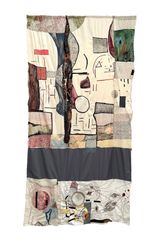
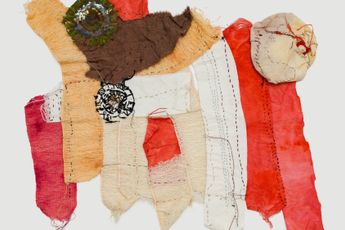
T. Vinoja’s (b. 1991) textile art practice is based in the landscape—both its physical presence and its emotional weight. Since the Sri Lankan Civil War (1983-2009), which lasted for over three decades, she has carried questions about the land and its people. The war may have ended, but its traces remain embedded in the soil, in memory, and in everyday life. This particular work is inspired by those wounded landscapes. To her, the land is not just a backdrop—it is a witness, a victim, and a silent bearer of trauma. Vinoja approaches the landscape as something that holds memory, loss, and grief, much like the human body. In this work, the land and the body are metaphorically intertwined. Through this connection, she explores the ongoing relationship between trauma, memory, and place—how landscapes can hold wounds, just as people do.

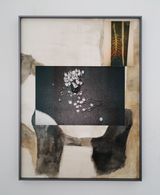
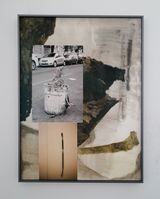
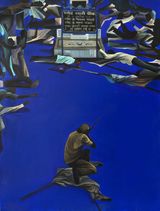
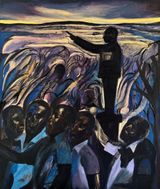
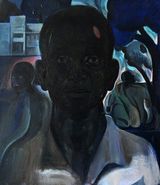
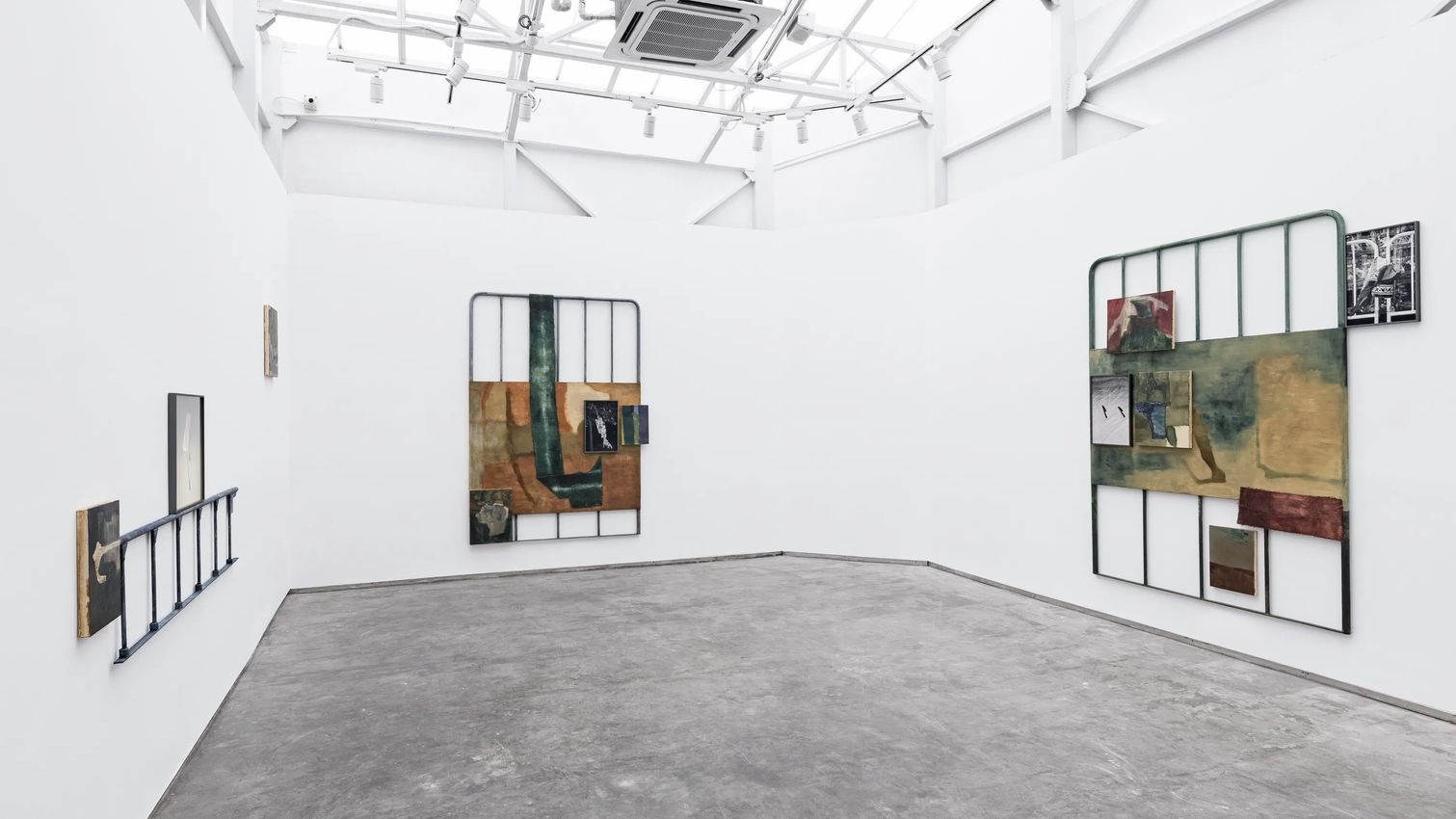
Biraaj Dodiya’s (b. 1993; lives and works in Mumbai, India) new work Atlas of Holding Together is a series of collaged drawings on paper. Combining images from Dodiya’s point- and-shoot camera with watercolour, ink, and acrylic drawings, these works trace back into the beginnings of her interest in abstraction and in constructing a cryptic geography, connecting body and landscape, imagined and urban. This particular body of work features photographs from the street or the studio, depicting objects either held together or falling apart. This sense of collapse and a resistance to collapse have become significant points of interest in Dodiya’s practice. Here, the black and white images combined with the immediacy and physical lucidity of water- based materials and the transparencies and overlaps it allows give the final image a scan- or x- ray-like quality, almost as if it were exposing the organs and bones of her larger practice. These function as a prequel to larger paintings; they contain diagrams, suggestions, clues, questions, spontaneous conjurings, and ways of looking. Construction, decay, formation, and collapse become verbs of a poetic interchangeability; the image arrived at is a tentative map of the world, charting a choreography for searching. In his new body of work, Vikrant Bhise (lives and works in Mumbai, India) depicts Chembur’s Siddharth Colony, an important and active Dalit neighbourhood in Mumbai. Rendered entirely in shades of ‘Royal Blue’—a symbol of resistance, dignity, and the collective strength of the Dalit community—the works evoke a history of struggle and a vision for social justice. Places like Worli BDD Chawl, Matunga Labour Camp, Ramabai Nagar Ghatkopar, Kannamwar Nagar Vikhroli, and Siddharth Colony are more than just residential spaces in Mumbai. They are sites where Ambedkarite philosophy has been practised and celebrated through public readings, street plays, musical performances, study circles, and political organising. Each colony holds a distinct legacy. Now that many of these colonies are being redeveloped, Bhise questions where future generations will gather to organise, perform, or express their activism. Yet he remains certain that the spirit of the Dalit movement will endure—through memory, voice, and resilience.
Bhasha Chakrabarti (b. 1991, Honolulu, HI; lives and works in New Haven, CT) will be showing a new work Oceanic Feelings, part of a new and ongoing series The Ship as Co- Conspirator (to capitalism and to its undoing), which is based on a series of visits that Chakrabarti has done to the shipbreaking yards across South Asia, where over 85% of the world’s ships are broken down and recycled. While there are ships of all kinds dealt with here, a large number of them are immense container ships which ferry the world’s commodities across the seas. Oceanic Feelings is a triptych of embroidered and needle-felted works, done on used anddiscarded clothing based on the eroded and barnacled surfaces of these mammoth vessels, which have reached the end of their lives. The embroidered pieces are set within brass portholes which she has collected from the shipyards themselves, and they were, of course, taken from the bodies of these same vessels. Rather than looking out into a distance, when one looks into these windows, one is faced with a tactile surface and immediate reality. It’s a reality that forces us to reckon with the violence of mass consumption and the inherent impossibility as well as unsustainability of the systems that are there to support globalised capitalism, even under promises of recycling.

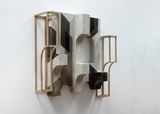
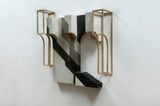
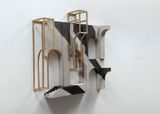
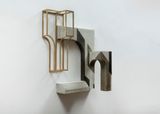
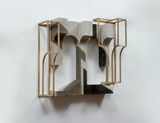
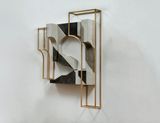
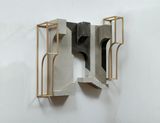
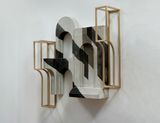
Rathin Barman (b. 1981; lives and works in Kolkata, India) presents Arbitrary Spaces, a new body of cast concrete relief sculptures with brass projections that highlight altered, contemporary arches and pillars. These forms are drawn from the architectural elements and renderings of grand colonial homes in North Kolkata, which Barman has engaged with for many years. This body of work also stands as a metaphor for the makeshift tenements and adaptive architectural interventions introduced to accommodate expanding families or migrant tenants—individuals who have, over generations, made these homes their own. Barman explores the notion of ‘home’ as a living organism, using a precise conjunction of disembodied built forms and the simultaneous renewal of future possibilities. In contrast to the perceived permanence of architectural structures, his work underscores how the configuration of spaces and architectural features morph over time, reflecting the shifting contexts and lives of their inhabitants. In Barman’s practice, architecture becomes an anthropological tool—the representation of space emerges not only from spontaneous, sensorial responses but also from deeply personal connections forged with the residents of these evolving homes.

Julien Segard’s (b. 1980 in Marseille, France; lives and works in Goa, India) body of work The Edge of Memory explores forgotten zones, spaces of contradiction where industry meets nature, and where marginal activities and hidden freedoms exist. The project began over 20 years ago in the industrial landscapes of the south of France around the Étand-de- Berre lagoon. The intimate, symbiotic, and oftentimes destructive relationship between man, nature, and architecture transforms into points of introspection for Segard, who is fascinated by these blind spots and places that escape control, where something unexpected can emerge. His work is a journey through fragmented geographies and inner worlds, reflecting on resilience, decay, and the stories one might find in these margins.

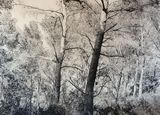
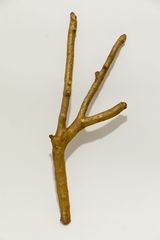
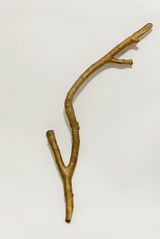
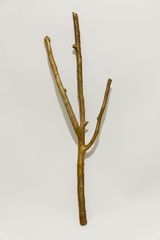
Over several years Adip Dutta (b. 1970, Kolkata) has immersed himself in the nightscape of the city, relooking at the sculpturality of form left behind in empty spaces of bustling footpaths, wares sold on streets tightly packed with tarpaulin and discarded items of daily use. Often, he sculpts trees and fallen branches in bronze in an extension of his exploration of form, but also as witnesses to his ethereal vision of the nightscape. Evident in the bronze sculptures is Dutta’s gaze that invites the viewer to renew value, we assign as a society, to objects that are everyday and occupy our field of vision.

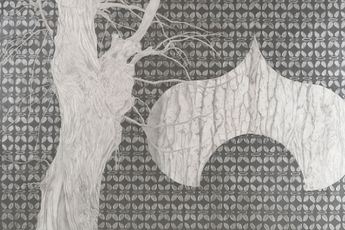
Ayesha Sultana’s (b. 1984; lives and works between Jashore, Bangladesh and Atlanta, USA) practice is an ongoing investigation of drawing, of seeing space in continuum, of exploring gaps in visual memory and revealing ways of seeing what is overlooked in plain sight. Sultana’s graphite drawings represent a delicate yet intriguing contrast between appearance and reality through arrangements of geometric shapes and spatial structures. The works embody Sultana’s propensity towards mark-making through the interconnectedness of image and time. On closer viewing the smooth surface of the paper is dark but reflective, while clustered within it lies intricate folds and ruptures which animate the surface resembling the texture of metal. It emphasises the mineral attributes of graphite used in the work. This also refers to an element of three-dimensionality produced by the dialogue between the versatile malleability of paper and the austere physicality of graphite.

Read More

Selected Works

Loading...

Artists Exhibiting

Also Exhibiting at Experimenter

The art world in focus