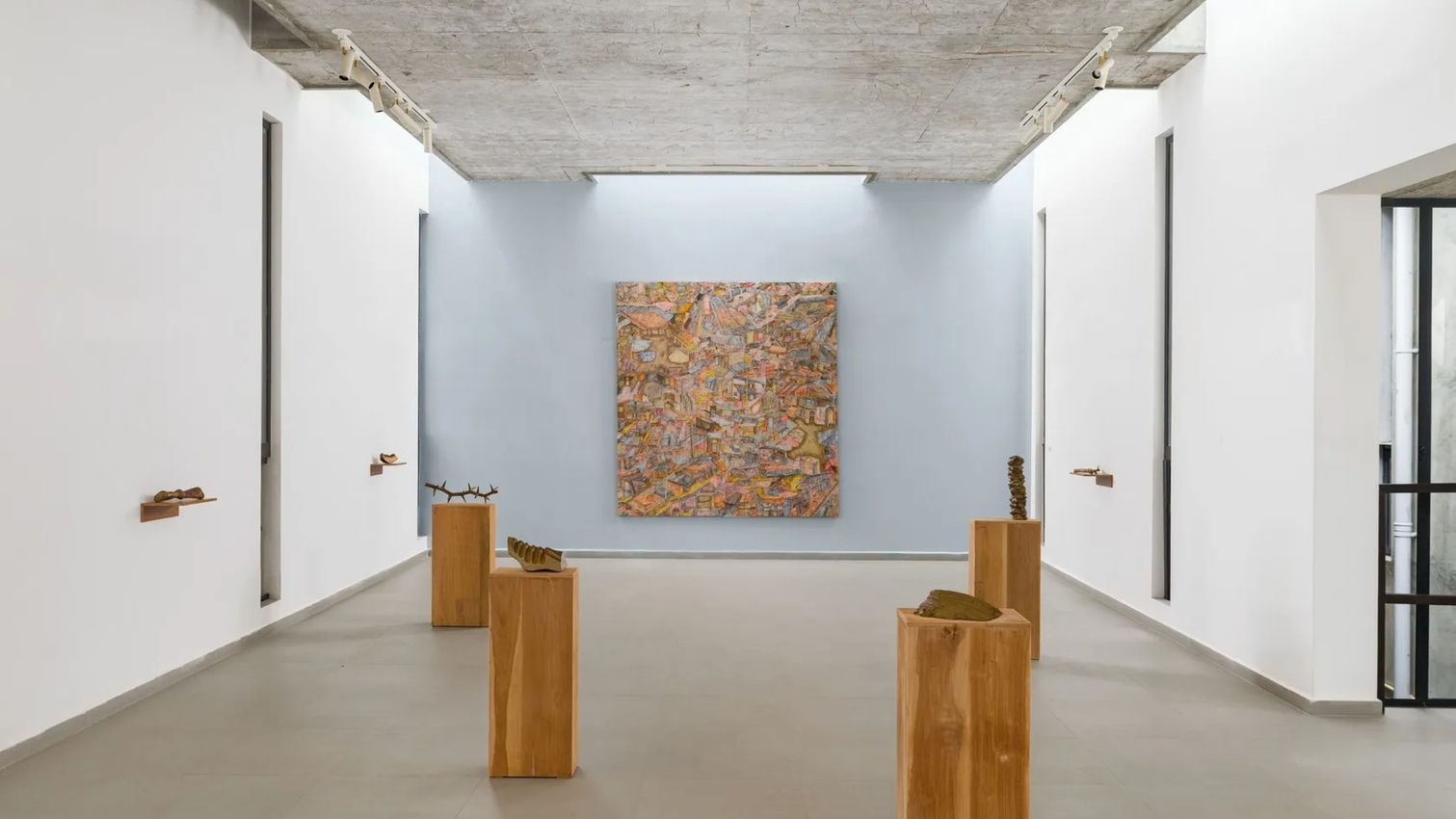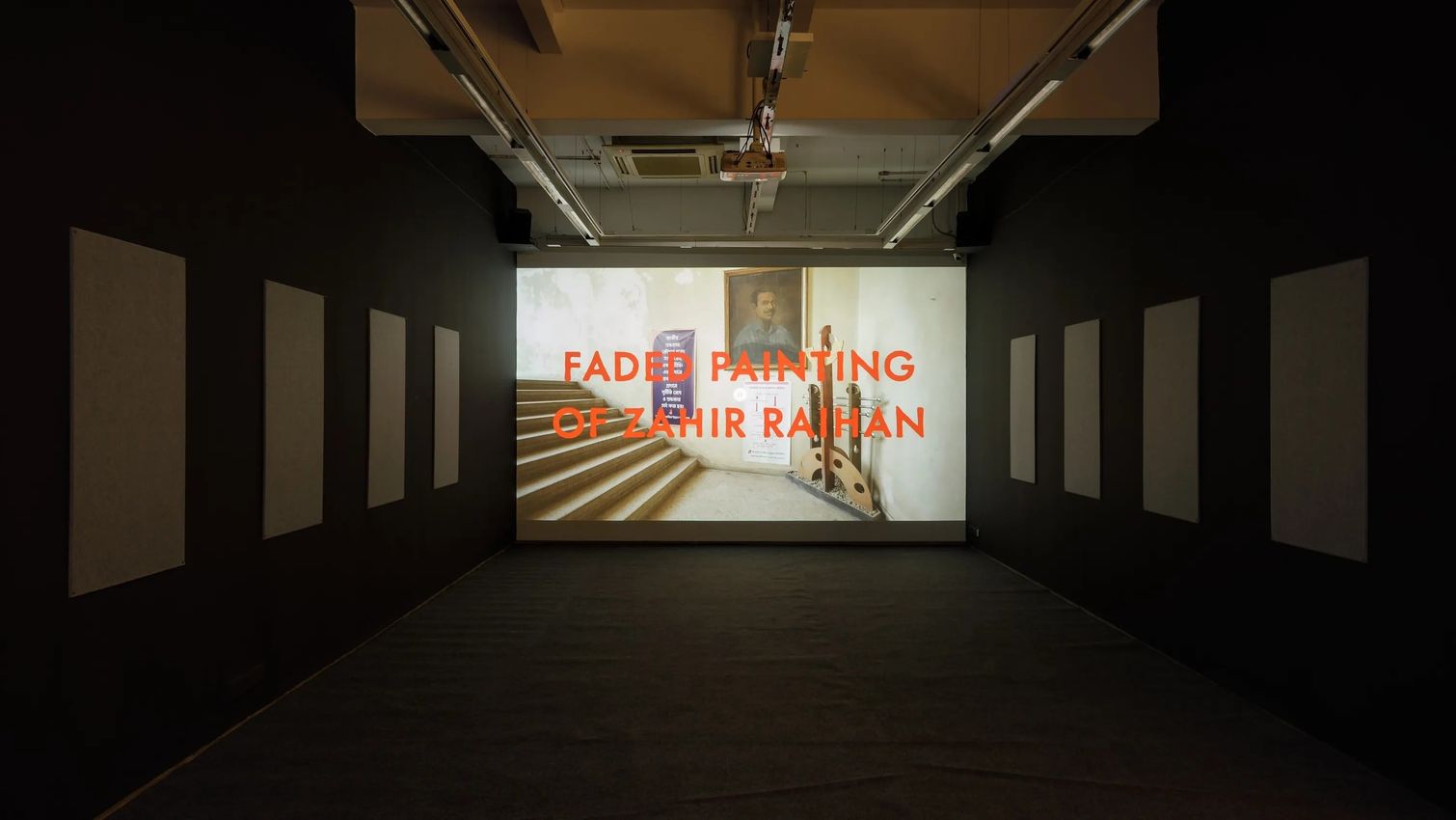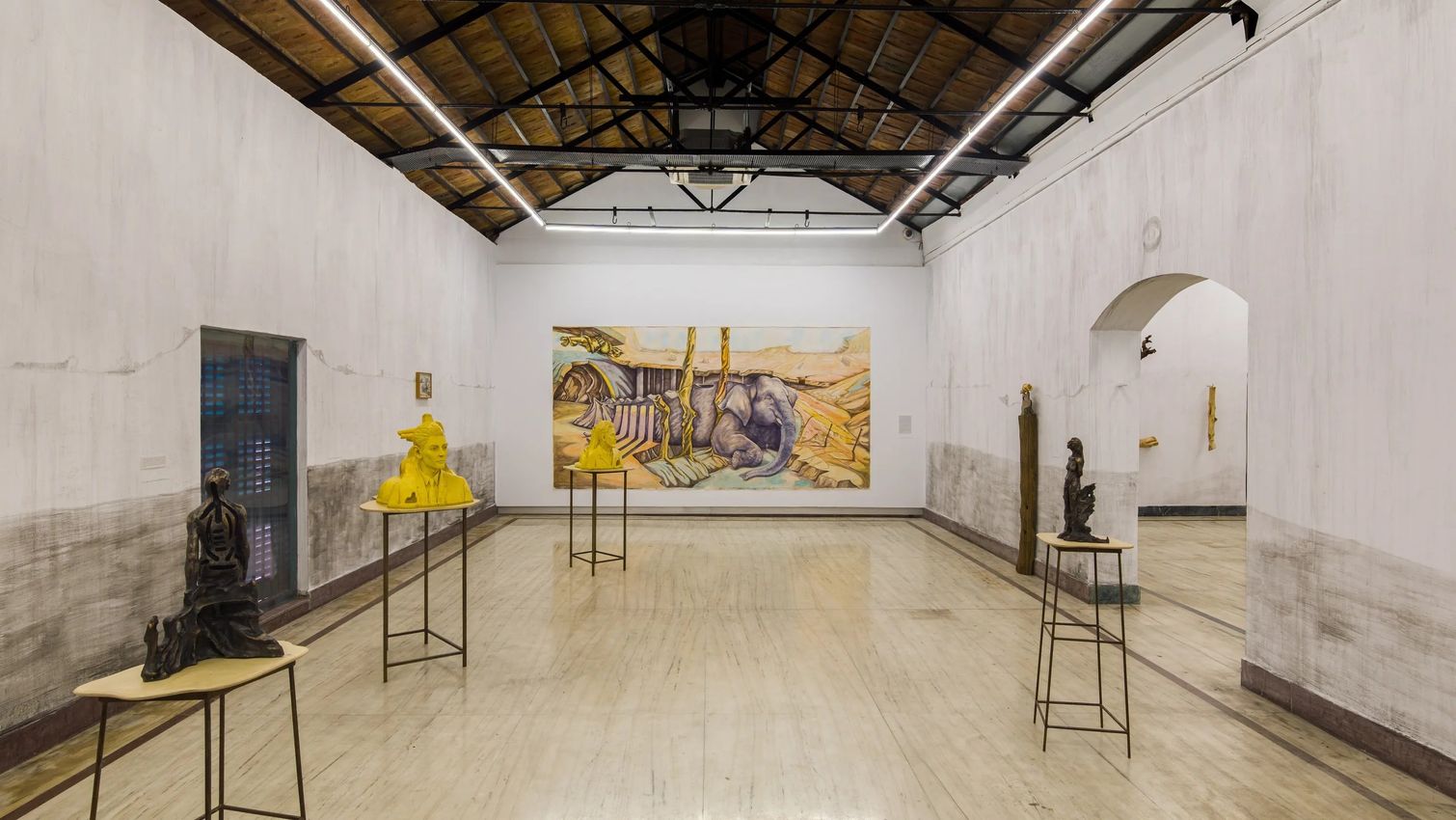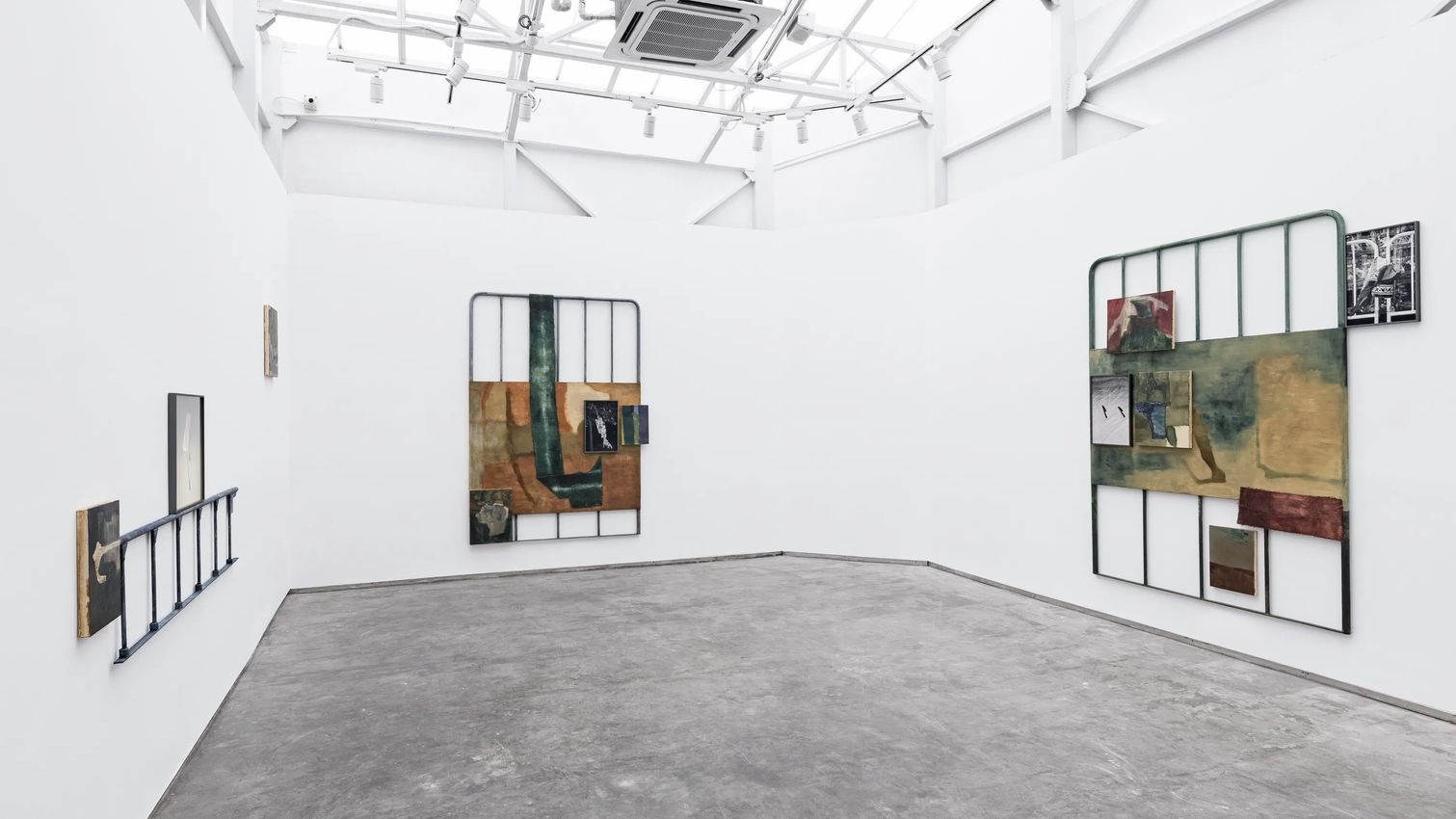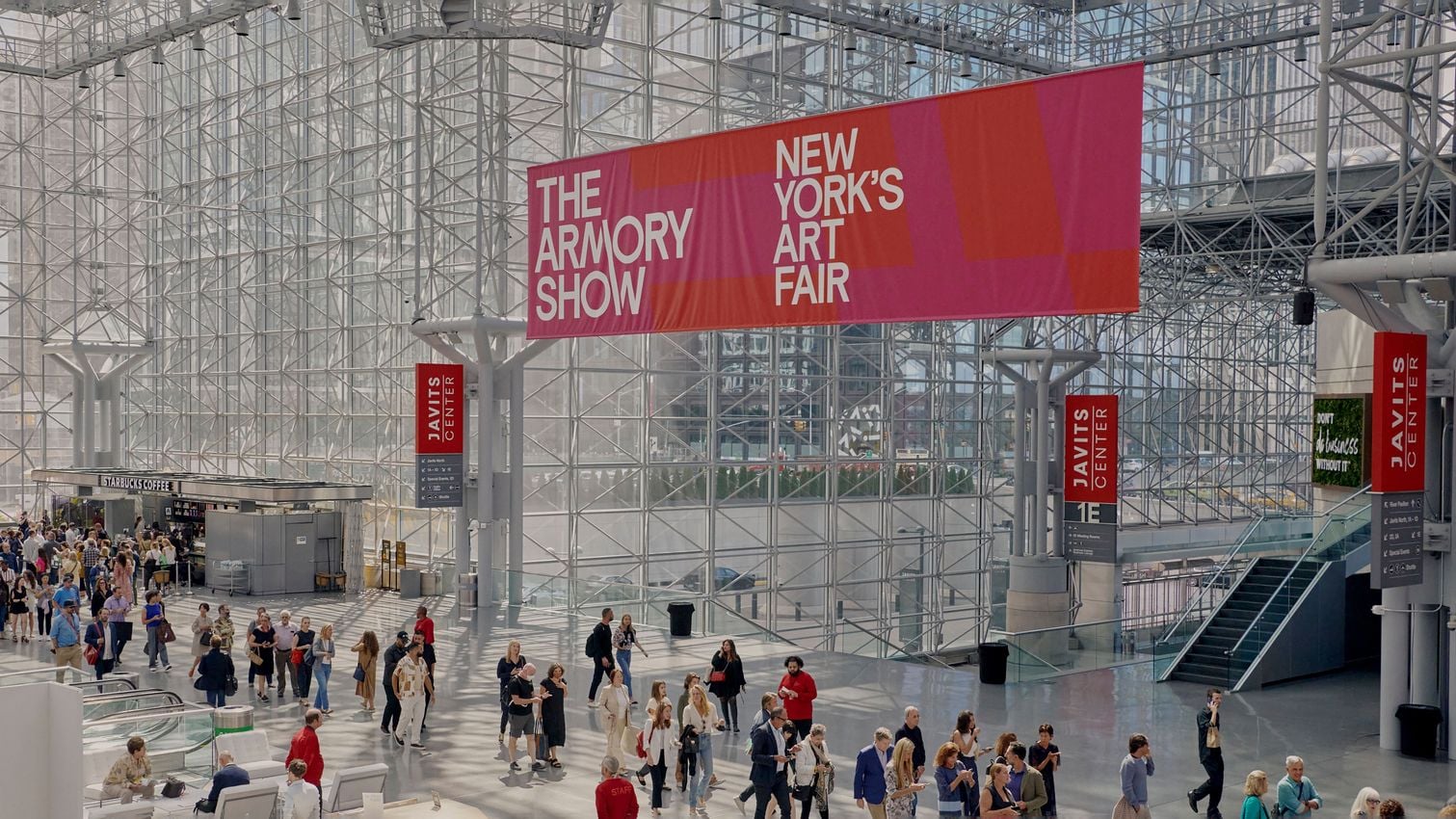
Experimenter marks its debut presentation at The Armory Show with a group exhibition which includes works by some of the most critical voices across South Asia—Ayesha Sultana, Bhasha Chakrabarti, Biraaj Dodiya, Kanishka Raja,Krishna Reddy,Rathin Barman, Sakshi Gupta, Sohrab Huraand T. Vinoja.
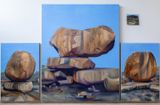
Bhasha Chakrabarti (b. 1991; Lives and works in New Haven, Connecticut) will be showing her new body of work Monolithic Witnesses, an installation depicting three untouched rocks from the megalithic site of Hire Benekal in the state of Karnataka, India alongside three paintings of ruins of the geographically proximate 64-pillared mandapa built in the 16th century Vijayanagara Empire. By placing these natural formations side by side with a man-made wonder, along with the scale shift of depicting the rocks as monumental and the monument as miniscule, the wonder and persistence of nature is brought to the fore—civilisations turn to ruin while nature persists as a witness to human hubris. It is interesting to note that each of the pillars of this mandapa corresponds to one of the arts according to classical Sanskrit texts, which list 64 types of art, from painting and music to playing word games and making the bed. In some ways then, these massive earthly boulders surpass the grandeur of the most sophisticated and revered of human endeavours—‘The Arts’. The work foregrounds the irony of the products of human imagination and labour being fragile and trivial, while the ‘raw materials’ take on qualities of timelessness and otherworldly splendour. The temporality of history is played out before these eyes of these enduring agents that do not forget.
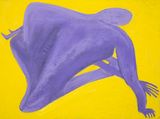
Sohrab Hura’s (b. 1981; Lives and works in New Delhi, India) series of soft pastel drawings are testaments to his yearning for softness and the fluid malleability of the process and the medium owing to the numbness he felt towards the harsh permanence of photography during a time of personal loss and ailment. Hura’s exploration in image making through drawing is underscored by his tendency to reflect upon the social and the political through everyday ordinariness and memories underscored by love, joy, relationships and the familial. His immediate space also includes animals while the significance of title texts, tempering the tone of the images, creates a parallel between this body of work with the format of a photobook. A part of this body of work will also be on view at the exhibition Mother, Hura’s first US survey, at MoMA PS1 opening on October 10, 2024.
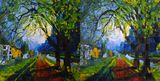
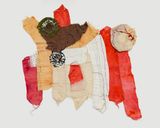
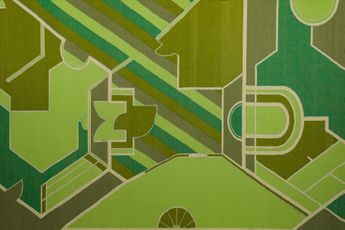
Kanishka Raja’s (1969–2018, India) ravishingly patterned work, as the artist once put it, ‘explores the intersection of representation, craft, technology, and the gaps that occur in the transmission of information.’ Conceptually heady and aesthetically alluring, Raja’s I and I series combines painting with woven, scanned, printed, embroidered, and reproduced counterparts. Raja transformed a hybrid inheritance—the postcolonial confluences of an urban Indian childhood, family roots in textile manufacturing and clothing design, liberal arts and studio education in the United States, binational footing in New York and Kolkata—into an extraordinary practice, wherein strategies of variation, repetition, reversal, and mirroring converge in ‘composite fields that tap into oppositions—the technological versus the handmade, original versus reproduction, and neutral versus contested.’
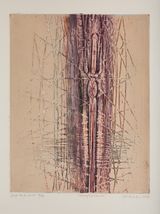
Krishna Reddy’s (1925–2018) career, which spanned over seven decades, was defined by constantly pushing boundaries not only through his artistic practice but also in thought and philosophy. Reddy’s practice was steeped in a profound and sensitive understanding of nature, that was instilled in him by his influential teachers Nandalal Bose and Ramkinkar Baij at Rabindranath Tagore’s Santiniketan in the mid 1940’s. His visual language underlined the innate interdependence and communion between nature and humanity—rooted in the ancient eastern philosophies imbibed through close association with his erstwhile teacher, Jiddu Krishnamurti, who is regarded as one of the greatest philosophical and spiritual figures of the twentieth century. These lived experiences enabled Reddy to be an empathetic and discerning artist, teacher and humanist as he traversed the world over the next decades, always challenging the limits that confronted him in his practice—materially, philosophically and technically. He converged his diverse strands of knowledge—of sculpture and painting, the delicate alchemy of materials and chemicals and his deep philosophical thinking into the pioneering process that he introduced to the world of art—simultaneous multicolour viscosity printing.
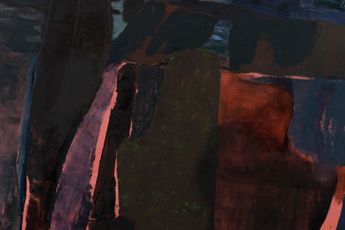
Simultaneously straddling ideas of ruination and form, chaos and care, Biraaj Dodiya’s (b. 1993; Lives and works in Mumbai, India) paintings are developed through an intuitive system of constant accretion and excavation of the painted surface. Flickering between depth and imagined shadow, these new paintings tread over the idea of land, air and home. The paintings seem to be on the brink of losing form, focus, and familiarity as faceted surfaces generate new landscapes from fractured and adjoining topographies. Bearing traces of their making and unmaking, the layers of earthy pigment accumulate and erode as the act of painting gives way to burial and excavation. In her work A day is vast, Dodiya captures and envelopes the viewer’s body within the painted psychological landscape, where the vibrating and shifting feeling of earth, form and absence emerge slowly. The Late fragment series is a set of intimate, ‘torso-sized’ paintings, where the emotive physicality of oil paint edits the soft darkness. Through these works, Dodiya examines whether the painted surfaces evoke erosion or bruise, shoulder or cliff, entries or exits, soil or flesh while also questioning if a cartography in paint could trace non-navigable terrains.
Sakshi Gupta’s (b. 1979; Lives and works in Mumbai, India) work explores visual and tactile contradictions and complexities through sculptural reinterpretation of everyday objects. She challenges the boundaries between art and life by juxtaposing materials in unexpected ways, re-evaluating how we perceive what is typically overlooked or considered obsolete. Central to her practice are found materials, particularly metal scrap, that contain their own histories, unravelling notions of transience, resilience and permanence. The crosses between banal inanimate objects and animal-human lives seen in the works arise from a desperate need to blur these rigid confines and experience the self in a larger context, outside of these demarcations. Sakshi Gupta will be showing a series of sculptures of pigeons, a bird species that has an all-pervasive presence in our everyday environments. They seem to play the role of spectators, or silent witnesses in the urban fabric. Observing their curious mannerisms reveal their starkly obstinate nature and invites scrutiny because human traits are so easily identifiable in its behavioural patterns.
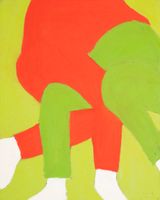
In Ayesha Sultana’s (b. 1984; Lives and works between Jashore, Bangladesh and Atlanta, USA) works, navigating one’s own body in relation to her immediate surroundings presents an intriguing interplay between spatial and corporeal semantics. In the new body of work Inhabiting Our Bodies, Sultana uses coloured ink on tissue paper and probes the porosity and absorption of fluid on such a translucent and ephemeral matrix—one that is easily torn, damaged and dissolved. The choice of tissue paper as the medium embodies an ininterconnectedness of her own body and its embedded memories, evokes the body and turbulence within the sea while holding space as an emotive force. These abstract works simulate the tactility of the bodily processes—stains, pools of fluid, blood clots and the cellular nexus. The works are also a testament to the resilience of the body and nature seen through the lens of forms that emerge from experiments in visually attempting to expand the interstices of her thoughts into material exploration.
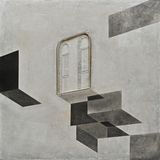
Rathin Barman (b. 1981; Lives and works in Kolkata, India) draws attention to how architecture adapts itself to a growing influx of people over extended periods of time through the Space Counts series. By providing an anthropological lens into the endless possibilities a space can entail, Barman redefines the idea of architecture as a fixed entity through multiple charcoal dissections and brass inlay on a concrete base, to reflect on human interventions upon built environments. Translating the aesthetic idea of a space or an illusion of a space with functional aspects, the Space Counts series highlights Barman’s gaze at details of buildings and the multiplicities of their architectural intricacies, such as windows, trellises and grilles. Like trees with shared roots, these homes are polycentric, since most of these structures are interlocked and inseparable and so are its people and their personal histories and relationships with each other.
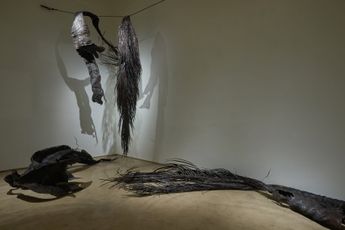
T. Vinoja (b. 1991 in Kilinochchi, Sri Lanka) trajectory as an artist is shaped by experiences of loss, forced abandonment and shattered realities, especially during the final chapter of the civil war in Sri Lanka’s North East and its prolonged aftermath. In her practice the cloth becomes a second skin as she invites an immersion into the constant infliction of injustices, while highlighting simultaneously how the land becomes the repository of memories and histories. At the heart of these expressions is the notion that land often serves as the primary catalyst for wars, precariously balancing the fate of countless lives between survival and destruction.
The exhibition is a quest in exploring possibilities of viewing disparate practices at play while balancing simultaneously the tightrope between technique, philosophy and vision.
A respected voice in contemporary art discourse.
Focusing on ambitious storytelling and insightful art-world commentary. Ocula Magazine publishes in-depth interviews, critical essays and timely analysis on the artists, exhibitions and ideas driving the global art world.
Learn more about Ocula Magazine
Showcasing the best of the art world.
Ocula partners with galleries from around the world to highlight their artists, artworks and exhibitions. Gallery membership is by application and invitation, with each member vetted by an independent panel.
Learn more about Ocula Membership

Specialises in the sale of major artworks.
Led by a team with deep ties to the world’s leading auction houses, galleries and collectors. Ocula’s advisory team offers bespoke services to high-net-worth clients from around the world who are looking to acquire the best of contemporary and modern art.
Learn more about our team and services