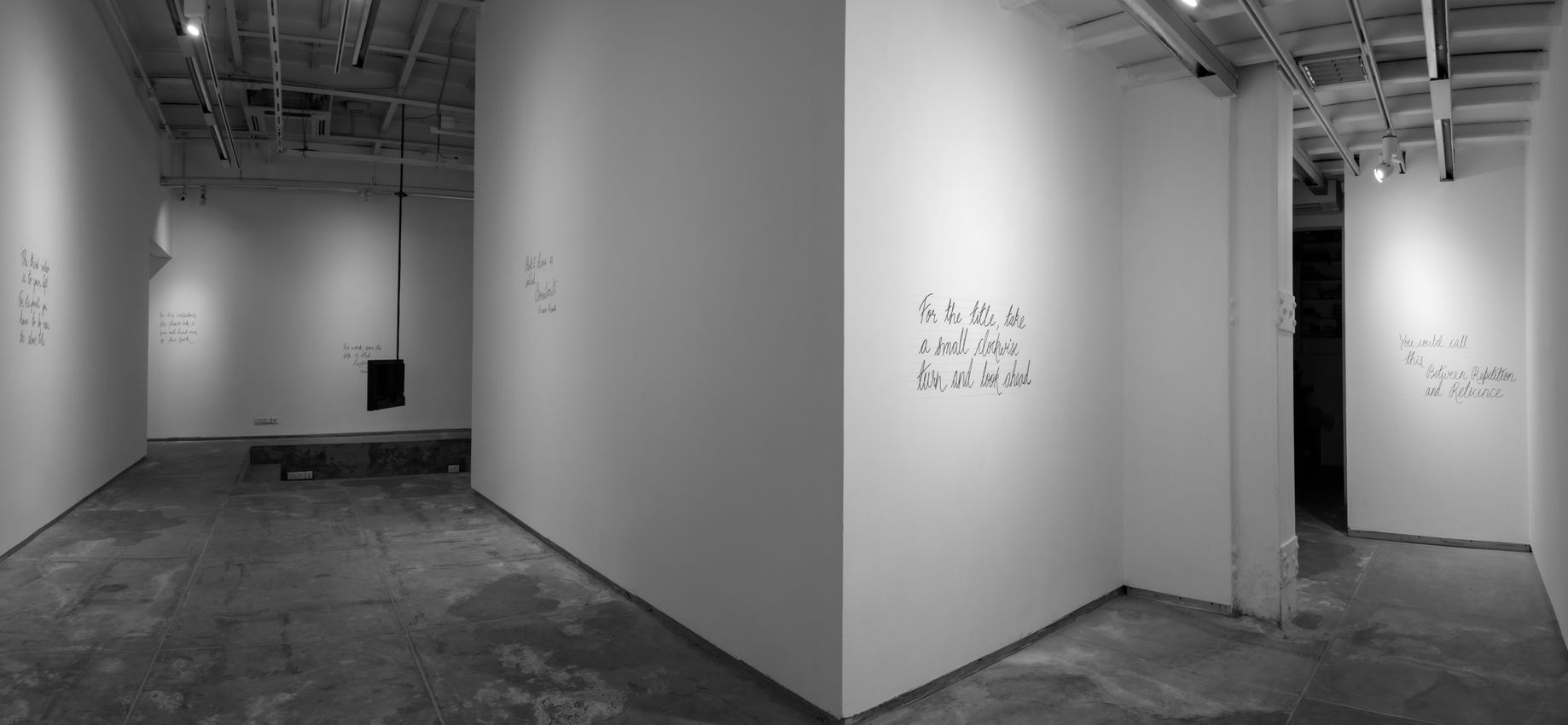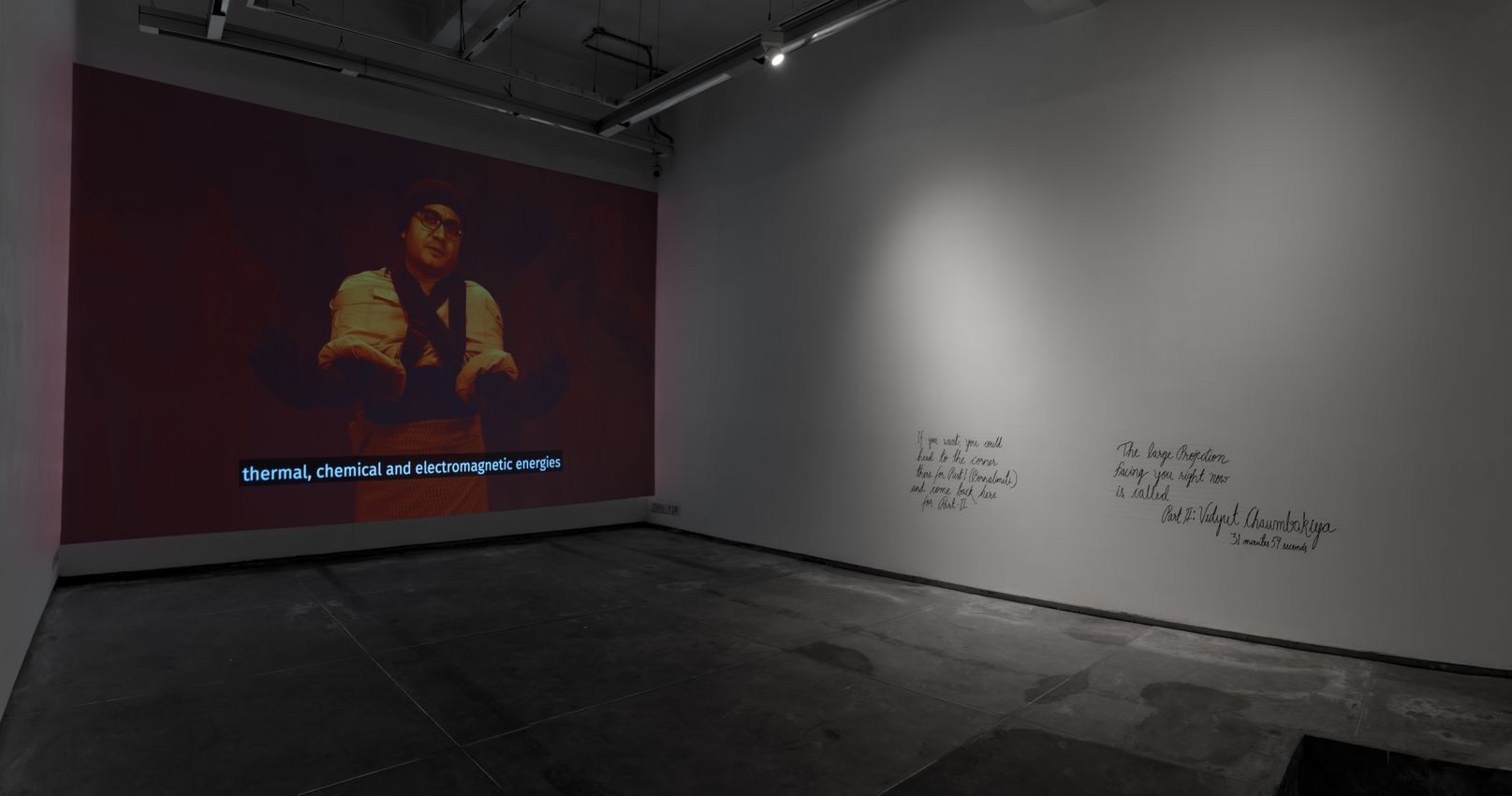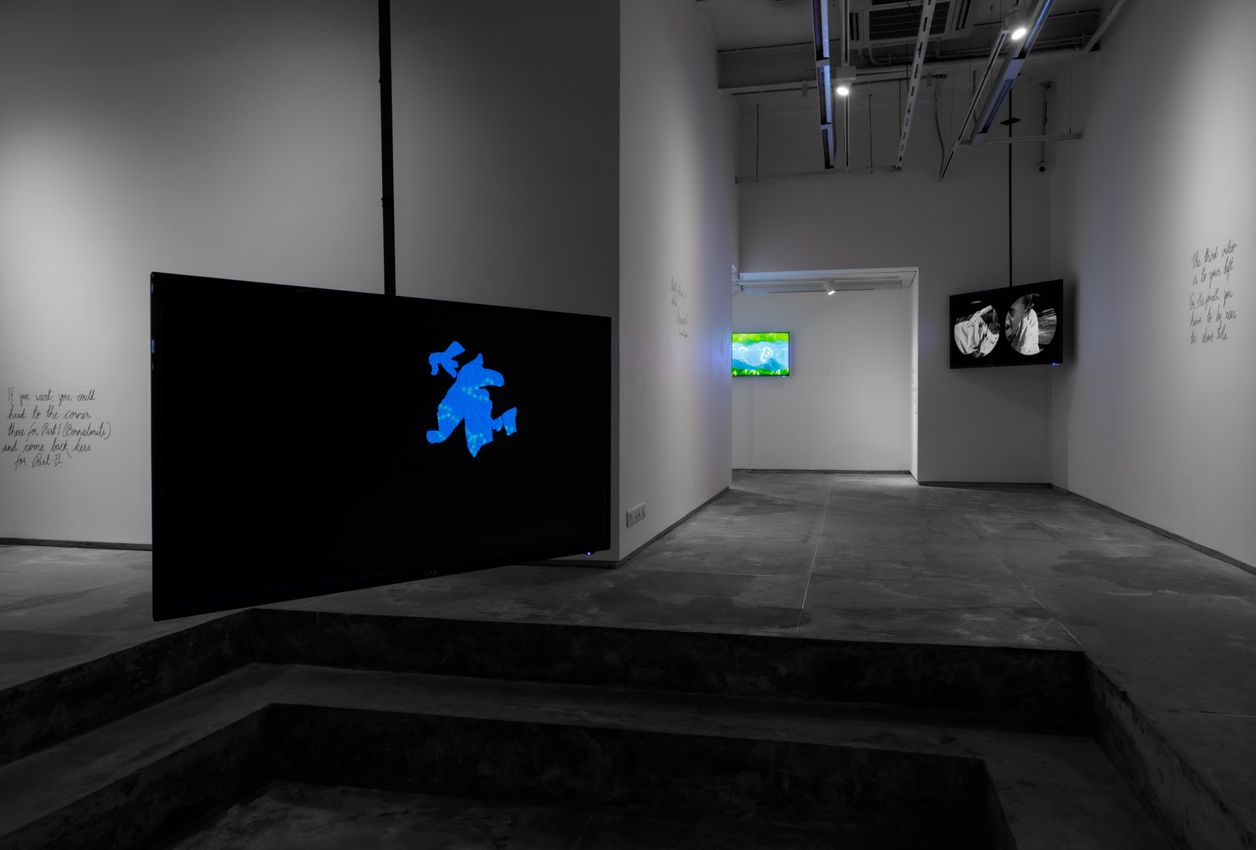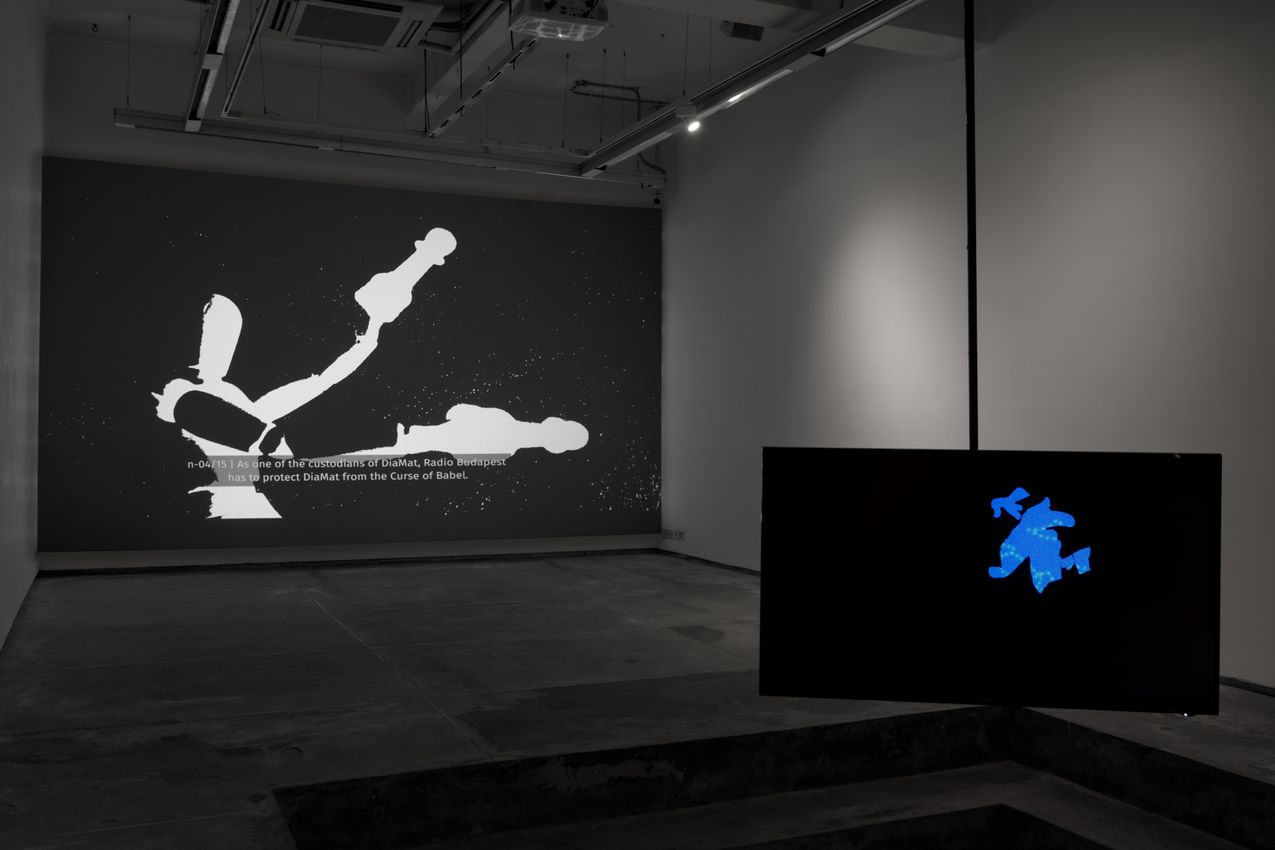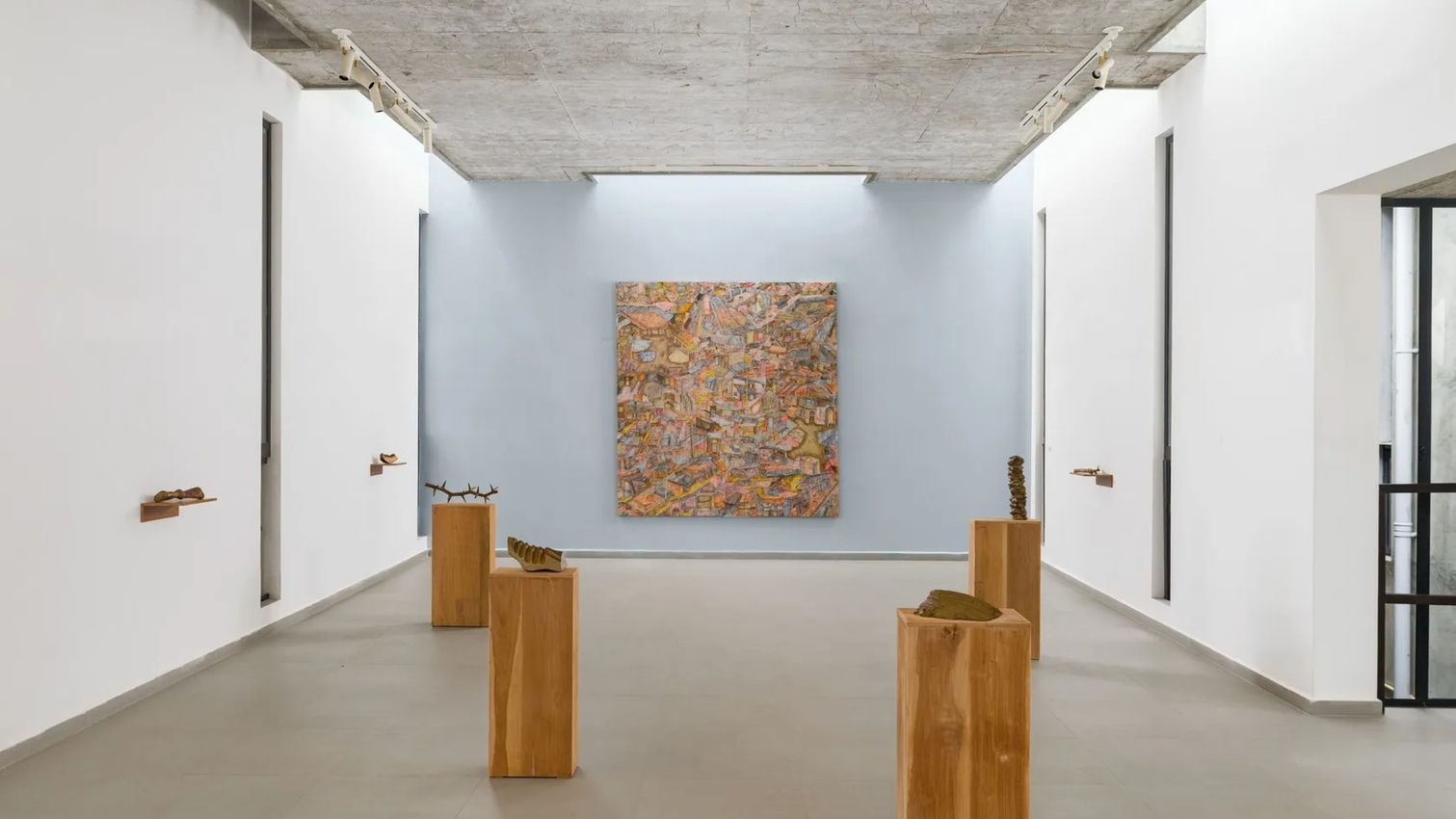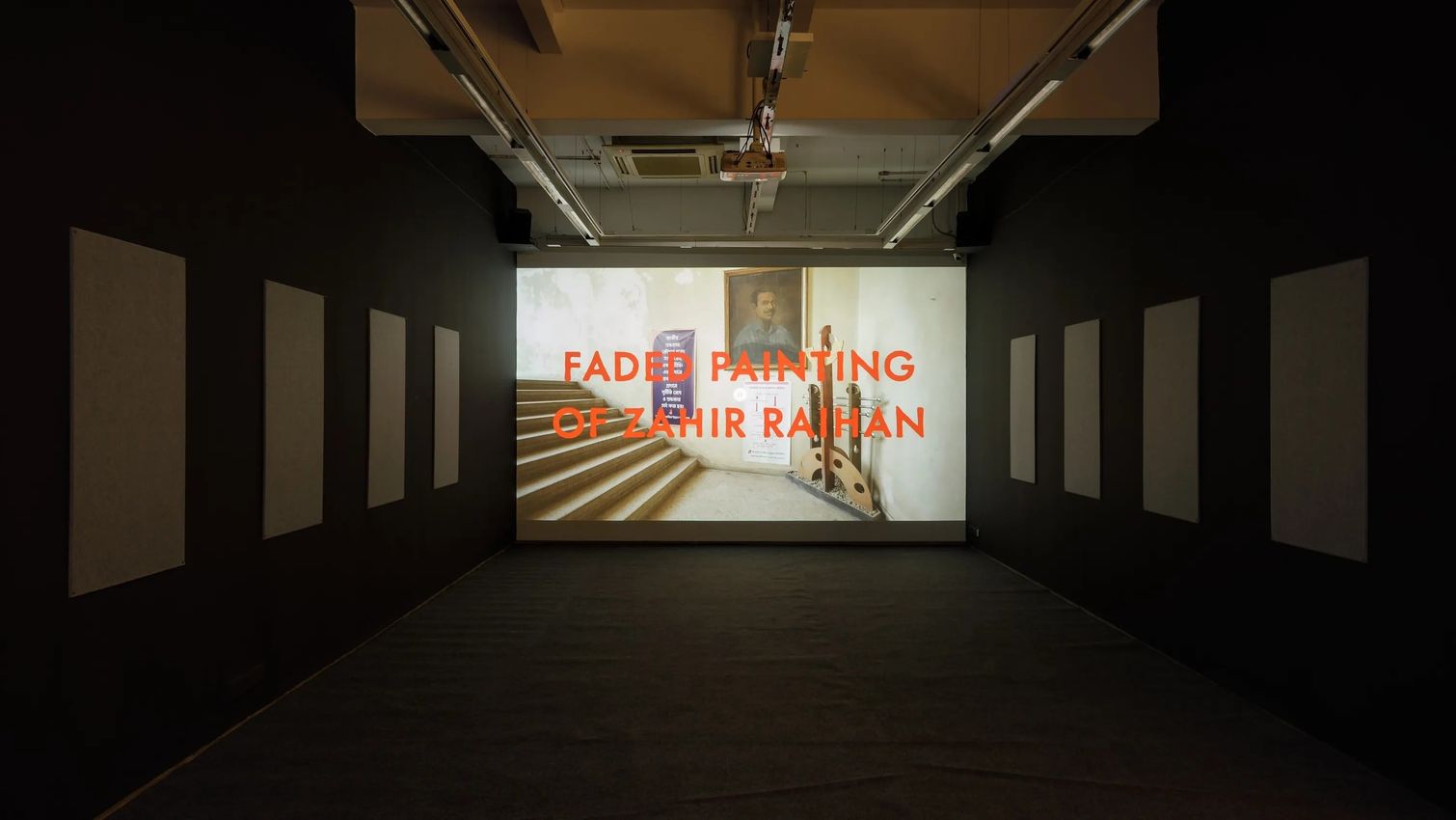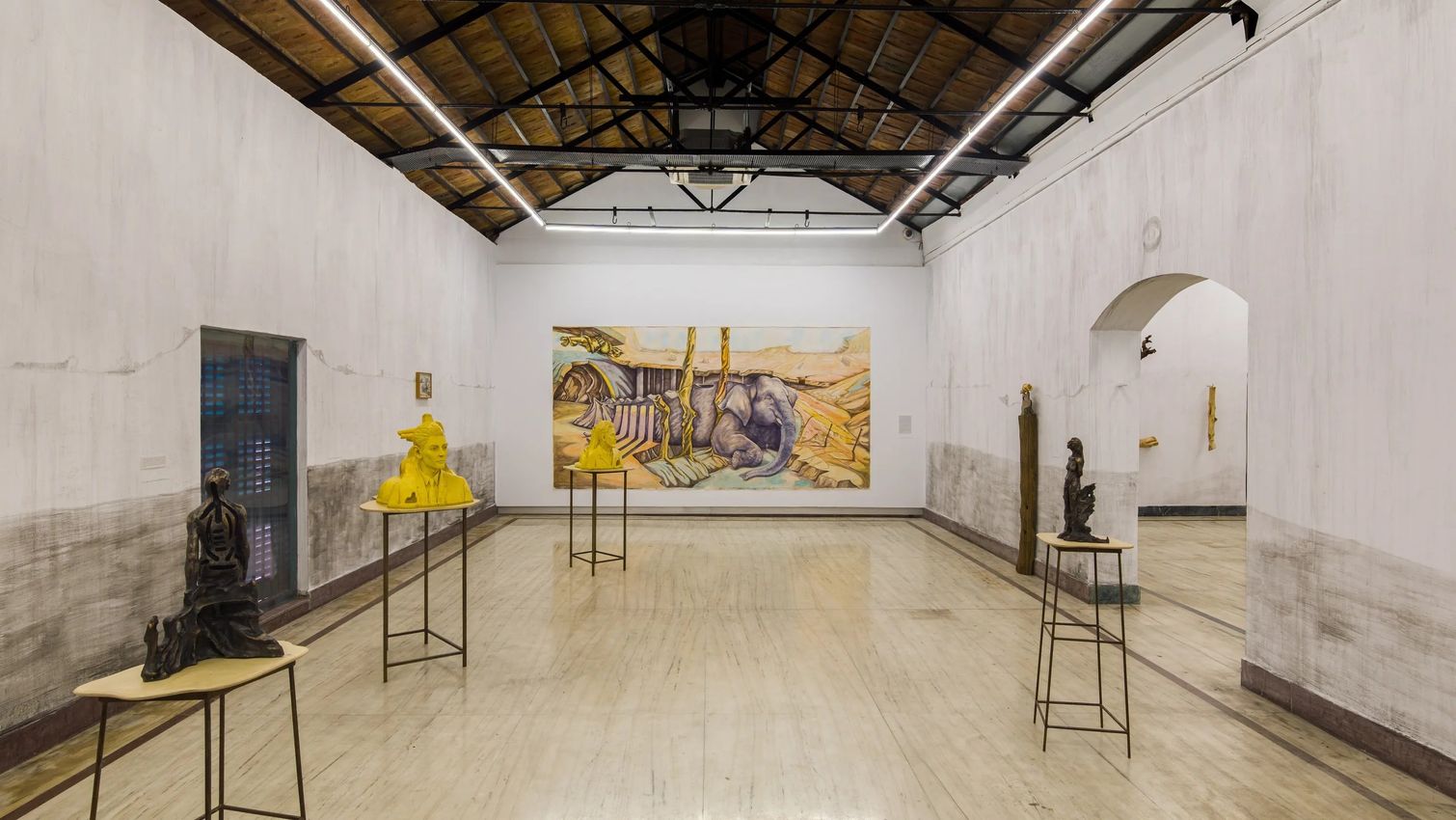
The nodal axis of Between Repetition & Reticence revolves around the famed astrophysicist and Banglaphone public intellectual Meghnad Saha (1893-1956). The work approaches Saha’s oeuvre as an entry point into a fragmented and highly self-reflexive exploration of the silences and disavowals in Bengali cultural history. Distinguished by his passionate involvement in the intersections between science and culture, Meghnad Saha remains a key figure in the twentieth-century history of science and technology in South Asia. However, a critical appreciation of his political salience has been missing from the standard narrative. Hazra borrows from a range of North Atlantic, South Asian and Bengali sources of popular culture, exploring complex connections between scientific enquiries and ideological differences in the backdrop of Saha’s unique interventions in science and politics.
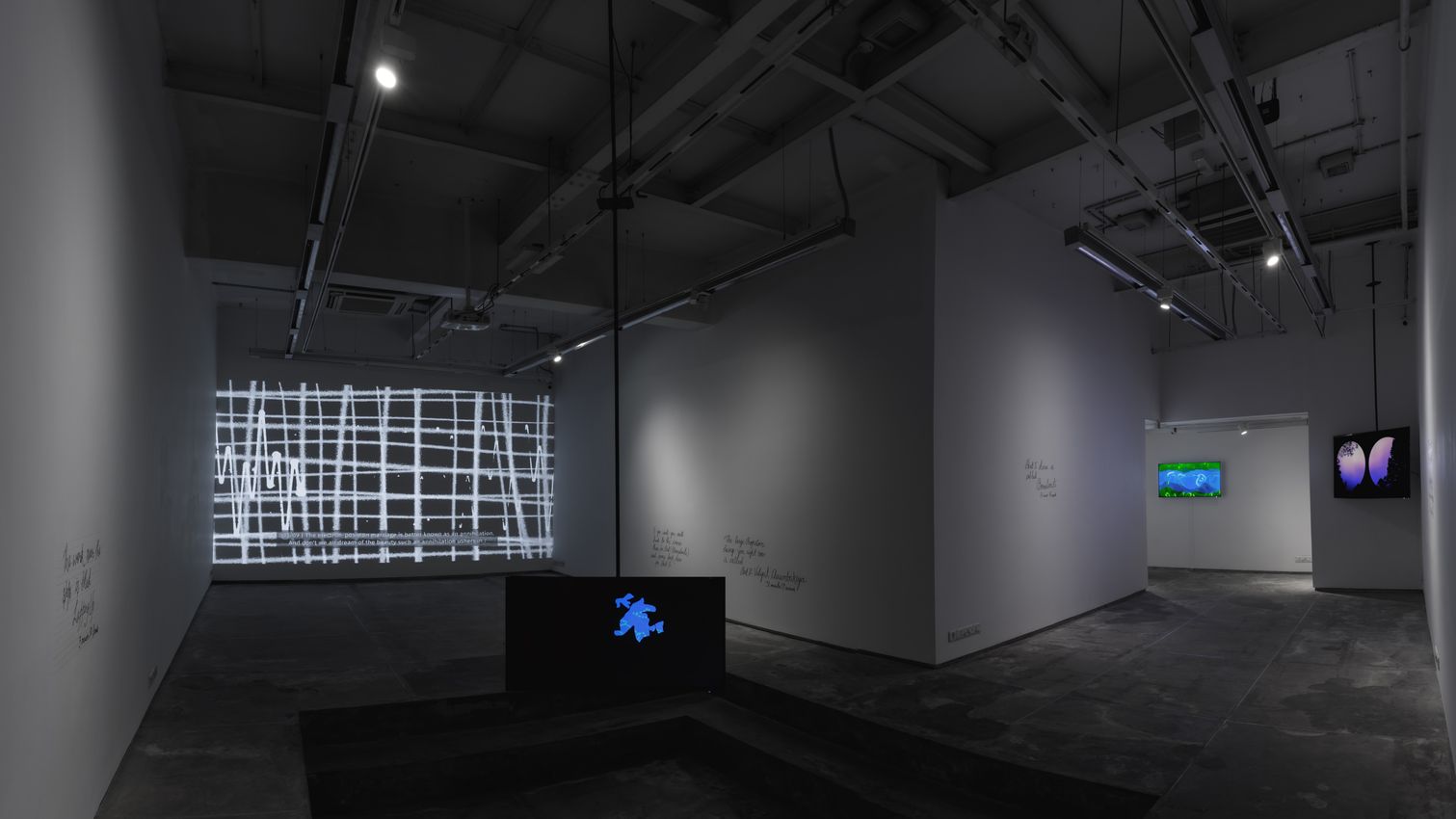
The exhibition confronts the viewer with several simultaneous visual and aural experiences immediately upon entry into the gallery. Using the depression central to the space, is Lapping Up, a video installed low on a screen, whose sound is culled from, amongst other things, statistical data on unemployment, foregrounding a large projection, Vidyut-Chaumbakiya (In Seven Sections). The term Vidyut-Chaumbakiya translates to electromagnetism, an area of fundamental importance for Saha’s scientific work. Working as a fulcrum to the entire show, this video includes a lecture-performance along with references to nuclear physics, western and eastern classical music, art-house cinema and Marxism amongst a host of other signposts, compelling the viewer to re-imagine several seemingly naturalised certainties. The work nudges numerous tipping points, notable amongst them — a moment when the projection screens the section titled “Fraud Weds Fraternity”.
At the other end of the gallery, Bornalimiti (In Five Sections) serves as a preface to Vidyut-Chaumbakiya and introduces Hazra’s sense of repetition and reticence to the show. Bornalimiti traces the longer arc of Saha’s dissenting sensibilities and argues that the full significance of Saha’s insistence on a democratic ethos in the fields of higher education and research hasn’t yet been fully comprehended. To some viewers, the use of double circular shapes to layer the video may resemble theviewing scopes typical of many scientific apparatus. To others, it might appear as a tool for patternsand repetition. The work critiques the strange logic that insists on separating Saha’s scientific andnation-building work from his more directly political work, such as his interventions in the Indian Parliament or his involvement with the contested question of post-Partition refugee settlement. Throughmusic and filmic collages with archival footages of dammed rivers, Bornalimiti stages Saha’s contributions to river valley projects as the site to explore the tensions between the analytical categories ofcaste and class. In the process, we witness an allusive conversation between Saha and RabindranathTagore, the poet-visionary and a co-resident of Saha’s deltaic land, as well as with Saha’s almost near-contemporary — the political philosopher and radical constitutional theorist (1891–1956) Dr. B.R.Ambedkar.
For Hazra, a sustained engagement with Saha’s oeuvre makes him question if the lifeworlds of caste can indeed be relegated to the status of a marginal ‘epiphenomena ‘when evaluating the theoreticaland the substantive content of a scientist’s work. What makes this engagement very difficult for theartist is his ambivalent affinity to an intellectual tradition that had once arrogantly asserted the sup-posed irrelevance of caste in emancipatory politics. Through dialogue, monologue, self-reflection or acombination of them, the artist continues to grapple with this difficulty.In this highly layered, dense and materially nuanced exhibition, what emerges as one approaches the title of the work, hidden away at the dead end of the gallery, is Hazra’s reticence, a conflicted subject-position and his repeated attempts to tangentially circle around the anxiety that grows intimately intothe work. Perhaps the title of the work is literally a bland statement of this unstable equilibrium. Is itpossible that the work tries to self-consciously articulate a polemical position, perhaps against its owngrain or perchance is this polemics an over-compensation for something else?


Experimenter was co-founded by Prateek & Priyanka Raja in 2009. With a multidisciplinary approach, the gallery is an incubator for an ambitious and challenging contemporary practice. The program represents some of the most critical contemporary artists worldwide. Considered to be a ‘pace-setter’ for its region, the program extends from exhibition-making, to knowledge creation, through regular talks, performances, workshops and most importantly, through it’s much acclaimed, annual curatorial intensive, Experimenter Curators’ Hub. In 2016, its artist-book publishing wing, Experimenter Books was launched. Experimenter’s program is rooted in dialogue and dissent. In 2018, the Experimenter Learning Program (ELP) was launched. ELP enables discussion, debate and learning in fields of contemporary and performing arts, curatorship, film, writing, language and social culture. In 2019, Experimenter Outpost an iterative exhibitions program outside the physical gallery where an extension of the program temporarily inhabits disused, characterful spaces was launched. In 2020, Experimenter Labs, an inclusive, experimental, online platform in addition to the onsite gallery programming was launched.

A respected voice in contemporary art discourse.
Focusing on ambitious storytelling and insightful art-world commentary. Ocula Magazine publishes in-depth interviews, critical essays and timely analysis on the artists, exhibitions and ideas driving the global art world.
Learn more about Ocula Magazine
Showcasing the best of the art world.
Ocula partners with galleries from around the world to highlight their artists, artworks and exhibitions. Gallery membership is by application and invitation, with each member vetted by an independent panel.
Learn more about Ocula Membership

Specialises in the sale of major artworks.
Led by a team with deep ties to the world’s leading auction houses, galleries and collectors. Ocula’s advisory team offers bespoke services to high-net-worth clients from around the world who are looking to acquire the best of contemporary and modern art.
Learn more about our team and services