Press Release

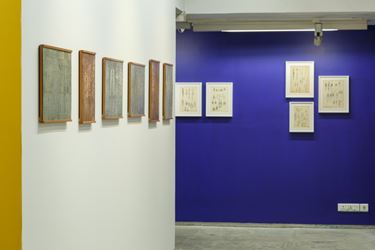
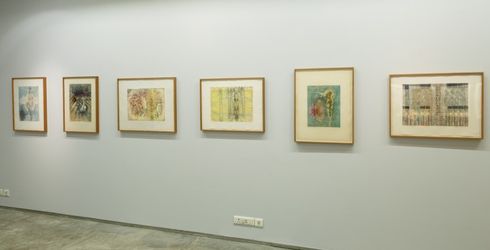
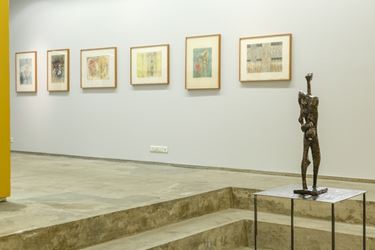
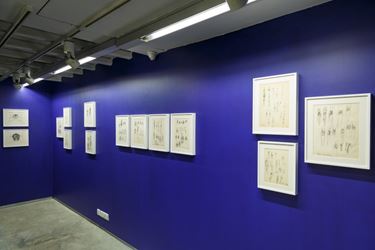
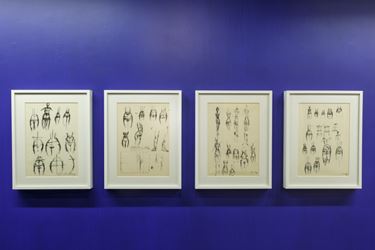
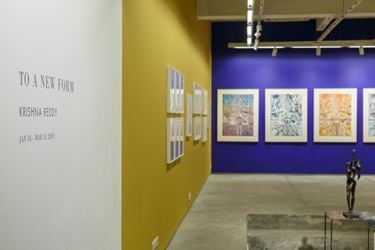
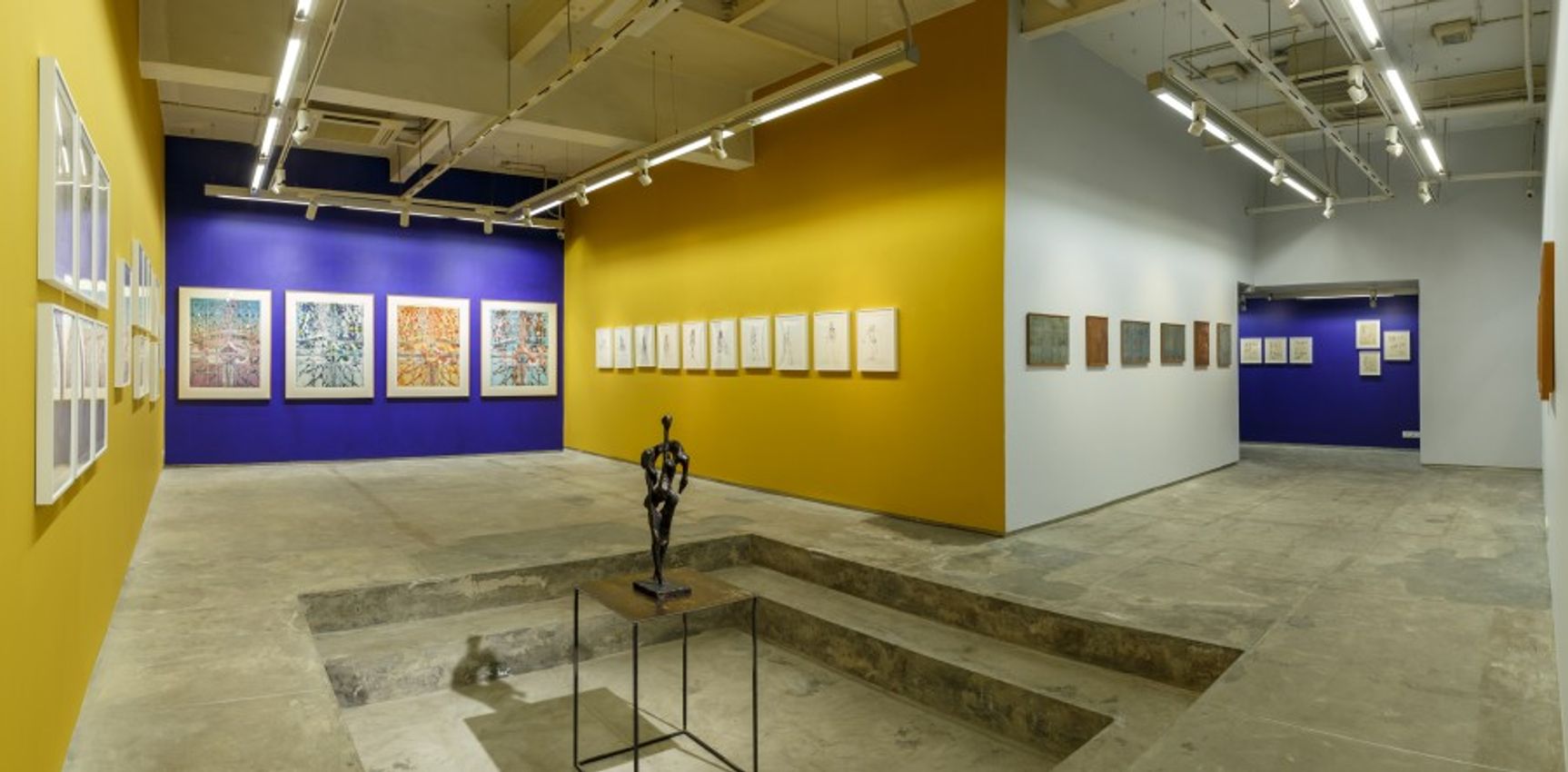
Experimenter presents To A New Form, a solo by the late Indian master printmaker and sculptor, Krishna Reddy (1925–2018). Reflecting on a continuous exploration of form that fed into a practice of over seven decades, the exhibition will show rare drawings, zinc and copper etching plates and corresponding prints. Keeping impression-making at the core of his discipline, the exhibition draws attention to Reddy’s pursuit in new ways of seeing his environment and an immersive lifelong practice of drawing and activating the sculptural surfaces of his metal etching plates.

Krishna Reddy drew from a plethora of experiences and was inspired by several divergent conceptual ideas to develop his own language. In the process, he used drawing as an almost obsessive practice that in turn significantly informed and structured his work, but rarely showed his drawing practice alongside. The exhibition threads a deep connection between Reddy’s drawing, printmaking and sculptural practice. Initially trained in Tagore’s Santiniketan under the tutelage of the influential Ramkinkar Baij and Nandalal Bose, whose guidance would be significant throughout Reddy’s career. In 1949 he moved to London studying sculpture at Slade School of Fine Art in Henry Moore’s class. Thereafter, he spent over two decades in Paris, first at the studio of Ossip Zadkine and then eventually directing Stanley William Hayter’s Atelier 17, which was at the time, a thriving hub for stalwarts like Joan Miro, Constantin Brancusi, Pablo Picasso, and Alberto Giacometti, with all of whom Reddy closely worked. At Atelier 17, he developed and invented the process that he is most well known for - simultaneous multicolour viscosity printing, and broke new ground in intaglio printmaking. In the cafes of Montparnasse, Reddy would discuss how the spiritualism he had learned from his first teacher, the philosopher Jiddu Krishnamurti, had blended with European modernism. Underpinning his ideas was a technical know how that produced several innovations in the medium Reddy made his own. Reddy’s studio practicewas spent in developing and mastering the technique of multicolour viscosity printing and in the process he experimented with form, technique and application.

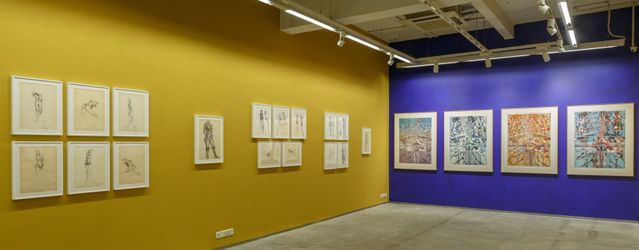
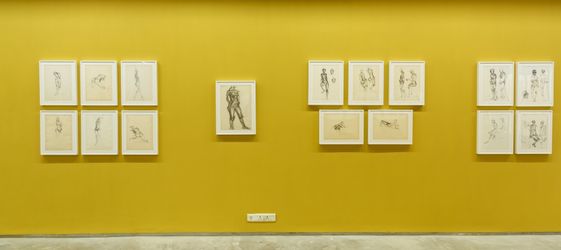
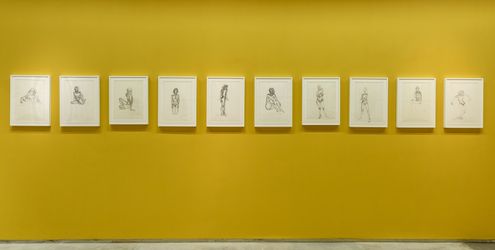
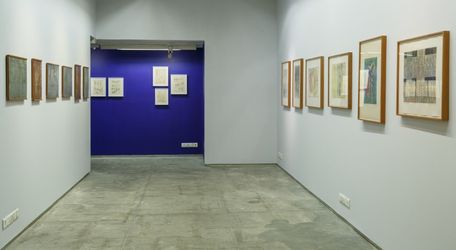
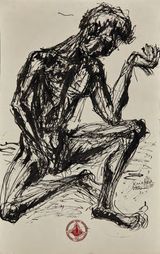
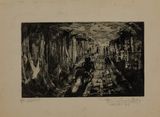
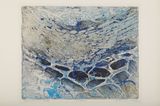
On view at the exhibition is a series of Reddy’s well known work The Great Clown, which truly elaborates the mastery of his technique. Combinations of colours were separately applied to the same metal printing etching plate, each paint mixed to a different thickness with linseed oil so that it did not contaminate the others and resulted in a spectacular range of unique prints, each different from the other. An overwhelming array of studies and drawings take center stage at the exhibition, rooting the practice to repeatedly looking at human form, nature and the relationship between the two, an interest which was developed since his early years in Santiniketan. At another section of the gallery, a selection of early prints are on display alongside corresponding etching plates, revealing how the sculptural deeply engraved surfaces of his plates birthed his prints that were as dimensional as they were resplendent.

In 1976 Reddy moved from Paris to New York. Thereafter, establishing the Color Print Atelier, Reddy became director of graphics and printmaking in the Art Department at New York University, a positionhe held until 2002. Pedagogy was a way of life for Reddy, his studio, lined with hundreds of tools andpiled high with printing plates, became a haven for young artists from all round the world, especiallythose new to the USA. Over the years Reddy’s influence on generations of artists, some of whom werehis students, left an indelible impression. Nature particularly fascinated Reddy. Butterflies, trees, waves,spiders’ webs and blossoms were frequent subjects, depicted in dream-like compositions that took theirreferences from abstraction and surrealism. As he constantly pushed the boundaries that were not onlyconfined to the formal process of printmaking but a revolutionary way of looking at his environment,Reddy found sanctuary in experimentation with sculpting, printmaking and drawing in a lifelong pursuitto understand form.

Read More

Installation Views

About the Artist

Krishna Reddy consistently experimented with form, technique and application. Initially trained in Tagore’s Shantiniketan under the tutelage of the influential Ramkinkar Baij, Reddy moved to London in 1949 studying sculpture at Slade School of Fine Art in Henry Moore’s class. Thereafter he spent over two decades in Paris, first at the studio of Ossip Zadkine and then eventually co-directing Stanley William Hayter’s Atelier 17, which was at the time (1960s), a thriving hub for stalwarts like Joan Miro, Constantin Brancusi, Pablo Picasso, and Alberto Giacometti, with all of whom he closely worked. At Atelier 17, he developed and invented the process that he is most well-known for — simultaneous multicolour viscosity printing and broke new ground in intaglio printmaking.

View Artist Profile

Also Exhibiting at Experimenter

About the Gallery

Experimenter was co-founded by Prateek & Priyanka Raja in 2009. With a multidisciplinary approach, the gallery is an incubator for an ambitious and challenging contemporary practice. The program represents some of the most critical contemporary artists worldwide. Considered to be a ‘pace-setter’ for its region, the program extends from exhibition-making, to knowledge creation, through regular talks, performances, workshops and most importantly, through it’s much acclaimed, annual curatorial intensive, Experimenter Curators’ Hub. In 2016, its artist-book publishing wing, Experimenter Books was launched. Experimenter’s program is rooted in dialogue and dissent. In 2018, the Experimenter Learning Program (ELP) was launched. ELP enables discussion, debate and learning in fields of contemporary and performing arts, curatorship, film, writing, language and social culture. In 2019, Experimenter Outpost an iterative exhibitions program outside the physical gallery where an extension of the program temporarily inhabits disused, characterful spaces was launched. In 2020, Experimenter Labs, an inclusive, experimental, online platform in addition to the onsite gallery programming was launched.

View Gallery Profile
Address
2/1 Hindusthan Road
Dover Terrace
Ballygunge
Kolkata
India
Opening Hours
10.30 am - 6.30 pm | Tuesday–Saturday
(1)
Kolkata 2/1 Hindusthan Road, Dover Terrace
Experimenter
2/1 Hindusthan Road, Dover Terrace, Ballygunge, Kolkata, India
+91 33 46026457‬
https://experimenter.in

Opening hours
10.30 am - 6.30 pm | Tuesday–Saturday
The art world in focus