‘I felt I had the right to be out there on my own as an absolute secular artist, looking at reality.’
—Richard Artschwager
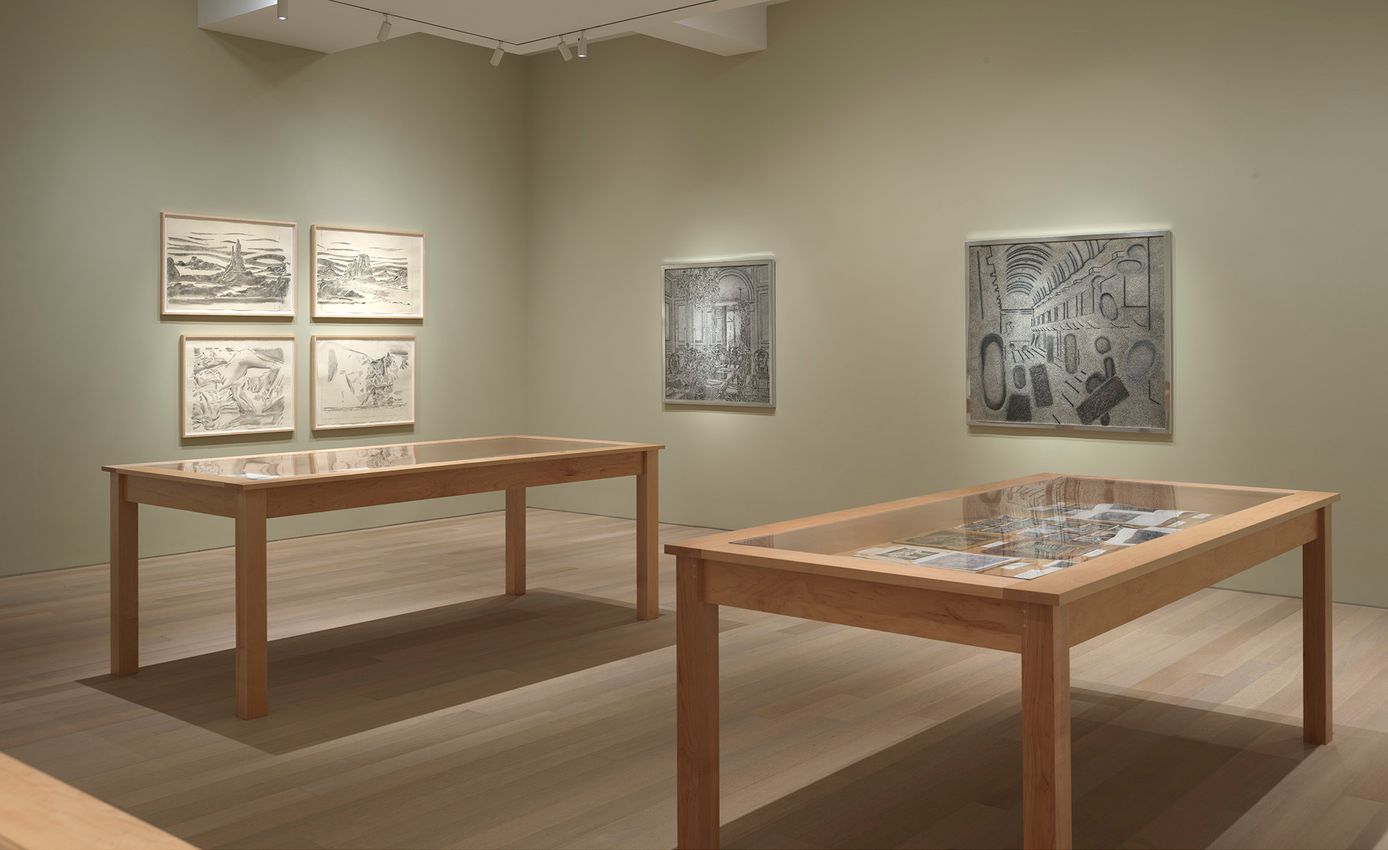
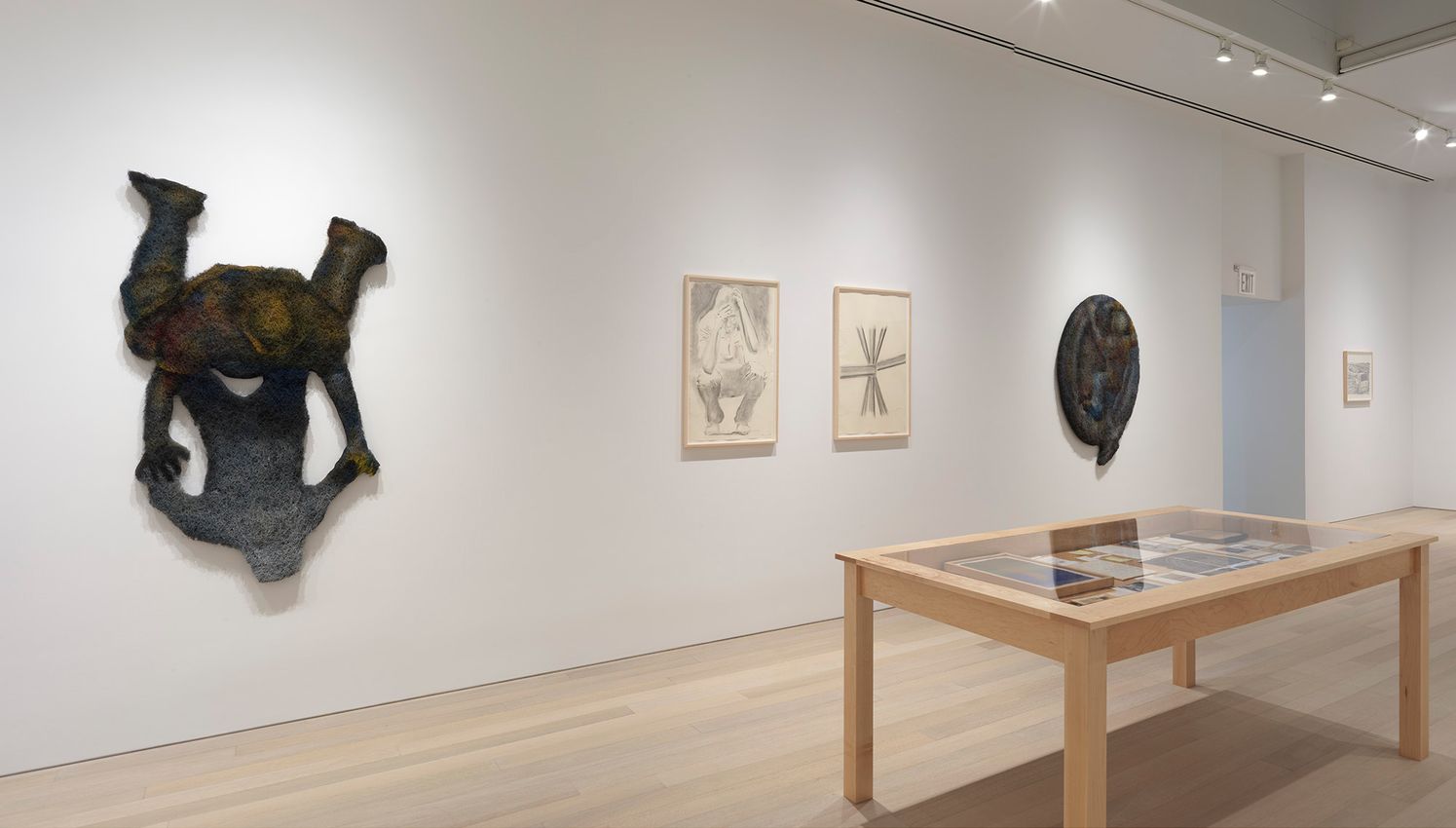
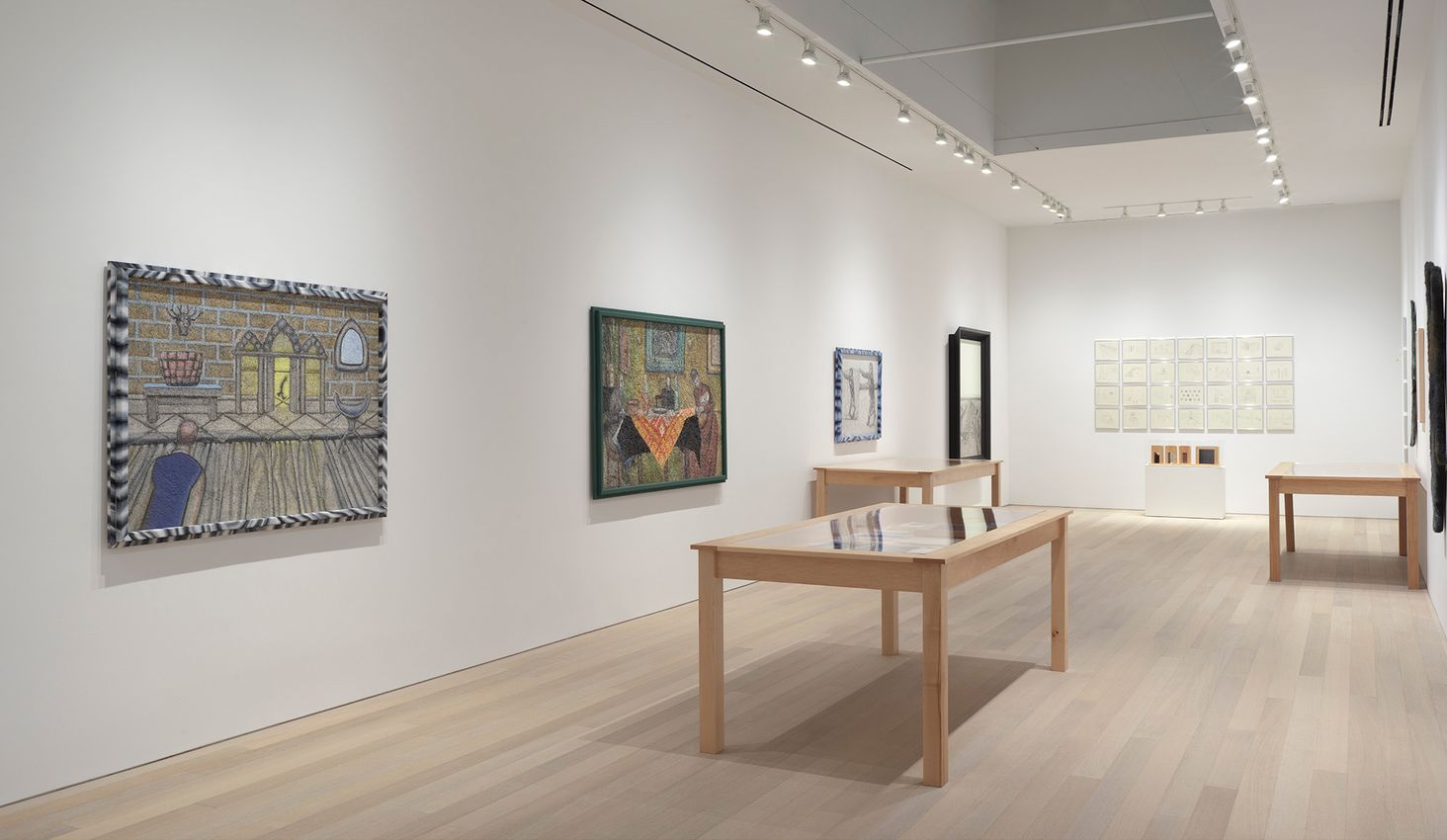
Gagosian is pleased to present Primary Sources, an exhibition of works by the late Richard Artschwager. This is the first time that key paintings and drawings will be shown with materials from the artist’s personal archive, spanning the 1960s to his death in 2013.
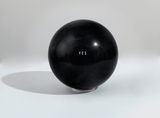
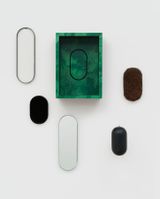
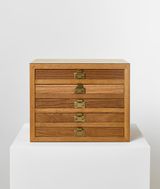
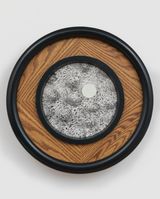
For five decades, Artschwager forged a maverick path by confounding the traditional limits of art and reconfiguring the visual comprehension of space. Associated with many genres but cleaving to none, Artschwager’s art has been variously described as Pop, Minimal, and Conceptual. Focusing on the structures of perception, his work conflates the visual world of images (painting) and the tactile world of objects (sculpture), with inspirations ranging from counterintelligence to cabinetry.
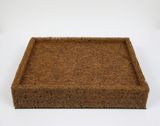
Synthetic materials were critical to Artschwager’s project. He worked frequently with Celotex, a heavily textured, obdurate compound board that allows brushstrokes to remain palpable, producing grisaille paintings of images both topical and obscure, from newspaper photographs to landscapes and interiors.
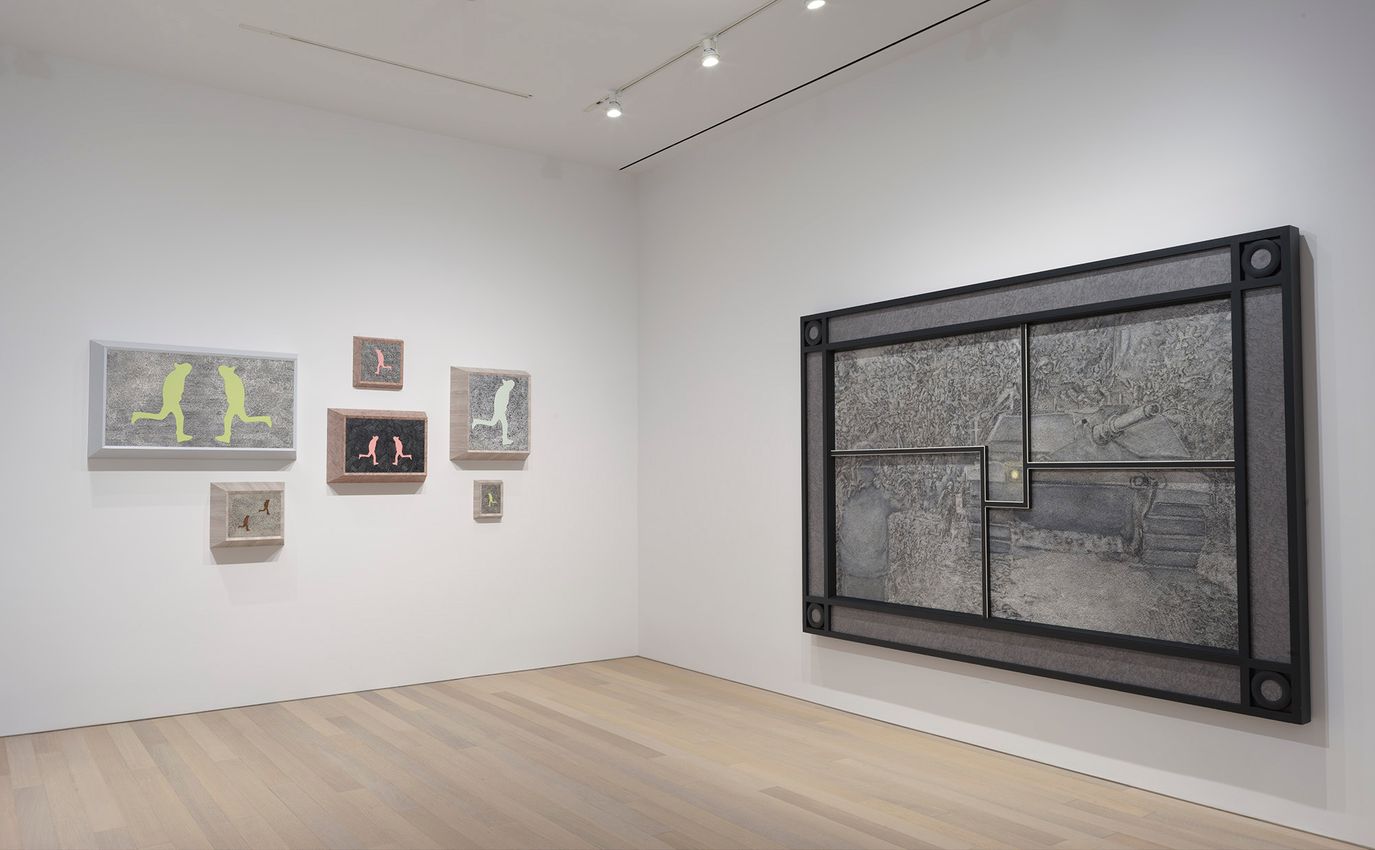
Artschwager often painted from photographs culled from the daily newspapers. Tank (1991), based on an image from The New York Times, depicts an M-1 tank on a roadside but leaves ambiguous the role of a figure in the foreground, back to the viewer: ally or target. Newsprint reproduction blurs photographs, so Artschwager developed a grid system to enlarge the image, allowing him to reinvent obscured details. Ten feet in length, the scale of Tank adds to the ominous drama of the image. In Artschwager’s representations, images originally published for informational or documentary purposes gain a surreal quality with infinite narrative and compositional possibilities.
Arizona (2002) depicts the sinking of the USS Arizona in Pearl Harbor, 1941. Artschwager painted it from an image reproduced in the July 27, 2002, issue of The New York Times, accompanying an article that compared the United States’s lack of military preparedness in the bombing of Pearl Harbor to the terrorist attack of 9/11—an event from which the country was still reeling at the time. Dark and elegiac, the literal aspects of the image with its doomed battleship are lost in texture and haze, recalling romantic seascapes by Turner as much as historical illustrations of war.
Artschwager’s 1969 interpretation of Tintoretto’s The Rescue of the Body of St. Mark (1562-66) reads like an architectural plan, divested of the brilliant colours and cast of characters of the original. The figures become geometric shapes, or ‘blps’—the lozenge-shaped forms he made to function as conceptual focal points. Positioned to demonstrate the foreshortening of the original painting’s perspective, they function as an abstract signifier of human presence, with the only remaining figurative part of the work a depiction of St. Mark’s hand. In typical Artschwager style, the rational yet radical dissection of what we experience in an image provides an emotional and psychological filter, while also reflecting on the political and social moods through which Artschwager himself lived.
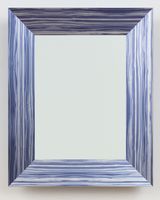
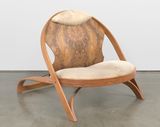
Richard Artschwager forged a unique path in art from the early 1950s through the early twenty-first century, making the visual comprehension of space and the everyday objects that occupy it strangely unfamiliar. His work has been variously described as Pop art, because of its derivation from utilitarian objects and incorporation of commercial and industrial materials; as Minimal art, because of its geometric forms and solid presence; and as conceptual art, because of its cool and cerebral detachment. But none of these classifications adequately define the aims of an artist who specialised in categorical confusion and worked to reveal the levels of deception involved in pictorial illusionism. In his work, an anonymous sheet of walnut-pattern Formica is both itself and a depiction of a wooden plane; a table or chair is furniture, sculpture, and image all at once; and a painting or sculpture can be a ‘multi-picture’ or ‘three-dimensional still life.’ Artschwager foregrounded the structures of perception, striving to conflate the world of images—which can be apprehended but not physically grasped—and the world of objects, the same space that we ourselves occupy. His last body of work marked a departure from his previous series, in that the images he composed from sources in popular culture communicated overt, if deadpan, allusions to contemporary political issues.


A respected voice in contemporary art discourse.
Focusing on ambitious storytelling and insightful art-world commentary. Ocula Magazine publishes in-depth interviews, critical essays and timely analysis on the artists, exhibitions and ideas driving the global art world.
Learn more about Ocula Magazine
Showcasing the best of the art world.
Ocula partners with galleries from around the world to highlight their artists, artworks and exhibitions. Gallery membership is by application and invitation, with each member vetted by an independent panel.
Learn more about Ocula Membership

Specialises in the sale of major artworks.
Led by a team with deep ties to the world’s leading auction houses, galleries and collectors. Ocula’s advisory team offers bespoke services to high-net-worth clients from around the world who are looking to acquire the best of contemporary and modern art.
Learn more about our team and services