To look out of a window—to have the opportunity—is to go to the furthest reaches, to escape , as we trivially say of reverie. It is the ultimate possibility of wandering beyond all limitations, the very thing that is deliberately blocked for recluses and prisoners. Sometimes a window closes like a parenthesis; the time comes when the veduta that allowed us to look upon the world and the story it tells us, closes. In painting, without seeming to touch it (since it deals with the distant), the landscape thus reveals where we stand in relation to openness and closure, to permission and authority.
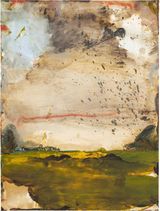
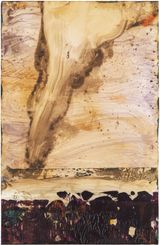
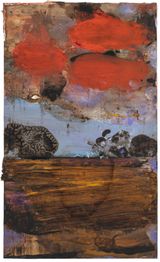
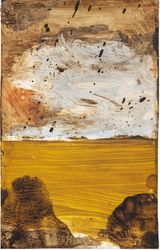
For Denis Laget and Edmond Quinche, landscape is not the standardised representation of a pictorial genre, but the site of tension between matter, memory, and imagination. Far from complex topographical arrangements, as well as edifying illustrations or charming naiveté, the two artists question the very substance of landscape, its capacity to shake perceptual certainties and open breaches in the perception of reality.
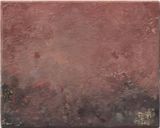
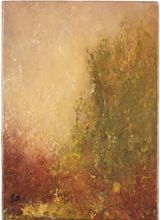
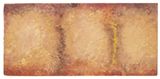
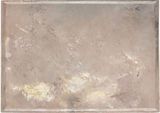
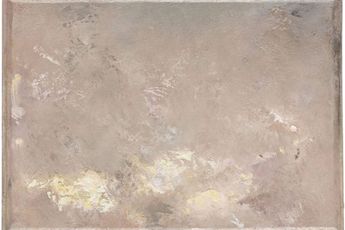
In Laget’s work, the landscape emerges from the paint itself, in an almost organic process where matter precedes the motif. His canvases, often small in size, seem to be the product of pictorial recycling: the palette becomes the canvas, the stain becomes form, the support is folded... This random emergence, where abstraction and figuration merge, lends his landscapes a spectral dimension. Nothing is asserted, everything is suspended, like a seascape in a storm. The landscape is not represented; it is evoked through apparition. Laget does not paint from life; he paints from within the paint itself, in a logic of self-generation. The landscape then becomes the site of an enigma, a rejection of didacticism, where the viewer is invited to wander, over quagmires, along muddy paths, always off-balance.
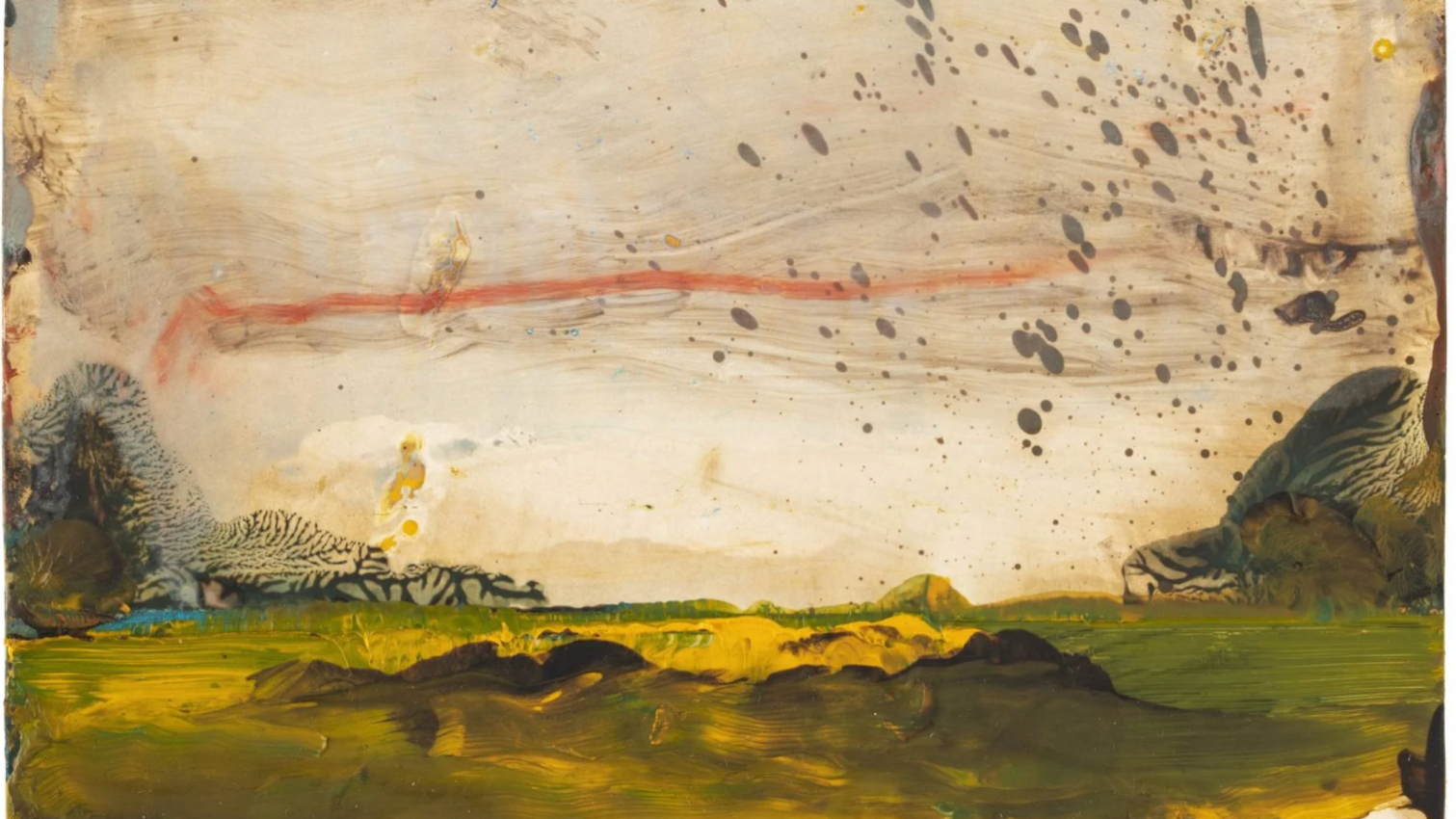
Quinche’s works, executed in oil on small panels, thus unfold directly onto a piece of nature: wood. Quinche also produced a considerable body of engraved work, notably collaborating with Tal Coat and many others on lithography. Like wood, the use of stone demonstrates a way of working not on (the motif, the landscape, or nature) but with it . The small board on which he painted, the tavola , can evoke not only the painting panel, but also the dining table, or even the anatomical or dissecting table. Moreover, the velvety crimson tones that Quinche employs evoke a luxurious aesthetic of the haruspex, mud, viscera, and turned-in hides (the artist’s output includes numerous still lifes, bird and boar carcasses, and meat and cupping—even in bouquets of flowers—are recurring motifs in Laget’s paintings). Nature is there, but always evanescent, elusive, confusing, always veiled in colour. Quinche does not seek to represent the landscape, perhaps not even to truly see it, but to capture its inner vibration, its ineffable aspect.
Each in their own way, Denis Laget and Edmond Quinche reject the transparency of the motif, preferring opacity, disturbance, and ambiguity. For them, landscape is neither a backdrop nor even a motif, but a chaotic field of forces, a place of emergence and resistance. In this sense, it is primarily internal.
Founded in 1994, the gallery organise approximately four exhibitions a year. The gallery’s program has a special emphasis on international contemporary art and on the rediscovery of historical figures.

A respected voice in contemporary art discourse.
Focusing on ambitious storytelling and insightful art-world commentary. Ocula Magazine publishes in-depth interviews, critical essays and timely analysis on the artists, exhibitions and ideas driving the global art world.
Learn more about Ocula Magazine
Showcasing the best of the art world.
Ocula partners with galleries from around the world to highlight their artists, artworks and exhibitions. Gallery membership is by application and invitation, with each member vetted by an independent panel.
Learn more about Ocula Membership

Specialises in the sale of major artworks.
Led by a team with deep ties to the world’s leading auction houses, galleries and collectors. Ocula’s advisory team offers bespoke services to high-net-worth clients from around the world who are looking to acquire the best of contemporary and modern art.
Learn more about our team and services