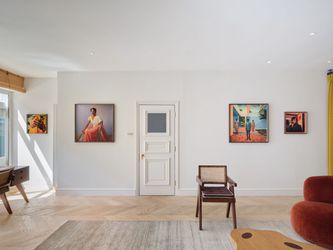
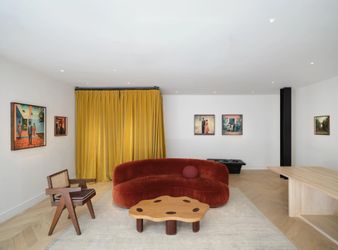
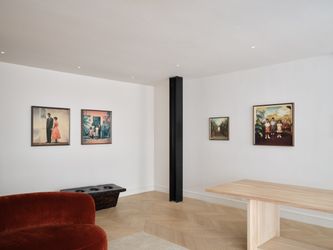
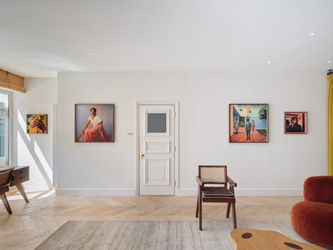
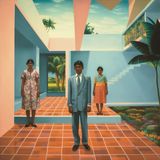
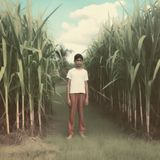
Sabrina Tirvengadum (b. 1983, London) is a deaf British Mauritian visual artist based in London. She works with photography, collage, archives, graphics, digital painting, film, and generative AI.
Examining identity, diaspora, and colonial legacies, Sabrina explores hidden and silenced histories, drawing on her experience as a deaf person advocating for disability justice. Her practice foregrounds the politics of visibility, asking who is remembered, who is erased, and how communities reclaim their narratives.
Using her Mauritian ancestry to confront exclusion in digital spaces and the historical erasure of Indian indentured labour, Sabrina asserts her ancestors’ identity through her family photographs, which date from the 1950s to the 1990s. These images form the foundation of a personal and collective archive that resists disappearance. Together with Mark Allred (with whom she occasionally collaborates), Sabrina uses an AI model she trained on these archives to reconstruct a fractured history, responding to the scarcity of visual records and the gaps left by colonial documentation.
‘It’s an opportunity to restore what has been lost and to retell stories’, says Sabrina. ‘It is a way to say: We are here. We exist in the digital space too.’ Her work challenges the assumption that digital technologies are neutral, instead revealing how they can be reshaped to honour marginalised histories.
Disrupting AI image generation, Sabrina has built an iterative method that layers AI with collage and digital painting. The final works lean into AI’s glitches, maintaining a sense of imperfection that blurs fact and fiction. This aesthetic of distortion becomes a metaphor for the instability of memory and the partial nature of archives: ‘Something’s always not quite right, and histories are distorted in a way as well.’ Through this process, she transforms technological error into a space for reclamation, imagination, and ancestral presence.


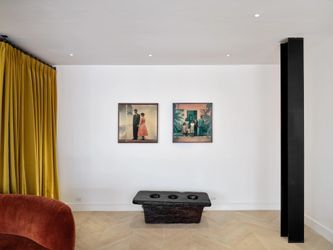
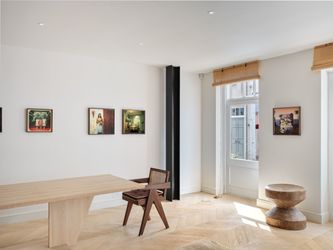
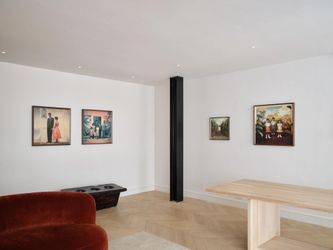
Jhaveri Contemporary was formed in 2010 by sisters Amrita and Priya with an eye towards representing artists, across generations and nationalities, whose work is informed by South Asian connections and traditions. The gallery’s dedication to original scholarship, engendered through its carefully crafted shows, is one of the many ways it distinguishes itself. Entwined with this philosophy is another guiding principle: showcasing the heterogeneous practices of long-celebrated luminaries as well as emerging talents, often in generously interrogative conversations. With a focus on mining lesser-known art histories, Jhaveri Contemporary facilitates dialogue between artists, curators and historians to add to the wider field of art. Estates served by the gallery include Mrinalini Mukherjee and Anwar Jalal Shemza.

A respected voice in contemporary art discourse.
Focusing on ambitious storytelling and insightful art-world commentary. Ocula Magazine publishes in-depth interviews, critical essays and timely analysis on the artists, exhibitions and ideas driving the global art world.
Learn more about Ocula Magazine
Showcasing the best of the art world.
Ocula partners with galleries from around the world to highlight their artists, artworks and exhibitions. Gallery membership is by application and invitation, with each member vetted by an independent panel.
Learn more about Ocula Membership

Specialises in the sale of major artworks.
Led by a team with deep ties to the world’s leading auction houses, galleries and collectors. Ocula’s advisory team offers bespoke services to high-net-worth clients from around the world who are looking to acquire the best of contemporary and modern art.
Learn more about our team and services