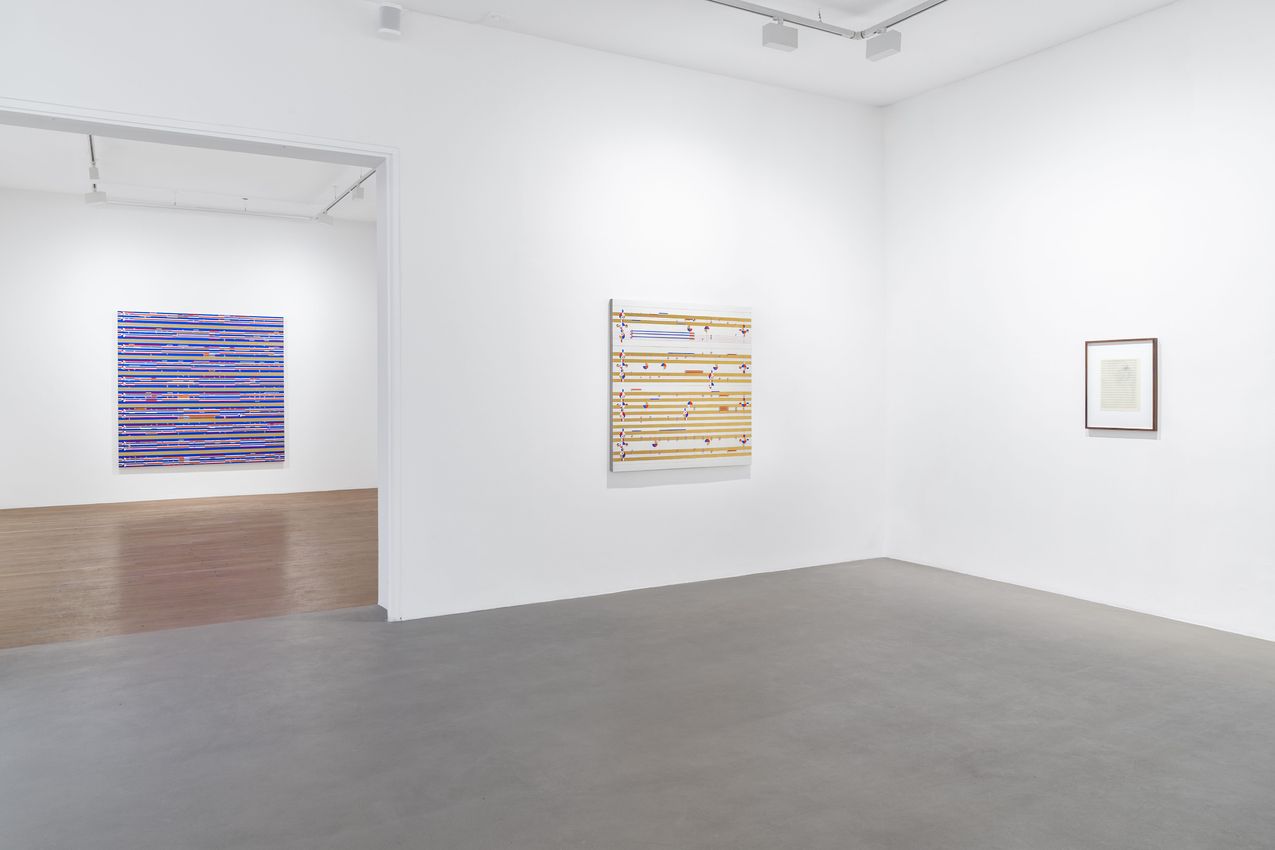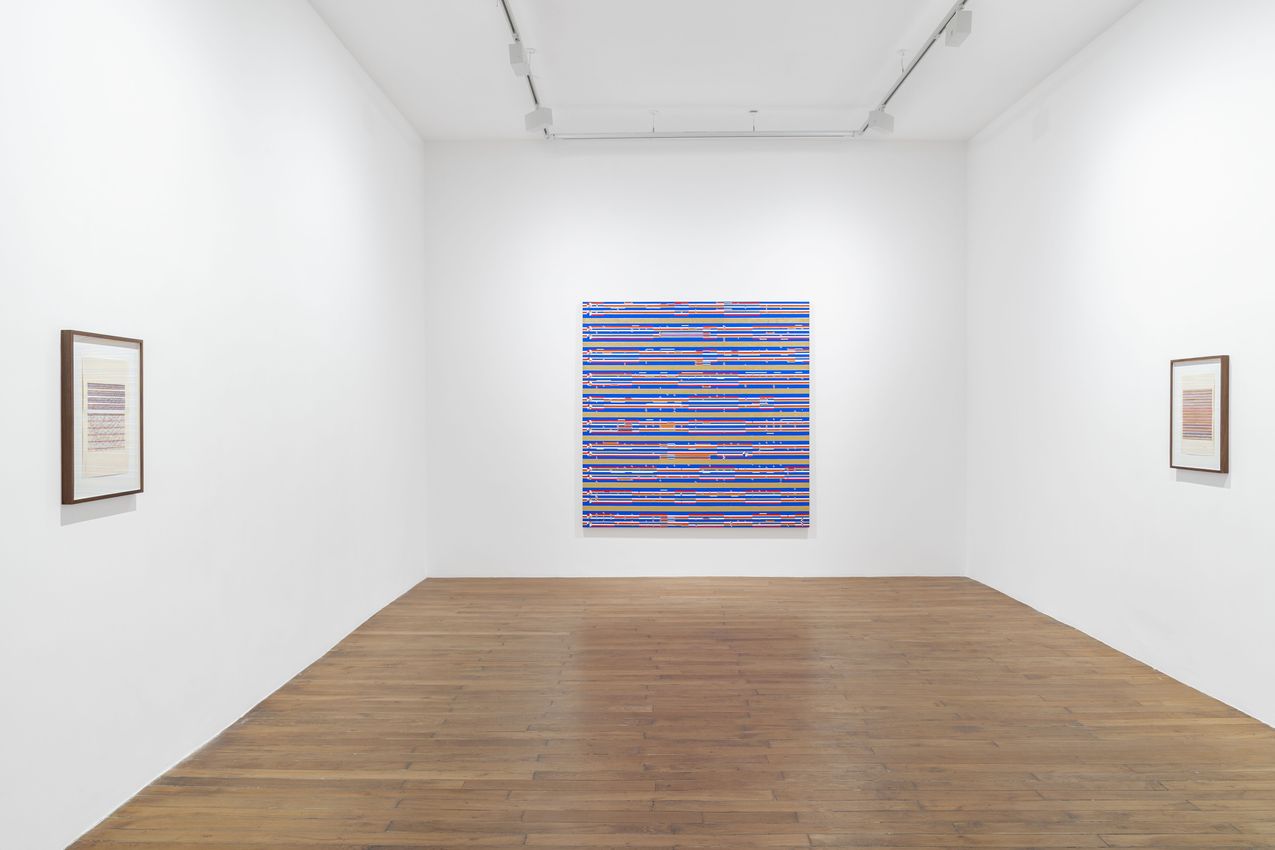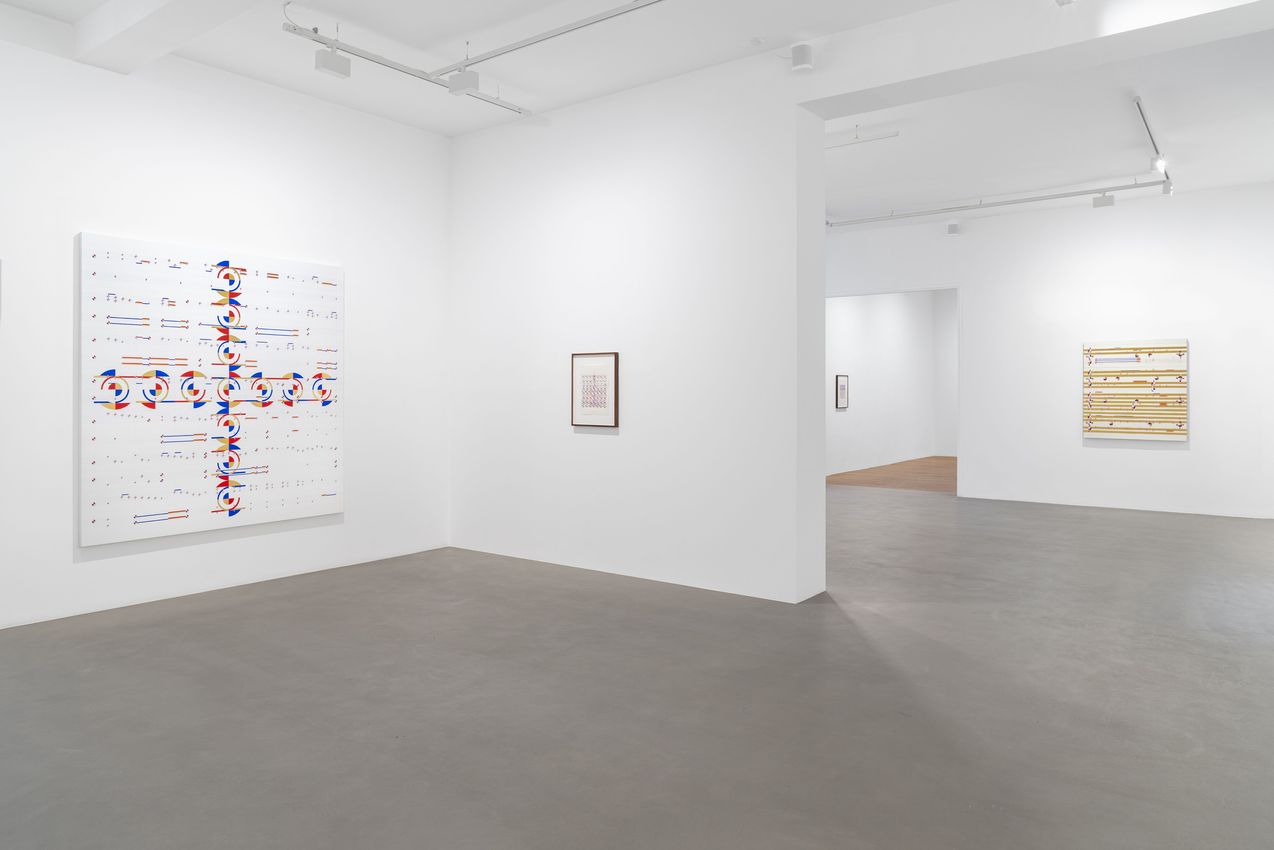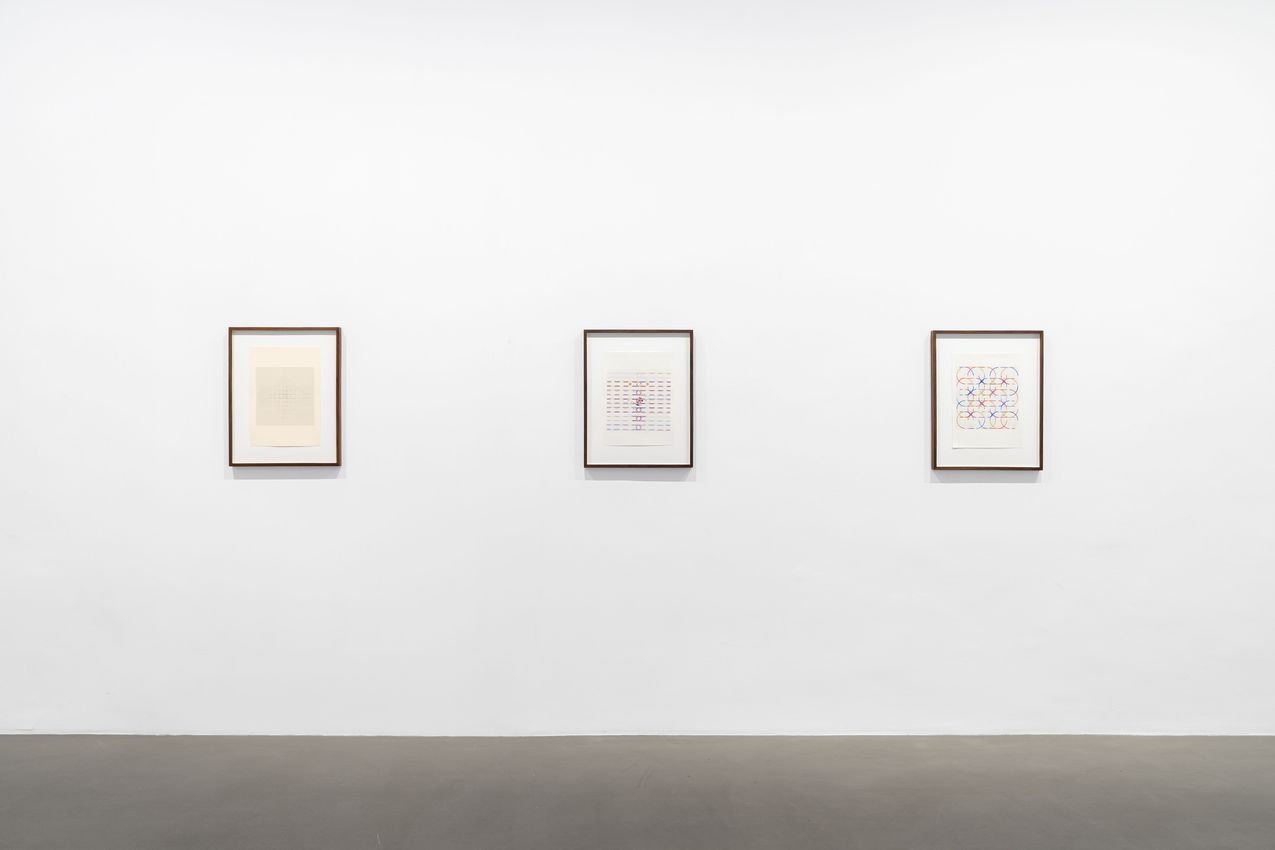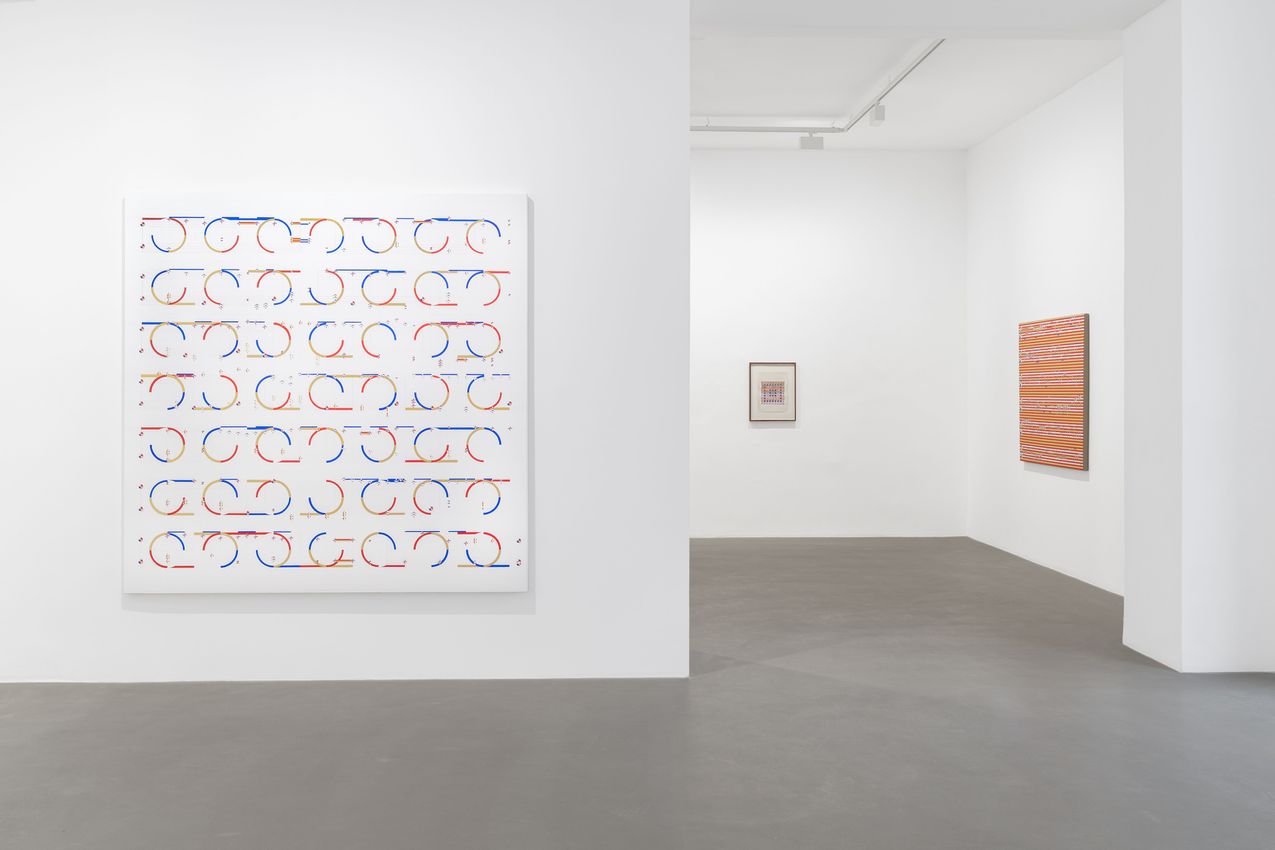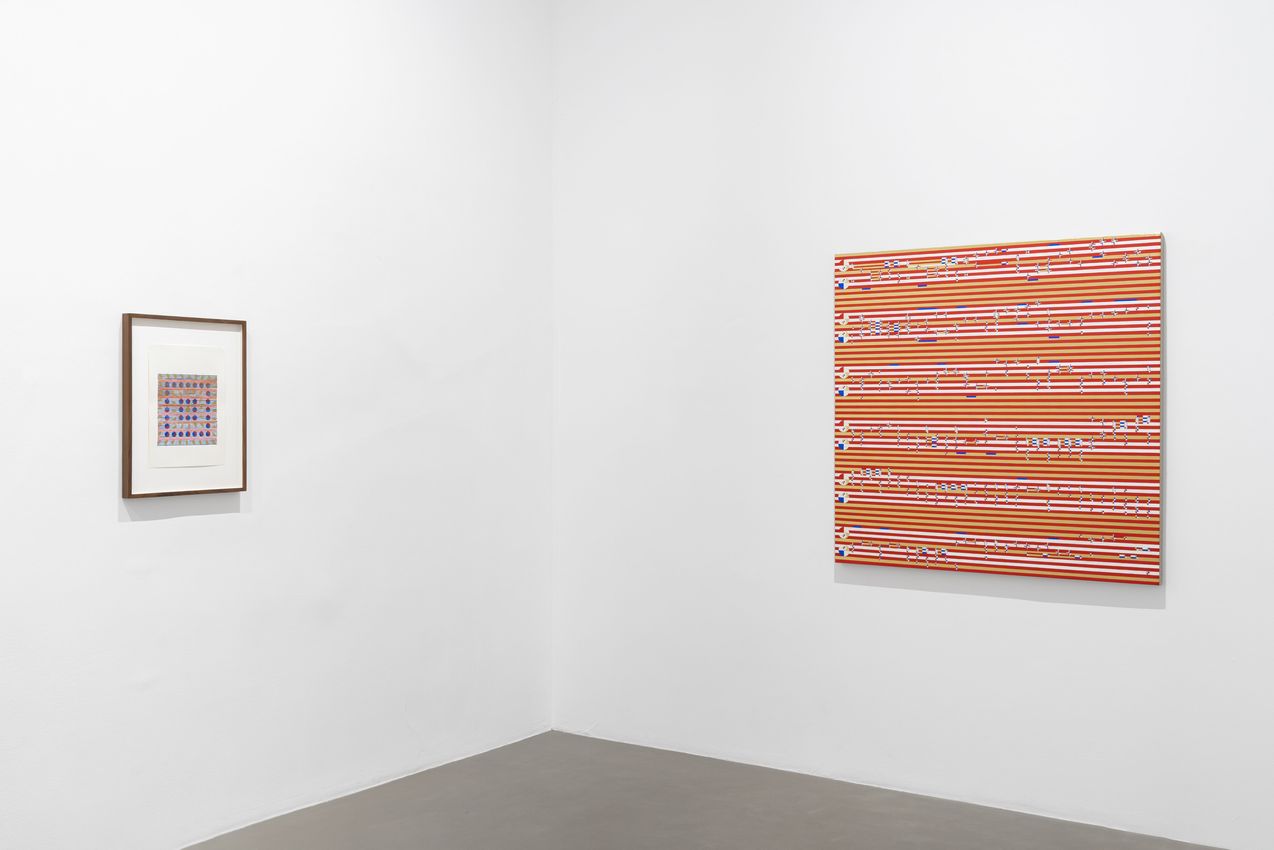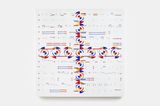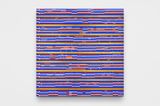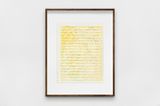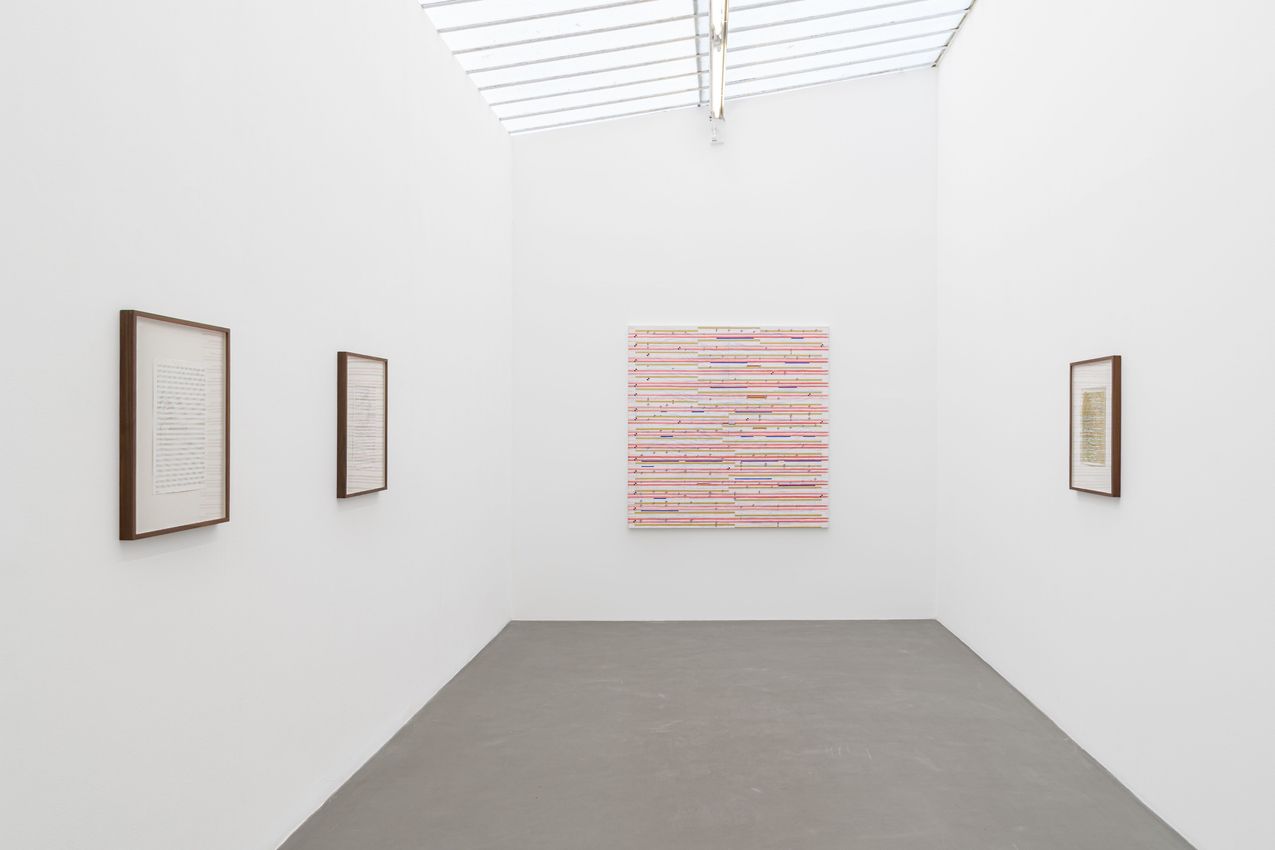
Galerie Chantal Crousel is pleased to present Partituras, a new exhibition by Gabriel Orozco, featuring a selection of recent works on paper and paintings created between Paris, Tokyo, and Mexico City.
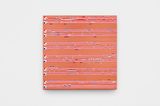
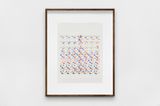
This body of work deepens Orozco’s exploration of rhythm and abstraction through a process where music becomes method, structuring each composition. The Partituras unfold gradually: from improvisation to recording, then drawing, and finally painting. Titled with the location, date and time each melody was recorded on the piano, the works hold a quiet code, where sound is translated into shape and colour.
Art historian Briony Fer observes, “there’s something deliberately out of sync—even improbable—about the way Gabriel Orozco’s new paintings recall abstraction’s original alliance with music—one clearly articulated by painters like Kandinsky and Kupka who were both interested in the sound of colour and the possibilities of chromatic vibration in painting.”*
This tension between structure and intuition is at the core of Partituras. The project begins not in the studio, but at the keyboard. Fer explains: “This is a part of the process Gabriel Orozco associates with particular feelings as he ‘draws’ with his hands on the keys. When he played the piano for this project, he recorded his improvisations, usually lasting only a few minutes; the recordings were then sent to a professional musician to be transcribed and printed as a piano score. Each short piece that he makes was rendered in this way, with the notes distributed across the five horizontal lines of the stave—pentagram—according to the traditions of musical notation. Next, the score was translated into a diagrammatic drawing and only then into a painting. Based on the system Orozco has created using the four colours—red, white, blue, gold—each painting corresponds to a particular piece of music, but has been highly mediated and transformed along the way.”*
These are not literal transcriptions nor traditional notations, but layered structures where gesture and colour resonate together. Partituras also gestures toward broader, more complex histories of abstraction. Briony Fer notes how the project reactivates not only the spiritual affinities between music and painting but also their more critical and transgressive intersections: “There’s a certain symmetry in the way Barthes describes sitting and playing the piano as the most ‘muscular, manual’ part of music and the way Orozco likens playing to drawing, which is arguably also the most ‘manual’ part of art.”*
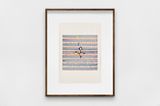
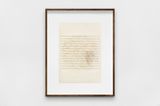
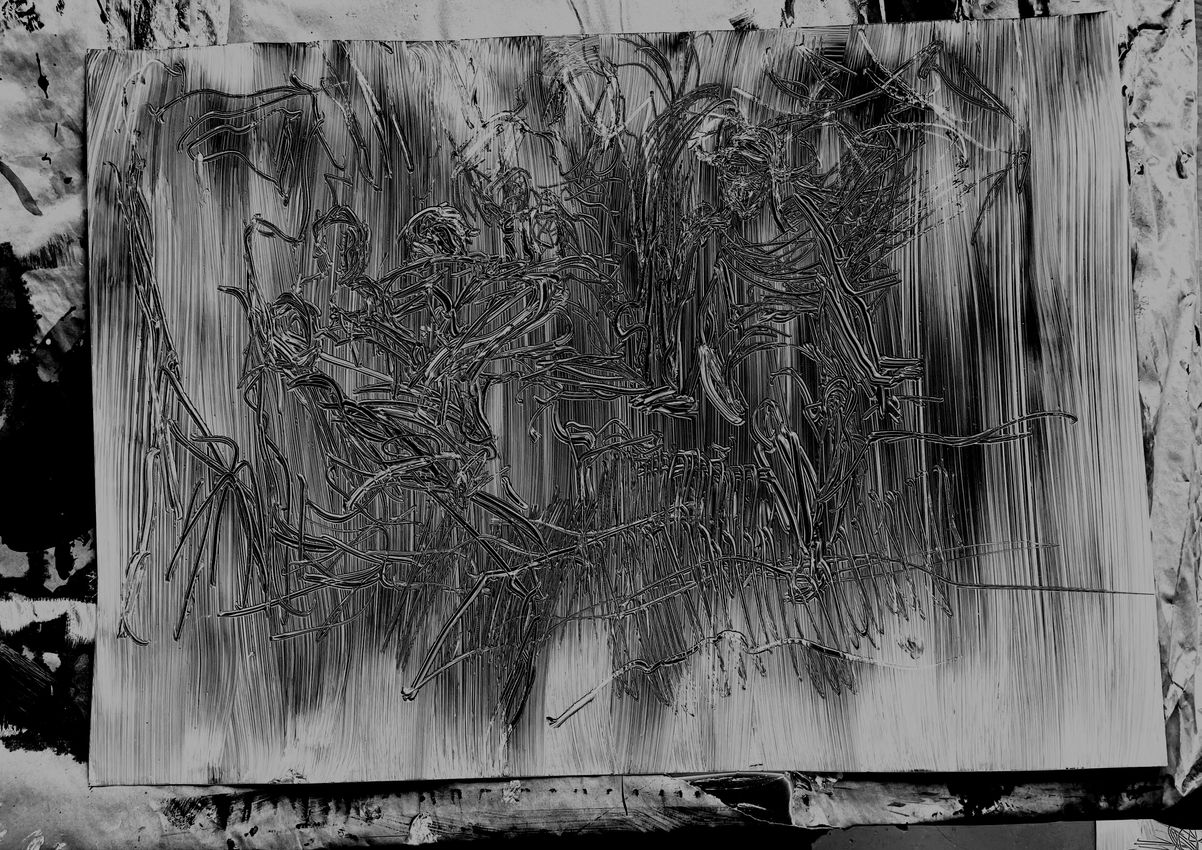
Drawings punctuate the project. They are made “independently of the process as ‘fictions’ because they do not have a one-to-one relation to the sound or melody of his piano pieces. They are more improvisatory, detached from the stricter rules of codification of the paintings.”*
In several works, circles, standing in for musical notes, appear as miniaturised constellations, suspended between the five lines of the stave. Briony Fer describes them as: “a mise en abyme, where familiar elements within his geometric language are dispersed across and ‘float’ in the spaces between the lines [...] driven by the horizontal lines of the pentagram – or what Orozco neatly calls the ‘linear horizon’. The bands of colour invoke textiles and thread, rather than revolving circuits. Paradoxically, despite what might be seen as a surfeit of intricacy filling the pictorial surface, they interrogate very basic semiotic questions about how to make paintings at a time when that seems a very improbable question to be asking. [...] As paintings, then, they are unpredictable and entirely susceptible to their surroundings and the passing of time.”*
In Partituras, drawing, music, and painting come together as parallel languages, tactile, temporal, and speculative. Each work becomes a surface where a sound once occurred, and where it might, once again, be imagined.
*Selected excerpts from Briony Fer, “Notes on Gabriel Orozco’s Partituras,” September 2025.
—
Born in 1962 in Xalapa, Veracruz, Mexico. Lives and works in Paris (France), Tokyo (Japan), Mexico City (Mexico) and New York (USA).
Constantly on the move, without a studio set, he rejects the national or regional identifications, and draws inspiration from the places where he lives and travel, through photography, sculpture, painting and video.
As the art historian and art critic Briony Fer writes: “Gabriel Orozco makes his work out of where he lives, using local materials and often drawing on traditional artisanal practices but of course art can—and often has—been made in one place but out of another, that is, in imaginary as well as actual dialogues with its own origins.
In one sense Orozco continues to animate precisely this entanglement of circumstance and movement. His methods are much more informal—inclining always to the partial and incomplete—than that of an atlas that aims systematically to document a whole world of images. It’s maybe more like a travel notebook of a life (his own), but one that records the circumstantial conditions of life along with the everyday living of it as he moves between different locations. The relationship of his work to place remains porous, exposing a distinctive formal procedure to multiple global image-circuits and economies, pictorial and otherwise.”
His work is characterised by a strong interest in the urban landscape and the human body. Incidents of everyday life and familiar, whose poetry is that of chance and paradox, feed his practice. The boundaries between the art object and the everyday environment are deliberately blurred, art and reality deliberately mixed. The movement, expansion, circularity, the relationship between geometric and organic, are constants that have animated his artistic research for over twenty years.
Gabriel Orozco is a recipient of the Cultural Achievement Award (2014); The Americas Society (2014) and is also Officer of the Order of Arts ans letters (2012).
He has had major solo exhibitions at The Noguchi Museum, Long Island City (2019); XIII Bienal de la Habana, Museo Nacional de Bellas Artes de La Habana, Havana (2019); Museum of Contemporary Art Tokyo, Tokyo (2015); Aspen Art Museum, Aspen (2015); Moderna Museet, Stockholm (2014); Kunsthaus Bregenz, Bregenz (2013); Tate Modern, London (2011); Musée National d’Art Moderne, Centre Georges Pompidou, Paris (2010); Kunstmuseum, Basel (2010); Museum of Modern Art, New York (2009); Museo Palacio de Bellas Artes, Mexico City (2006); Museum Ludwig, Köln (2006); Hirshhorn Museum and Sculpture Garden, Washington (2005); Museum of Contemporary Art, Los Angeles (2000); Philadelphia Museum of Art, Philadelphia (1999); Musée d’Art Moderne de Paris, Paris (1998), among others.
In 2019, Gabriel Orozco was chosen to orchestrate the transformation of Chapultepec Park in Mexico City into a nerve centre at the crossroads of art, culture, and nature.
Gabriel Orozco was also featured in several international group shows: MAMAC, Nice (2022); MCA Chicago, Chicago (2020); MAXXI, Rome (2018); Rockbund Art Museum, Shanghai (2018); Seattle Art Museum, Seattle (2017); Centre Pompidou-Metz, Metz (2017); 57th and 51st Venice Biennale, Venice (2017; 2005); Yokohama Museum of Art, Yokohama (2016); Philadelphia Museum of Art, Philadelphia (2015); 10th Gwangju Biennale, Gwangju (2014); Guggenheim Museum, New York (2014); The Metropolitan Museum of Art, New York (2011); The Power Plant, Toronto (2009); Bass Museum of Art, Miami (2009); Fundación PROA, Buenos Aires (2009); Magasin 3, Stockholm (2008); Istanbul Modern, Istanbul (2009); FRAC Ile-de-France — Le Plateau, Paris (2008); Kunsthalle wien, Vienna (2007); The Institute of Contemporary Art, Boston (2006); Museum Ludwig, Köln (2005); Tate Modern, London (2006); Documenta 11, Kassel (2002).
His works have joined the collections of the Dallas Museum of Art, Dallas; Frac Normandie, Sotteville-lès-Rouen; Carré d’art, Nîmes; Musée d’Art Moderne de Paris, Paris; Kunstmuseum Basel, Basel; Musée National d’Art Moderne, Centre Georges Pompidou, Paris; Museum Of Contemporary Art, Los Angeles; Museum of Modern Art, New York; Guggenheim Museum, New York; San Francisco Museum Of Modern Art, San Francisco; Whitney Museum, New York; Colección Jumex, Mexico City; Fondation Louis Vuitton, Paris; Fundación Botín, Cantabria; Long Museum West Bund, Shanghai; The Museum of Fine Arts, Houston.
*The texts by Briony Fer here quoted are taken from the press release written on the occasion of Gabriel Orozco’s sixth solo exhibition at Galerie Chantal Crousel in 2017.


Gabriel Orozco has emerged from the early 1990s as one of the most important artists of his generation.


Located on rue Charlot in the 3rd arrondissement in Paris, Galerie Chantal Crousel presents a selection of artists highly diverse in their national and cultural origins and mediums who together contribute to a universal visual language.

A respected voice in contemporary art discourse.
Focusing on ambitious storytelling and insightful art-world commentary. Ocula Magazine publishes in-depth interviews, critical essays and timely analysis on the artists, exhibitions and ideas driving the global art world.
Learn more about Ocula Magazine
Showcasing the best of the art world.
Ocula partners with galleries from around the world to highlight their artists, artworks and exhibitions. Gallery membership is by application and invitation, with each member vetted by an independent panel.
Learn more about Ocula Membership

Specialises in the sale of major artworks.
Led by a team with deep ties to the world’s leading auction houses, galleries and collectors. Ocula’s advisory team offers bespoke services to high-net-worth clients from around the world who are looking to acquire the best of contemporary and modern art.
Learn more about our team and services