



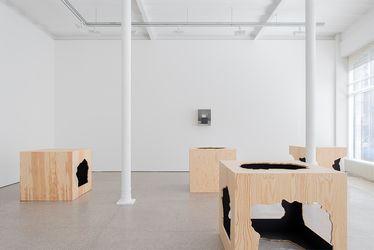
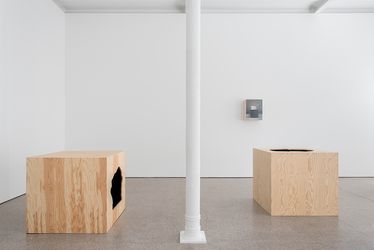
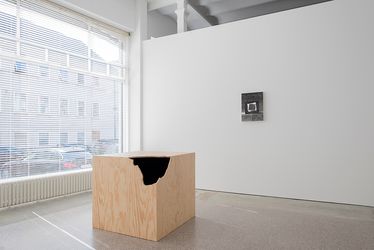
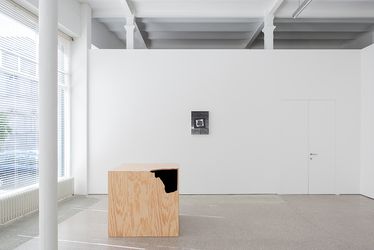
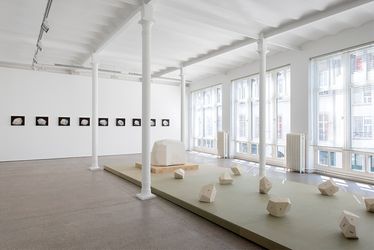
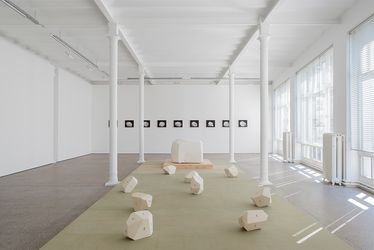
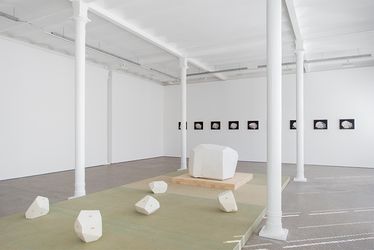
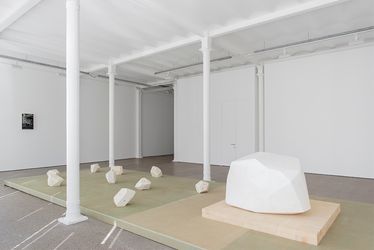
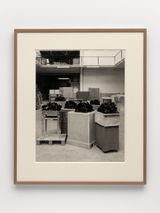
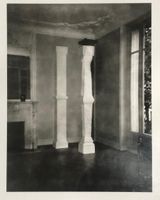
Galerie Greta Meert is pleased to present the new exhibition by Didier Vermeiren (Brussels, 1951), displaying a collection of sculptures and photographs. The greater part of these works are exhibited for the first time on this occasion.
Didier Vermeiren’s entire oeuvre has developed a perpetual back and forth between past and present, between interpretation of the history of sculpture and a contemporary exploration of its essence.
From the late 1970s on, the artist has addressed the fundamental question of the pedestal, with the ‘pedestal sculptures’ that made him famous. Vermeiren has rethought the purpose of the pedestal, turning it into an autonomous volume in space: the pedestal is a base or a foundation, but it can also be deployed for itself and starting from itself, destining the whole oeuvre.
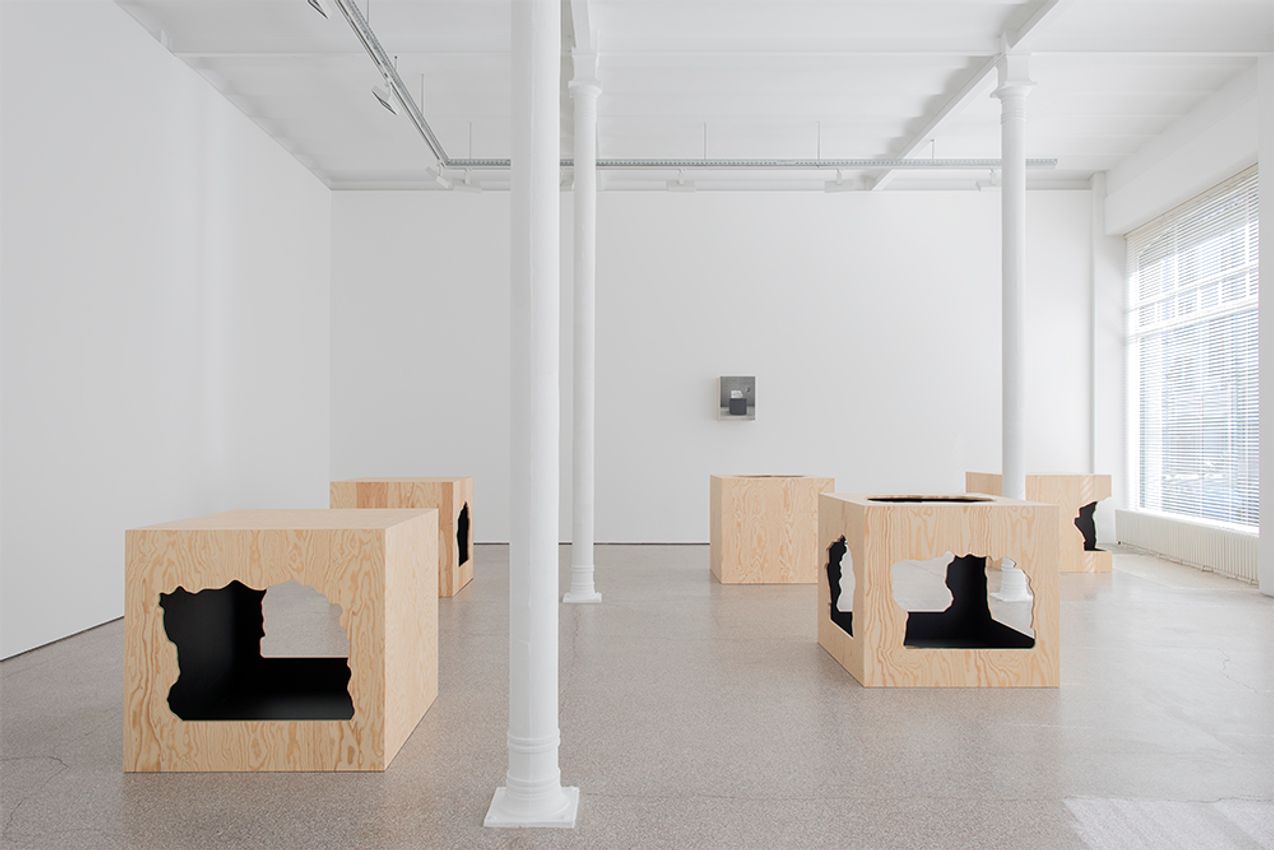
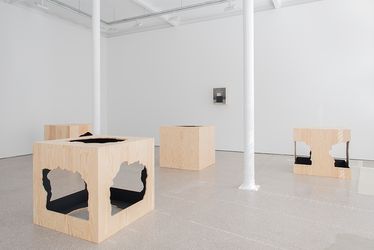
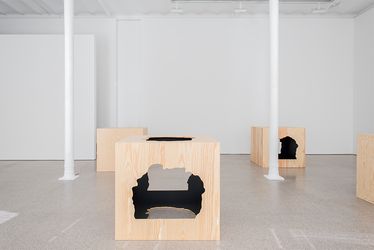
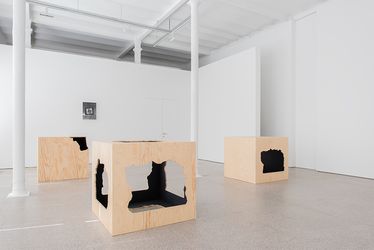
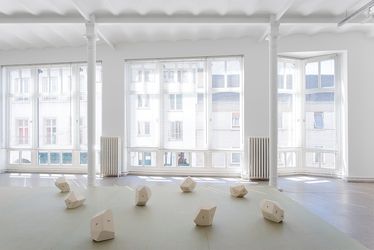
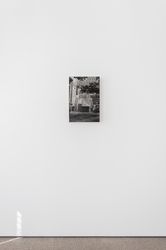
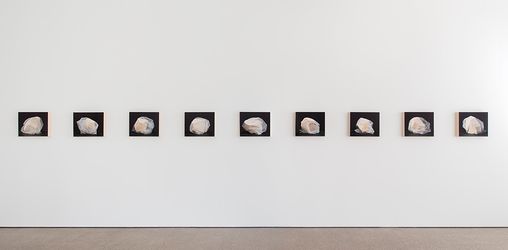
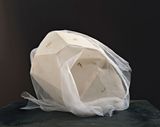
Additionally, Vermeiren’s sculptures often refer to other sculptures from the history of art. In this exhibition for example, La pierre and Étude pour la pierre (#1 to #9, 2013) refer to Rodin’s Cariatide à la pierre. Yet Vermeiren’s approach makes sense only insofar as his works also refer to each other within his own oeuvre. A good example in this exhibition are the Open Cubes (#2 to #6, 2016) that are traversed (or pierced) by the ghost of Solide géométrique #2 (2003), a sculpture Vermeiren shows here through a photograph, displayed on the ground floor (Photorelief 2008. Atelier 2005).
For this third exhibition by Didier Vermeiren at Galerie Greta Meert, 17 sculptures and 12 photographs are presented on two levels: on the gallery’s ground floor and 1st floor.


Didier Vermeiren’s practice is based on repetition, reversal, doubling and inversion. The plinth is incorporated and elevated to a sculptural level: plinth on plinth, the plinth becomes sculpture, the mold becomes sculpture, the replica becomes the Original, the negative becomes the positive. These strategies are subsequently expanded to various means of production, transport and presentation.

Over the past 30 years, Galerie Greta Meert established itself as one of Brussels’ leading contemporary art galleries. Founded in 1988 as Galerie Meert Rihoux, it was subsequently renamed after its founding director Greta Meert in 2006. Located in the center of Brussels, the gallery occupies a five-story Art Nouveau building designed by Louis Bral and renovated for the gallery by renowned Belgian architects Hilde Daem and Paul Robbrecht. Since 2012 three floors of the building are dedicated to exhibitions, making it possible to maintain an expanded exhibition schedule.

A respected voice in contemporary art discourse.
Focusing on ambitious storytelling and insightful art-world commentary. Ocula Magazine publishes in-depth interviews, critical essays and timely analysis on the artists, exhibitions and ideas driving the global art world.
Learn more about Ocula Magazine
Showcasing the best of the art world.
Ocula partners with galleries from around the world to highlight their artists, artworks and exhibitions. Gallery membership is by application and invitation, with each member vetted by an independent panel.
Learn more about Ocula Membership

Specialises in the sale of major artworks.
Led by a team with deep ties to the world’s leading auction houses, galleries and collectors. Ocula’s advisory team offers bespoke services to high-net-worth clients from around the world who are looking to acquire the best of contemporary and modern art.
Learn more about our team and services