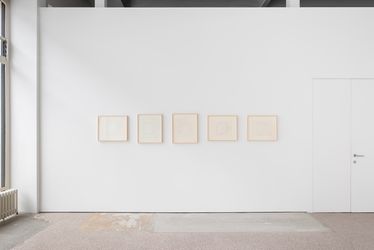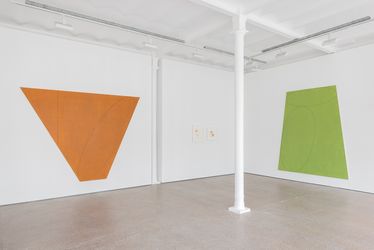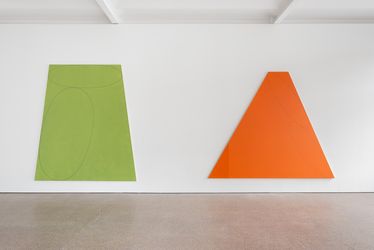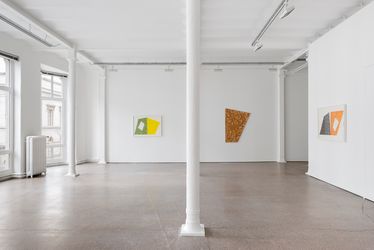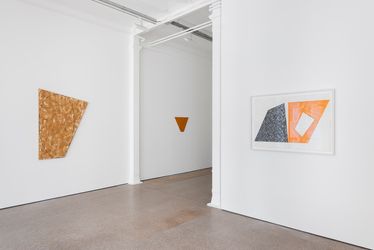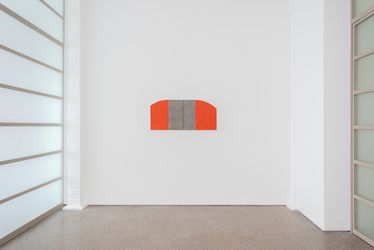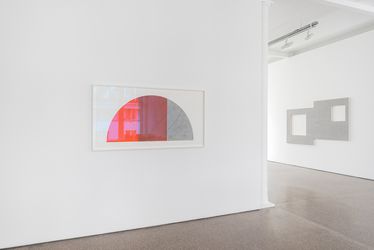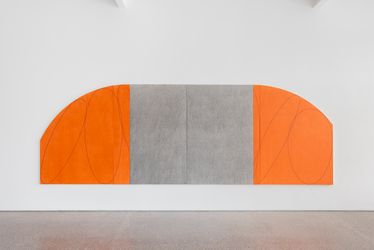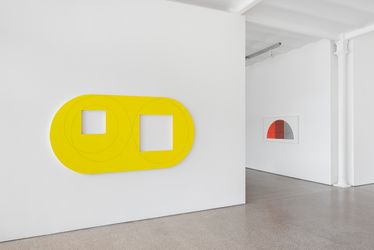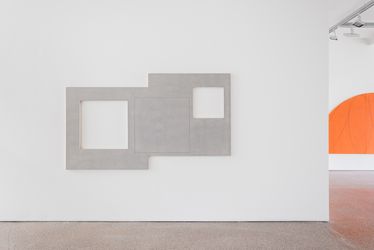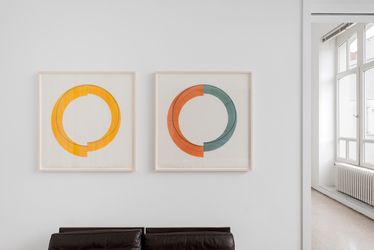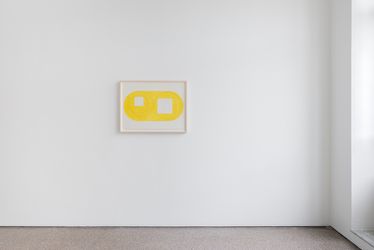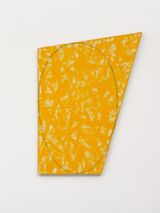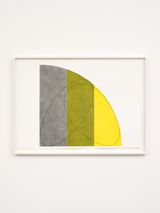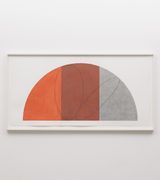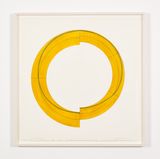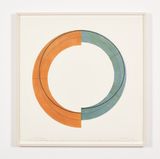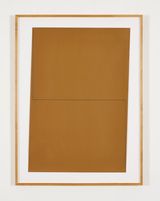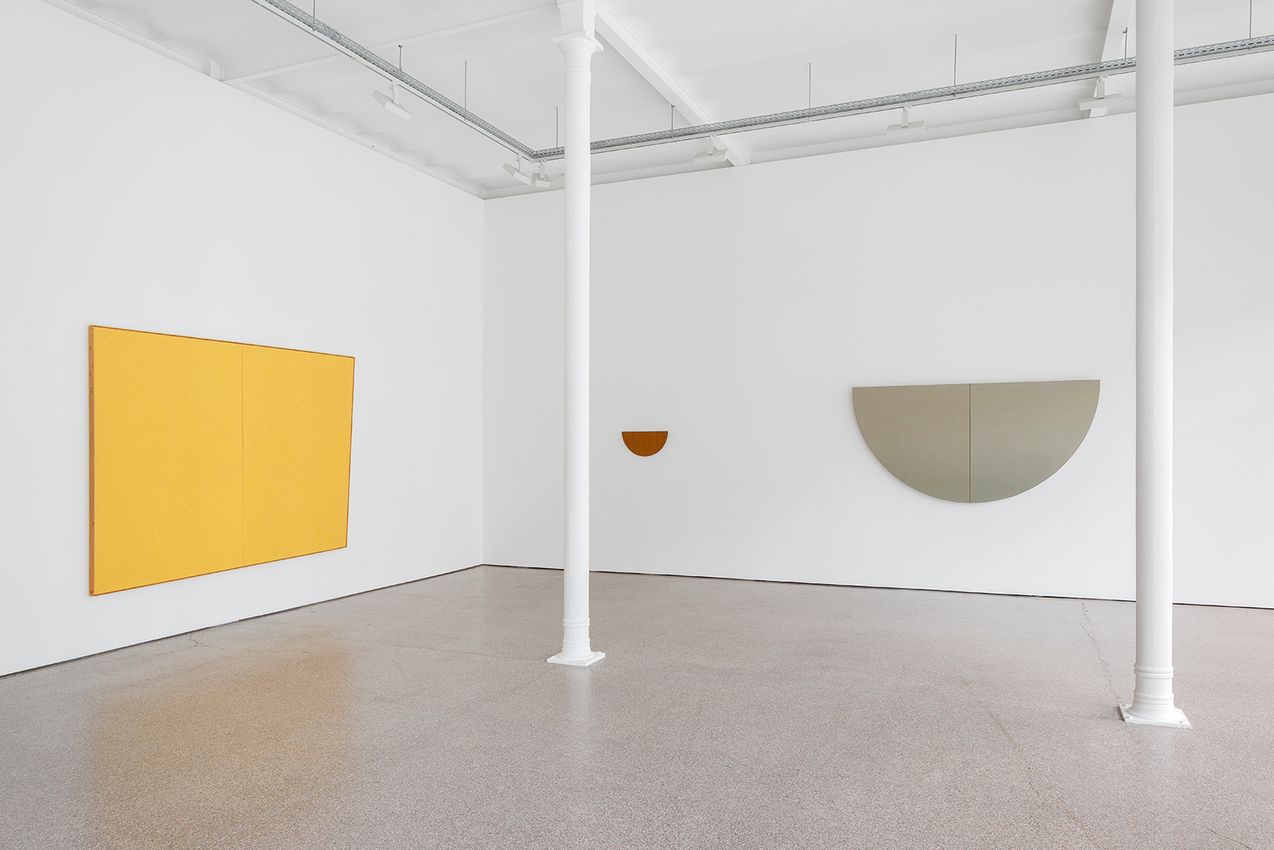
At the occasion of its seventh exhibition with Robert Mangold, Galerie Greta Meert presents a large selection of works spanning the artist’s career from 1967 to 2017. The exhibition comprises works on paper, shaped canvases and works on Masonite panels - the artist’s characteristic materials. Beginning with the seemingly simple idea of starting over, Robert Mangold’s work operates a reduction of painting to its most primary elements: shapes, planes, colors, lines, scale and materials.
Often working through extensive series of preliminary sketches, Mangold is a calculated and precise artist who has repeatedly been portrayed as a formalist. Yet he has also described himself a “romantic artist” and his line drawings are best defined by their quasi-lyrical quality. Originally responding to the influence of late abstract expressionism and to the rise of pop art, Mangold remains hard to classify even within the canon of Minimalism.
In setting up formal problems for himself and for the viewer, his work brings us to look at painting in a way that eludes traditional assumptions. When a painting presents a void at its center our pursuit of a clear subject or object is deterred, leaving us with what is peripheral or in-between as the main point of focus. When a painting presents itself as a column, our intuitive left to right reading gets disrupted. These supposedly elementary problems constitute the core of his practice. While living in New York City, Mangold developed an early interest in architectural forms that could at once be solid and atmospheric, evoke a building or an empty space in-between building. This led him to cultivate a language that revolved around straight lines, sections and areas, as well as a highly idiosyncratic sense of color channeled by the urban environment of Lower Manhattan.
Later on, this language developed towards curved areas, columns, rings and split rings. Following his paintings influenced by the vertical lines present in the work of Barnett Newman, Mangold has described his ring paintings as the outcome of envisioning two bent columns joint together to form a wheel. This type of logic illustrates the way in which the artist tends to follow an idea as it morphs, gets more complex and literally changes form. Just as they create an architecture of their own, the shapes he works with are also a suggestion of our fragmentary perception of the world and of our understanding of culture. Chronologically set up, this exhibition provides a rare insight into Robert Mangold’s work up to today.
Courtesy Galerie Greta Meert


Robert Mangold is an American painter associated with the Minimalist movement of the 1960s. Over the course of his six-decade career, Mangold has used a formal language of shape, line, and colour on supports of varying shapes and dimensions to challenge the very nature of painting.

Over the past 30 years, Galerie Greta Meert established itself as one of Brussels’ leading contemporary art galleries. Founded in 1988 as Galerie Meert Rihoux, it was subsequently renamed after its founding director Greta Meert in 2006. Located in the center of Brussels, the gallery occupies a five-story Art Nouveau building designed by Louis Bral and renovated for the gallery by renowned Belgian architects Hilde Daem and Paul Robbrecht. Since 2012 three floors of the building are dedicated to exhibitions, making it possible to maintain an expanded exhibition schedule.

A respected voice in contemporary art discourse.
Focusing on ambitious storytelling and insightful art-world commentary. Ocula Magazine publishes in-depth interviews, critical essays and timely analysis on the artists, exhibitions and ideas driving the global art world.
Learn more about Ocula Magazine
Showcasing the best of the art world.
Ocula partners with galleries from around the world to highlight their artists, artworks and exhibitions. Gallery membership is by application and invitation, with each member vetted by an independent panel.
Learn more about Ocula Membership

Specialises in the sale of major artworks.
Led by a team with deep ties to the world’s leading auction houses, galleries and collectors. Ocula’s advisory team offers bespoke services to high-net-worth clients from around the world who are looking to acquire the best of contemporary and modern art.
Learn more about our team and services