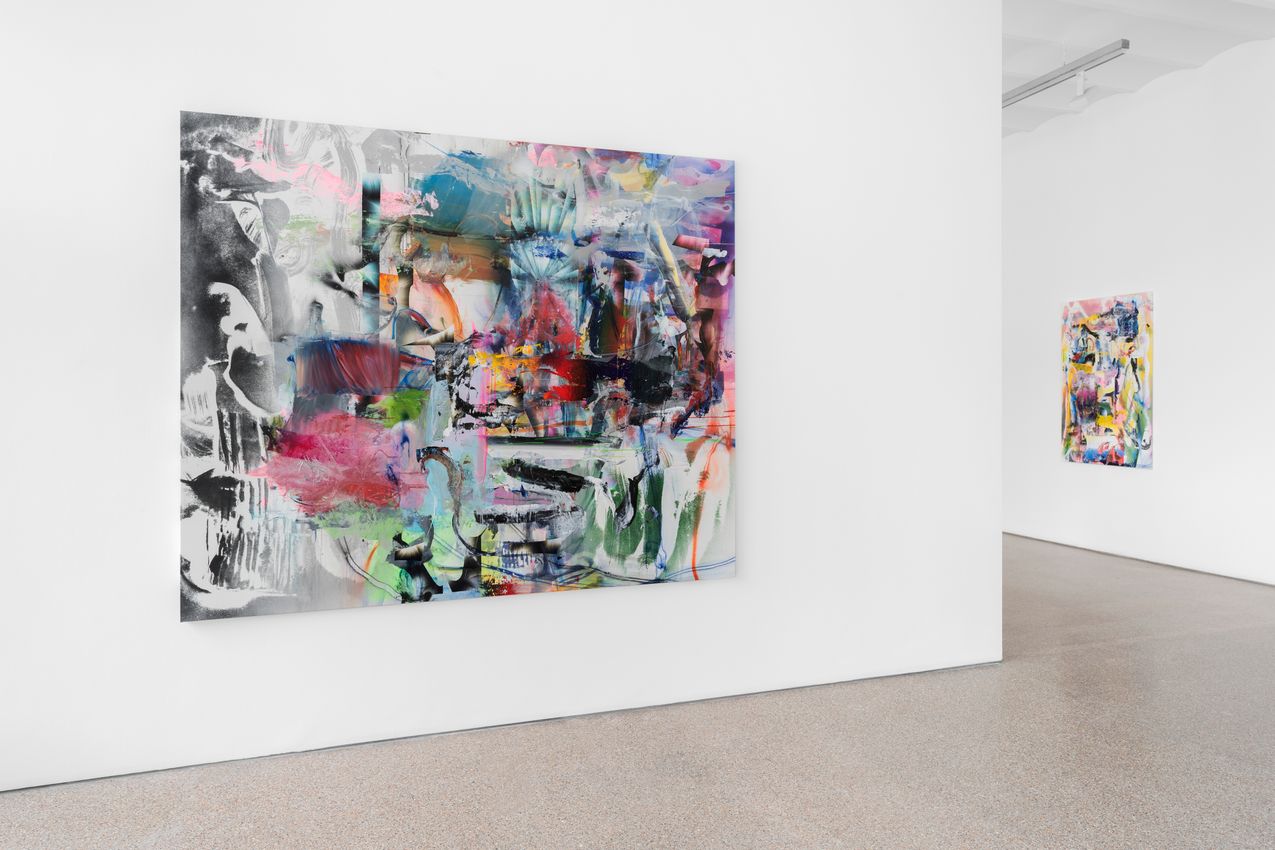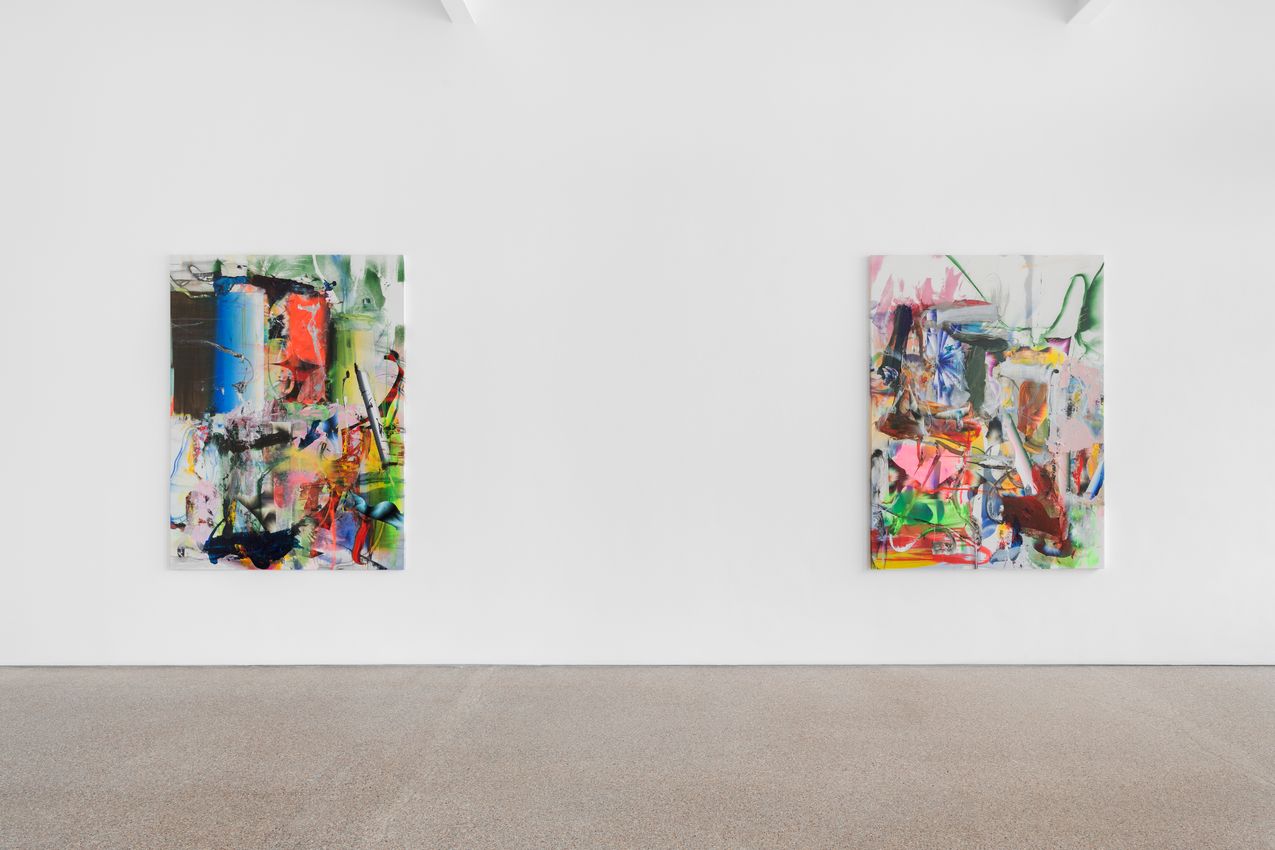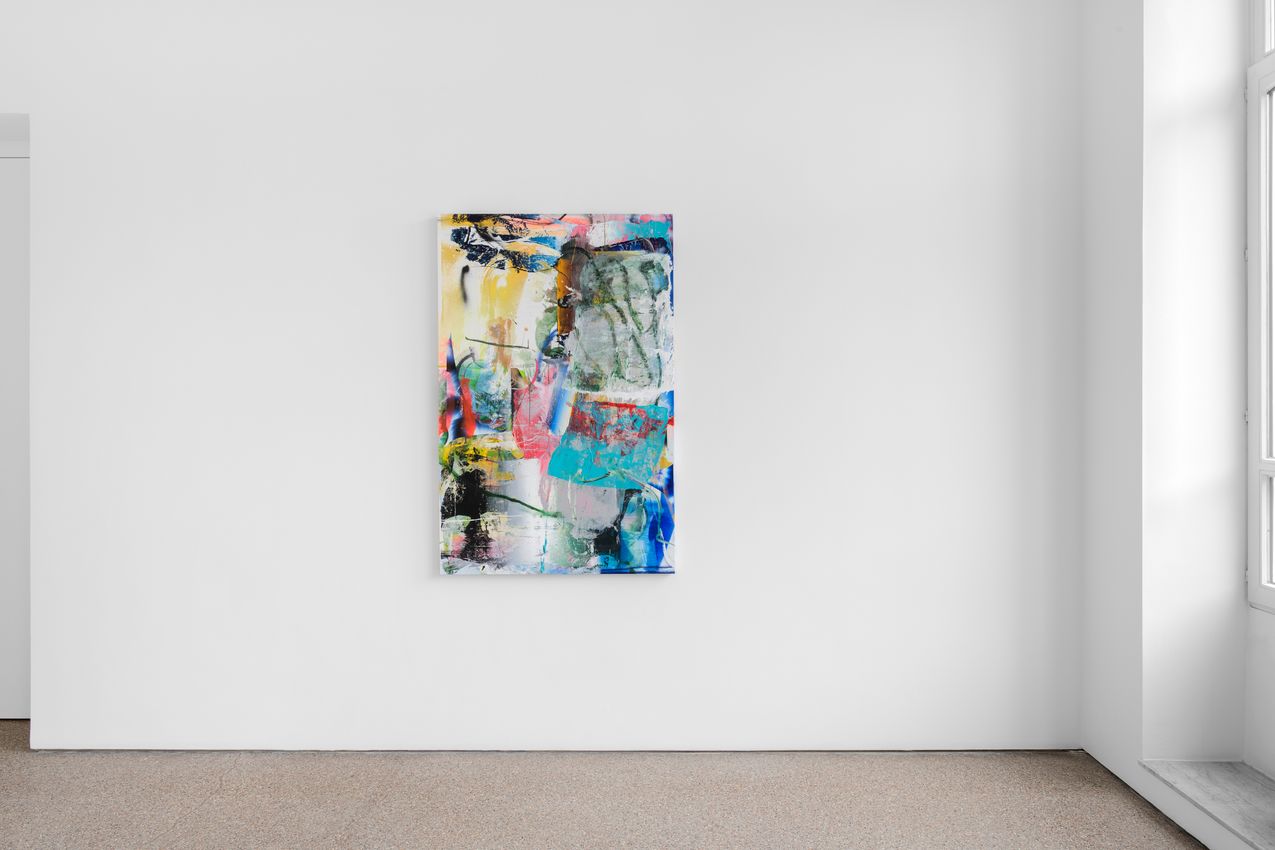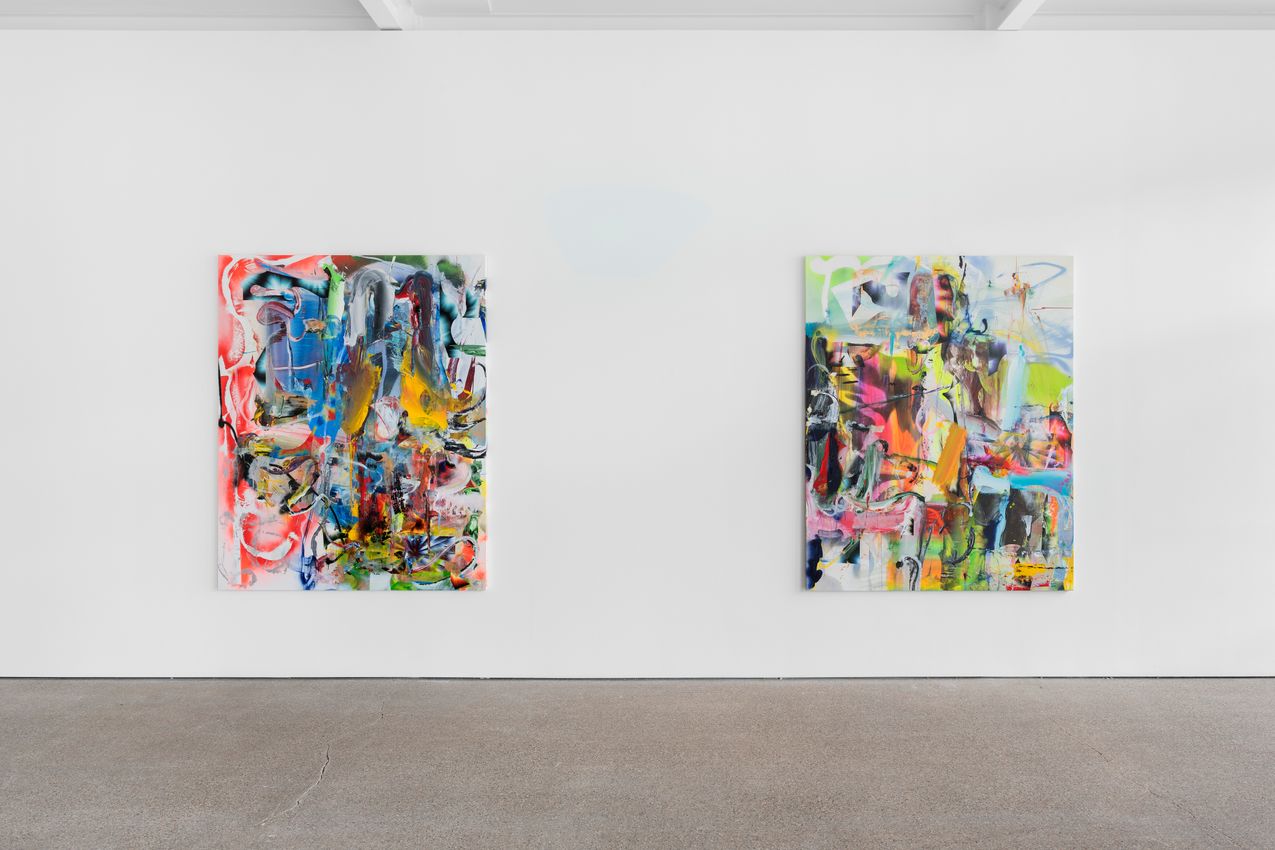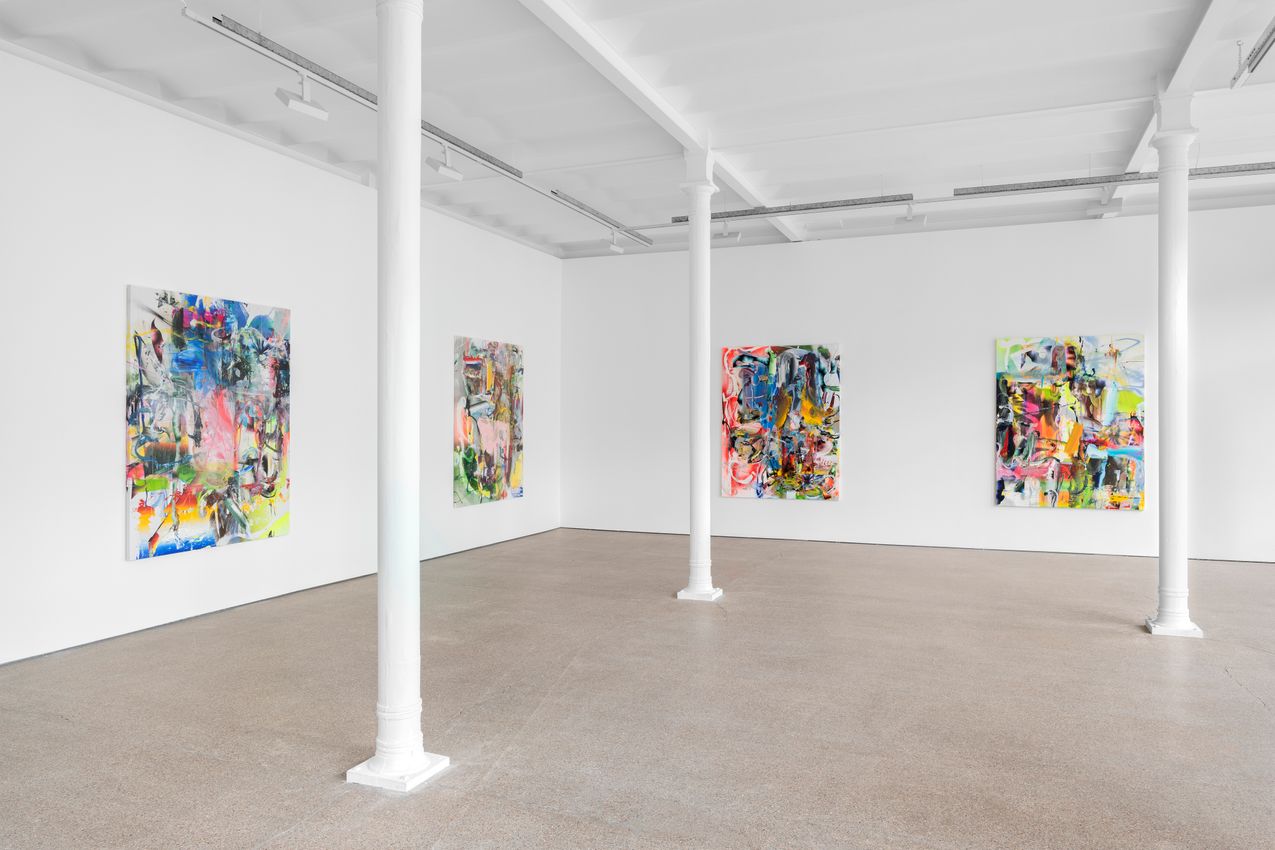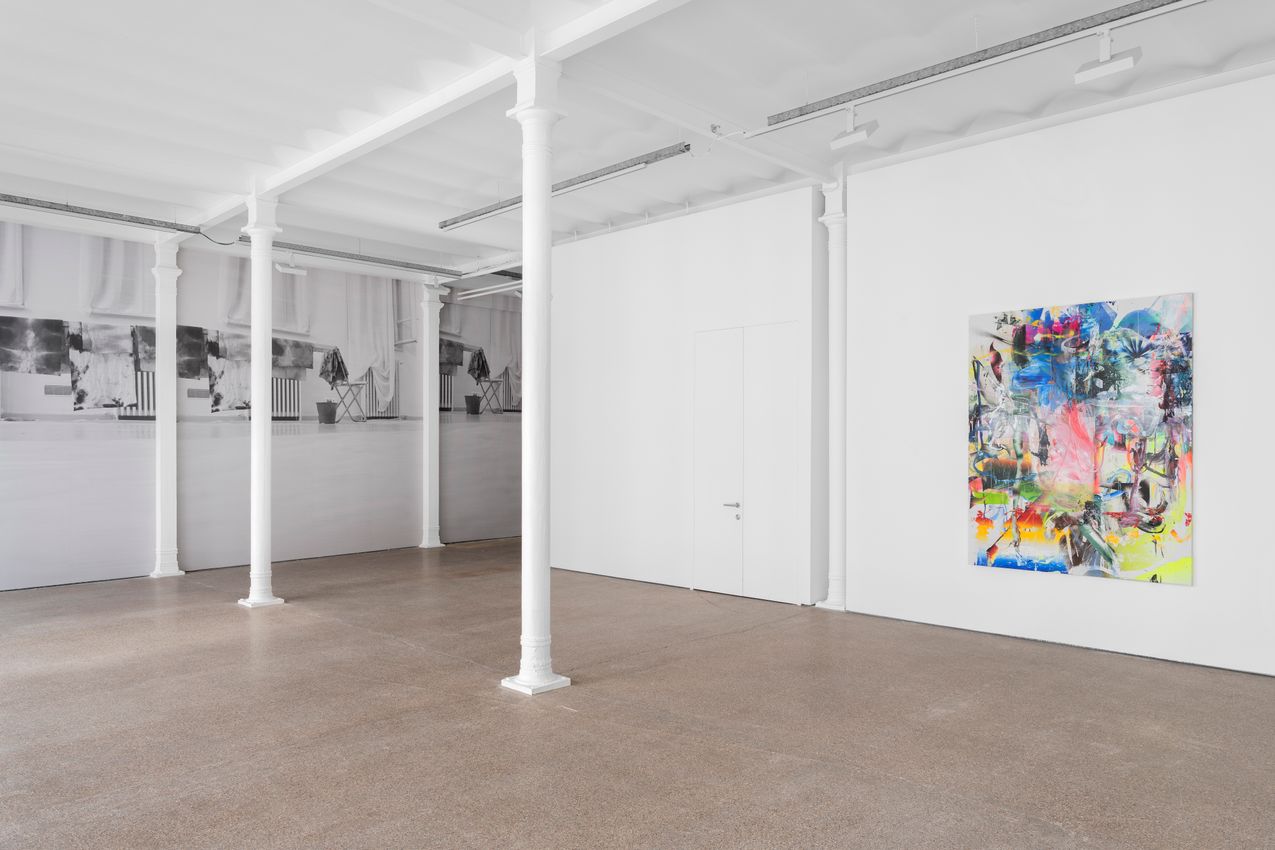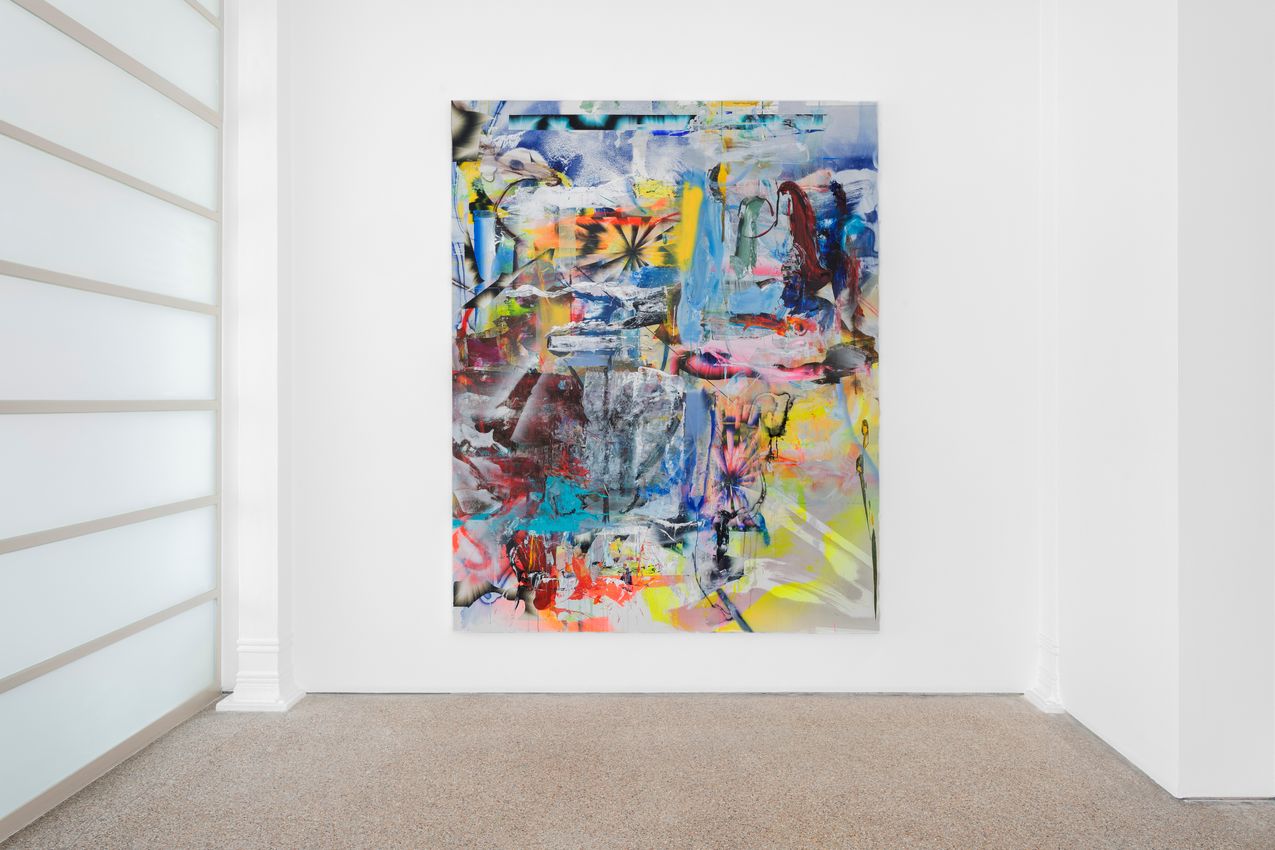
Galerie Greta Meert is pleased to present Steel your face right off your head, Liam Everett‘s first solo exhibition with the gallery.
Informed by theatre, dance and choreography, Liam Everett’s heavily layered paintings are the result of an embodied, performative and material approach. In his studio, Everett sets up physical obstacles such as wooden poles, metal grids or trestles between himself and the surface of the substrate to raise his body’s awareness in the process of mark making. These same objects often make their way onto the substrate itself, also serving as tools to stain or leave imprints.
For Everett, the studio becomes akin to a stage where he moves around and creates temporary props and situations that all take part in the making of the work. In turns, his abstract and energetic paintings seem to oscillate between their onticand indexical nature; between their state as the by-products of a set of performative reactions, and the naturally autonomous inclination of abstraction. This in-betweenness forces his paintings to remain in a perpetually provisional state,questioning traditional notions of composition and ‘aesthetic finish.’ Everett has said that he hopes for his work to ‘continue working’ upon leaving the studio.
While the title of this exhibition evokes his California state of mind, the artist lets us peer into the workspace he occupied for a year in Paris as he was creating the works on view. A wall-sized black and white photographic mural shows the chairs,tables and rugs of the artist’s studio from the incongruously low vantage point of the floor. Looking at this mural is a bit like embodying one of the mice in Bruce Nauman’s Mapping the Studio (Fat Chance John Cage) where the artist used infrared cameras to record his cat’s nocturnal activity.
The floor and its horizontality constitutes a cardinal point and a recurrent concern in Everett’s spatial and choreographic painting practice. In her essays on Horizontality in the 1996 catalogue for the exhibition Formless: A User’s Guide, Rosalind Krauss also refers to the idea of spatial mapping while defining the operation by which the floor became a production site. Liam Everett approaches the floor as such a site and subsequently as a system of support for the picture plane, which entails a larger cultural shift in how one considers the role of form, its relationship to the body, and to our perceptual apparatus.
By adding many layers of ‘pictorial material’ and subsequently sanding or erasing layers with caustic everyday substances like salt, lemon juice, and alcohol, the artist also foregrounds paintings’ earthiness while highlighting its kinship with the practice of alchemy. Gestural smears, smudges, lines, creases, traces of rust or spray paint make up compound surfaces that challenge the terms of our engagement with his work. Viewers become the audience for the play or the performance that they did not see. Like a steam locomotive, rollin’ down the track, Everett’s paintings are brought forth in such a way that they are ‘always painting.’ even when He’s gone.
Liam Everett’s (b.1973, Rochester, NY) embodied and martially driven relationship to abstraction results in paintings that oscillate between their indexical and autonomous tendencies. In his abstract, mixed-media paintings and sculptures, Everett explores the process of art making through the movement of his body as he shapes raw materials into finished pieces. Inspired by dance and theatre, his work abounds with human traces, gestural smears and smudges, lines, and creases. By erasing layers of pigment with caustic everyday substances like salt, lemon juice, and alcohol, he foregrounds paintings’ earthiness wile highlighting its kinship with the practice of alchemy.
Over the past 30 years, Galerie Greta Meert established itself as one of Brussels’ leading contemporary art galleries. Founded in 1988 as Galerie Meert Rihoux, it was subsequently renamed after its founding director Greta Meert in 2006. Located in the center of Brussels, the gallery occupies a five-story Art Nouveau building designed by Louis Bral and renovated for the gallery by renowned Belgian architects Hilde Daem and Paul Robbrecht. Since 2012 three floors of the building are dedicated to exhibitions, making it possible to maintain an expanded exhibition schedule.

A respected voice in contemporary art discourse.
Focusing on ambitious storytelling and insightful art-world commentary. Ocula Magazine publishes in-depth interviews, critical essays and timely analysis on the artists, exhibitions and ideas driving the global art world.
Learn more about Ocula Magazine
Showcasing the best of the art world.
Ocula partners with galleries from around the world to highlight their artists, artworks and exhibitions. Gallery membership is by application and invitation, with each member vetted by an independent panel.
Learn more about Ocula Membership

Specialises in the sale of major artworks.
Led by a team with deep ties to the world’s leading auction houses, galleries and collectors. Ocula’s advisory team offers bespoke services to high-net-worth clients from around the world who are looking to acquire the best of contemporary and modern art.
Learn more about our team and services