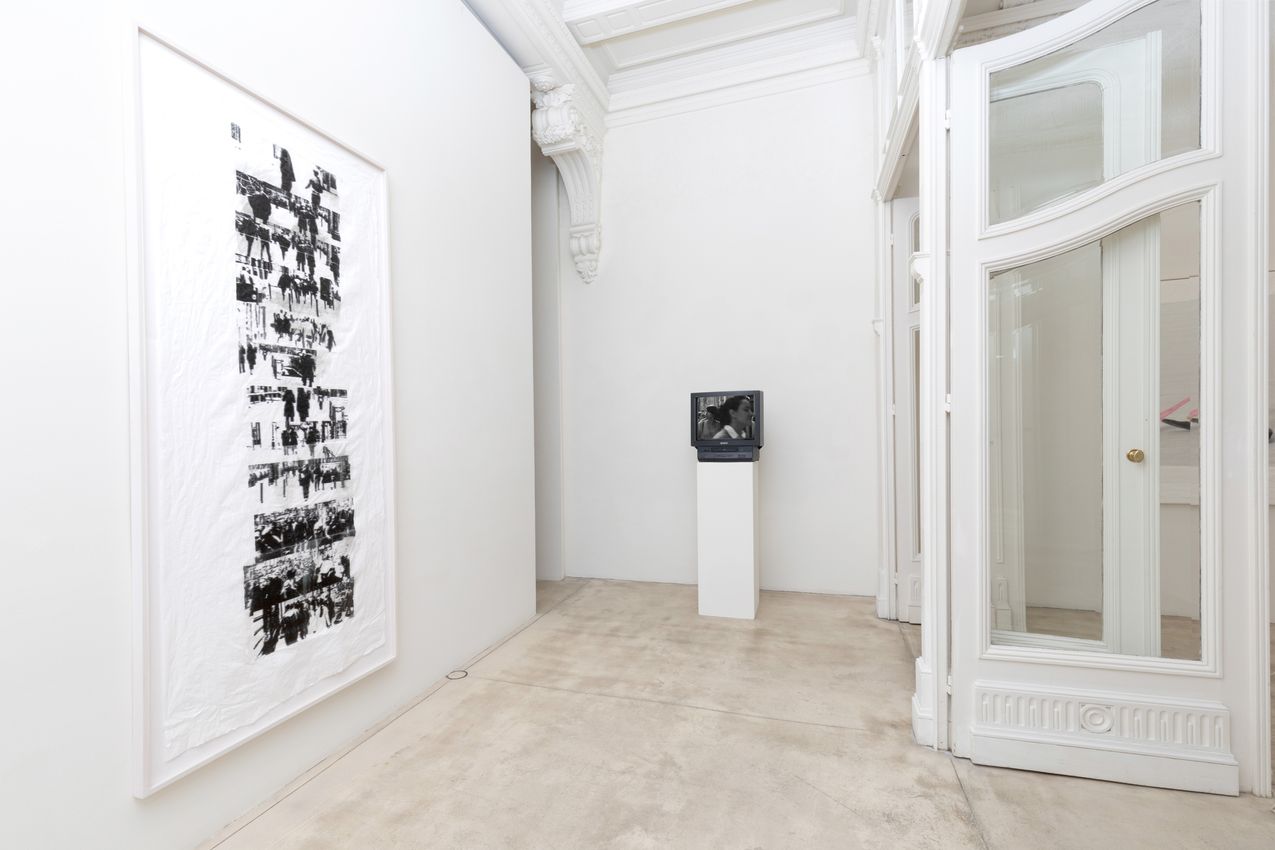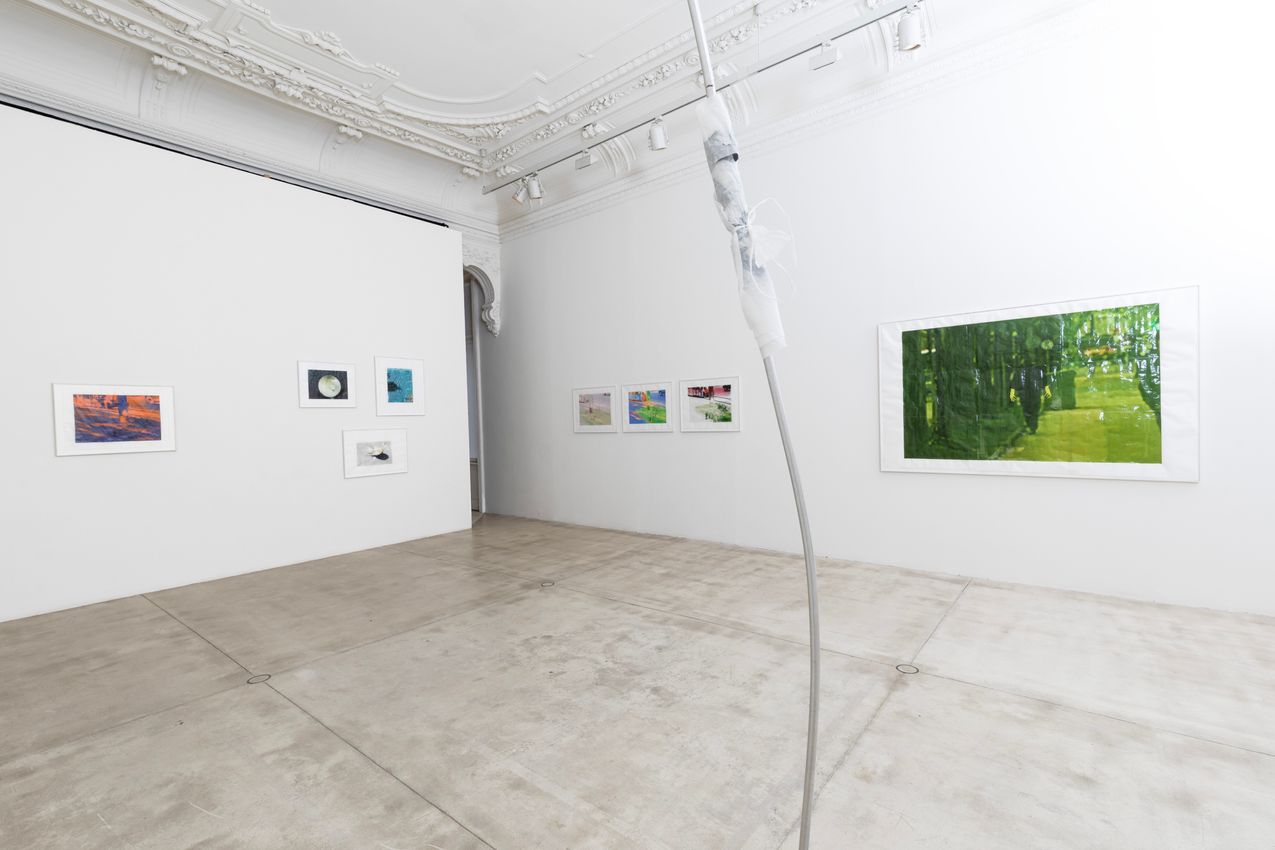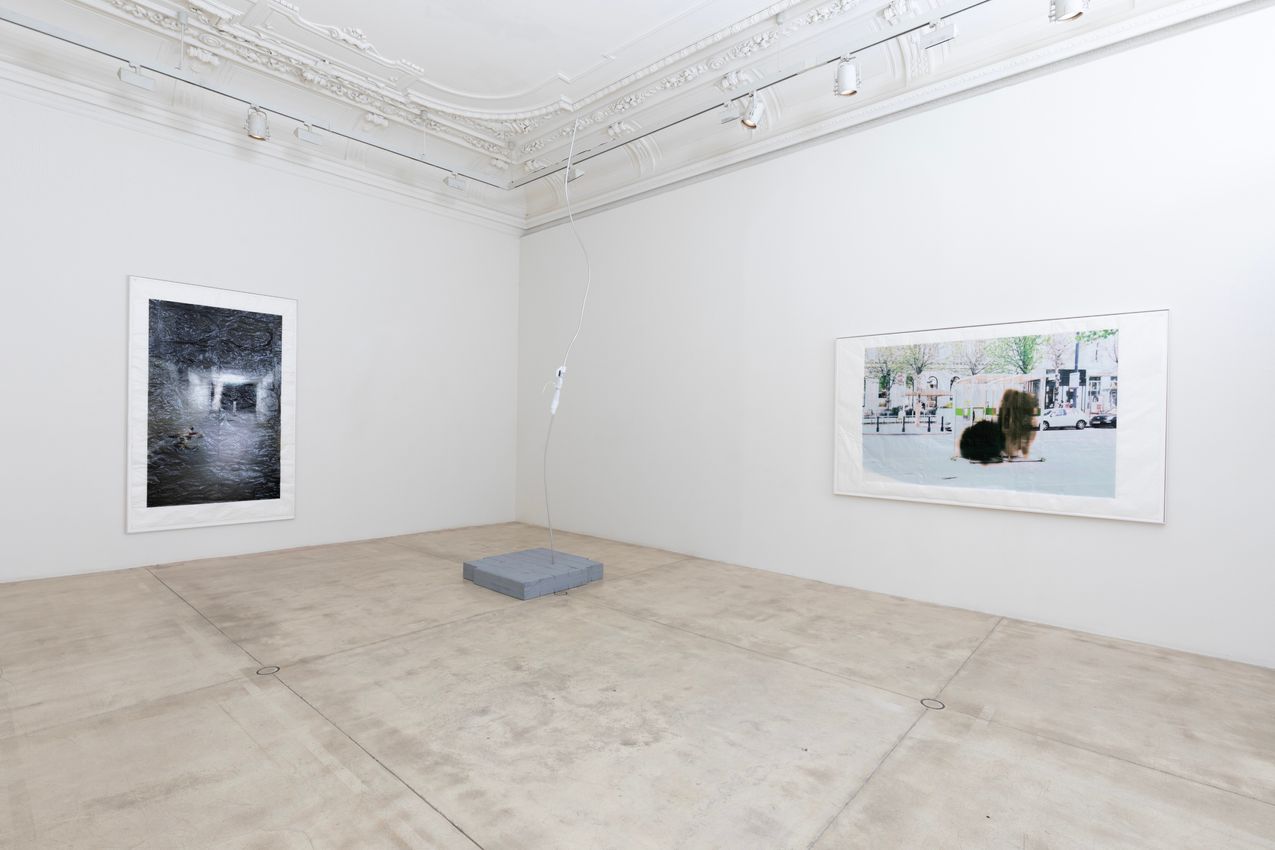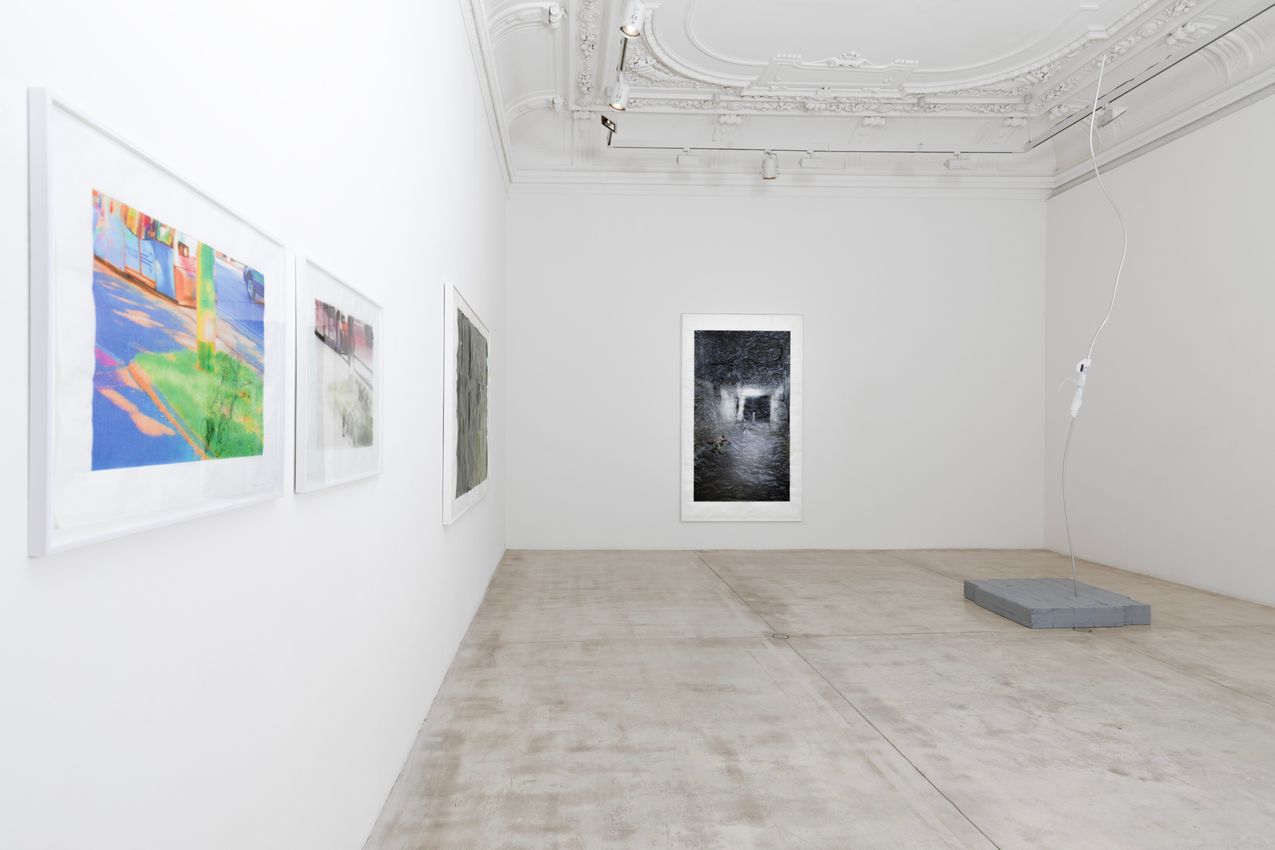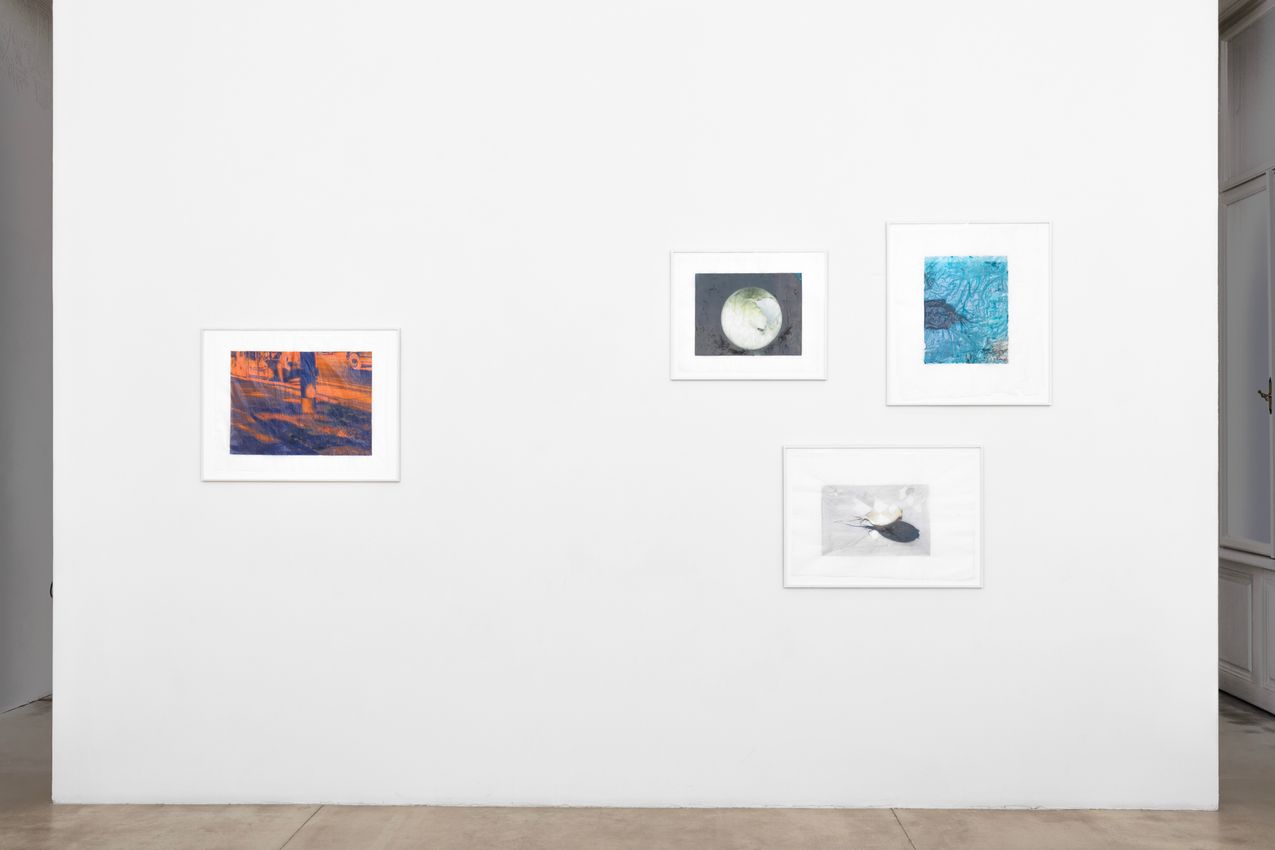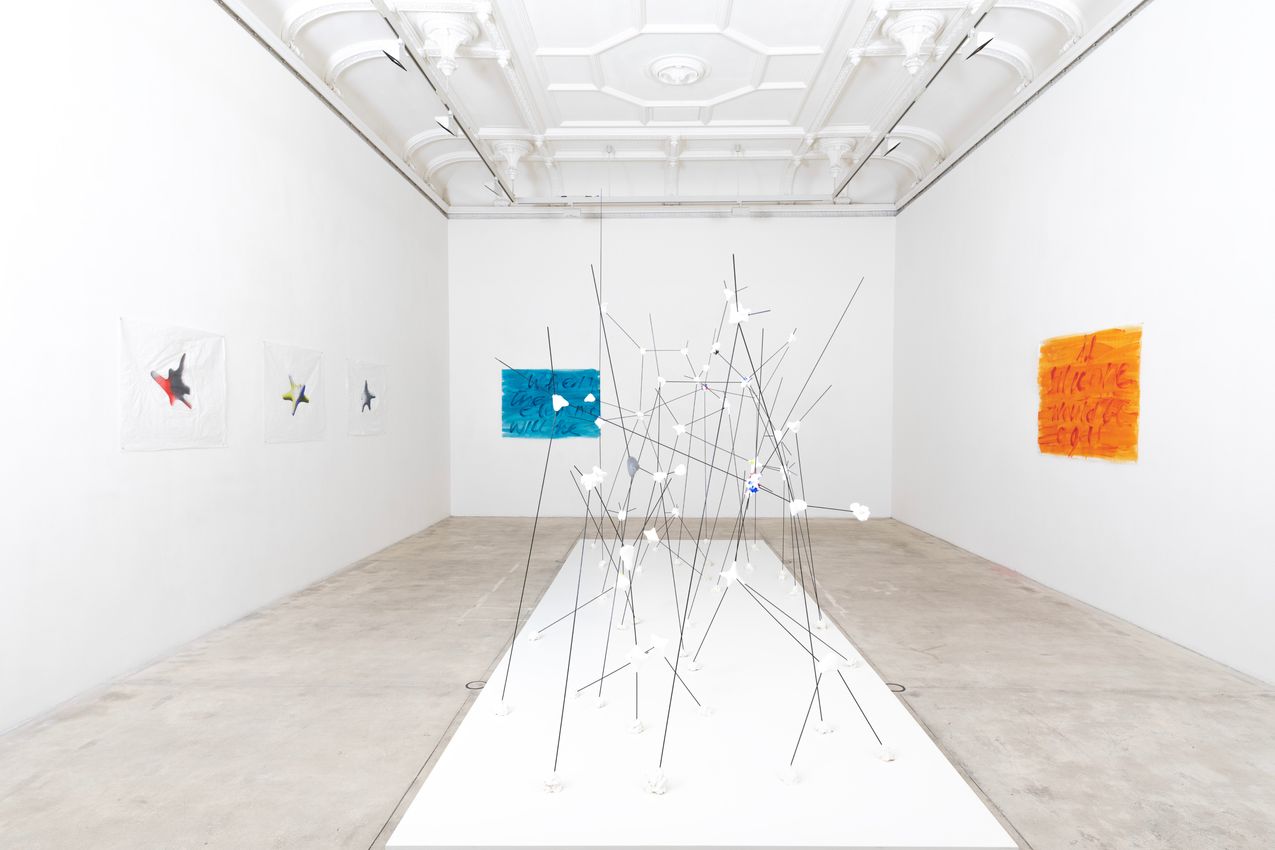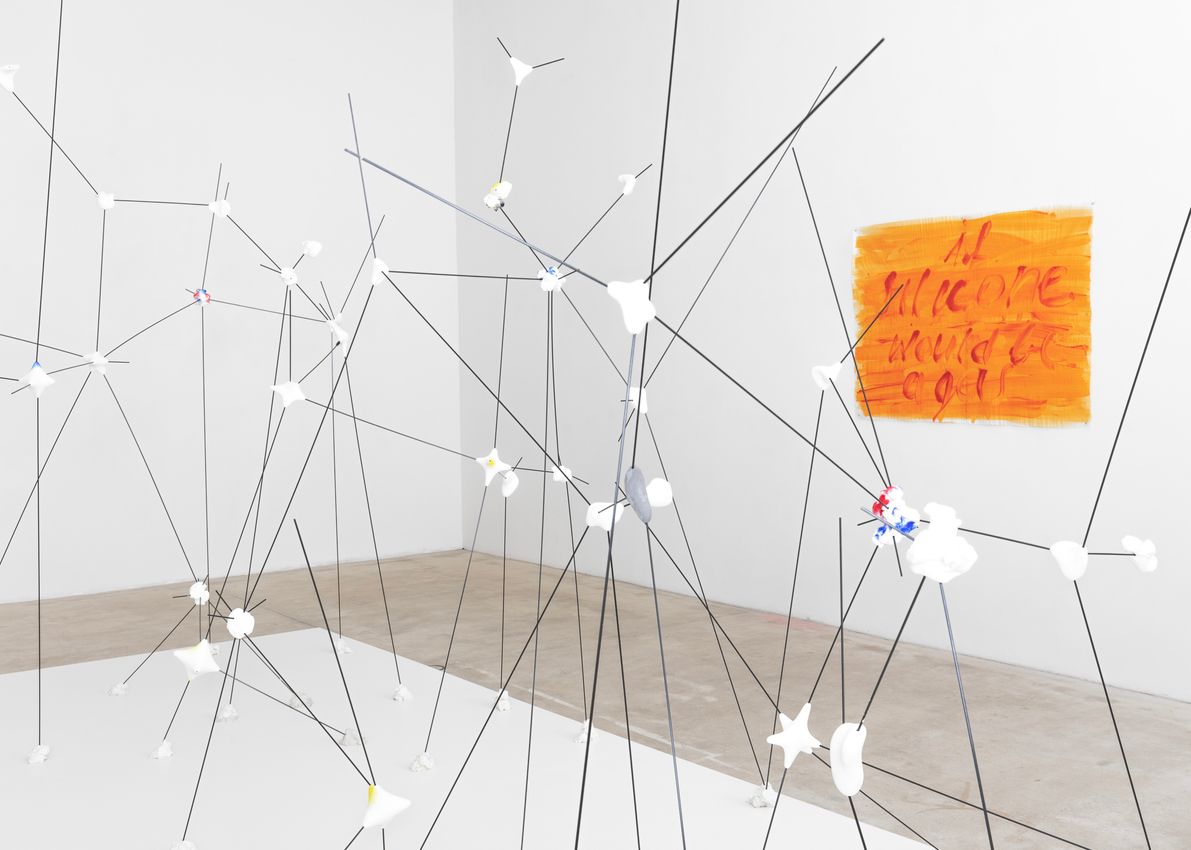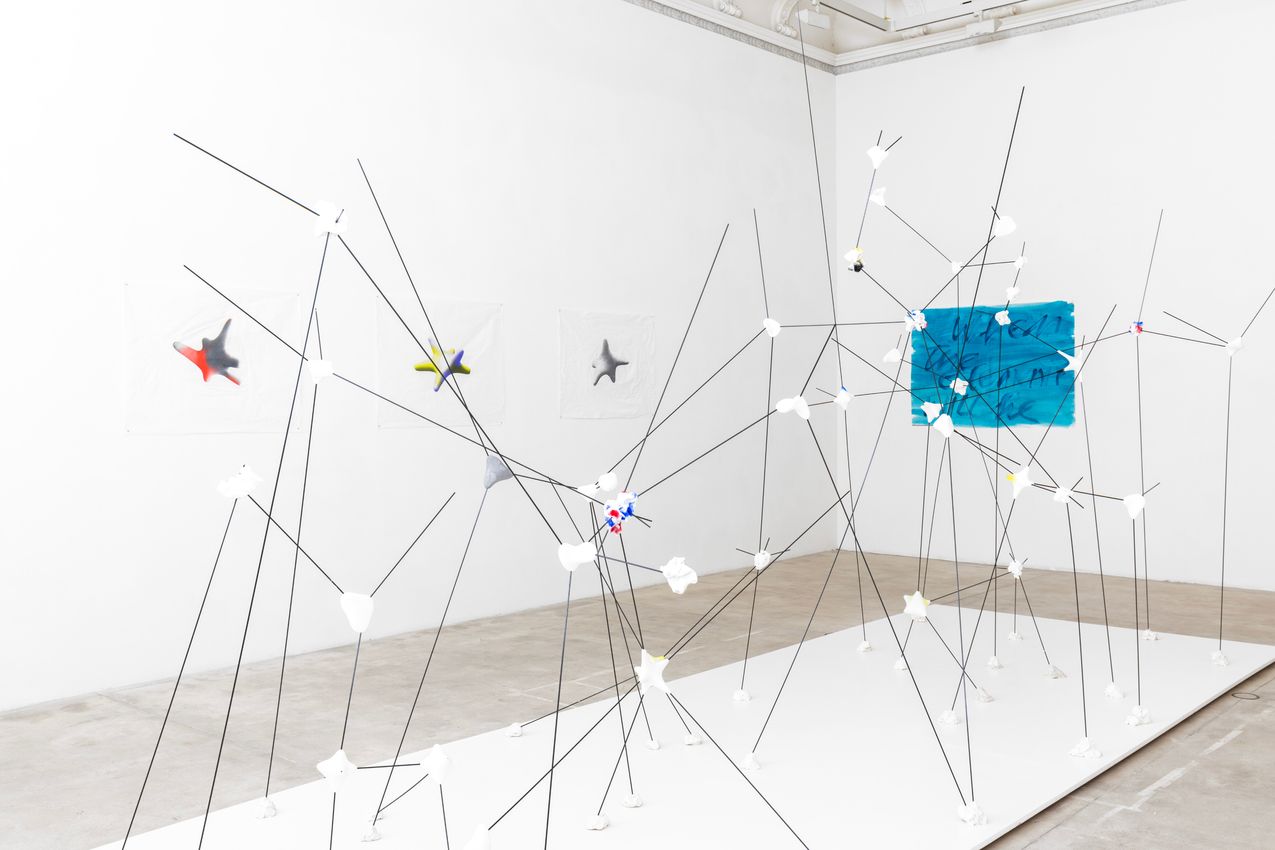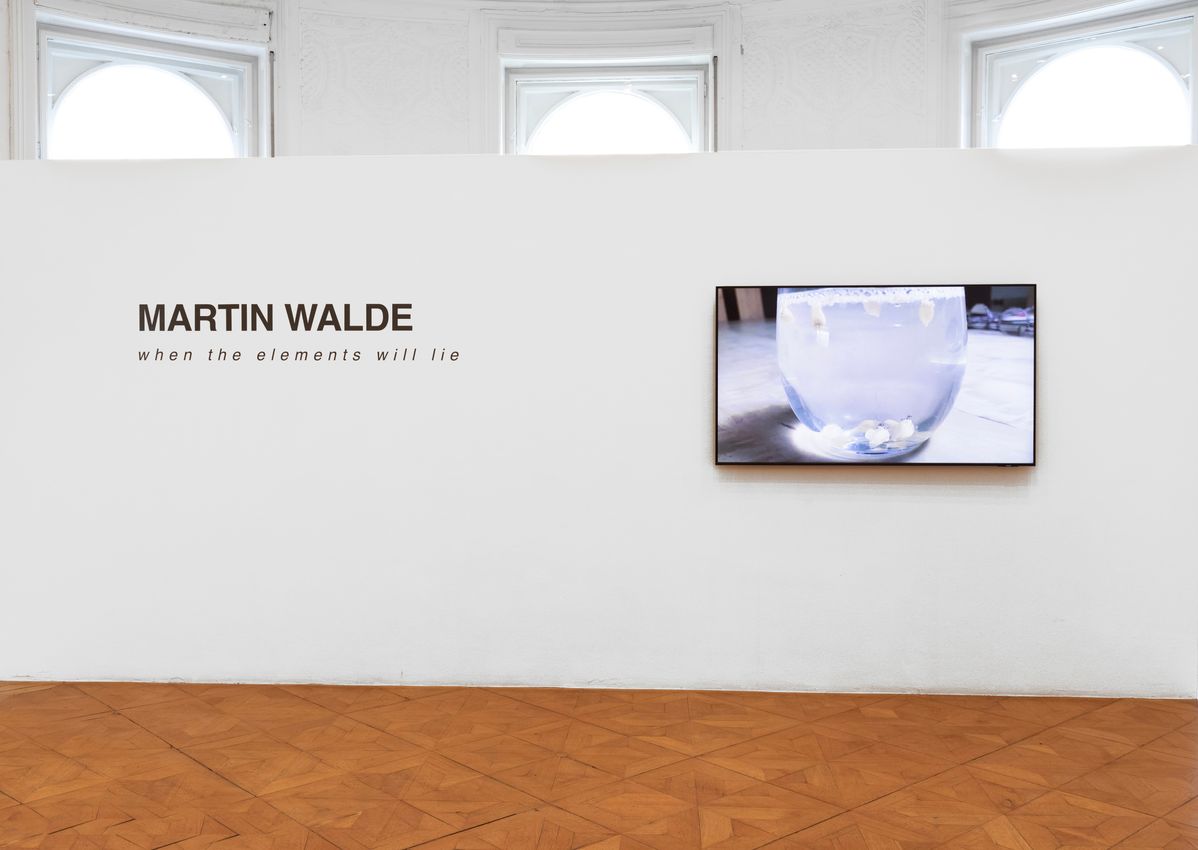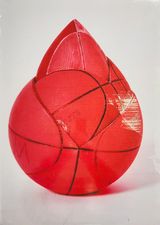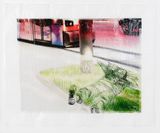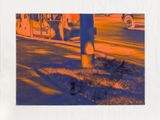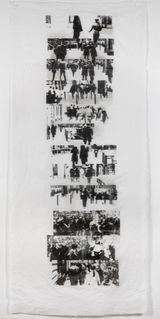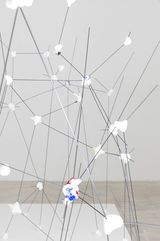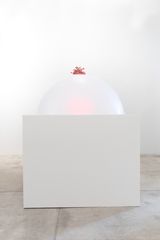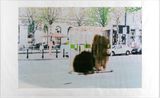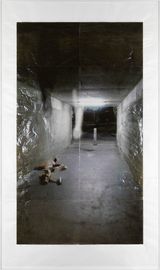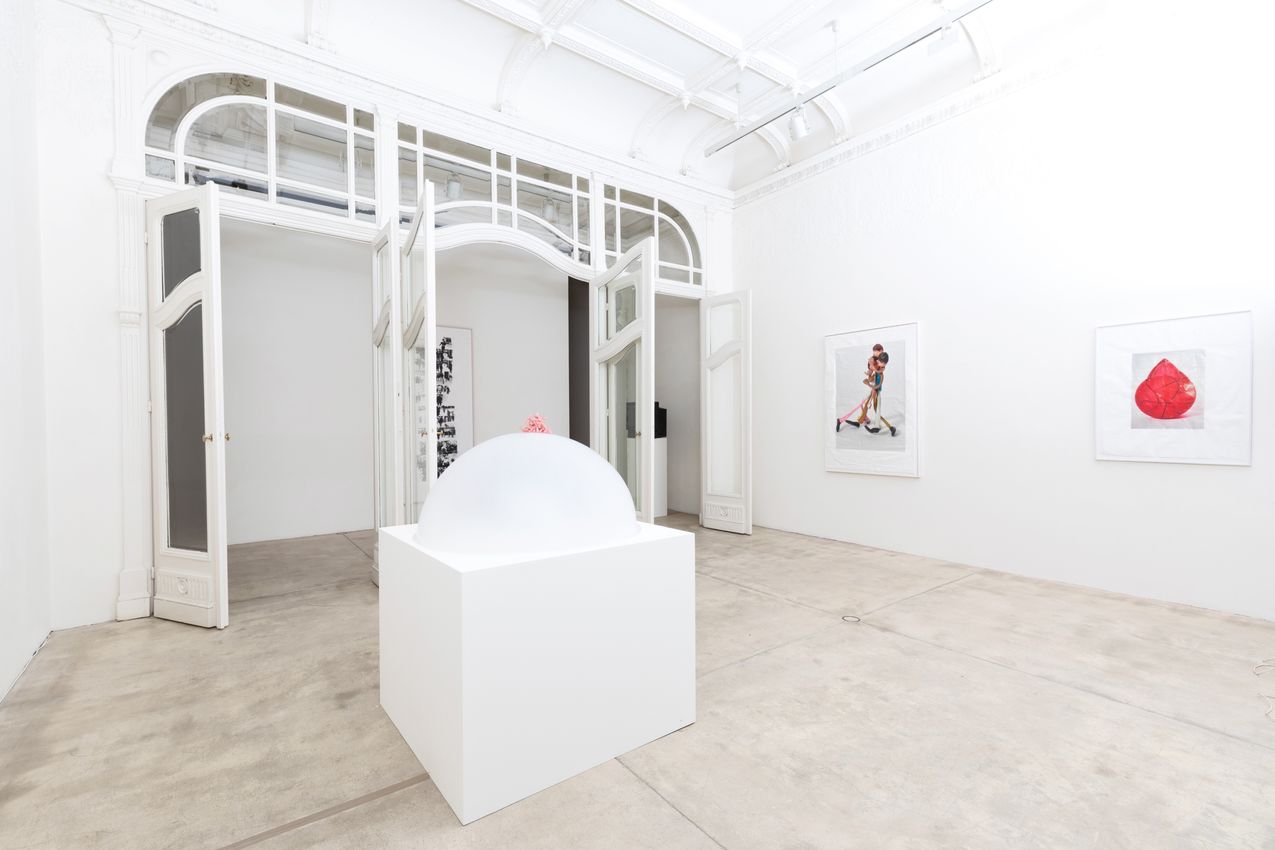
The exhibition when the elements will lie is a sequence of works that contrast in content butconvey a heterogeneous situation in their interaction. They are fragments of different levels ofreality of the experience and representation of our world. They find their realisation andvisuality through different media. The break is an artistic means and represents a form ofreality. Do we experience our world in fragments, which we continuously try to transform intoa continuum?
—Sabine B. Vogel.
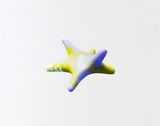
Martin Walde’s solo exhibition when the elements will lie shows installations, sculptures, ‘videosketches’, photographs and works on paper from various work cycles. The expansive netstructure of the installation out of the blue to an open end is based on organic microstructures.The sculpture P.P. Concoction consists of intertwined silicone figures balancing on a luminous,translucent hemisphere.
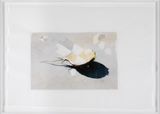
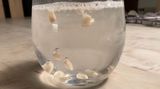
The film Soda Zitron shows lemon seeds dancing in soda water, a rare unrepeatableoccurrence. With Nomad, Martin Walde explores the phenomenon of mass in motion with apoetic reflection on the relativity of simultaneity in the form of a video and a MUD print (theMUD Print is a transfer technique developed by Martin Walde using biopolymers).
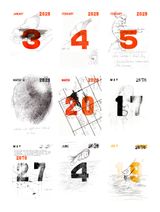
In the series L.C./enactments, which has been running since 1990, Martin Walde shows placesin real space combined with fragmentarily depicted people whose actions do not correspondto the socially accepted norm. They are also positioned outside social perception due to theirsocial situation.
Martin Walde, born in Innsbruck in 1957, lives and works in Vienna.His process-oriented practice operates at the intersection of art, nature and science. He works across arange of media to create works that are simultaneously experimental and analytical in nature. Walde’sworks explore concepts of time and the way objects occupy space and are often realised through activeaudience participation. Walde conveys abstract concepts in a variety of ways, encouraging viewers torethink accepted ideas and challenge their understanding of the materiality of the world.His works have been exhibited at the 21st Sydney Biennale in 2018, the Kochi-Muziris Biennale in 2016,the 4th Moscow Biennale in 2011, the Venice Biennale in 2001, the Montreal Biennale in 1998,“documenta X” in Kassel in 1997 and the Istanbul Biennale in 1989, among others. Extensive soloexhibitions have taken place at the Secession in Vienna, the Fuchu Art Museum in Tokyo, the SalzburgerKunstverein, the Galerie im Taxispalais, the Kunsthaus Baselland, the MARTa Herford and mostrecently at the Neue Galerie in Graz, among others.
Galerie Krinzinger was founded in 1971 by art-historian Dr. Ursula Krinzinger. Since then, she has organized at least 500 exhibitions of national and international artists, mounting solo, group and thematic shows.

A respected voice in contemporary art discourse.
Focusing on ambitious storytelling and insightful art-world commentary. Ocula Magazine publishes in-depth interviews, critical essays and timely analysis on the artists, exhibitions and ideas driving the global art world.
Learn more about Ocula Magazine
Showcasing the best of the art world.
Ocula partners with galleries from around the world to highlight their artists, artworks and exhibitions. Gallery membership is by application and invitation, with each member vetted by an independent panel.
Learn more about Ocula Membership

Specialises in the sale of major artworks.
Led by a team with deep ties to the world’s leading auction houses, galleries and collectors. Ocula’s advisory team offers bespoke services to high-net-worth clients from around the world who are looking to acquire the best of contemporary and modern art.
Learn more about our team and services