



Press Release
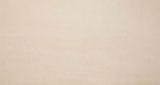
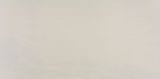
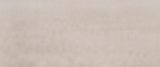
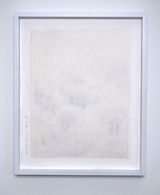
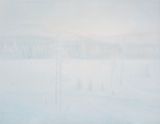
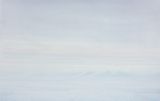
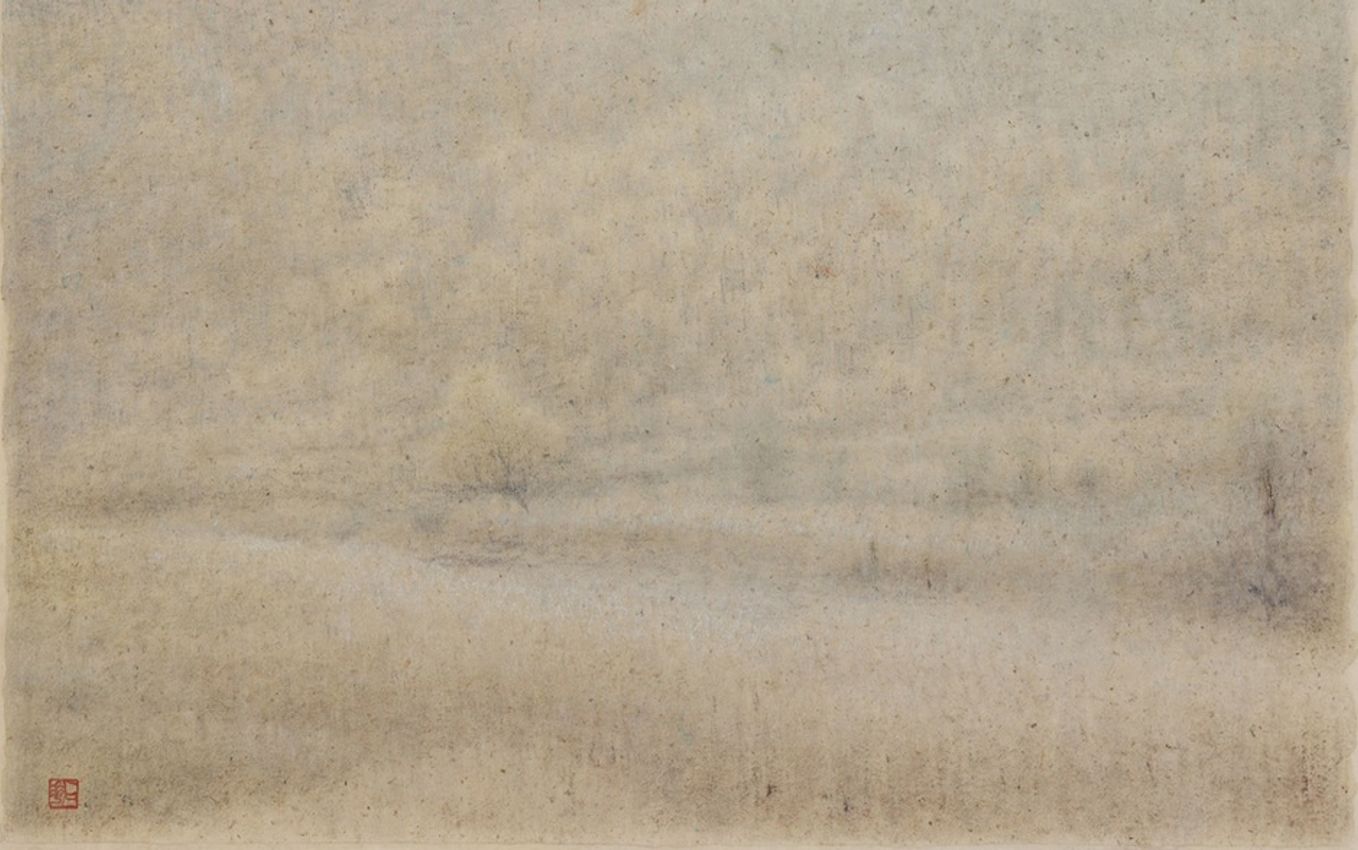
Qiu Shihua holds a singular position within contemporary art. At first glance you see big, off-white, seemingly empty canvases. But at second glance, actual landscapes appear. Terrain forms out of the white background and vanishes again. Upon closer inspection you realise that the apparently white surfaces are surprisingly colourful and that traces of thinly applied pigment are visible.

Established contemporary art terms don’t help to describe what a viewer experiences in front of Qiu Shihua’s paintings. Oft-quoted modes of perception, ideas of space, landscape, or painting itself are not of concern to the artist. You have to deploy a spiritual vocabulary to find words for Qiu Shihua’s art: as a viewer, it is best to let associations come and go, similar to the way that thoughts appear and disappear during meditation, and to give up on reason, will, and intention in favor of an intuitive, acquiescent perception. Visualisation and imagination are also helpful concepts for approaching Qiu Shihua’s works. His images are projection screens. Self-confidently, the artist states that he is not interested in other peoples’ thoughts, and this could be interpreted as an aloof attitude. But it is not so much a lack of interest in communication than it is the insight that, where spirituality is concerned, a profound exchange is simply not possible. Goethe’s words can be applied to every image, but they are particularly true of Qiu Shihua’s blank spaces: ‘You only see what you already know and understand.’1 The artist allows his audience many liberties. Whatever anyone sees in the painting is in the painting, he states. His motifs are proposals. Because of this his landscapes are archetypes and not copies of existing scenery. Chinese art has a long tradition of idealised landscapes. In Western art history the first landscape painting dates back to the early Renaissance, and to this day they are mainly concerned with representation. Not only did China have a head start of roughly a thousand years—the first landscape paintings date from the Tang Dynasty (618–907)—but Chinese art also has a fundamentally different notion of the landscape: from the beginning landscape was conceived as an idealised, almost ornamentally organised space for meditation. A tradition Qiu Shihua relates to.

For Qiu Shihua, the development of his radical, achromatic style was an act of liberation from the logic of the Western avant-garde and his education in Socialist Realism’s painting styles. Trained at the art academy in Xi’an, he initially worked as poster painter for a theatre in Tongchuan. During the 1980s he had the opportunity to travel to Europe and to study Western art history. He has been painting his characteristic, neutral landscapes since the early 1990s. His work has been seen at St. Moritz Art Masters (2013), the Shanghai Biennial (2004), the Berlin Biennial (2001), the 48tth Venice Biennial (1999) and at the Kunsthalle Basel (1999). Furthermore, a retrospective of his work traveled last year from the Hamburger Bahnhof in Berlin to the Pfalzgalerie in Kaiserslautern, Germany. His seventh exhibition at Galerie Urs Meile picks up from there and features a selection of his new paintings and works on paper.
About the Artist

Qiu Shihua was born in 1940 in Zizhong, Sichuan Province, China. In 1962 he graduated from the Xi’an Academy of Fine Arts, oil painting department, where he was trained in Chinese traditional painting and Russian Social Realist painting. Throughout the Cultural Revolution and until 1984 he worked as a poster painter for a theatre in Tongchuan. He lives and works in Beijing, Shenzhen and San Francisco. Qiu Shihua has participated in several international solo exhibitions and group shows, including: Shanshui – Poetry Without Sound? Landscape in Chinese Contemporary Art, Kunstmuseum Luzern, Switzerland (2011); Mahjong: Contemporary Chinese Art from the Sigg Collection, The University of California, Berkeley Art Museum, Pacific Film Archive, Berkeley, USA (2008); Shanghai Biennale, Shanghai, China (2004); Qiu Shihua, The New York Kunsthalle, New York, USA; 2nd Berlin Biennale (2001); d’APERTutto, La Biennale di Venezia, 48 Esposizione Internationale d’Arte, Venice, Italy (1999); and Qiu Shi-hua, Basel Kunsthalle, Basel, Switzerland (1999).

View Artist Profile

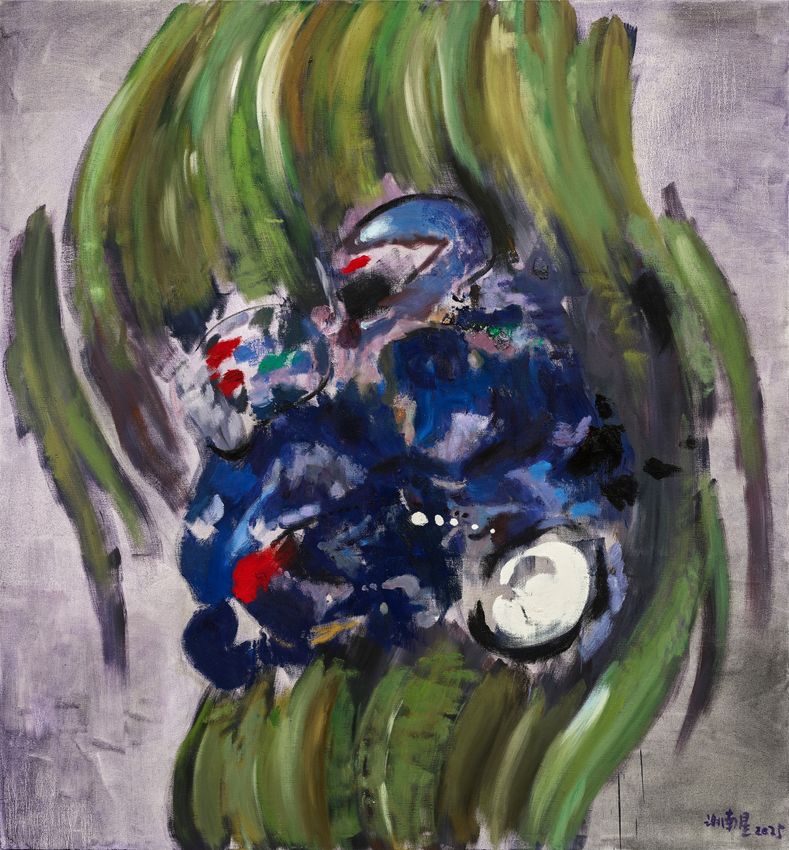
Also Exhibiting at Galerie Urs Meile

About the Gallery

Since its establishment in 1992, Galerie Urs Meile has contributed to the presentation and dissemination of contemporary art, from painting and sculpture to photography, installation and video. The gallery is working from two locations: Lucerne (Switzerland) and Beijing (China). While its center of operations is based in Switzerland, the Beijing gallery has established itself as an international meeting place for collectors, curators, artists and aficionados of the arts.

View Gallery Profile
Address
Rosenberghöhe 4
Lucerne
Switzerland
Opening Hours
Tues - Fri, 10am - 6pm
Sat by appointment
(1)
Lucerne Rosenberghöhe 4
Galerie Urs Meile
Rosenberghöhe 4, Lucerne, Switzerland

Opening hours
Tues - Fri, 10am - 6pm
Sat by appointment
The art world in focus