



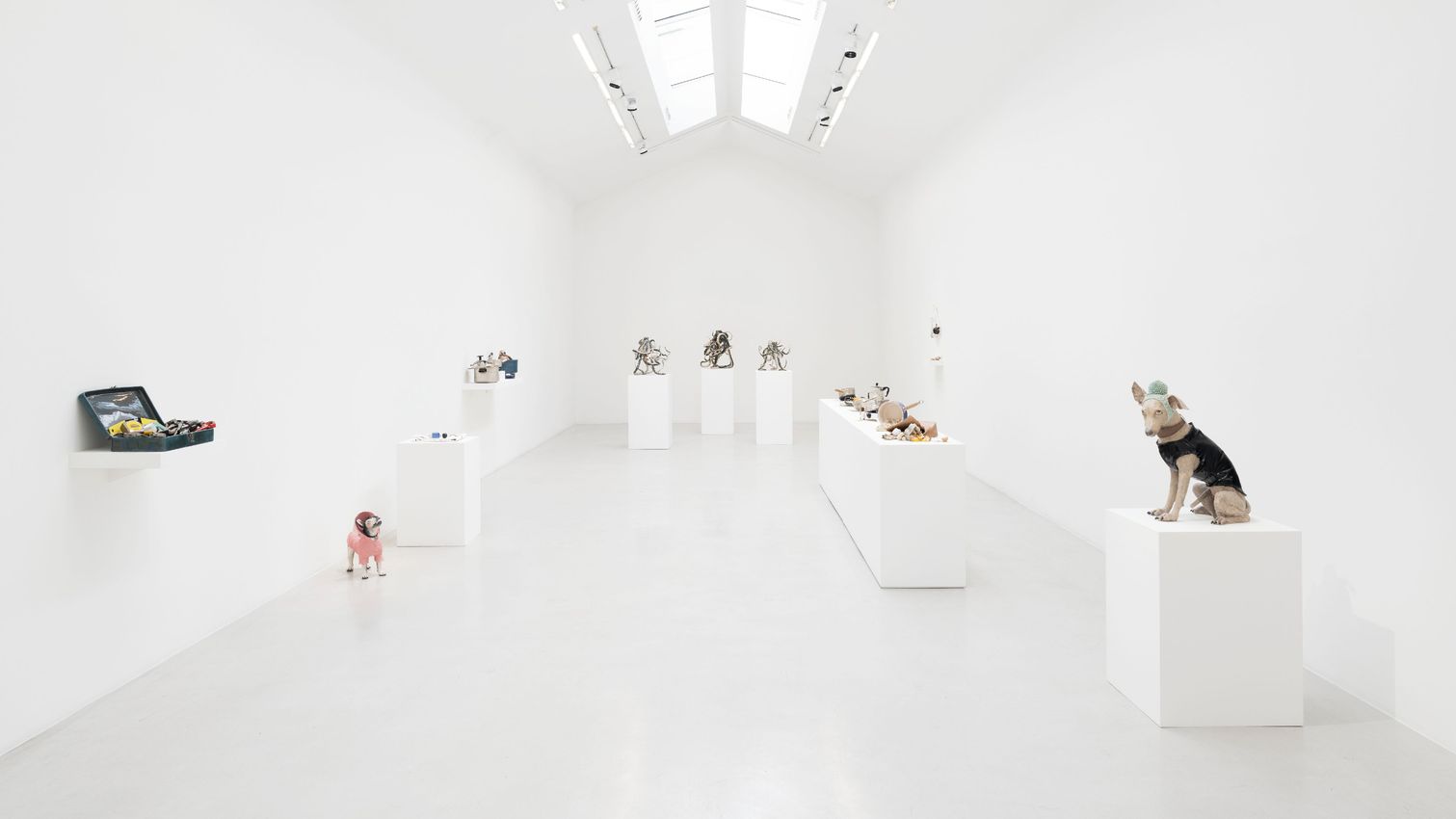
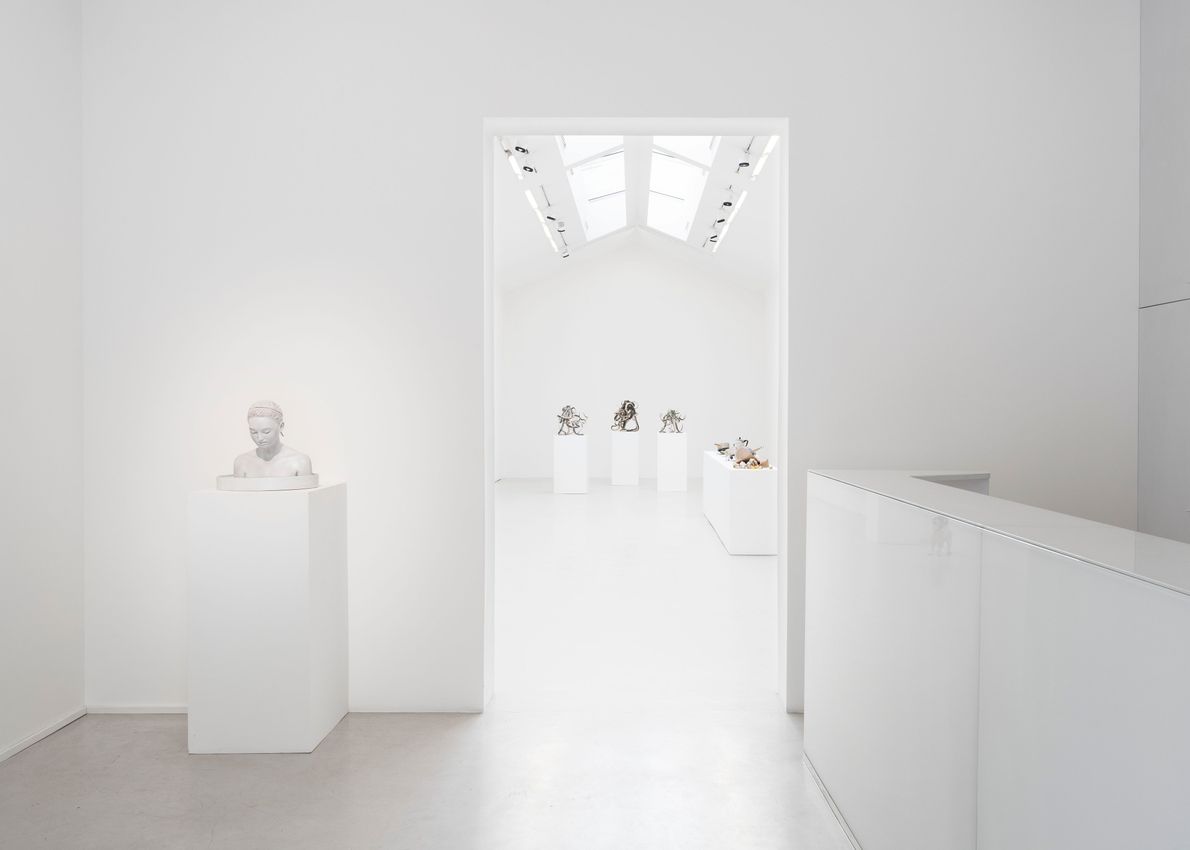
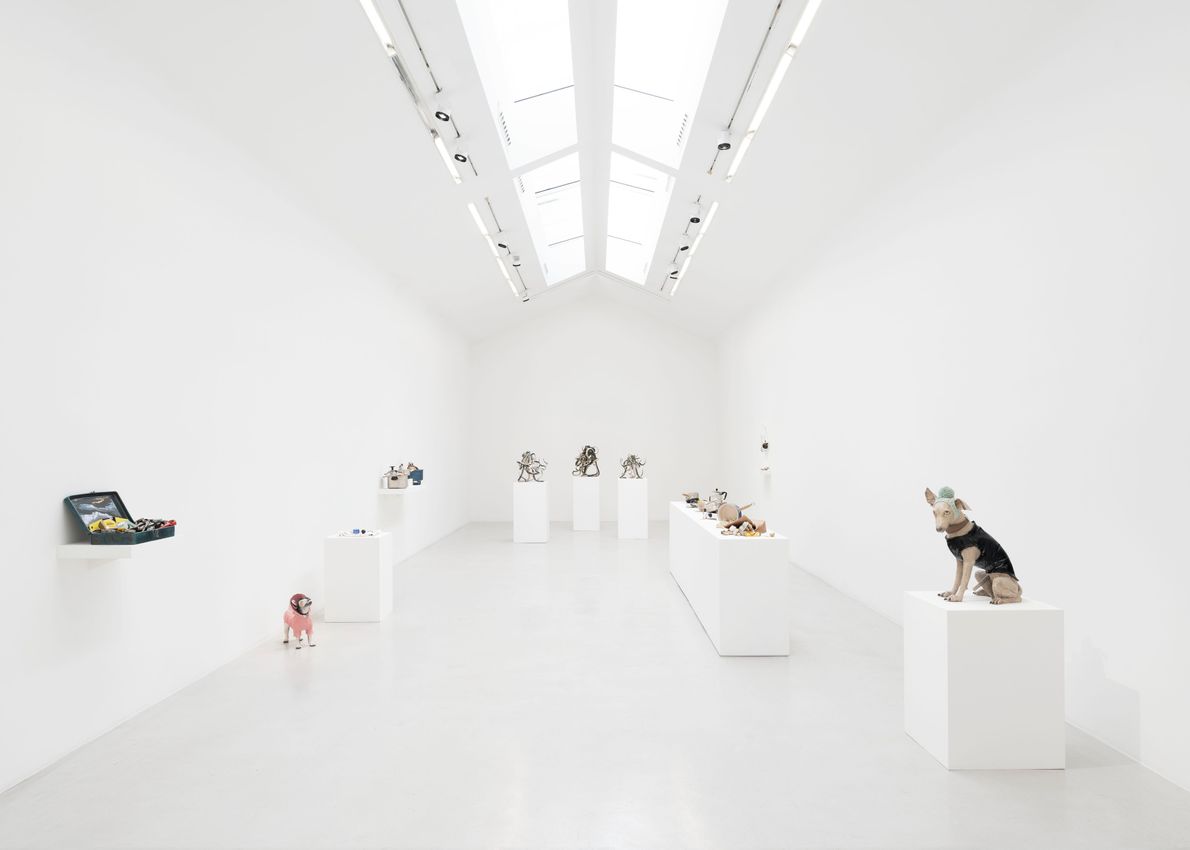
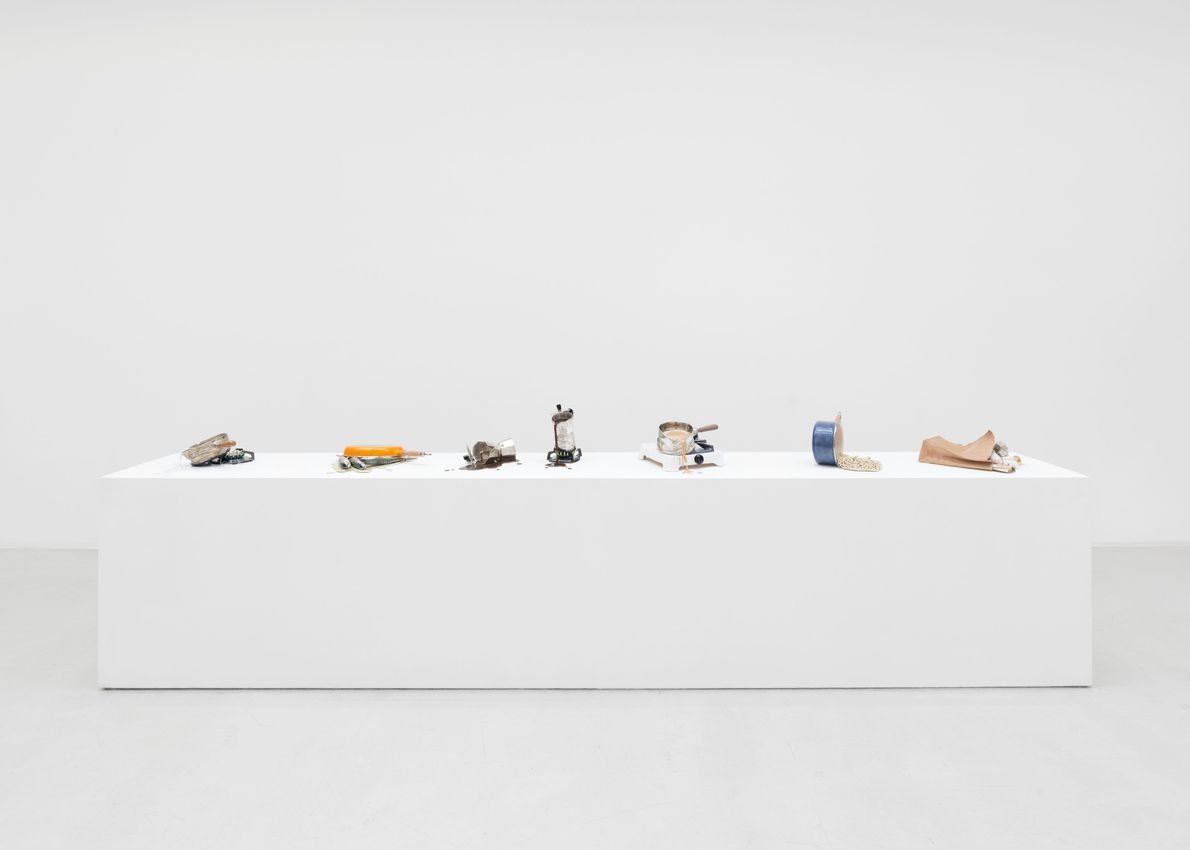
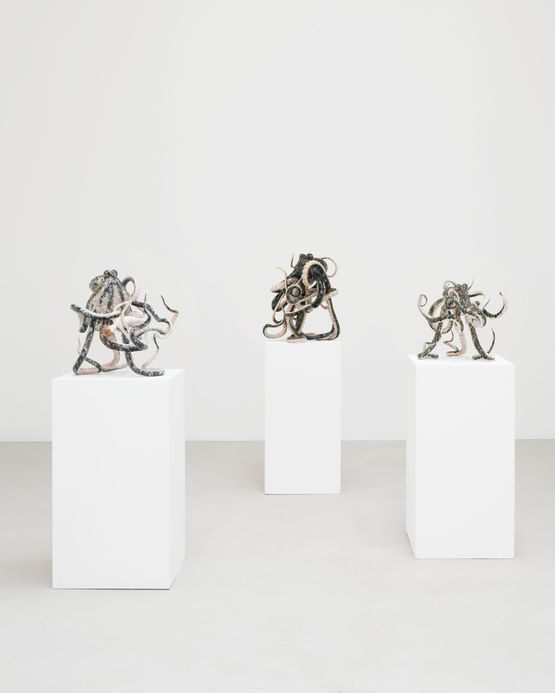
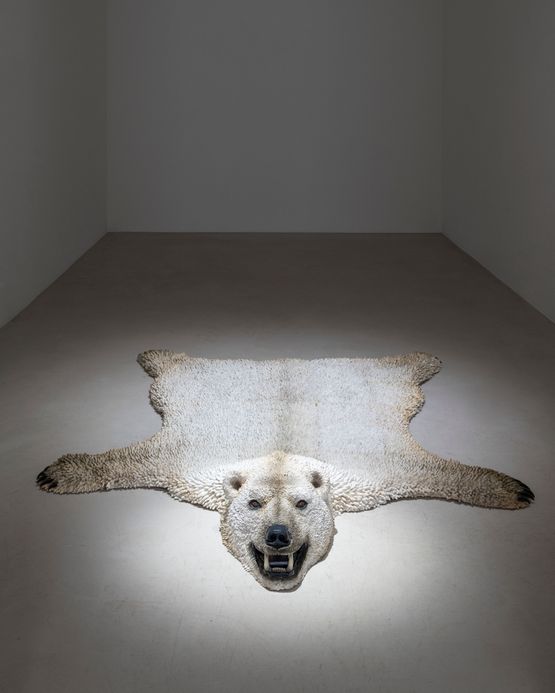
Perrotin is pleased to present, for the first time in its Maraisspace, a solo exhibition by French artist Serena Carone. Throughenamelled faience sculptures featuring striking trompe-l’œileffects, the artist blurs the boundaries between reality andillusion, transforming everyday objects into visual experiencesthat are as poetic as they are unsettling.
Serena Carone likes to trick people. She started out by tricking thepostal service by painting stamps, using a magnifying glass and aminiaturist’s brush, and putting them on letters she sent from abroad.Originally a way of relieving the boredom of sitting around in hotelrooms, these artworks seemed successful to her when they arrivedsafely at their destination, duly postmarked and thus approved bythe relevant authorities. Next, she created three-dimensional trompel’œil works by making cameras, phones, record players, and even ascooter using boxes of brand-name products. Then she moved on tometal, working with a soldering iron. And finally, after many attemptsat tinkering with this and that, she discovered ceramics. Ever sinceBernard Palissy we have known what a difficult medium ceramicis, especially when you want the earth that composes it to becomeboth painting and sculpture—the ultimate deception. For a long time,Western art argued over the superiority of one or the other. TheItalian Renaissance called this debate Paragone delle arti, asking whether sculpture or painting created a more successful illusion ofreality—this principle that, from the time of ancient Greece, governedour aesthetics. Marcel Duchamp gave a radically new solution to theproblem with his Large Glass, a transparent altarpiece standing up inspace, a flat surface that can be perceived like a statue. In some way,Serena Carone has picked up on the Duchampian answer, includingits humor; more precisely, she has put her own spin on it, reconcilingthe opposite parts in her own way, using her personal techniquesof deception. With her octopi and her dogs as with her domesticdisasters (a whole wonderfully represented reality that sinks, rips,collapses), she moves from the trivial to the metaphysical and fromobviousness to a tour de force, compelling the viewer to put out afinger to touch the mystery, like doubting Thomas. Can ceramic turninto metal, paper, fur, or the flame of a portable stove? Serena Caronereminds us that one deception can still hide another. Welcome to thekingdom of false appearances.
Courtesy Perrotin.


Emmanuel Perrotin founded his first gallery in 1989 at the age of 21. He has opened since then over 17 different spaces, with the aim of continuing to offer increasingly vibrant and creative environments to experience artists work. He has worked closely with his roster of artists, some since more than 25 years, to help fulfil their ambitious dreams and projects.

A respected voice in contemporary art discourse.
Focusing on ambitious storytelling and insightful art-world commentary. Ocula Magazine publishes in-depth interviews, critical essays and timely analysis on the artists, exhibitions and ideas driving the global art world.
Learn more about Ocula Magazine
Showcasing the best of the art world.
Ocula partners with galleries from around the world to highlight their artists, artworks and exhibitions. Gallery membership is by application and invitation, with each member vetted by an independent panel.
Learn more about Ocula Membership

Specialises in the sale of major artworks.
Led by a team with deep ties to the world’s leading auction houses, galleries and collectors. Ocula’s advisory team offers bespoke services to high-net-worth clients from around the world who are looking to acquire the best of contemporary and modern art.
Learn more about our team and services