



Press Release
Galleria Continua / Beijing is pleased to host the first solo exhibition in China of Serse, a European master of draughtsmanship and a custodian, for almost twenty five years, of an unequalled technical practice: drawing.

This medium of representation, involving the use of graphite on white paper mounted on aluminium, reflects the artist’s need to create an image that is as simple in perceptual terms as it is suited to the poetic and mimetic dimension, whether on a large scale or in a small format.

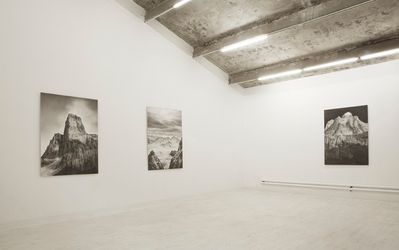
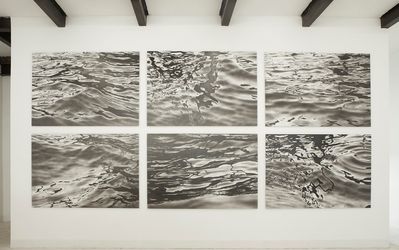
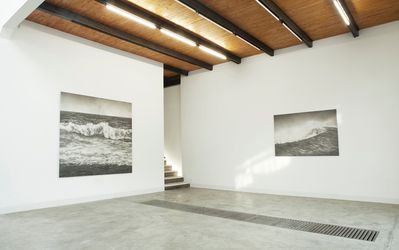
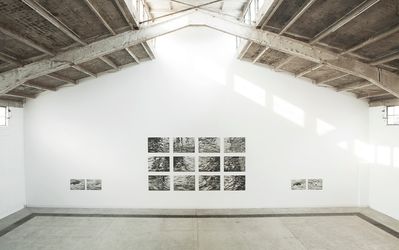
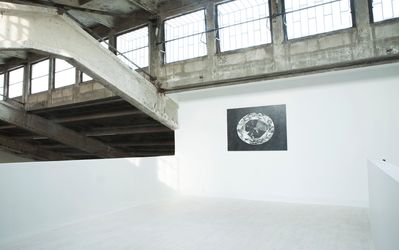
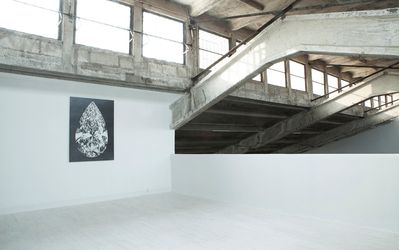
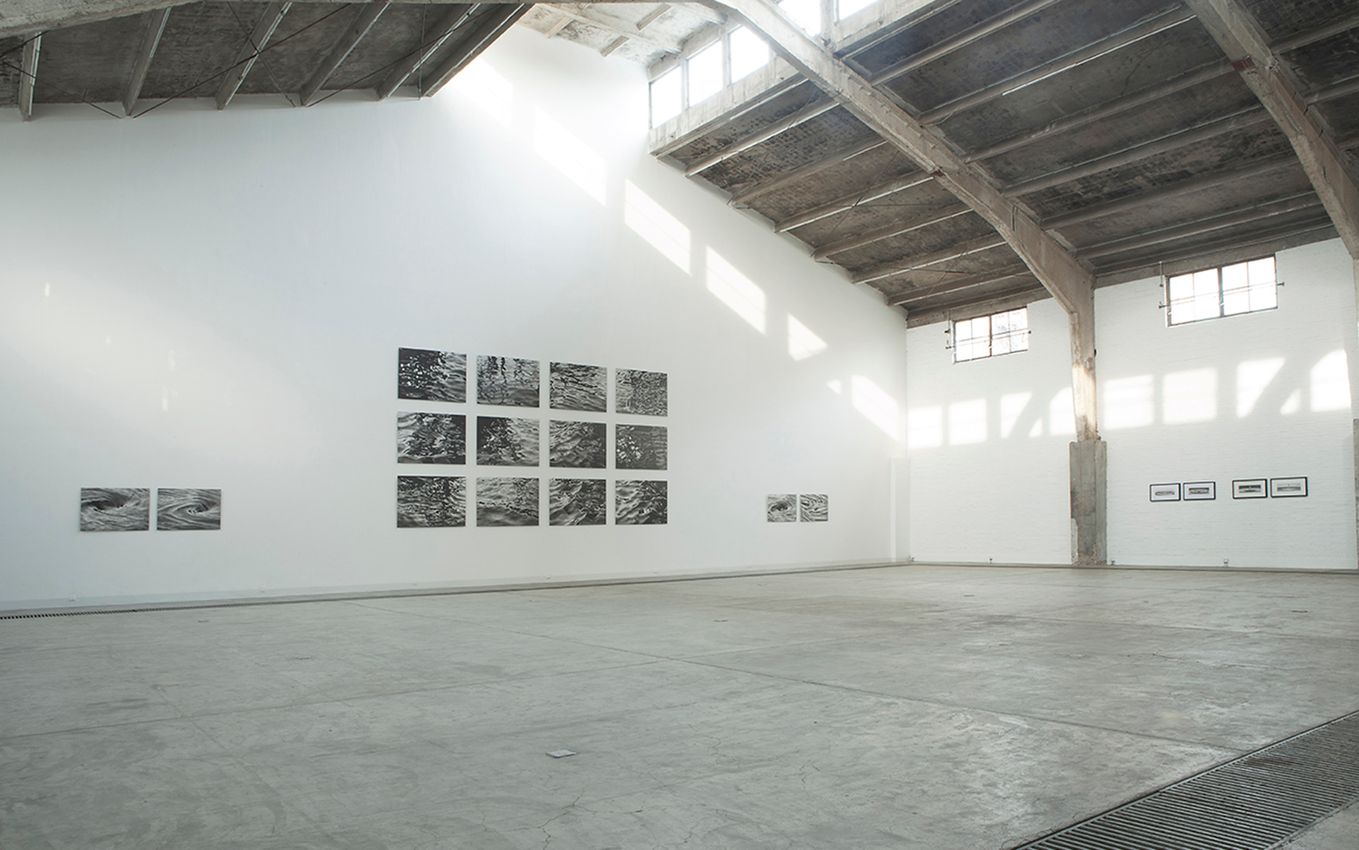
The show conceived by the artist for Beijing is entitled AS FAR AS THE EYE CAN SEE, and comprises a new body of drawings in the A fior d’acqua series, and a monographic exhibition of his last twenty years of work. Serse has always drawn inspiration from Chinese artists, with whom he entered into contact through the work of CHIH WENG (JIKIO), a Chinese monk and painter active towards the end of the Song dynasty (1127–1279), and his works have cited themes dear to Oriental art, as in Bambu from 2004.

Serse starts from reality and, through his drawing, reflects on the nature of the gaze and of the representation. He composes forms that do not remain enclosed within the borders of the paper medium, but evoke a much broader dimension – a full-blown philosophy.

Referring to the Elementi works of 2008, Costantino D’Orazio writes: “In this sense, the Renaissance master closest to the intellectual leanings of Serse is undoubtedly Leonardo, to whom the artist from Trieste has dedicated more than one study during his career. In his case, we have to seek out a lesser known series of drawings by da Vinci (...) the series of polyhedrons that Leonardo drew to illustrate De Divina Proportione by Luca Pacioli, published in Milan in 1497. Pacioli was the master who opened up the world of Euclidean geometry, arithmetic theory and, above all, Greek philosophy to Leonardo. (...) His etchings illustrate the numerous possibilities for the development of a polyhedron through the symmetrical and proportional expansion of its sides.”

The artist himself has said: “I am trying to reinvent drawing”, emphasizing a technical aspect of his “obsessive” work, which enables the vision to emerge from the image. And in fact, when we observe his drawings, we become conscious of the patience and precision of his art, of the concentration of his isolation in the Trieste studio, of the length of time spent outlining, shading, filling and erasing, the exact opposite of drawing as the realization of a sketch.

Serse organizes the shadows, impressing blacks onto the whiteness of the paper through the strength of the graphite, and light appears on the paper with the gradual elimination of the layers of black. His practice involves “a constant search for different gazes” by bringing into focus the shades of grey between black and white, in order to grasp the dichotomy between absolute darkness and full light.

The effect of the veiling and of the shadows, the subtle transition from opaqueness to transparency, bring the light out from the depths of the subject, as if realized in the “light of the wandering moon” that speaks to our inner self. The absence of colour, or rather non-colour experiments with illumination, the “dizziness” of every emotion between the beginning and the end of everything.

“The point of view I go looking for,” says Serse, “is found in the practice of immersing oneself in our own depths; a point of view that brings you into contact with a new reality, totally ‘qualitative, mobile, undivided’ (Bergson), which eludes the quantification of number and measurement. It is the ‘reality’ expressed by the sublimity of nature, by the immeasurability that distinguishes it and traverses us, leaving in us the indelible signs of its immensity. It is the hugeness that does not regard the open eye, but the closed eye. I found dizziness by erasing perspective with the metaphorical gesture of ‘tearing the eyelids’, or ‘reversing one’s eyes’ (G. Penone, 1970), so as to embrace the vision of the world in its maximum extension.”

In Notti bianche, Serse treats nature with respect and objectivity, delineating it as it appears to man in the Romantic world: intense and ineluctable. The point of departure for his views – of stormy seas, mountains, snowy hills – is the photographic datum as ‘specific object’, taken to the real limits of descriptive possibility. “Serse’s mountains, skies, horizons and water speak to us of geological eras, of slow, unperceivable becomings, of continental drifts, of earth crust clods”, steering clear of descriptive intent. The capacity to deprive the work of a hierarchy of personal connotations constructs an image as solemn as it is neutral. His perception of the world battles in a civil fashion with sensory reality: on the one hand it appears to be a window for and on the world; on the other, it keeps away from the superficial self-referentiality of landscape painting. As Lorand Heygi writes, Serse questions the “reliability of visual appearance” through “the material, precise, rapt observation of the phenomena of the world; the impersonal and cold, virtually scientific, extraordinarily stoic objectivity of the presentation of material appearances; the radical and complete disappearance of actual anecdotal, additive stories and personal memories”, to create, at the end of this process, images with “an almost celebratory, sublime mood and an indifferent coldness”.

Serse (San Polo di Piave, Italy, 1952) lives and works in Trieste. He teaches drawing at the Academy in Urbino. Over the years he has produced an extraordinary series of images, which have earned him a place in Drawing, published by the Phaidon Press. He has shown in many important national and international galleries, including: Musée d’art moderne et contemporaine de Saint-Etienne Métropole, Centre Pompidou, Musée National d’Art Moderne, Paris, France (2015); Museo d’Arte Moderna e Contemporanea, Rimini (2012); Musée des beaux arts et d’archeologie de Besancon, France (2010); Palazzo Reale, Milan (2007); De Garage Cultuurcentrum, Mechelen, Belgium (2006); 3rd Valencia Biennale, Spain (2005); Villa Manin–Centro d’Arte Contemporanea, Codroipo (2004); S.M.A.K., Gent, Belgium (2004); Het Domein, Sittard, Holland (2003); Museo Rufino Tamayo, Mexico City, Mexico (2002); Centro per l’Arte Contemporanea Luigi Pecci, Prato (2002); Centro Difusor de Arte, Lisbon, Portugal (2000); Kunstverein Augsburg, Germany (2000).

Serse first showed in China at the STILL IMAGE: Contemporary Italian Painting exhibition at Galleria Continua / Beijing.

Installation Views

About the Gallery

It was in the year 1990 that three friends, Lorenzo Fiaschi, Mario Cristiani and Maurizio Rigillo, decided to open a gallery in a quite unexpected location, far from the big cities and smoothly running art circuits – in San Gimignano, a town steeped in history and somehow out of time, in the heart of Tuscany. Over these 25 years of activity, generosity and altruism have formed the basis for numerous and multifaceted artistic collaborations.

View Gallery Profile
Address
Dashanzi Art District 798 #8503,
2 Jiuxianqiao Road
Chaoyang District
Beijing
China
Opening Hours
Tuesday – Sunday,
11am – 6pm
(1)
Beijing Dashanzi Art District 798 #8503,, 2 Jiuxianqiao Road
Galleria Continua
Dashanzi Art District 798 #8503,, 2 Jiuxianqiao Road, Chaoyang District, Beijing, China

Opening hours
Tuesday – Sunday,
11am – 6pm
The art world in focus