




IAN HAMILTON FINLAY
1925-2006, BahamasIan Hamilton Finlay was a pioneering Scottish artist, poet, and philosopher whose radical approach to art, landscape, and language established him as one of the most influential figures in contemporary art. He is known for Little Sparta, his legendary garden in the Pentland Hills, which Ocula describes as having ‘attained an almost-mythical status not only as a work of art, but also for the life lived by its creator’. Finlay’s practice fused poetry, sculpture, and landscape into a singular vision, earning him international acclaim and a nomination for the Turner Prize.
Early Years
Finlay was born in Nassau, Bahamas, and raised in Glasgow and the Orkney Islands after his family returned to Scotland. He attended Dollar Academy and briefly studied at Glasgow School of Art before serving in the British Army during the Second World War. His early experiences in rural Scotland and Orkney, where he worked as a shepherd, profoundly shaped his fascination with nature and the landscape. In 1966, Finlay and his wife, Sue, moved to Stonypath Farm in the Pentland Hills, where they began transforming the land into what would become Little Sparta.
Ian Hamilton Finlay Artworks
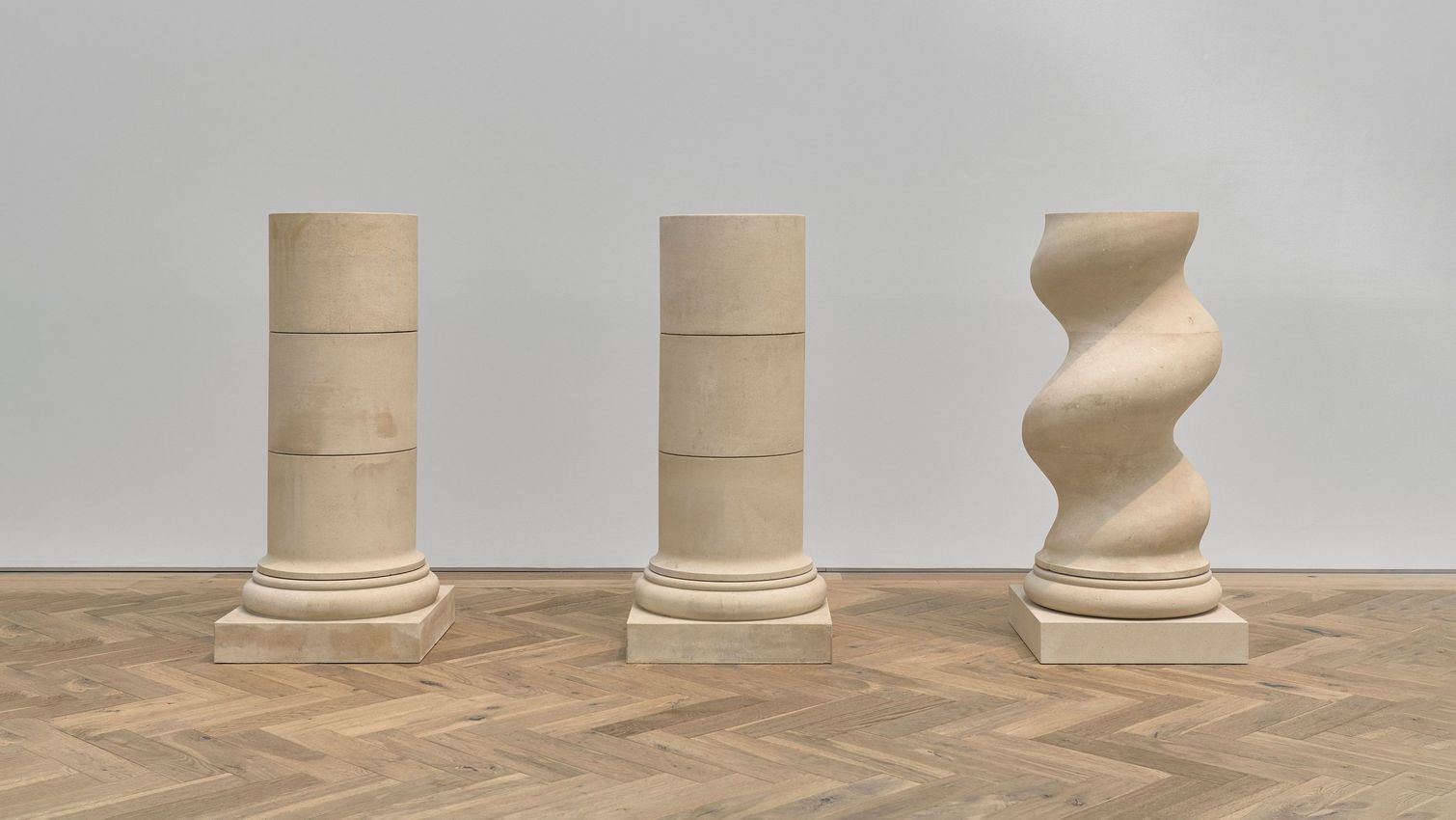
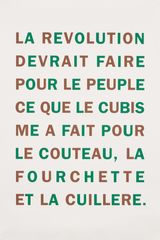
Finlay’s art practice is celebrated for its innovative blending of poetry, visual art, and landscape design. His works explore the enduring power of language and classical tradition through concrete poetry, sculpture, prints, and immersive garden installations.
Concrete Poetry and Early Works
Emerging as a leader of the concrete poetry movement in the early 1960s, Finlay published works such as Rapel (1963) and The Dancers Inherit the Party (1960) and founded Wild Hawthorn Press in 1961 to distribute his and others’ experimental poetry. His early poems distilled language to its visual and conceptual essence.
Transition to Visual and Environmental Art
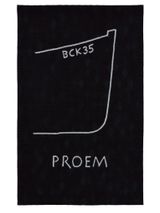
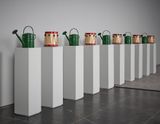
By the mid-1960s, Finlay began translating poetic ideas into visual and environmental forms, producing text-based sculptures and installations made from materials such as stone, wood, and glass. Notable works include Boat Names and Numbers (1967—68) and Wave/Rock (1966). Over the following decades, more than 270 artworks-mostly sculptures-were installed across Little Sparta, reflecting his fascination with history, from Classical antiquity to the French Revolution and the Second World War.
Little Sparta and Landscape Art
Little Sparta, the garden Finlay developed with his wife Sue, is widely recognised as his most significant artwork. ‘Gradually-over years-the garden took shape. I learnt about plants and planting. Ian found new collaborators to make the works. Little Sparta was created one turf at a time’, Sue recalled. The garden is filled with sculptural inscriptions, poetic aphorisms, and installations that explore themes of nature, history, and Western civilisation. According to Richard Ingleby, Finlay’s gallerist and trustee of Little Sparta, ‘The sea is hugely present there with references to fishing and naval boats, but more than anything, the sounds: the trees that rustle in the wind, mimicking waves breaking on the shore. It’s an island kingdom, despite being land-locked. It has this Homeric quality, as if he’s finding his way home’.
Collaborative Practice
Finlay’s practice was highly collaborative, involving engravers, stonemasons, printers, and artists to realise his vision in a variety of materials and contexts.
Public Commissions
- Improvement Garden, Stockwood Discovery Centre, Luton, UK
- Permanent installations in museums, parks, and gardens worldwide
Awards and Accolades
- Turner Prize nomination, 1985
- Commander of the Order of the British Empire (CBE), 2002
- Scottish Horticultural Medal, Royal Caledonian Horticultural Society, 2002
- Scottish Arts Council Creative Scotland Award, 2003
- Honorary doctorates from Aberdeen, Heriot-Watt, Glasgow, and Dundee Universities
Exhibitions
Solo Exhibitions
- ARTIST ROOMS: Ian Hamilton Finlay — Nature over again after Poussin 1979—1980, Callendar House and The Park Gallery, Falkirk; Arnolfini Gallery, Bristol; Gallery of Modern Art, Glasgow
- Ring of Waves, David Nolan Gallery, New York
- Tate Britain, London
- Victoria Miro, London
- City Arts Centre, Edinburgh
- Kunsthalle Bremen, Bremen
- Kewenig Galerie, Cologne
Group Exhibitions
- 30th São Paulo Biennale, Brazil
- Documenta, Kassel
- Major group shows at Scottish National Gallery of Modern Art, Edinburgh; Ingleby Gallery, Edinburgh
Ian Hamilton Finlay FAQs
Where can I see Ian Hamilton Finlay’s work?
The most significant site is Little Sparta, open to visitors in the Pentland Hills near Edinburgh. His art is also held in collections and displayed at institutions such as Tate Britain, the Scottish National Gallery of Modern Art, Victoria Miro Gallery (London), Ingleby Gallery (Edinburgh), and public spaces like the Improvement Garden at Stockwood Discovery Centre, Luton.
What is Ian Hamilton Finlay’s artistic legacy?
Finlay is recognised as a major figure in concrete poetry, conceptual art, and landscape design. His work redefined the relationship between language, art, and environment, influencing generations of contemporary artists and writers.
Did Ian Hamilton Finlay collaborate with other artists?
Yes. Finlay’s practice was highly collaborative, involving over a hundred artists, designers, and craftspeople, including Patrick Caulfield, Richard Demarco, Michael Harvey, and others.
What themes are central to Finlay’s work?
Recurring themes include classical antiquity, nature, maritime history, and the interplay between language and landscape. His art often juxtaposes poetic text with sculptural form, inviting reflection on Western civilisation and the natural world.
How can I learn more about Ian Hamilton Finlay?
Comprehensive information, including catalogues and essays, can also be found via the Little Sparta Trust, Ingleby Gallery, and Ocula’s artist page.
Ocula | 2025

View Ian Hamilton Finlay's Artworks























Explore Ian Hamilton Finlay's Exhibitions







Explore and Follow Artists Shaping Contemporary Art
A respected voice in contemporary art discourse.
Focusing on ambitious storytelling and insightful art-world commentary. Ocula Magazine publishes in-depth interviews, critical essays and timely analysis on the artists, exhibitions and ideas driving the global art world.
Learn more about Ocula Magazine
Showcasing the best of the art world.
Ocula partners with galleries from around the world to highlight their artists, artworks and exhibitions. Gallery membership is by application and invitation, with each member vetted by an independent panel.
Learn more about Ocula Membership
Specialises in the sale of major artworks.
Led by a team with deep ties to the world’s leading auction houses, galleries and collectors. Ocula’s advisory team offers bespoke services to high-net-worth clients from around the world who are looking to acquire the best of contemporary and modern art.
Learn more about our team and services