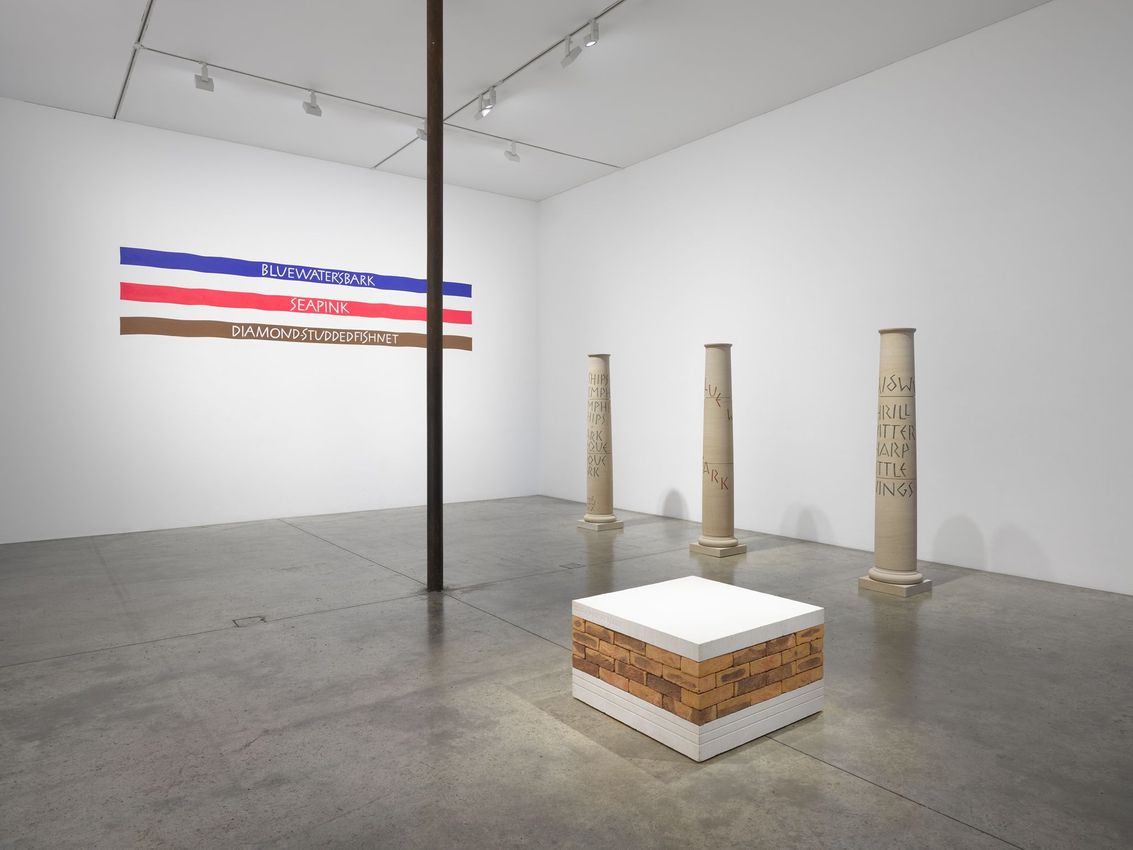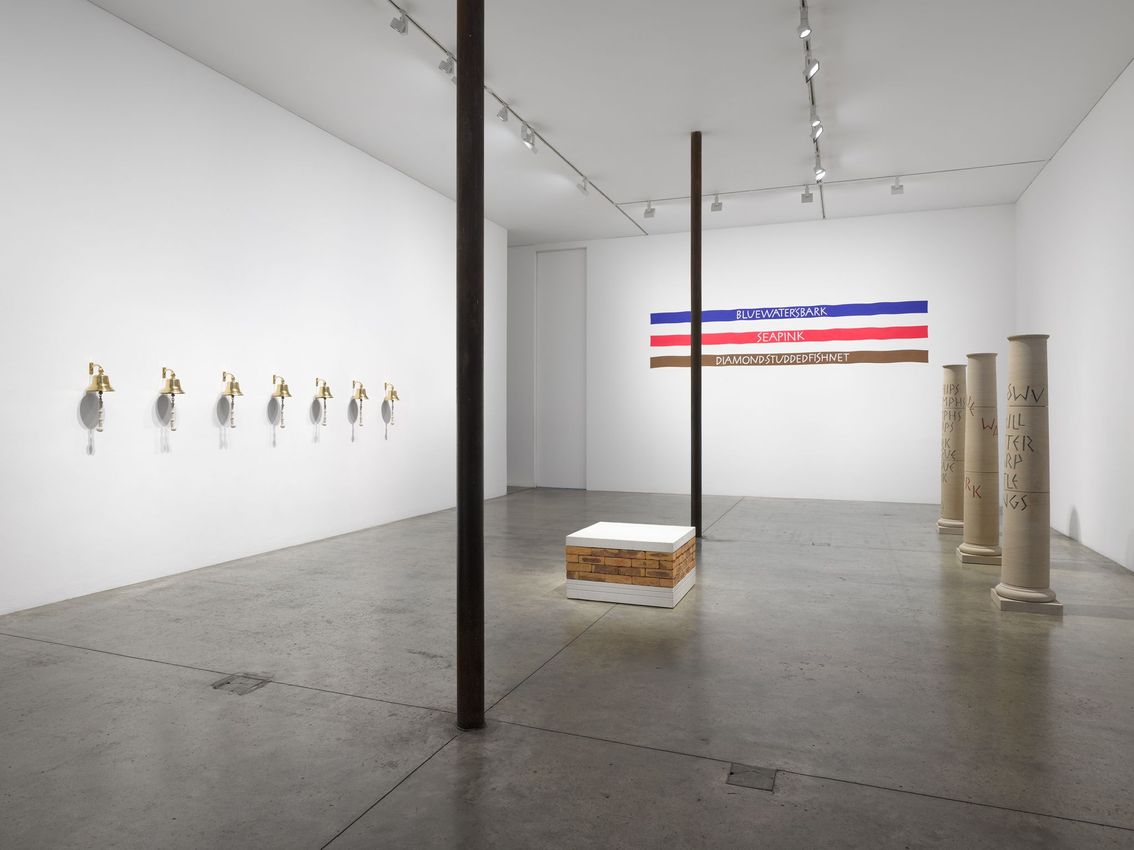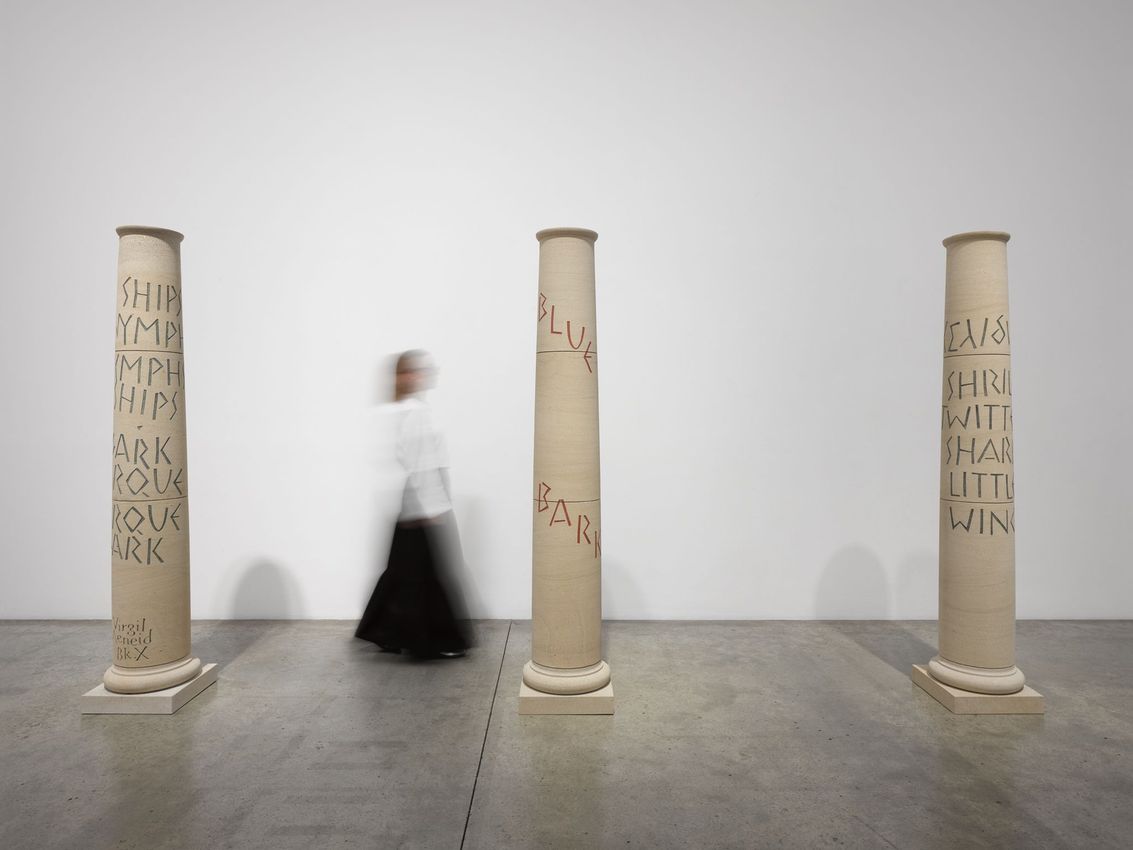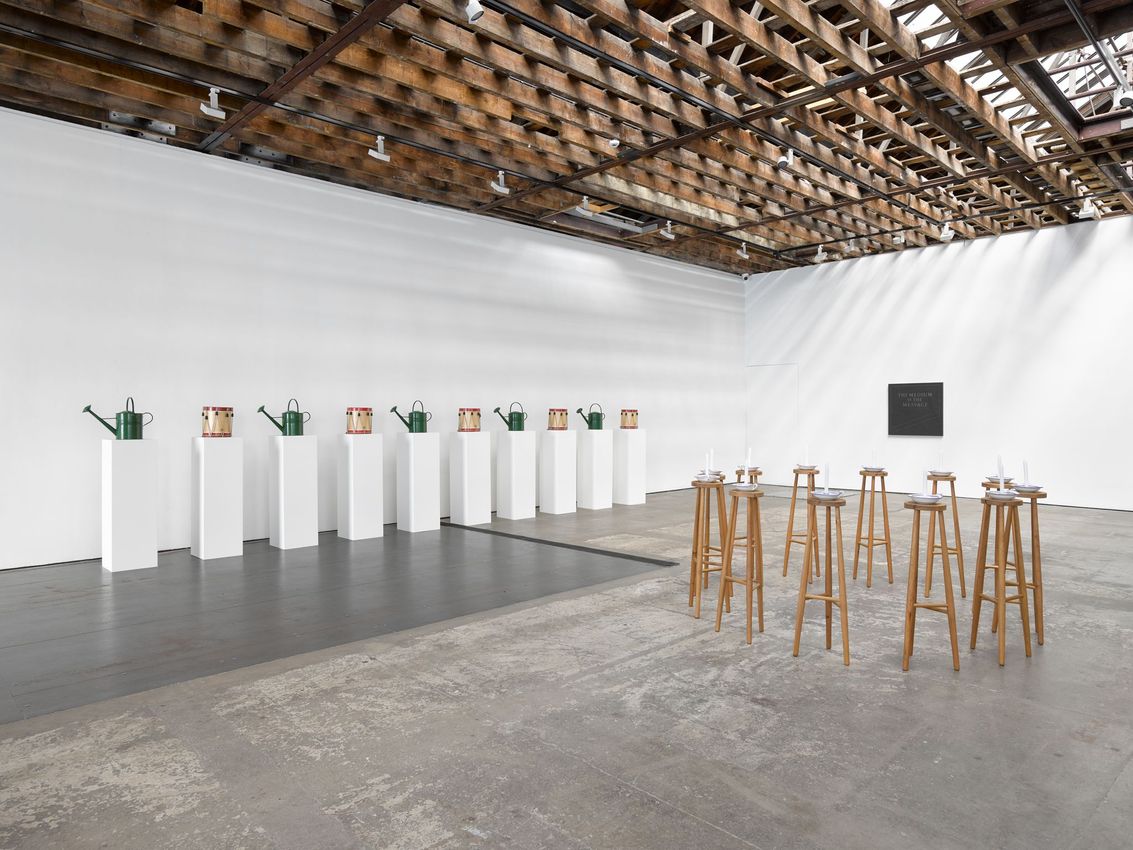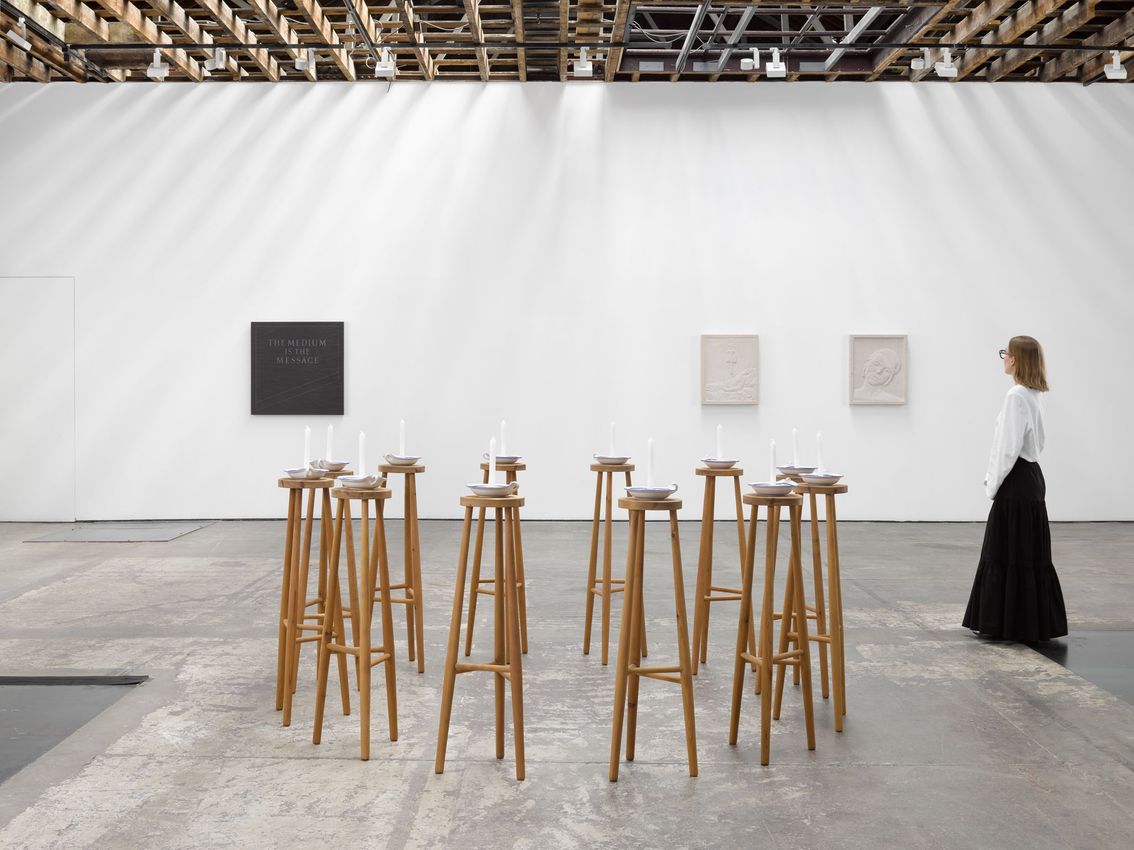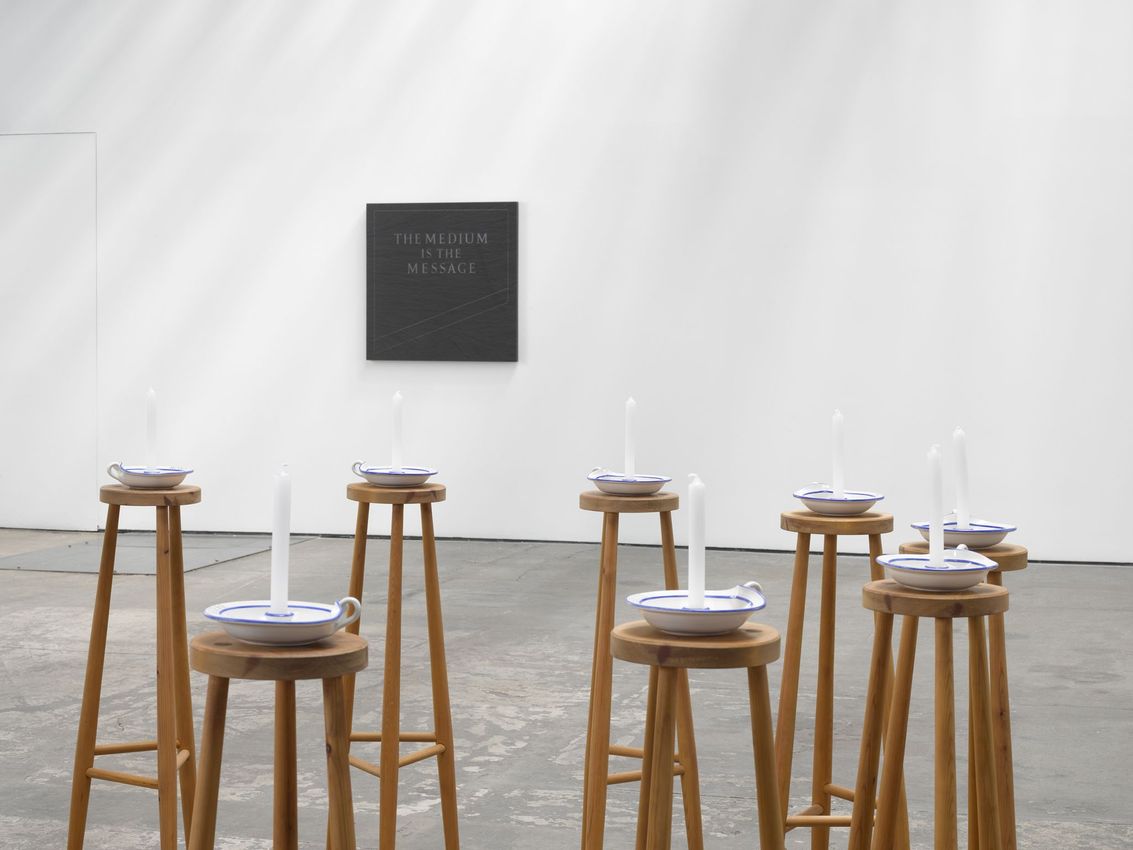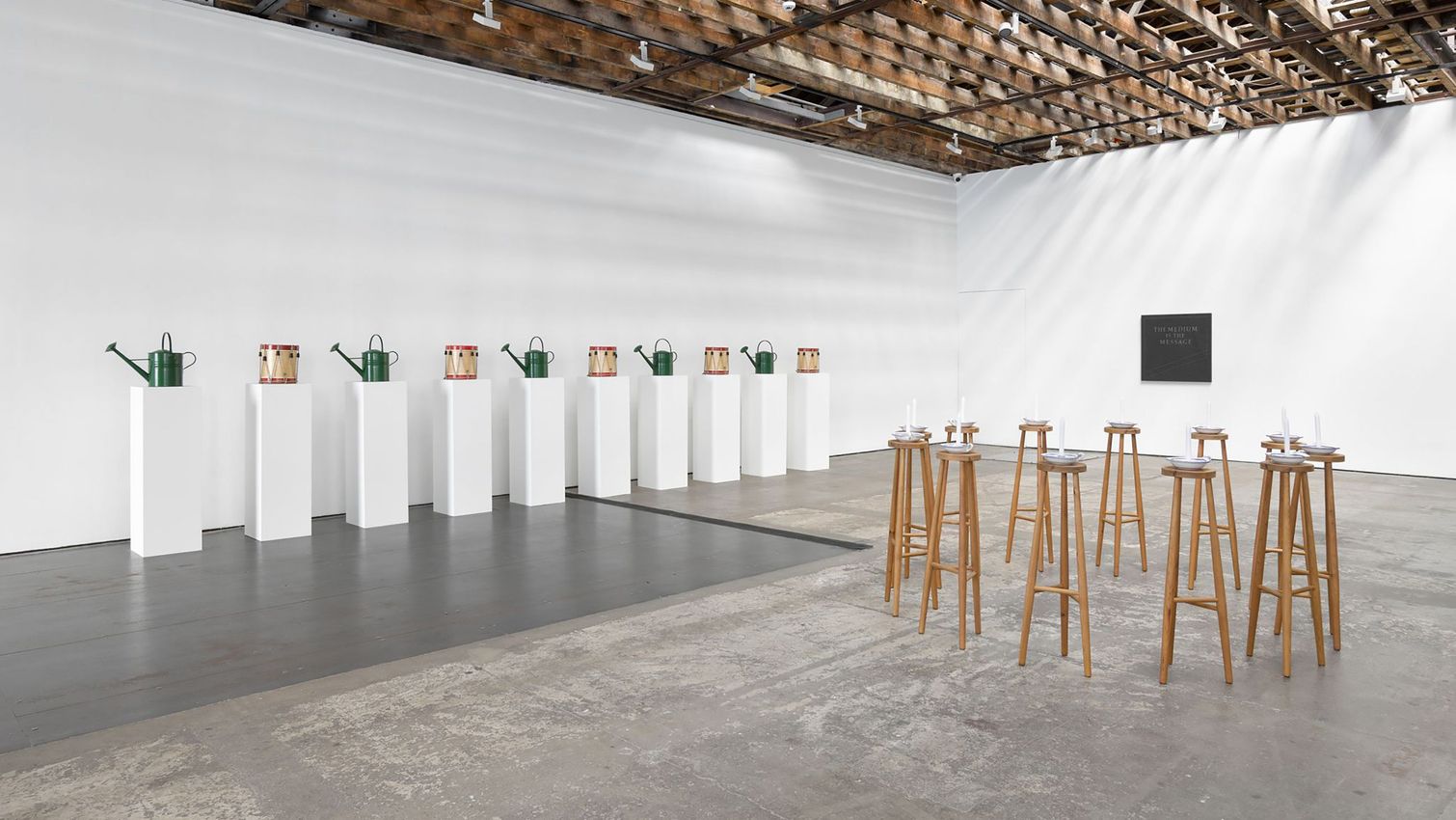
Victoria Miro is delighted to present an exhibition marking the centenary of the birth of one of Scotland’s greatest artists, Ian Hamilton Finlay (1925–2006). Fragments is both a major new book and eight exhibitions that will take place internationally during May 2025 in Basel, Brescia, Edinburgh, Hamburg, London, New York, Palma de Mallorca and Vienna, curated and edited by Pia Maria Simig.
An artist, poet and landscape designer, Ian Hamilton Finlay reinvigorated the classical tradition in a body of work that encompasses a variety of creative forms to celebrate the sustaining power of words. He is best known for his garden Little Sparta, set in the Pentland Hills, near Edinburgh, where he lived and worked for the last 40 years of his life. He significantly influenced the concrete poetry movement, and his extensive printed poetical and graphical works were published by Wild Hawthorn Press, which he co-founded in 1961. His visual art work, achieved in collaboration with expert artists and craftspeople, can be found in museums, parks and gardens worldwide.
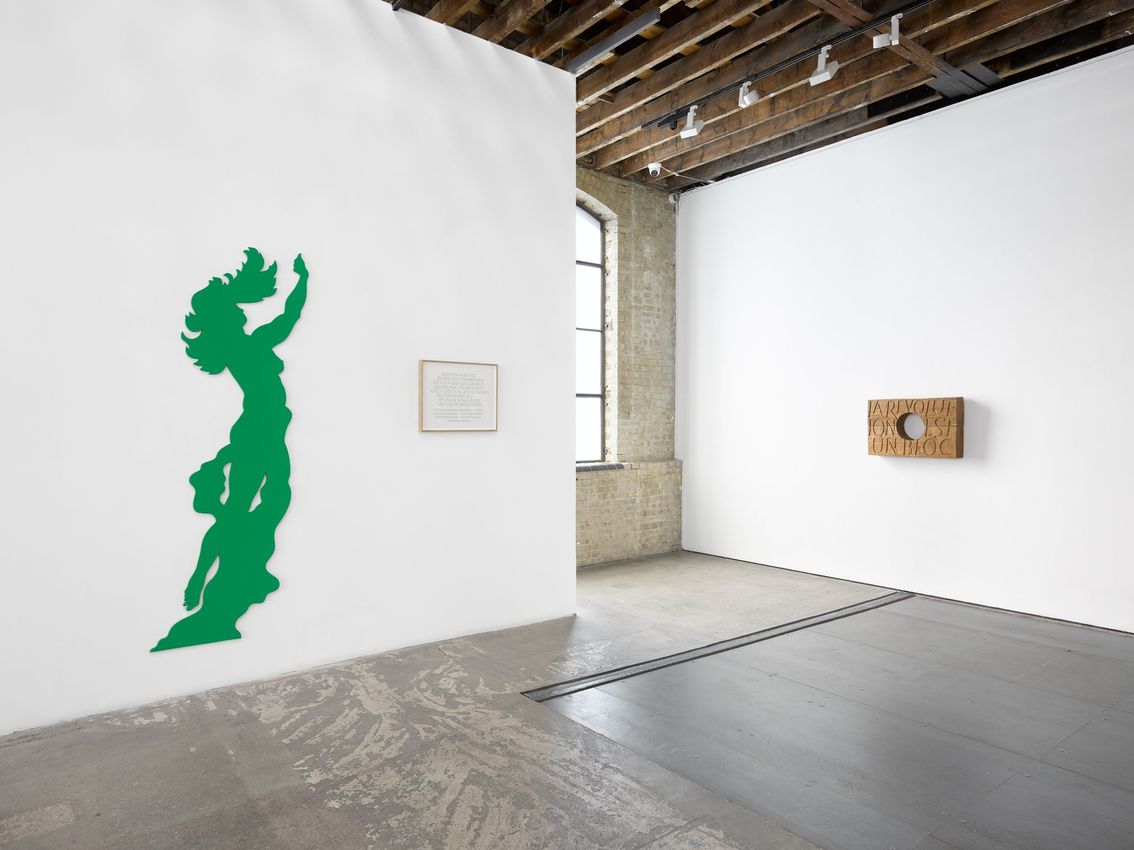
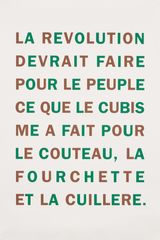
Drawn principally from the 1990s, and featuring sculpture in stone, wood and neon, as well as wall painting, tapestry and print, works on view at Victoria Miro in London are curated around the themes of ‘maritime’ and ‘revolution’. Representing a moment of enormous political and aesthetic rupture and signalling a great moral, as well as political leap, the French Revolution proved a rich subject for Finlay; he first received international attention for his guillotine installation A View to the Temple at Documenta 8 in Kassel in 1987 and thereafter the guillotine became one of the most enduring elements of his iconography. La Rèvolution est un Bloc, 1992 – a wooden block carved with the words of the title and a central aperture reminiscent of a guillotine’s lunette – alludes to advances in secular democracy and social progress, and the bloodshed and unrest brought about by the Revolution. Two carved-stone wall sculptures, Head of the Dead Marat and Irony n. The Unwanted Shadow, both completed in 1991, refer to Jacques-Louis David’s 1793 portraits of revolutionary martyrs, Death of Marat an The Last Moments of Michel Lepeletier.
Finlay’s rarely seen neon works date back to the early 1970s and run parallel to his better-known inscriptions in stone, extending his poetic ideas beyond the printed page to become objects in the world. Key examples on view include ICI on Danse, 1996, which quotes Camille Desmoulins in response to the fall of the Bastille, in which the journalist and politician played an instrumental role.
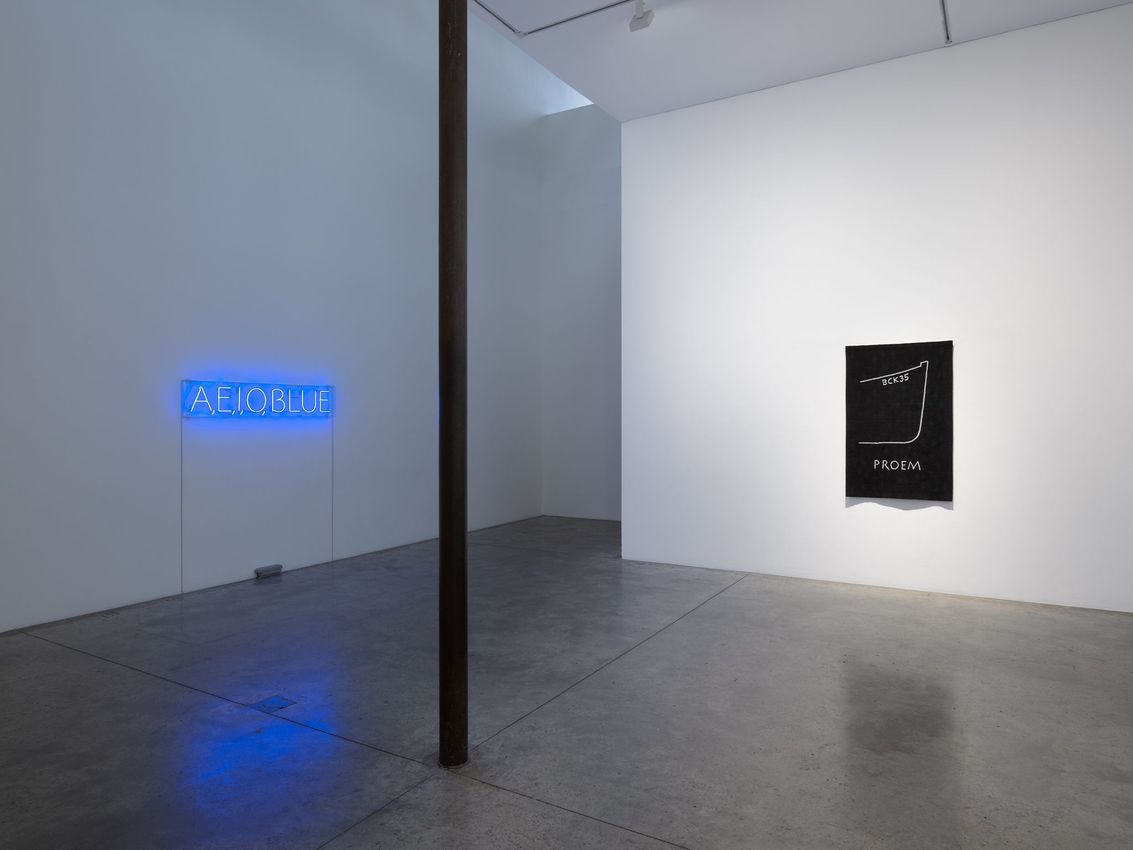
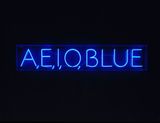
The sea and maritime themes such as boats, fishing and seafaring were recurring sources of inspiration for Finlay. The tapestry _Proem_, 1998, distils a visual and linguistic pun (poem/prow) and also makes reference to the classification numbers of fishing boats (in this instance, BCK35, signifying Buckie in the Moray Firth). Finlay was born in Nassau, the Bahamas, and later, during the winter of 1955-56, lived on the small island of Rousay, Orkney, a location that inspired the symbolic landscapes of his later works. Often his works stretch outwards from the immediacy of language in the here and now towards the immensity of nature or, temporally, to the infancy of philosophical thought. In the 1992 neon A, E, I, O, Blue, while the initial letters are the first four vowels of the English alphabet, the sequence is completed not by the final vowel – U – but by the word ‘blue’, which creates a rhyme on its pronunciation, complemented by the colour of the work, as well as a corresponding sense of vastness.
Among Seven Ship’s Bells, 2002, a sequence of brass bells engraved with text, one bell features the words ‘Cosalt’ (a marine company founded in 1873 as a cooperative of fishing vessel owners) along with ‘Pre-Socratic Attunement’ (the early Greek concept of a harmony of opposites) – a combination of the prosaic, the poetic, the allusive and the self-referential that rings with Finlay’s restless intellect and characteristic wry humour
A philosopher, sculptor and poet, Ian Hamilton Finlay (1925-2006) reinvigorated the classical tradition in a body of work that encompasses a variety of creative forms to celebrate the sustaining power of words. His diverse production encompassed a variety of creative forms including prints, poems, books, inscriptions, neons, sculptures, permanent installations and landscape design. The purest kind of conceptual artist, Finlay was sensitive to the formalist concerns (colour, shape, scale, texture, composition) of literary and artistic modernism. For almost forty years, he formed his works using philosophical texts, myths, characters and images from the past to make enigmatic juxtapositions and in so doing new thoughts. Finlay’s adept use of syntax and narrative configuration weaved refined distinctions with a lyrical philosophy. His skill lay in his unique ability to break down complex ideas into coherent single words and short phrases, infused with Finlay’s characteristic wit and, often, wry humour.


A respected voice in contemporary art discourse.
Focusing on ambitious storytelling and insightful art-world commentary. Ocula Magazine publishes in-depth interviews, critical essays and timely analysis on the artists, exhibitions and ideas driving the global art world.
Learn more about Ocula Magazine
Showcasing the best of the art world.
Ocula partners with galleries from around the world to highlight their artists, artworks and exhibitions. Gallery membership is by application and invitation, with each member vetted by an independent panel.
Learn more about Ocula Membership

Specialises in the sale of major artworks.
Led by a team with deep ties to the world’s leading auction houses, galleries and collectors. Ocula’s advisory team offers bespoke services to high-net-worth clients from around the world who are looking to acquire the best of contemporary and modern art.
Learn more about our team and services