In the area of the retina where the optic nerve exits the eyeball there are no photoreceptor cells present, and this produces an obscuration, like a black spot, of the part of the field of vision. This phenomenon is known as ‘scotoma’ and it has been introduced as a psychoanalytical term by the French school.
Lacan explains scotoma as the “consciousness of the subject” experienced through gaze. As expressed in the phrase “I see myself seeing myself,” the concept of gaze indicates the sensation that I am seen by the object I see, and it is similar to the form of light spurting out toward me from the object in my sight. Lacan describes this light as casting a dark shadow, or scotoma, in my eye.
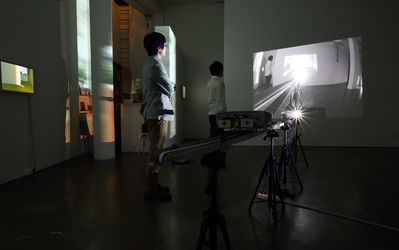
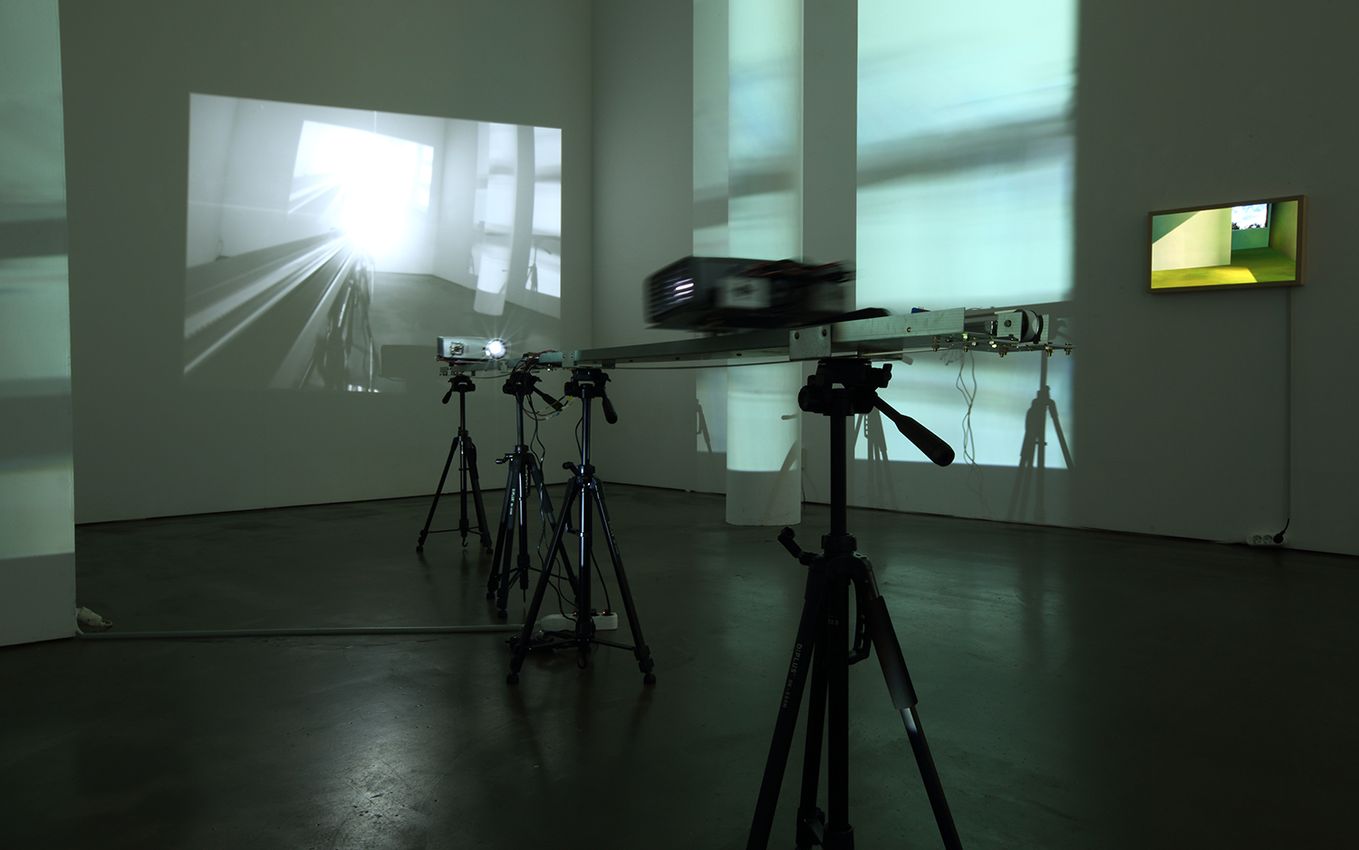
In Gaze, two projectors move along a long rail while facing each other from opposite ends. In real time each projector projects on the wall in front of it the video taken by the video camera installed with it. The video camera installed with each projector stares at the light spilling out of the projector on the opposite side and at the same time spews its attention onto the projector on the opposite side. The image of moving toward and away from the opposite projector while spewing out light metaphorically expresses the relationship between the ‘I’ that sees and the ‘I’ that is seen by the other.
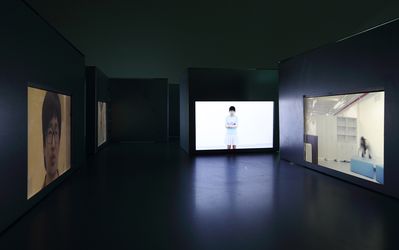
In Five Living Rooms, the living rooms of the apartments of the artist’s friends are filmed using a revolving camera and these videos are shown in random mixture with the video of the artist’s own apartment living room. In Living Room, a model of the artist’s apartment living room is constructed and five monitors are installed on its walls. Each monitor shows a video that recounts the hurt or stress caused by people closest to the artist, such as family members or friends, and the artist’s reaction to such stress.
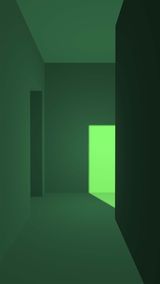
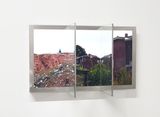
The light and gaze within space and the movement expressed through these works are metaphors for complex emotions such as unfamiliarity, anxiety, curiosity, intimacy, and fear that arise between the ‘I’ and the ‘other,’ a scotoma formed through the everyday life experienced by the artist.


Jeongju Jeong explores the interaction between light and space through mediums such as sculpture and media installations. Light becomes a gaze toward a concrete architectural space and functions as a formative element with abstract space. After majoring in sculpture at Hongik University in 1995, Jeongju Jeong attained the title of Meisterschüler under Professor Hubert Kiecol at the Kunstakademie Düsseldorf in Germany in 2002. He earned his Ph.D. in Art from Kookmin University in 2015 and has been a professor in the Sculpture Department at Sungshin Women’s University since 2012.
Gallery Chosun was established in 2004 in Bukchon, an area in Seoul known for its vibrant art scene comprising prominent art galleries and the National Museum of Modern and Contemporary Art. With a reputation for providing a versatile environment for its forward-thinking exhibitions, Gallery Chosun is committed to becoming an ultimate paradigm for Korean contemporary art.

A respected voice in contemporary art discourse.
Focusing on ambitious storytelling and insightful art-world commentary. Ocula Magazine publishes in-depth interviews, critical essays and timely analysis on the artists, exhibitions and ideas driving the global art world.
Learn more about Ocula Magazine
Showcasing the best of the art world.
Ocula partners with galleries from around the world to highlight their artists, artworks and exhibitions. Gallery membership is by application and invitation, with each member vetted by an independent panel.
Learn more about Ocula Membership

Specialises in the sale of major artworks.
Led by a team with deep ties to the world’s leading auction houses, galleries and collectors. Ocula’s advisory team offers bespoke services to high-net-worth clients from around the world who are looking to acquire the best of contemporary and modern art.
Learn more about our team and services