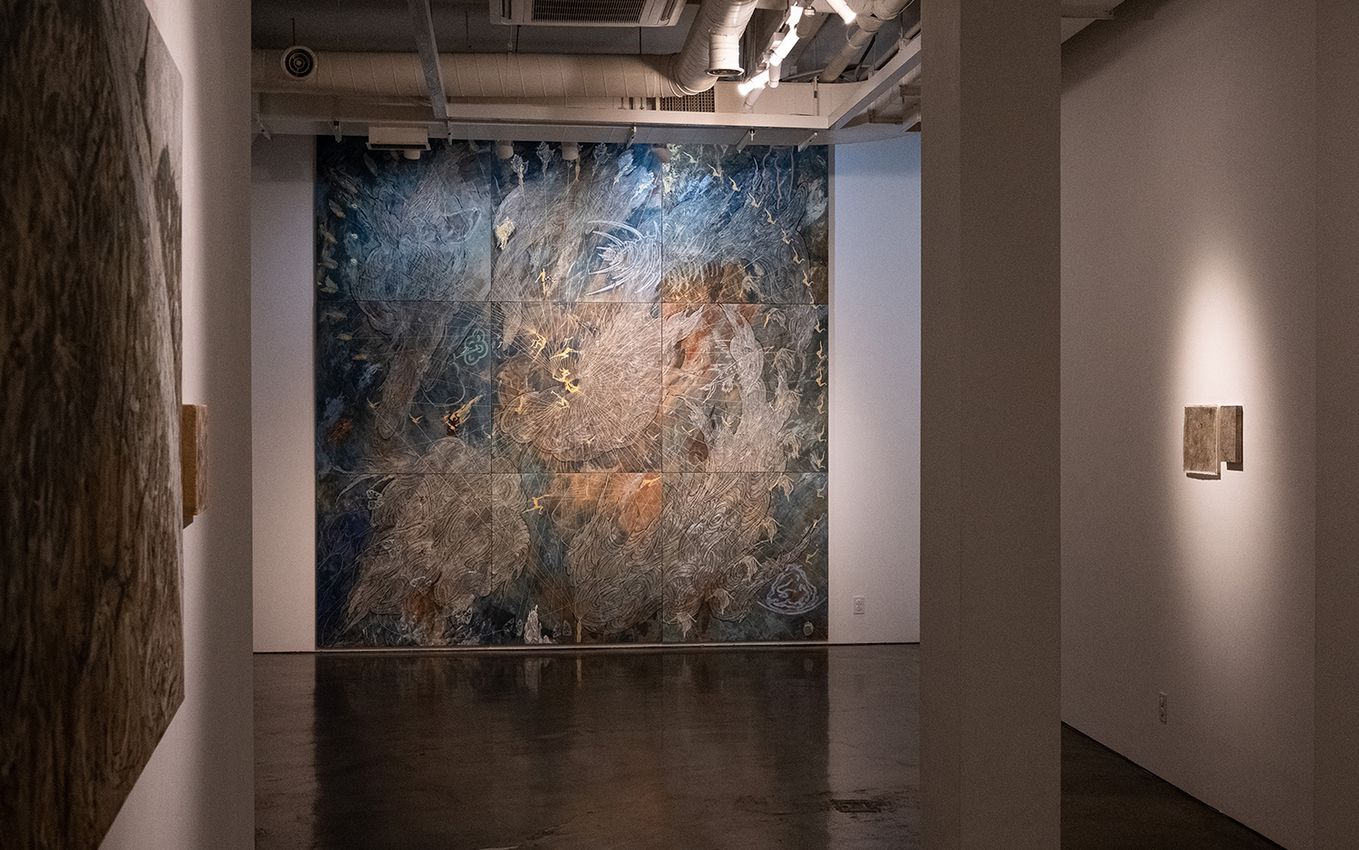
Gallery Chosun presents Woven Knot, a solo exhibition by Soshi Matsunobe, from 4 to 29 October 2024. Matsunobe has been expressing the concept of space and emptiness, from a single dot to lines, holes, and shadows, as two-dimensional images and three-dimensional real objects.
The exhibition Woven Knot focuses on the concept of dimensionality and explores the spatiality of lines. Using the keywords ‘line,’ ‘drawing,’ and ‘calligraphy,’ the exhibition explores the space that lines create, as well as their inherent kinetic and materiality. Whether in calligraphy, where words are considered images, or in drawing, where multiple lines converge into a single form, the artist explores the three-dimensional aspects surrounding lines, distinguishing between the experience of drawing them and the experience of seeing them.
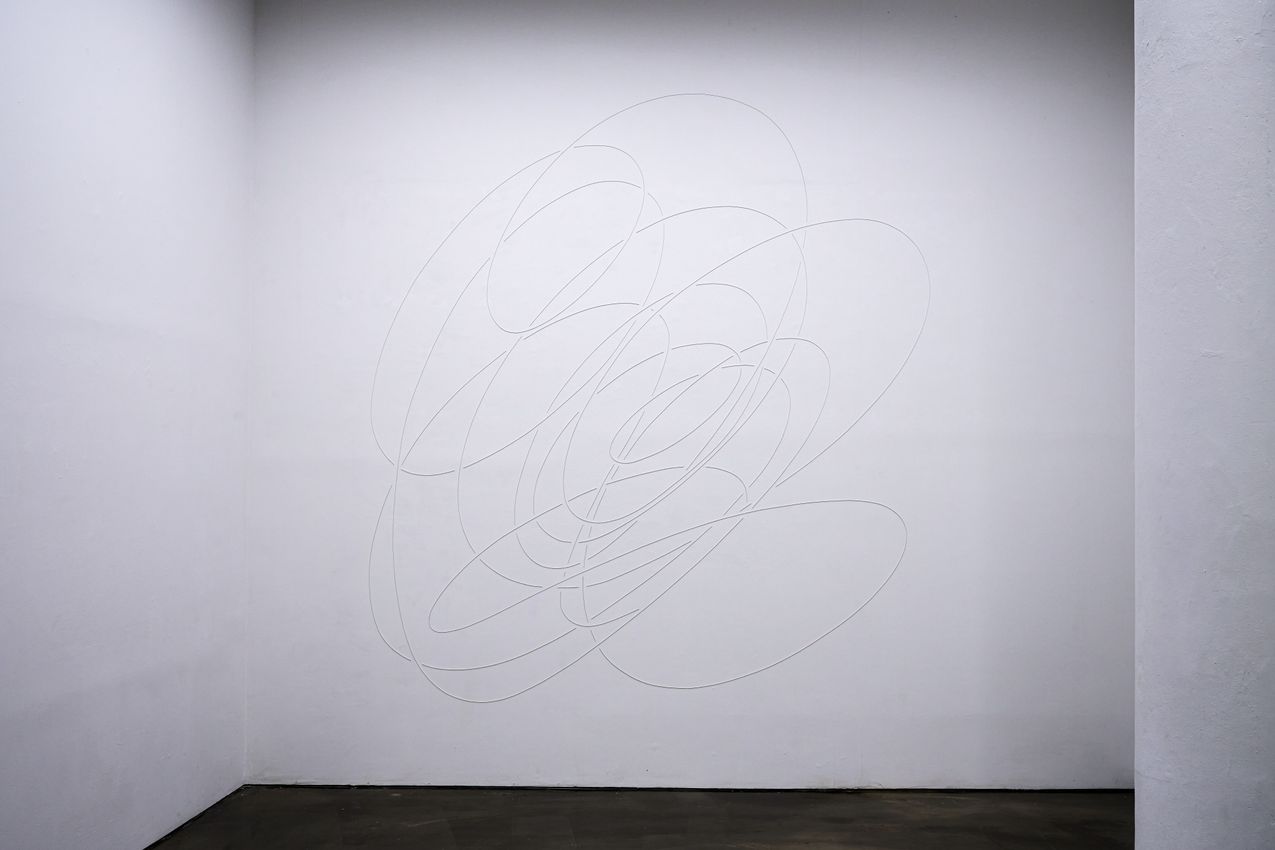
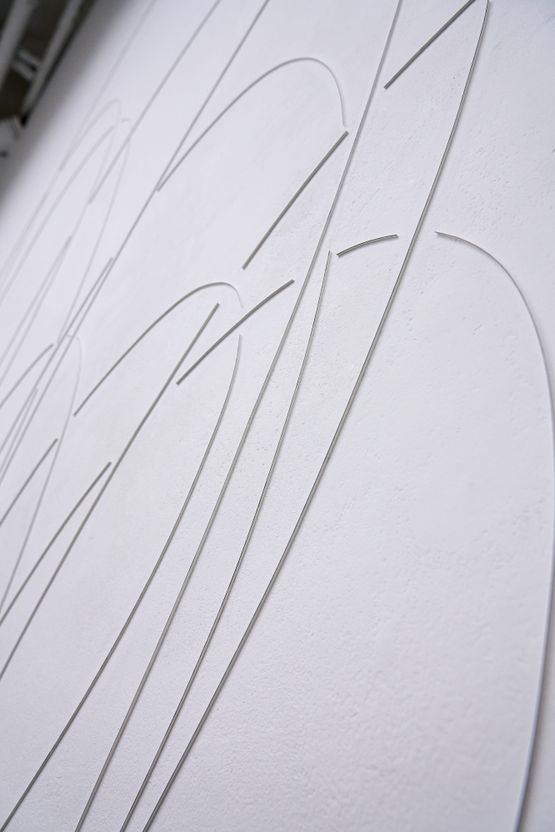
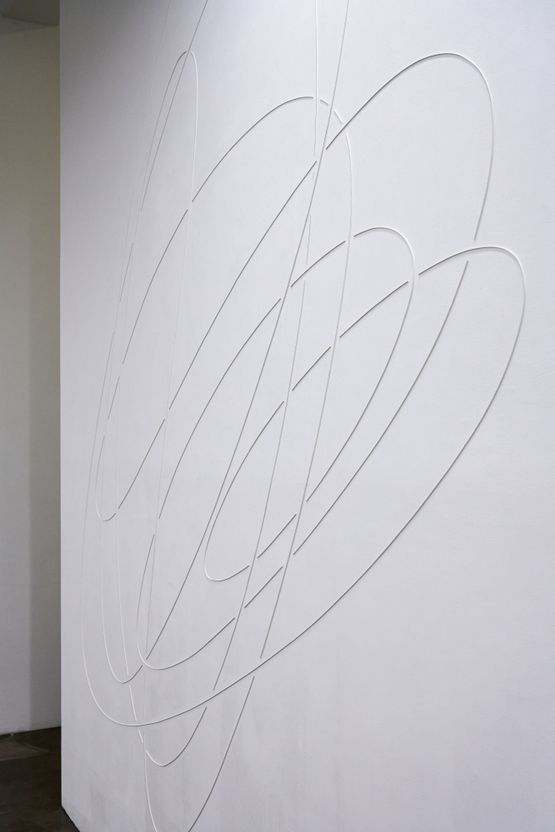
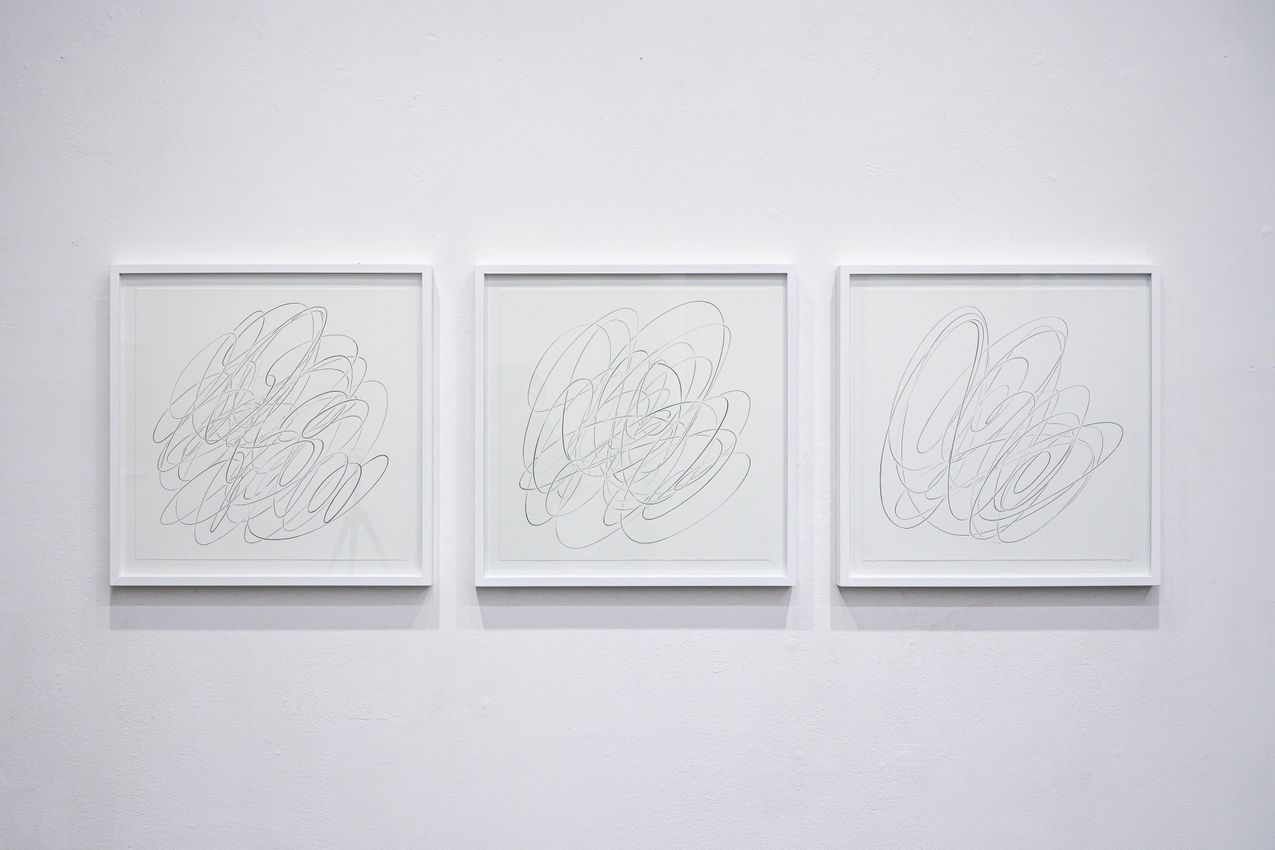
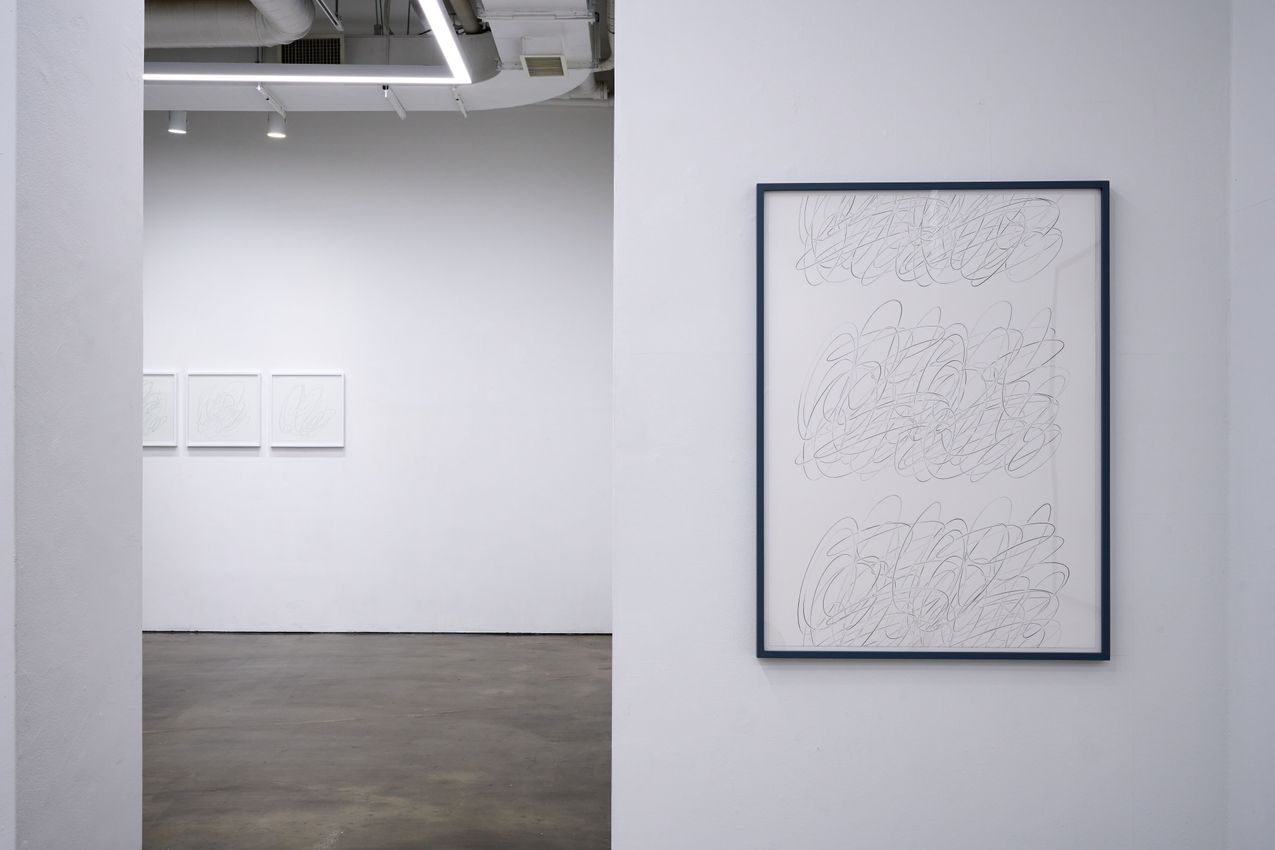
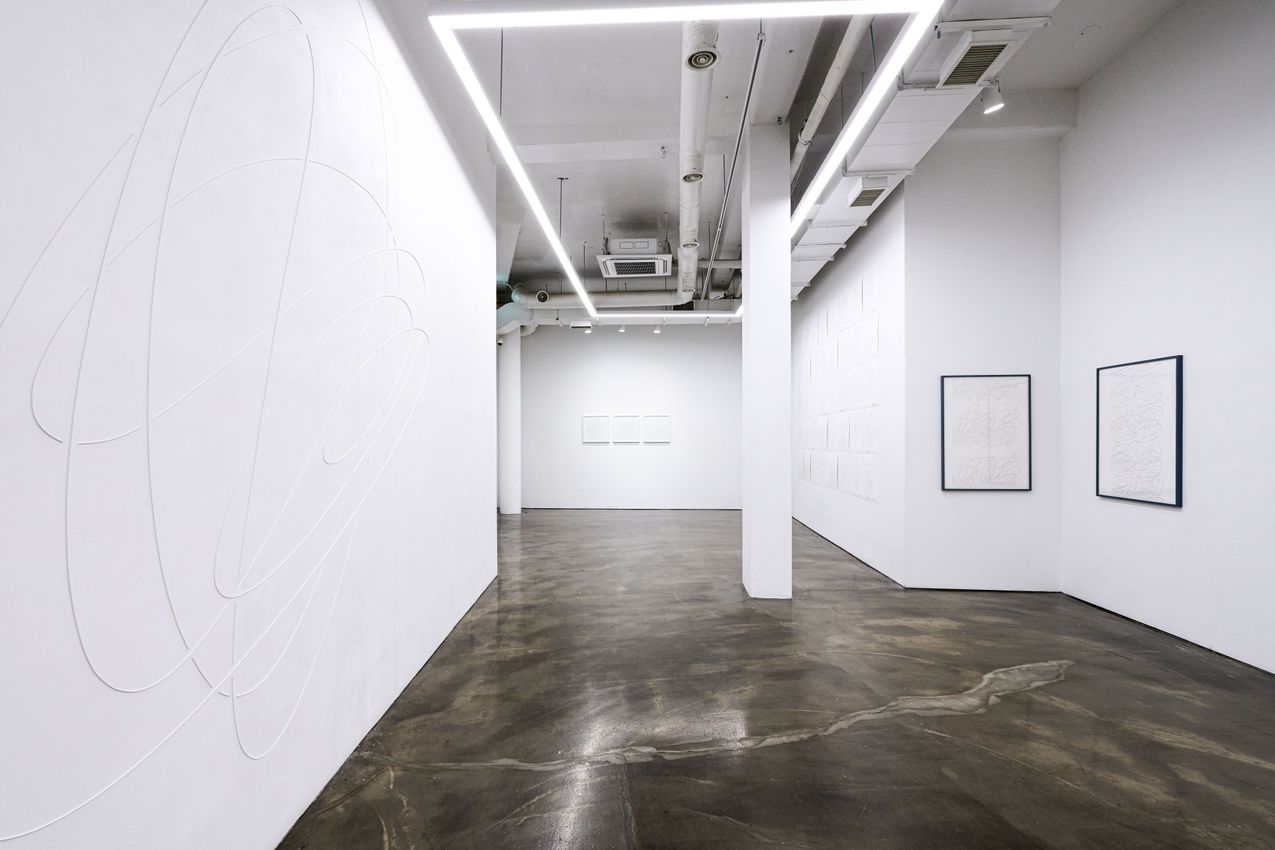
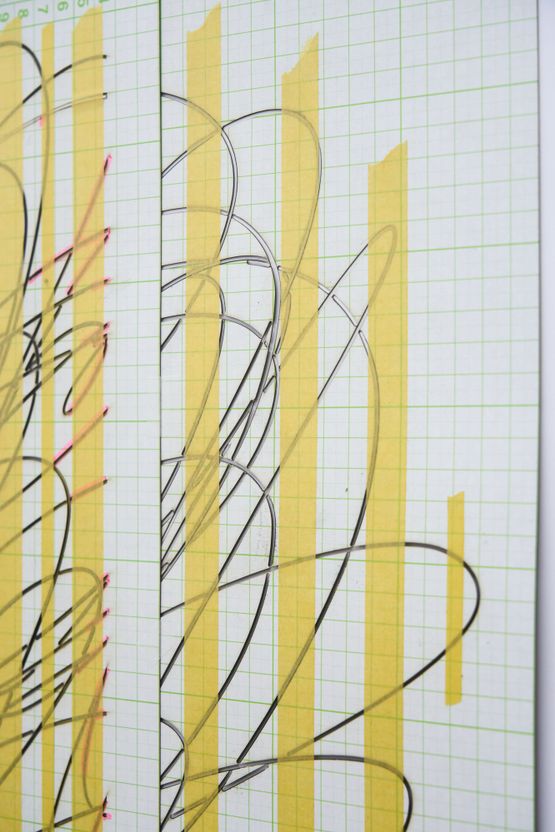
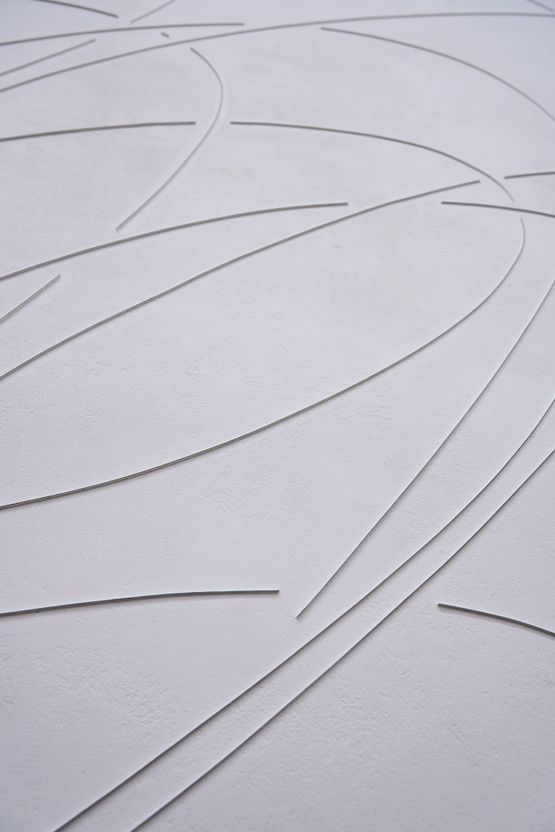
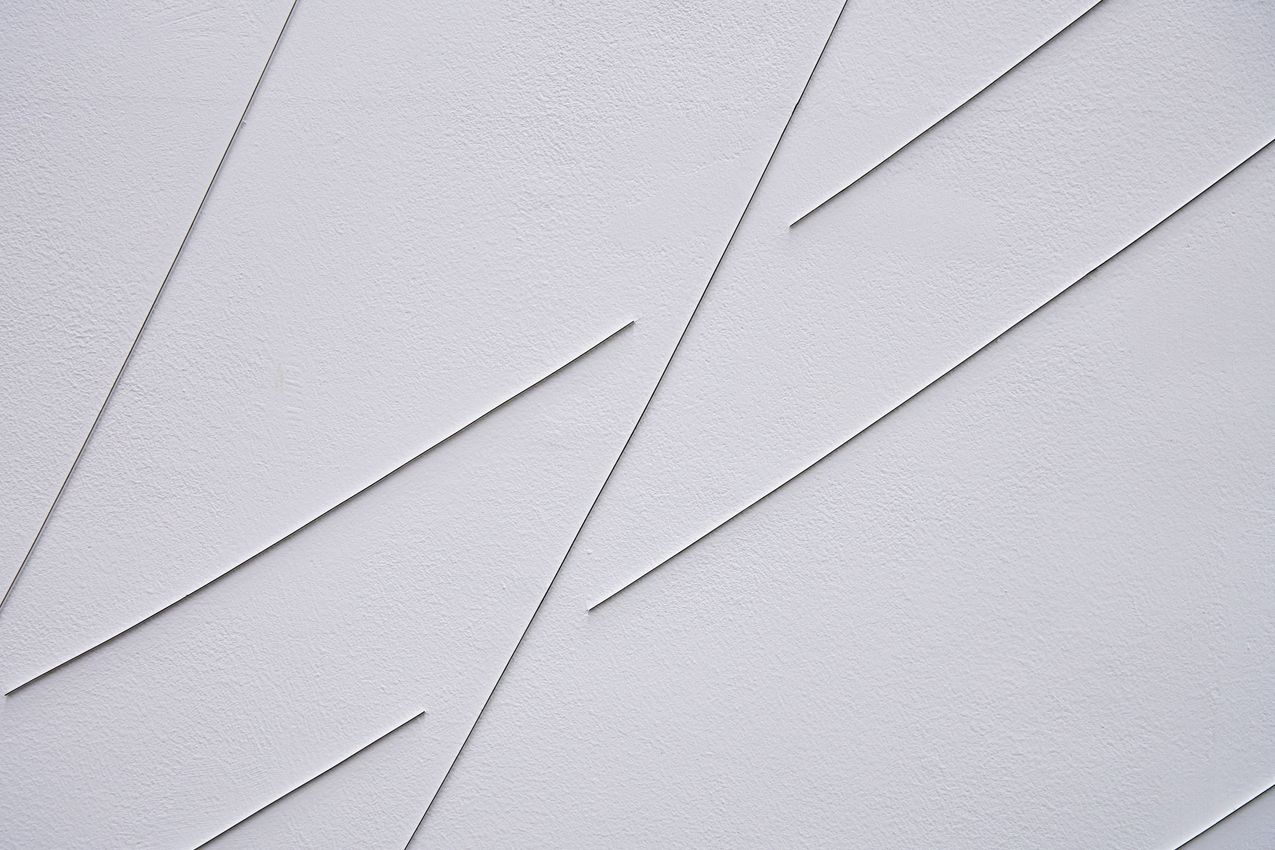
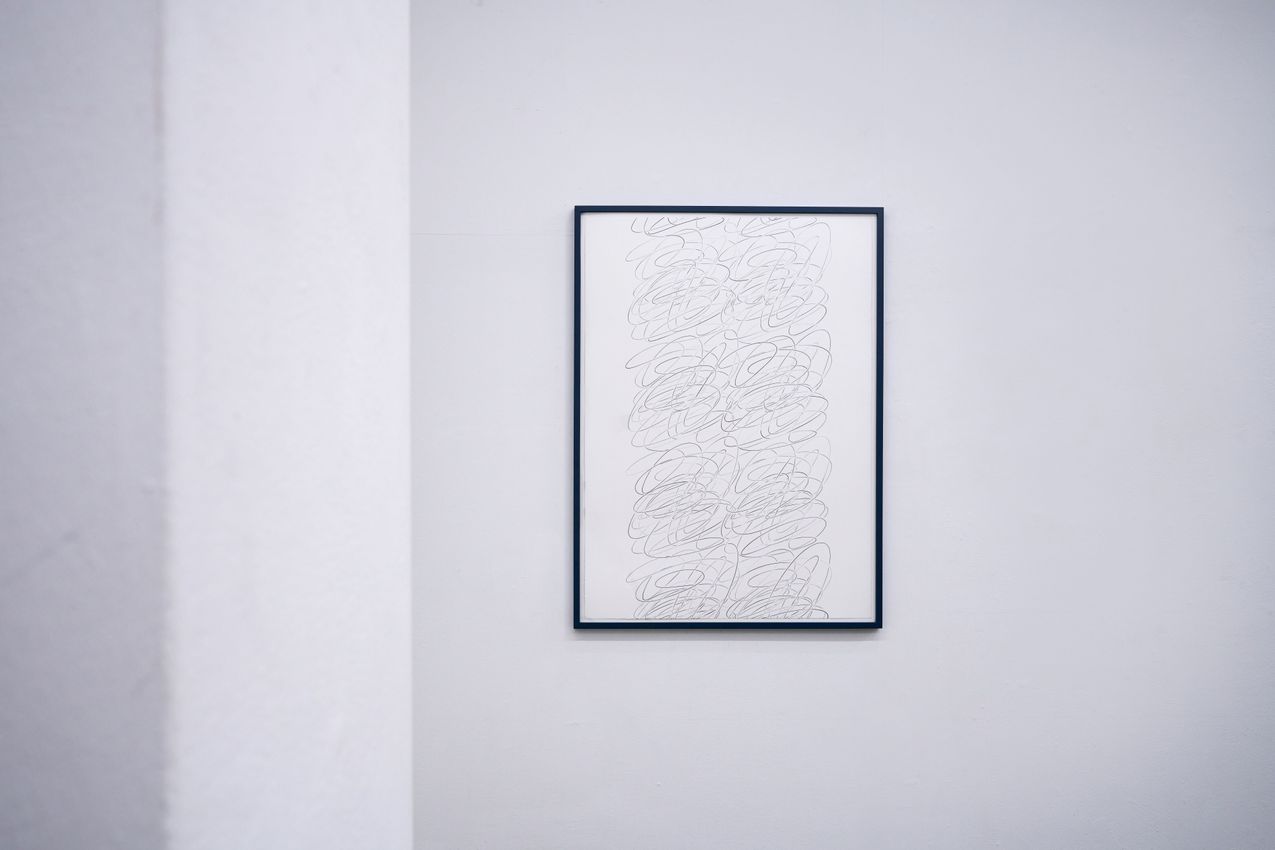
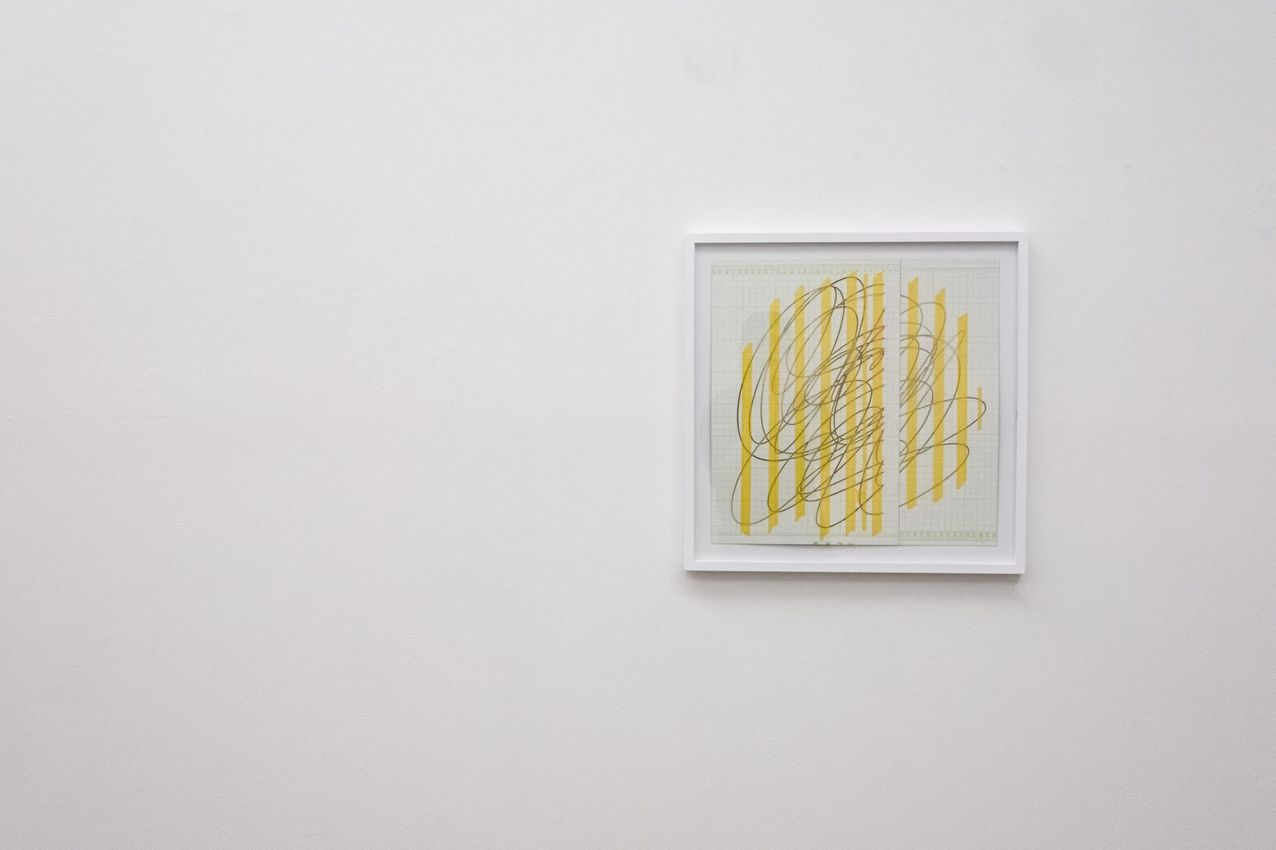
In the exhibition, both of the works, Woven Knot (2024?) and Knot (Wall Drawing) (2024?) are scribbled on paper in an improvisational manner and then scanned into a computer using design software. They are then completed by tracing the lines, manipulating their intersections, and editing the order in which they were drawn. Based on these procedures, the artist creates a stencil-like template from the data and then uses the template to redraw the lines on paper. The lines have a parallel structure and are based on the same original drawing with variations. Lines from the same image are superimposed on the same frame, revealing different degrees of mobility.
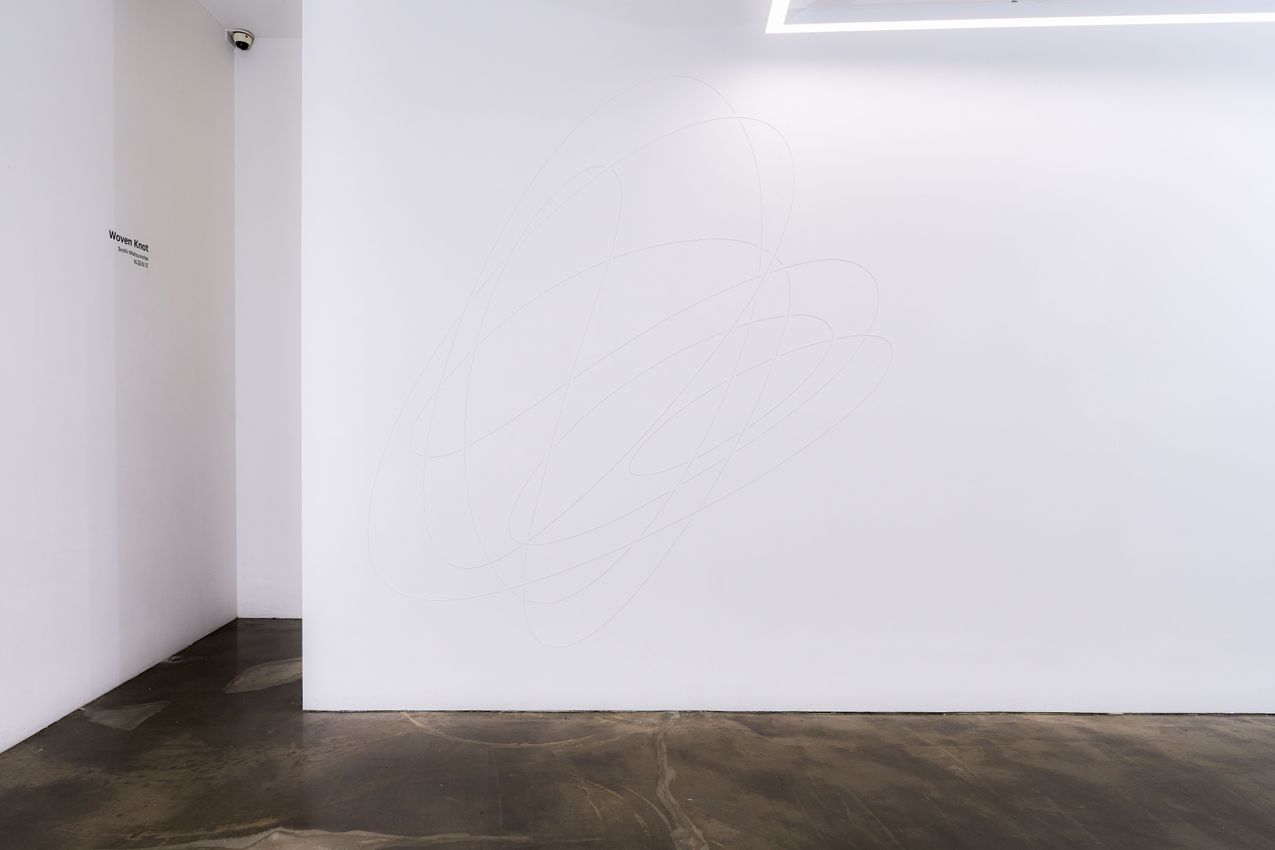
While the overall shapes have a sense of speed and improvisational rhythm, like a stroke endowed with the movement of the human body, the detailed lines are densely woven together based on quantified calculations. For Knot (wall drawing), he draws his own image on the wall. The material used is not pencil or pen, but shredded paper. Just as lines come together to form a face, the drawings made by paper reveal the two-dimensional nature of the face in the form of lines, and further emphasize their materiality in three-dimensional space by being attached to the wall.
In Japanese calligrapher Kyūyō Ishikawa’s book The Way to Calligraphy, Matsunobe finds a passage in which the ink of the brush and pen is not simply the paint, but ‘the unlighted shadows created in the traces of engraving.’ He notes the relationship and conceptual perception of line and shadow, and speaks of the sense of repetition and boredom it evokes. Specifically, he asks us to imagine the traces of things that light has not penetrated from the image of shadows. Motifs such as stones, rubber bands, humming, and lathes appear in his work. He expresses the shapes directly with dots or lines, which is his metaphor for line/shadow.
Just as painting had to re-identify itself with the advent of photography and printing technology, Matsunobe’s work offers a meditative experience of boredom and monotony from the overstimulation and sensation of images in the contemporary scene. The seemingly scribbled forms with missing letters, or the playful weightlessness of the lines, evoke a sense of the poetry of the image among the figures and shadows.
Soshi Matsunobe graduated from Kyoto Saga University of Arts in 2008 and studied in France on a Polar Arts Foundation Fellowship in 2023. He currently lives and works in Kyoto and Shiga. Through a variety of media, including sculpture, drawing, and installation, Matsunobe reveals the concept of emptiness - holes and gaps, shadows and spaces - as two- and three-dimensional objects. Understanding art as spiritual, he focuses on how the form of art can convey the ideas and concepts behind it. Taking perception and experience as the object of interpretation, He imagines the space beyond the unrecognizable and the gap between reality.

Gallery Chosun was established in 2004 in Bukchon, an area in Seoul known for its vibrant art scene comprising prominent art galleries and the National Museum of Modern and Contemporary Art. With a reputation for providing a versatile environment for its forward-thinking exhibitions, Gallery Chosun is committed to becoming an ultimate paradigm for Korean contemporary art.

A respected voice in contemporary art discourse.
Focusing on ambitious storytelling and insightful art-world commentary. Ocula Magazine publishes in-depth interviews, critical essays and timely analysis on the artists, exhibitions and ideas driving the global art world.
Learn more about Ocula Magazine
Showcasing the best of the art world.
Ocula partners with galleries from around the world to highlight their artists, artworks and exhibitions. Gallery membership is by application and invitation, with each member vetted by an independent panel.
Learn more about Ocula Membership

Specialises in the sale of major artworks.
Led by a team with deep ties to the world’s leading auction houses, galleries and collectors. Ocula’s advisory team offers bespoke services to high-net-worth clients from around the world who are looking to acquire the best of contemporary and modern art.
Learn more about our team and services