



Press Release

A neo-conceptual artist, Wim Delvoye is widely known for contemporary art that cleverly combines philosophical ideas, a fresh use of materials and a love for craftsmanship. Blurring the boundary between the art of the past and the digital realm of current art practice, he makes aerodynamic, mathematically perfect, intricate sculptures that take both art and design to new levels of invention, laying down a lucid and amused glance at contemporary society.

He explores art history, Gothic cathedrals and sculptures of the 19th century-from Bosch and Brueghel to Warhol, simultaneously revealing the beauty of daily objects. With a Baroque gesture between homage and irreverence, he appropriates and deforms the motifs that inspire him.

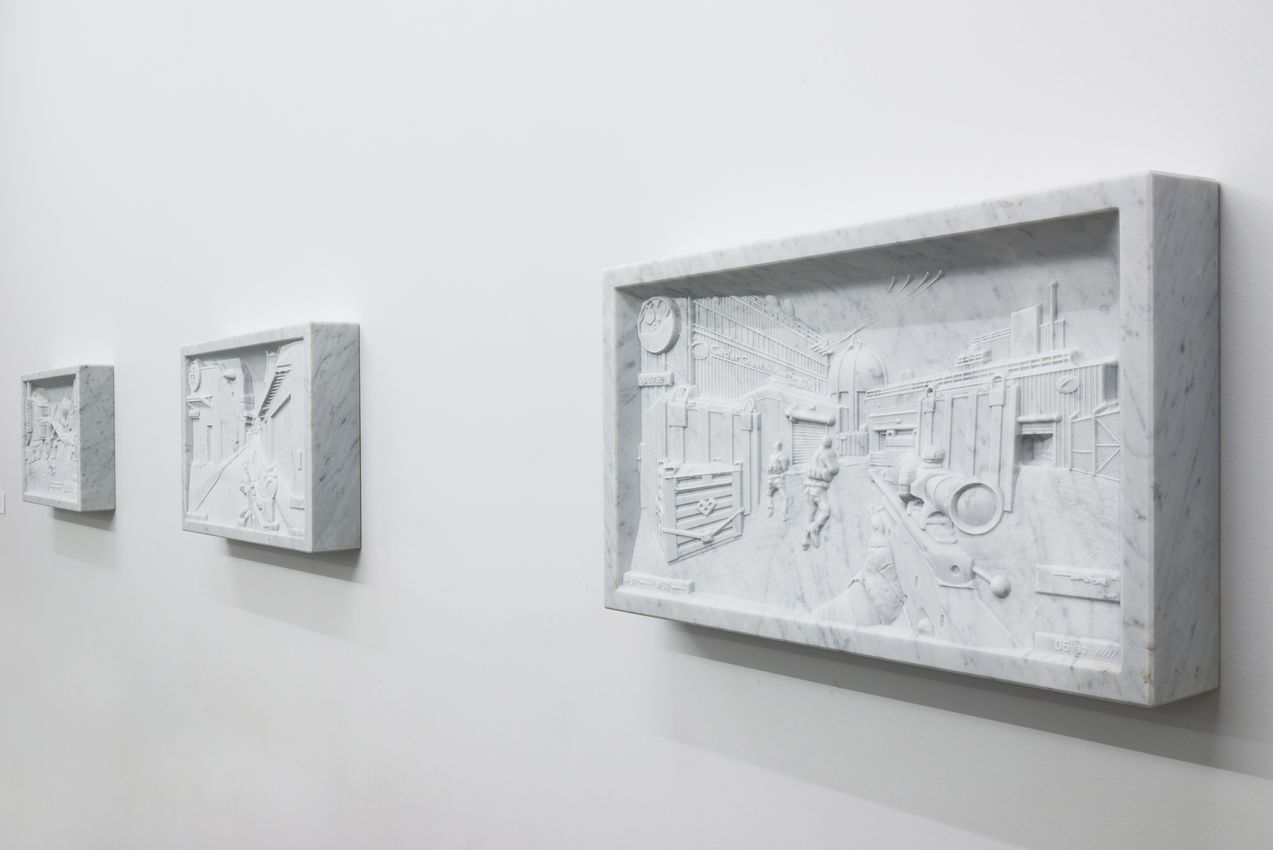
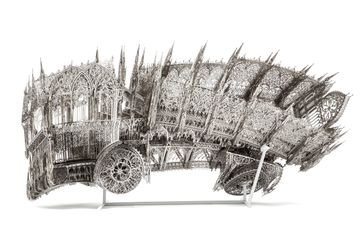
With the body of Gothic works that evolved since the early 2000s Delvoye walks a thin line between exploring artistic styles of the past and monumentality–by highlighting the medieval Gothic, interpreting it with contemporary themes and industrial techniques, he is aiming to create a new form of contemporary architecture. The works are made of a Corten steel plates which have been laser cut to reproduce neo-Gothic tracery. Those ornaments are not so much used as decorative quotations but as patterns of value and permanence in the modern era.

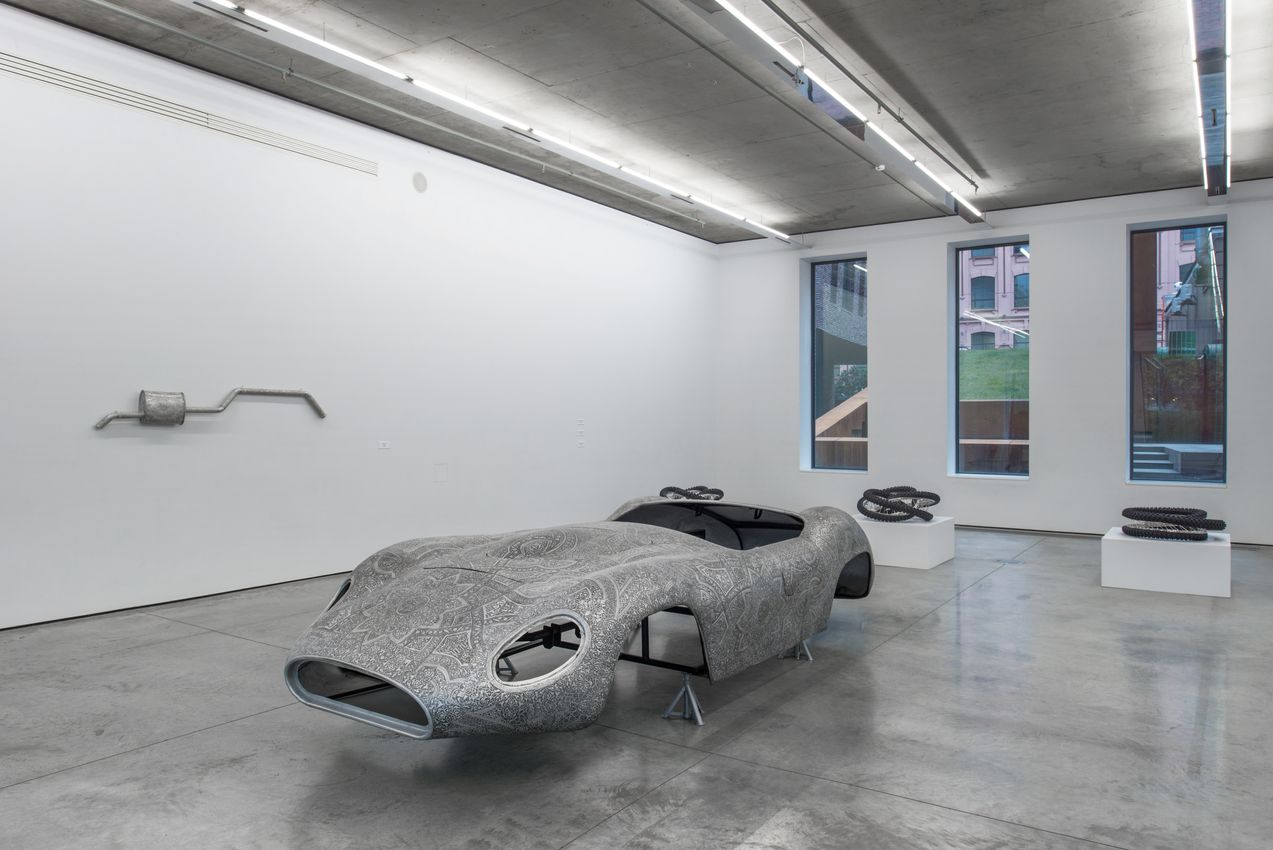
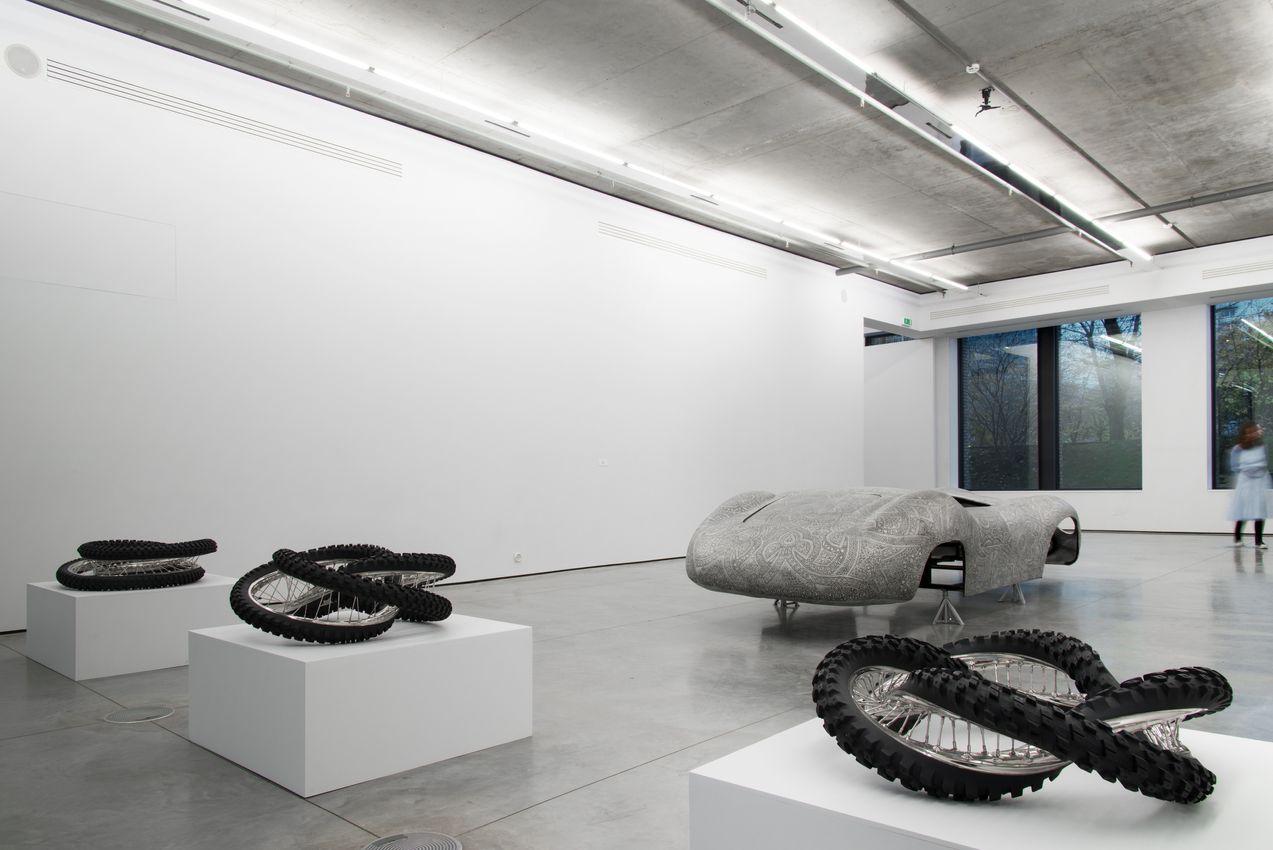
The Maserati sculpture presented at the exhibition, which the artist ironically implied—‘a new flying carpet’. Acquiring the body of a late-1950s’ Maserati 450S racing car, Delvoye had Iranian artisans emboss the aluminum carapace with elaborate Middle Eastern designs. He recently added a new object to this assortment of assisted ready-mades: an embossed automobile tailpipe, which-within the context of this show-comically seems as though it might have fallen off the car. Similarly, Delvoye purchased a selection of luxurious Rimowa-brand luggage and had the Iranian craftsmen embellish the aluminium suitcases with traditional patterns and iconic imagery culled from his existing body of work.

His ‘Twisted Tyres’ series (2013), consisting of bicycle tires placed on pedestals, are mathematically reformed as they are twisted into a Mobius puzzle, rendering the wheels functionless. Constantly oscillating between antagonistic realms such as the sacred and the profane, or the local and the global, he sarcastically confronts the various myths that feed our contemporary society from religion, science, to capitalism. Delvoye takes audiences on a virtual journey with his sublime suitcases, car parts, cement trucks and motorcycle tires.

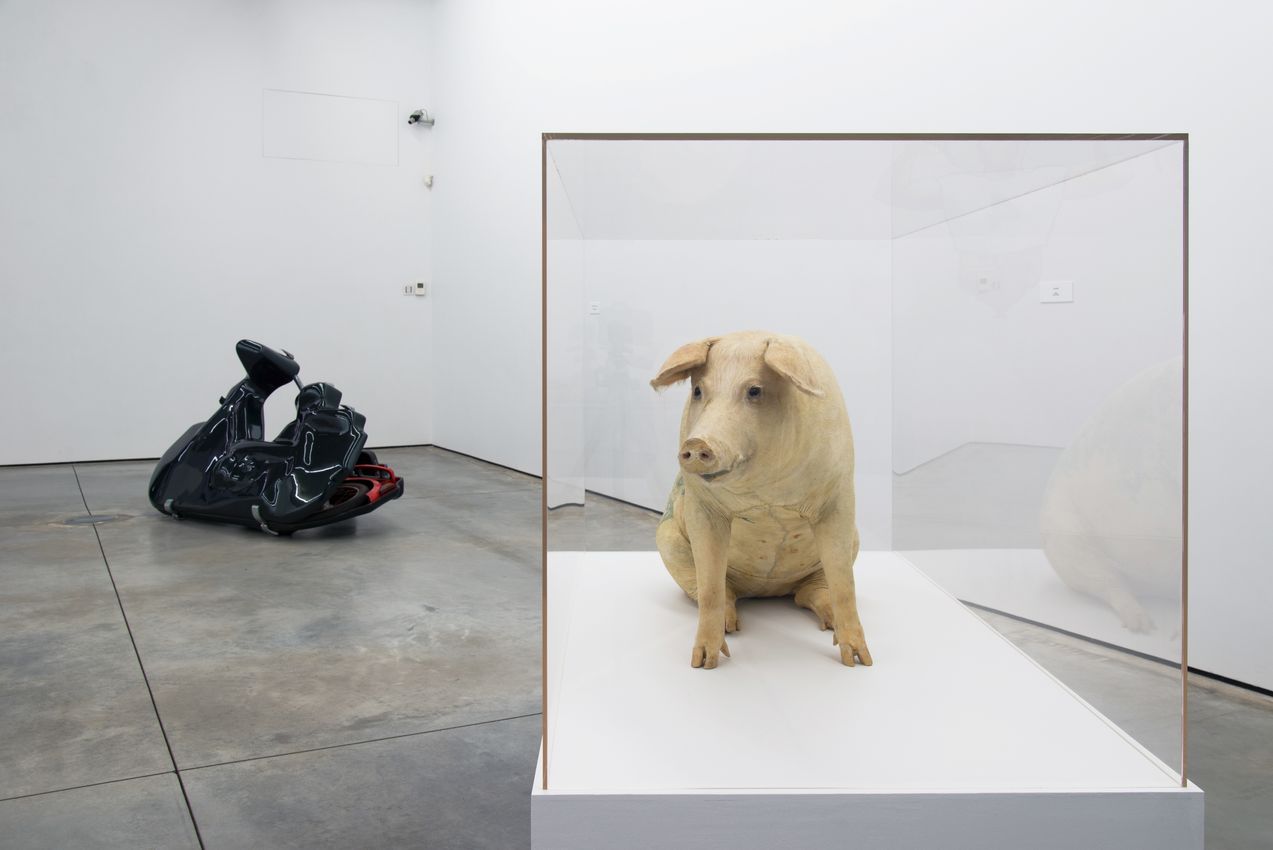
Delvoye shows the world works of art that are so alive. In the 1990s, Delvoye began to experiment with tattoo art; more specifically, tattooing the skin of pigs. The artist’s tattoos are based on Western iconography such as old school drawings, the Louis Vuitton monogram and characters from Disney cartoons. By placing these iconic images on pigskin, the artist takes away their commercial value. The inspiration to tattoo pig’s backs came about as he thought of ways to fascinate people without doing the obvious. Delvoye repurposes pigs lives as living canvases.

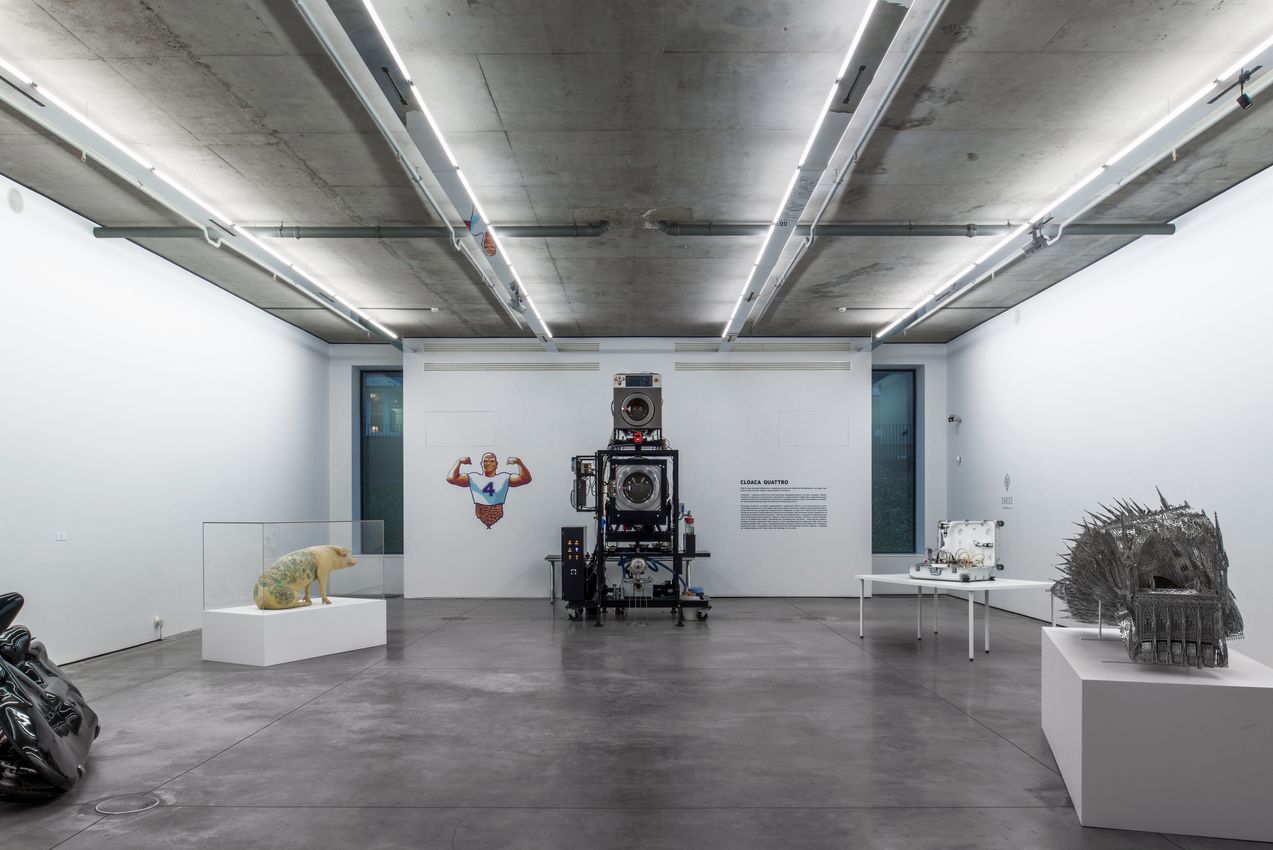
As of the 90s Delvoye radicalised the critical function of art, exploring the boundaries of commodity art, setting up his Cloaca-project. Cloaca can be described as a machine that simulate the human digestive system. Based on real scientific and technical expertise, it is composed of successive receptacles containing acids, digestive juices, bacteria and enzymes, maintained at a temperature of 37.2°C. Each machine is marked by a logo that appears to be a mocking cross between the mr. Clean and the Coca-Cola logo. Over the years, Delvoye develops several variants of Cloaca. From the point of view of the process they operate, these machines elaborate a critical account of the transformations of food. Their diet is a splendid waste having the paradoxical effect of producing faeces endowed with an added value, conferred here by an art market in prey to the most crazy speculations. From food to the production of excrement and the consumption of it, Cloaca acts not as a metaphor, but as a concretisation of the mechanisms of the modern economy. The fact that food serves as the primary material for this purpose is just another demonstration of the symbolic plasticity of it.

The term also refers to the sewers: historically, the main sewer of Rome was called the cloaca maxima. Figuratively, a cloaca evokes a foul and unhealthy place. They are mysterious, functional but useless objects that challenge the exhibition context and the viewer’s gaze. Cloaca can be read as a phantasmagorical representation, informed by a scientific approach, of a process that escapes the gaze.The works were directly influenced be the Swiss artist Tinguely and his kinetic sculptures. But Delvoye wanted a machine that looked more high-tech and clinical. The highlight of the exhibition is Cloaca Quattro-the fourth one from the artist’s series.

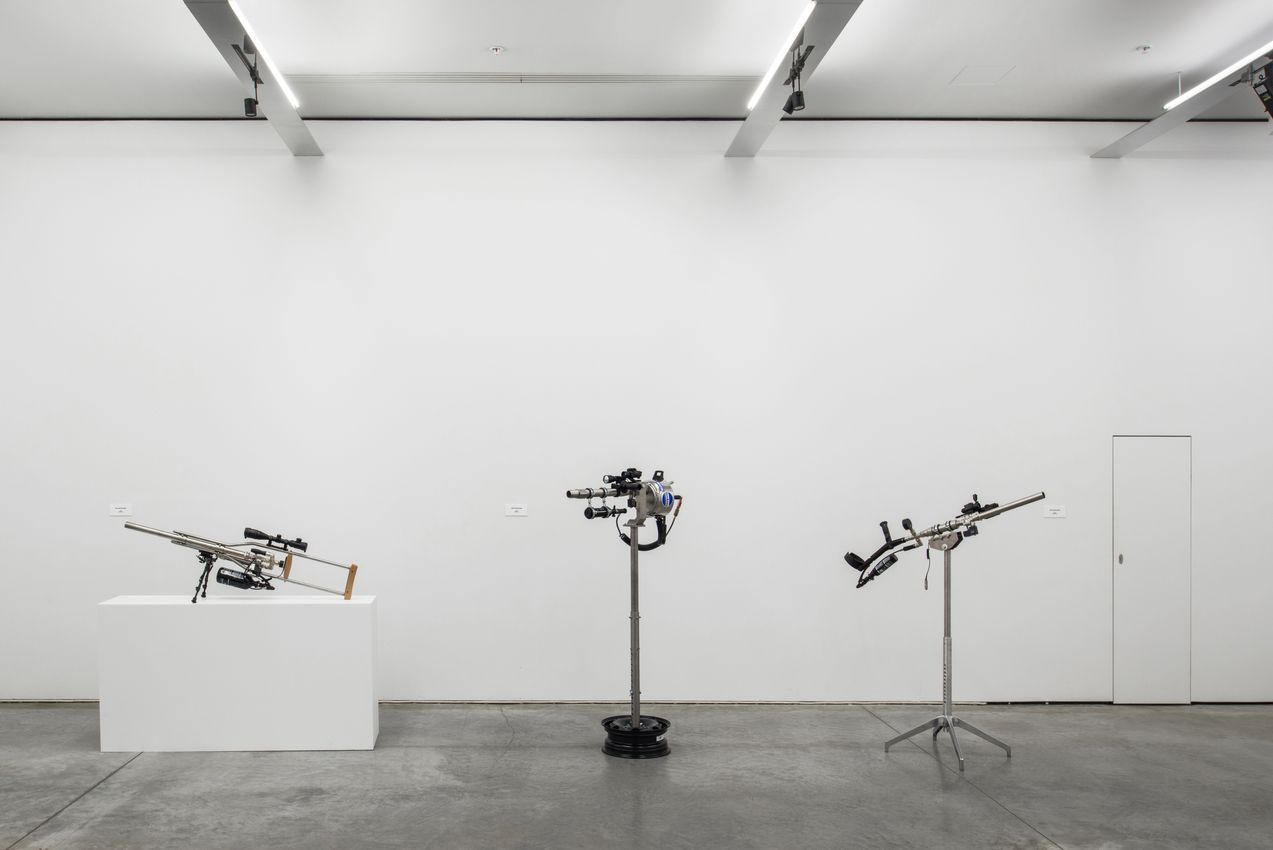
The Spud Gun sculptures take their name from children’s toy guns that use potatoes as ammunition. ‘Each work has this bricolage and boyish aspect and they actually shoot’, Delvoye says. ‘They’re very beautiful and they look a little like small Cloacas, in the same bricolage style, very shiny, techy and boyish. You use potatoes to shoot with them, and they can badly hurt someone. It’s all about defending yourself today against bad people, against governments, against violence.’

Wim Delvoye’s work has been on display at MuHKA (Antwerp, BE), Migros Museum (Zurich, CH), the Power Plant (Toronto, CA), New Museum (New York, USA), Musées de Bordeaux (FR), Musée d’art Contemporain de Lyon (FR), Kaohsiung Museum (Taiwan), Pushkin State Museum of Fine Art, Moscow (2014), Musée Rodin (Paris, 2010) Bozar (Brussels, 2010), Jing’An Sculpture Park in Shanghai (2012), Louvre Museum (Paris, 2012), TMoCA, Tehran (2016) and Tasmania’s MONA.

Read More

Installation Views

About the Artist

Wim Delvoye (1965, Wervik, Belgium). Lives and works Ghent (BE) and Brighton (UK).

View Artist Profile Wim Delvoye contemporary artist
About the Gallery
Gary Tatintsian Gallery is dedicated to organising exhibitions of American and European contemporary art.
View Gallery Profile
Address
Serebryanicheskaya Naberezhnaya, 19
Moscow
Russia
(1)
Moscow Serebryanicheskaya Naberezhnaya, 19
Gary Tatintsian Gallery
Serebryanicheskaya Naberezhnaya, 19, Moscow, Russia
The art world in focus
