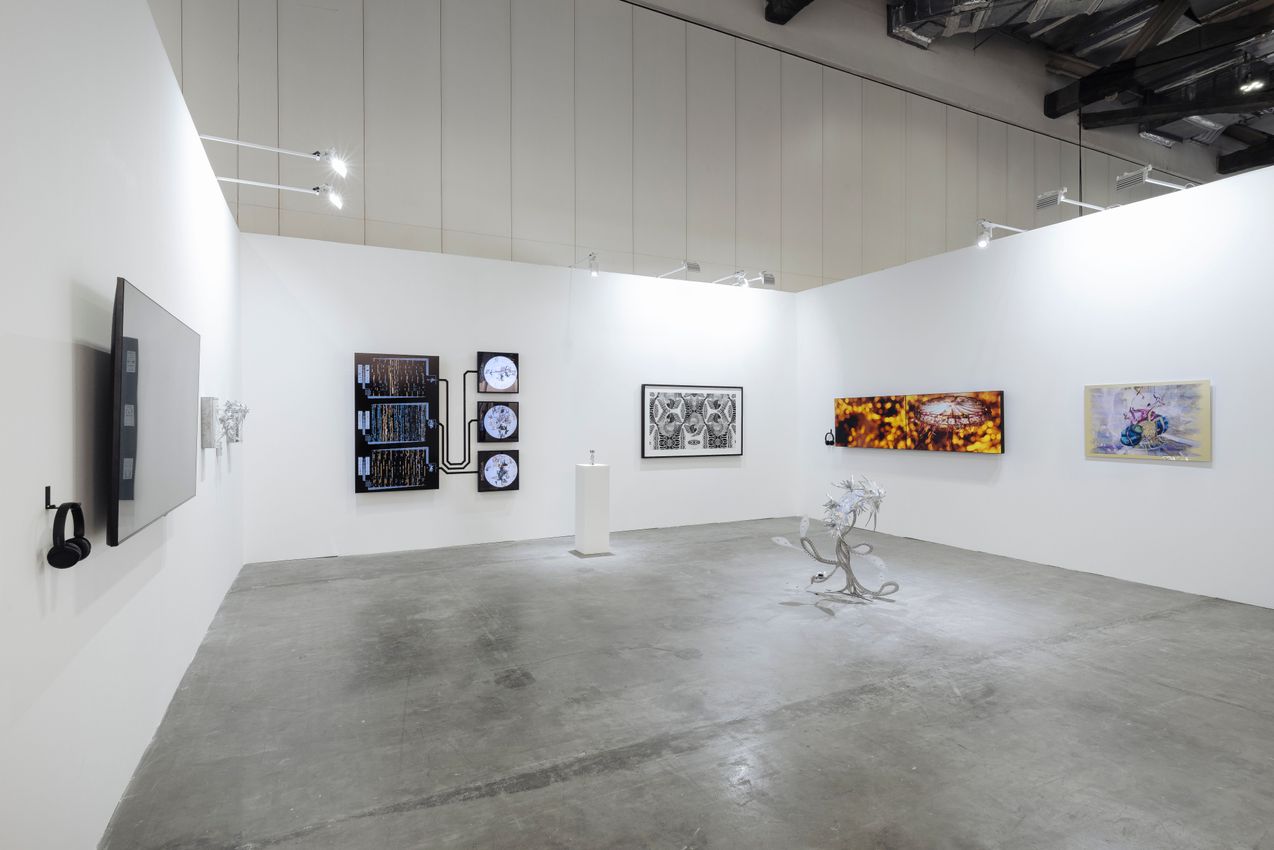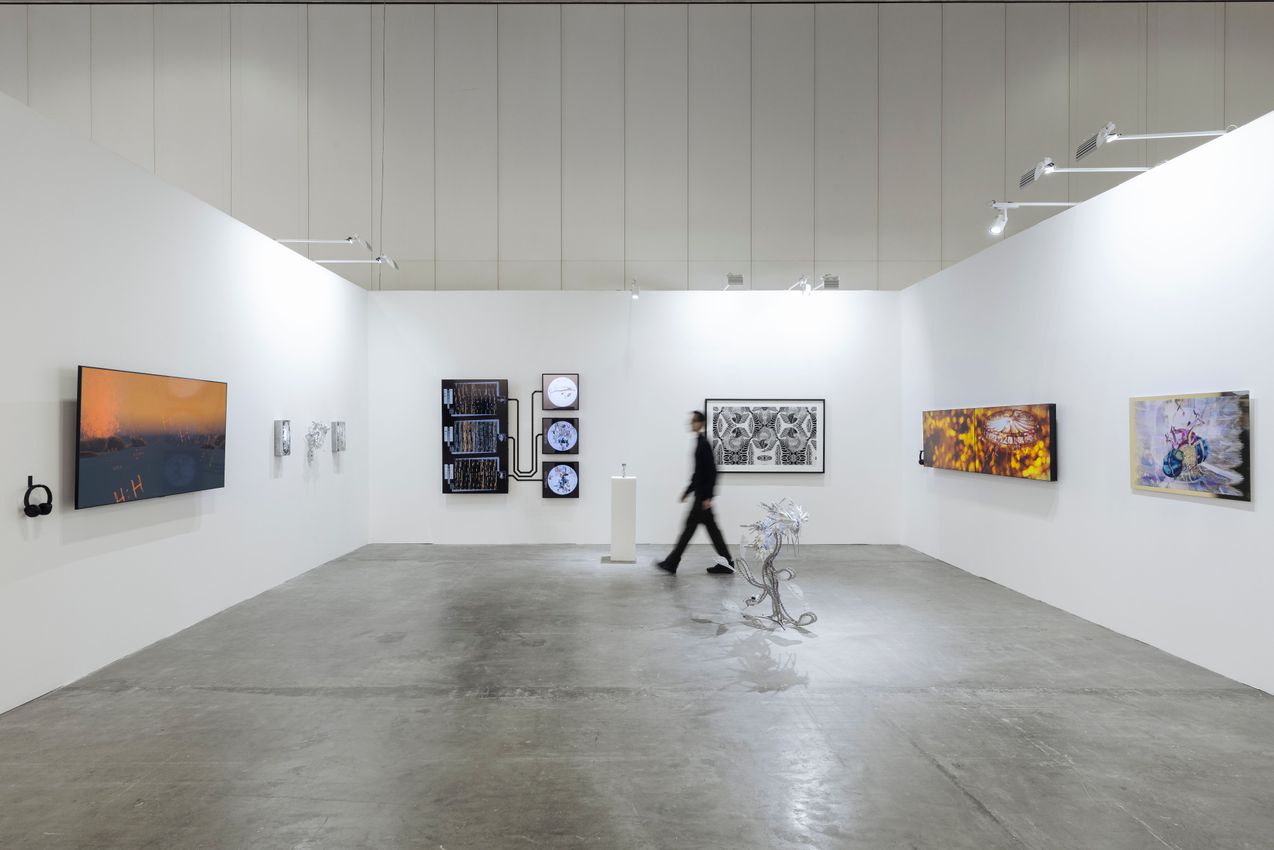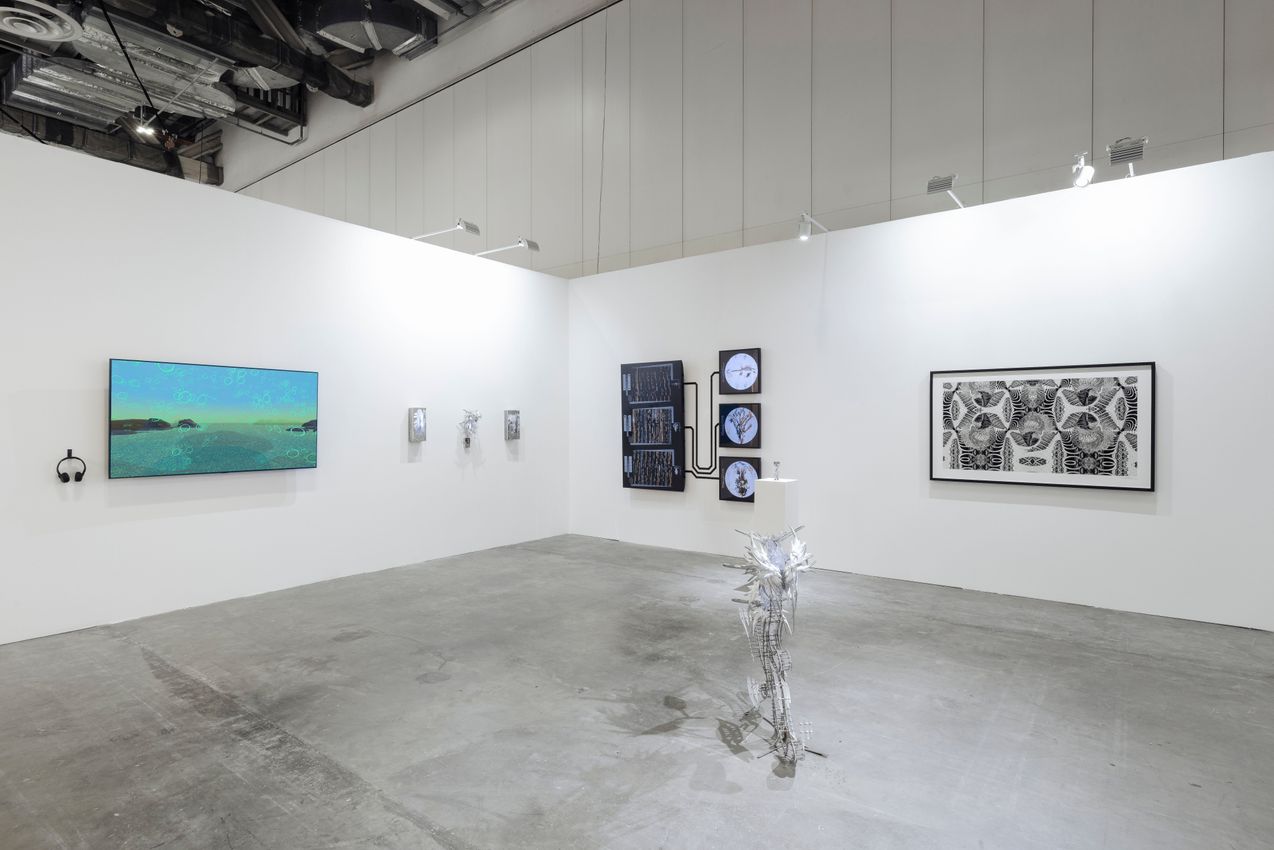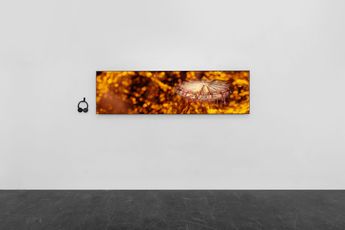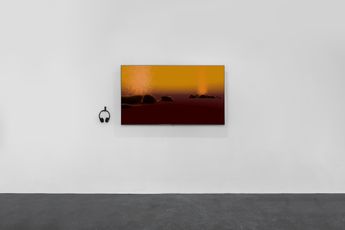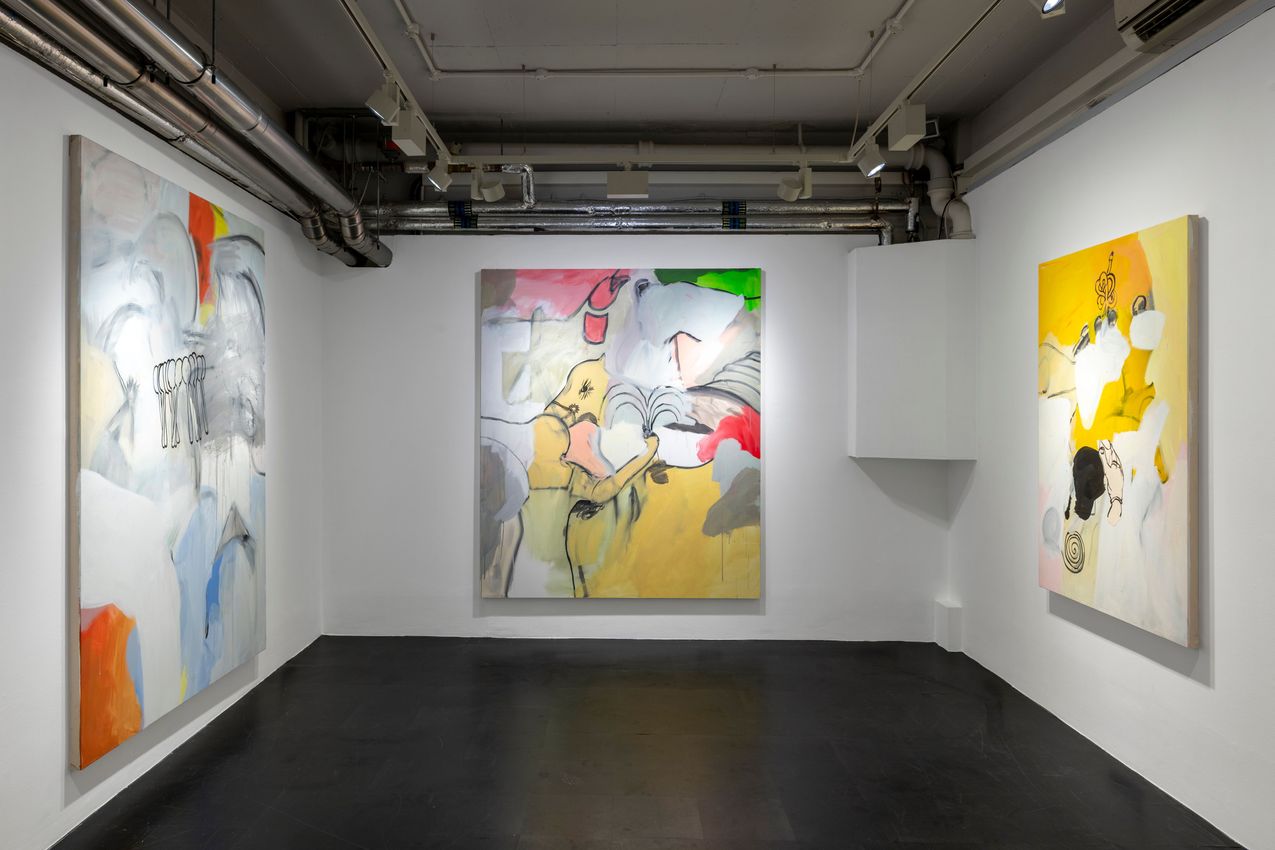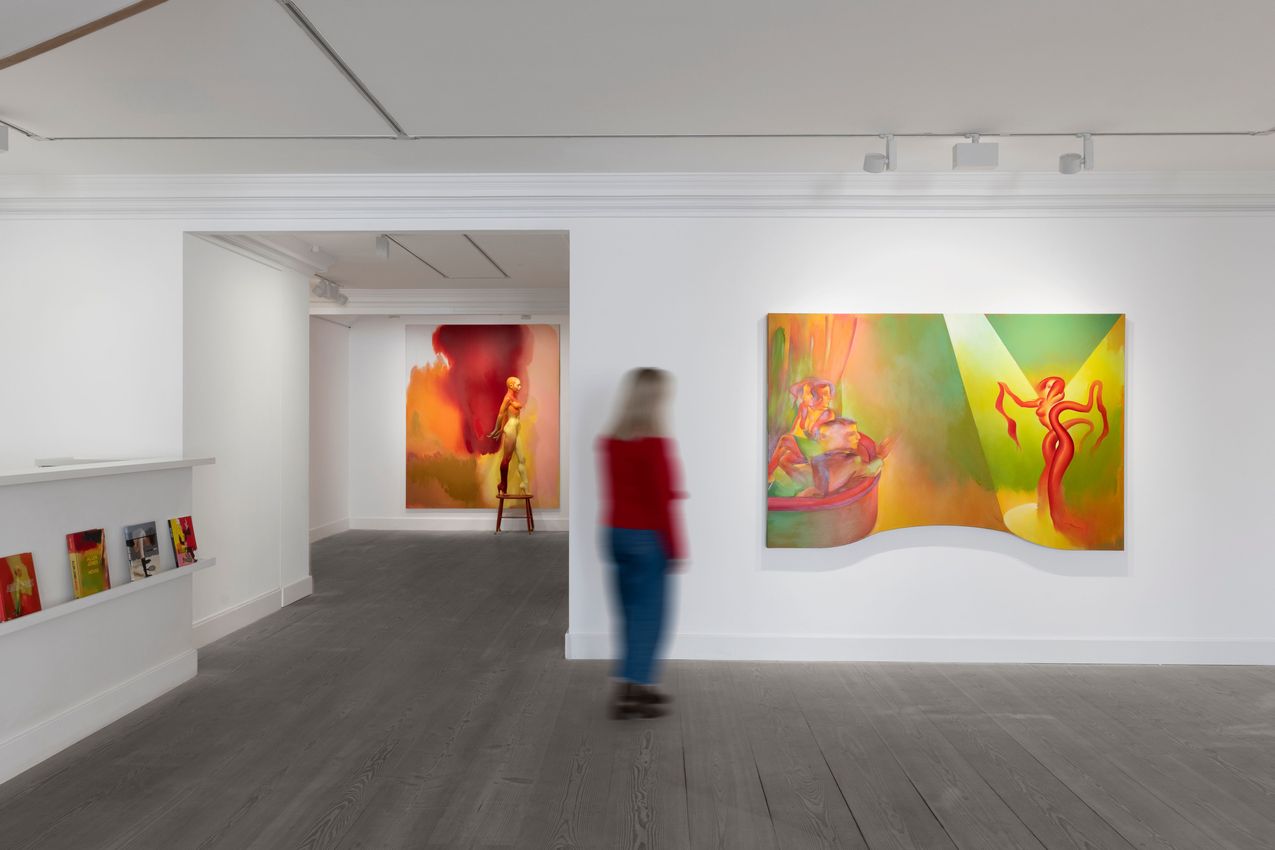




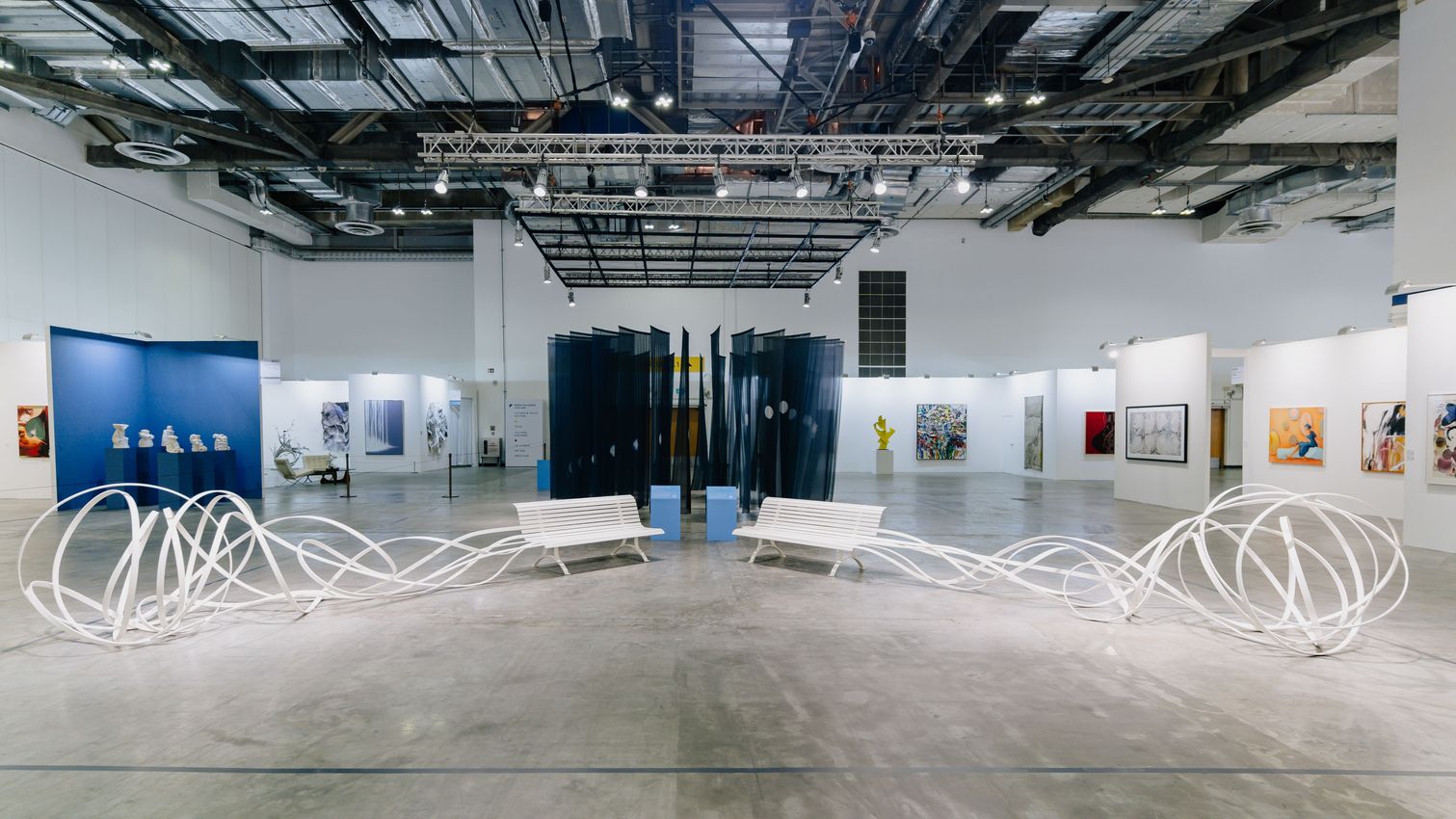
For ART SG 2025, Gazelli Art House presents a group booth titled Unknown & Uncontained, featuring the work of six pioneering artists who explore the intersection of digital media, emerging technologies and organic lifeforms, including Entangled Others, Libby Heaney, William Latham, Xin Liu, Tamiko Thiel, and 00 Zhang. The theme centres on speculative communication between species and invites viewers to experience newly generated worlds through various mediums, including video, generative code, sculpture and print. The presentation highlights how these artists map and recreate environments at vastly different scales, offering a poetic and immersive exploration of the unknown.
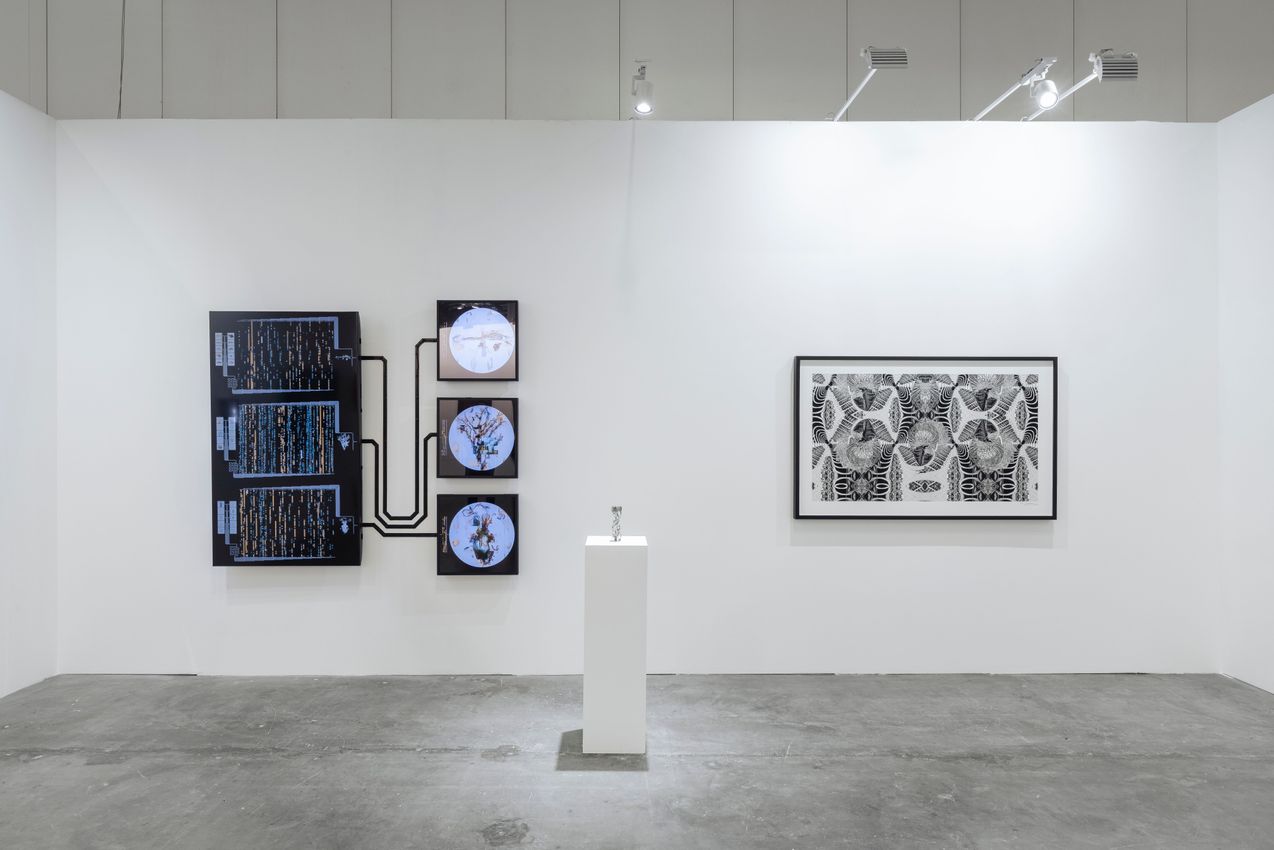
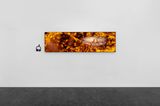
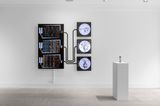
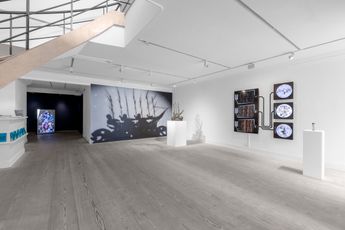
A highlight is the work of Entangled Others, who in their ongoing project self-contained (2023– 2024) explore the encoding of information in organic systems. The collaborative duo enact a generative process using image datasets of aquatic animals and plants to create beautifully evocative and shifting depictions of new life forms. The piece delves into how information is encoded and decoded in both the natural world and digital spaces, emphasising the shared characteristics of remixing and mutation. The installation comprises bespoke video screens and a metal sculpture which contains a synthetic DNA sample of the artwork itself, stored in a tiny vial.
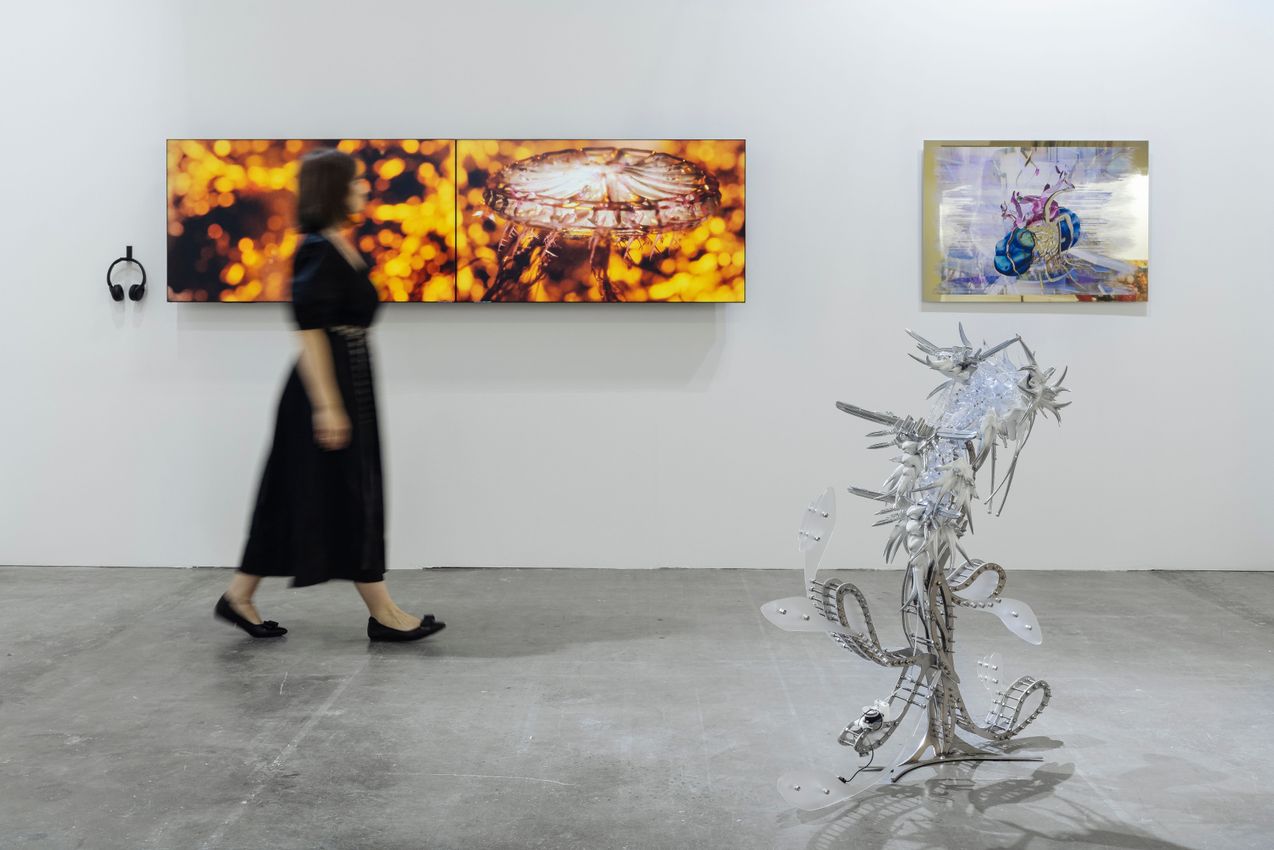
Xin Liu presents Lycorises Reverie (2023), an immersive encounter with the imaginary world of the Lycorises, made in collaboration with media artist and scientist Nan Zhao. Digitally born yet biologically evolved, Lycorieses is a series of artworks initially inspired by the illustrations of 19th-century German zoologist Ernst Haeckel. The project uses generative tools to respond to the strange beauty of microscopic organisms and flowers. Across the course of the animation algorithmically-generated forms that resemble real-world Lycoris plants crossed with fictitious organisms constantly adapt to environments such as volcanoes, alien deserts, and cyberspace.
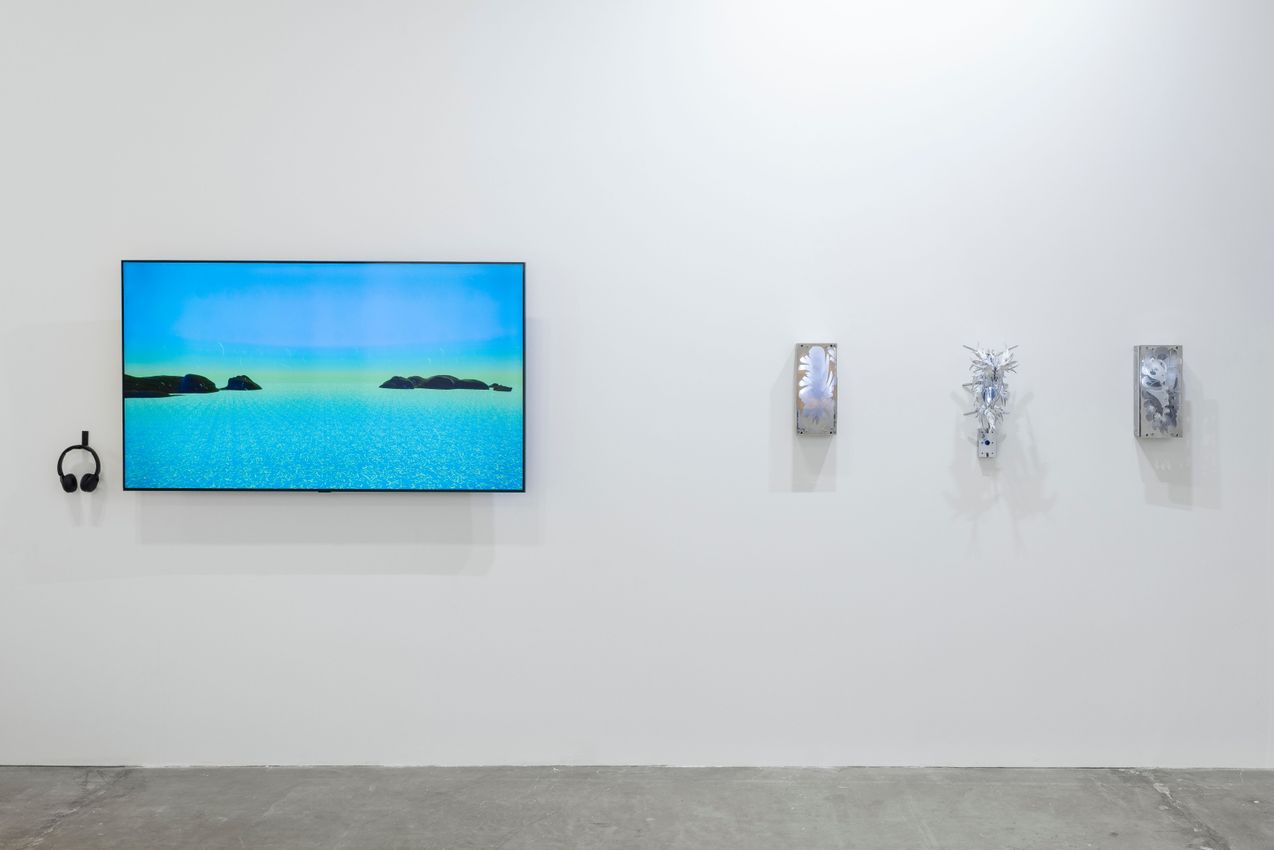
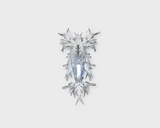
Made specifically for ART SG, artist 00 Zhang’s Prototype series (2024) features a series of intricate biomorphic sculptures which move and glow. 00 Zhang blurs the lines between the human body, animal bodies and technological systems – and between the physical and the virtual. Her multi-faceted practice explores the relationship between the individual and larger societal and architectural structures and highlights the circulation of bodies, memories and emotions across space and time.
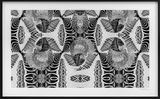
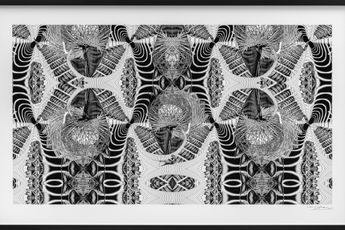
William Latham contributes a new print from his Infinity Mutator Drawing series (2022), where intricate, serpentine organic forms are generated using his pioneering Mutator AI software. Influenced by electron microscopy, Latham’s work engages in a collaborative process with the software, creating densely layered compositions that evoke Gothic architecture, Albrecht Dürer, William Morris, sprouting foliage and creatures from science fiction. Latham’s prints exemplify the fusion of traditional and digital art forms, demonstrating the creative possibilities of artificial life AI.
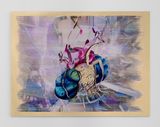
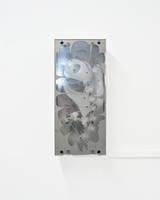
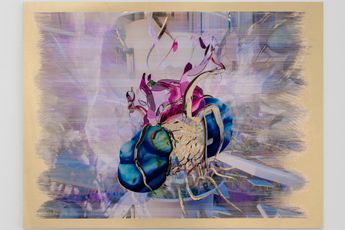
Libby Heaney recently unveiled her latest unique print, Ent-er the quantum cyborg (2024) as an extension of her commission for Frieze Sculpture London 2024. Inspired by The Garden of Earthly Delights by Hieronymus Bosch (1490–1500), a dramatic blue-bodied and golden- tentacled ‘Q-borg’ sculptural creature was accompanied by two augmented reality experiences. The digital print on mirrored gold Dibond panel layers quantum-edited textures with fragments of the AR and the Q-borg itself. The amalgamation of bodies combines queered references to sculptural depictions from antiquity, such as the Laocoön Group, reclining figures in Renaissance painting such as Titian’s Venus of Urbino, and the small Paleolithic figure the Venus of Willendorf. Biomorphic blue flesh oozes from the industrial chamber of a machine, and metallic tentacles inspired by the gold plating of quantum computers writhe and pulsate.
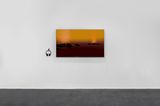
Finally, Tamiko Thiel’s Atmos Sphaerae (2021/2024) is a deep-time meditation on the Earth’s atmospheric evolution. Inspired by the poetic beauty of the scientific notation ‘Lewis structures’ Thiel uses hand-drawn and computer animation to make visible the atomic composition of normally invisible molecules. Atmos Sphaerae was originally commissioned by curator Christiane Paul for the virtual museum platform DiMoDA 4.0. Presented at ART SG as a 4K single-channel video, the work also exists as a VR headset version and immersive multiscreen projection. The work takes viewers on a journey from the pre-Big Bang VOID to life-giving water and Oxygenation, to the present climate crisis triggered by humans’ voracious appetite for fossil fuels.
Together, these works connect directly to Singapore’s reputation as Asia’s Silicon Valley, emphasising innovation and the critical examination of technological progress. The exhibition offers a thought-provoking exploration of the relationships between humanity, technology, and the environment.
A respected voice in contemporary art discourse.
Focusing on ambitious storytelling and insightful art-world commentary. Ocula Magazine publishes in-depth interviews, critical essays and timely analysis on the artists, exhibitions and ideas driving the global art world.
Learn more about Ocula Magazine
Showcasing the best of the art world.
Ocula partners with galleries from around the world to highlight their artists, artworks and exhibitions. Gallery membership is by application and invitation, with each member vetted by an independent panel.
Learn more about Ocula Membership

Specialises in the sale of major artworks.
Led by a team with deep ties to the world’s leading auction houses, galleries and collectors. Ocula’s advisory team offers bespoke services to high-net-worth clients from around the world who are looking to acquire the best of contemporary and modern art.
Learn more about our team and services