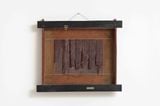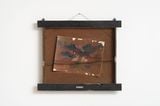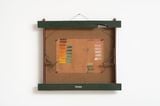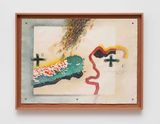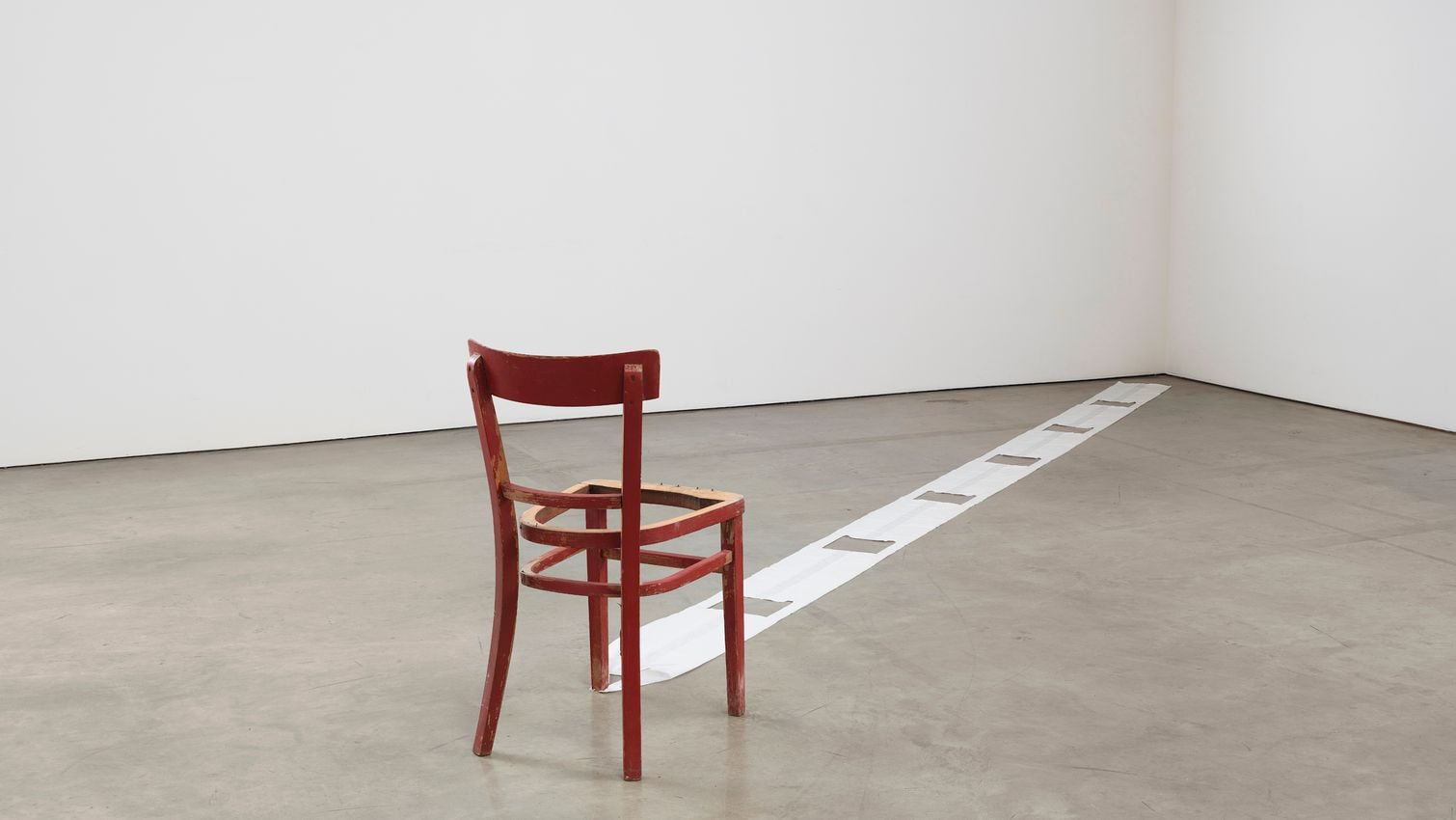
Gomide&Co is pleased to present Ubirajara Ribeiro: Quadros, the inaugural exhibition of its Mezanino exhibition space. Dedicated to the work of Ubirajara Ribeiro (Brazil, 1930–2002), the exhibition brings together assemblages, paintings, watercolours, gouaches, and other works on paper spanning approximately four decades of the artist’s career. Featuring a critical essay by Yuri Quevedo, the exhibition will be on view from August 7th to October 3rd.
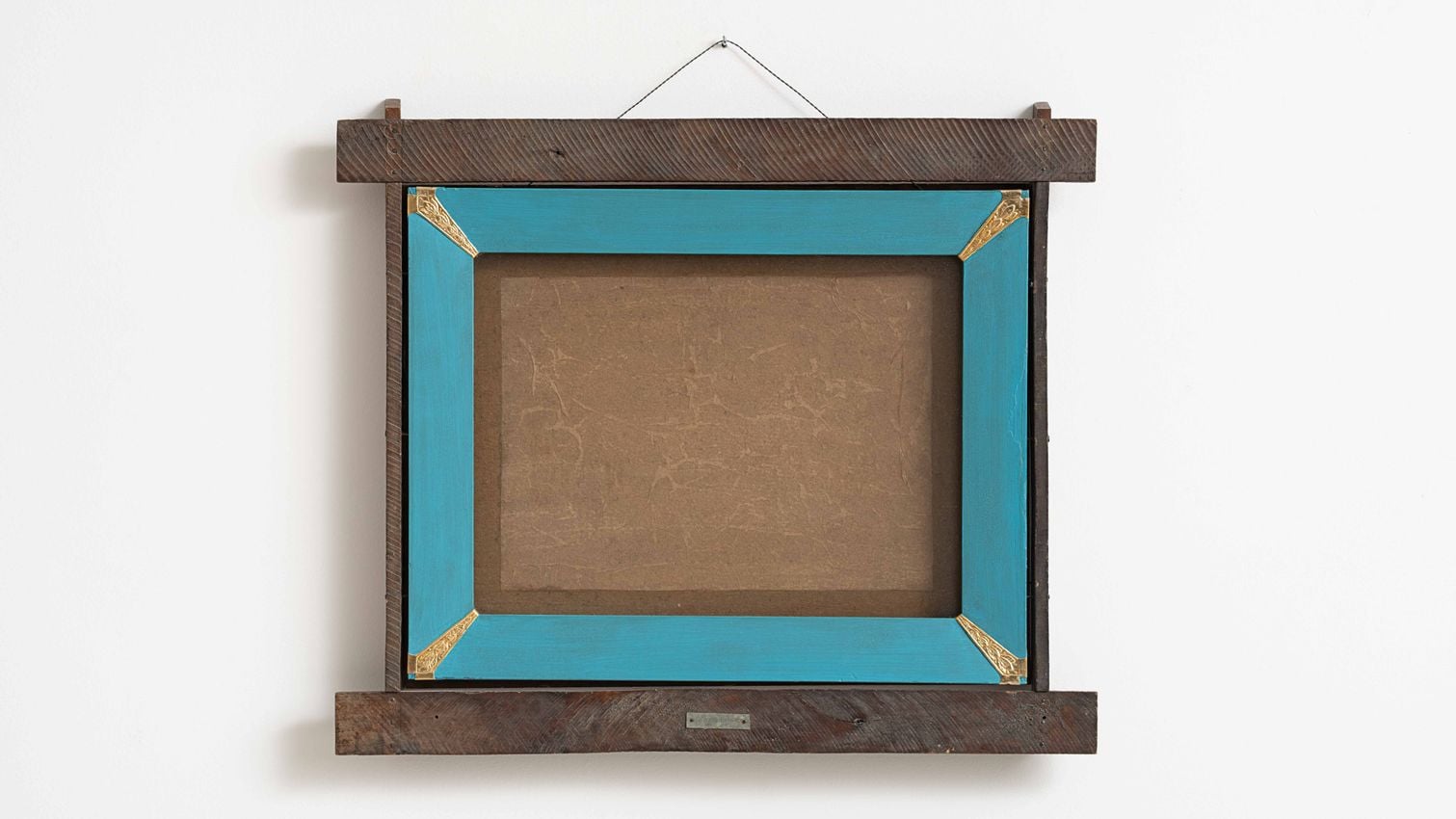
The exhibition’s central highlight is the re-presentation of a group of works originally shown in the artist’s 1981 solo exhibition at Galeria do Sesc Paulista, in São Paulo. On that occasion, Ribeiro proposed that each work be exchanged for a specific consumer good or service, identified in handwritten notes on the reverse of the works themselves. Among the proposed exchanges were the repair and repainting of his 1976 Dodge Polara, a Brastemp clothes dryer, books and art supplies, a ceramic work by Megumi Yuasa, and even the “payment of debts incurred with third parties for the installation of this exhibition.” Combining humour with a critical perspective, the project shifted the artwork into the realm of direct negotiation, questioning the conditions of its production as well as its circulation and systems of value.
Bringing together works produced over the course of four decades—including this group first presented in 1981—the exhibition at Gomide&Co highlights a defining aspect of Ubirajara Ribeiro’s practice: his sustained interest in the processes through which images are constructed. Rather than treating painting as a finished result, the artist turned his attention to the elements that make it possible—drawing, paper, writing, the frame, colour, collage, and the very procedures involved in constructing the picture plane. In his works, these elements move from supporting roles to become subjects of investigation in their own right, revealing a practice that takes the very act of making as its object of inquiry.
Over more than forty years of artistic practice, Ubirajara Ribeiro worked across drawing, watercolour, printmaking, painting, collage, and object-making, engaging with the transformations of Brazilian art in the second half of the twentieth century without committing himself to a single artistic language. Drawing remained the guiding principle of his practice, alongside a lasting interest in the materiality of paper, understood not simply as a support but as a site of experimentation where images, words, annotations, and diverse graphic procedures coexist.
This investigation is closely tied to his training as an architect. After graduating in Architecture from Universidade Presbiteriana Mackenzie in 1954, Ribeiro balanced his artistic practice with architecture and teaching for more than two decades, lecturing at Mackenzie and at Fundação Armando Álvares Penteado (FAAP). More than a formal influence, architecture offered the artist a distinctive way of structuring visual thought. Many of his works take the form of diagrams, plans, and models, articulating relationships between image, space, and material in compositions that invite viewers to follow the work’s process of construction.
Although his practice engaged with the languages of Pop Art and New Figuration that shaped the renewal of Brazilian visual arts in the 1960s, Ubirajara Ribeiro developed a distinct artistic inquiry. Vibrant colours, graphic forms, and references to urban visual culture coexist with investigations into the materiality of painting and the picture as object, in works that displace elements traditionally associated with representation in order to foreground their physical presence and constructive possibilities.
From the 1970s onward, these investigations unfolded into a body of work increasingly centred on paper, watercolour, and the relationships between drawing, writing, and collage. Rather than organizing these elements into a unified image, the artist preserves their autonomy, allowing different registers of experience to coexist on the same surface. As Yuri Quevedo observes in his essay accompanying the exhibition, Ubirajara Ribeiro’s works make visible “the relationships that sustain painting.”
By bringing together this body of work, the exhibition offers a perspective on an artistic practice that traverses different media while remaining driven by the same fundamental question: how is an image constructed? Between painting, drawing, architecture, and writing, Ubirajara Ribeiro transforms materials, procedures, and structures into integral components of the work itself, inviting viewers to consider not only what an image represents, but also how it comes into being.

A respected voice in contemporary art discourse.
Focusing on ambitious storytelling and insightful art-world commentary. Ocula Magazine publishes in-depth interviews, critical essays and timely analysis on the artists, exhibitions and ideas driving the global art world.
Learn more about Ocula Magazine
Showcasing the best of the art world.
Ocula partners with galleries from around the world to highlight their artists, artworks and exhibitions. Gallery membership is by application and invitation, with each member vetted by an independent panel.
Learn more about Ocula Membership

Specialises in the sale of major artworks.
Led by a team with deep ties to the world’s leading auction houses, galleries and collectors. Ocula’s advisory team offers bespoke services to high-net-worth clients from around the world who are looking to acquire the best of contemporary and modern art.
Learn more about our team and services