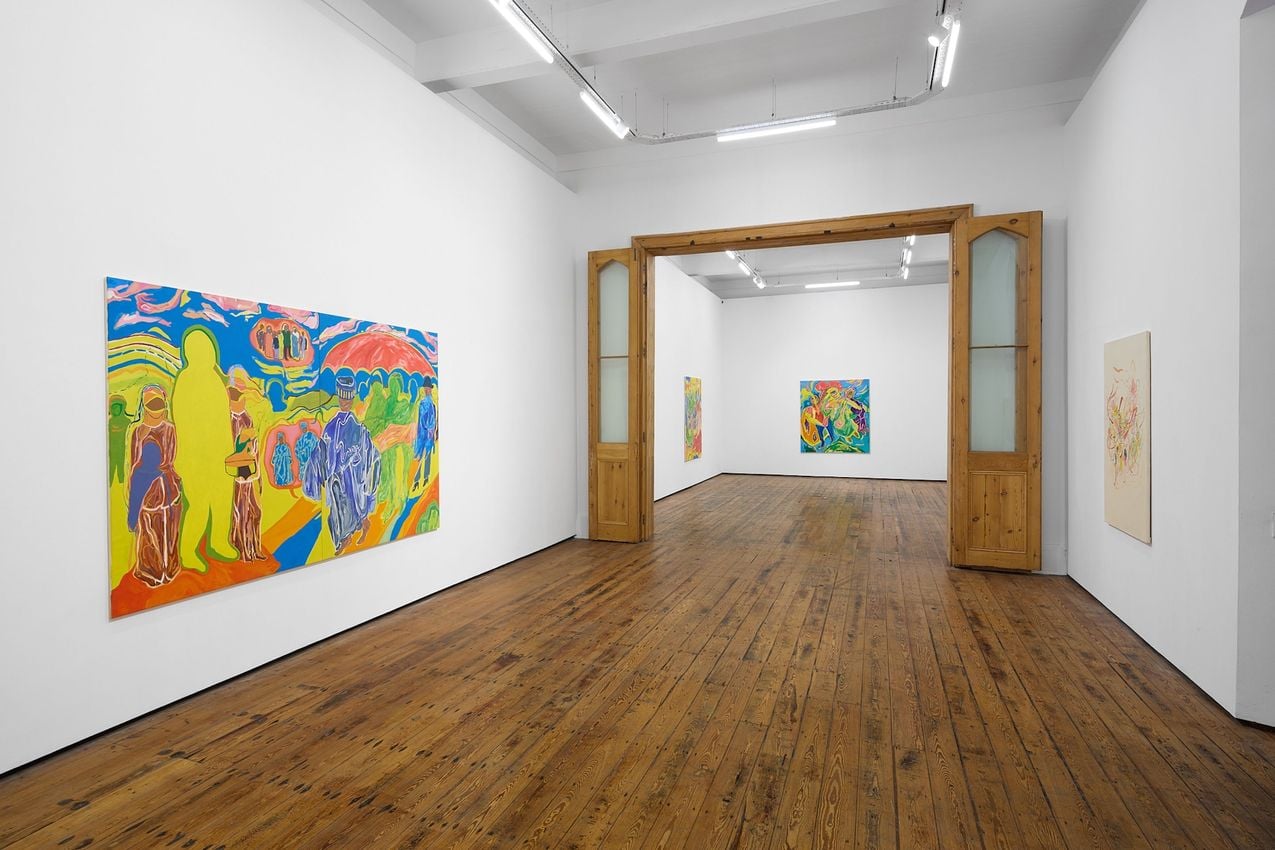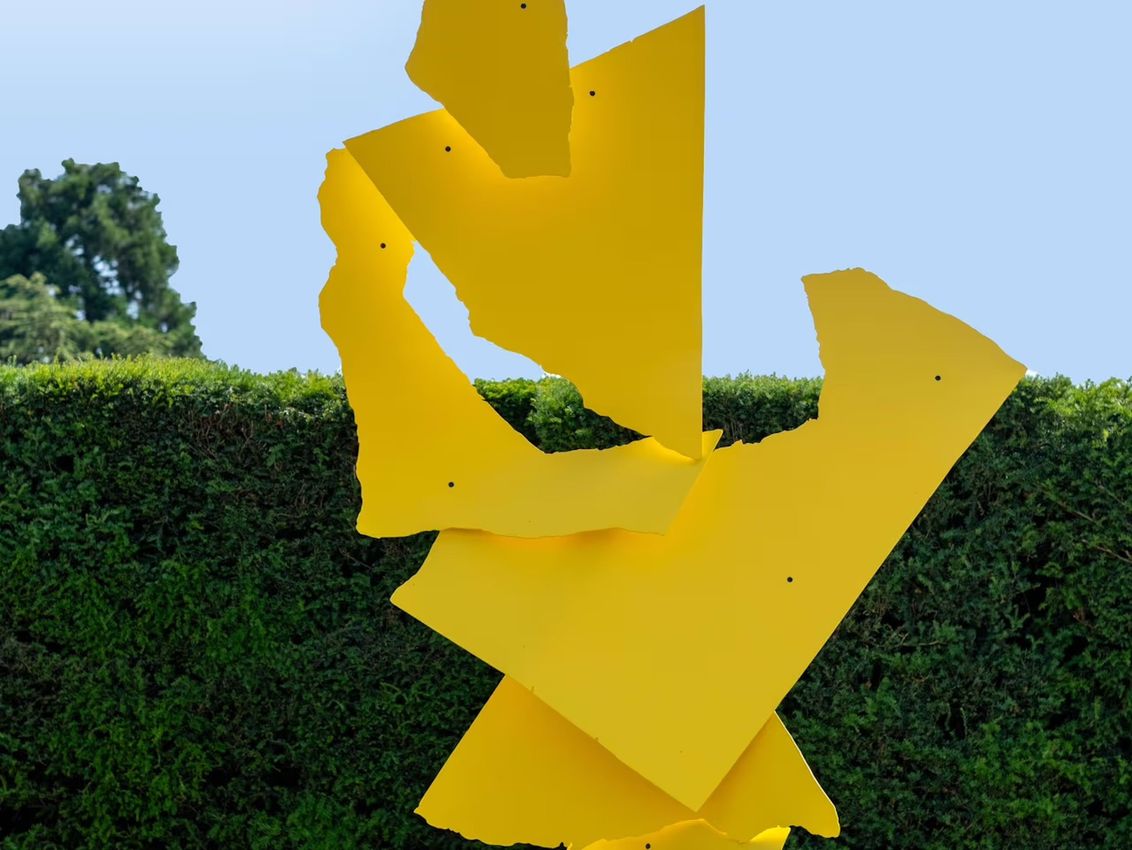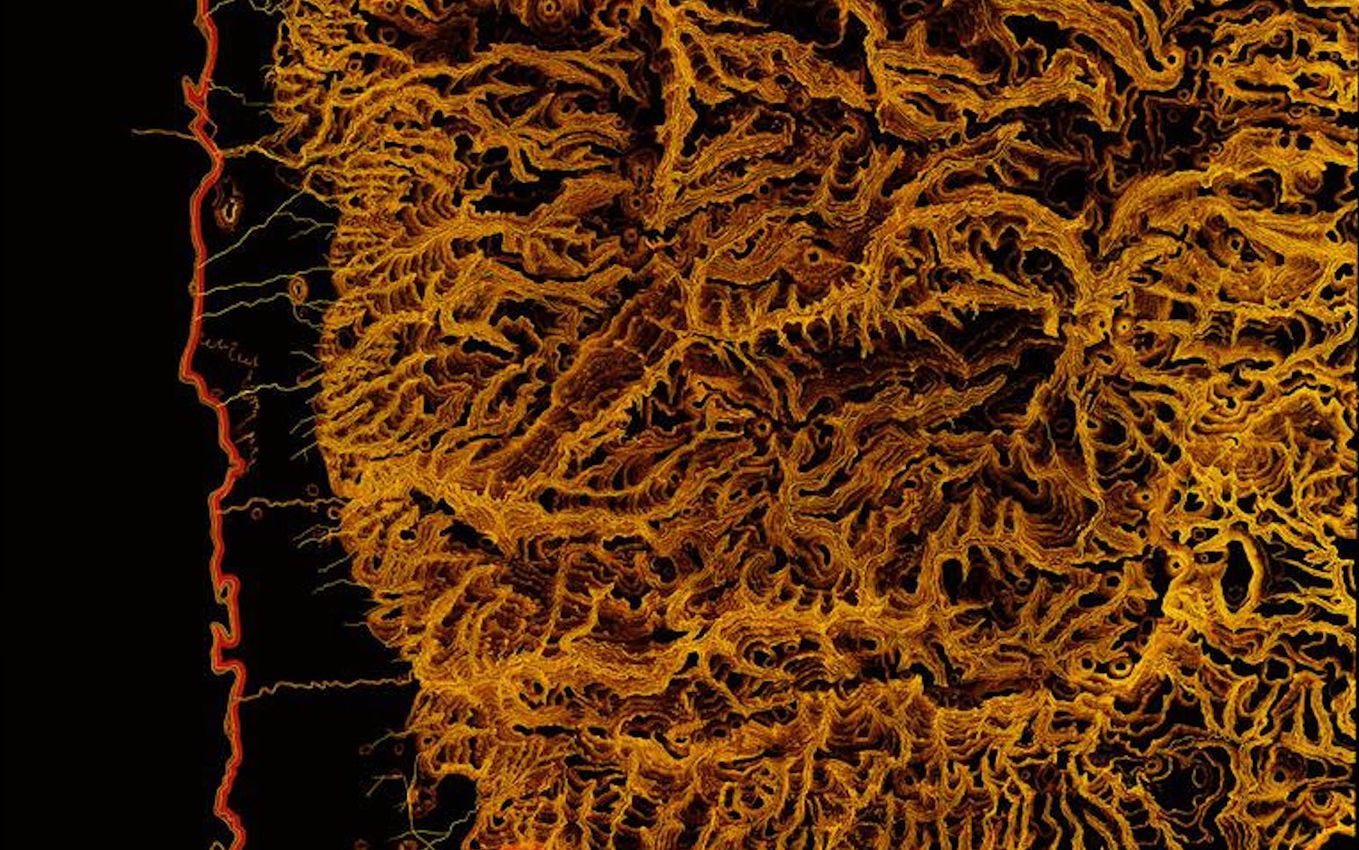
The phrase ‘Knowing the Land’ was coined in 1845 by Joseph Schwarz, one of the first geographers of Ottoman Palestine. Today, Knowing the Land Studies have become more recognised as an academic discipline across local universities, separate from the subject of Geography. Referring to ‘Knowing the Land’, and its evolution during the British Mandate period in Palestine, Guez’s work points to the close relationship between routine colonial practices and the exploration of the Levant.
The centrepiece, titled Qalâat Al-Husan, (2022) was filmed in a historical basalt stone-built city, colloquially known as Hippos, an archaeological site located between Syria and Israel. Access to the site is restricted due to leftover minefields from past wars. Due to decades-long abandonment, flora and fauna considered to be extinct have been able to flourish again, and a rare species of bats have set up their roosts in an old military base. The soundtrack is composed of recordings of female bats as they look for prey above the basalt city at night. The video opens with a distant colonial-like gaze, reminiscent of early images of the Levant. The movement of light and camera throughout the video varies in cadence, evoking gun turrets scanning for a target, navigation devices, or the frantic commotion of a battlefield.
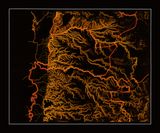
Guez’s new series of prints, titled Amid Imperial Grids (2022), presents manipulated negative images of the first modern maps of Palestine dating back to 1885. Based on these maps, two geographical grids were established at the beginning of the 20th century: ‘The British Palestine Grid’ and ‘The French Levant Grid”’ divided on the map by a thick pink line. Guez removes any human markers from the maps that categorise the landscape, including names of roads, towns, borders, villages, cities, mountains, and valleys. 90° away from the Sun (2022) constitutes the artist’s most recent sculptural series. Guez uses sliced basalt rocks from the Israel- Syria border and ancient measuring instruments. The basalt, which is unique to this area, creates a magnetic field that disrupts the functionality of a compass which has made it challenging for military forces to navigate in the area. In 90° away from the Sun, the basalt natural shape rocks float above a reflective mirror-like surface that simulates lines of topographic maps. The measuring device hanging above is a pointed weight designed to help mark a straight vertical line using gravity.
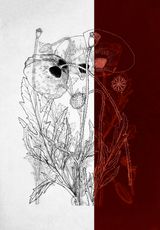
The new series of featured photographs, which lend the exhibition its title, Knowing the Land (2022), is based on a 1960s guide on flora in Palestine. Guez focuses on plants growing on national border regions in the Levant to consider the appropriation of nature to enforce a sense of national identity:
‘Features of the land are often re-named with titles related to specific national ethos. Plants often bear names of cities, countries, and peoples, framing them as ‘Syrian’, ‘Damascene’, ‘Jordanian’, ‘Egyptian’, ‘Persian’, ‘Land of Israel’, ‘Arab’, ‘Palestinian’, ‘Jewish’, and more’ – Guez.
To create these layered photographs, Guez places one botanic illustration at a time on top of a paper-made lightbox. The result is that the front image appears in sharp focus while the image printed on the underside of the paper is cast in faint detail. After printing a positive image in black and white, Guez returns to the original negative and re-prints it as a negative, and combines the two prints on the singular surface. The Knowing the Land photographic series, therefore, attempts to blend two different plants, two images that are in close proximity and share a physical border, and two formats of printmaking. Dor Guez (b. Jerusalem) is a Jaffa-based artist, educator, archivist, and curator. His latest overview, ‘Catastrophe’, at the Museum of Modern Art Bogota, spans a wide range of works showcasing the artist’s ongoing engagement with the ever-unfolding studies of his region. Catastrophe will travel to Laboratorio Arte Alameda in Mexico City in April 2023.
Guez’s work has been displayed in over 45 solo exhibitions worldwide; MAMBO: Museum of Modern Art, Bogota (2022); Kunst im Kreuzgang, Bielefeld (2021); Futura Gallery, Prague, (2020); American Colony Archive, Jerusalem (2019); MAN Museum, Nuoro (2018); DEPO, Istanbul (2017); the Museum for Islamic Art, Jerusalem (2017); the Museum of Contemporary Art, Detroit (2016); the Institute of Contemporary Arts, London (2015); the Center for Contemporary Art, Tel Aviv (2015); the Rose Art Museum, Brandeis University, Massachusetts (2013); Artpace, San Antonio (2013); the Mosaic Rooms, Centre for Contemporary Arab Culture & Art, London (2013); the KW Institute for Contemporary Art, Berlin (2010); and Petach Tikva Museum of Art, (2009).
Group exhibitions include: The Jewish Museum New York (2021); Hugh Lane Gallery, Dublin, (2020); Susquehanna Art Museum, Harrisburg (2019); Musée des beaux arts, France (2018); MODEM Museum, Hungary (2018); Brown University, Providence USA (2017); Arab World Institute, Paris (2017); CEPA Gallery, Buffalo, USA (2017); UNTREF Museum, Buenos Aires (2016); Buenos Aires Museum of Modern Art (2016); the North Coast Art Triennial, Denmark (2016); Weatherspoon Art Museum, Greensboro, North Carolina (2015); the 17th, 18th, and 19th International Contemporary Art Festival Videobrasil, São Paulo (2011, 2013, 2015); the 8th Berlin Biennale for Contemporary Art (2014); Cleveland Institute of Art (2014); Triennale Museum, Milan (2014); Centre of Contemporary Art, Torun (2014); Tokyo Metropolitan Museum of Photography (2014); Maxxi Museum, Rome (2013); Palais de Tokyo, Paris (2012); the 12th Istanbul Biennial (2011); and the Museum of Modern Art, Ljubljana (2010).Public collections span Tate Modern (London), Center Pompidou (Paris), Guggenheim (Abu Dhabi), The Jewish Museum (New York), Rose Art Museum (Boston), Princeton Art Museum (New Jersey), FRAC collection (Marseille), and Museum of Modern Art (Bogota).
Upcoming: Guez will open a solo exhibition at Princeton Art Museum (US) in late 2022, followed by a solo exhibition at Felix Nussbaum Museum (Germany) in early 2023.
Dor Guez’s artistic practice is at once forensic and personal. It culminates in installations of found objects as well as deeply textured ‘scanograms,’ a term he uses to describe a unique digital imaging process. Born into a blended family of Palestinians and Tunisian Jews, Guez explores chapters of his own layered history to expose the hidden connections, subversive undercurrents, and present-day contexts of his family’s unique story, and that of the region he comes from. Oftentimes the point of departure is a seemingly modest treasure from the family archive—a vintage wedding photograph, a dress-maker’s pattern, or a notebook written in an ancient Judeo-Arabic dialect. Yet for Guez such relics are the stuff of expansive possibility.


Goodman Gallery holds the reputation as a pre-eminent art gallery on the African continent, platforming art that confronts entrenched power structures and champions social change.

A respected voice in contemporary art discourse.
Focusing on ambitious storytelling and insightful art-world commentary. Ocula Magazine publishes in-depth interviews, critical essays and timely analysis on the artists, exhibitions and ideas driving the global art world.
Learn more about Ocula Magazine
Showcasing the best of the art world.
Ocula partners with galleries from around the world to highlight their artists, artworks and exhibitions. Gallery membership is by application and invitation, with each member vetted by an independent panel.
Learn more about Ocula Membership

Specialises in the sale of major artworks.
Led by a team with deep ties to the world’s leading auction houses, galleries and collectors. Ocula’s advisory team offers bespoke services to high-net-worth clients from around the world who are looking to acquire the best of contemporary and modern art.
Learn more about our team and services