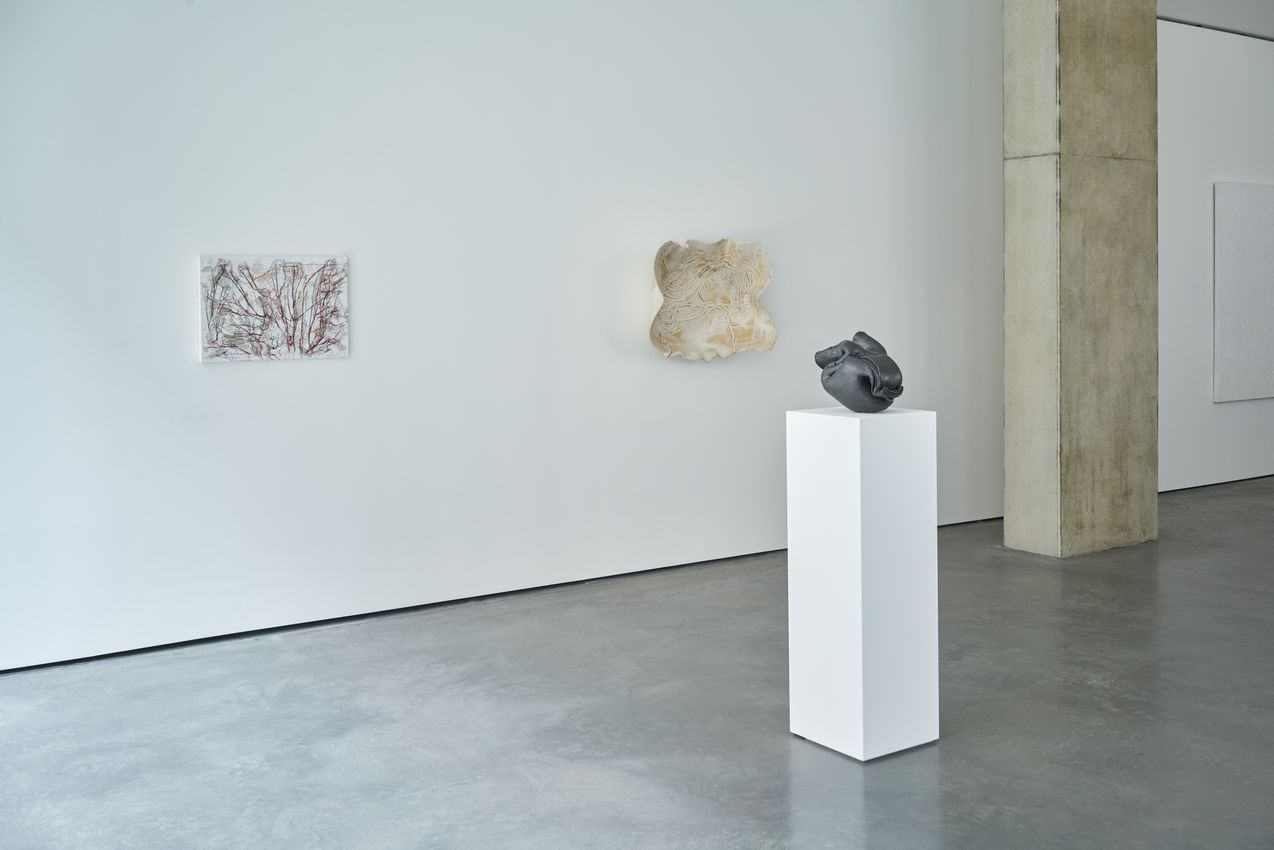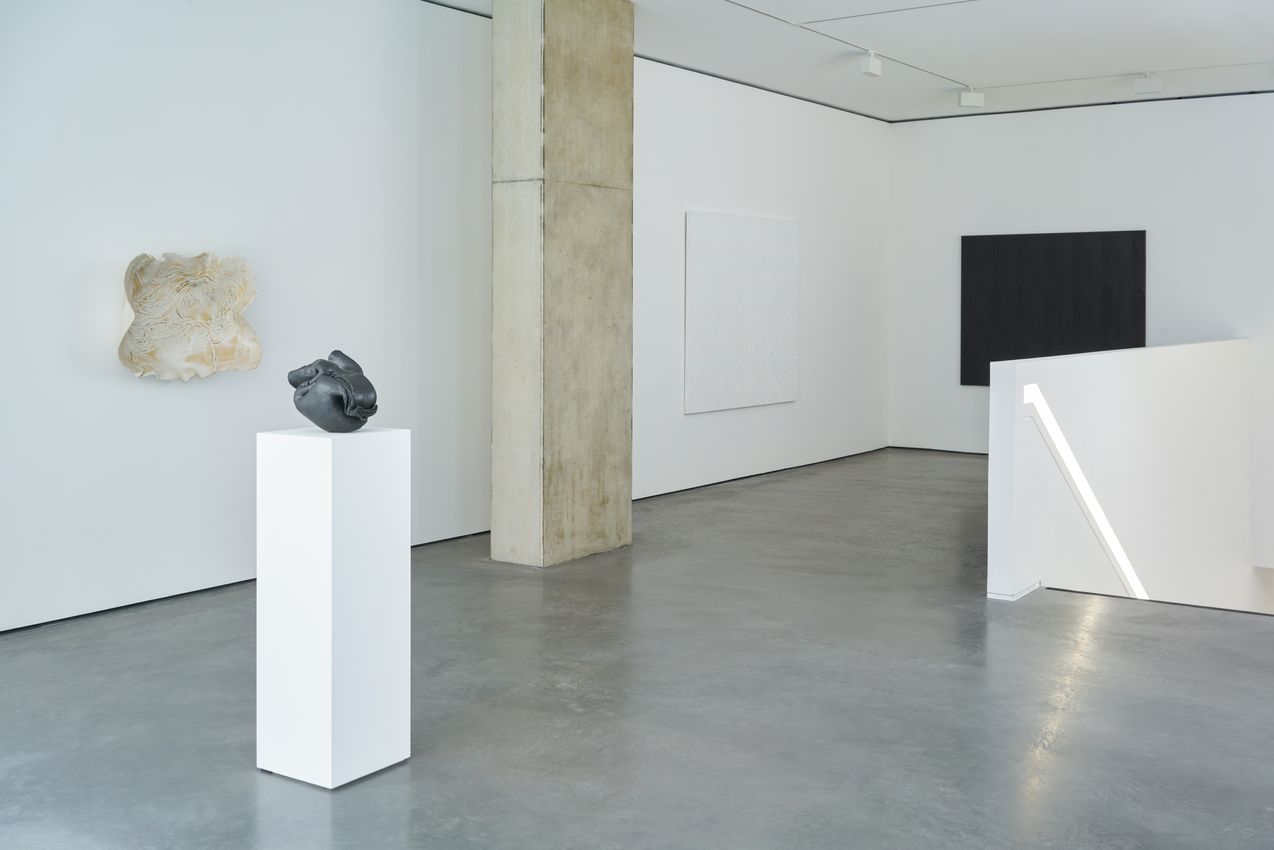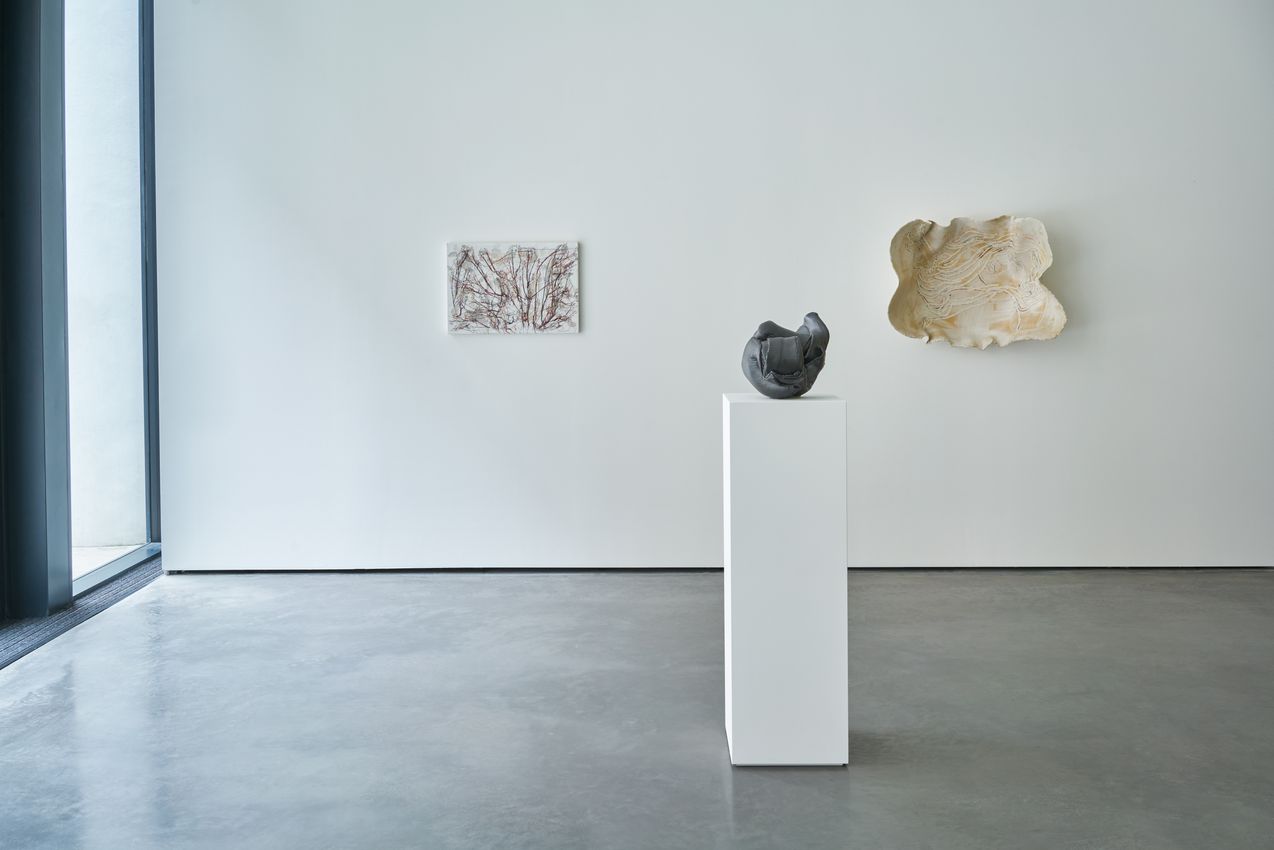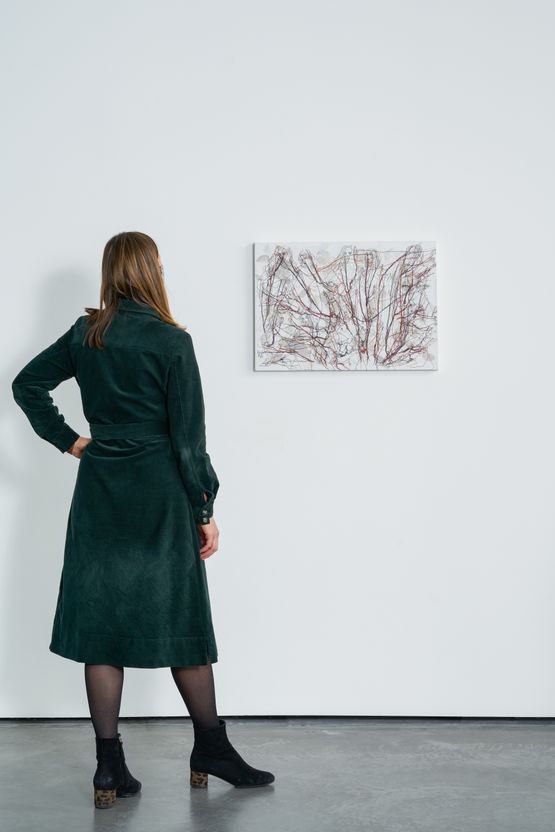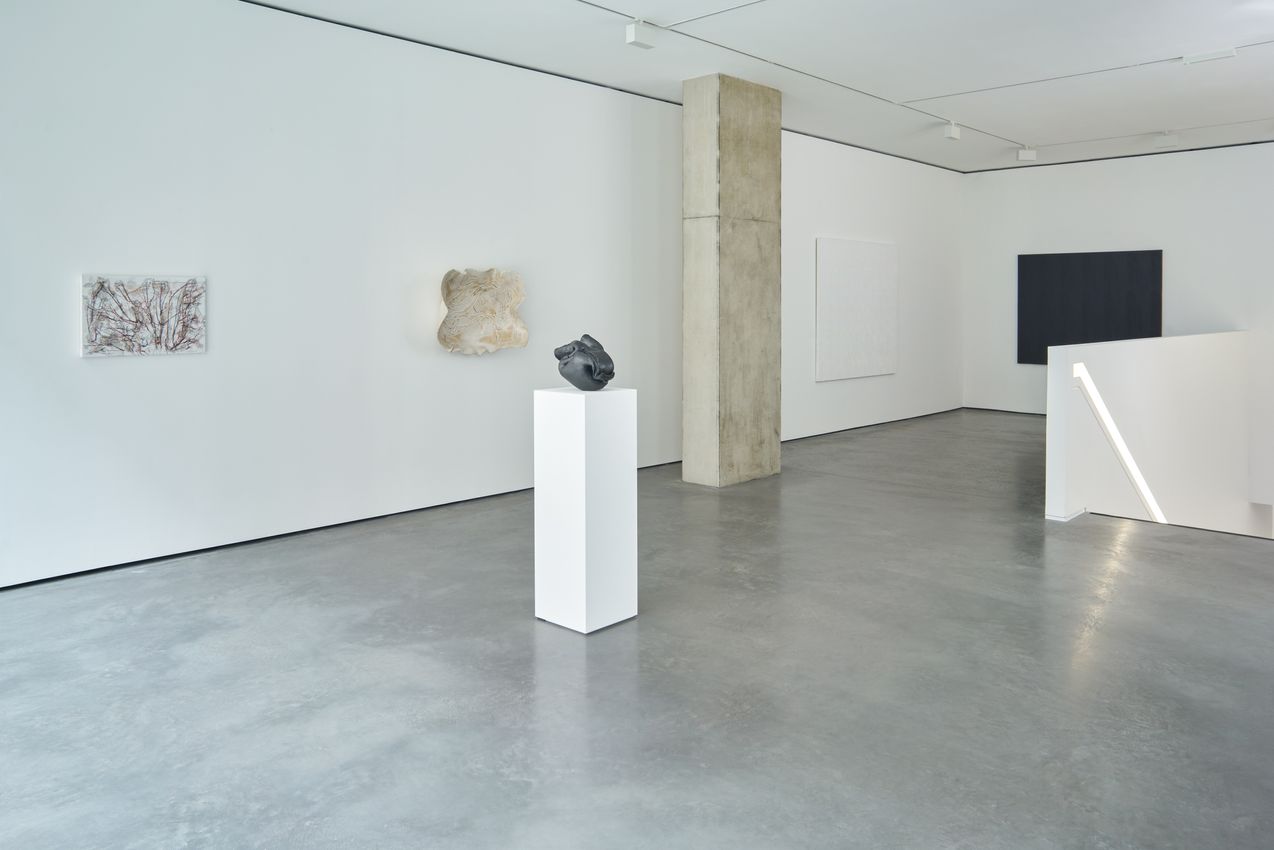
Goodman Gallery presents a selection of Ghada Amer‘s signature thread and canvas works alongside a series of abstract and image-driven ceramic objects. In Black and White marks Amer’s first London presentation in almost two decades and precedes the artist’s full solo exhibition at Goodman Gallery London in 2022.
Over thirty years, Amer has dedicated her multidisciplinary practice to questioning binary perceptions: ‘East’ versus ‘West’; feminine versus masculine; art versus craft. Her work subverts assumptions related to the roles and attributes assigned to women in Middle Eastern and Western societies, rejecting both religious-driven laws that govern women’s bodies as well as second-wave feminist ideas that reject expressions of conventional femininity as an avenue to empowerment.
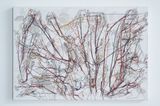
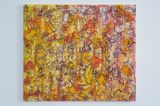
The humorous and transgressive erotic embroideries, which brought Amer to prominence in the 1990s, depict explicit female forms with the delicacy of needle and thread. Amer’s unique application of tumbling thickets of thread glued to the canvas evokes the action paintings of Jackson Pollock. This Art Historical reference is at the centre of Amer’s attempts to rethink painting as a medium reserved for men and in which women tend to feature as objects of a male gaze.
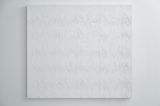
The exhibition presents a curated selection of Amer’s embroidered canvas works, ranging from autumnal and colour-abounding to monochromatic pieces.
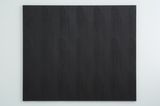
While ANOTHER BLACK PAINTING (2019) and WHITE GIRLS (2017) bear the hallmarks of Amer’s threaded figures on canvas, the usually striped palette allows for a singular focus on texture and form. For art historian Jenni Sorkin, Amer’s WHITE GIRLS can be read as a critique of white femininity as the set norm and aspiration. Sorkin suggests a deliberate obfuscating of white femininity, ‘underscoring white womanhood as dematerialised, without a solid bodily presence’.
From afar Ghada Amer’s ANOTHER BLACK PAINTING (2019) reads as an abstract work rendered in rich black colour. On closer inspection, the work depicts a repeated motif of a woman’s outline in black thread stitched onto a black painted surface. The repeated figure merges with the background in certain places, then re-appears elsewhere to create an important visual interplay between the abstract appearance of the canvas and its figurative elements, inviting parallels between the linearity of thread and painted brushstrokes.
The effect is a visual and intellectual tension between visibility and invisibility, both of the subject depicted and the material ‘objecthood’ of the work itself. In this work, Amer points to traditions of abstraction and the canon of painting, historically dominated by men, and practices of needlework often designated as ‘women’s work’. ANOTHER BLACK PAINTING directs audiences to look, and look again, and question whether we can rely on vision alone.
Critic Seph Rodney describes Amer’s work as exposing refused agency around the body: ‘The combination of drawing and dangling thread that hangs over the portraits like a forest of vines or a cage of hair makes the work even more visually seductive. The tendrils slightly obscure the female figure and make her more desirable because she can’t be fully visually possessed [...] But here is the rub: it’s the fault of the anatomy. A woman’s body does not make the decisions regarding how she is represented nor seen. Rather, the culture around her body does this—a culture that makes her body into a territory to be conquered, a chance to be wooed, a citadel to be protected, a prize to be revered—all ways of diminishing the person to the mere status of an object of desire’.
In 2014, Amer expanded her repertoire to include ceramics, which take on either a rough abstract or a smooth image-driven form—both of which are represented in this selection. Amer’s more tactile ceramics, such as The Black Knot (2014), can be read as ‘formal experimentations with tropes of modernist sculpture ...carefully shaped and moulded to create dimensionality. She manipulates the clay in a manner that befits cut and folded paper, making walls thick enough to stand, but thin enough to retain a sense of delicacy’ (Sorkin).
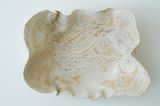
For Amer’s painterly, image-driven ceramics, such as The White Plate (2017), the artist uses clay as a flat surface to create a link with the imagery that populates her paintings: ‘figuring out how to recreate her own signature imagery with an entirely new set of material conditions’ (Sorkin).
Ghada Amer (b. 1963, Cairo, Egypt) views herself primarily as a painter, but she has worked in a variety of media, producing ceramics, site-specific garden works, photographs, prints, drawings, installations, and performance pieces.


Goodman Gallery holds the reputation as a pre-eminent art gallery on the African continent, platforming art that confronts entrenched power structures and champions social change.

A respected voice in contemporary art discourse.
Focusing on ambitious storytelling and insightful art-world commentary. Ocula Magazine publishes in-depth interviews, critical essays and timely analysis on the artists, exhibitions and ideas driving the global art world.
Learn more about Ocula Magazine
Showcasing the best of the art world.
Ocula partners with galleries from around the world to highlight their artists, artworks and exhibitions. Gallery membership is by application and invitation, with each member vetted by an independent panel.
Learn more about Ocula Membership

Specialises in the sale of major artworks.
Led by a team with deep ties to the world’s leading auction houses, galleries and collectors. Ocula’s advisory team offers bespoke services to high-net-worth clients from around the world who are looking to acquire the best of contemporary and modern art.
Learn more about our team and services