




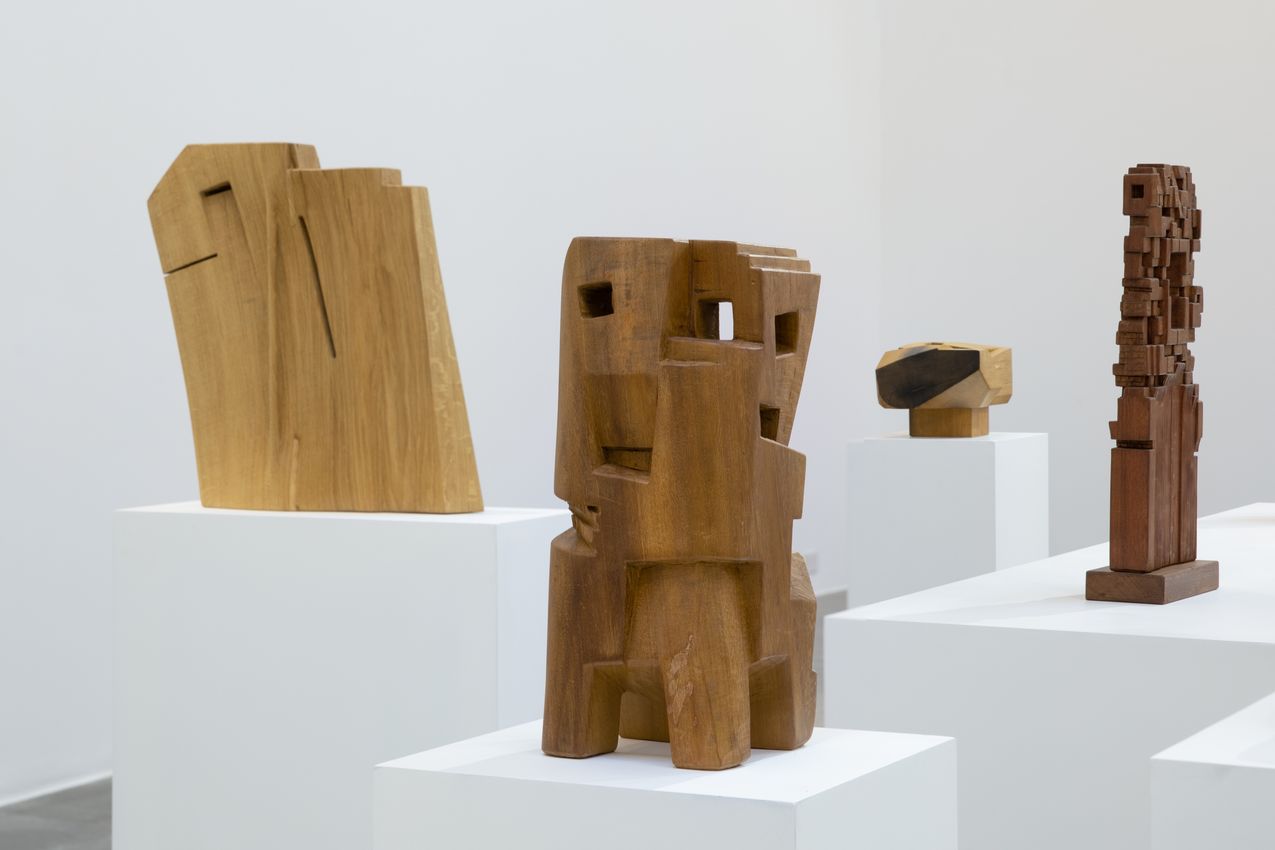
On the surface, it looks like a conspiracy. Although surprisingly little has been written about sculptor Chaouki Choukini’s five-decade practice, all narratives plot the same story. The clichés gang up on him, perpetually tracing his inspiration back to the sun-drenched hills of a native Lebanese landscape. As if hell-bent on unearthing some Freudian eureka moment, the analyses equate his genesis as a sculptor with a childhood drive to craft his own wooden toys. The more lyrical yarns spin his journey to Japan as a spiritual reckoning with a ceremonious culture deeply reverent of wood. Still others endow him with shamanistic qualities, or frame him, chisel in hand, performing sculptural hermeneutics, releasing a poetic code recessed deep into the timber.
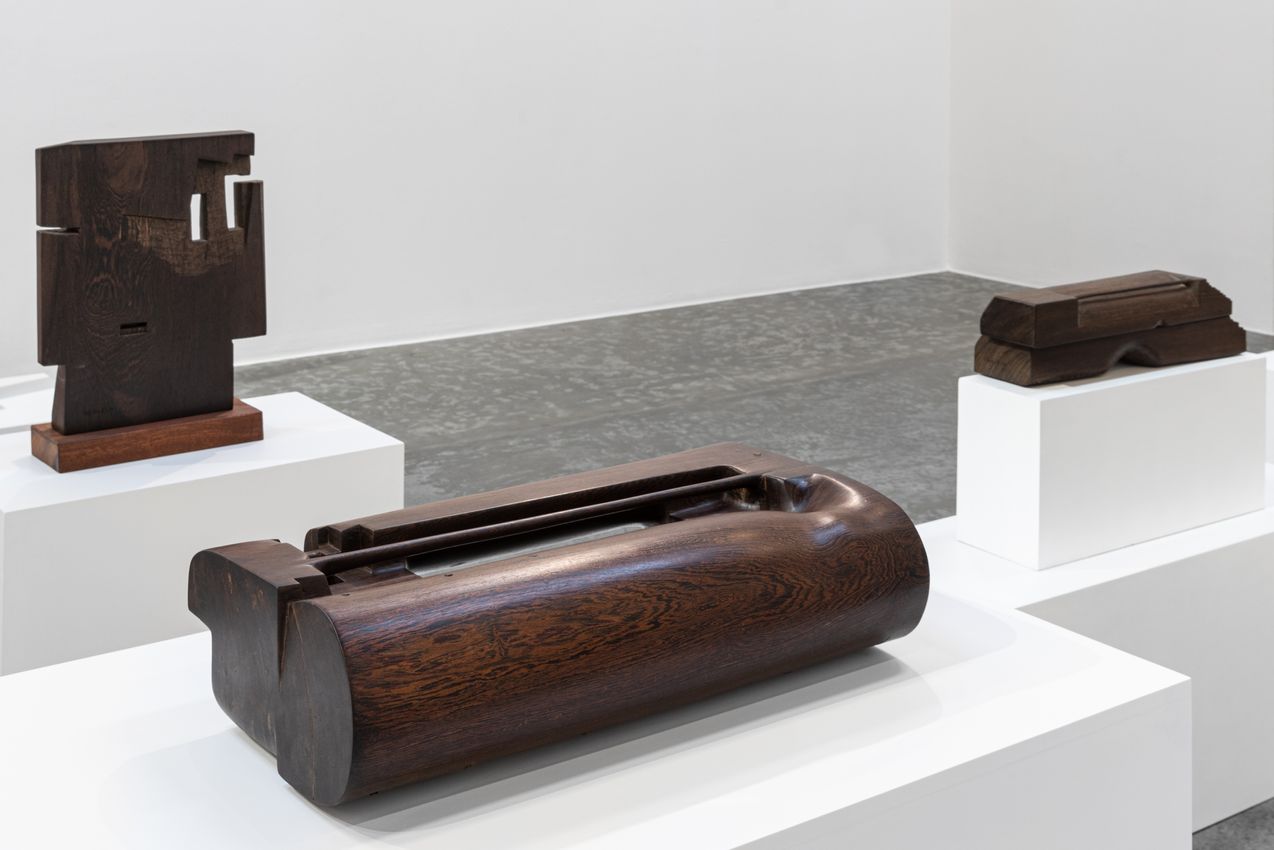
Let’s try another reading. Choukini is a body, not a biography. As a body, he occupies a space. He stands, a fleshy counterweight to the sinuous, hewn wood before him. He is not circumspect: he knows the wood. He sees into its pores and fibres; he guesses its knots and crevices. In an era with a taste for object-oriented ontology and heightened relations with the “non-human,” it would be tempting to cast Choukini as somehow symbiotic with the cleft wedge of wenge. Or, at the very least, complicit with it.
This complicity—his will and skill to act with his material—forces us to reinterpret not only the canonical sculptor/material, creator/artwork power dynamic, but also the language in which such potentialities are analysed. We can speak, for example, of a blurring of matter and spirit in the sculptural gesture. We can ascribe corporality and will to materials. And we can perhaps begin to understand that it is less the idea of intellectually articulating a landscape, an anatomy, a machine that solidifies the creation, but rather that fragile moment of direct touch, of material bodies rubbing surfaces and sharing energy flows, that truly predestines a form.
There is something spectral about Choukini. In the annals of art history, he is recorded yet invisible. He is a monstre sacré who remains unknown to most. His worldview is wildly consistent—from his early horizontal Lieux to his recent bulbous totems—but scholarship is uneven. And for a sculptor touted as a poet of light, he is tantalizingly dark.
Choukini merits a new reading, and there is substantial material to reinvigorate our appreciation of his work. The time has come to liberate his practice from the clichés in which it has been unfairly mired.
Kevin Jones
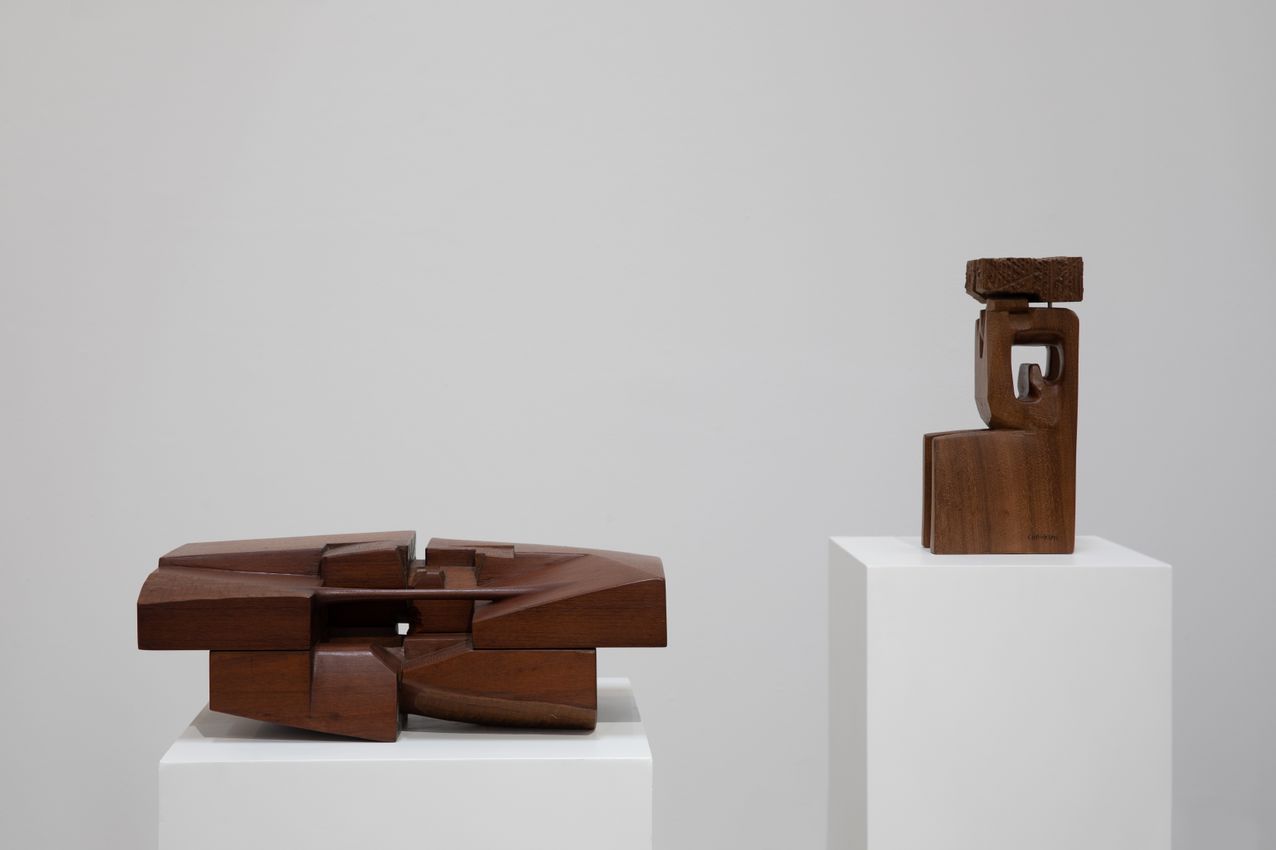
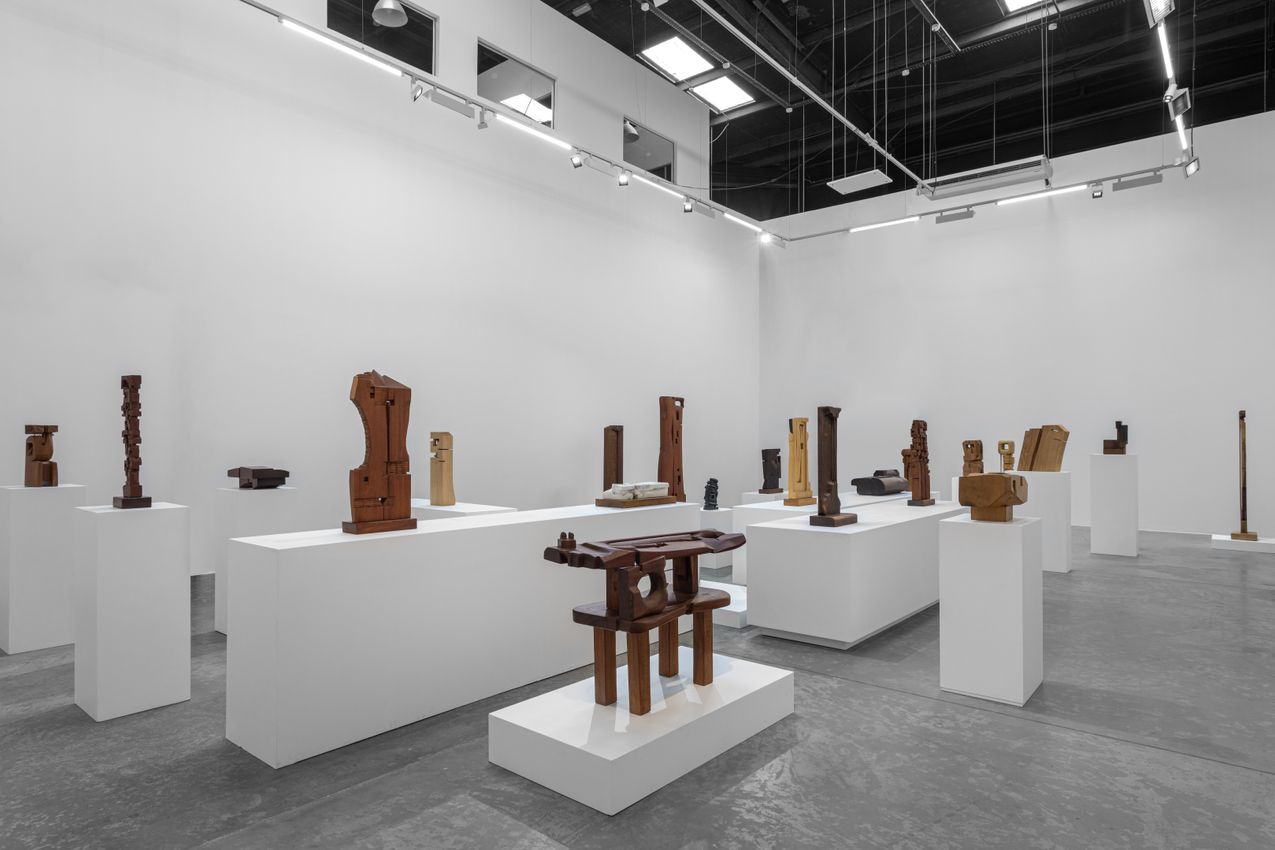
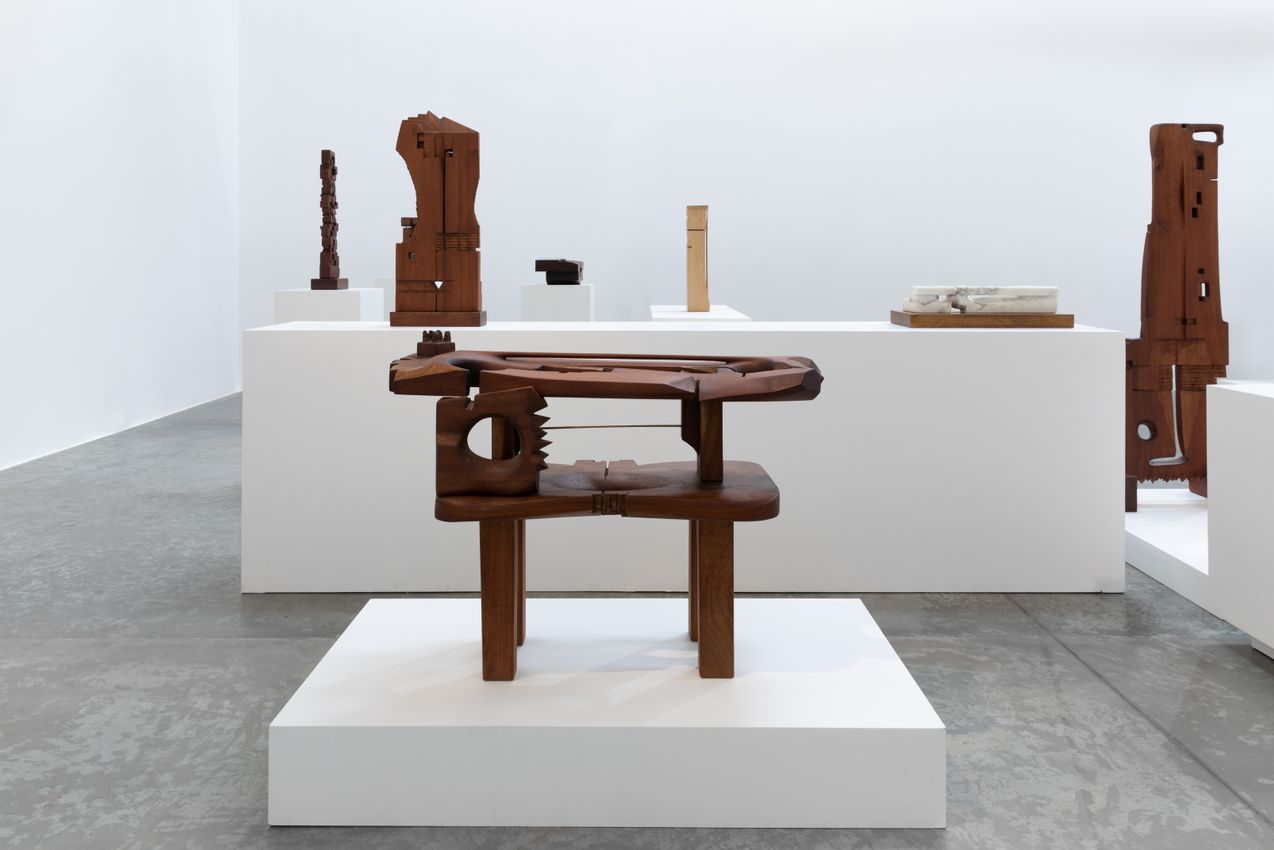
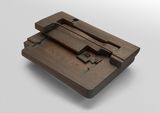
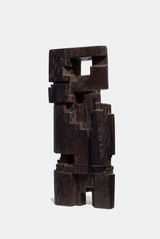
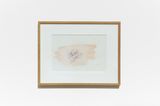
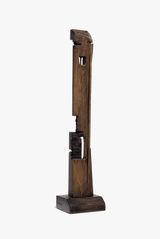
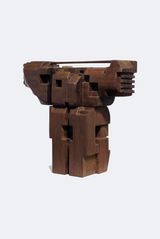
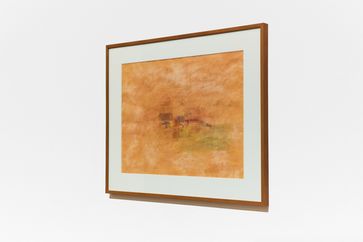
Since the late 1960s, Chaouki Choukini has developed an astoundingly consistent aesthetic worldview. His sculptural works, mainly in wood but occasionally in marble or stone, range from horizontal Lieux and Paysages to upright, anthropomorphic, almost totemic figures. At first glance, the works may appear somewhat primitivist. A closer look, however, reveals a sophisticated interrogation of organic and mechanical worlds, where curvaceous mounds are punctuated by a regiment of pegs, or undulating bases bristle with teeth-like crags. Discursively, Choukini layers an eerie latency into his works: mazes of slits, recesses, and multi-level cavities evoke some vanished human presence on the tense horizon line; the ubiquitous “cord” is a taut yet silent marker of dormant sound.
Green Art Gallery is a contemporary art space featuring a multi-generational mix of artists whose practices are rigorously researched, idea-led, and representative of our current moment. The gallery now represents a multi-generational mix of artists from the Middle East, North Africa, South Asia and beyond, including Turkish artists Hale Tenger and Hera Büyüktaşcıyan; Iranian artists Kamrooz Aram and Nazgol Ansarinia; and Shadi Habib Allah, Seher Shah, and Alessandro Balteo-Yazbeck, who are Palestinian, Pakistani and Venezuelan respectively. In this geographic mix, the gallery reflects Dubai’s position as a cosmopolitan—as well as artistic—entrepôt, even as it boasts of a strong parallel Arab Modernist program.

A respected voice in contemporary art discourse.
Focusing on ambitious storytelling and insightful art-world commentary. Ocula Magazine publishes in-depth interviews, critical essays and timely analysis on the artists, exhibitions and ideas driving the global art world.
Learn more about Ocula Magazine
Showcasing the best of the art world.
Ocula partners with galleries from around the world to highlight their artists, artworks and exhibitions. Gallery membership is by application and invitation, with each member vetted by an independent panel.
Learn more about Ocula Membership

Specialises in the sale of major artworks.
Led by a team with deep ties to the world’s leading auction houses, galleries and collectors. Ocula’s advisory team offers bespoke services to high-net-worth clients from around the world who are looking to acquire the best of contemporary and modern art.
Learn more about our team and services
