Press Release

1992, Marzahn, Berlin: Alexander Dik’s family moves to Germany. They are ‘Russlanddeutsche’ migrants—a problematic German minority in their homeland, Kazakhstan. For Alexander, life has been a hard road since he was very young. Marzahn is far from a rosy neighbourhood—the water tastes like blood, as they say around there. Alexander desires only one thing, the one thing he always felt destined to do: painting. But the conservative environment he comes from forbids it. Instead, he becomes a retail salesman for a supermarket chain specialised in Eastern European food and practices taekwondo as an amateur athlete. He continues to paint in secret, finding solace in a clandestine, dark, almost claustrophobic studio in the supermarket’s basement. In 2018, he makes a bold decision: he will be a full-time painter. The following year, at thirty-five, he enrols at the Berlin Academy of Arts, begins to breathe again, and becomes unstoppable. His professor, Andreas Amrhein, writes about him: ‘During his studies, Alexander has achieved a lot, tried many things, discarded some, developed a strong artistic stance, and is now moving forward. None of his goals are too distant for him. With his innate energy, he will pursue them.’

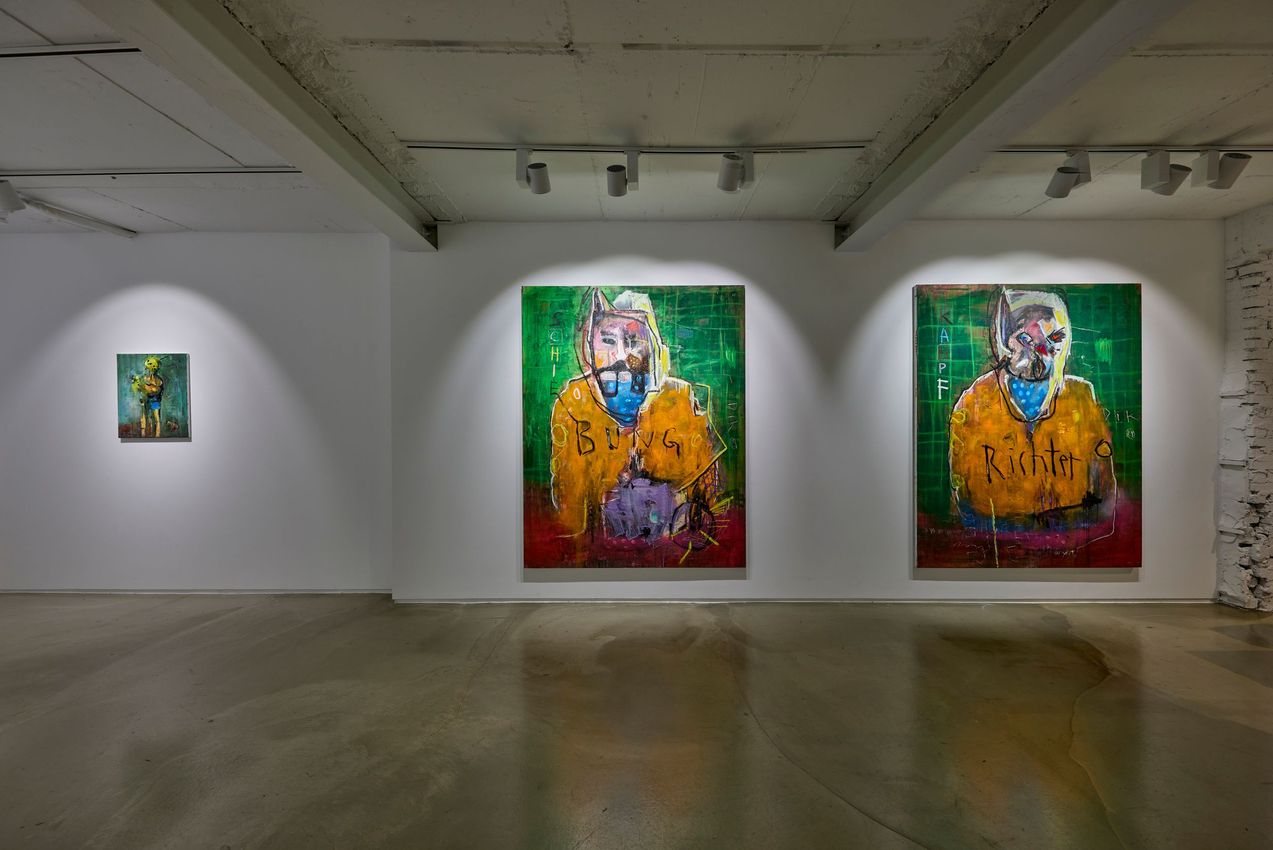
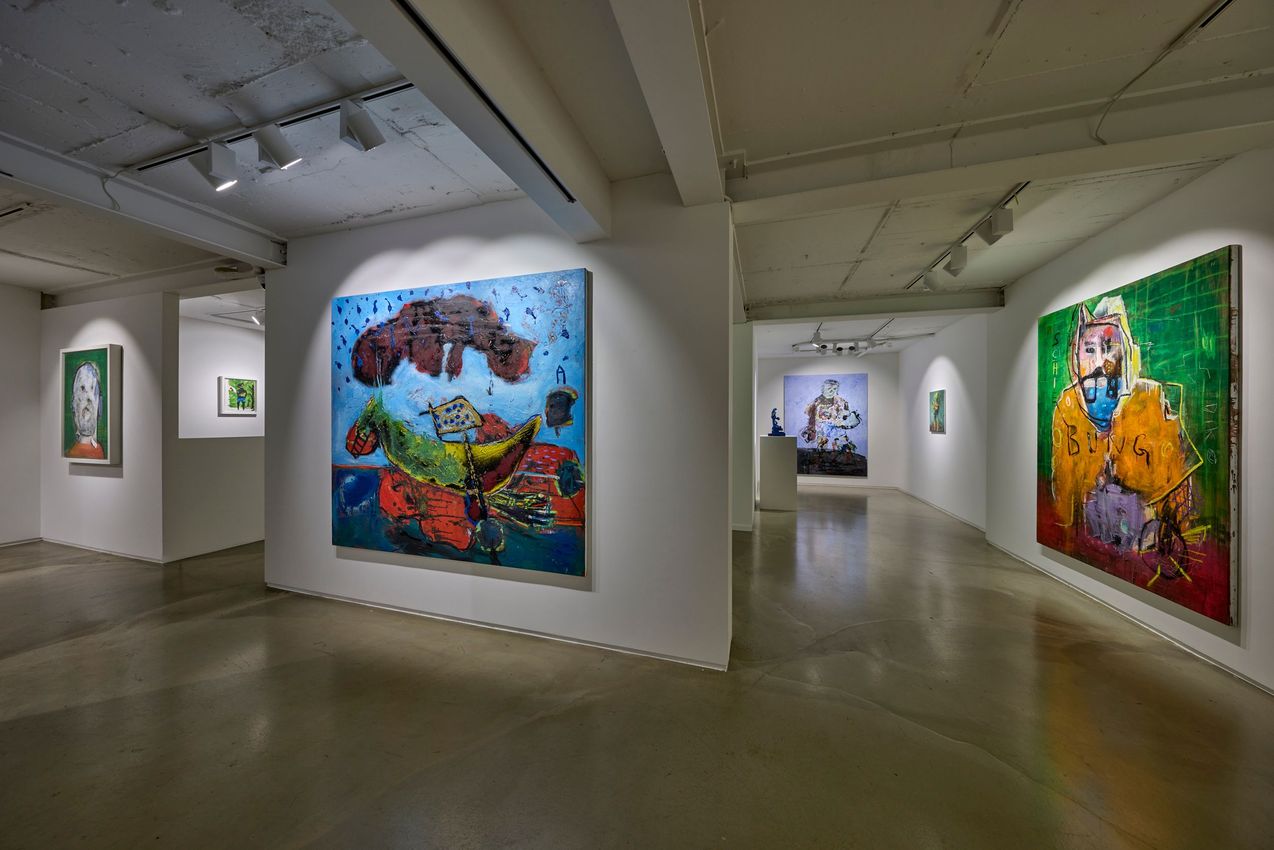
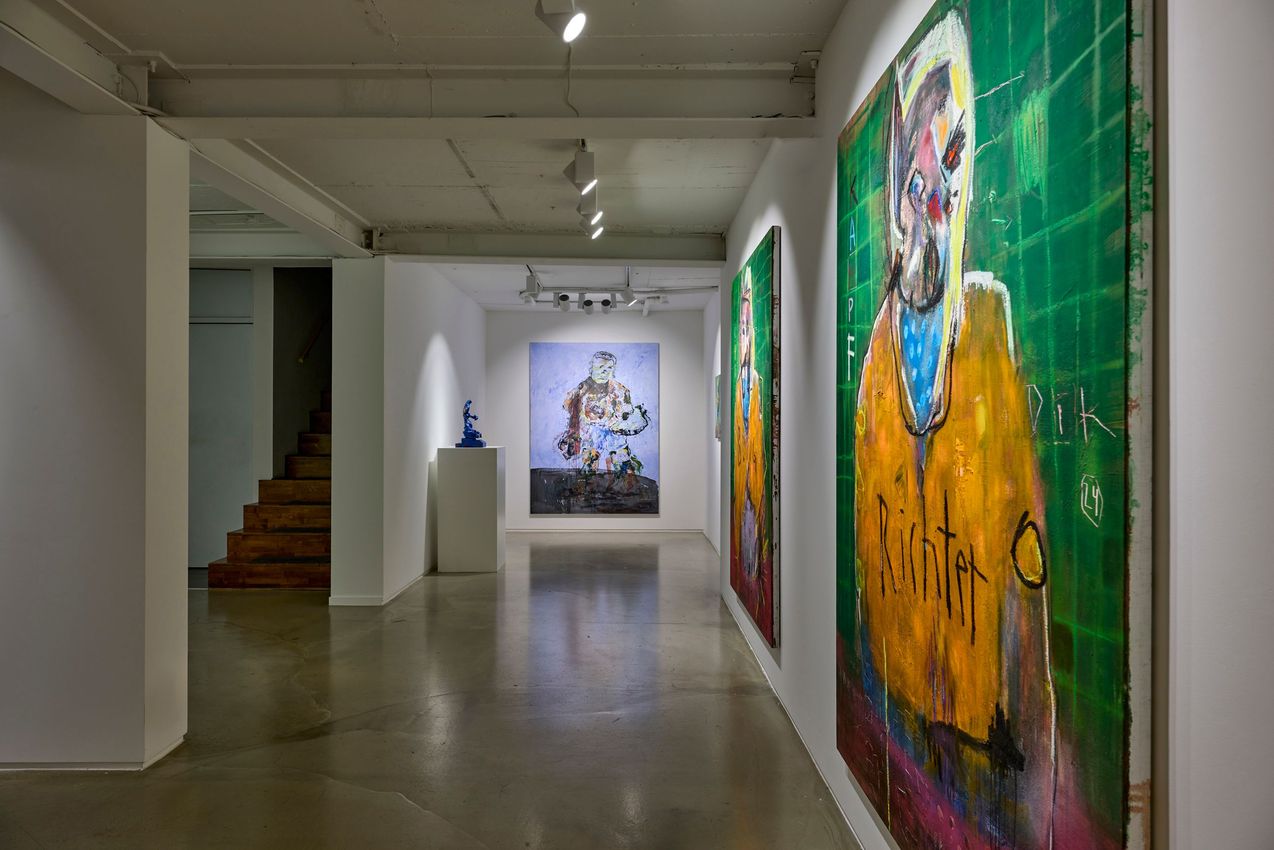
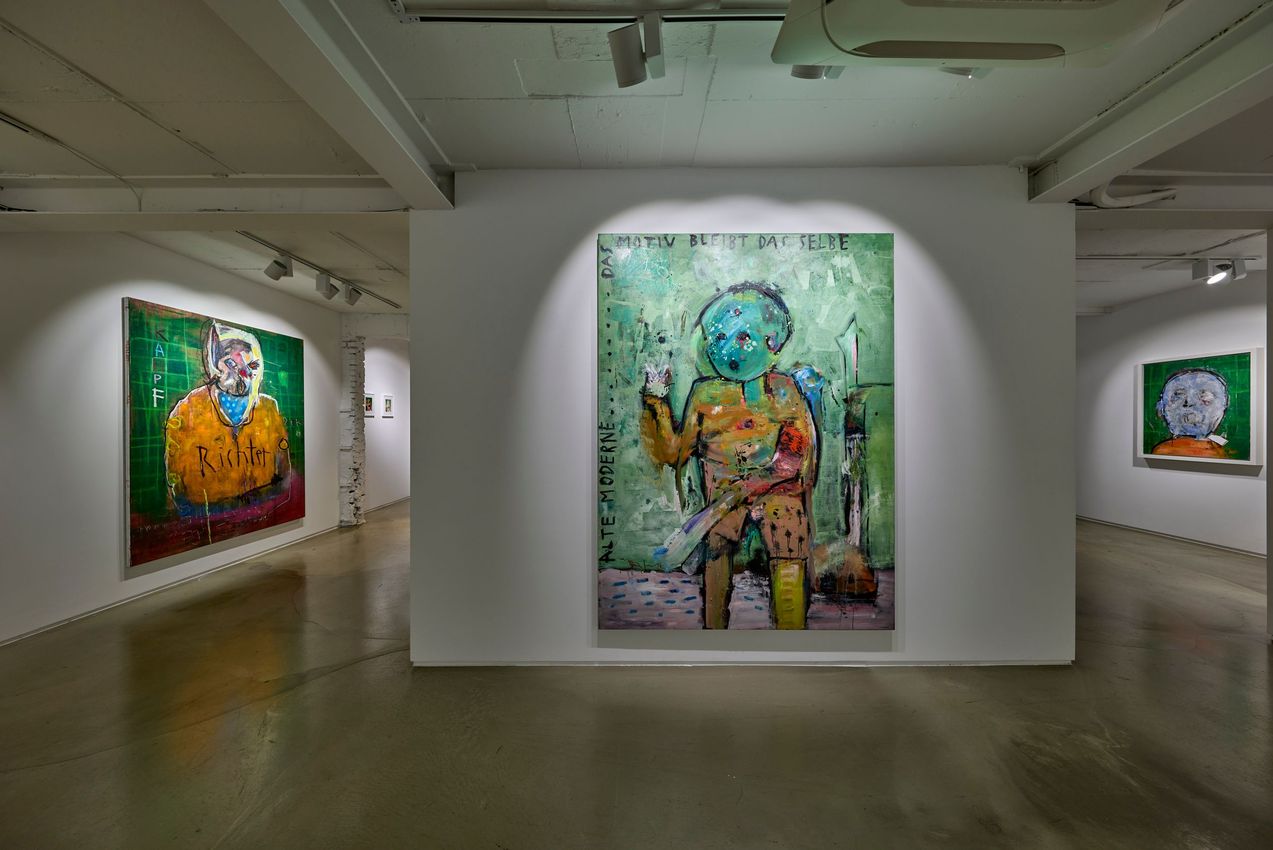
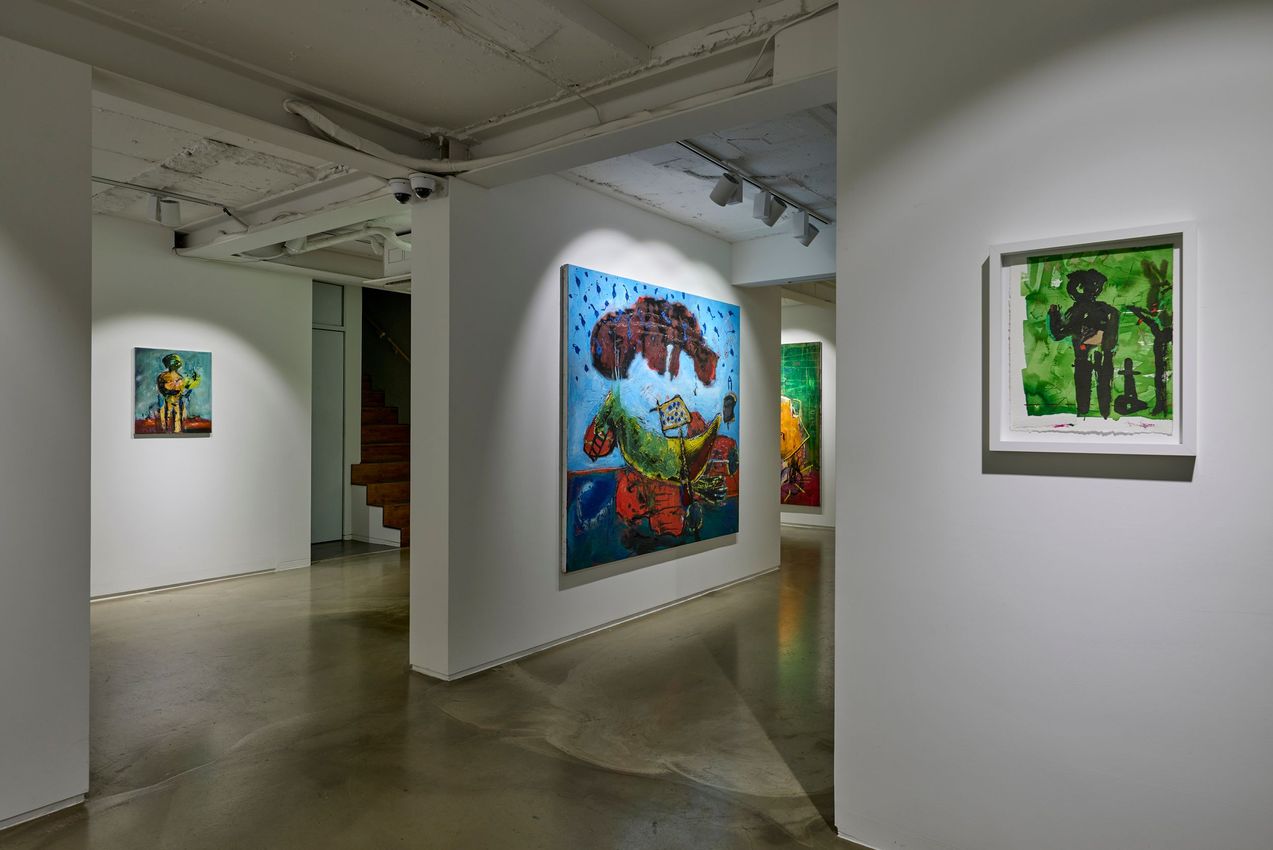
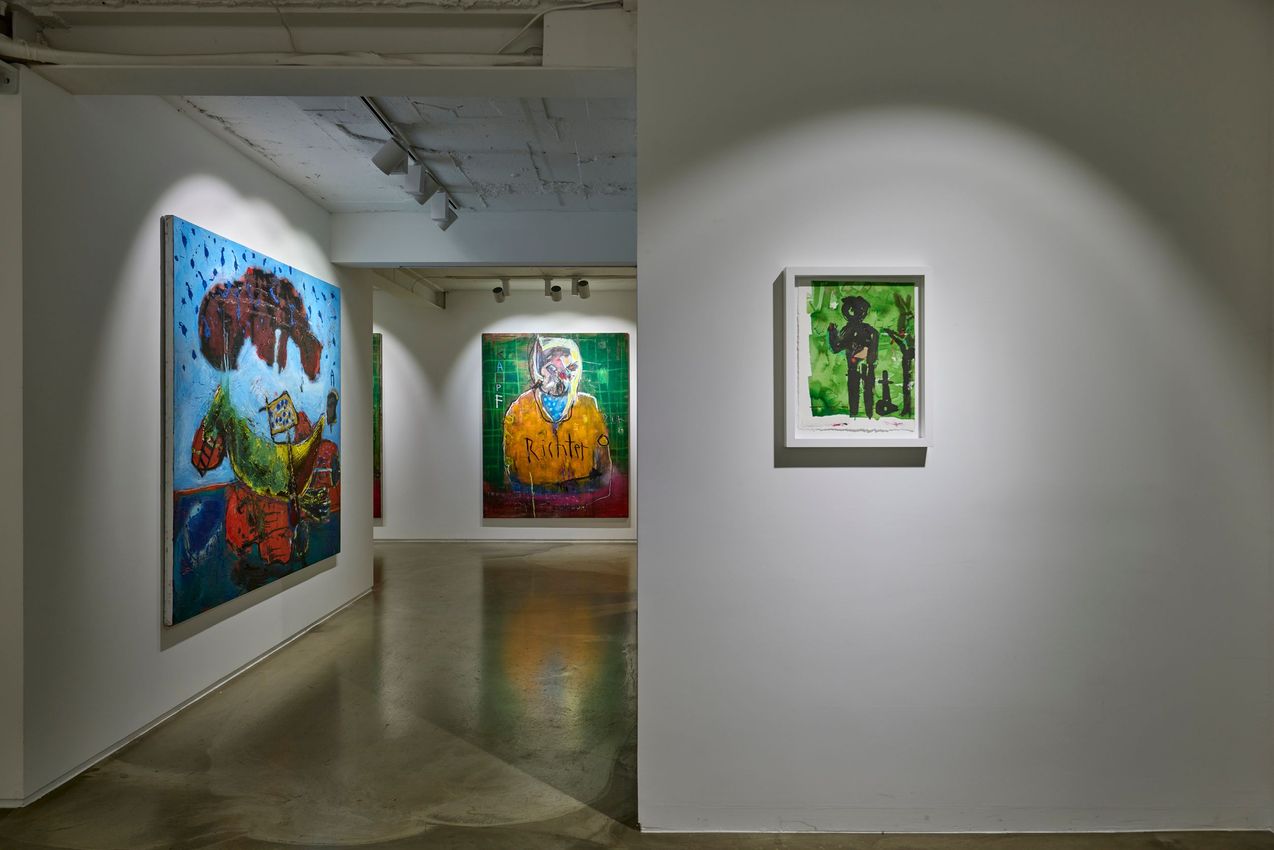
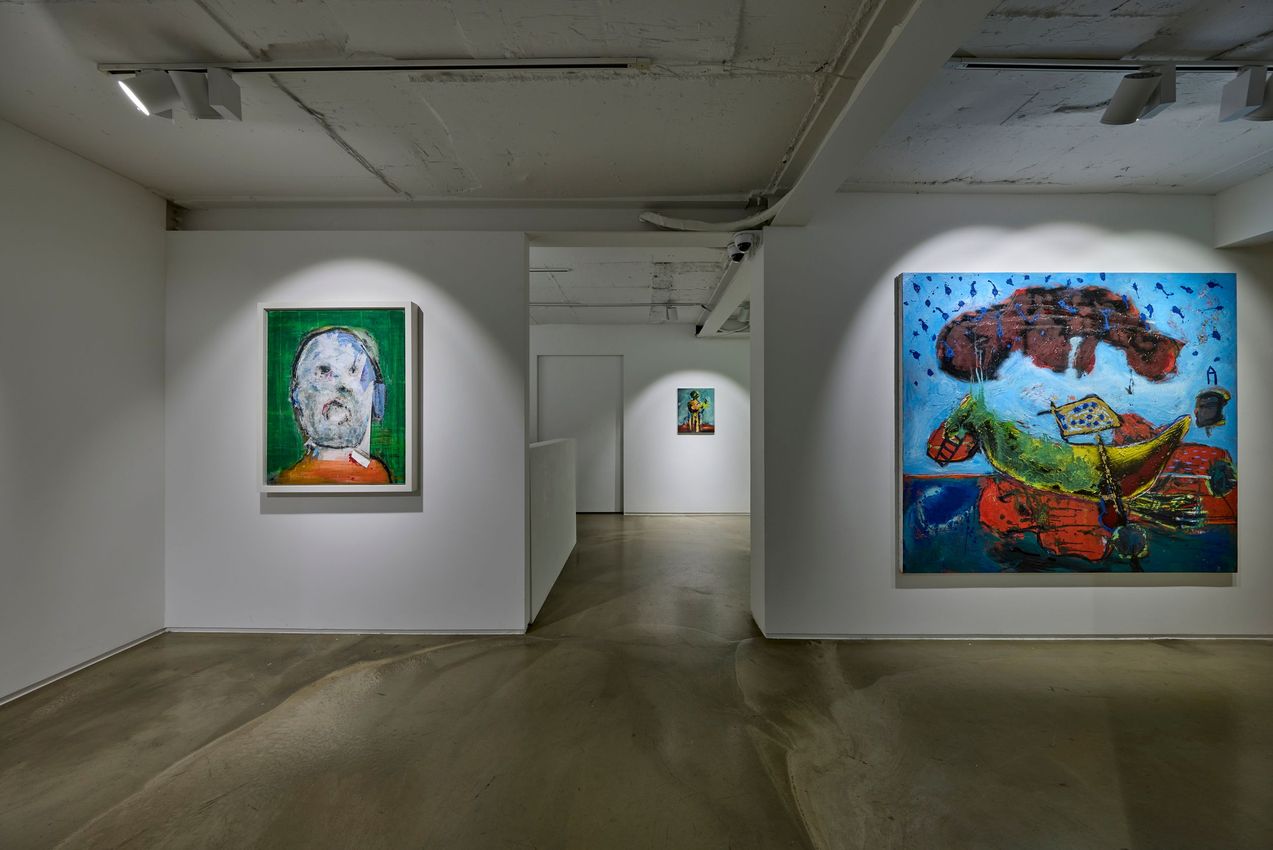
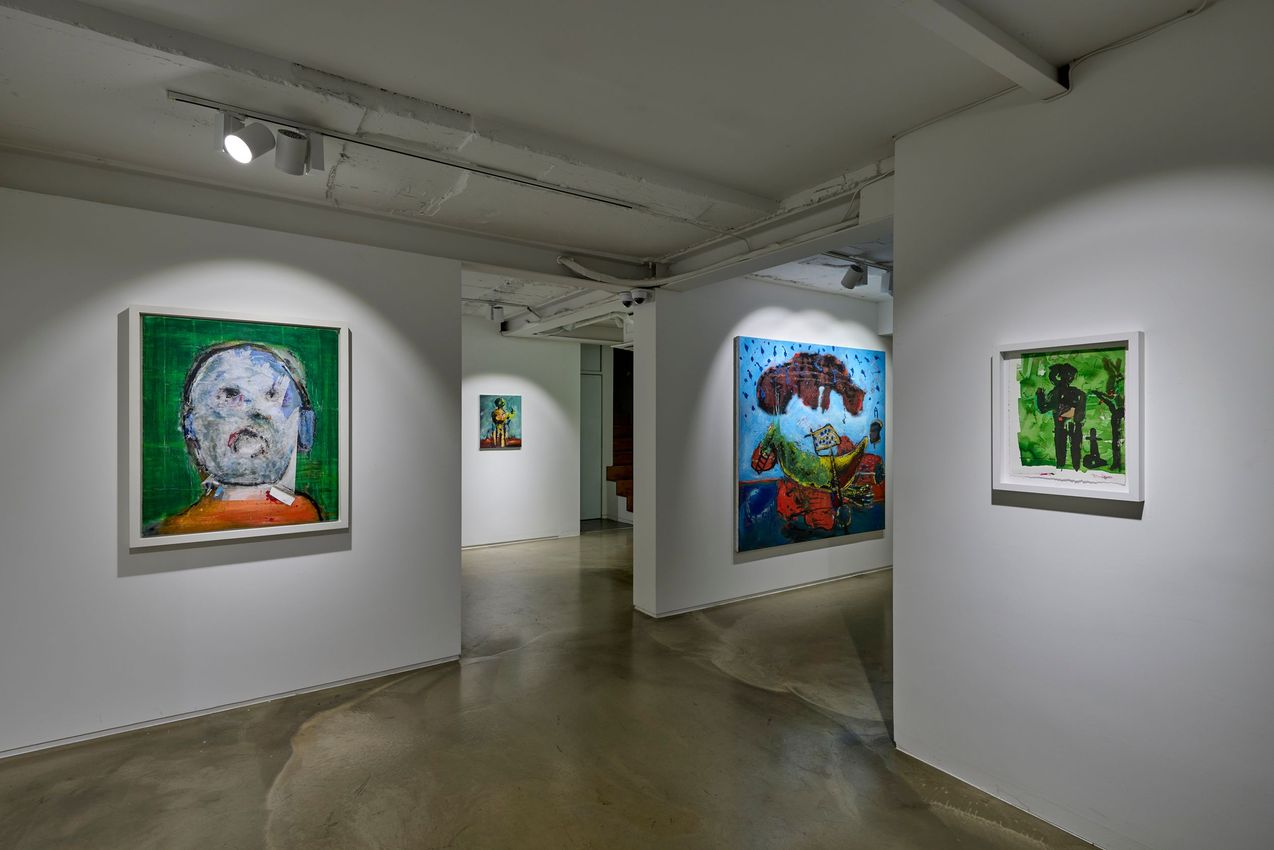
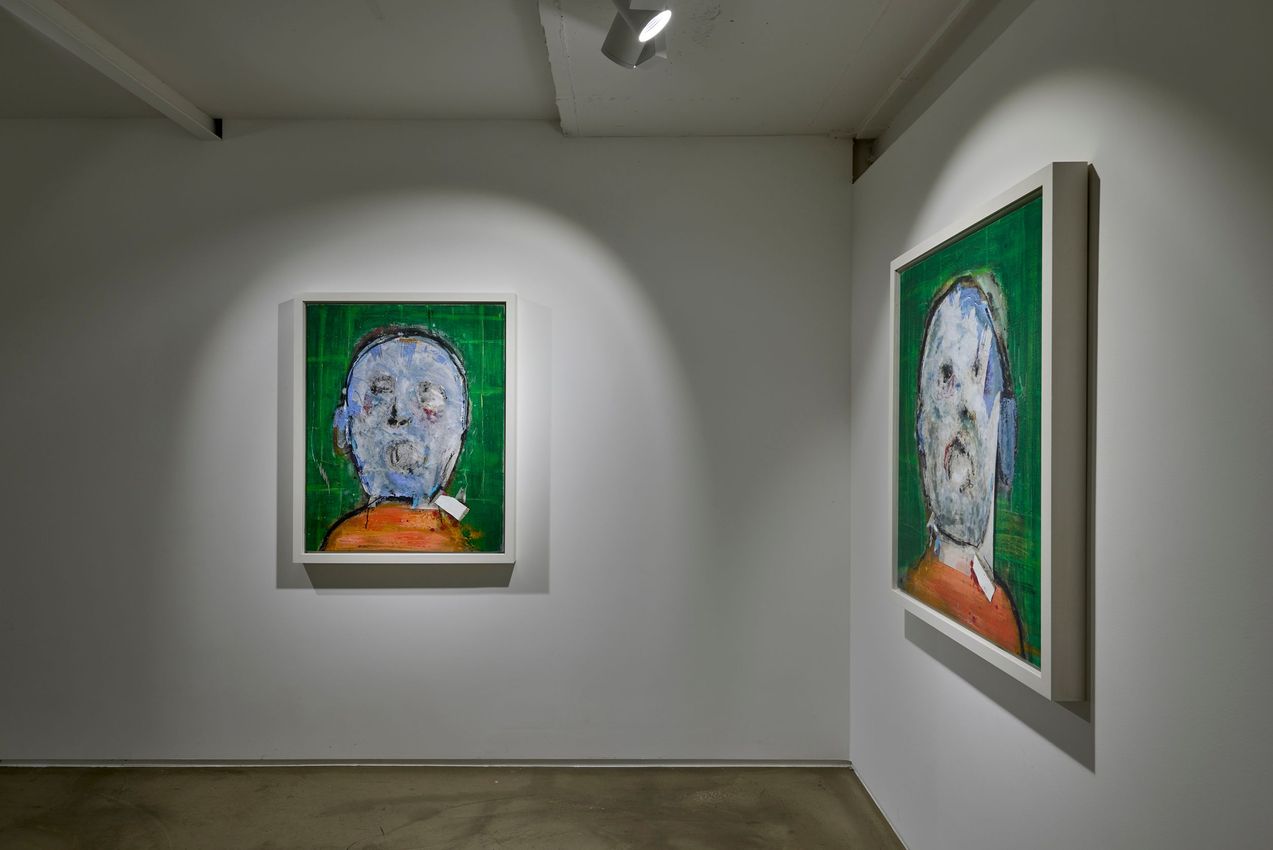
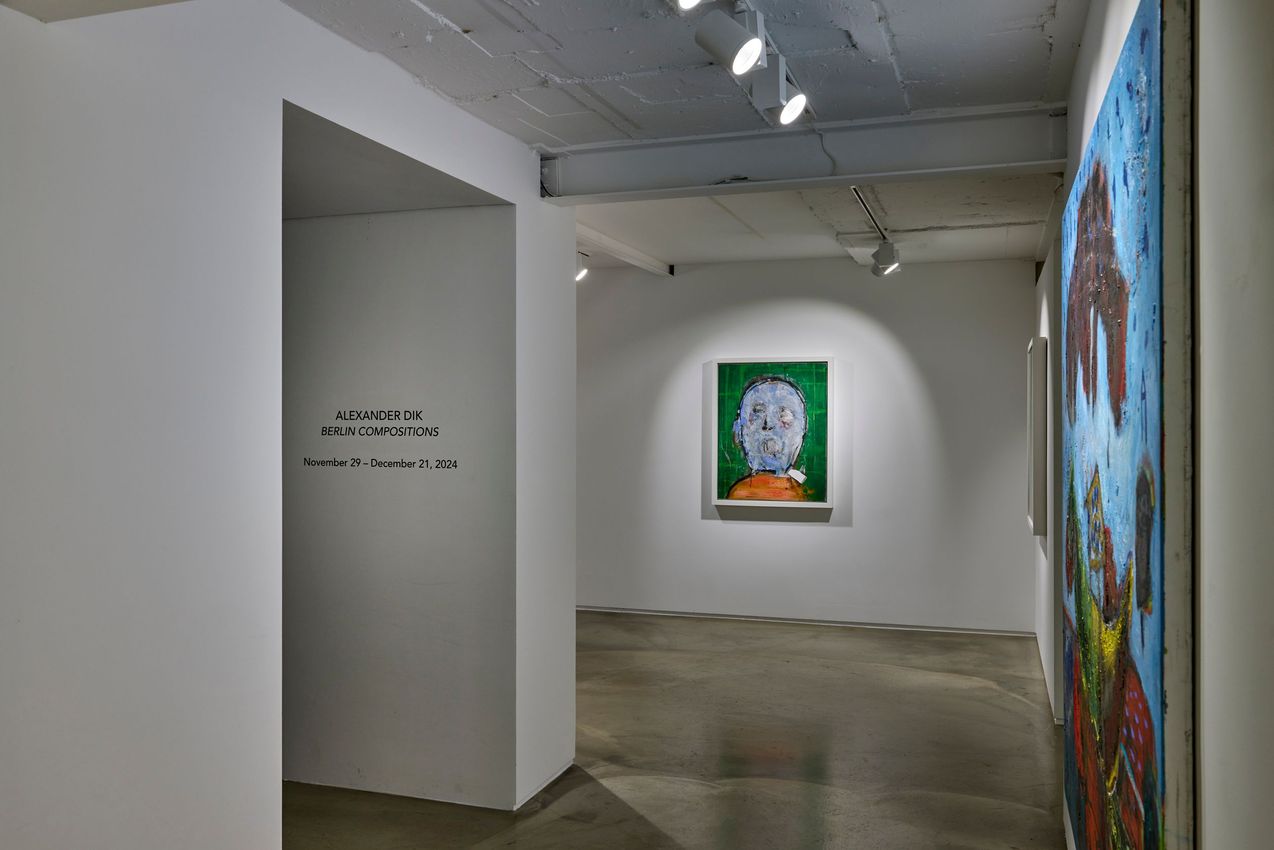
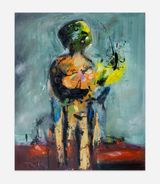
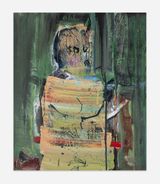
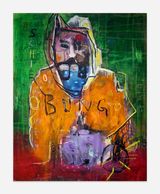
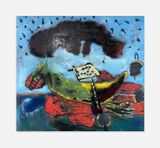
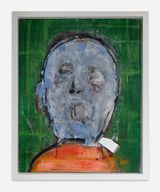
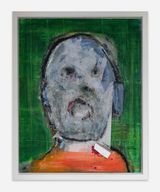
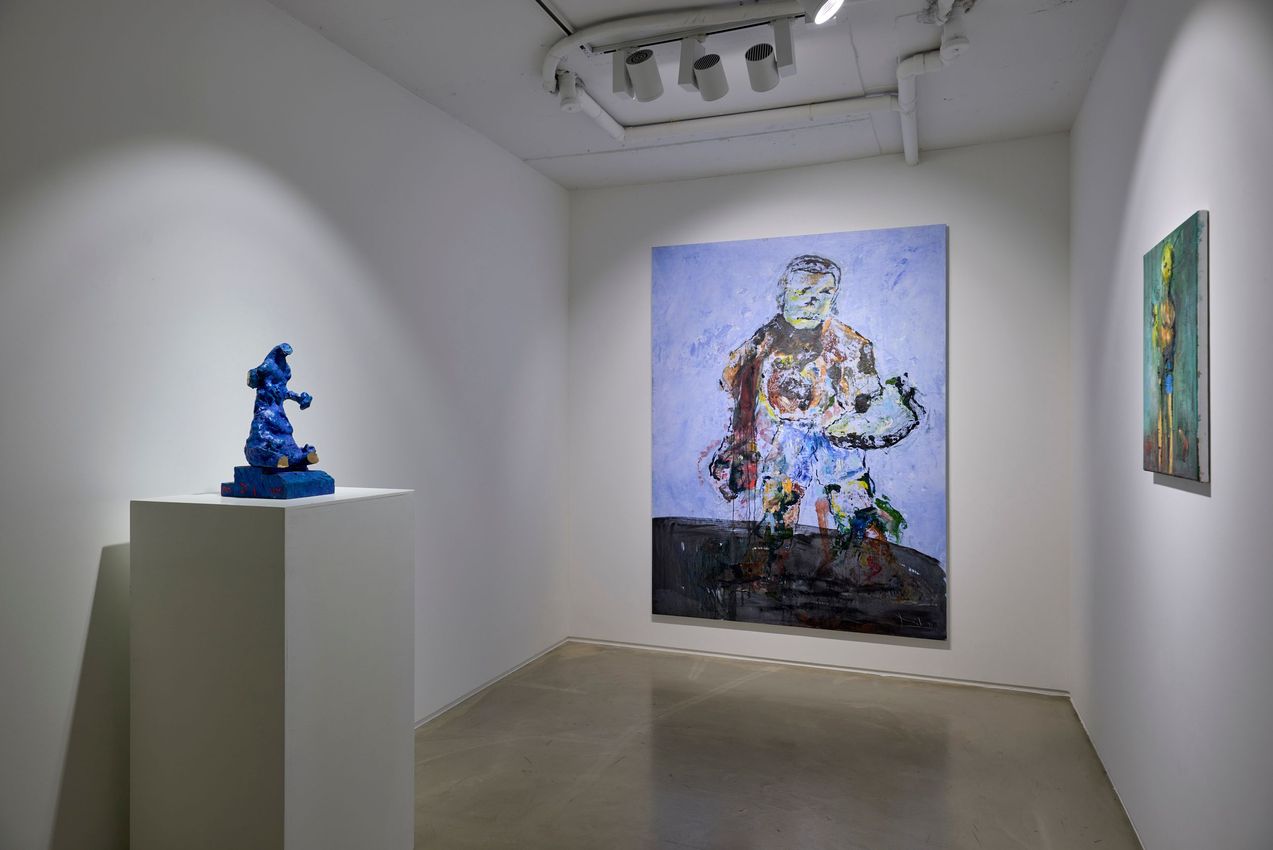
Berlin Compositions, Dik’s debut solo show at JARILAGER Gallery Seoul, is a goal checked off. Featuring his recent body of work, from paintings and works of paper to sculpture, the exhibition marks a new chapter in the exceptional journey of this ‘Berlin kid’ in the arts. His works are bold and unfiltered, much like his city, filled with all its contradictions, its violence, and its wounded, uprooted, and feverish heroes.

After years of suppressing his talent, Alexander Dik is now experiencing a working trance. Each morning, he wakes up early and heads to his new studio: a spacious, airy shed in the heart of Brandenburg’s countryside. Unlike many artists, he does not suffer from the impasse of facing a blank canvas. For him, the challenge is how to contain the flood of ideas rushing out. He typically works on multiple series at once, often across several canvases simultaneously, both vertically and horizontally. He loves to place a canvas under his feet while he paints, allowing it to collect splashes of colour, the imprints of his steps, and even the ashes of his cigarettes. These ‘floor paintings’ unintentionally capture the full spectrum of the creative process, from the raw materiality of his movements to the residue of his artistic rituals. For Alexander, they hold equal value to those produced with deliberate intention.

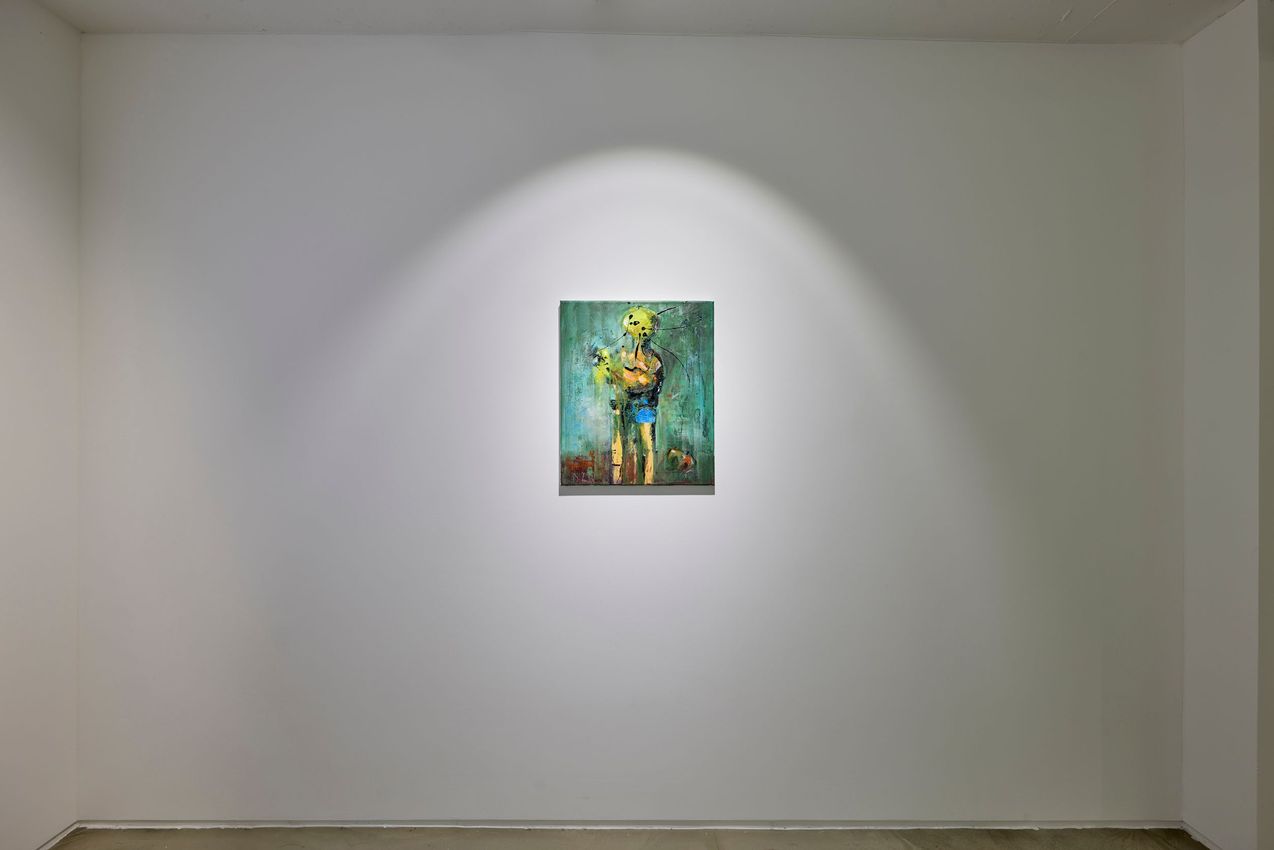
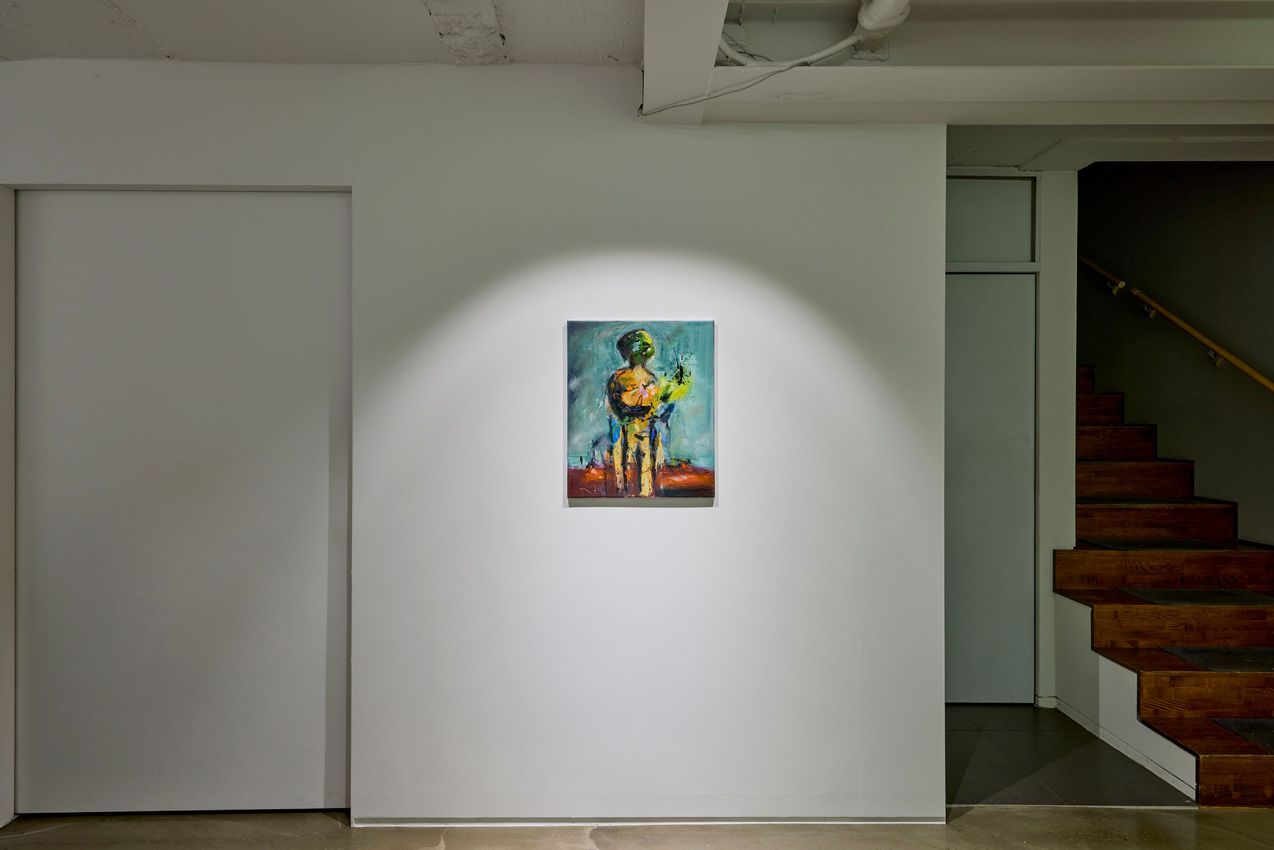
Above all, Alexander Dik is a craftsman. His art, at once neo-expressionist and symbolic, blends a profound mastery of oil paint—his ‘true language,’ as he calls it—with a relentless drive to experiment with different techniques. He works with brush, spatula, and spray, but his paintings often seem like they had been made by different hands. Few artists work in such a wide range of approaches. At times, he flings paint onto the canvas in dribbled patterns, echoing the energy of Jackson Pollock. At other times, colours fold into mountainous formations, protruding from the surface like fleshy contours. There are moments in which he arranges paint blobs on the canvas, then sweeps them with a wide spatula—just like that, a single move and the work is complete. Yet there are also longer battles, where he stratifies layer over layer, only satisfied when colours magically suck the viewer into their depths. Excitement peaks when he presses one canvas against another, letting the imprint of an ongoing work guide the birth of something new—a process charged with physical intensity and unpredictability.

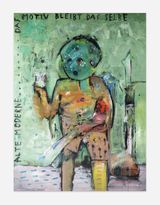
Alexander is as wild with his canvases as he is with himself. The paintings chosen for Berlin Compositions deal in a very direct, pitiless way with grand themes linked to the personal and collective struggles of being German: origin, displacement, youth, wrath, but also politics, war, history, and art history. These themes, especially the aggressive, destructive beauty of their execution, provoke and unsettle, yet speak to the very soul. Georg Baselitz once said, ‘If I had been born elsewhere, I would have certainly made happier pictures.’ Alexander would fully agree with this sentiment. His connection to Baselitz is explicit, as seen in Alte Moderne, a clear reference to one of Baselitz’s most scandalous works: Die große Nacht im Eimer (1963). Baselitz’s painting, which caused a courtroom drama for its disturbing subject—a grotesque figure with an erect penis and a Hitleresque haircut – was even confiscated by the Berlin prosecutor. Dik, in his own way, embraces this legacy. As a man, he is a fighter, a risk-taker; his choice to be an artist remains scandalous to those who once opposed it. As a painter, he is a defier, a seeker—one who dares to look where others cannot or would rather not. He is, in every sense, an armed poet.

‘At three years old, I painted cars with sixteen wheels; they laughed. At nine, I painted forbidden symbols; they punished me. At sixteen, I painted swamps; they said I was crazy. At twenty, I wanted to study art; they forbade it. At thirty-five, I began studying art; they said I was unwell. The fear of others took many years from me. Do not live with the fear of others. Live your dream now and without delay.’

Alexander Dik

Read More

Installation Views

Also Exhibiting at JARILAGER Gallery

About the Gallery

Since its establishment in 2012, JARILAGER Gallery (Cologne/Seoul) has played a pivotal role as the holding company for UNION Gallery (London) and has expanded its reach with the recent opening of its doors in Seoul’s Gangnam district in 2023. Jari Lager serves as the director of both entities. Over the course of a decade, JARILAGER Gallery (Cologne/Seoul) has evolved into a distinct entity while maintaining collaborative ties with its sister gallery, UNION Gallery, located in London and managed by William Gustafsson.

View Gallery Profile
Address
12 Eonju-ro 165-gil
Gangnam-gu
Seoul
South Korea
Opening Hours
Wednesday – Saturday
1pm – 6pm
And by appointment
(1)
Seoul 12 Eonju-ro 165-gil, Gangnam-gu
JARILAGER Gallery
12 Eonju-ro 165-gil, Gangnam-gu, Seoul, South Korea
+ 82 (0)10 8191 5834
http://www.jarilagergallery.com

Opening hours
Wednesday – Saturday
1pm – 6pm
And by appointment
The art world in focus