




JACKSON POLLOCK
1912-1956, United StatesAbstract painter Jackson Pollock was one of the pioneering figures of the American post-war movement of Abstract Expressionism, and is for many an icon of 20th-century modern art.
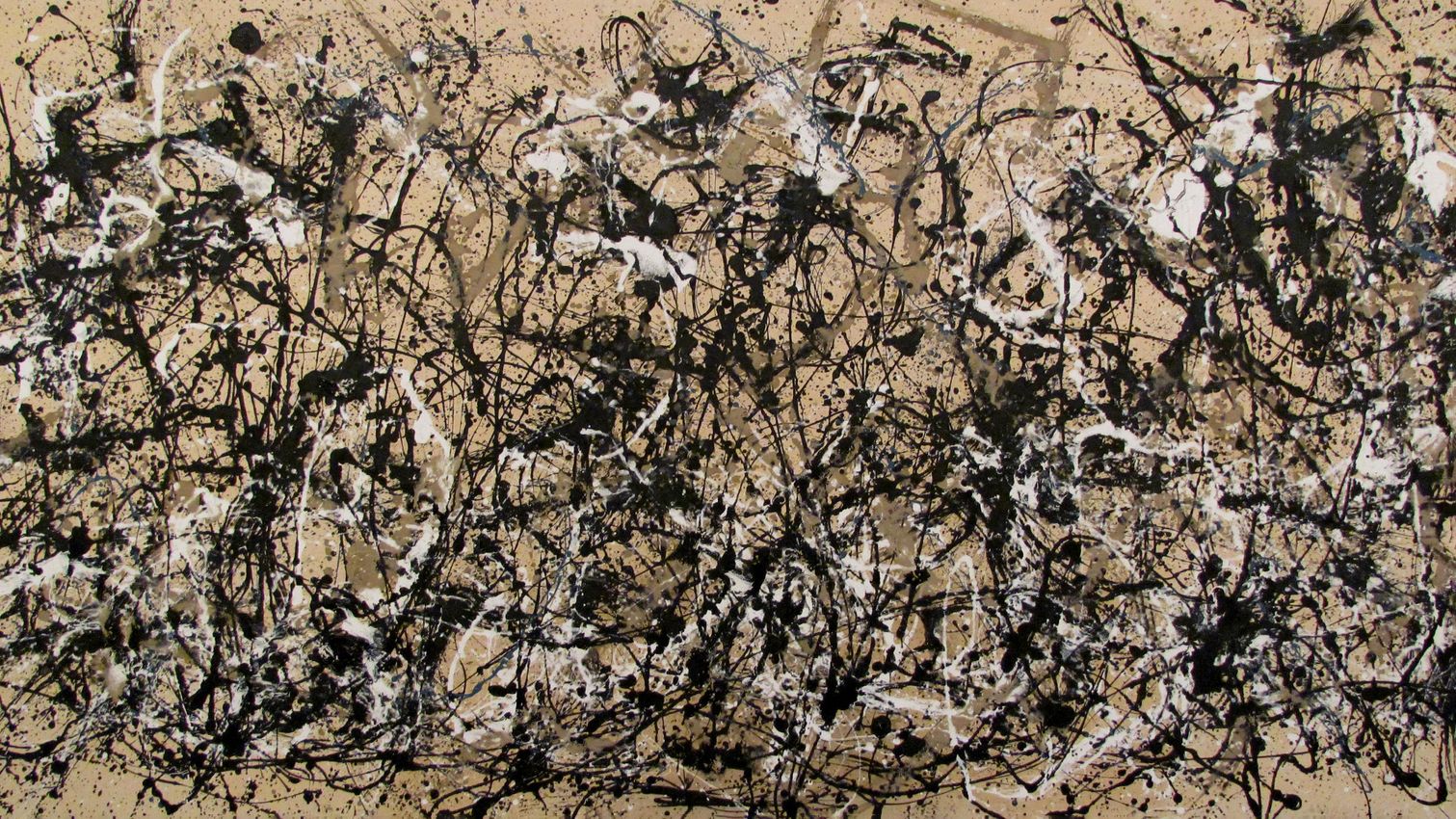
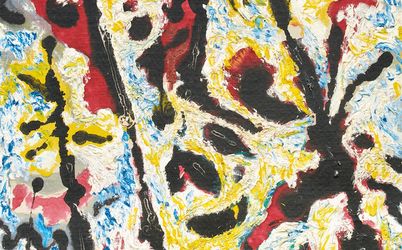
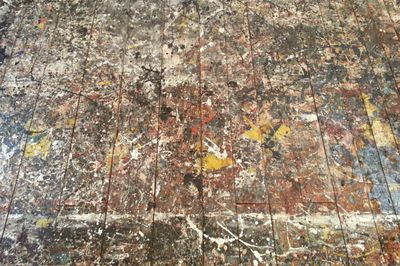
Jackson Pollock’s painting practice, which consisted of dripping and splashing enamel paint on unstretched canvas—as seen in Autumn Rhythm (Number 30) (1950) and Number 1 (Lavender Mist) (1950)—helped pave the way for action painting and painterly abstraction.
Where was Jackson Pollock born?
Born in Wyoming in 1912, Jackson Pollock was raised across several states of the American Midwest. Pollock began studying painting in Los Angeles in 1928 before moving to New York in the 1930s.
Taking classes at the Art Students League in New York, Pollock was initially mentored by conservative figurative regionalist painter Thomas Hart Benton. But, from the mid-1930s, Pollock began to absorb the influences of other, more avant-garde elements of the New York art scene.
Which artists influenced Jackson Pollock?
Among Pollock’s influences were socialist Mexican muralists such as José Clemente Orozco and David Alfaro Siqueiros; Pablo Picasso‘s semi-abstract Cubist works, and the Surrealists, who had begun to migrate from Europe to New York. Reflecting this, works such as Pasiphaë (1943) and Moby Dick (1943) presented surreal imagery in a heavily abstracted fashion.
Pollock began to emerge in the New York avantgarde scene of the 1940s, through the attention and support of gallerists like Peggy Guggenheim and Betty Parsons, and era-defining art critic Clement Greenberg. Pollock’s first solo exhibition was held at Peggy Guggenheim’s Art of This Century gallery in 1943.
What is Jackson Pollock’s action painting?
By the mid-1940s—around the time he married fellow avantgarde painter Lee Krasner—Pollock was painting in a completely abstract fashion free of the easel, working with unstretched canvases on the floor.
By 1947, this had evolved into his iconic drip paintings. Works such as Jackson Pollock’s Number 5 (1948), were the product of energetic gestural movement, with Pollock splashing and dripping paint on an unstretched canvas on the ground in unconscious rhythm.
Continually developing his approach, there was still much variation within the later works of Jackson Pollock. Blue Poles (1952), for example, demonstrates an innovative division of the composition using stark, dark lines. Always, though, the artist sought to paint like an automaton, a mindless machine whose expressive gestural movements were driven by his subconscious.
Inspired by sand art traditions of the Navajo people from the Midwest and notions of the subconscious in Jungian psychology, this technique, known as action or gestural painting, became the basis of one of the two main branches of Abstract Expressionism in the 1950s and 60s.
Where is Jackson Pollock’s work being exhibited?
World-renowned, Jackson Pollock’s art can be found in public and private collections across the globe including major institutions such as the Solomon R. Guggenheim Museum, MoMA, and the Metropolitan Museum of Art in New York; The Museum of Contemporary Art in Los Angeles, the National Gallery of Art in Washington, the Tate in London, Centre Georges Pompidou in Paris, and the National Gallery of Australia.
Notable solo exhibitions include
- Solo show, Art of This Century Gallery, New York (November 1943)
- Solo exhibition, Betty Parsons Gallery, New York (1948)
- 15 Years of Jackson Pollock, Sidney Janis Gallery, New York (1955)
- Jackson Pollock, Blind Spots, Tate Liverpool + RIBA North (30 June–18 October 2018).
- Jackson Pollock: A Collection Survey, 1934–1954, Museum of Modern Art, New York (22 November 2015–1 May 2016)
What is Jackson Pollock’s legacy?
Synonymous with modern art, his name has worked its way into popular culture. Highlighting his ongoing significance in American culture, a Hollywood-produced Jackson Pollock movie was made in the year 2000—44 years after his life was cut short by a fatal car accident.
For more information on Pollock, see the Pollock-Krasner Foundation website.
Ocula | 2025




Representative Artworks
View exhibition








Explore and Follow Artists Shaping Contemporary Art
A respected voice in contemporary art discourse.
Focusing on ambitious storytelling and insightful art-world commentary. Ocula Magazine publishes in-depth interviews, critical essays and timely analysis on the artists, exhibitions and ideas driving the global art world.
Learn more about Ocula Magazine
Showcasing the best of the art world.
Ocula partners with galleries from around the world to highlight their artists, artworks and exhibitions. Gallery membership is by application and invitation, with each member vetted by an independent panel.
Learn more about Ocula Membership
Specialises in the sale of major artworks.
Led by a team with deep ties to the world’s leading auction houses, galleries and collectors. Ocula’s advisory team offers bespoke services to high-net-worth clients from around the world who are looking to acquire the best of contemporary and modern art.
Learn more about our team and services