Press Release

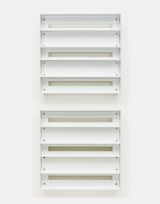
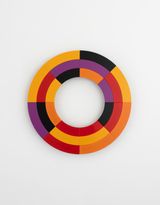
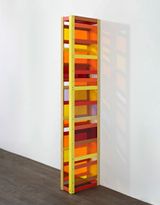
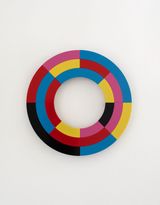
À bientôt, j’espère... presents an array of archetypal abstract works by Liam Gillick, alongside a revisiting of his work relating to the French film collective Groupe Medvedkine (1967–1974)

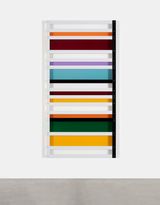
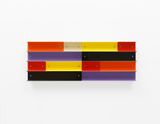
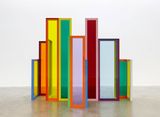
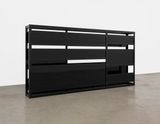
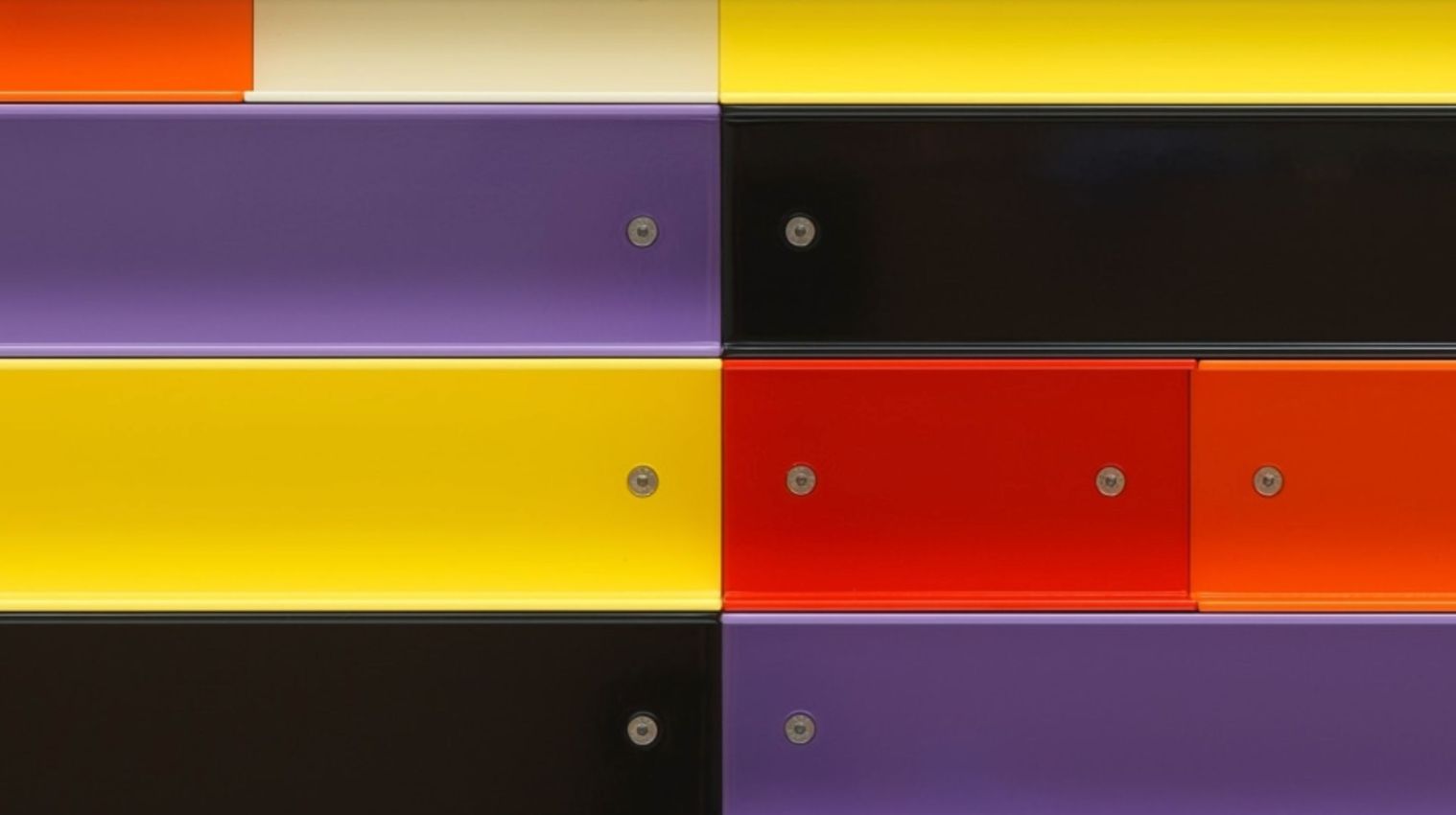
Since the 1990s, Gillick’s abstract work has drawn upon the visual language of renovation, recuperation and re-occupation. He absorbs the aesthetics of neo-liberalism, which restage the remnants and surfaces of modernism as in the production of false ceilings, cladding systems and walls dividers. For Gillick, car production and kitchen design remain the two shadows cast when the aesthetics of advanced technology mask the failure of the modernist project and have been at the centre of a number of key works and exhibitions, including the German Pavilion at the Venice Biennale in 2009.

Alongside this is a focus upon the rise of the contemporary artist as a compromised figure, emerging alongside the collapse in traditional mass production in the Global North and the displacement of production away from the sites of consumption. Gillick’s general approach does not attempt to resolve the contradictions between his search for contemporary forms of abstraction and his critical texts, films and exhibition structures that often expose its implicated ideological underpinnings.

The title of this exhibition is borrowed from Chris Marker and Mario Marret’s 1967 film, also known as Be Seeing Youin English. Shot during a strike at the Rhodiacéta nylon and polyester factory in Besançon, France, the filmmakers documented the workers as they spoke of the situation, their conditions and their complaints. In the same year, Marker had formed the film collective SLON – Société pour le Lancement des Oeuvres Nouvelles (Society for Launching New Works). Following comments from the participants in Be Seeing You that the film did not effectively reflect the complexity of their daily lives, the Medvedkine Group was founded in order to engage more directly with workers and involve them in the co-production and re-staging of their own stories and struggles.

In 2007 Liam Gillick presented an exhibition at The Lab Belmar in Lakewood near Denver, Colorado. Titled Weekend in So Show, the exhibition set the stage for a discursive exhibition structure produced with a group of young artists and students from the area. A screening of the Group Medvedkine film Week-end à Sochaux (1972) was the prompt for discussion about cultural engagement. The film is a development from the SLON-era productions. It involved participation of workers and activists and rather than a standard documentary includes various staged moments and performances that heighten and expose the relationships of production at the Peugeot factory at Sochaux in Eastern France through re-enactments and satirical performance. In contrast to the SLON films, Week-end à Sochaux clearly marks the arrival of activist theatrics in a modern form. At The Lab, the film was shown on a number of monitors installed side by side on the wall and running out of sync to allow visitors to get a sense of the whole film at the same time.

At the end of the process, a plain large-format book was produced and left behind in the centre of simple plywood staging alongside large wall texts. The book spoke. In strong French-accented English, voiced by artist Pierre Bismuth, it invited visitors to “Open the book” to “Read the book” to “Come on – open the book”. The only way to stop the incessant pleading was to open the book. Inside the front cover a text was laid out in a plain san-serif typeface. The written language was not immediately recognisable until read out loud by an English language speaker, revealing it to be phonetic French adapted for a North American accent. Reading the text, the visitor would find themselves performing the role of one of the worker-activist-performers from Week-end à Sochaux, mocking the entreaties and offers from the factory boss to potential workers:

**Ah pro-shay. Ah pro-shay. Lah shahnts duh **

vot rah vee (Come close! Come close! The chance of your life)

Voo cher-shay do trav-eye. Juh voos on ah

port. Kell trav-eye?

**(You are looking for work? I’ll bring you **

some. What work? )

Voos allay con stweer v’wah-chur door-toe-

mo-beel. Poe Joe!

**(You are going to build automobiles! **

Peugeot!)

For À bientôt, j’espère...,the front page from the book is presented as a series of wall texts alongside sculptural works. One of the main points of discussion in Denver was the constant deployment of culture as a response to stagnation and misery. Nearly twenty years later, the promise of art as an alternative form of life and resolution to societies of narcissism and boredom remains elusive. But as Gillick has argued in his book Industry and Intelligence, that might well be contemporary art’s endlessly evasive potential.

Read More
About the Artist

One of the most important figures in international contemporary art, Liam Gillick works across diverse forms, including sculpture and installation. A theorist, curator and educator as well as an artist, his wider body of work includes published essays and texts, lectures, curatorial and collaborative projects, all of which inform (and are informed by) his art practice. Gillick’s line of enquiry is into conditions of production, including how it continues to operate in a post-industrial landscape: questions of economy, labour and social organisation are ongoing preoccupations. He is perhaps best-known for producing sculptural objects – platforms, screens, models, benches, prototypes, signage, or structural supports made from sleek modular Plexiglas and aluminium forms in standardised colours from the RAL system. These seductive materials speak the language of renovation and development: originally refined by the military, they’ve been widely used in corporate interiors since the 1990s, a decade in which post-industrial societies saw a shift from the collective to the individualist and privatised. Drawing upon engineering and industrial design as well as the legacy of hard-edged minimalism, these abstract quasi-architectural forms offer a critique of neo-liberal or corporate aesthetics, automation and endless (re)development. Focusing on secondary or incomplete forms such as screens and platforms, Gillick pinpoints structures which have a potential to destabilise the power of architecture and the architecture of power, creating generative spaces for discussion or the development of ideas.

View Artist Profile

Also Exhibiting at Kerlin Gallery

About the Gallery

Kerlin Gallery was founded in Dublin in 1988. It has built an international reputation for its dedicated, meaningful representation of leading contemporary artists through its exhibition, publishing and art fair programmes. Its current site was designed by the minimalist architect John Pawson in 1994 and offers 3,600 square feet of exhibition space over two floors in the heart of Dublin City Centre.

View Gallery Profile
Address
Anne's Lane
South Anne Street
Dublin
Ireland
Opening Hours
Tuesday – Friday, 10am – 5:30pm
Saturday, 11am – 4:30pm
(1)
Dublin Anne's Lane, South Anne Street
Kerlin Gallery
Anne's Lane, South Anne Street, Dublin, Ireland
+35 316 709 093
http://www.kerlin.ie

Opening hours
Tuesday – Friday, 10am – 5:30pm
Saturday, 11am – 4:30pm
The art world in focus