Press Release

I want to show what is not just modern but to show something that holds eternity.– Candida Höfer¹

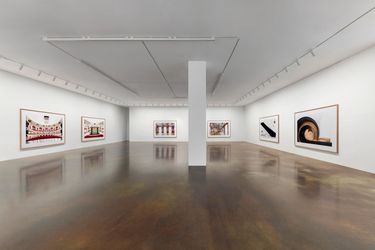
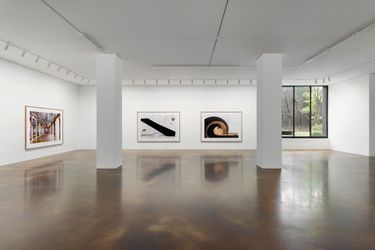
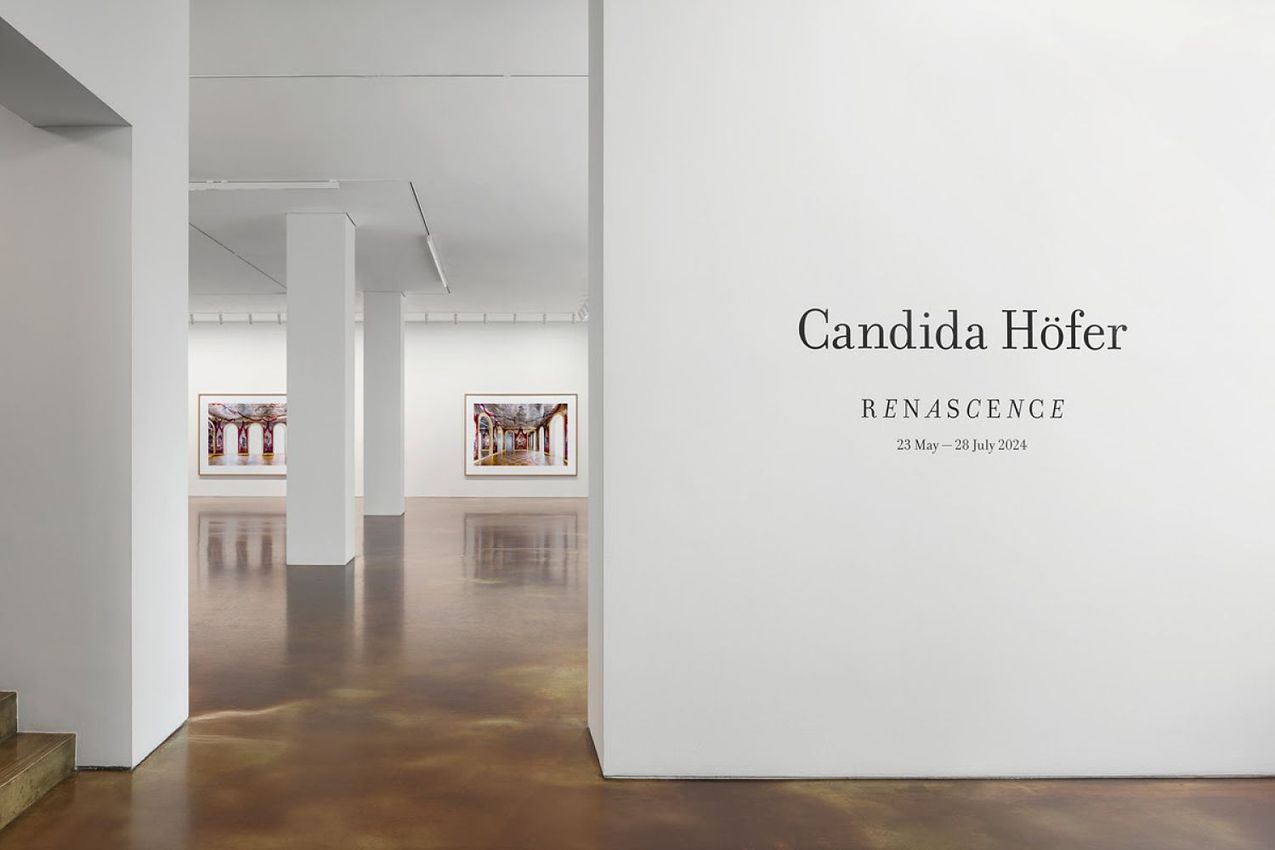
Kukje Gallery is pleased to present RENASCENCE, a solo exhibition of new works by the internationally celebrated artist Candida Höfer, on view in K2 from 23 May to 28 July 2024. Four years since the artist’s solo exhibition in the gallery’s Busan space, this exhibition features 16 works selected from her latest series documenting historic buildings that underwent renovations during the pandemic, as well as previously photographed sites the artist has revisited. Over the past five decades, Höfer has photographed the interiors of culturally significant public spaces around the world, including libraries, museums, and concert halls with her signature compositional precision and detail. Höfer, who has focused on an absence of inhabitants that inversely emphasizes rich social and historical implications of public spaces, reveals a unique framing of global adversities through a lens of recovery and renewal.

The exhibition’s title ‘renascence,’ which commonly refers to a revival of what has become obsolete, is situated at the intersecting issues of the physical and institutional ‘regeneration’ of Western cultural spaces with deep historical resonances and the ‘recovery’ of the public sphere after the paralysis caused by the pandemic. In her photographs, the architectural renovations, which had already been underway since the 2010s for some of the museums featured, were carried out in strict accordance with restoration standards, focusing on retaining traces of the past while reorganizing the infrastructure to keep up with today’s requirements. Höfer’s camera lens captures this restraint, framing the architects’ methodical approach to the careful restoration of these diverse cultural landmarks as illuminated by the artist’s objective and neutral gaze. In this light, her works can be seen as a spatial portrait of encounters between a range of subjects, including the history of each building, the interventions of architects and institutions, and the artist’s own aesthetic perspectives. These thematic layers align with Höfer’s distinctive technical methods—foregoing lighting equipment and minimizing subjective intervention—underscoring her approach to photography as an investigation into public spaces that exist as products of human cultural activities.

At the same time, the works lead to questions about institutional and social renewal of the public sphere, analogized by the architectural renovations, and further extend to larger concerns revolving around the sustainability of public institutions as they respond to shifting urban ecologies and pressures highlighted by the pandemic and climate change. Through the values of renewal and regeneration offered in Höfer’s work, the exhibition encourages the viewer to reexamine those years of the pandemic—often described in terms of ‘rupture’ or ‘hiatus’—as a time of continuity, in which traces of the past are renewed and updated in relation to the present and future.

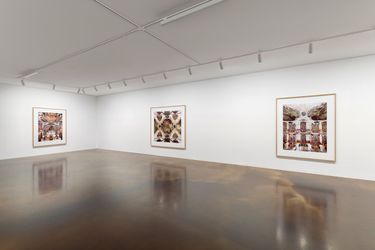
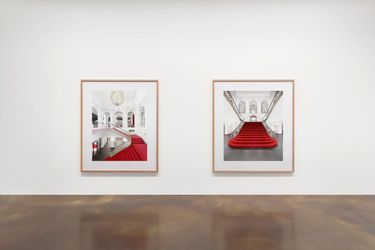
The first floor of K2 displays selections from the series focusing on changes (following renovation) in the interior space of the Carnavalet Museum (Musée Carnavalet) in Paris, France. Dedicated to the history of Paris, the museum first opened to the public in 1880 and consists of two neighboring mansions—the 16th-century Renaissance-style Hôtel Carnavalet and the 17th-century Hôtel Le Peletier de Saint-Fargeau. Beginning in 2016, the museum, which boasts a rich tradition, underwent a renovation led by Chatillon Architects with a focus on preserving the unique charm of the place while establishing a more coherent layout to accommodate more visitors. The museum has been operated by the city of Paris since its opening.

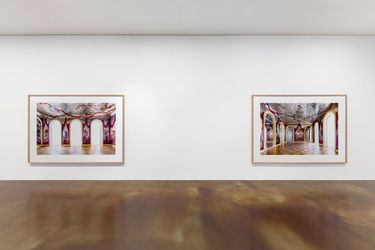
Upon her site visit in 2020 ahead of its reopening in 2021, Höfer paid attention to the new serpentine steel-and-wood staircase from various angles as a visual motif that connects the multi-temporal fragments of the city’s history collected throughout different levels of the museum. By capturing the modern intervention as encapsulating the accumulated layers of time, she encourages her viewers to appreciate the history of space based on visual clarity and compositional flatness. The staircase forms a stark visual contrast with a mural depicting a dramatic and theatrical setting. Originally commissioned in 1925 for the ballroom of the Hôtel de Wendel, the mural decor of the ballroom was reinstalled at the museum in 1989 and restored during the renovation. Höfer’s works highlight the quality of transparency and luminosity accentuated by the gold frames that surround the many arched thresholds and the natural light flooding the space, while also reframing it with new spatial order through formal elements, such as the symmetrical composition and decorative motifs.

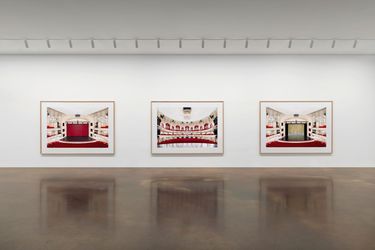
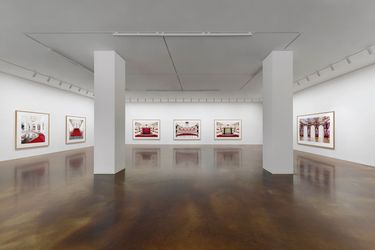
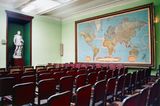
The theatrical atmosphere emphasized by the visual elements of the red curtain in the restored mural of the Carnavalet Museum continues in the series of works depicting an empty stage and auditorium of the Komische Oper, one of Berlin’s three major opera companies. The existing building of the opera house, which dates back to the late 19th century, was severely damaged during the Second World War and had been restored in the 1960s and 80s since its reopening under the current name in 1947. Currently, the building is undergoing another extensive renovation and expansion process, including new facilities such as rehearsal rooms and backstage area. The ‘Komische Oper Berlin 2022’ series (on view in the gallery) was created from Höfer’s visit to the place in 2022, prior to the renovation which began in 2023. While the series depicts a portrait of space before the changes, it leads the viewer to predict what lies ahead, for Höfer’s photographs serve as ‘carriers of time’ both containing and transporting countless traces of changes accumulated since the original construction of the building. As such, the viewer becomes a witness to the changes harbored in the space seen through Höfer’s lens.

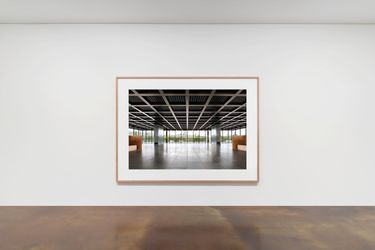
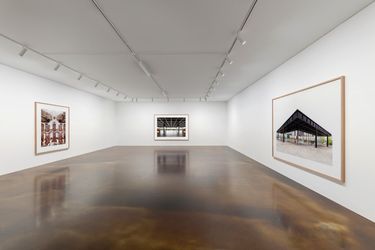
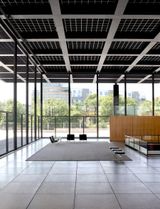
The second floor of K2 presents a series of works focused on the New National Gallery (Neue Nationalgalerie), a modernist landmark in Berlin, following its renovation. Known as the ‘temple of light and glass,’ the New National Gallery was built between 1965 and 1968 in the Kulturforum, West Berlin’s cultural and artistic district. Designed by the modernist master Ludwig Mies van der Rohe (1886-1969), it is considered an icon of twentieth-century architecture. The museum building is a monumental work of genius that Mies van der Rohe gifted his home country after 30 years of exile in the United States, and it is a culmination of his architectural philosophy ‘less is more’ pursued throughout his life. The museum recently underwent a major refurbishment under the lead architect David Chipperfield (b. 1953) based on the principle of retaining ‘as much Mies as possible.’ The museum’s infrastructure was reorganized and strengthened by dismantling individual components of the building and returning them to their original positions after a cleaning and restoration process. Höfer visited the place in 2021, immediately after the refurbishment, and captured various parts of the renewed space while alluding to the traces of human activities implied, conversely, by their absence. As the minimal intervention preserves the past trajectories of pre-refurbishment visitors and construction workers alike, the work becomes a site for intersections and coordination of various human activities.

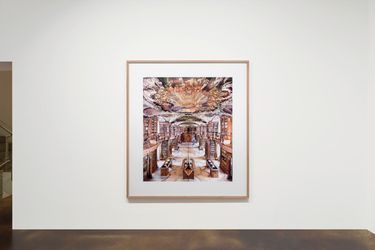
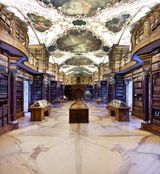
Also on display are selections from the ‘Stiftsbibliothek St. Gallen 2021’ series, in which the artist revisits the Abbey Library of Saint Gall featured in her series from 2001. The 2021 revisit of the site was part of her preparation for Candida Höfer: Liechtenstein held at the Kunstmuseum Liechtenstein in Vaduz the following year. The abbey, located in the city of St. Gallen, was considered one of the most important monasteries in Europe, from its establishment in 719 to its dissolution in 1805, and was extensively renovated in the Baroque style in the 18th century. In 1983, it was designated as a UNESCO World Heritage Site. In her 2001 series showing the Abbey Library, Höfer’s camera highlights the interior hall’s defining features, such as the elaborate frescoes and the vaulted ceiling with Rococo molding, drawing the viewer’s attention to the spatial order and systems for perpetuating the optimistic view of intellectual progress. The series further captures rare instances of visitors using the library. In her revisit in 2021, she not only excludes the element of human presence but highlights the empty interior space where past and present intersect. By focusing instead on the traces of human activity that once occupied the space and capturing the subtle atmospheric sensations that animate it, her formal rigor and emphasis on symmetry provide a portrait of vacant public space that embodies an eternal sense of time.

1 Artist’s notes

Read More

Installation Views

About the Artist

Candida Höfer was born in 1944 in Eberswalde, Germany, a town situated northeast of Berlin. Having expressed interest in photography during childhood, Höfer first began her career at the age of nineteen as an apprentice at a photography atelier that dealt with advertisements, architecture, and fashion. She entered the Kölner Werkschulen (Cologne Academy of Fine and Applied Arts) in 1964 and studied art and photography, and worked as a freelance photographer upon graduation. She later attended the Kunstakademie Düsseldorf, one of the most influential European educational institutions at the time in 1973, where she initially studied film under Ole John. In 1976 she was accepted into Bernd Becher’s first photography class, studying alongside contemporaries Axel Hütte (1976–1981), Thomas Struth (1976–1980), Thomas Ruff (1978–1985), Tata Ronkholz (1978–1985), Petra Wunderlich (1985–1988), and Andreas Gursky (1981–1987)—later collectively referred to as the first generation of the ‘Becher class’. Having already been the subject of gallery exhibitions in the late 1970s, Candida Höfer has spent decades expanding and redefining the boundaries of her practice. She not only photographs the interior spaces of public venues, but also conducts serial projects with specific subjects such as On Kawara’s paintings and the twelve casts of Auguste Rodin’s The Burghers of Calais, documenting how they are placed in their respective collections, along with photographing the interiors and exteriors of the architectural feats of Herzog & de Meuron.

View Artist Profile

Also Exhibiting at Kukje Gallery

About the Gallery

Established in the heart of Seoul in 1982, Kukje Gallery is a leading Korean gallery dedicated to showcasing works by Korean and international artists and promoting modern and contemporary art. At 54 Samcheong-ro, Jongno-gu, the gallery has 3 key exhibition spaces, respectively named K1, K2, and K3. In 2018, the gallery opened a second location in F1963, a cultural complex housed in a former wire factory in Suyeong-gu, Busan.

View Gallery Profile
Address
54, Samcheong-ro
Jongno-gu
Seoul
South Korea
Opening Hours
Monday – Saturday
10am – 6pm

Sunnday
10am – 5pm

National Holidays
10am – 5pm
(1)
Seoul 54, Samcheong-ro, Jongno-gu
Kukje Gallery
54, Samcheong-ro, Jongno-gu, Seoul, South Korea

Opening hours
Monday – Saturday
10am – 6pm

Sunnday
10am – 5pm

National Holidays
10am – 5pm
The art world in focus