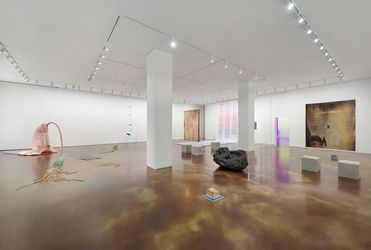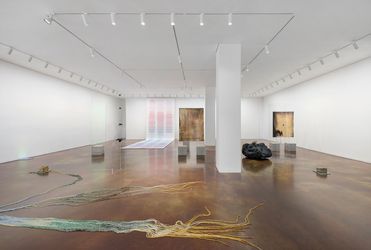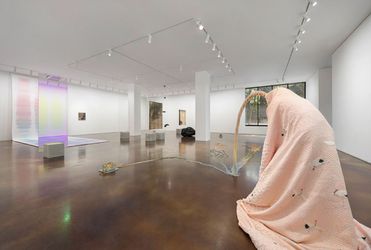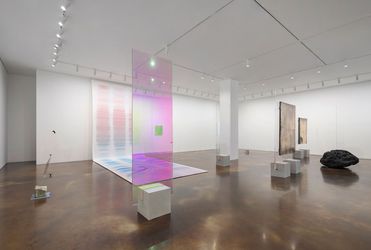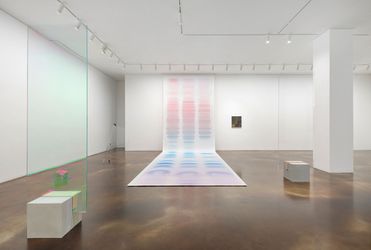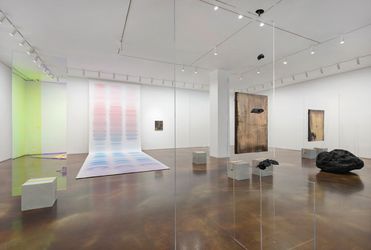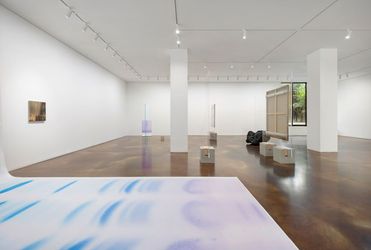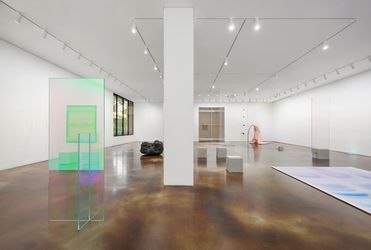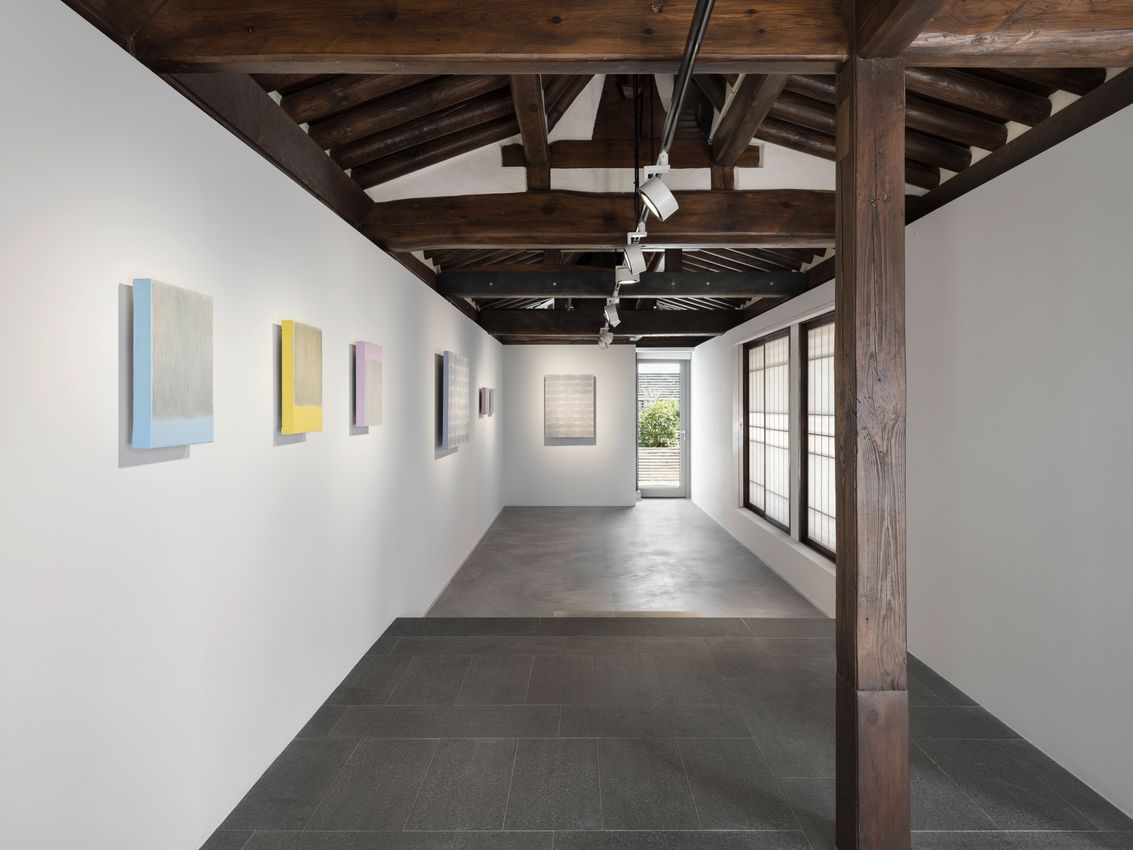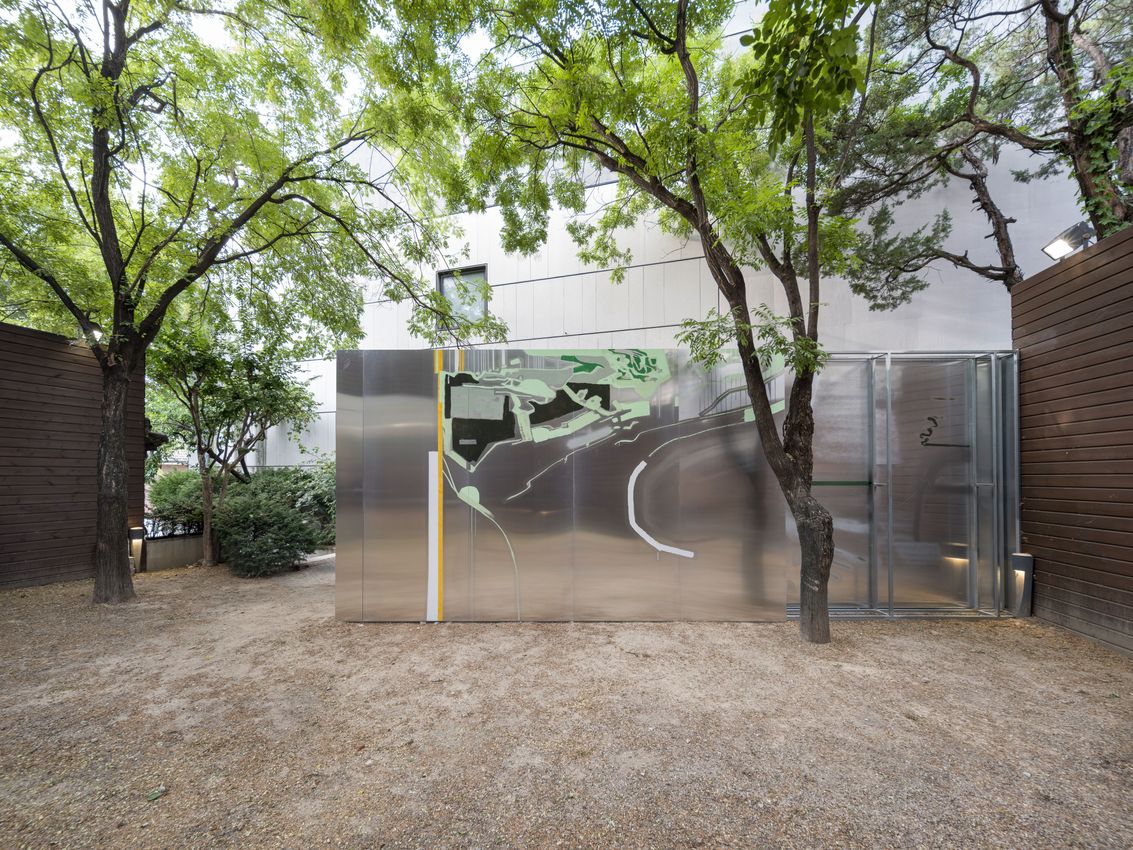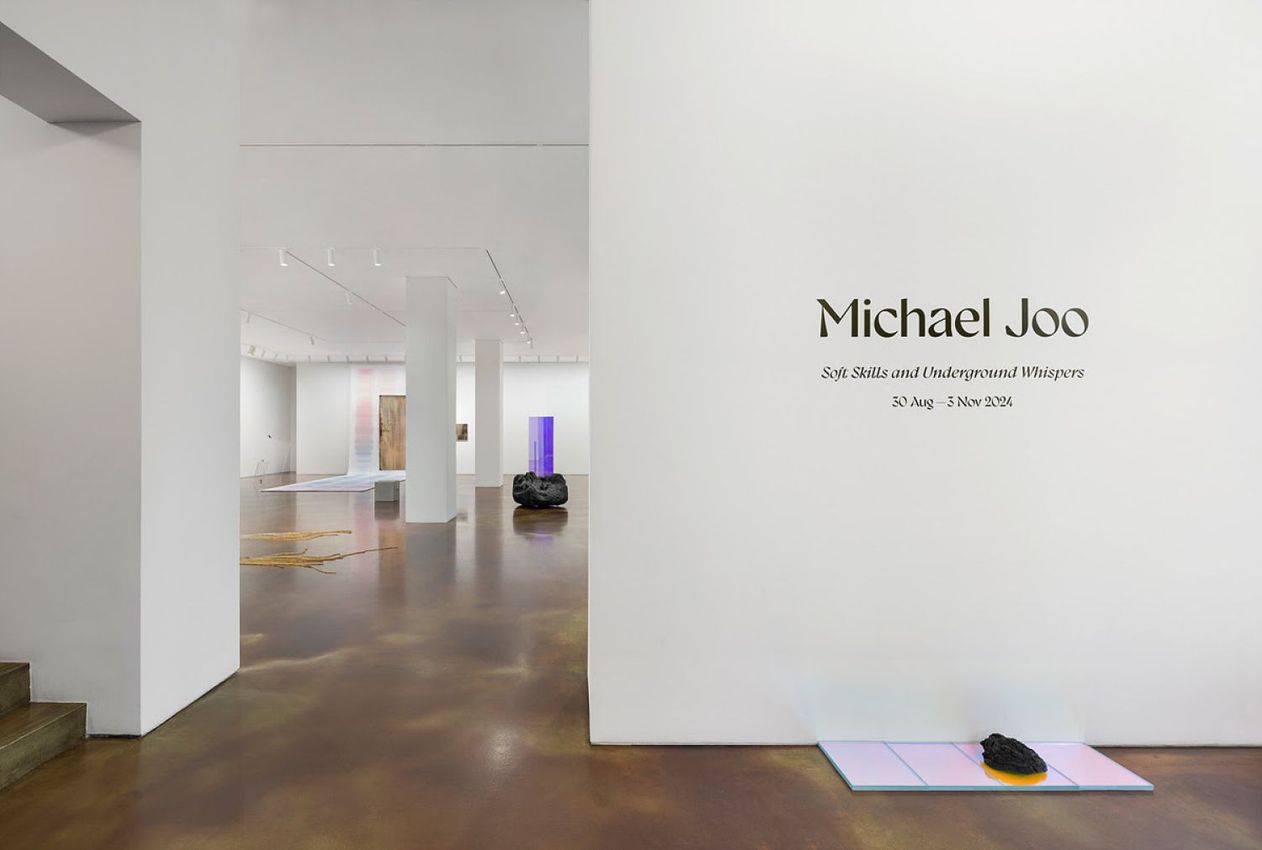
Kukje Gallery is pleased to present Michael Joo’s Soft Skills and Underground Whispers, a new installation of recent works on view from 30 August to 3 November 2024. For his second solo exhibition in Seoul with the gallery since 2017, Joo engages gallery K2 with a dense yet delicate visual field of crystalline surfaces, geometric shapes, and materially charged objects. Continuing his ongoing inquiry into perception, identity, and liminality, Joo mines the intersections of art, science, and belief as the exhibition’s methodology emphasizes the exchanges, connections, and ineffable relations of mutual influences that occur at the subliminal level of perception.
A poetic phrase that encapsulates these themes, the exhibition title ‘Soft Skills and Underground Whispers’ hints at this range of hidden networks that operate like whispers vibrating from underneath, and calls viewers’ attention to the soft skills that contour invisible relations and intimacies. Upon entering the gallery, the viewer is first presented with a new group of works from the artist’s ‘Reviders’ series, which embodies Joo’s ongoing use of materials and modalities that both separates and connects space. Constructed from both clear acrylic and dichroic glass—which displays a wide spectrum of colors visible from different viewing angles—the works present transparent and kaleidoscopic surfaces that visually animate the static object. For Joo, the unstable optical quality of the materials encourages the viewer to engage by shifting one’s position and gaze.
Objects delicately mounted on their surfaces appear suspended in space, visible in their relationship to each other. Upon closer inspection the rich black objects in Revider for Ganoderms (Yeongjiboseot 1, 3) (2024) reveal themselves to be carbonised reishi mushrooms made using a process that Joo developed with traditional white charcoal makers—merging new and centuries-old technologies. The material transformation to pure carbon takes the object beyond the point of combustion into a material that is so hyperporous that it can purify air and water at an ionic level, connecting the seemingly inert with the continuously active, while visually and spatially alluding to the invisible subterranean networks that connect fungi with their surrounding ecologies. Central to the grid-like yet lyrical arrangement of panels is Revider with Carbon Doppelganger (2024), a crystalline acrylic construction which, depending on one’s perspective, is either being penetrated by or merged with a large, sculpted boulder. Carved from a composite block of carbon dust, graphite, wood charcoal, and urethane by a seven-axis robotic arm, the stone takes its form directly from volcanic rocks collected by children living in the area bordering the Demilitarized Zone along the Hantan River during Joo’s 2018 REAL DMZ PROJECT. Using scanned details from these site-specific samples, the stone accrues multiple identities: it is a synecdochic part that speaks to the larger context of the DMZ, an artifact born out of technical mediation, a burnt object whose components have been mutated as a result of combustion, and a material that is comprised of the elemental (carbon, graphite), the residual (charcoal), and the artificial (urethane). This destabilizing of the hierarchical relation between an object and its support is another clear example of Joo’s resistance to containment and his commitment to continuously engaging with the entangled narratives found in and perpetuated by material artifacts.
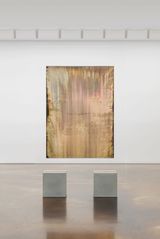
Installed further in the K2 space is Untitled (after LBB) (2024) which pays homage to Joo’s long-standing regard for the ‘glass easels’ designed by the Italian-born Brazilian architect Lina Bo Bardi (1914–1992). Conceived for the opening exhibition of the Museu de Arte de São Paulo (MASP) in 1968, the ‘glass easel’ refers to Bo Bardi’s original display system consisting of a pane of glass wedged into a concrete cube, which together form a self supporting structure for an artwork attached to the sheet of glass. Eliminating the historical authority and didactic aura traditionally associated with the display method of works hung on the wall, the glass easels invite a more intimate and direct relationship with an artwork that stands in close proximity to each viewer. Joo’s interpretation of this as a portable and provisional architecture that blurs the boundary between the inside and outside, as well as its status as a liminal plane signaling an opening to another kind of space, has been a direct influence on the artist’s strategies of display, ranging from the glass ropes and stanchions of the ‘Expanded Access’ series (2001–present) to the silvered glass and polycarbonate shield series such as in ‘Plexus’ (2013) and ‘Indivisible’ (2010–2012).
In two of the works displayed on these supports, Barcelona and The Vagueness Argument (both 2017), metallised, reflective surfaces fluctuate in silver, gold, and copper hues, shifting according to the viewer’s position and movement and further connecting them with the surrounding environment. Part of an ongoing series of silvered epoxy paintings, the works continue Joo’s decades-long research developing an innovative method that merges glass silvering techniques familiar to traditional photography such as abandoned structures, borderlands, and contested territories, an environmental record “fixed” over long duration in the cured epoxy that can then be retrieved and silvered. In doing so, the artist has invented what he describes as an “image making process to amplify presence and merge subject with context,” marrying the subtlety of the silver and the concrete relief of the cured epoxy, to reveal and highlight the resulting textures and forms of his locations. Placed at intentional intervals throughout the installation, the series of works Cosms (Catalunya 1, 2, 5, 7) (2016–2024) also explores site by investigating the discipline of archaeology, framing subjects including subterranean geology, identity, place, and migration. The works highlight the artist’s interest in the science of excavation and how the different forensic categories of biofact, ecofact, and geofact establish the rubric of authority that surrounds history, an interest that underpins the entire exhibition. Resembling broken architectural columns, the Cosms consist of compact blocks of alabaster stone, carefully cut to reflect their relationship to the landscapes beneath which they are typically buried. Silvered and placed on dichroic glass plates, the carved works amplify their physical origin, encouraging the viewer to connect to a sense of deep time and physical scale.
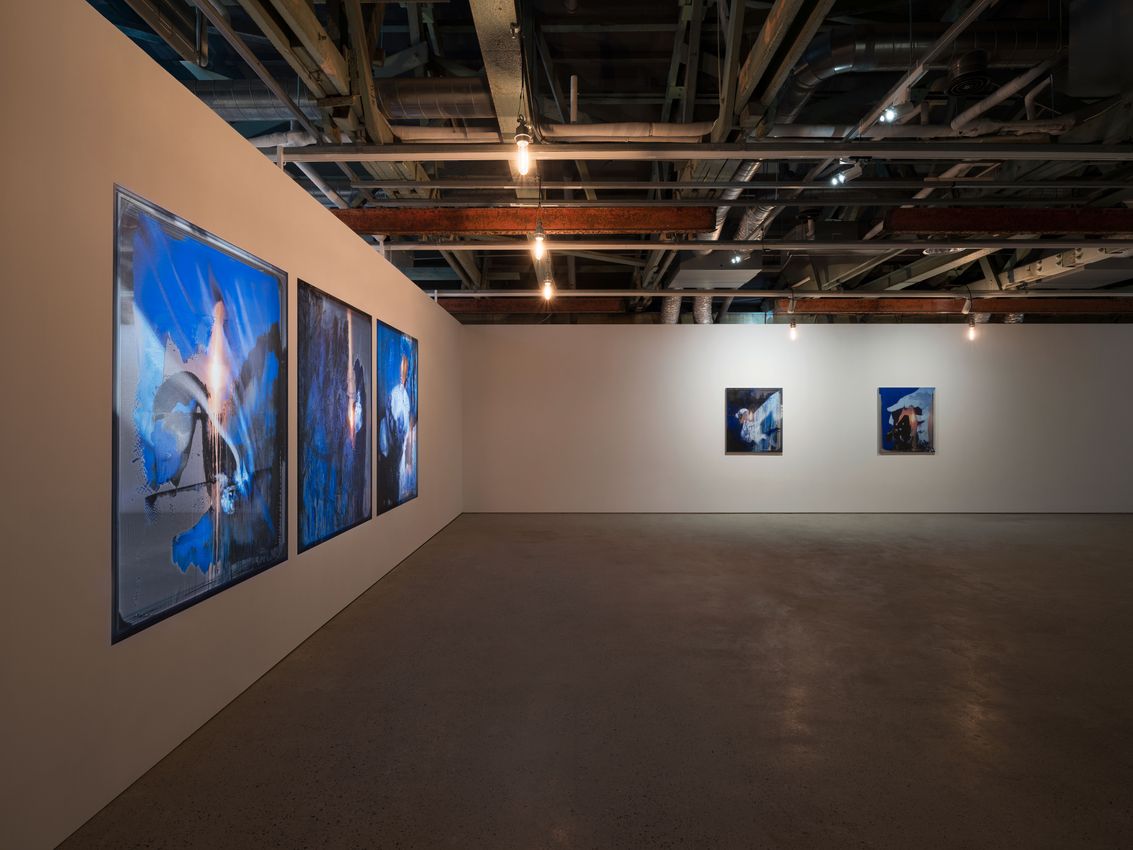
The complex mycorrhizal logic suggested by the title ‘underground whispers’” extends to a more deeply personal realm in the final two works that anchor the exhibition. In EP Cascade (2024), what appears to be a sumptuous streak of watercolor at first glance, is in fact an AI modified image derived from a process of DNA molecular separation using electrophoresis, separating molecules by mass to assist in determining genetic identities. The color palette of the work was based on that of the dichroic glass spectrum and applied to the image profile, creating a visual resonance with the sculptures. As a work that visualizes genetic information and is therefore a blueprint of a life, EP Cascade is also a tender tribute to the influence of the artist’s mother, who was a plant physiologist and electrophoresis specialist, evoking the idyllic waterfalls he and his siblings’ experienced as children in upstate New York.
Finally, the lone figurative form suggested in Mediator (redux) (2024) incorporates a family heirloom brought over to the US from Korea in the 1980s. Echoing the sculptural form that appeared in Caroline Tisdall’s documentation of Joseph Beuys’ iconic 1974 performance, I Like America and America Likes Me, a critique of European and American relations as well as an exploration of the conflicting mystique and reality of American identity, the subtle sheen of the pink sateen quilt in Joo’s work appears to fall and drape naturally over an absent human body. The artist takes this evocation of generational personal history further by incorporating a dense strand of stone beads that seem to come from within the figurative shroud. Like pollinating corn silk, the networked spray of lines emanating from the work weaves the interstices of other works into fertile connections, as if facilitating the crosspollinations and transmissions of the softest of whispers. with printmaking processes. potential and physicality of combining these two mediums allows Joo to create site-specific ‘prints’ of surfaces in remote sites such as abandoned structures, borderlands, and contested territories, an environmental record ‘fixed’ over long duration in the cured epoxy that can then be retrieved and silvered. In doing so, the artist has invented what he describes as an ‘image making process to amplify presence and merge subject with context,’ marrying the subtlety of the silver and the concrete relief of the cured epoxy, to reveal and highlight the resulting textures and forms of his locations.


Michael Joo’s work investigates the concepts of identity and knowledge in a hybrid contemporary world. He creates narratives that explore places, people and objects through reinterpreting perception: why do we perceive as we perceive – science and religion, nature versus human intervention, fact versus fiction, high and low culture, sex, and death. By juxtaposing humanity’s various pools of knowledge and culture Joo addresses the fluid nature of identity itself. He does so by making use of an extensive variety of medium: video, sculpture, installations out of any sort of material ranging from bamboo to human sweat and cameras, drawing and print making – it seems as if the artist permanently tries to achieve the unachievable: to make us see an object in real life that is barely conceivable as thought alone.


Established in the heart of Seoul in 1982, Kukje Gallery is a leading Korean gallery dedicated to showcasing works by Korean and international artists and promoting modern and contemporary art. At 54 Samcheong-ro, Jongno-gu, the gallery has 3 key exhibition spaces, respectively named K1, K2, and K3. In 2018, the gallery opened a second location in F1963, a cultural complex housed in a former wire factory in Suyeong-gu, Busan.

A respected voice in contemporary art discourse.
Focusing on ambitious storytelling and insightful art-world commentary. Ocula Magazine publishes in-depth interviews, critical essays and timely analysis on the artists, exhibitions and ideas driving the global art world.
Learn more about Ocula Magazine
Showcasing the best of the art world.
Ocula partners with galleries from around the world to highlight their artists, artworks and exhibitions. Gallery membership is by application and invitation, with each member vetted by an independent panel.
Learn more about Ocula Membership

Specialises in the sale of major artworks.
Led by a team with deep ties to the world’s leading auction houses, galleries and collectors. Ocula’s advisory team offers bespoke services to high-net-worth clients from around the world who are looking to acquire the best of contemporary and modern art.
Learn more about our team and services