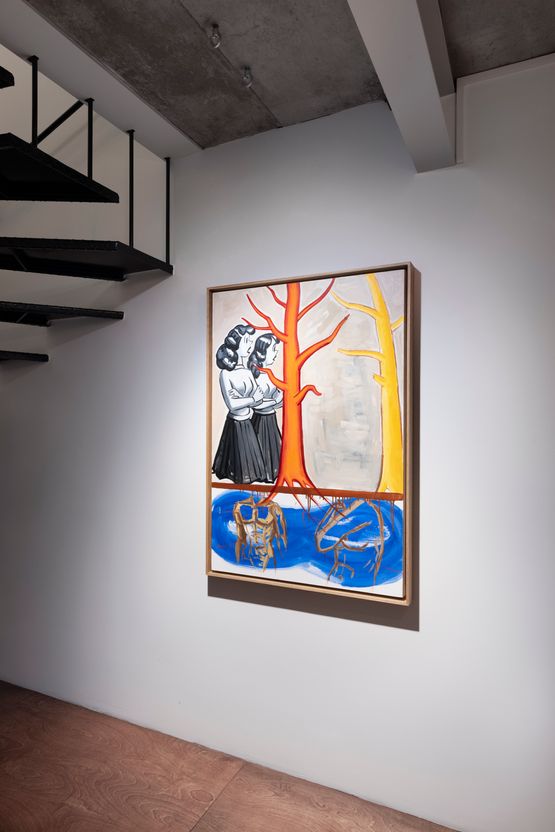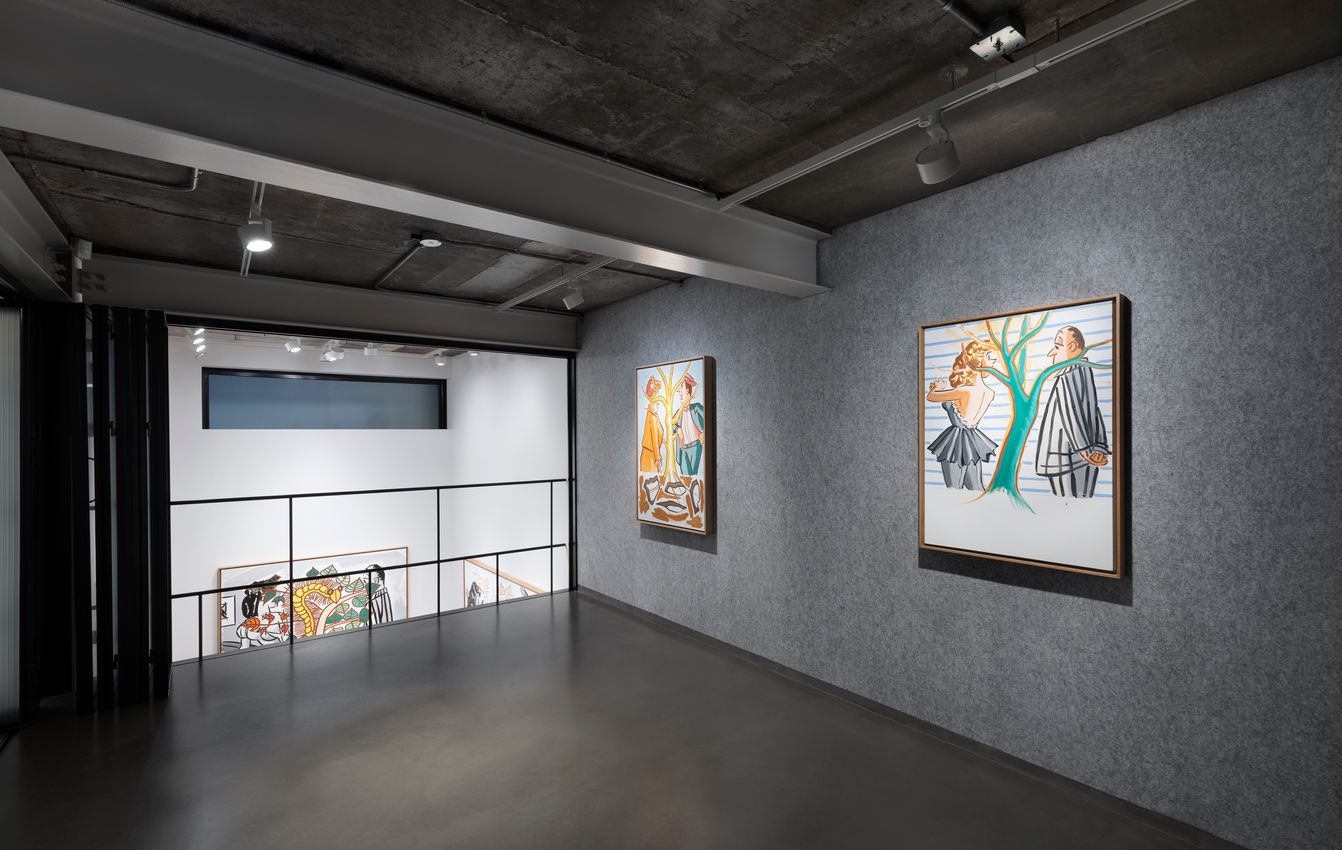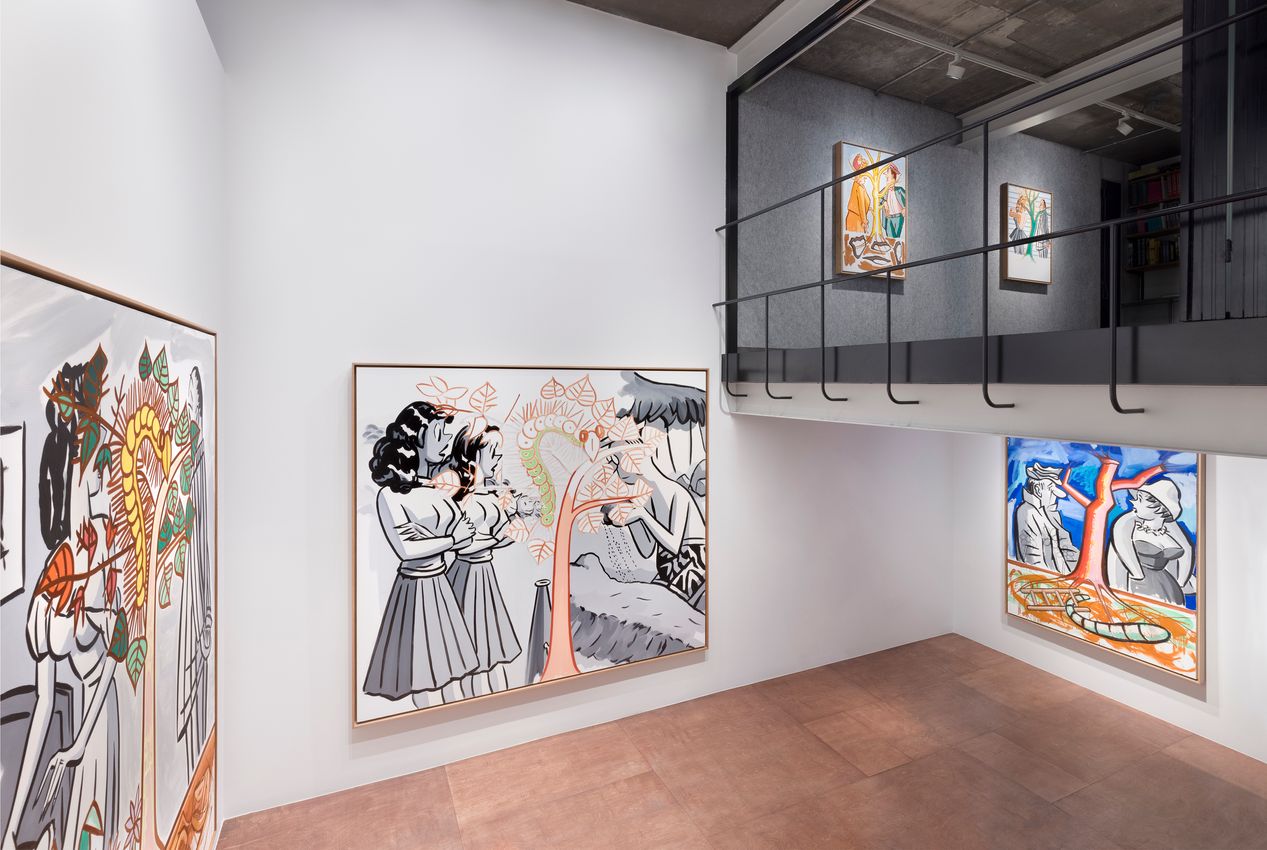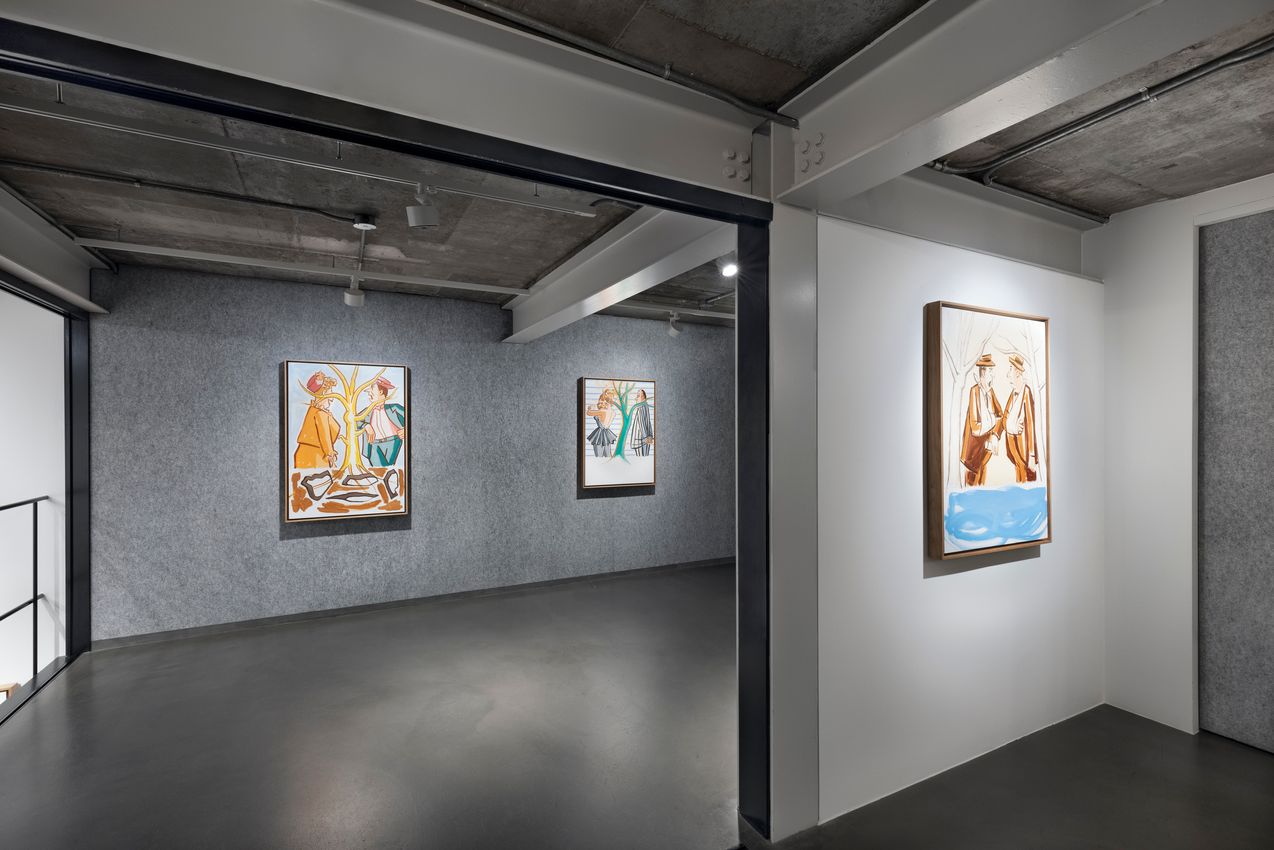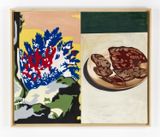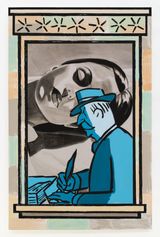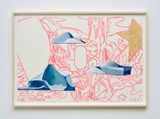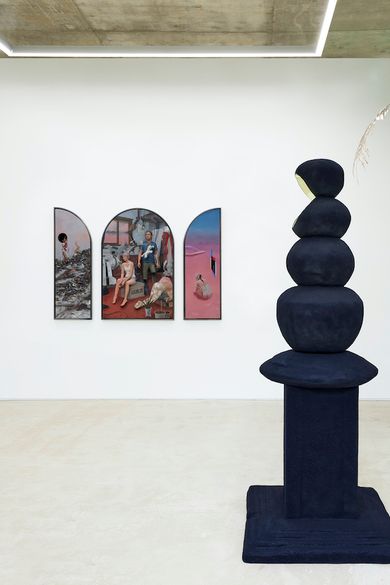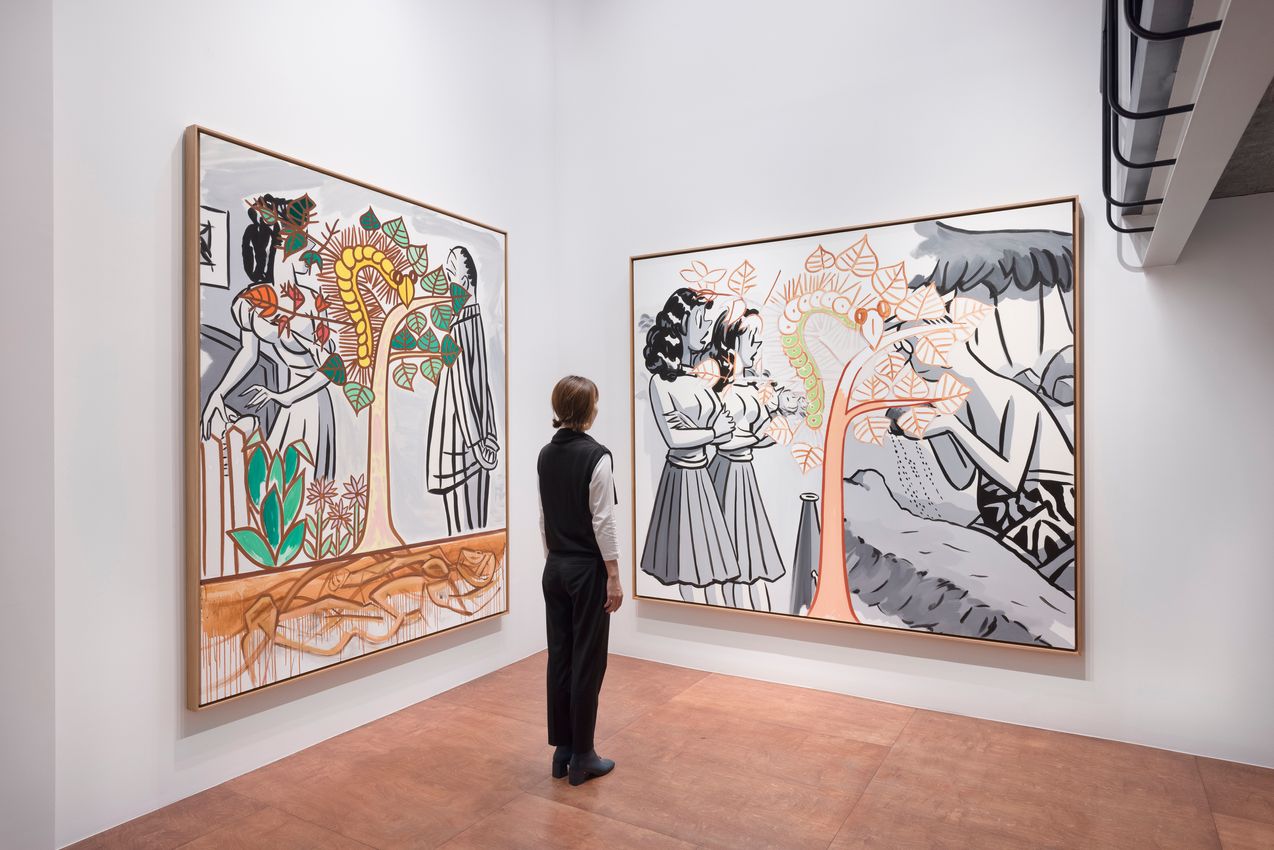
Lehmann Maupin Seoul will present Alchemy in Real Life, featuring new paintings by artist David Salle from his ‘Tree of Life’ series. The artist’s fourth exhibition with the gallery and first with Lehmann Maupin in Seoul will feature eight of Salle’s newest paintings, created during the course of the pandemic. Born in 1952 and raised in Wichita, Kansas, Salle attended California Institute of Arts (CalArts) in Los Angeles, receiving a B.F.A. in 1973 and an M.A. in 1975. A member of the influential Pictures Generation, Salle combines popular, or commercial imagery with images made from direct observation, as well as a range of art historical references to create a personal pictorial language. His work features a sophisticated and highly intuitive approach to composition, one that suggests new associations and relationships between familiar (or un-familiar) subjects. Salle’s multi-layered works do not rely on subject matter alone, however—his paintings pack an immediate formal impact and present multiple points of entry for the viewer. Built to draw the eye through and across the picture plane, they reward close looking and prolonged contemplation.
The paintings in Salle’s ‘Tree of Life’ series feature vignettes of men and women in the midst of various interpersonal interactions. The style of Salle’s figures recall the cartoons of Peter Arno, who rose to prominence during the Depression era and revitalised single-panel cartooning while working for the New Yorker Magazine. Arno’s distinctive style and one line captions brimmed with social satire, and were often aimed at America’s upper class. Many of the figures in Salle’s ‘Tree of Life’ series appear to be in the middle of conversation, and the viewer can almost hear the next line of dialogue captioning the paintings—much like an Arno cartoon. In Tree of Life #26, a glum man in a large overcoat and crumpled hat appears to have stopped a woman dressed smartly in a strapless dress, bejewelled necklace, and large fur coat. The figures’ grisaille tones contrast sharply with the bright blue background and red, leafless tree in the centre of the work, and the overall impression is of cold winter’s night, the hand-drawn flowers in the lower left corner appearing as ghostly shadows of their summer selves. The viewer seems to have stumbled upon these two figures at a critical juncture—perhaps the woman has just noticed the man behind her, or he has just called out to her while stepping out from a shadow. In this and other works in the series, the ambiguous relationship between the subjects and the sometimes madcap situations in which they have found themselves ensures that the full story remains just beyond our grasp. As is so often the case with Salle’s work, we are unable to completely decipher the narrative at play in each painting—we can almost, but not quite discern what might have come just before or what will come just after the scenes depicted in each work.
Trees figure throughout Alchemy in Real Life, vertically bisecting the canvas in most paintings and often obscuring the subjects and settings. Typically, a single tree acts as a visual divide or barrier between the sexes, men on one side, women on the other—a formal device that references Tarot imagery as well as historical representations of the Garden of Eden. In many religious, philosophical, and mythological traditions, the Tree of Life is imagined as the support for all creation—here, it overlays the action in each piece, presenting a throughline across the series and imparting a certain timelessness to the otherwise period-specific clothing and pictorial style of the subjects. One of Salle’s innovations in this series is to represent—in the same painting—the tree both above and below ground. The roots of each tree occupy the lower third of the composition, often in a separate panel directly beneath the larger canvas. This lower panel takes on a range of meanings. Broadly speaking, it is the ‘subconscious’ of the painting, or a representation of our collective history; simply put, it represents the past, or ‘how we got here’. In these panels, Salle’s penchant for, and skill at, relational composition, as well as his imagistic resourcefulness reaches new heights, The roots of the various trees are shown intermixed with ladders, worms, and human heads, torsos, and hands, as well as passages of ‘pure’ abstraction, and these panels privilege Salle’s other highly recognisable, signature attributes—his strong, vibrant colour palette and confident line. As Salle himself has written in his highly acclaimed essays, it is how something is painted, as much as what is painted that is the key to unlocking a painting’s meaning, and nowhere is this more apparent than in these paintings. That is, simply put, Alchemy in Real Life.
About the Artist
David Salle (b. 1952, Norman, Oklahoma; lives and works in New York). Salle received both a BFA and an MFA from the California Institute of Arts, Los Angeles (1973 and 1975). Solo exhibitions of his work have been organised at the Dallas Contemporary, Dallas (2015); Arts Club of Chicago, Chicago (2014); Metropolitan Opera House, New York (2012); Museo de Arte Contemporáneo de Monterrey, Mexico (2000); Stedelijk Museum, Amsterdam (1999); Museum Moderner Kunst Stiftung, Ludwig, Vienna (2000); Museo d’Arte Contemporanea Castello di Rivoli, Turin, Italy (2000); and the Guggenheim Museum Bilbao, Spain (1999). In 1987, at age 34, Salle was the youngest artist ever to be honoured with a mid-career survey exhibition at the Whitney Museum of American Art. Select group exhibitions featuring his work include Before/On/After: William Wegman and California Conceptualism, Metropolitan Museum of Art, New York (2018); Zeitgeist, Museum of Modern and Contemporary Art Geneva, Switzerland (2017); Fast Forward: Paintings from the 1980s, Whitney Museum of American Art, New York (2017); Third Space/Shifting Conversations About Contemporary Art, Birmingham Museum of Art, Alabama (2071); Unfinished Business: Paintings from the 1970s and 1980s by Ross Bleckner, Eric Fischl, and David Salle, Parrish Art Museum, Water Mill, NY (2016); Inspired by True-Life Events, CAC Malaga, Spain (2016); America is Hard to See, Whitney Museum of American Art, New York (2015); This Will Have Been: Art, Love, & Politics in the 1980s, Museum of Contemporary Art Chicago; Walker Art Center, Minneapolis, and the Institute of Contemporary Art, Boston (2012); and The Pictures Generation, Metropolitan Museum of Art, New York (2009). His work is in numerous international public and private collections including Centre Georges Pompidou, Paris; Los Angeles County Museum of Art; The Museum of Modern Art, New York; Stedelijk Museum, Amsterdam; Tate Modern, London; and the Walker Art Center, Minneapolis.
Salle is also a prolific writer on art. His essays and reviews have been published in Artforum, Art in America, Modern Painters, and The Paris Review, as well as in numerous exhibition catalogues and anthologies. A recent volume of Salle’s collected essays, How to See, was published by W.W. Norton in October 2016.

David Salle (b. 1952, Norman, OK; lives and works in New York). He received a B.F.A. from the California Institute of Arts, Los Angeles in 1973 and an M.F.A. from the California Institute of Arts, Los Angeles in 1975. Solo exhibitions of his work have been organized at Dallas Contemporary, Dallas, 2015; The Arts Club of Chicago, Chicago, 2014; Metropolitan Opera House, New York, 2012; Museo de Arte Contemporáneo de Monterrey, Mexico, 2000; Stedelijk Museum, Amsterdam, The Netherlands, 1999; Museum Moderner Kunst Stiftung, Ludwig, Vienna, 2000; Museo d’Arte Contemporanea Castello di Rivoli, Turin, Italy, 2000; Guggenheim Museum, Bilbao, Spain, 1999. Select groups exhibitions featuring his work include America is Hard to See, Whitney Museum of American Art, New York, 2015; This Will Have Been: Art, Love, & P__olitics in the 1980s, Museum of Contemporary Art Chicago, Walker Art Center Minneapolis, and Institute of Contemporary Art, Boston, 2012; and The Pictures Generation, Metropolitan Museum of Art, New York, 2009. His work is in numerous international public and private collections including Centre Georges Pompidou, Paris; Los Angeles County Museum of Art, Los Angeles; The Museum of Modern Art, New York; Stedelijk Museum, Amsterdam, The Netherlands; Tate Modern, London; and Walker Art Center, Minneapolis.


Rachel Lehmann and David Maupin founded Lehmann Maupin in 1996. The gallery represents a diverse range of American artists, as well as artists and estates from across Europe, Asia, Africa, South America, and the Middle East. It has been instrumental in introducing numerous artists from around the world in their first New York exhibitions.

A respected voice in contemporary art discourse.
Focusing on ambitious storytelling and insightful art-world commentary. Ocula Magazine publishes in-depth interviews, critical essays and timely analysis on the artists, exhibitions and ideas driving the global art world.
Learn more about Ocula Magazine
Showcasing the best of the art world.
Ocula partners with galleries from around the world to highlight their artists, artworks and exhibitions. Gallery membership is by application and invitation, with each member vetted by an independent panel.
Learn more about Ocula Membership

Specialises in the sale of major artworks.
Led by a team with deep ties to the world’s leading auction houses, galleries and collectors. Ocula’s advisory team offers bespoke services to high-net-worth clients from around the world who are looking to acquire the best of contemporary and modern art.
Learn more about our team and services