



Press Release

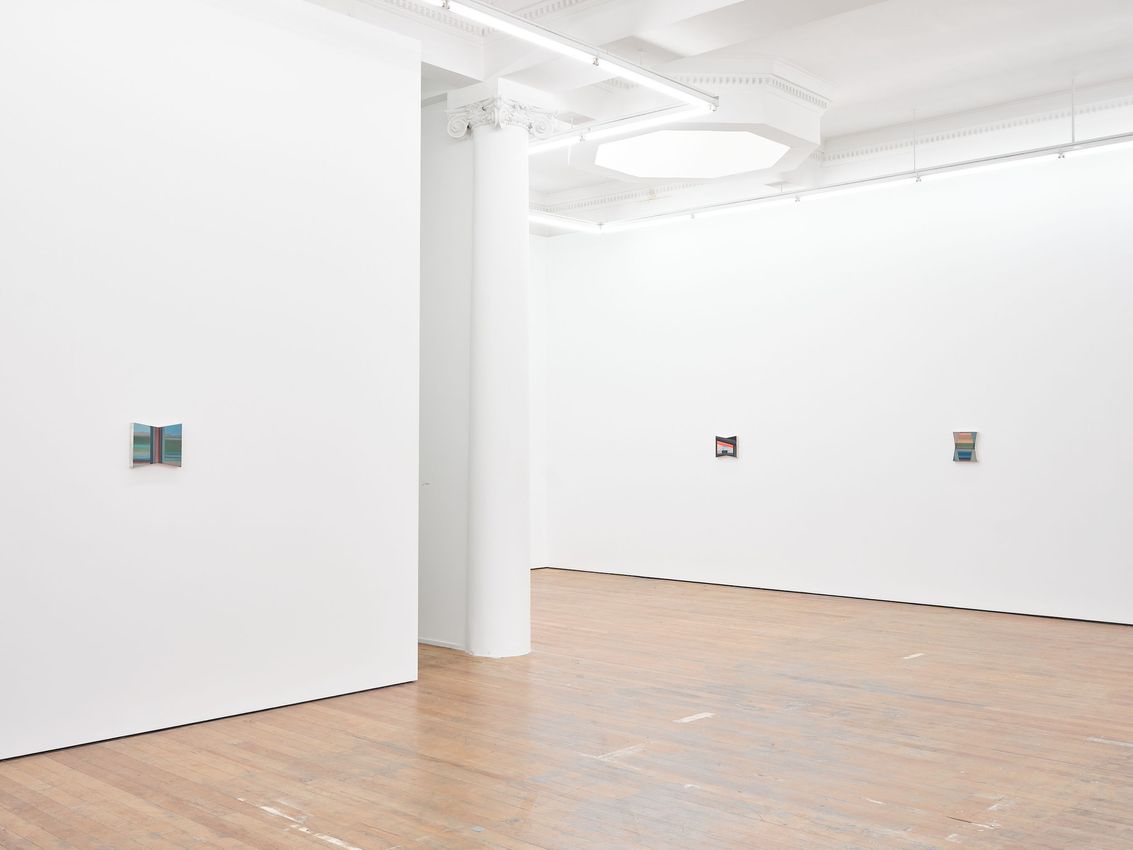
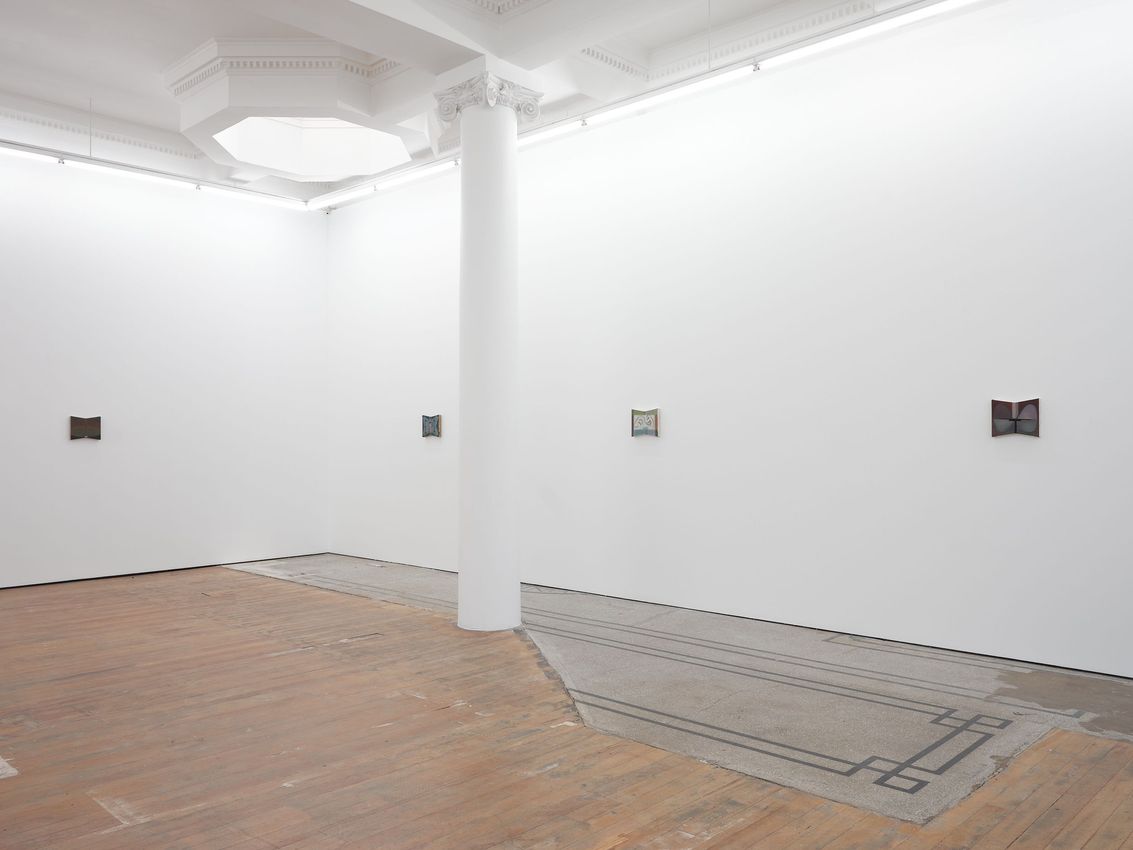
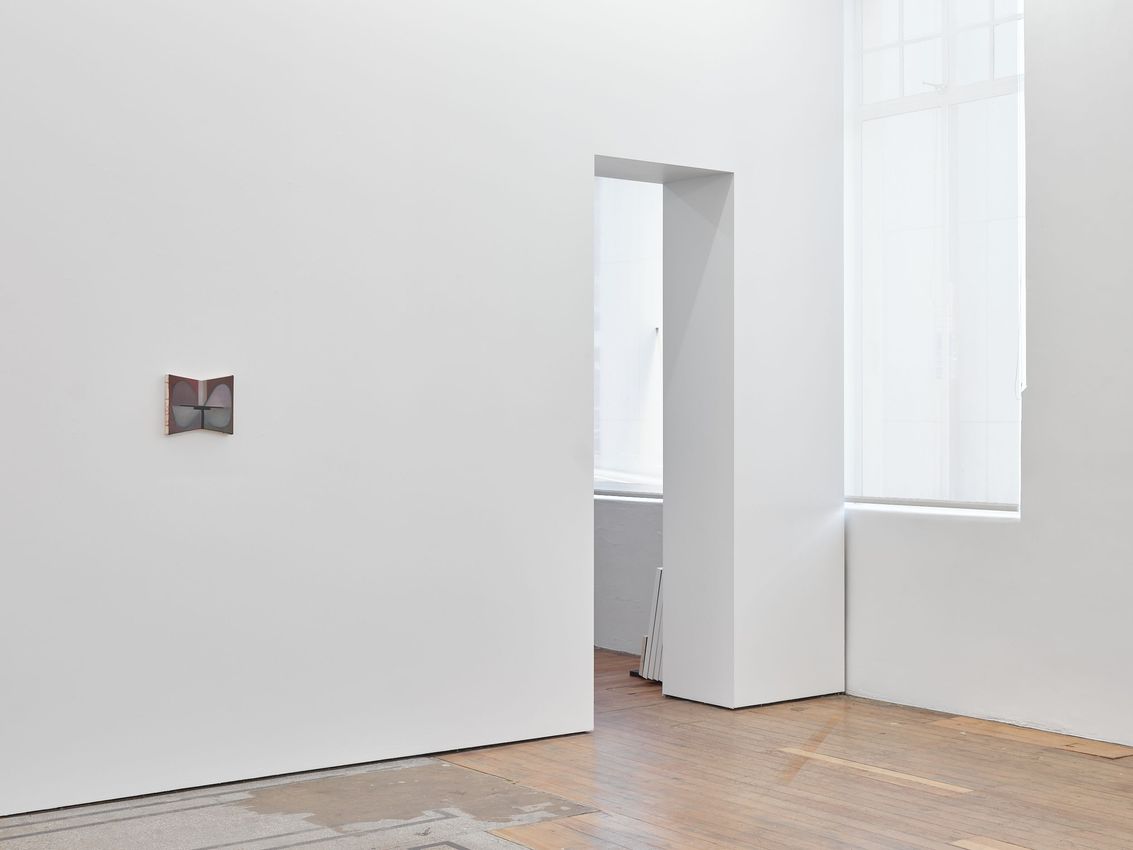
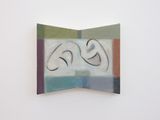
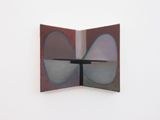
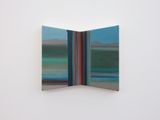
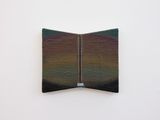
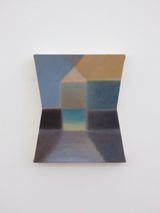
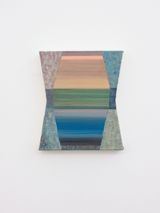
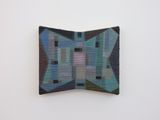
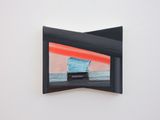
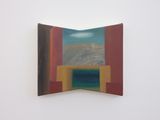
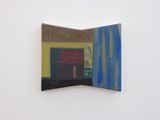
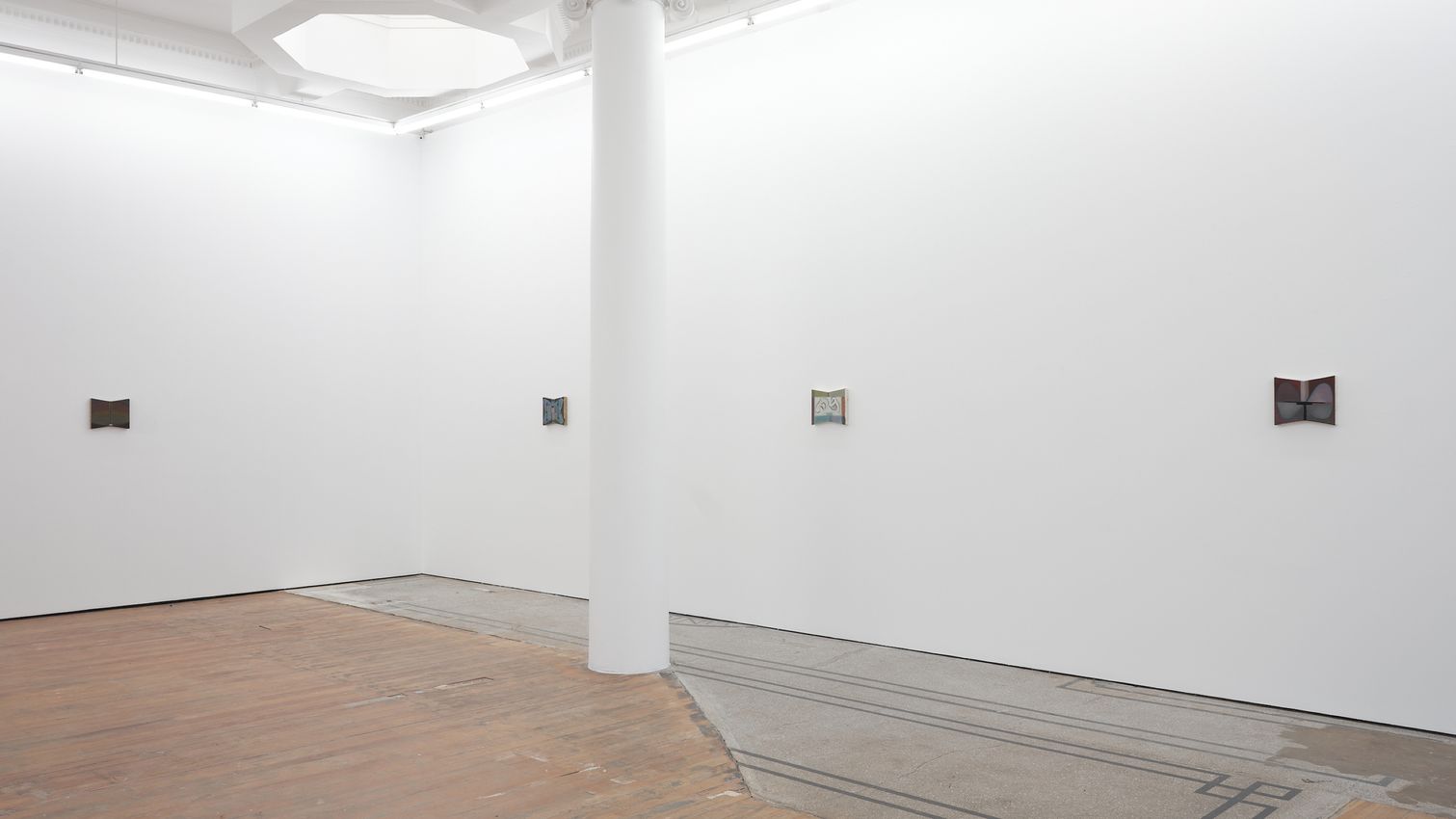
The ‘gutter’ of a book refers to the centre seam and inner margins of pages made visible when a book is open. The gutter is a throughline for Imogen Taylor’s Deep Impact, a series of book-sized paintings on identical polygonal canvases. Mimicking the form of an open book, Taylor plays with depth, surface and narrative in each.

The works tug at a regular sense of ocular alignment, toying with depth perspective to what Sara Ahmed refers to as queer effect, “in which objects appear slantwise and the vertical and horizontal axes appear ‘out of line’.” This disalignment of perspective is the territory of abstraction—form, line and colour meet on Taylor’s canvases, slantwise. Uneasy marriages of thick colour and textural surfaces hint at yet resist normative figuration in favour of a looser abstraction, dancing with the vertical tension point at the centre of each canvas—it is a echoed, inverted, offset at odd angles, subsumed or outright ignored. The gutter is a horizon, a shadowy corner, a doorway, a pair of pale lips framing a wobbling line.

In Doldrums, a habour landscape—or is it a park?–and distant mountain range are cut clean in the middle by a muddied vertical set of lines, claiming foreground territory; the vista is severed, its impact disorientating. Frames are interrogated through the works–curtains, sills, stark outlines. A Liminal sense of remove (of perceiving through or from a threshold) persistently returns us to the very act of looking. Occupying, perhaps, what Ahmed refers to as a queer moment, occurring “when things fail to cohere. In such moments of failure, when things do not stay in place or cohere as place, disorientation happens.”

Textural play persists, amplifying the delineation of perspective: the grist of the painterly surface is never far from Taylor’s hand. In Toff, what might be a view through to a red-rooted structure is obscured on one side by a crude block of green-brown film, Deep Impact involved idiosyncratic wordplay Taylor is known for, post-ironic in that comedic decontextualised pop-culture references rub up against an earnest sense of tension and yearning.

Taylor has long imbued her works with loaded nods to modernist painting – and painters—of settler-colonial New Zealand. While these concerns remain evident throughout Deep Impact, the prominence of collage as a painterly method – used by Taylor since early in her career—in notable. Taylor uses collage deftly, sometimes additively and at others in absentia: media painted over/around and removed.

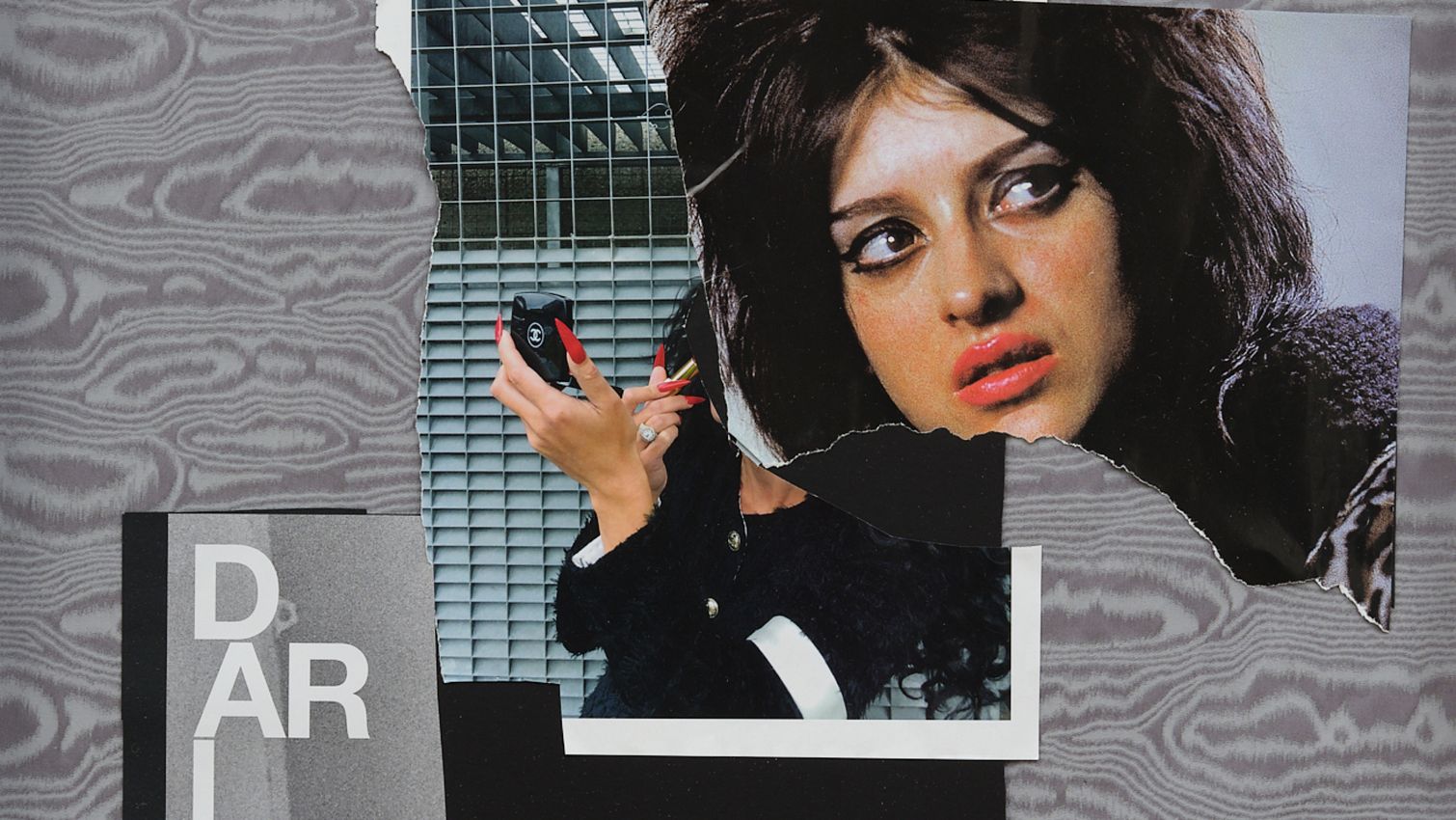
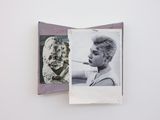
In There ain’t no reins on this one, Taylor takes the inquiry to a new place, the painted canvas colliding with mixed media collage in a hark back to early work involving queer comics, riotgrrl and anarcho-feminist politics through the inclusion of two found elements. One: a postcard depicting a second–century Roman bust of Heracles. Two: a photographic portrait of punk/no-wave icon Edwige Belmont, torn by Taylors young hand two decades ago from cult lesbian magazine Girls Like Us. Edwige—with short, bleached hair and safety-pinned skin —wears a thin rope around her neck pulled taut by what might be her own hand, out of shot. Her face is calm, dispassionate.

The image of Edwige hangs loosely, affixed to the painted canvas with a single nail, the hand-torn edge of paper hanging beyond the slanted edges of the canvas. The fragile, quick tenor of it’s assembly calls to the mutability of paint, painting and its application; a controlled easing of hold on form, shape and process. This is belied by the work’s temper, which, in spite of its sudden image, nods to a long, slow temporality—another kind of depth—via both the figure of an ancient, and through a persistent fidelity that saw Taylor pin this same picture of Belmont up in every workspace they’ve occupied for the past nineteen years.

Deep Impact’s inquiry into texture, depth and form (and its iterative ‘workings-out’ across the identically shaped canvases) allows a rare glimpse into Taylor’s process. snatched through a window, as though the show’s final pages have been pared back or left undone. No dénouement, loose ends are left untied, hanging over the edge. You might call it a cliffhanger.

Text by Frances Libeau, July 2026. Courtesy Lett Thomas

Read More
About the Artist

Imogen Taylor was born Whangarei, New Zealand in 1985. Taylor studied at the University of Auckland’s Elam School of Fine Arts, graduating with a BFA (2007) and a Post-Graduate Diploma of Fine Arts (2010). Her recent exhibitions include Pocket Histories, Te Uru Waitakere Contemporary Gallery, Auckland (2018), Open Air, Still Life, Dunedin Public Art Gallery, Dunedin (2017) and BODY LANGUAGE at Artspace, Auckland (2015).

View Artist Profile Imogen Taylor contemporary artist
About the Gallery

Lett Thomas is a contemporary art gallery in Tāmaki Makaurau Auckland. The gallery represents international and locally based artists at the forefront of contemporary practice, and presents a programme of exhibitions focused on innovative practices from the present day and preceding decades. In addition, the gallery regularly produces art publications, ranging from artist books to collected writings.

View Gallery Profile
Address
312 Karangahape Road
Newton
Auckland
New Zealand
Opening Hours
Wednesday – Friday
11am – 5pm

Saturday
11am – 3pm
(1)
Auckland 312 Karangahape Road, Newton
Lett Thomas
312 Karangahape Road, Newton, Auckland, New Zealand
+64 9 309 7848
https://lett-thomas.com/

Opening hours
Wednesday – Friday
11am – 5pm

Saturday
11am – 3pm
The art world in focus