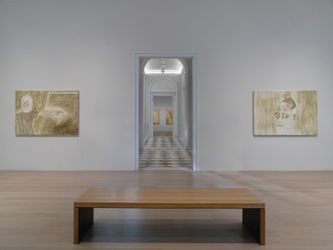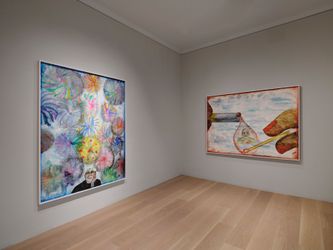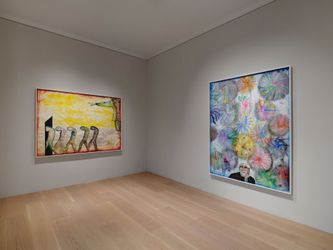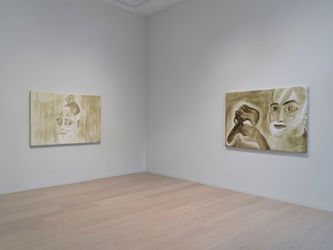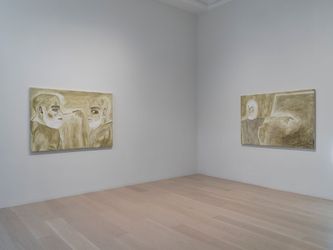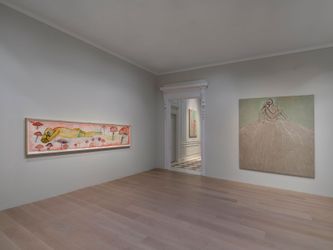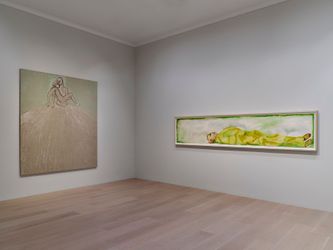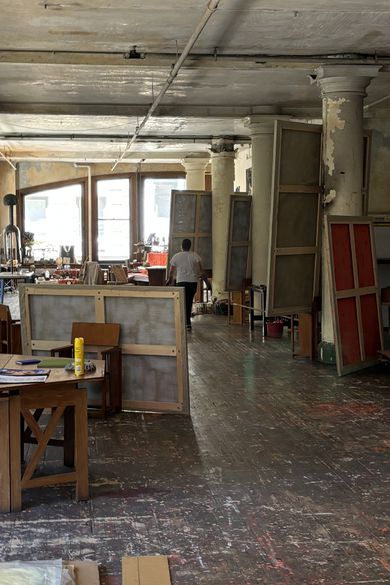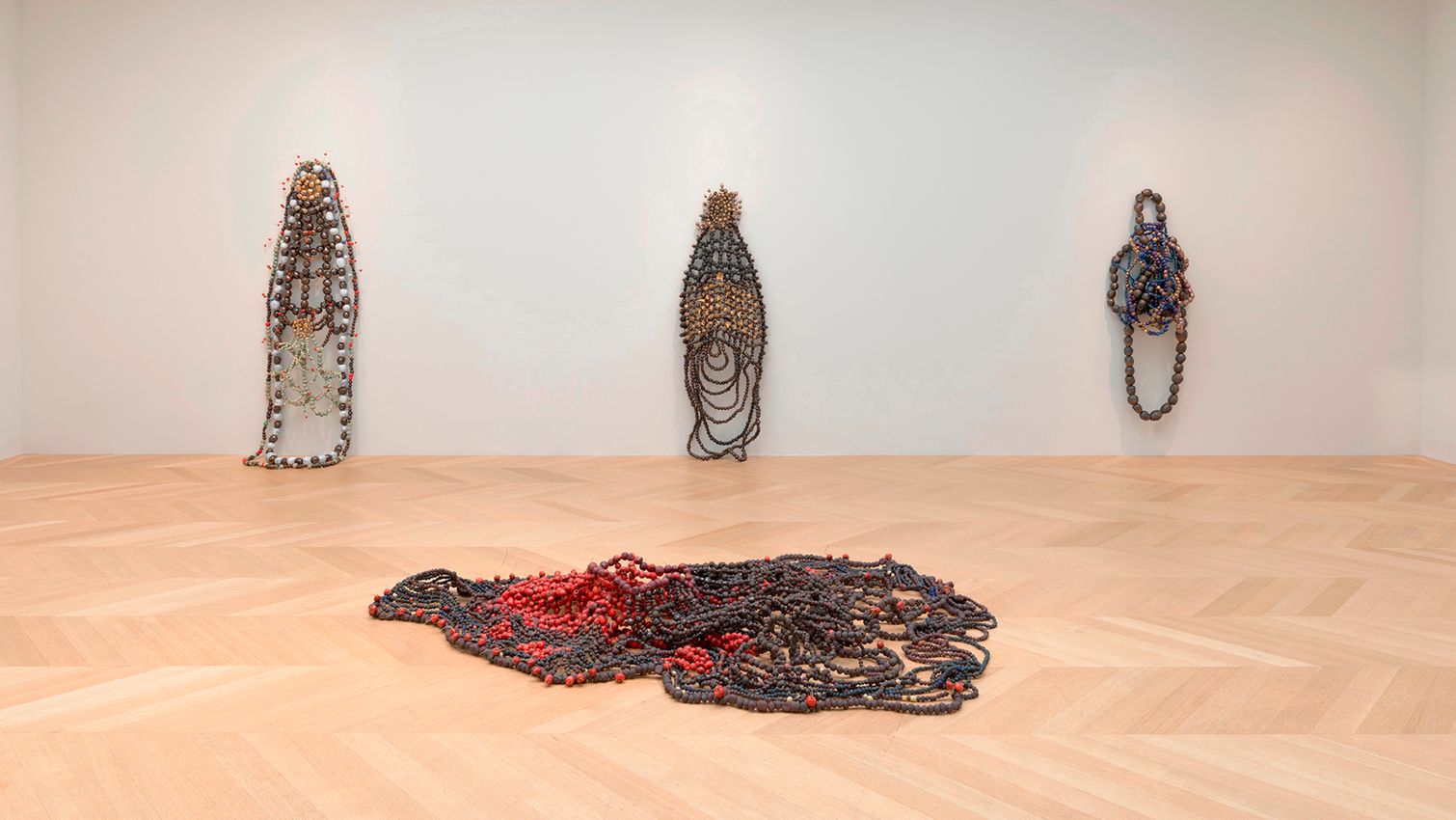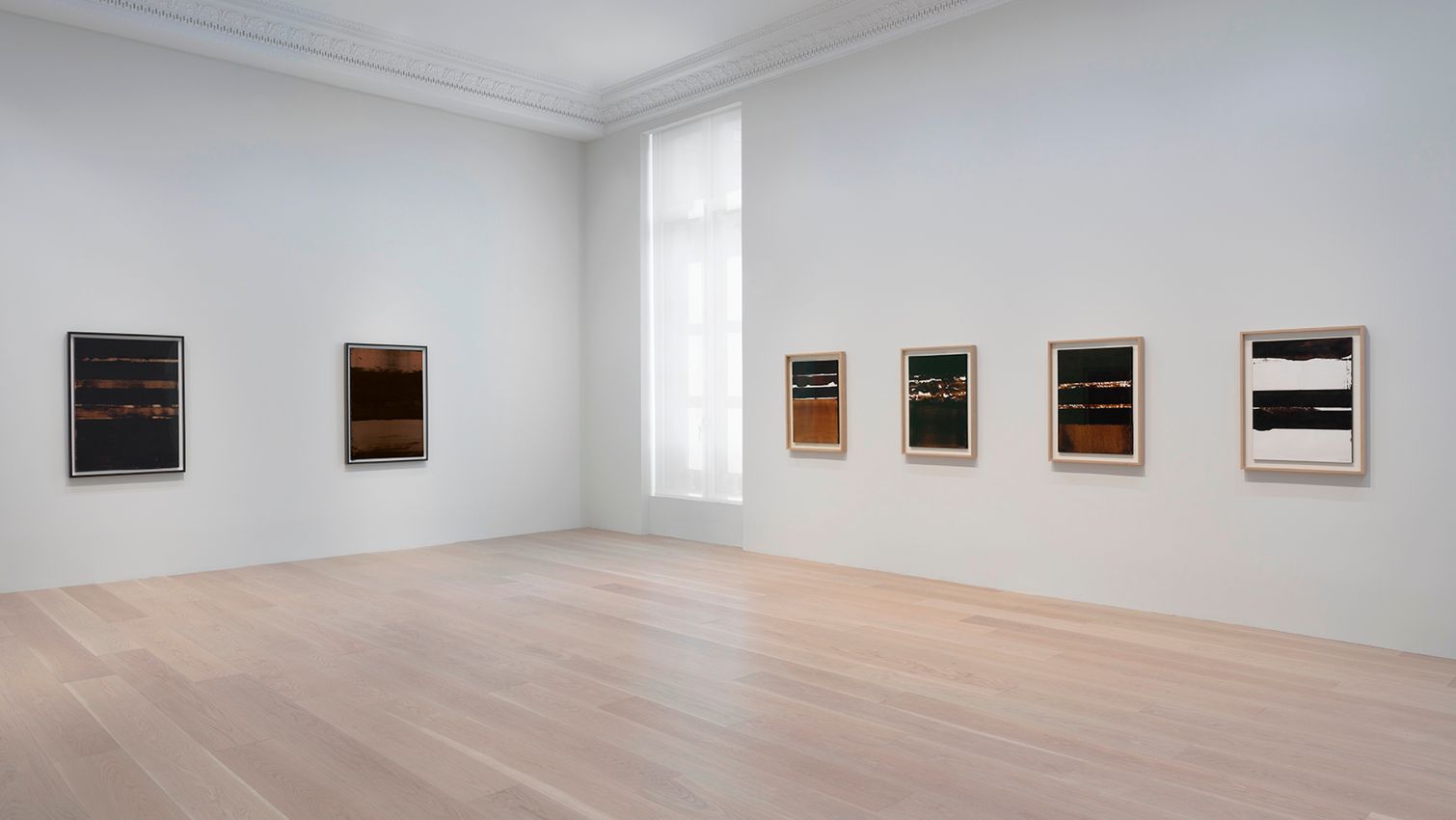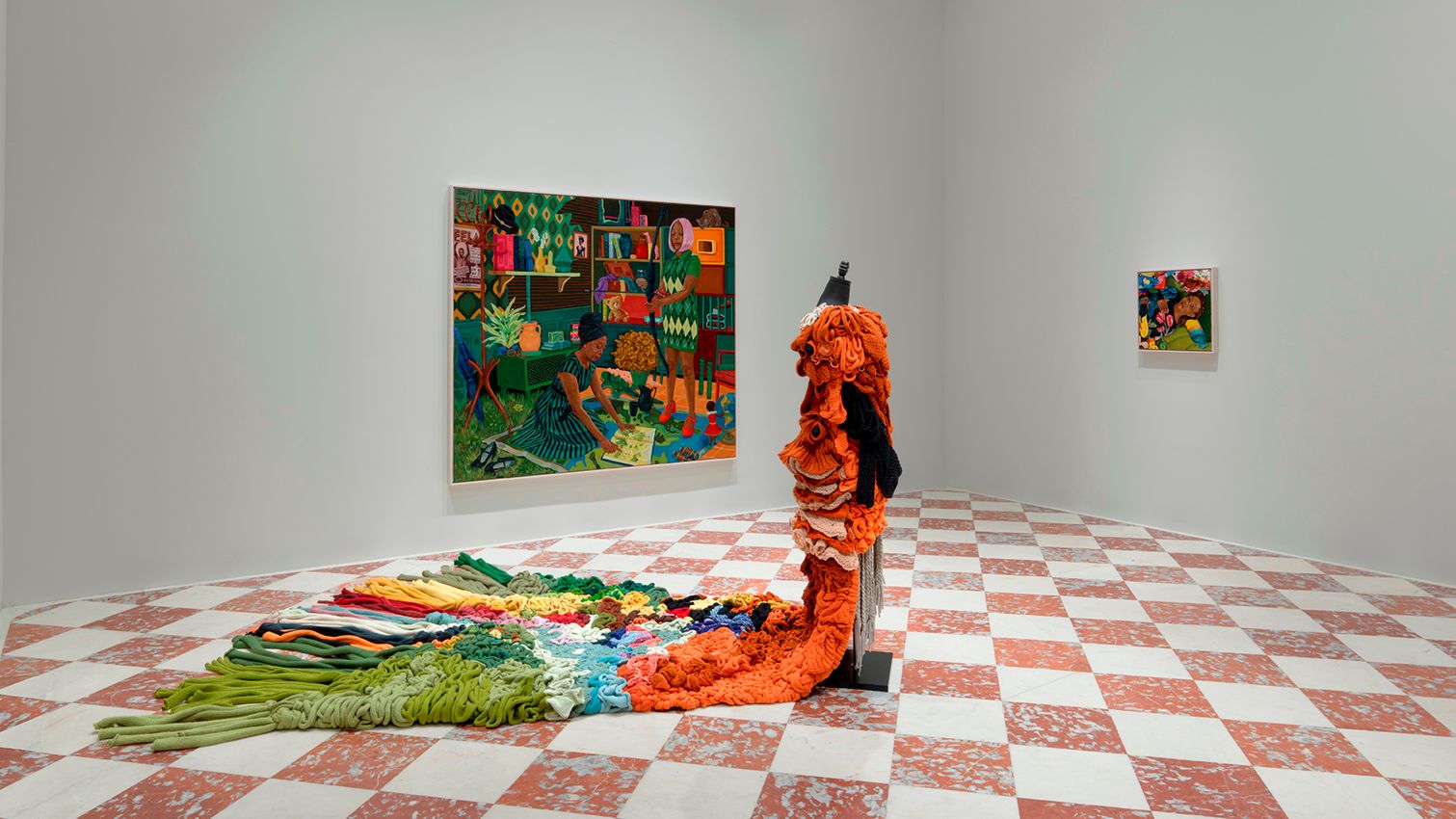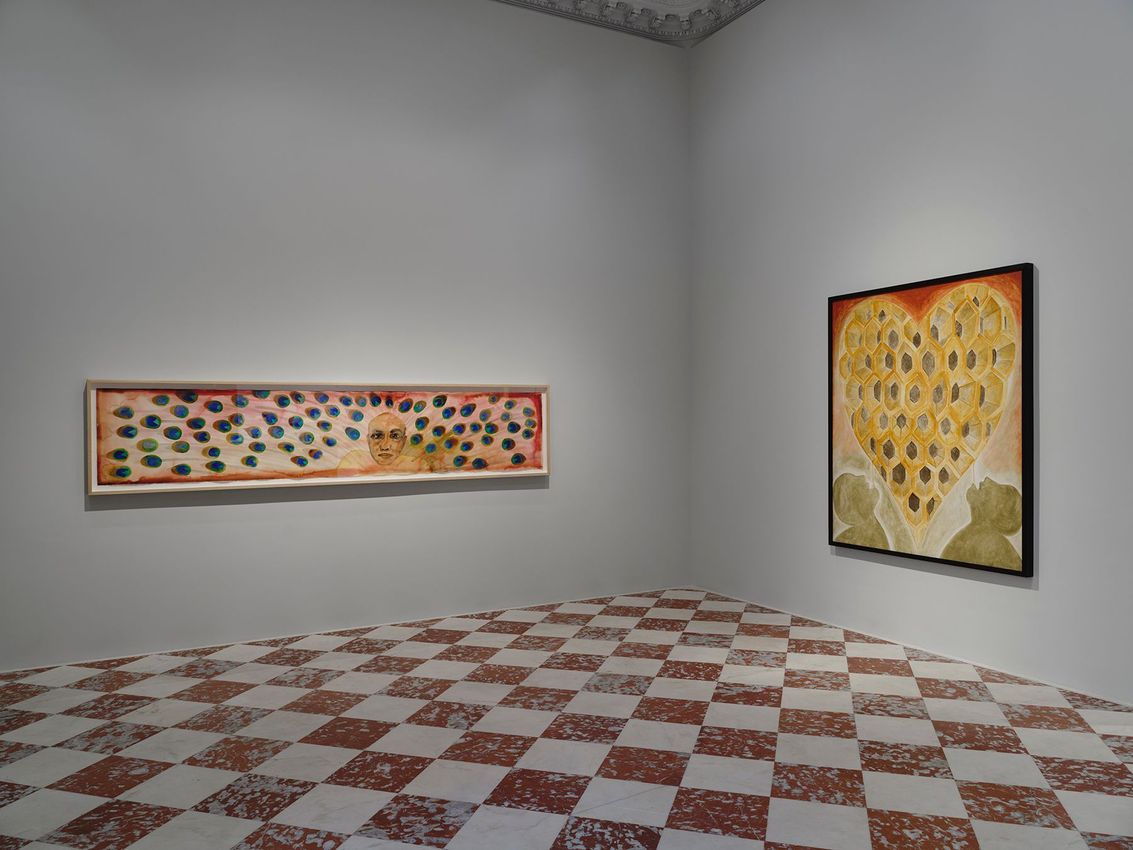
NEW YORK—This autumn, Lévy Gorvy Dayan will open Francesco Clemente: Summer Love in the Fall, marking the venerated artist’s first exhibition at the gallery’s Beaux-Arts townhouse at 19 East 64th Street. Here, across multiple floors, Clemente will debut recent large-scale paintings in oil, watercolours, and frescoes, demonstrating his engagement with form and material—and melding artistic influences from India, West Africa, Egypt, and Italy to classical Greece and Rome. The subject of his new work is grounded in introspection and personal connection, echoing the expression penned by William Blake, ‘Love, the human form divine.’ Clemente’s figuration and symbolism can be felt and read across cultures, religions, and time—drawing inspiration from disparate geographies, mythologies, and antiquities. He once stated, ‘The Egyptians, Greeks, and Romans are still more alive for me than live people, other painters.... I am a link in the long chain with the past.’
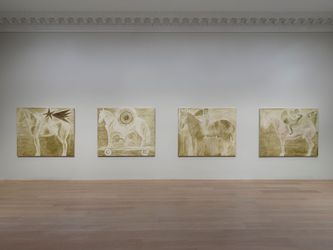
It follows that Clemente harnesses historical precedents to convey his contemporary reflections—as seen in his new work in fresco. The artist’s engagement with this ancient medium is informed by his early life in his native Naples, where decorative Greco-Roman and Italian wall paintings appeared throughout the city’s architecture and in the nearby fabled ruins of Pompeii. Utilising four traditional fresco pigments—terre verte, ochre, sienna, and umber—Clemente renders portraits that explore self and longing. ‘The Clemente subject is prototypically the self; the divided self, the twinned self, the self caught in the very instant of a shift in identity or a shift in perception or perspective,’ Henry Geldzahler observed. A series of tonal earth-green self-portraits find Clemente considering his identity—both as an artist and a human being, posed with a series of historical, transcultural masks. In other paintings, a horse subsumes the composition, hosting riders that further delve into explorations of personhood; ‘All horses are Trojan horses,’ the artist has quipped with a smile. Elsewhere, vibrant multicolored frescoes feature expressions of eros: nectar drips from a honeycomb heart into open mouths; figures make love amidst lotus petals; and a nymphic Daphne resists Apollo, seen through the gap of a keyhole.
For Clemente, the act of being represents a powerful subject, a malleable and transformative state through which critical questions can be pursued. Signifying fluidity, watercolor has long functioned for Clemente as an important means to stage these explorations. He has said, ‘The goal of my work is to remind the viewer of the necessity to be fluid, to be in a constant state of transformation.’ Beginning in the 1970s, Clemente worked in small-format watercolour, which suited his nomadic lifestyle and travels in India. In more recent years, Clemente has embarked on large-scale watercolour paintings, first with his series A History of the Heart in Three Rainbows (2009). In the exhibition at Lévy Gorvy Dayan, the watercolors on view will measure two and three meters horizontally, vividly conveying the artist’s meditations on selfhood through veils and bleeds of aqueous.
Created during the warm and lush summer months, Clemente’s representations in oil of amorous love and the erotic impulse are intimate yet universal, addressing physical and emotional connection. His earthen, pared-down palette emphasises metallic hues of gold and silver, while also referencing the pictorial traditions of the Italian trecento and Renaissance—the dry greys of Giotto and the cool greens of Fra Angelico. The paintings are populated with figurative iconography, including that of angels, and resonant themes of spirituality and sexuality. In Scissors (2024), an angel is nestled in the close embrace of another who has clipped their wings. Net (2024) presents intertwined forms tumbling with gravity in webbed suspension, while Cloud (2024) reveals two figures kissing, uplifted in the composition by an expansive, white tulle skirt. With Summer Love in the Fall, Clemente renders luminous visions that reflect on the bodily quality of desire and desire’s promise of transcendence.


Francesco Clemente’s nomadism inflects many aspects of his practice: The artist divides his time between New York, New Mexico, and India, drawing inspiration from the cultural histories of these places as well as from his native Italy. Likewise, he has traversed movements over the course of his four-decade career, having been linked to the Italian Transavanguardia group that emerged in the late 1970s as well as New York’s concurrent neo-expressionism. Both Clemente’s life and work have long been invested in fluidity and indeterminacy, and he has actively resisted participating in any social order. Informed by such diverse practices as Beat poetry, the Tantra traditions of India and Tibet, the ritualism of Joseph Beuys, and Greco-Roman art, Clemente has forged a singular career that seeks intercultural resonance. In works whose poetic intensity has found form in paintings, works on paper, frescoes, photography, book arts, and installations, he regularly turns to portraiture and self-portraiture, employing metaphor and symbolism to consider the nature of the self. Commingling references that are anatomical, botanical, art historical, and mythical, Clemente addresses various dualities that plague philosophy: mind and body, freedom and constraint, part and whole. He approaches painting as a process in which he must wait for his mind and materials to arrive at narrative order together.
Helmed by Dominique Lévy, Brett Gorvy, and Amalia Dayan, Lévy Gorvy Dayan collaborates with artists, estates, non-profit organizations, foundations, museums, and private collections to increase the visibility of twentieth- and twenty-first century works and artists—realizing seminal projects and furthering legacies. In forming Lévy Gorvy Dayan, the partners merge their respective specialties across twentieth- and twenty-first century art, their reputations as leaders and tastemakers, and their respective backgrounds in the primary and secondary markets. Lévy Gorvy Dayan provides opportunities for education, exposure, and access to acquiring exceptional art through its museum-quality exhibition program and thoughtful participation in international art fairs. Expanding, refining, and enhancing world-class modern and contemporary art collections, the gallery emphasizes connoisseurship and curation in its collection development, estate planning, and art appraisal services. Both international and local in practice and perspective, Lévy Gorvy Dayan has unique spaces and unmatched market knowledge in New York, London, and Hong Kong, in addition to representation in Geneva, Milan, Paris, Shanghai, Singapore, and Taiwan.

A respected voice in contemporary art discourse.
Focusing on ambitious storytelling and insightful art-world commentary. Ocula Magazine publishes in-depth interviews, critical essays and timely analysis on the artists, exhibitions and ideas driving the global art world.
Learn more about Ocula Magazine
Showcasing the best of the art world.
Ocula partners with galleries from around the world to highlight their artists, artworks and exhibitions. Gallery membership is by application and invitation, with each member vetted by an independent panel.
Learn more about Ocula Membership

Specialises in the sale of major artworks.
Led by a team with deep ties to the world’s leading auction houses, galleries and collectors. Ocula’s advisory team offers bespoke services to high-net-worth clients from around the world who are looking to acquire the best of contemporary and modern art.
Learn more about our team and services