





Francesco Clemente: New Bar, New Show, New York

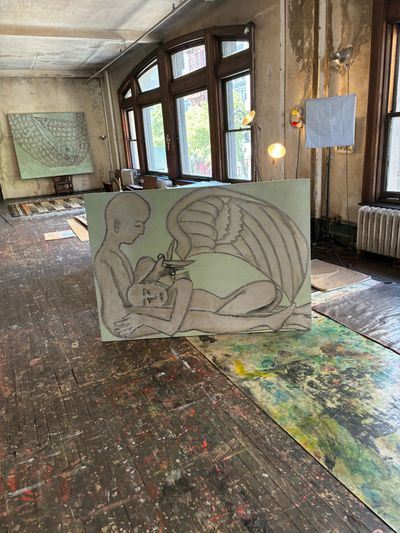
Francesco Clemente's New York studio. Photo: Dan Duray.
‘I wish there was a drink named after me,’ Francesco Clemente said one day to New York chef Daniel Humm. The two met a few years back through art dealer Vito Schnabel and have since become close friends.
‘Just a drink?’ Humm responded with a more ambitious suggestion: ‘How about an entire bar?’ What began as a pipe dream came to fruition last month with the opening of Clemente Bar on the upper floor of Humm’s Michelin-starred vegan restaurant, Eleven Madison Park.
Ushering guests in is Clemente’s first permanent artwork: a ceiling fresco depicting a constellation of figures around an all-seeing eye, while at the bar is a sprawling, erotic frieze in gold, red, and black. On the opposite wall, a second mural features a festive procession.
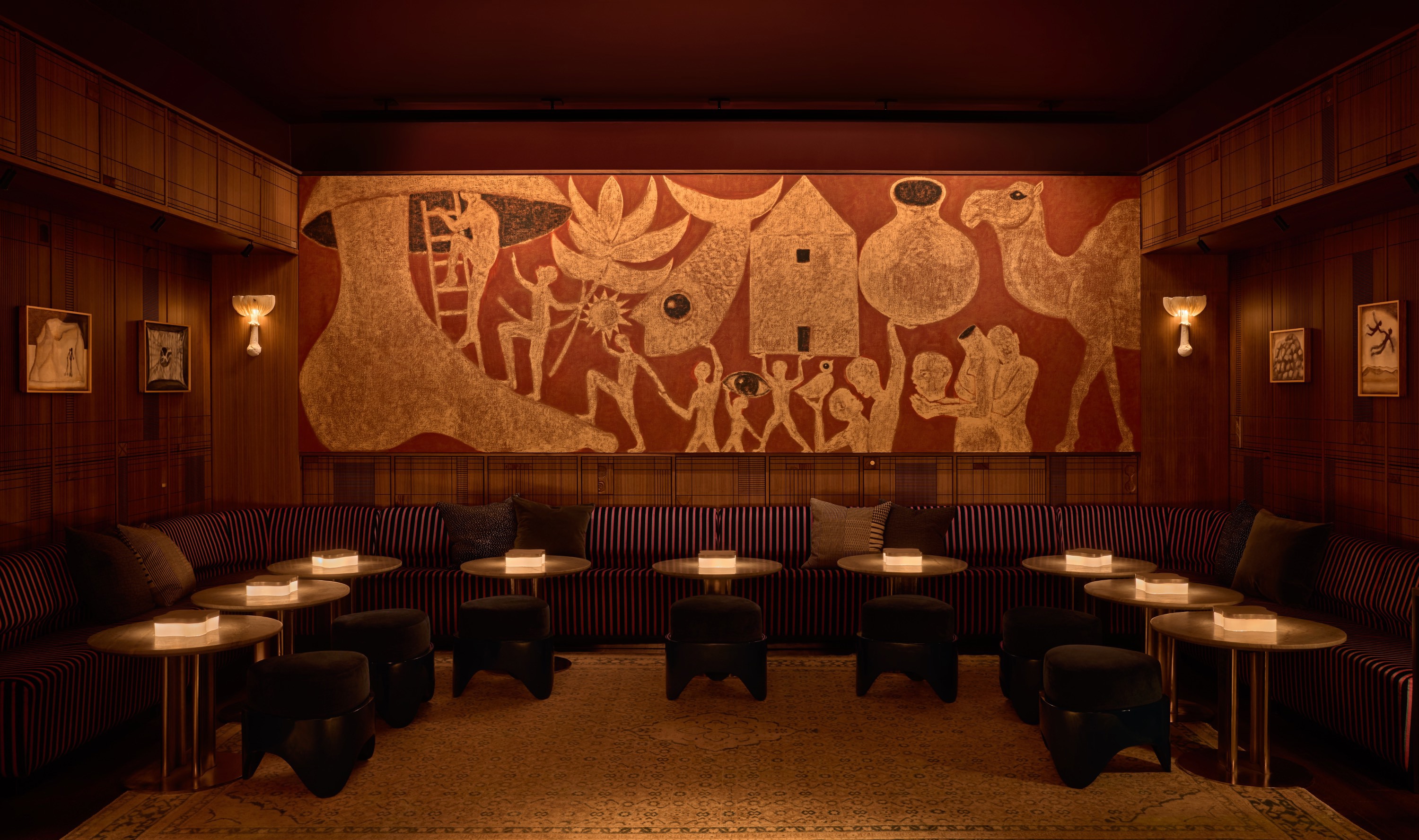
The artist still got his drink: the Clemente Martini, a perilous potion of vodka and gin infused with green curry and saffron. The concoction is a nod to India, where the artist has lived on and off since first visiting in 1971.
Clemente’s namesake burger, on the other hand—a fixture of Humm’s menu—is an ode to New York, where the artist moved in the early eighties, setting up shop in the all-but-forgotten streets of Noho. ‘I raised my two daughters in a large, dilapidated loft which reminded me of a post office in Bombay,’ Clemente says. ‘When we tried to hire a babysitter, the first person who came looked at the large, untamed empty room and said: ‘Well, I’ve been camping before.’
Clemente rose to fame in the 1980s with contemporaries David Salle and Julian Schnabel by his side. These artists—identified collectively as part of the Neo-expressionist group—were united by a shared interest in reinvigorating figurative painting.
One of Clemente’s earliest examples is the series of 12 large oil paintings, titled ‘The Fourteen Stations’ (1981–1982), produced when he first moved to New York. He was creating rudimentary yet powerful depictions of the body that seemed to hover in abstract environments: his robust figures a mix of Willem de Kooning‘s complex layering with the brittle emotional tone of Jean-Michel Basquiat.
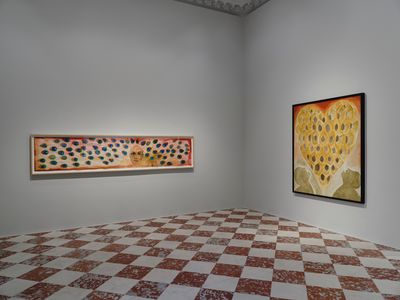
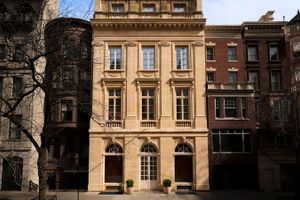
His subjects—often the female form and his own image—evolved through watercolours and oil paintings to ink drawings and frescos, the latest of which are on view in Summer Love in the Fall (29 October–21 December 2024) at Lévy Gorvy Dayan‘s Beaux-Arts townhouse space at 19 East 64th Street.
‘Summer in New York is for me a time of solitude and concentration,’ Clemente says. ‘The great enemy of a painter is interruption.’
An undisturbed state of mind is arguably crucial when you’re painting a fresco, a fast-drying, unforgiving medium requiring a healthy dose of control and surrender. It’s this sense of restraint that Clemente learned to master from Italian conceptual artist Alighiero Boetti, who sought to create ‘order and disorder’ through establishing protocols in his practice.
‘To relinquish control requires knowledge of what control is,’ Clemente explains. ‘Frescos and watercolours are mediums that compose themselves; they will not allow you to go back or correct anything.’
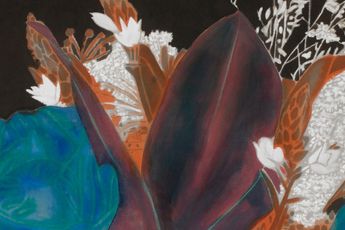
The exhibition at Lévy Gorvy Dayan features eleven large-scale frescos and a number of self-portraits. Like his work on the ceiling of Clemente Bar, they are coloured with traditional pigments—terre verte, ochre, sienna, and umber.
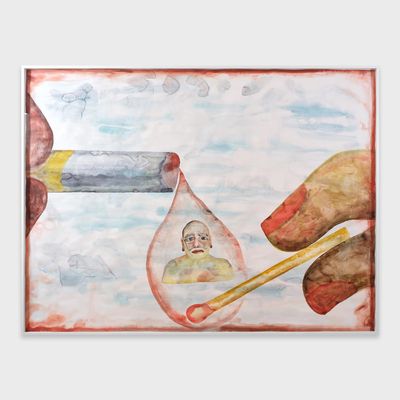
Clemente has also painted himself—discernible by his white beard and beady eye—into works such as Cigarette (2024), where his image is encased in a teardrop leaking out the tip of a cigarette, while in Firework (2024), the artist sits at the base of the composition, looking up at a volley of surrounding explosions.
‘Painting is the relic of a vivid act of seeing,’ he says. ‘To see is to remember and to see is also to explore the ever-variable distance between us and the world.’ —[O]
Selected Artworks
Main image: Francesco Clemente's New York studio. Photo: Dan Duray.





A respected voice in contemporary art discourse.
Focusing on ambitious storytelling and insightful art-world commentary. Ocula Magazine publishes in-depth interviews, critical essays and timely analysis on the artists, exhibitions and ideas driving the global art world.
Learn more about Ocula Magazine
Showcasing the best of the art world.
Ocula partners with galleries from around the world to highlight their artists, artworks and exhibitions. Gallery membership is by application and invitation, with each member vetted by an independent panel.
Learn more about Ocula Membership
Specialises in the sale of major artworks.
Led by a team with deep ties to the world’s leading auction houses, galleries and collectors. Ocula’s advisory team offers bespoke services to high-net-worth clients from around the world who are looking to acquire the best of contemporary and modern art.
Learn more about our team and services