Press Release

For her first exhibition with Lisson, Dana Awartani builds on significantrecent presentations at Arnolfini, Towner Eastbourne and the VeniceBiennale, with a new body of floor-based sculptures and paintings onpaper. Four installations continue the series of mosaics made for theNational Pavilion of Saudi Arabia at the 61st Venice Biennale (ends22 November), entitled May your tears never dry, you who weep overstones. These iterations of her handmade, brick tile floors restore nowlost decorative mosaics from former sites of worship or architecturalimportance that were destroyed over the past three or four years,continuing her exploration and preservation of destroyed sites ofcultural heritage in the wider Arab world.

Working in collaboration with stonemasons and artisans ofAfghan, Pakistani and Syrian descent from a mountainside studionear Riyadh, Awartani redrew and recast the geometric floor patternsin three colours of clay, which were harvested from three differentlocations in the region, before being dried and baked by the sun. Theknowledge and traditions encapsulated in her laboriously handmaderecreations constitute a bridge to the past and an act of protection andperpetuation of a dying art form. By researching multiple sites harkingall the way back to the origins of mosaic in ancient Mesapotamia(largely corresponding to present-day Iraq), the fragmentary natureof this medium reflects not only those previous and complex colonialentanglements, but also the present day shattering of shared culturesand histories. Despite all of this, Awartani posits that these shards canstill be remade and recombined into a unified, aesthetic composition.

From a dozen ink and gouache reconstructions of the designsthat were displayed as one combined instllation in Venice, Awartanihas selected four floor pieces for this show: namely the ByzantineChurch in Khirbet Midras (latter-day Israel), Hisham’s Palace inJericho (Palestine), the Church of the Nativity in Bethlehem (Palestine)and the Kursi Monastery in Golan Heights (Syria), all demolishedthrough bombardments by the Israel military. The reclamation of thesesignificant sites of cultural heritage also amounts to a plea for thepreservation of memory, craftsmanship and the people who helpedconstruct these temples, basilicas and holy spaces – amounting to akind of “quiet resistance,” to use Awartani’s words. Her original titlefor the series May your tears never dry, you who weep over stones is nowjoined by a subtitle for this show from the same Arabic poem by AbuNuwas (762–813CE), Give and be generous with all your hand possesses,referring to the sharing of knowledge that went into this body of work,constructed as it was by the labour and skill of ‘many hands’. Indeed, byspanning the fifth to the 21st centuries, the original, mostly Christian,Byzantine-era mosaics would have been seen and used by worshippersfrom Islamic, Greek Orthodox, Roman Catholic and Jewish faiths andbeen witness to the rise and fall of Ottoman and Roman emperors alike.

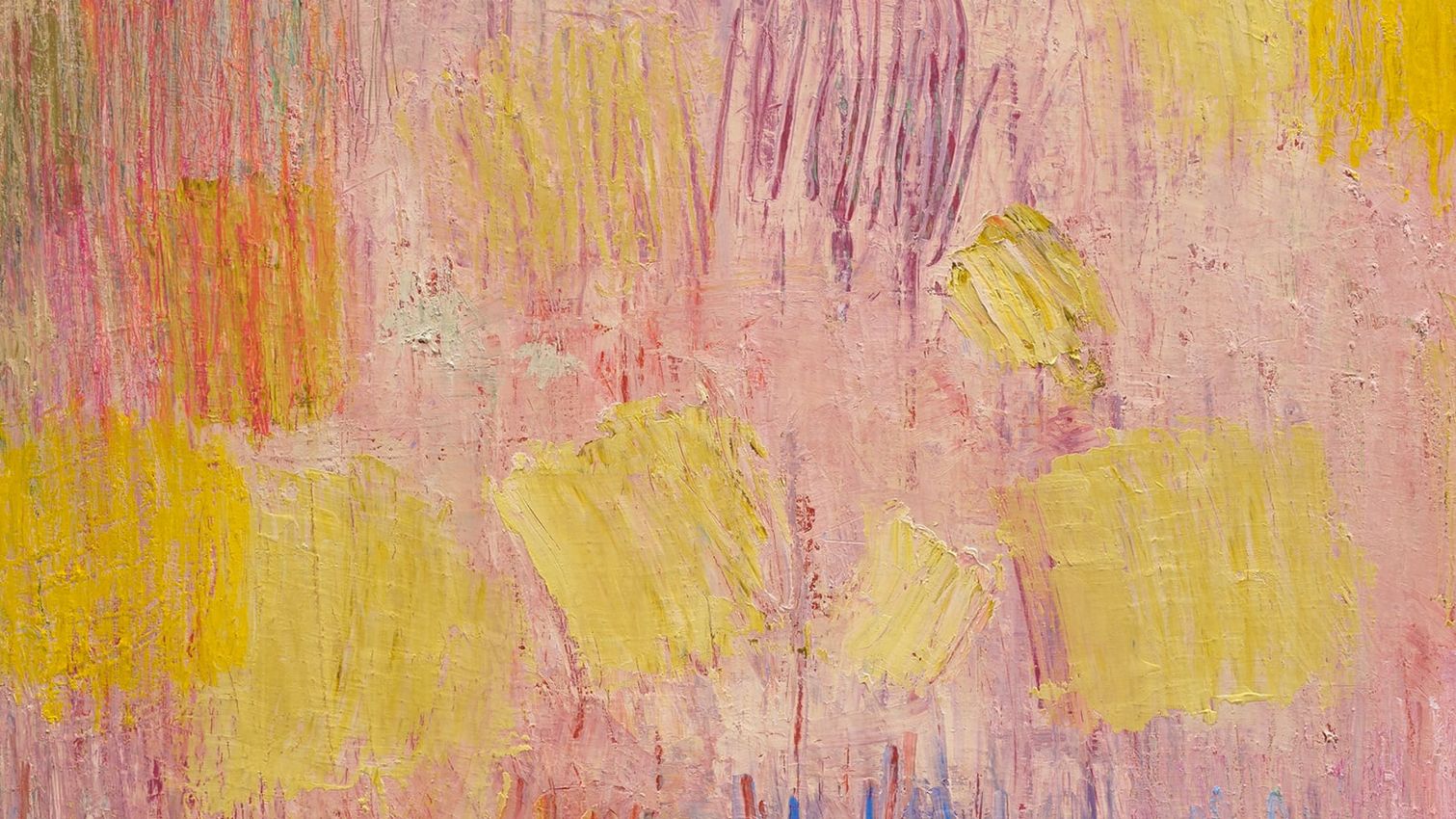
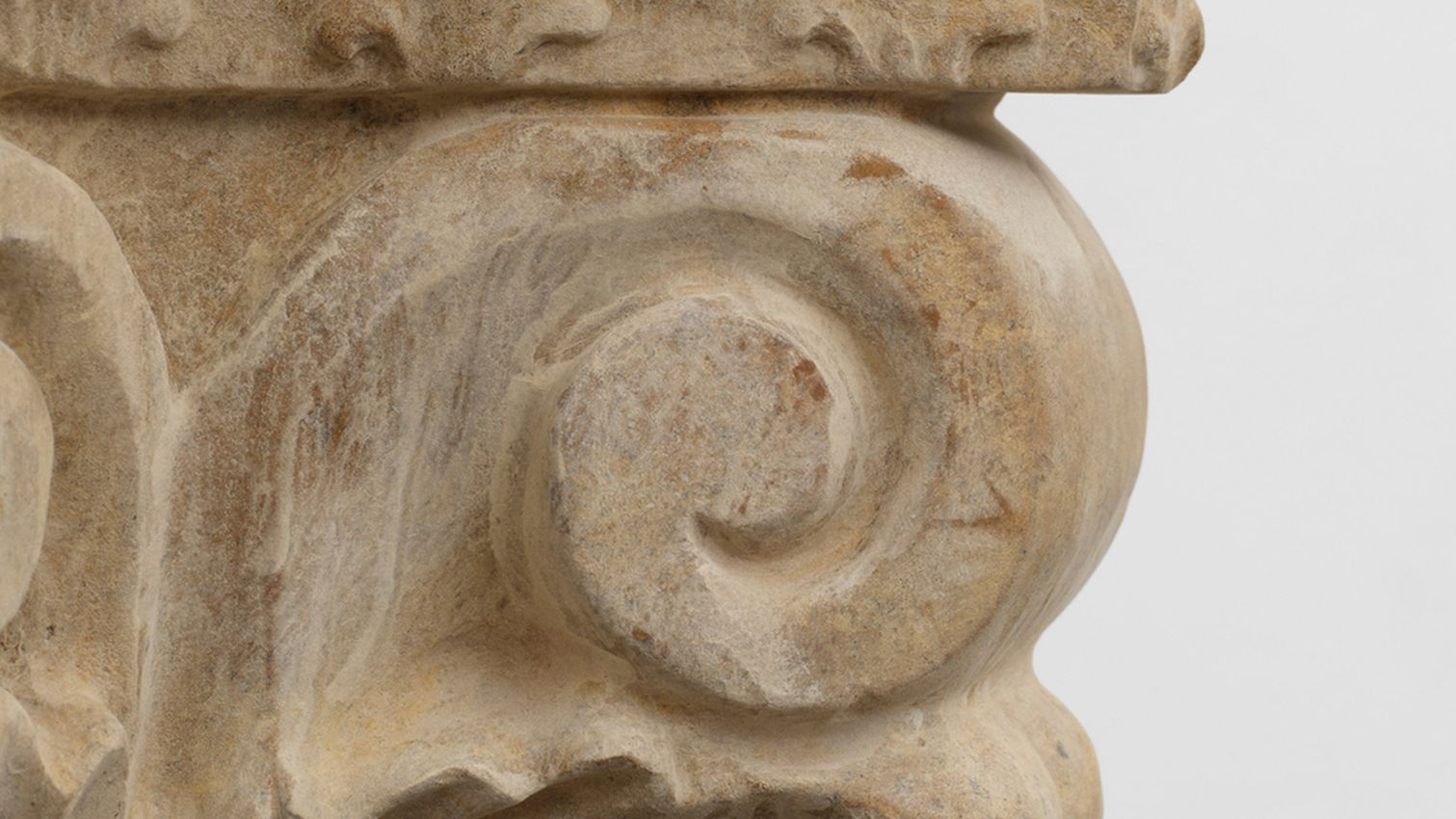
The paradox of the man-made and the man-destroyed is also evidentupstairs in Let me mend your broken bones (2024) composed of naturallydyed silk fabrics, handmade in Kerala in south India. The abstract panelsare infused and coloured with ayurvedic herbs and medicinal spices,but are then slashed and disrupted by holes and tears that correspondto mapped locations in the Middle East that were subjected to sustainedviolence or destruction. The artist then mends these punctures througha healing process of darning, just as she has re-carved a Palmyran pillar,which also recalls the silenced traditions and epochs of beauty that areunthinkingly erased by moments of violence.

Courtesy Lisson Gallery.

Read More
About the Artist

Dana Awartani engages in critical and contemporary reinterpretations of the forms, techniques, concepts and spatial constructs that shape Middle Eastern culture. Steeped in a multitude of historical references, especially Islamic and Arab art-making traditions, Awartani’s practice straddles continuity and innovation, aesthetic experimentation and social relevance. Spanning painting, sculpture, performance and installation, Awartani’s commitment to historically situated and locally sourced materials lends a rare sensitivity to urgent political concerns of gender, healing, cultural destruction and sustainability. Consistent throughout the artist’s work has been her philosophical elaboration of geometric patterns as an alternative genealogy of abstraction.

View Artist Profile

Also Exhibiting at Lisson Gallery

About the Gallery

Established in 1967 in London, Lisson Gallery is one of the most well-known galleries operating globally. Boasting an influential and continuing legacy, including playing a pivotal role in the careers of many pioneers of historically important art movements, the gallery works with some of the most significant contemporary artists today.

View Gallery Profile
Address
67 Lisson Street
London
United Kingdom
Opening Hours
Tuesday – Saturday
11am – 6pm
(1)
London 67 Lisson Street
Lisson Gallery
67 Lisson Street, London, United Kingdom
+ 44 207 724 2739
http://www.lissongallery.com

Opening hours
Tuesday – Saturday
11am – 6pm
The art world in focus