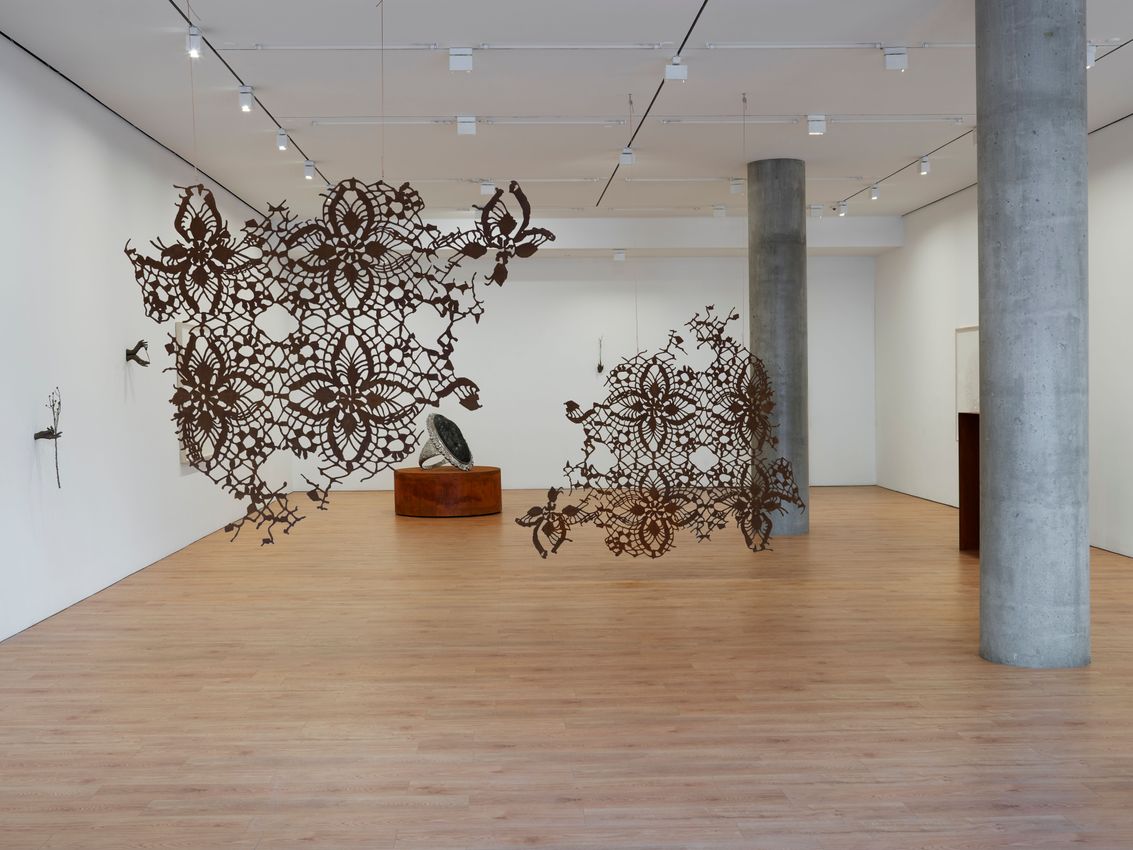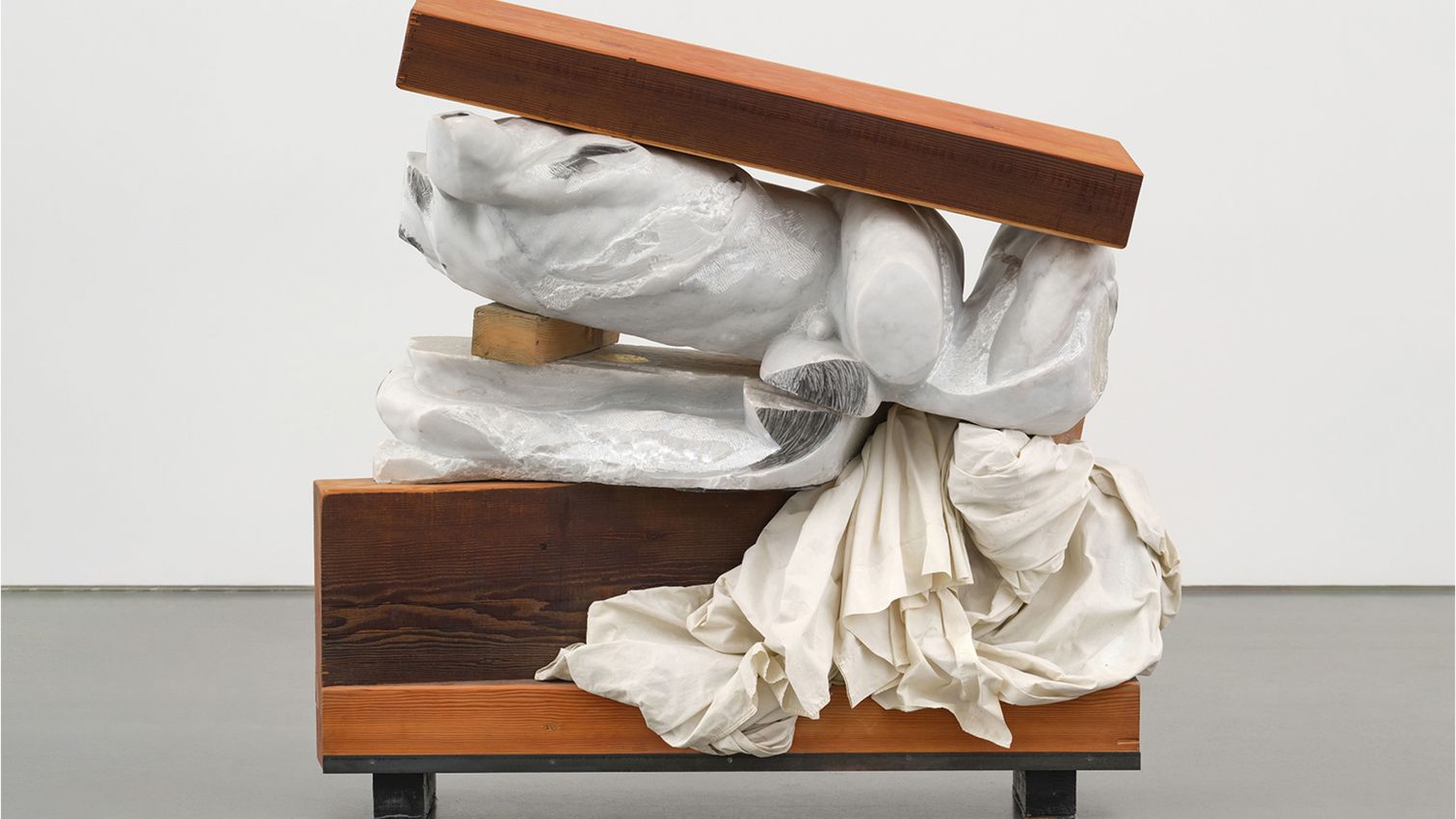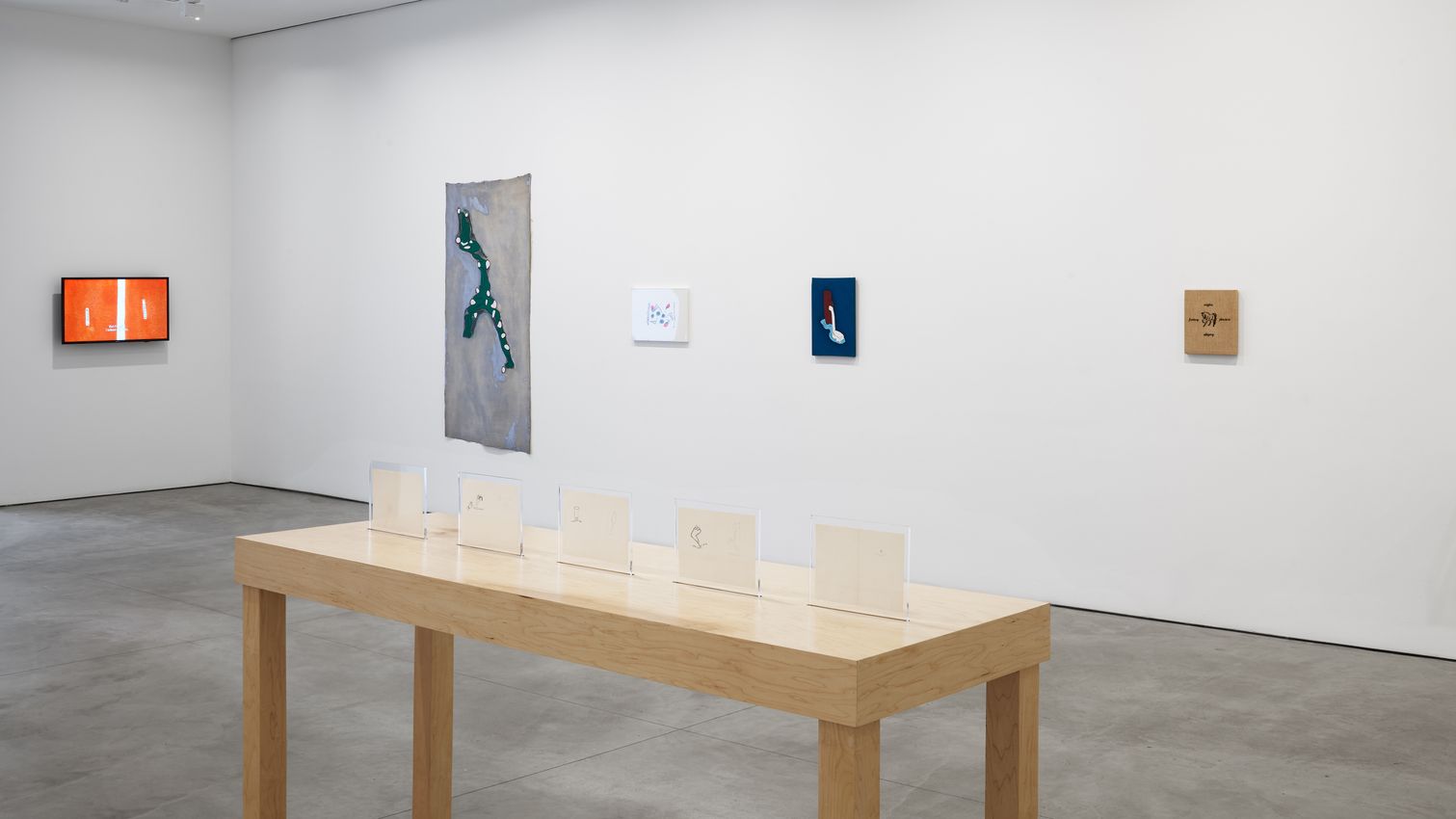
For her first exhibition with Lisson Gallery in New York, Kelly Akashi presents Heirloom, a new body of work that builds on her pivotal 2025 presentation in Los Angeles. Where that earlier exhibition examined inheritance through formal and material tension, Heirloom turns toward the conditions of loss and grief, asking how absence is held, transmitted, and given form. The exhibition coincides with Akashi’s participation in the 2026 Whitney Biennial and precedes the unveiling of her commission for John F. Kennedy International Airport’s New Terminal One, in partnership with Lead Curator, Culture Corps.
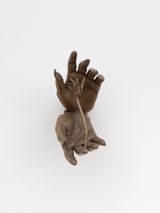
Across bronze, Corten steel, flame-worked glass, and carved stone, Akashi approaches sculpture as a site where loss can be registered without resolution. These materials do not conceal rupture but sustain it, allowing traces of erosion, oxidation, and transformation to remain visible. Form is subject to ongoing processes of change through which matter records duration. In this sense, the works operate as accumulations of time, where loss is not an isolated event but a condition that unfolds, settles, and alters.
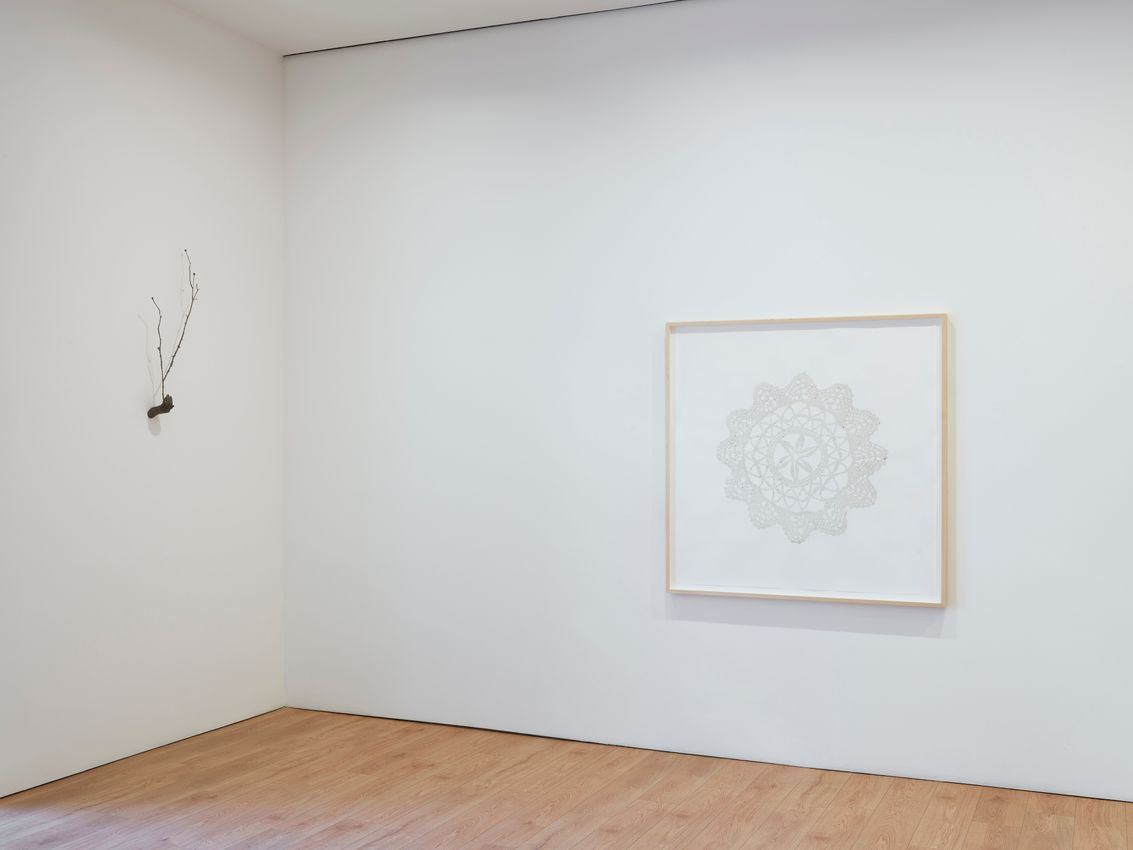
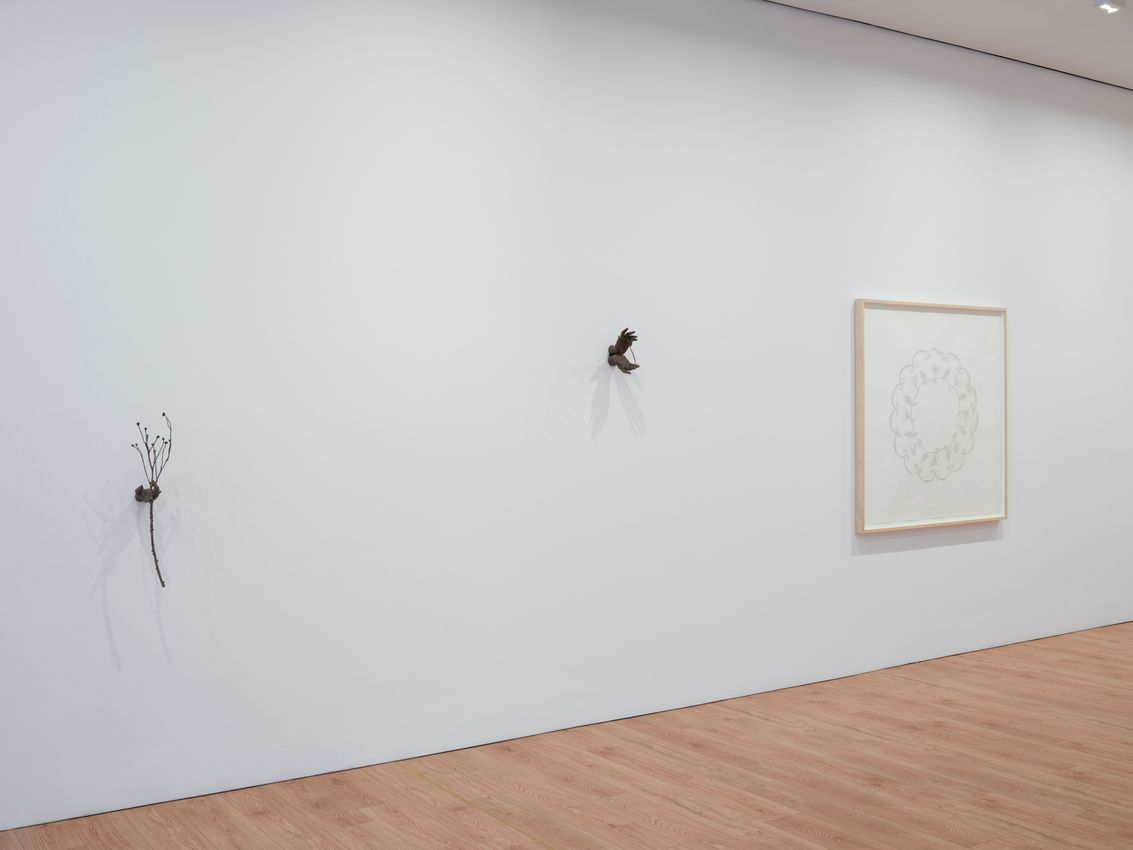
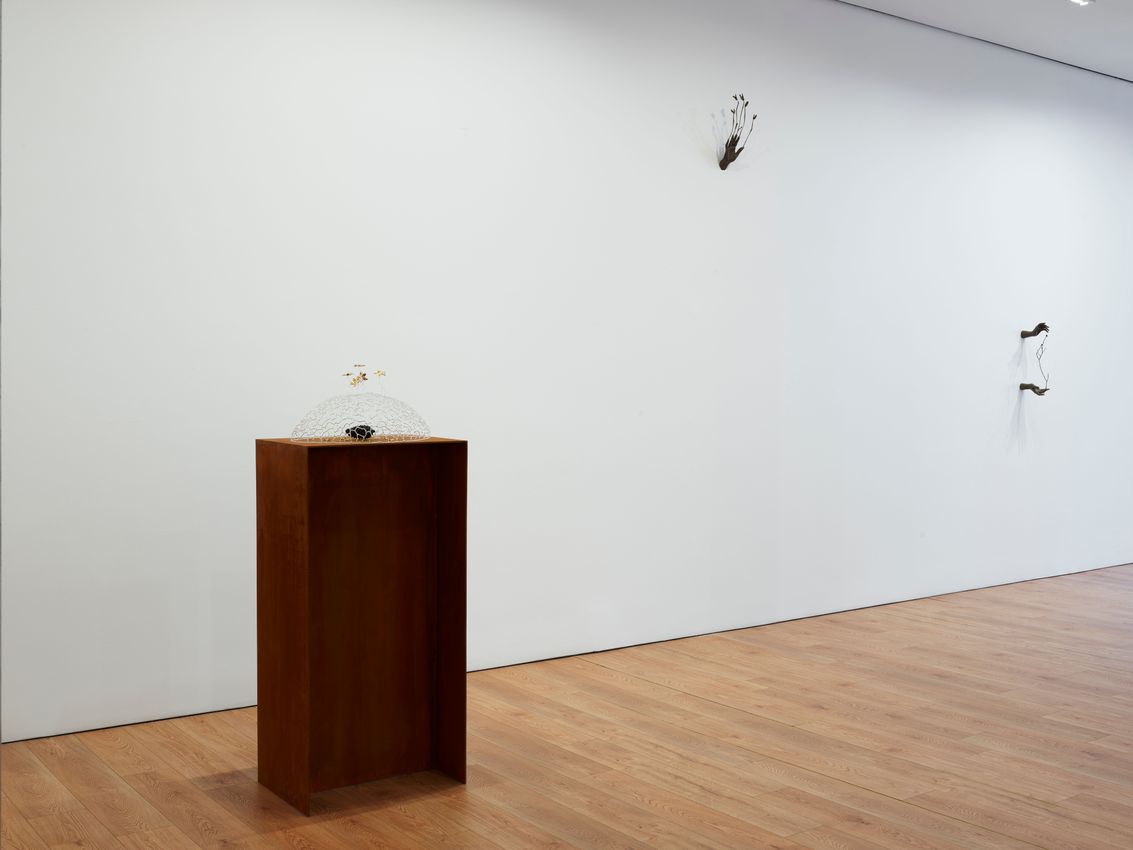
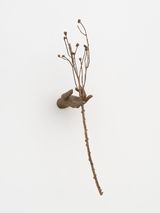
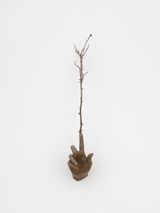
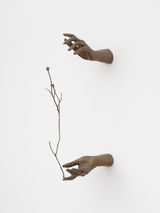
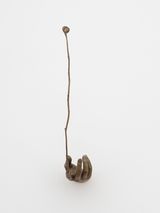
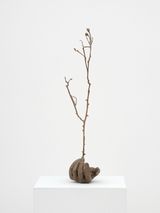
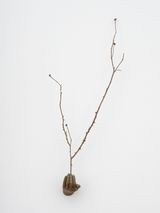
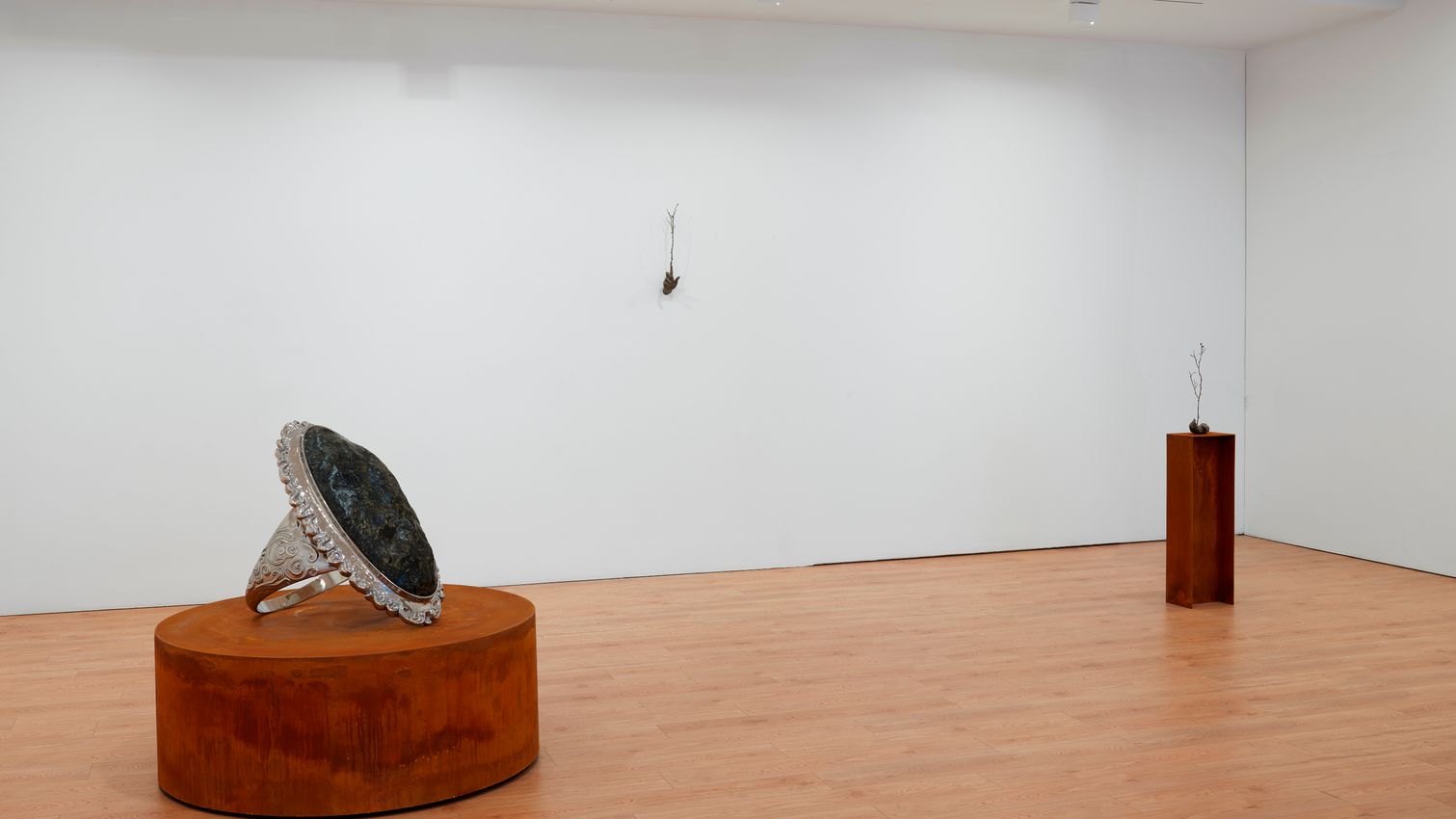
Over the last year, Akashi has tended to the land and cultivated a garden where her home and studio once stood. This act of care becomes central to the exhibition, not as restoration but as a practice of attending to what persists. In Heirloom, organic forms drawn from that site reappear as bronze roses, irises, and branches. Directly cast into metal, these elements become relics and resilient markers of domesticity and care. They recall gestures of preservation that attempt to memorialize, even as their original context has vanished. The works hold a tension between endurance and fragility, suggesting memory as something reconstituted in order to be claimed.
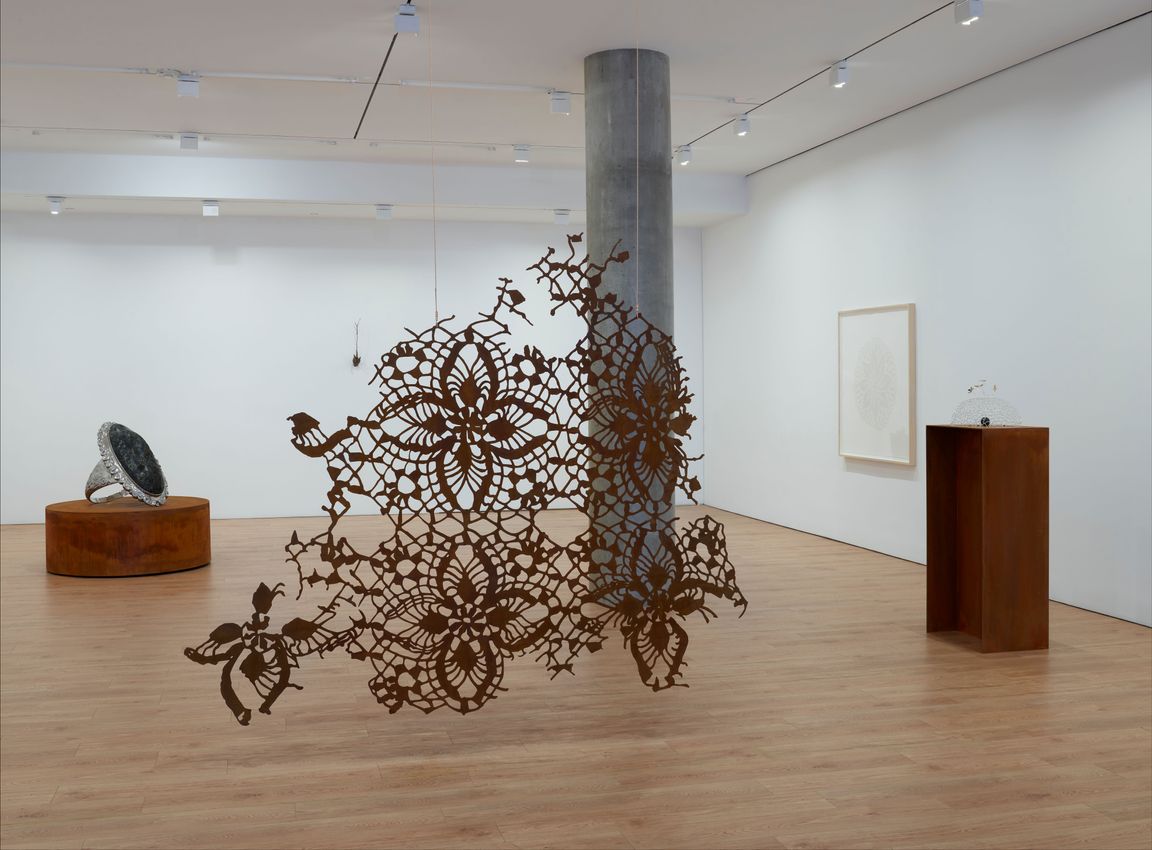
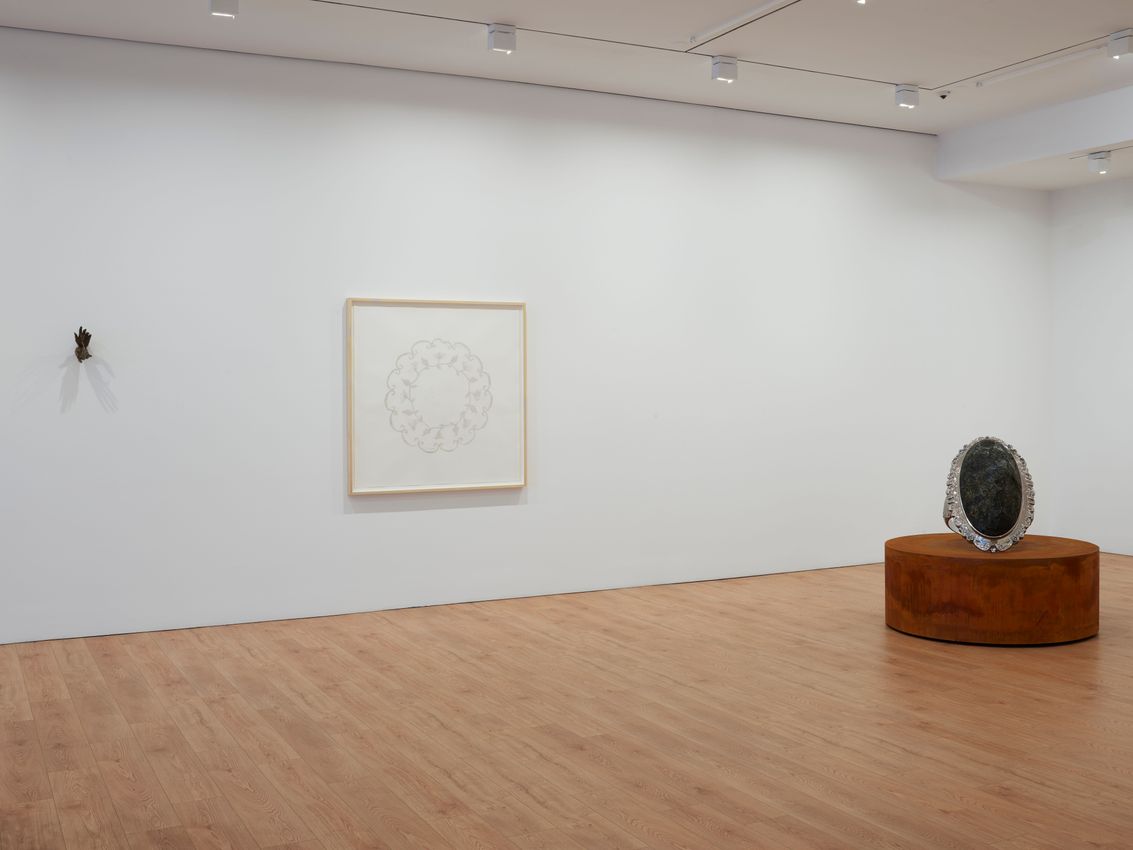
At the center of the exhibition stands an enlarged rendering of an inherited stone ring once worn by the artist. Expanded to a monumental scale and retaining the rough surface of the original, the object shifts between bodily intimacy and geological presence. Its altered proportion speaks to the way grief reshapes perception, enlarging what is absent until it exceeds the capacity to contain it. The sculpture does not function as a replacement. Instead, it stages a confrontation with weight, both literal and psychological, as something carried forward.
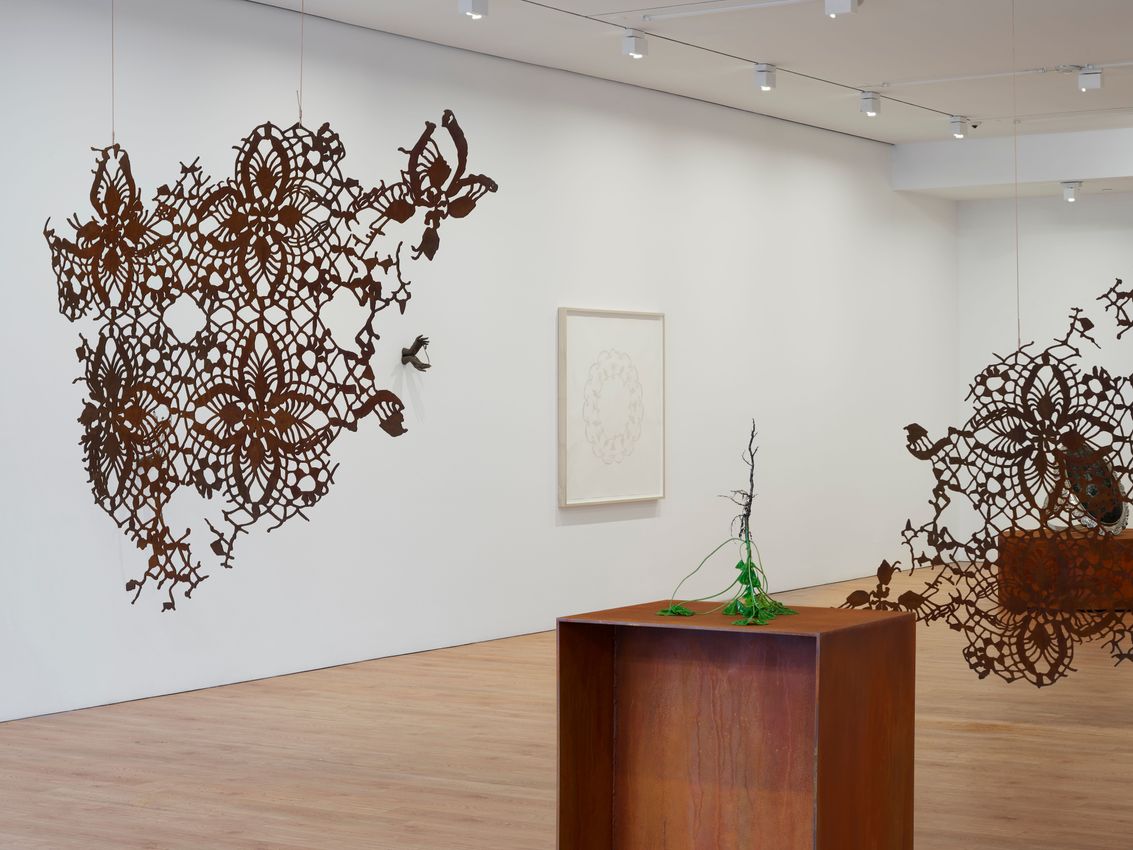
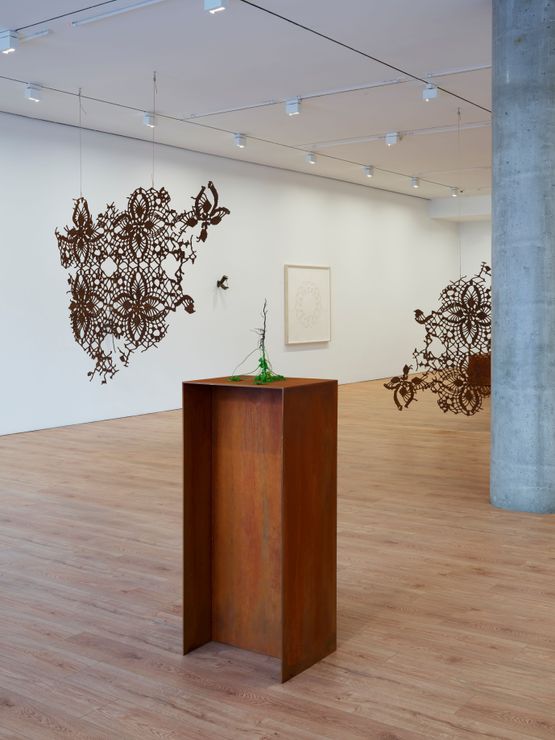
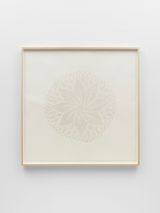
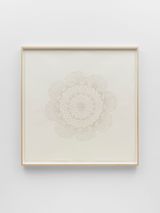
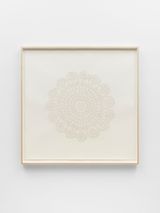
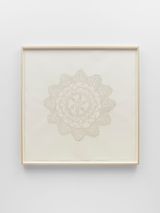
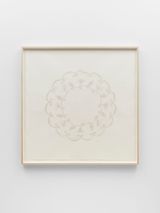
A pair of Corten steel panels, cut from doily patterns traced from scans of her grandmother’s handmade lace tablecloth, extends this inquiry into the articulation of absence. Suspended with a gap between them, the panels demarcate a space of interruption that resists closure. The material itself is integral. Weathering steel records exposure over time, its surface continually oxidizing, increasing its structural integrity despite its distressed patina. Here, permanence and impermanence coexist, allowing absence to be understood as an active and ongoing presence rather than a void. Nearby, book-ash flocked paper works incorporate remnants of the artist’s former library. The delicate lace pattern evokes domestic familiarity while also indexing systems of transmission through which knowledge, memory, and history are passed down. These works situate personal grief within broader temporal and cultural continuities.
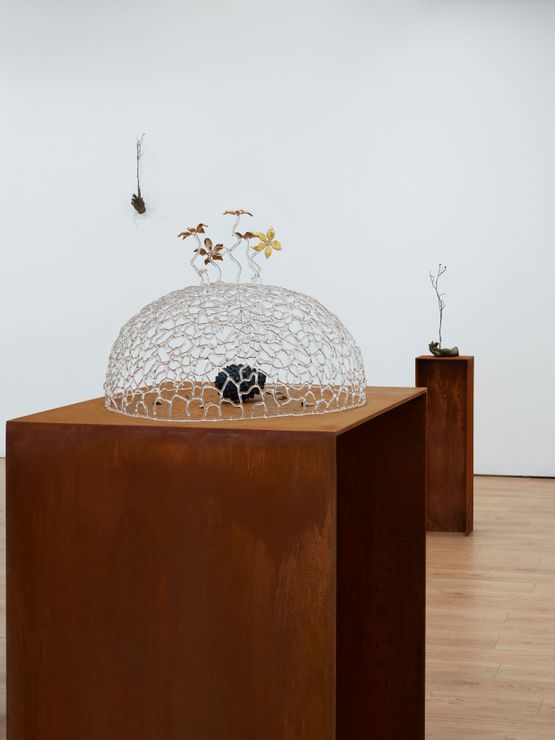
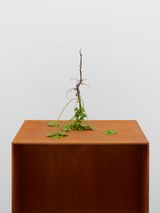
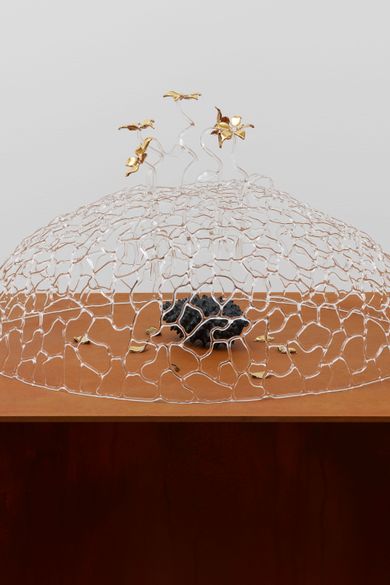
Glass works complete the exhibition, introducing a language of fragility and exposure. A mallow plant, originally found while gardening, has been recreated in glass with its root system exposed. This particular species commonly emerges from disturbed soil and indicates emerging biodiversity after a disaster. Another glass and bronze sculpture takes a finely latticed botanical form that suggests both containment and permeability. Its intricate construction reflects a sustained engagement with vulnerability, where delicacy is not a weakness but a mode of attention. In these works, loss is neither obscured nor resolved. It is articulated through forms that remain open, provisional, and responsive.
Heirloom proceeds from Akashi’s understanding of sculpture as a medium uniquely capable of holding absence in materiality. Rather than treating heirlooms as static tokens of remembrance, the exhibition proposes them as dynamic carriers of history, shaped as much by what is no longer present as by what endures.
Courtesy Lisson Gallery.


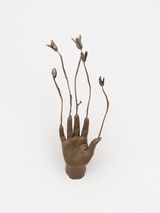
Executed with deft manual skill and astute material knowledge, Kelly Akashi’s visual language emphasises the impermanence of the natural world, recording and indexing fragmented moments in time. Her singular practice is characterised by a rigorous conceptual approach, yet the work is distinguished by a deep reverence for process. Always a student, Akashi is perpetually studying new practices and physical techniques such as glass-blowing, casting, candle-making and stone carving. The repeated use of the hand as motif serves as a symbol for Akashi’s ongoing investigation into the temporality of the human experience. Often cast in bronze or crystal, her hands bear the mark of time on her body, her growing fingernails, and aging flesh. Towering sculpted weeds, delicately glass-blown flowers, a to-scale depiction of her body in polished travertine, enlarged casts of extinct species of shells; Akashi poetically and objectively encapsulates the notion of mortality in a ritualistic gathering of objects. However, her take on her own practice is not a morbid one. Akashi references the phrase mono no aware. ‘It refers to a wistful awareness of impermanence—the ‘pathos of things.’ It’s central to hanami, the Japanese custom of venturing out to enjoy the brief season of cherry blossoms.’


A respected voice in contemporary art discourse.
Focusing on ambitious storytelling and insightful art-world commentary. Ocula Magazine publishes in-depth interviews, critical essays and timely analysis on the artists, exhibitions and ideas driving the global art world.
Learn more about Ocula Magazine
Showcasing the best of the art world.
Ocula partners with galleries from around the world to highlight their artists, artworks and exhibitions. Gallery membership is by application and invitation, with each member vetted by an independent panel.
Learn more about Ocula Membership

Specialises in the sale of major artworks.
Led by a team with deep ties to the world’s leading auction houses, galleries and collectors. Ocula’s advisory team offers bespoke services to high-net-worth clients from around the world who are looking to acquire the best of contemporary and modern art.
Learn more about our team and services