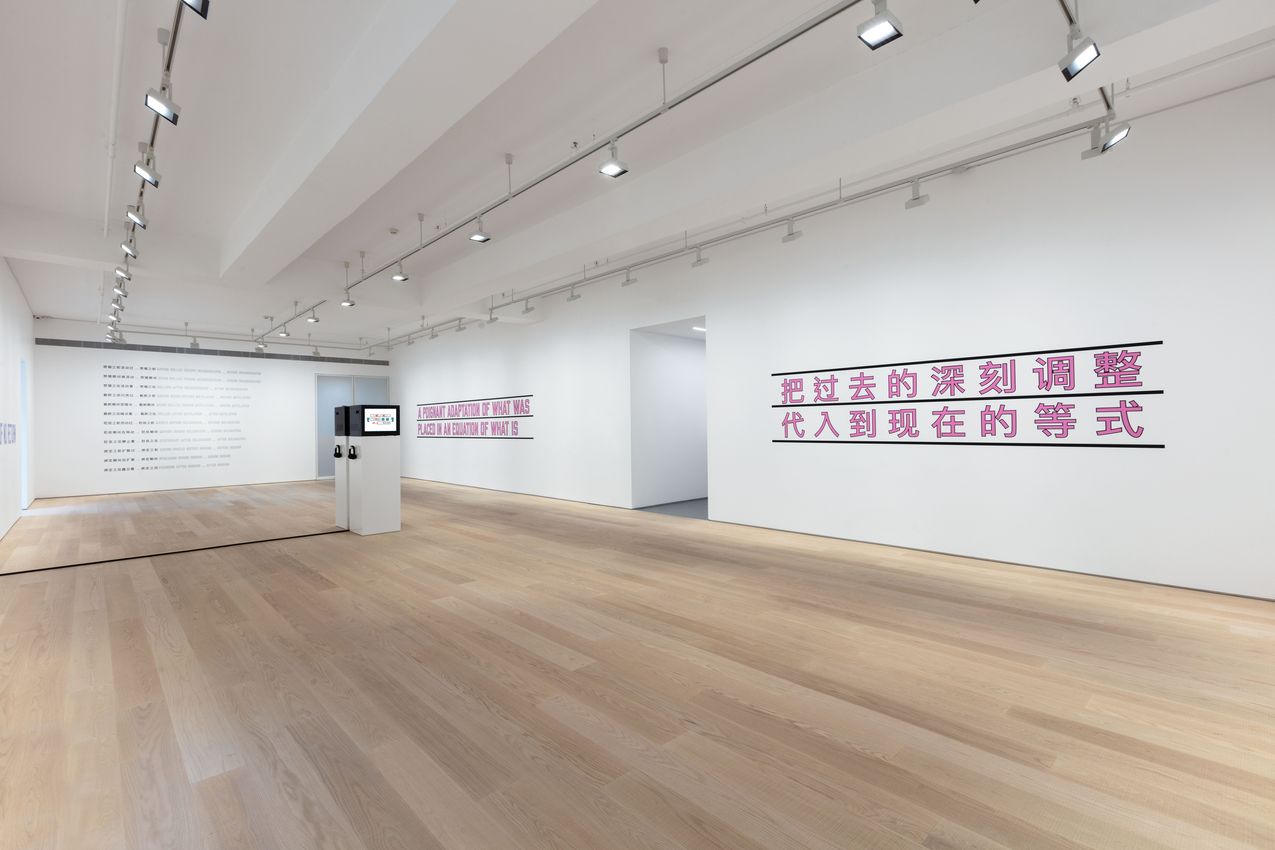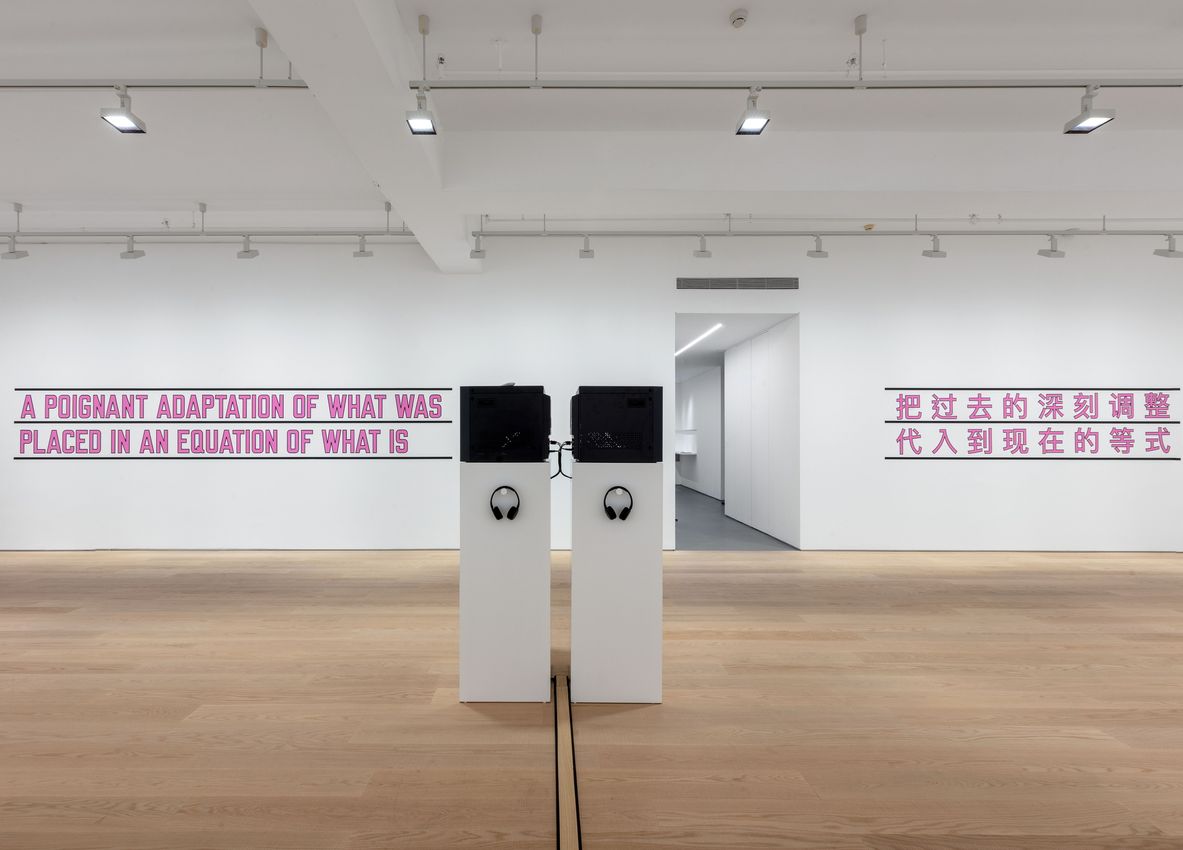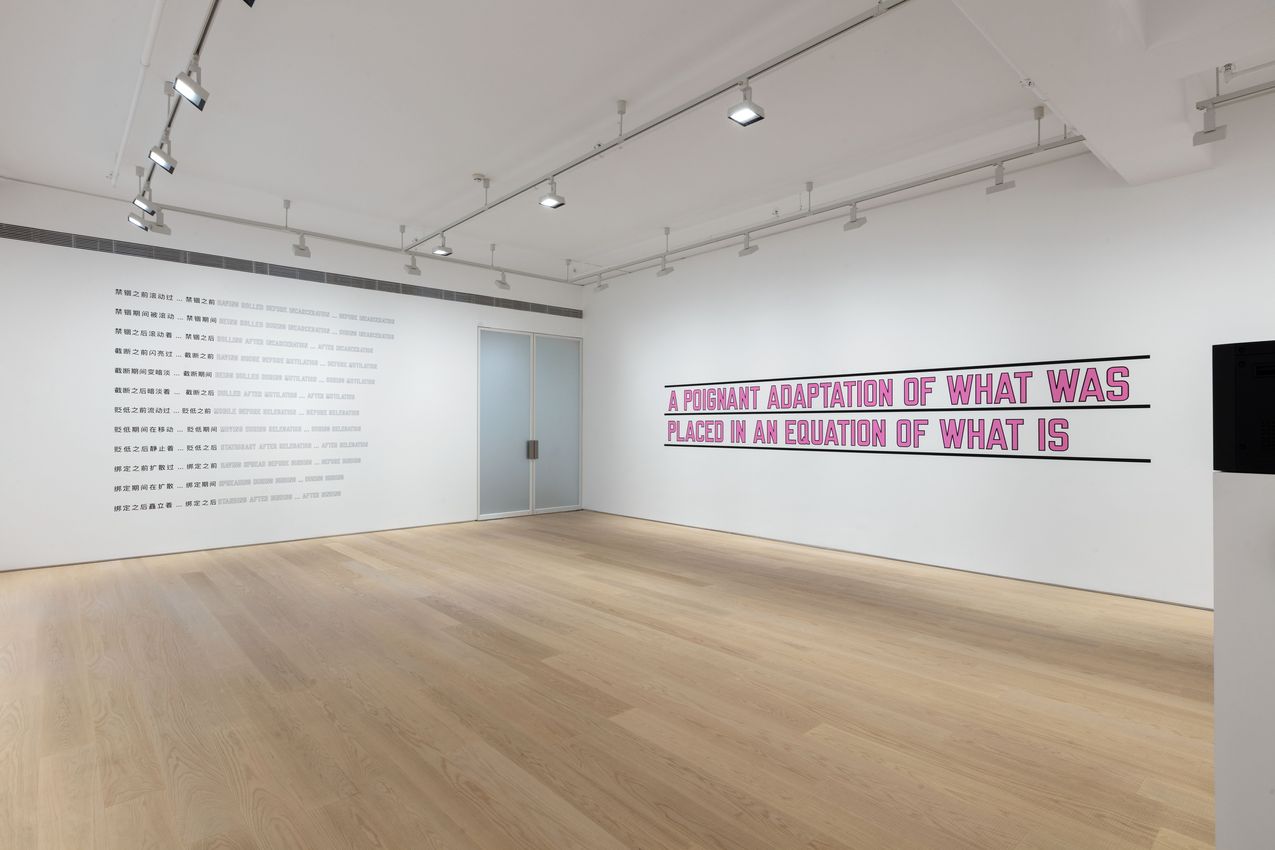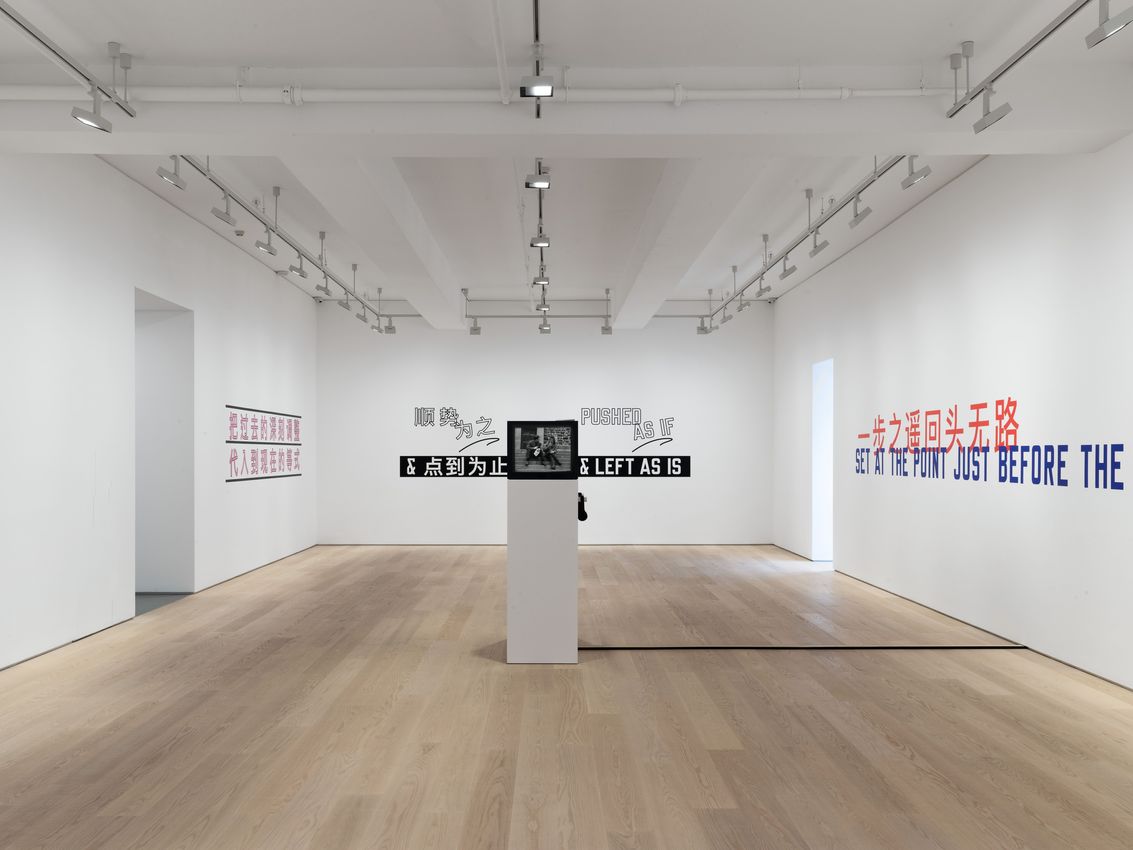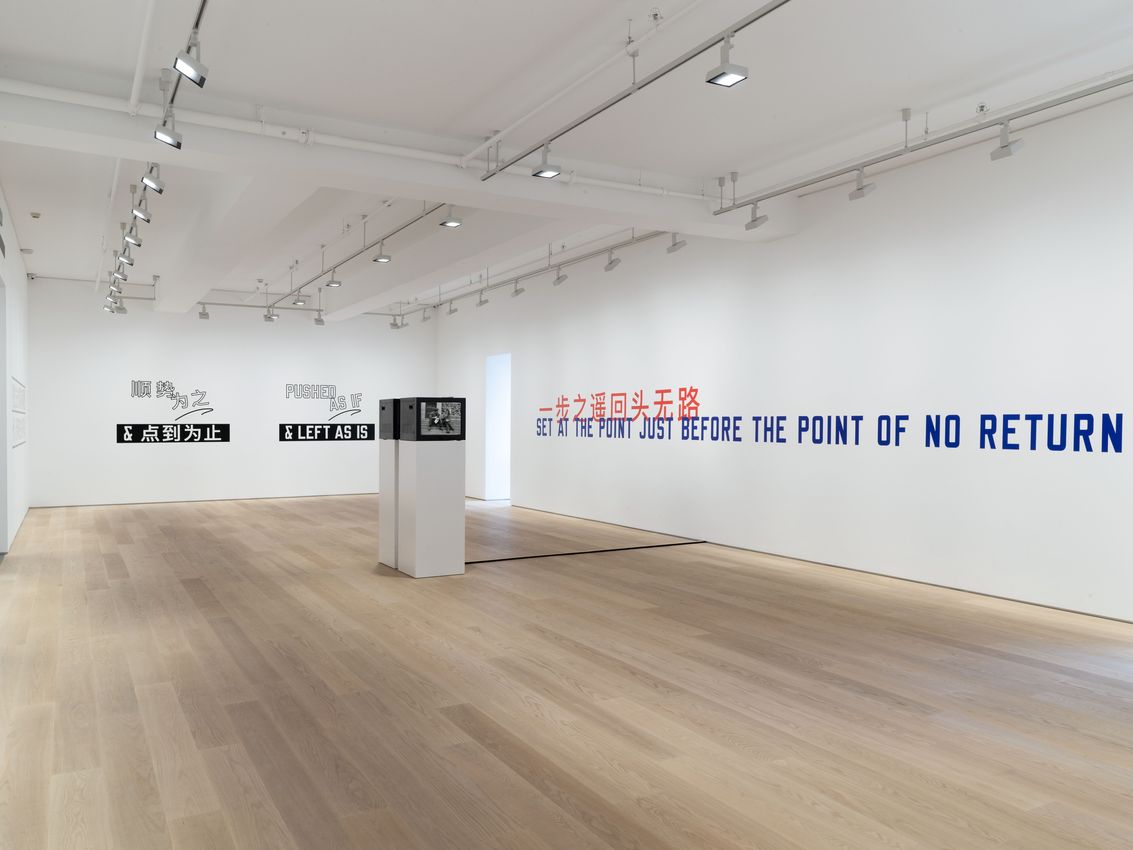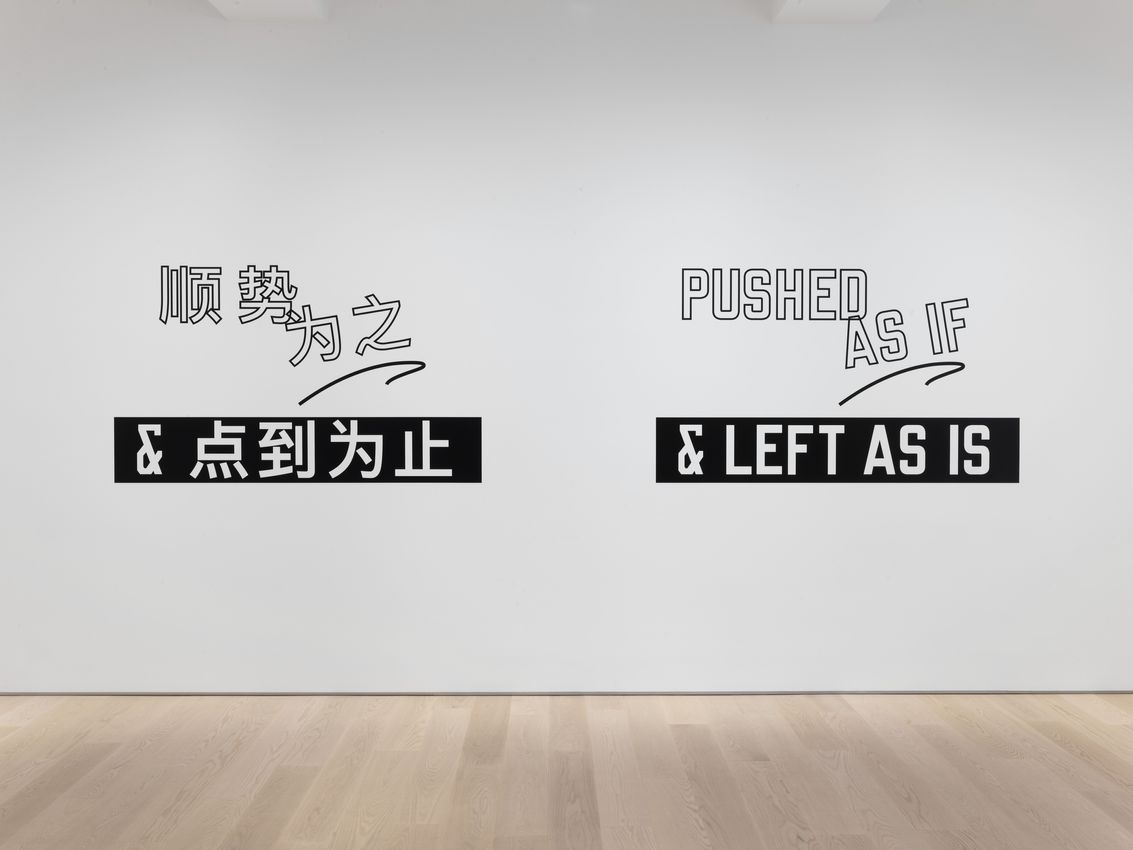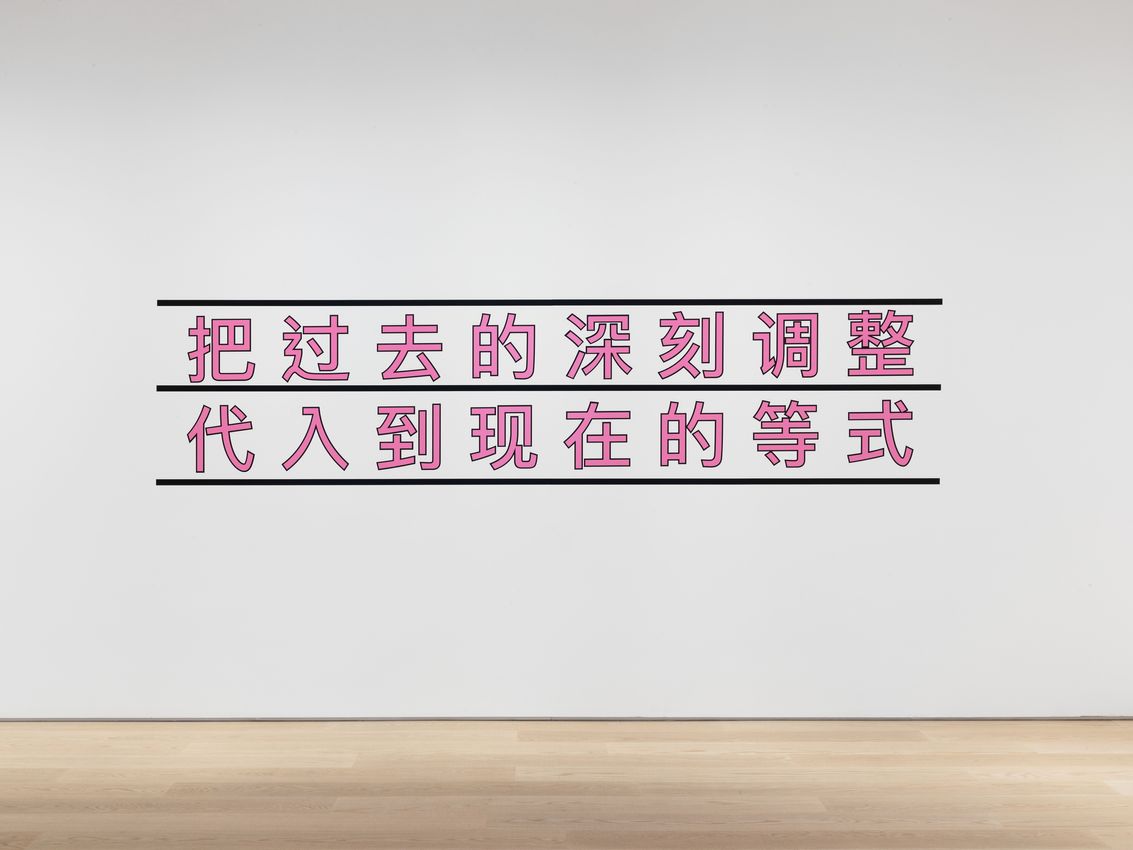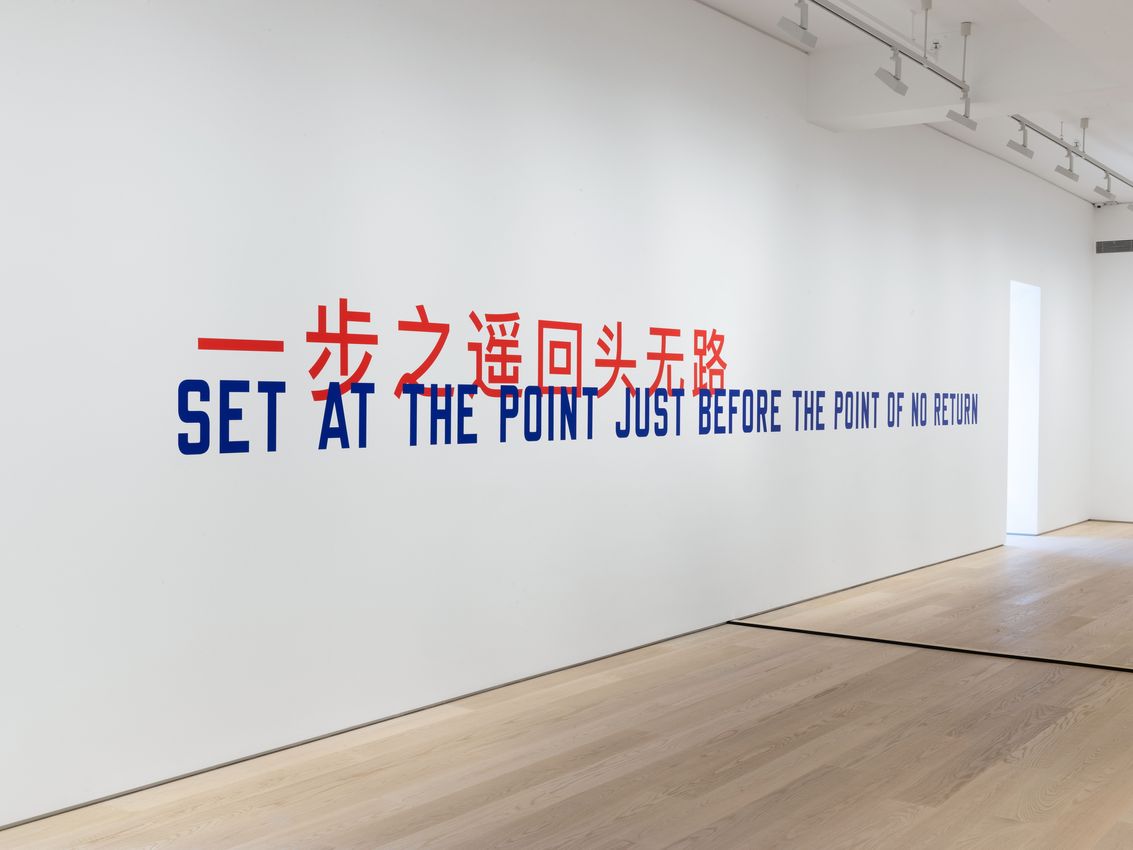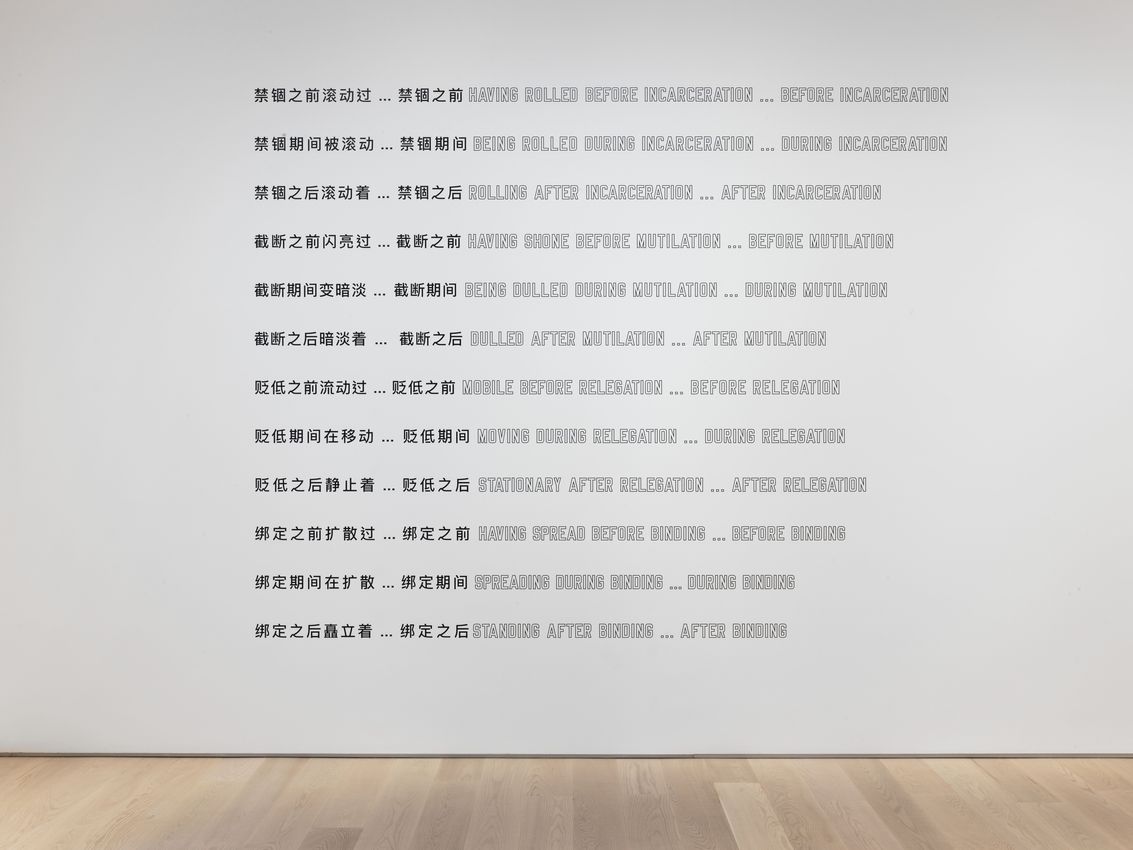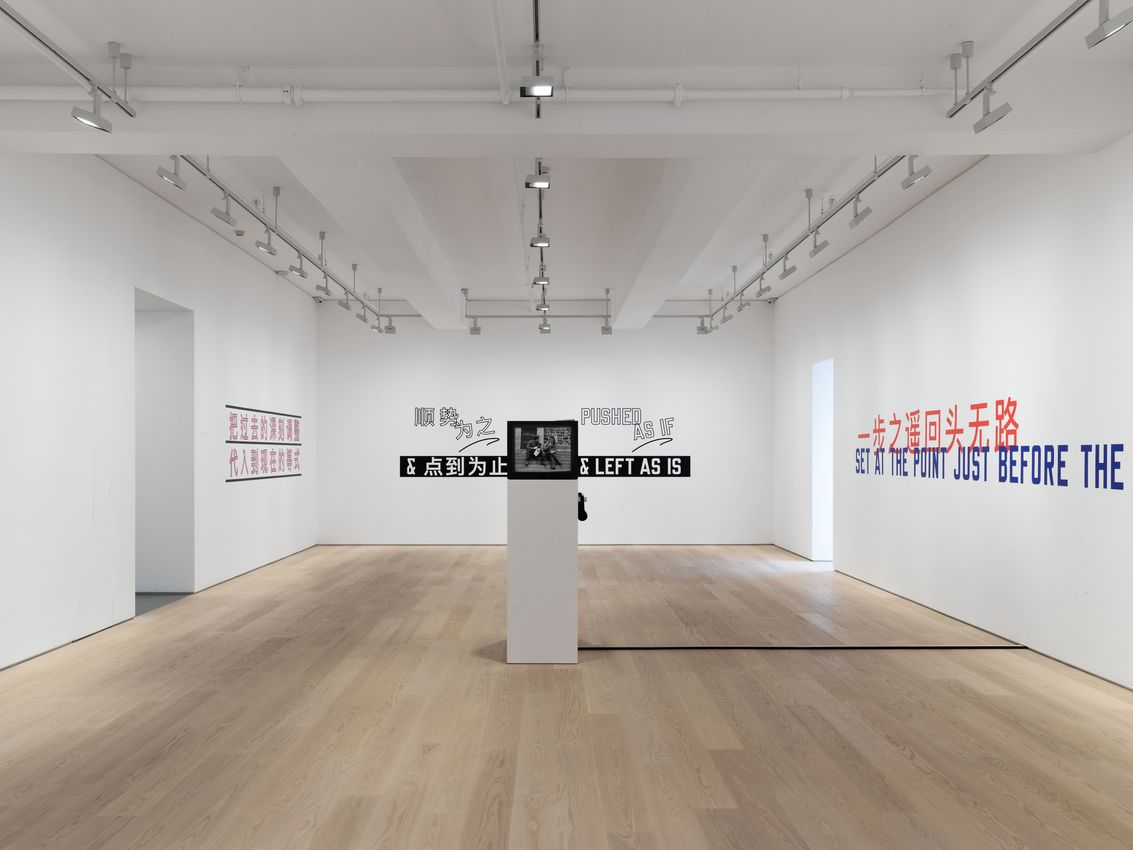
Lisson Gallery is honoured to present their first solo exhibition in China with American artist, Lawrence Weiner.Widely regarded as a trailblazer in the development of Conceptual Art in the 1960s, Weiner saw himself as asculptor and defined his sculptural medium simply as ‘language + the material referred to’, by referring tolanguage as a material for construction. Presenting a selection of wall-based texts dating from 1972 – 2013,alongside two video installations, the exhibition in the North Gallery of Lisson Gallery Beijing is Weiner’s firstpresentation in China since the 2008 exhibition, ‘TO ALLOW THE LIGHT’ at the UCCA, Beijing, offering achance to trace the contours of a career that spans over 50 years.
A central figure in the formation of the Conceptual Art movement, Weiner rigorously constructed an oeuvre thatreflects and encourages the interaction of both linguistic and artistic themes, having worked with a multitude ofgenre that include installations, videos, films, books, sound works, sculptures, and performances. Weinerpresented his art in language form, asserting that a construction in language can function as sculpture just asadequately as a fabricated object. Throughout his career, he investigated the nature of language as a three-dimensional material. While believing that the value of his practice exists within the language itself, rather thanwithin a unique physical presentation, the artist provided guidance on how to present his words; Weiner wrote aDECLARATION OF INTENT in 1968, which established the conditions for serving his work:
THE ARTIST MAY CONSTRUCT THE WORK
THE WORK MAY BE FABRICATED
THE WORK NEED NOT BE BUILT
EACH BEING EQUAL AND CONSISTENT WITH THE INTENT OF THE ARTIST THE DECISION AS TOCONDITION RESTS WITH THE RECEIVER UPON THE OCCASION OF RECEIVERSHIP.
While Weiner never strayed from these guidelines, the forms and contexts for Weiner’s works continue todevelop, given the ever-expansive nature of language-as-material. Without restricting metaphors, Weiner believedthat a work’s existence requires a readership and social engagement rather than a physical presence, which leavesviewers with an interpretative autonomy. This concept radically reimagined the relationship between viewer,artist, and artwork, allowing the possibility for multiple iterations of the same piece.
Weiner insisted that the material concerns of the sculptures transcend the particularities of any one language, andcan exist, and do exist equally, in any language. Thus, the four works featured in this exhibition are both renderedin their original English as well as in Chinese, including the earliest work in this presentation HAVING ROLLEDBEFORE INCARCERATION... (1972), noting Weiner’s response to labour protests happening at a printing plantin Turin, Italy.
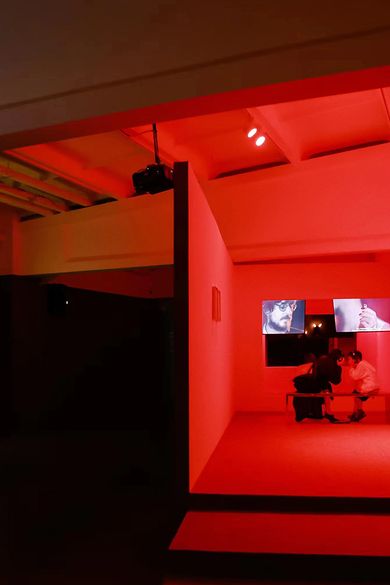
Also featured in this presentation is an 18-minute, cartoon-styled video entitled SINK OR SWIM (2003).Combining live footage with animated drawings, text and diagrams, this collaged sequence comments on therelationship between knowledge, perception and language with recurring visual and linguistic references to waterand the sky. The other video in this presentation is a recording of an early interview with CBC Television inHalifax, Canada in 1969, where Weiner enacted ONE STANDARD DYE MARKER THROWN INTO THE SEA(1968), articulating both the intention and function of his work.
Driven by a strong belief that art should be accessible to all, Weiner’s interest in public art led to a substantialbody of work produced in a variety of urban spaces throughout his career. To accompany the exhibition, beyondthe gallery space, three works by Weiner will be presented at the 798 Art District as part of Gallery WeekendBeijing’s public programme (26 May to 4 June), featuring a poster and texts manifested both on the ground of apublic square and throughout the alleyways adjacent to the square.
As curator Kelly Taxter wrote in the essay to accompany this presentation, “Weiner’s contribution to Conceptualart was much more than a material innovation, it was a rebuke of institutional constraints that separated artistsfrom their public. He also hoped that our role – as viewer, audience and public of his work – was to find a use forit.”

Lawrence Weiner’s texts have appeared in all sorts of places over the last five decades and although he sees himself as a sculptor rather than a conceptualist, he is among the trailblazers of the 1960s to present art as language. He defines his sculptural medium simply as ‘language + the material referred to’, in the sense that language is a material for construction. Accordingly, his first book _Statements, _1968, contains 24 typewritten descriptions of works, where only a few had actually been made, suggesting that a work’s existence requires a readership rather than a physical presence. Weiner’s _Statement of Intent, _1969, even more clearly identifies ‘universal availability’ as a guiding principle:


A respected voice in contemporary art discourse.
Focusing on ambitious storytelling and insightful art-world commentary. Ocula Magazine publishes in-depth interviews, critical essays and timely analysis on the artists, exhibitions and ideas driving the global art world.
Learn more about Ocula Magazine
Showcasing the best of the art world.
Ocula partners with galleries from around the world to highlight their artists, artworks and exhibitions. Gallery membership is by application and invitation, with each member vetted by an independent panel.
Learn more about Ocula Membership

Specialises in the sale of major artworks.
Led by a team with deep ties to the world’s leading auction houses, galleries and collectors. Ocula’s advisory team offers bespoke services to high-net-worth clients from around the world who are looking to acquire the best of contemporary and modern art.
Learn more about our team and services