



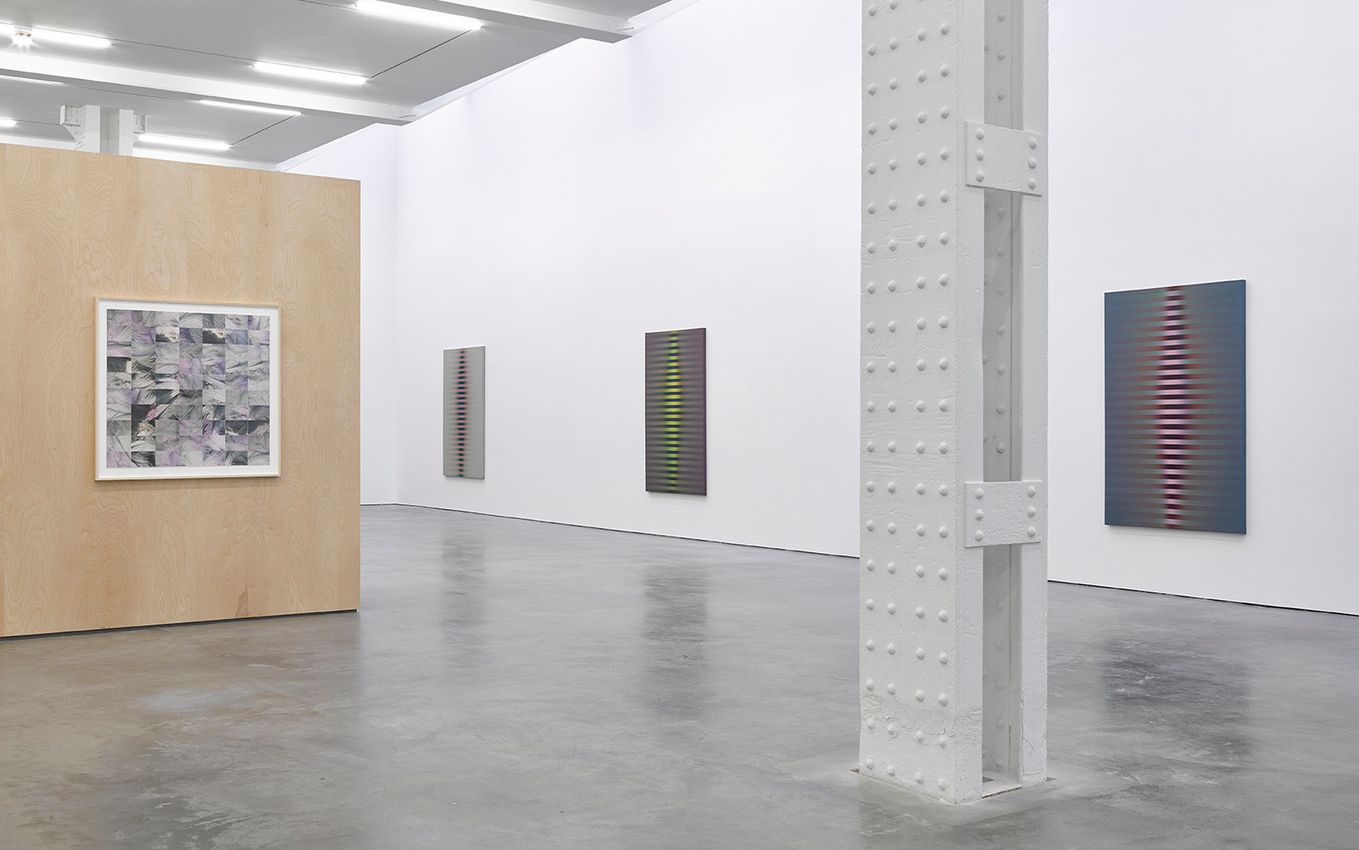
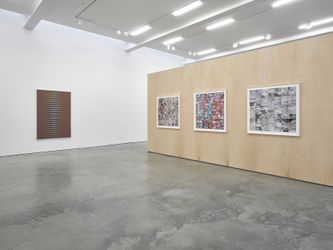
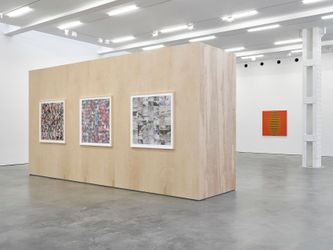
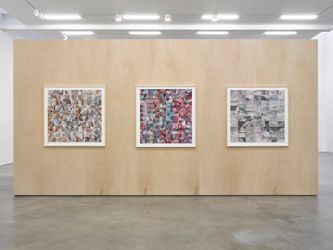
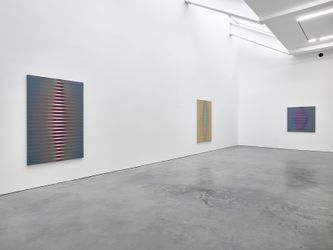
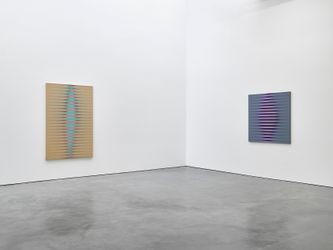
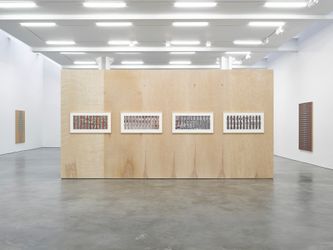
Lisson Gallery is pleased to announce representation of The Estate of Roy Colmer and will open the gallery’s first exhibition of his work in January 2017 in New York. The exhibition will feature fifteen of the artist’s early spray-gun paintings, most of which have never been exhibited, and a selection of late photo collages. To accompany the presentation, Lisson Gallery will produce a new publication, featuring an essay by exhibition curator Alex Bacon, as well as previously unpublished archival material.
Known primarily for his conceptual photography and film projects, Colmer began creating his experimental, colour-intensive paintings in the mid-1960s, upon moving to New York after graduation from the Hochschule für Bildende Künste in Hamburg, Germany. Inspired by the shifting artistic landscape created by the introduction of electronic media, Colmer challenged the boundaries between painting and film to develop a new kind of perception.
Of his process, Colmer noted: “Experimenting with video feedback, I became excited working with a flowing and constantly changing form. Working in black-and-white video, the liquid properties of the image suggested many possibilities. In my painting, the use of an industrial model spray gun allowed me to cover large areas of the canvas with little effort. The stripes were taped horizontally. I could then approach a breaking down of the color vertically”.
Colmer was able to connect the surfaces of his paintings to video by using this spray technique and a careful selection of colour, to suggest filmic effects such as movement, flicker, distortion, and as Colmer described, “feedback”. He was interested in the immediacy and versatility of the spray gesture, and the ability to manipulate space and depth through color and form, notions influenced by his Concretist mentors at the Hochschule für Bildende Künste in Hamburg, Germany.
By the early 1970s, Colmer began to incorporate telegenic feedback directly into his practice, increasingly working in video and film. His exploration and manipulation of electronic signals was aligned with a larger group of artists working in the area at the time, among them Nam June Paik and Bruce Nauman. Colmer stopped experimenting with paint entirely a few years later and focused his attention on conceptual photography and documentary projects.
A selection of photographic works from the 1980s are also included in the exhibition. Arranged in a grid, they create striking contrasts between order and disorder, and focus and distortion, similar to the tension between the field and centralized figure in the early spray paintings. Placed together, the early paintings and late photo collages articulate Colmer’s lifelong experiment with colour, form and technique.


Established in 1967 in London, Lisson Gallery is one of the most well-known galleries operating globally. Boasting an influential and continuing legacy, including playing a pivotal role in the careers of many pioneers of historically important art movements, the gallery works with some of the most significant contemporary artists today.

A respected voice in contemporary art discourse.
Focusing on ambitious storytelling and insightful art-world commentary. Ocula Magazine publishes in-depth interviews, critical essays and timely analysis on the artists, exhibitions and ideas driving the global art world.
Learn more about Ocula Magazine
Showcasing the best of the art world.
Ocula partners with galleries from around the world to highlight their artists, artworks and exhibitions. Gallery membership is by application and invitation, with each member vetted by an independent panel.
Learn more about Ocula Membership

Specialises in the sale of major artworks.
Led by a team with deep ties to the world’s leading auction houses, galleries and collectors. Ocula’s advisory team offers bespoke services to high-net-worth clients from around the world who are looking to acquire the best of contemporary and modern art.
Learn more about our team and services
